







If you’re wondering when toddlers stop drinking milk before bed, you’re not alone. I’ve been there too, standing in a dark hallway wondering if the bedtime milk habit was helping or hurting. Many parents ask this same question.
In this article, I’ll walk you through the right age to stop, how to wean your toddler off gently, and what to do if they refuse to sleep without it.
I’ve spent years researching toddler sleep and nutrition, so you can trust the advice here is practical, simple, and built for real families like yours.
Understanding Bedtime Milk for Toddlers

Bedtime milk usually starts in infancy. A warm feed helps a baby settle, and over time it gets tied to sleep. Many parents keep the habit going simply because it works. The baby is calm, sleep comes fast, and no one questions it.
But what works at 6 months can cause problems by 18 months or 2 years. Once your toddler turns one, solid foods should cover most of their nutrition.
Milk still plays a role, but it’s no longer the main source of calories or comfort it once was. Cheese, yogurt, leafy greens, and fortified foods can all fill that gap. By toddler age, bedtime milk is mostly about routine and closeness rather than hunger.
Your child wants warmth and a familiar habit. Knowing the difference between comfort and nutrition helps you decide when it’s time to make a change.
When Do Toddlers Stop Drinking Milk Before Bed?

Most experts agree on a general timeline, but every child is a little different.
Recommended Age to Stop Bedtime Milk
6-12 months: Milk feeds at night are normal and expected. Babies need them.
From 1 year: This is a good time to start moving milk earlier in the evening routine. You don’t have to stop cold turkey, but the shift can begin.
By 2 years: Most toddlers should no longer need milk as the last step before sleep. A consistent bedtime routine without milk works well at this age.
Signs Your Toddler Is Ready to Stop
Your toddler may be ready if they
- Eat well during the day
- Can settle at night with other comfort
- Wake up less often asking for milk
- Show interest in a bedtime story or song instead
Is There a “Right” Age or Does It Depend on the Child?
There’s no fixed rule. The general advice is to aim for no bedtime milk by age 2, but some children take longer. What matters most is that your child is eating well during the day and learning to fall asleep on their own.
Why You Might Consider Stopping Milk Before Bed

Bedtime milk can affect sleep, teeth, and appetite more than most parents realise.
Can Bedtime Milk Affect Sleep?
When a toddler falls asleep drinking milk, they build a sleep association. They start to believe they can only sleep with milk.
Every time they wake in the night, they need that same comfort to settle again. This leads to more wakings, not fewer.
Dental Health and Tooth Decay Risk
Milk contains natural sugars. When those sugars sit on your child’s teeth overnight, they raise the risk of tooth decay.
This is why brushing after the last milk feed is so important. If milk is the very last step before sleep, fitting in teeth cleaning becomes much harder.
Can Toddlers Drink Too Much Milk?
Yes. Too much milk fills up a toddler’s stomach, leaving little room for solid foods. This can lead to poor appetite at mealtimes, low iron levels, and constipation.
Milk should support a balanced diet, not replace it.
How Much Milk Should a Toddler Have Per Day?

Getting the amount right supports good nutrition without going overboard.
Recommended Milk Intake (12-24 Months)
For toddlers aged 1-2, around 400-500ml per day is a good target. That’s roughly two cups. Most health guidelines consider more than 600ml a day too much at this age.
Signs Your Toddler Is Drinking Too Much Milk
Watch for a toddler who refuses meals, eats very little solid food, has pale skin, low energy, or slow weight gain. These can all point to too much milk crowding out proper nutrition.
How Excess Milk Can Affect Appetite and Iron Levels
Cow’s milk is low in iron. When toddlers fill up on milk, they often skip iron-rich foods like meat, lentils, and fortified cereals. Over time, this can lead to iron-deficiency anemia, which affects energy, focus, and healthy growth.
How to Wean a Toddler Off Milk Before Bed
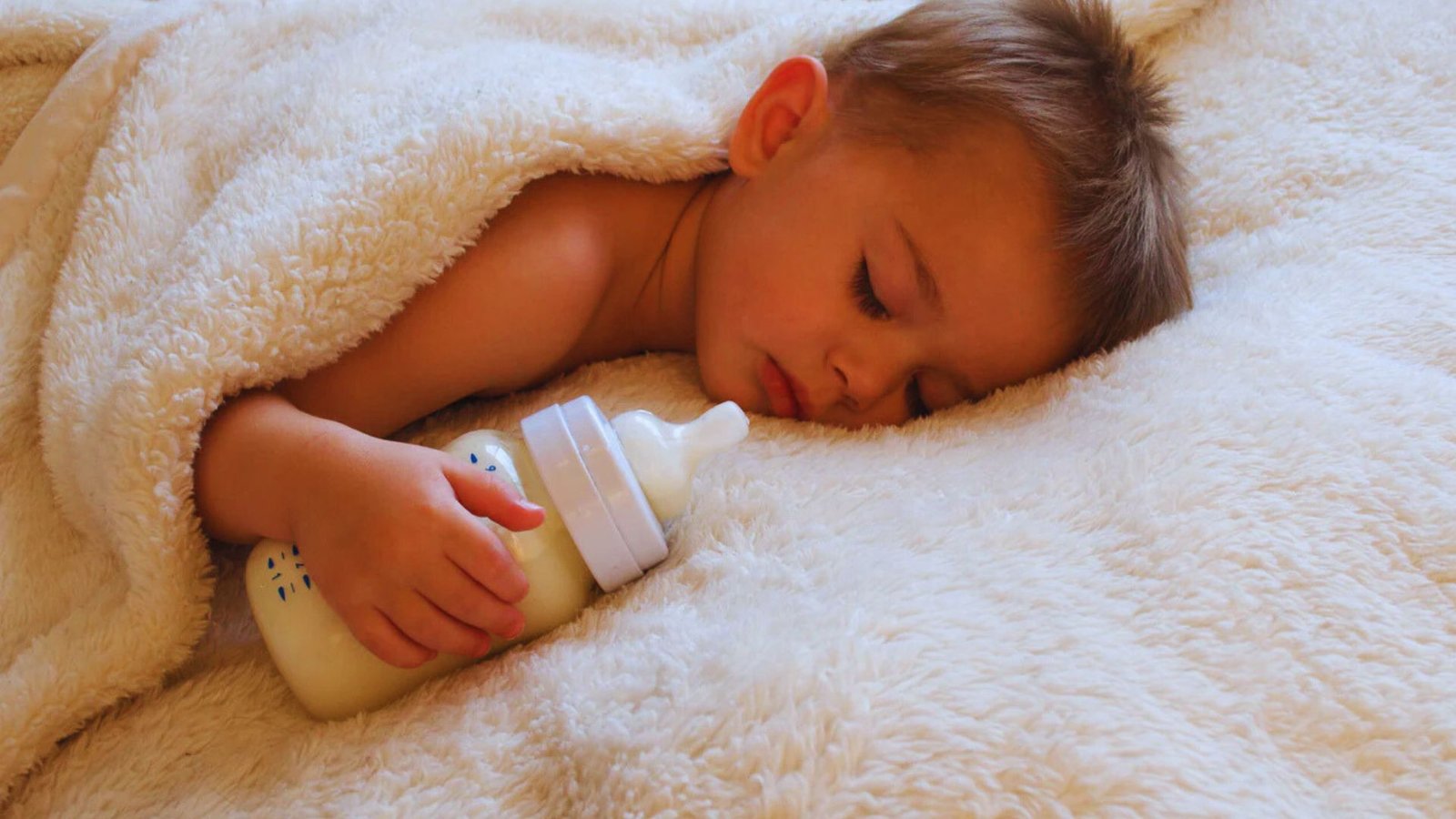
Small, steady changes work far better than sudden ones.
Move Milk Earlier in the Bedtime Routine
Start by offering milk before the bath instead of after. Then shift it to right after dinner. This small change begins to break the link between milk and sleep without upsetting your toddler too much.
Break the Feed-to-Sleep Habit
After milk, make sure your toddler is still awake before putting them in bed. This teaches them to fall asleep on their own. It may take a few nights, but staying calm and consistent makes a big difference.
Replace Milk With a New Bedtime Ritual
Build a routine that ends without milk. A warm bath, a short story, a song, or a quiet cuddle all work well. If your toddler uses a bottle, swap it for a cup to reduce the comfort attachment. Keep the same steps every night so your toddler knows what to expect.
What If My Toddler Refuses Bed Without Milk?

It’s normal for toddlers to push back. Here’s how to handle it without stress.
Is It Hunger or Just Comfort?
Ask yourself if your toddler is actually hungry or simply looking for comfort. If they’ve had a good dinner and a small snack like toast or a banana before bath time, it’s most likely a comfort. You can meet that need in other ways.
A stuffed animal, a nightlight, or extra reassurance at bedtime can all work well. If they ask for a drink, offer water. It won’t harm their teeth and won’t build a sleep association the way milk does.
How to Stay Calm and Consistent
Toddlers test boundaries and that’s completely normal. If you give in one night, don’t worry about it. Just return to the plan the next night. Consistency over days and weeks matters far more than getting it perfect every single night.
Keep the evening routine steady, stay calm when they push back, and trust that small steps forward add up. Your toddler will adjust with time.
Practical Tips for Stopping Bedtime Milk Smoothly

Simple steps that make the process easier for both of you.
- Move milk back by 15-30 minutes each week instead of cutting it out all at once.
- Keep the rest of the bedtime routine the same so your toddler still feels safe and settled.
- Always brush teeth after the last milk of the day, no matter what time it falls.
- Avoid removing milk suddenly if your toddler is unwell or going through a big change at home.
- Focus on good daytime meals and an evening snack so nighttime hunger is not the problem.
- Reassure your toddler through the process. This is new for them and a little extra comfort goes a long way.
- Stay patient and consistent. Some nights will be harder than others, and that is completely okay.
Conclusion
As a parent myself, I know how tough it can be to change something that works – even when you know it’s time. If your toddler still needs milk before bed, don’t stress. Small steps really do add up. When do toddlers stop drinking milk before bed? For most, around 12-24 months is the right window. But your child, your pace.
Try one small change this week. See how it goes. And if you found this helpful, share it with another parent who might need it – or drop a comment below. I’d love to hear how it goes for you.
Frequently Asked Questions
Can I still give my toddler milk at night if they wake up?
After 12 months, night milk feeds are usually habit rather than necessity. Try offering water instead and comfort them back to sleep without milk.
Does warm milk really help toddlers sleep?
Warm milk can feel soothing, but it’s mostly the routine and comfort that helps – not a sleep-inducing ingredient. The ritual matters more than the milk itself.
What can I give my toddler instead of milk before bed?
A small snack like toast or banana earlier in the evening works well. At bedtime, stick to water if they need a drink.
Is it harmful to let my toddler have milk before bed?
It can affect dental health and create sleep associations. As long as you brush teeth after and don’t let your toddler fall asleep drinking, occasional bedtime milk isn’t a crisis.
My toddler is 2 and still needs milk to sleep. What should I do?
Start by moving milk earlier in the routine. Then build a new sleep ritual without it. Go slowly, stay consistent, and expect a few rough nights before things improve.