





Alt text: A boy wearing glasses is seated on a couch, throwing a green toy in his hands.
If your toddler throws things constantly, you are not alone. I have been there, watching a sippy cup fly across the room for the tenth time before lunch.
It is exhausting, and honestly, a little confusing too.
This article explains why toddlers throw things and what is really going on in their little minds. You will also get practical tips that actually work in real life, not just in theory.
From angry throwing to tossing food off the highchair, we cover it all. No fluff. No guessing.
Just clear, helpful answers backed by child development that will make your days a little easier and a lot less stressful.
Why Do Toddlers Throw Things?
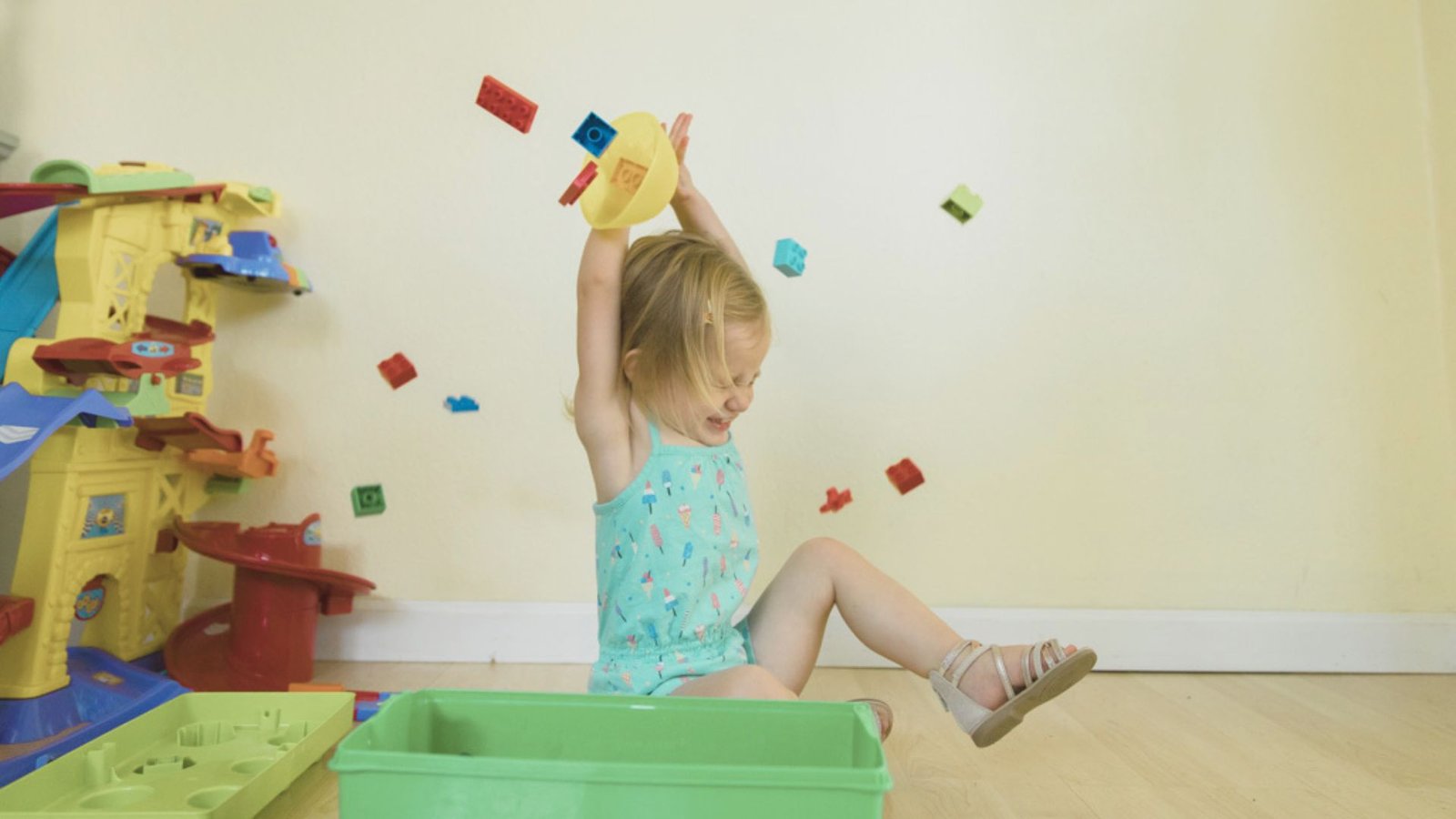
Toddlers throw things for many reasons, and most of them are completely normal. It is not bad behavior. It is how they learn about the world around them.
Once you understand what is behind it, the behavior starts to make a lot more sense.
Most children start throwing around 12 to 18 months when their grip and arm strength develop enough to release things with purpose.
By age two, it often increases because emotions grow bigger but language skills have not caught up yet. That gap leads to a lot of flying toys.
Every throw also tells you something. Their brain is making connections between actions and results, their fine motor skills are growing, and they are testing cause and effect.
Before a child has the words to express themselves, throwing is their way of communicating. That sippy cup hitting the floor is your toddler telling you something the only way they know how right now.
Developmental Reasons Why Toddlers Throw Things
Throwing is a sign your toddler is growing and learning. Here is what is happening developmentally behind every toss.
Learning Cause and Effect (gravity, sound, movement)
Toddlers are natural scientists. When they drop a ball and it bounces, they are watching physics happen in real time.
When they throw a plate and it makes a loud crash, that reaction is fascinating to them.
They are not trying to make a mess. They are running a little experiment. Every throw gives them new information about how the world works.
Developing Motor Skills and Hand-Eye Coordination
Throwing also builds physical skills. The act of picking something up, aiming, and releasing it takes real coordination.
For toddlers, this is a challenge they enjoy practicing over and over.
Arm strength, grip control, and spatial awareness all grow through this kind of activity. Throwing a ball across the room is actually great exercise for a developing body.
Curiosity, Experimentation, and Learning Through Play
Play is how toddlers learn. Throwing is part of that play. They want to see what different objects do when thrown. Does this stuffed animal bounce?
Does this block slide? Does this cup splash?
Encouraging safe throwing, like tossing a soft ball into a basket, channels this curiosity in a positive direction without shutting it down completely.
How to Stop a Toddler from Throwing Things
Stopping the throwing overnight is not realistic, but guiding it in the right direction is.
Why Punishment Doesn’t Work at This Age
Punishment teaches fear, not behavior change.
Time-outs and taking toys away do not teach a toddler why throwing is a problem.
The gap between the action and the consequence is too wide for them to connect the two. Immediate, calm redirection works far better.
Teaching What Can Be Thrown vs What Cannot
Clear rules work better than repeated corrections.
Keep the rule simple. “We throw balls. We do not throw books.” Give them something they are always allowed to throw and keep it within reach.
When they grab the wrong thing, quietly redirect without making it a big moment.
Redirecting Throwing Behavior Safely
The best time to redirect is before the throw happens.
Step in early, before the throw happens. As soon as you see them wind up, hand them a soft ball and say “Throw this instead.”
With enough repetition, they start reaching for the right thing on their own.
Using Simple Language Toddlers Understand
Few words delivered calmly go a long way with toddlers.
Short words land better than long explanations. “No throwing books. Throw the ball.” That is enough.
Pair your words with action and point to where throwing is okay. The physical cue makes the message stick faster.
Smart Parent Tips to Manage Toddler Throwing
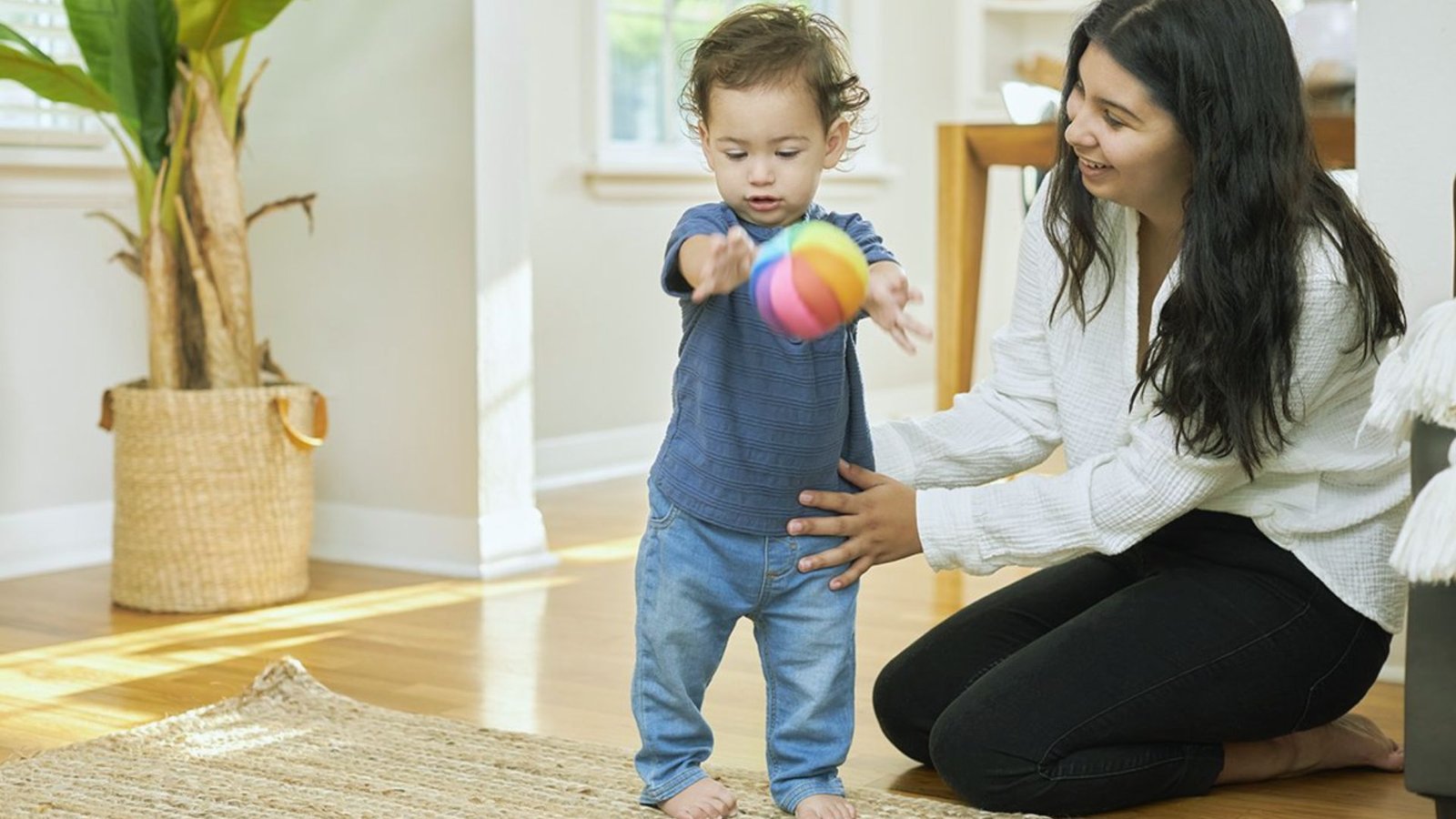
These practical strategies help you stay one step ahead of the throwing phase and keep everyone calmer.
Create Safe Throwing Zones and Activities
Give the urge a proper outlet and it becomes much easier to manage.
Set up a small throwing space with a laundry basket or bucket. Label it clearly. “This is where we throw things.” When the urge hits in the wrong place, redirect them there quickly.
Model Calm Behavior and Emotional Language
Your toddler learns how to handle feelings by watching you first.
When you stay calm during frustrating moments, you are showing them what regulation looks like. You do not need to be perfect. The more you model it, the more they absorb it over time.
Use Consistency and Predictable Routines
Same response every time is what makes the lesson stick.
Toddlers feel more secure when they know what to expect. Keep your reaction to throwing the same each time. Same words, same tone, same redirect.
Encourage Alternatives Like Throwing Balls or Bean Bags
Approved throwing time reduces random throwing significantly.
Outdoor play with a ball, tossing beanbags into a bucket, or throwing rolled socks into a laundry basket all satisfy the urge safely. When they get enough of this, unsafe throwing tends to decrease on its own.
When Toddler Throwing Becomes a Concern
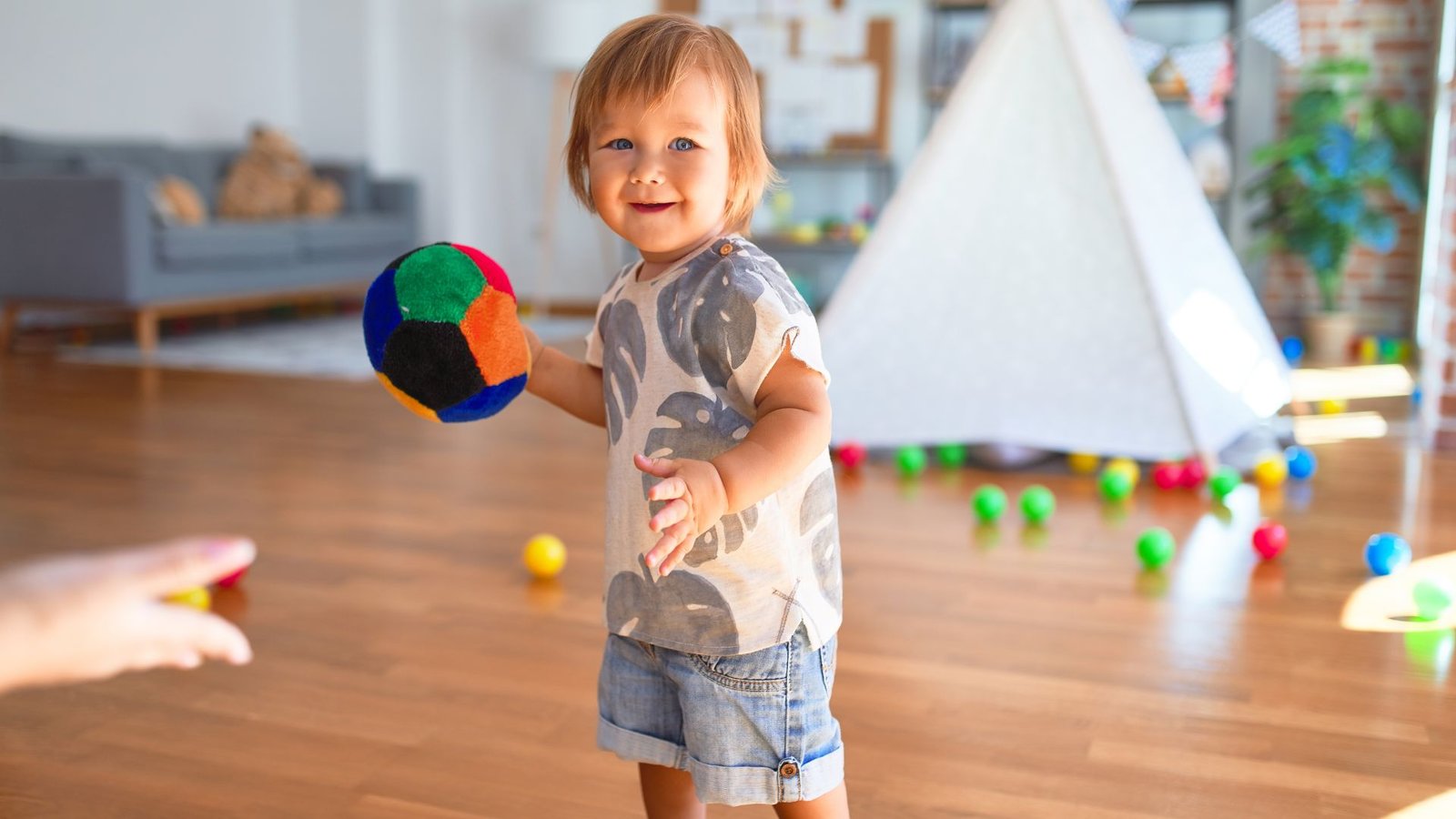
Most throwing is normal, but some signs are worth paying closer attention to.
Occasional angry throwing is expected. What stands out is when it happens constantly, with clear intent to hurt, or alongside behaviors like biting and hitting.
Frequency and intensity are the key things to watch.
If throwing is paired with a speech delay, trouble with transitions, or social withdrawal, bring it up at your next pediatric visit.
These combinations can sometimes point to developmental considerations that benefit from early support.
Also watch for throwing that increases over time or shows no awareness of how it affected someone else. Most toddlers pause when they hear “ouch.”
If that awareness is consistently missing, mention it to your pediatrician.
Tips for Parents to Stay Calm and Consistent
Parenting through the throwing phase takes real patience. These tips help you stay grounded.
- It is okay to feel frustrated. Take a breath before you respond so you can react calmly instead of out of stress.
- Your regulated nervous system helps your toddler regulate theirs. Calm is contagious, and so is chaos.
- You will repeat the same rule hundreds of times before it sticks. That is not failure. That is how toddler learning works.
- Every calm redirect counts, even when it does not feel like it is working. Consistency is what builds the habit over time.
- Talk about feelings regularly, not just during throwing moments. The more words your toddler has for emotions, the less they need to throw something to express them.
Conclusion
The throwing phase is real, and I know it can wear you out.
But here is what I have come to believe: every throw is your toddler telling you something without words. Once I started seeing it that way, it got a little easier to respond with patience instead of frustration.
Throwing is a phase. With guidance, it does not last forever. Use these moments to teach, not just correct.
Did this help? Drop a comment below or share this with another parent who needs it.
Frequently Asked Questions
Why do toddlers throw things repeatedly?
Toddlers throw things repeatedly because they enjoy the cause-and-effect reaction it creates. Repetition also helps them feel in control and learn how the world around them works.
Will my toddler grow out of throwing things?
Yes, most toddlers grow out of throwing as they develop more language and emotional skills. Consistent redirection and teaching appropriate outlets speeds up this process.
How long does the throwing phase last?
The throwing phase typically peaks between ages one and three. With consistent guidance, most children show a noticeable decrease in random throwing by age three or four.
Should I punish my toddler for throwing things?
Punishment is generally not effective at this age because toddlers cannot connect it to the behavior. Calm redirection to a safe throwing option works much better over time.
What can I give my toddler to throw safely?
Soft balls, rolled socks, beanbags, and foam toys are all great options. Setting up a specific throwing game or basket gives them a safe and approved outlet for the urge.