
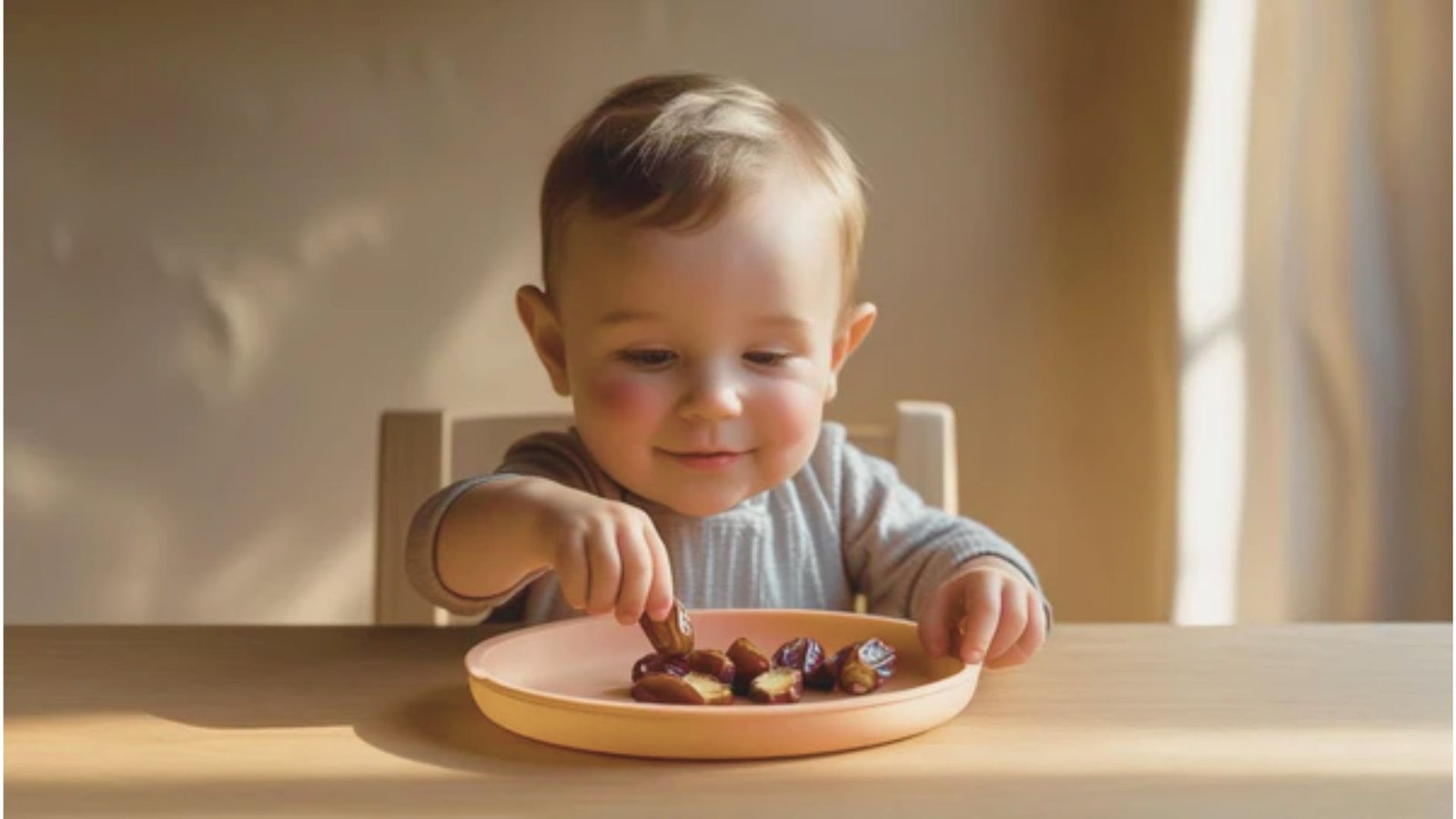






You’ve probably seen dates in smoothies, energy balls, or baby food recipes and wondered if babies actually have dates?
It’s a fair question. Dates are sweet, sticky, and packed with nutrients, but they’re not always safe to serve as-is.
The texture alone can be a risk if you don’t know what to look for.
This guide covers the right age to start, how to prepare dates safely, and what side effects to watch for. You’ll find clear, practical answers here with no guesswork involved.
Can Babies Have Dates?

Yes, babies can have dates, but only when prepared correctly.
Dates are not safe to serve whole to young babies. The sticky, chewy texture makes them a serious choking risk. Even small pieces can stick to a baby’s throat and cause problems quickly.
Beyond texture, dates are high in natural sugar and fiber. Both can be hard on a baby’s digestive system, especially in the early months when their gut is still getting used to solid foods.
The key is preparation. Properly mashed or pureed dates are a very different story from a whole date pulled straight from the bag.
Getting the texture right makes all the difference between a safe snack and a choking hazard.
Safe serving of dates for babies depends on age, texture, and portion size. Get those three things right, and dates can be a genuinely good addition to your baby’s diet.
When Can Babies Have Dates?

Age matters, but so does readiness. Here’s what to know before you start.
At What Age Can Babies Have Dates?
Most babies are ready for pureed foods, including dates, around 6 months. But age alone isn’t the only sign to go by.
Look for these readiness cues: your baby can hold their head up steadily, shows interest in food, and can sit with minimal support. If you’re unsure, check with your pediatrician before introducing anything new.
Can Babies Have Dates at 6 Months?
At 6 months, smooth purée is the only safe option.
No chunks. No pieces. Just a fine, lump-free paste. Some babies with sensitive digestion may not handle dates well this early, so waiting until 8 to 10 months is perfectly fine. Start with half a teaspoon and watch for any reactions over the next 24 to 48 hours.
Can Toddlers Eat Dates?
By 12 to 18 months, toddlers can handle finely chopped dates as a finger food.
Keep pieces very small and soft. Sticky foods still need close supervision at this age since chewing skills are still developing.
Health Benefits of Dates for Babies

Dates bring more to the table than just sweetness.
Natural Energy From Dates
A gentle, natural fuel source for growing babies.
Dates contain natural sugars like glucose and fructose, which provide steady energy without the crash that comes from refined sugar.
This makes date purée a smarter swap compared to white sugar or corn syrup in baby food.
Digestive Health and Constipation Support
A small amount of date purée can go a long way for a baby’s digestion.
Dates contain soluble fiber that helps soften stools and support regularity. For babies with mild constipation, it can offer gentle relief.
That said, too much fiber can cause gas or loose stools, so keep portions small.
Iron and Mineral Support for Growth
Dates pack in several minerals that support healthy development.
Iron, potassium, and magnesium all play a role in muscle function, blood development, and overall growth.
Iron is especially helpful for babies moving away from breast milk or formula as their main nutrition source.
Dates as a Natural Sweetener Alternative
A simple way to add flavor without processed sugar.
Many parents stir date paste into oatmeal, yogurt, or fruit purées to sweeten things up naturally.
It works well, just keep the amount small since natural sugar still adds up in a baby’s diet.
Dates by Age: Safe Serving Guide

The right texture at the right age makes all the difference.
Dates for Babies 6 to 8 Months
Keep it smooth, simple, and very small.
Smooth purée only. No lumps, no pieces. Start with half a teaspoon and increase slowly if tolerated. Mix with milk or water to thin the texture as needed.
Dates for Babies 8 to 10 Months
Texture can get a little thicker now, but soft is still the rule.
Mashed or blended dates can be stirred into other foods like oatmeal, mashed banana, or pureed vegetables.
The consistency can be slightly thicker but should still be easy to swallow without much chewing.
Dates for Toddlers 12 to 18+ Months
Finger foods are on the table, but supervision stays non-negotiable.
Finely chopped dates work well as a finger food at this stage. Pieces should be small and soft. Always make sure your toddler is seated and calm while eating, since sticky foods still need a close eye even at this age.
How to Serve Dates to Babies Safely

Preparation is everything when it comes to serving dates safely.
Best Ways to Prepare Dates for Babies
Follow these steps every time you prepare dates for a young baby:
- Remove the pit completely (date pits are a major choking hazard)
- Soak dates in warm water for 20 to 30 minutes to soften them
- Blend or mash until smooth with no lumps
- Mix with breast milk, formula, or water to adjust consistency
How to Make Date Purée for Babies
Making date purée at home is simple:
- Pit and soak 4 to 5 Medjool dates in warm water for 30 minutes
- Drain and place in a blender
- Add 2 to 3 tablespoons of water, breast milk, or formula
- Blend until completely smooth
- Store in a sealed container in the fridge for up to 5 days
How to Cut Dates for Babies and Toddlers
For toddlers who are ready for finger foods:
- Remove the pit fully
- Cut the date lengthwise into thin strips
- Chop into very small pieces, no larger than a pea
- Serve on a flat surface and watch closely
Tips for Feeding Dates to Babies Safely
Go slow. Introduce dates in tiny amounts and build up over time. There’s no rush.
- Check for the pit every time. Date pits can hide inside even when you think you’ve removed them. Always double-check before preparing.
- Keep an eye on sugar intake. Dates are naturally sweet. One or two teaspoons of purée per serving is enough for young babies. More is not better here.
- Care for their teeth. After serving dates, clean your baby’s mouth with a wet cloth or soft toothbrush. Sticky sugars cling to teeth and gums.
- Supervise all meals. Even when your toddler seems confident eating, sit close and stay alert during every meal that includes sticky foods.
Conclusion
Dates can absolutely be part of your baby’s diet, as long as you start at the right age and prepare them correctly.
Smooth purée for younger babies, finely chopped pieces for toddlers, and always close supervision.
I remember feeling unsure the first time I wanted to add dates to baby oatmeal. Once I learned the right prep method, it became one of my favorite natural sweeteners for little ones.
Have you tried dates for your baby? Drop a comment below and share what worked for you!
Frequently Asked Questions About Babies and Dates
Are dates good for babies?
Yes, dates offer iron, fiber, and natural energy. They work well as a natural sweetener in small amounts when prepared safely for each age stage.
When can babies have dates safely?
Babies can start with smooth date purée at around 6 months. Finely chopped dates are suitable for toddlers aged 12 months and older.
Can I give dates to a newborn baby?
No. Newborns are not ready for solid food. Dates should not be introduced until a baby shows signs of solid food readiness, usually around 6 months.
Can I use dates to sweeten baby food?
Yes. Date purée works well as a natural sweetener in oatmeal, yogurt, or fruit purée. Use just a small amount and avoid adding it daily in large quantities.
How often can babies eat dates?
Two to three times per week in small portions is a reasonable amount. Daily servings in large quantities may cause digestive upset due to the natural sugar and fiber content.