





Can babies have sourdough bread at 6 months? It’s a question I’ve seen come up again and again among new parents.
Starting solids is exciting and confusing. You want to get it right.
This article covers everything you need to know. You’ll learn when sourdough is safe, how to serve it, and what to watch for. I’ll also share why sourdough stands out from regular bread.
You’ll leave with clear, practical answers. No guesswork needed. As someone who has spent a lot of time researching baby food and first foods, I’ve put together what actually matters for your baby’s safety.
Can Babies Have Sourdough Bread at 6 Months?
Yes, babies can have sourdough bread at 6 months, but only under the right conditions. Not every 6-month-old is ready for bread. It depends on where your baby is developmentally, not just their age.
Before offering sourdough, make sure your baby can sit with minimal support, bring food to their mouth on their own, and gum or chew soft textures. They should also show a clear interest in food.
If your baby is showing these signs and has no known wheat or gluten allergy, a small piece of soft sourdough can be introduced carefully.
Start slow. Watch closely. Every baby is different.
When Can Babies Have Sourdough Bread?

The right time to introduce sourdough depends on your baby’s readiness, not just their age.
Most babies are ready to try sourdough between 6 and 8 months. At 6 months, babies are still learning to move food around in their mouths.
First foods are usually pureed vegetables or mashed fruit. Sourdough works better once your baby has built some confidence with textures.
By 7 to 8 months, most babies handle soft bread pieces more easily. They’re stronger, more coordinated, and better at managing chewier textures.
Is Sourdough Bread Safe for Babies?

Sourdough can be safe for babies when introduced at the right time and in the right way.
Gluten and Allergy Considerations
Sourdough contains gluten, so it’s not suitable for babies with a wheat or gluten allergy. If there’s a family history of celiac disease, speak with your pediatrician first.
For most babies, introducing gluten early at around 6 months is now recommended.
When you first offer sourdough, watch for rashes, swelling, or unusual fussiness and contact your doctor if anything seems off.
Choking Risks and Texture Safety
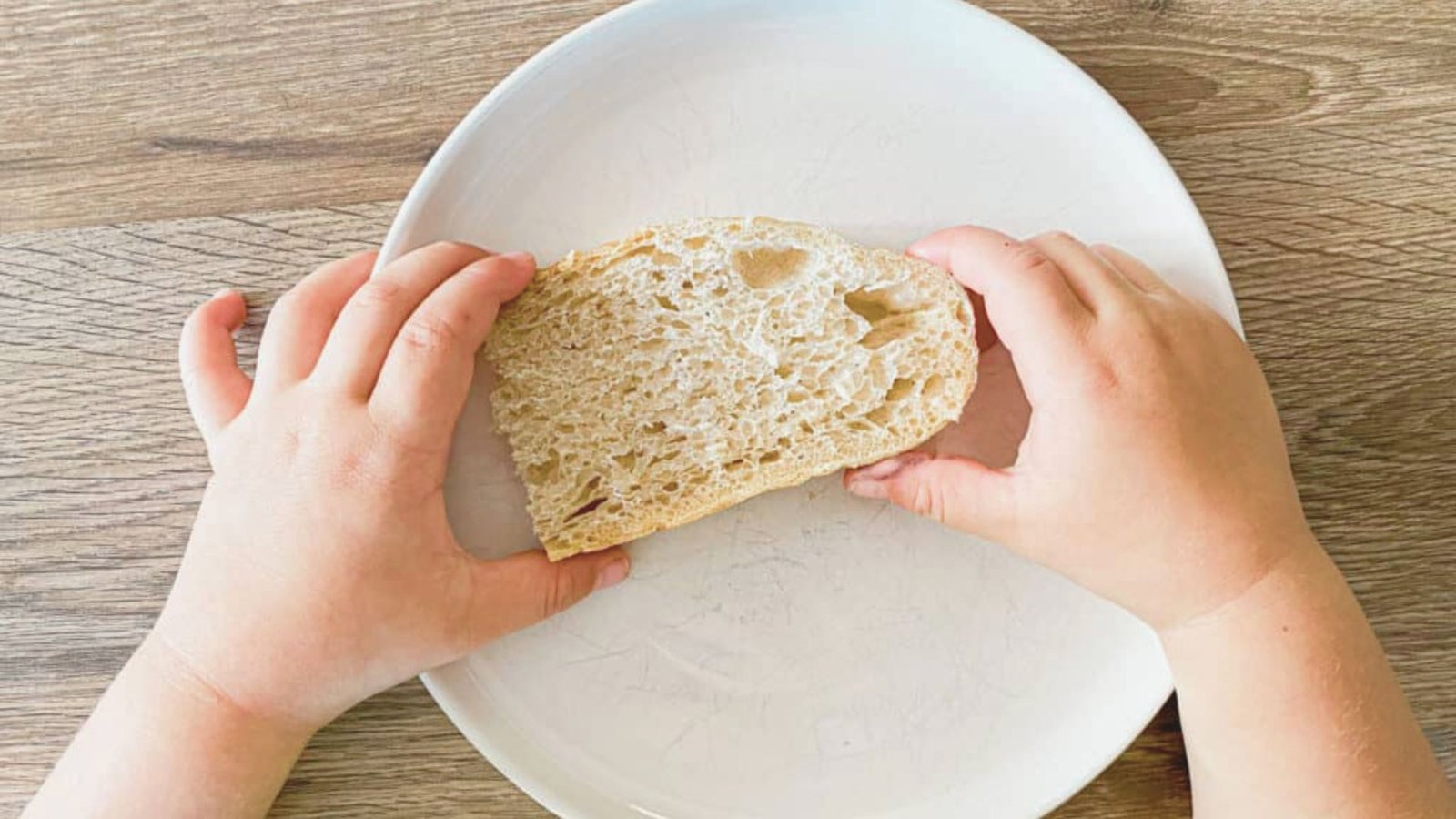
Bread can compress and form a sticky lump, which is hard for a young baby to manage. Always remove the crust and offer small, flat pieces rather than chunks.
Never leave your baby alone while eating.
How to Serve Sourdough Bread to a 6-Month-Old

How you serve sourdough is just as important as which bread you choose.
Safe Serving Styles by Age
From 6 to 9 months, offer thin, soft strips your baby can hold in their fist. Remove all crusts and avoid toasted or dense bread. A little unsalted butter or mashed avocado can help soften it further.
From 9 to 12 months, you can offer slightly thicker pieces or small bite-sized squares. Babies at this stage have better hand control and are more confident with self-feeding. Still avoid crusts and keep textures soft.
How Much Sourdough Can a Baby Eat?
At 6 months, a small strip or half a slice is more than enough. Bread fills babies up quickly without offering much nutritional value compared to vegetables, fruit, or protein.
Keep portions small and treat sourdough as one part of a varied meal, not the main event. As your baby grows and tries more foods, you can gradually offer a little more.
Why Sourdough Is Better Than Regular Bread for Babies

Sourdough offers real advantages over regular bread when it comes to feeding babies.
Easier Digestion Through Fermentation
Sourdough is made through a natural fermentation process. This breaks down phytic acid, a compound found in grains that can block nutrient absorption.
The result is a bread that’s easier on a baby’s developing gut than standard commercial bread.
The fermentation also partially breaks down gluten. This doesn’t make it gluten-free, but it does make it gentler and easier to process for many babies.
Lower Glycaemic Impact
Regular white bread causes a sharp spike in blood sugar. Sourdough has a lower glycaemic index, meaning it releases energy more slowly.
This is better for babies and helps avoid energy crashes after eating.
Simple Ingredients vs Processed Bread
Most commercial sandwich bread contains preservatives, added sugars, and a long list of additives. Traditional sourdough uses just flour, water, and salt.
That simplicity matters when you’re feeding a baby whose digestive system is still developing.
Best Type of Sourdough Bread for Babies

Choosing the right sourdough makes a real difference in how safe and suitable it is for your baby.
Ingredients to Look For
The best sourdough for babies has three ingredients: flour, water, and salt. Look for a traditionally made loaf from a bakery or one you’ve made at home.
The shorter the ingredient list, the better.
Ingredients to Avoid
Not all sourdough is created equal. Avoid loaves that contain seeds or nuts due to choking risk, honey which is unsafe for babies under 12 months, added sugar, or high salt content.
Babies under 12 months should have less than 1g of salt per day.Always read the label carefully, even on loaves that look plain.
Common Mistakes Parents Make When Giving Bread

A few common missteps can make bread less safe or less helpful for your baby.
Too much bread can displace other important foods. Keep portions small and rotate with a range of other foods at each meal.
Seeded loaves, flavoured sourdoughs, and artisan breads with added ingredients may not be suitable for babies.
Some contain seeds that are a choking hazard, while others have high salt or sugar levels. Stick to plain.
Bread is also not an ideal first food. It doesn’t offer the same nutrient density as vegetables, fruit, or iron-rich foods.
Introduce those first and bring in bread once your baby is more confident with textures.
Tips for Parents Introducing Sourdough Bread
These simple steps can make introducing sourdough safer and less stressful.
- Start small and observe. Offer a tiny piece and watch how your baby handles it before giving more.
- Offer water alongside bread. It helps soften any pieces in the mouth and supports swallowing.
- Pair with safe spreads. Unsalted nut butter (if no allergy), mashed avocado, or hummus adds nutrition and moisture.
- Introduce one new food at a time. This makes it easier to spot any reaction to sourdough specifically.
- Always supervise mealtimes. Bread can be a choking risk, so stay close and keep a eye on your baby throughout every meal.
Conclusion
If you’ve been asking yourself, can babies have sourdough bread at 6 months, I hope this gave you the clear answer you were looking for.
The short version: yes, with the right bread, the right texture, and a watchful eye.
I remember feeling overwhelmed by all the rules around starting solids. Keeping it simple helped the most. Start small, stay present, and trust yourself.
If this helped you, leave a comment below. I’d love to hear how it goes. Feel free to share this with another parent who might need it.
Frequently Asked Questions
Can babies have sourdough bread at 6 months?

Yes, if they show signs of readiness. Offer small, soft pieces with the crust removed and watch closely for any reaction.
When can babies have sourdough bread safely?
Most babies can try sourdough between 6 and 8 months, once they can sit with minimal support and handle soft textures.
Is sourdough healthier than regular bread for babies?
Sourdough is generally a better choice. The fermentation process makes it easier to digest and it contains fewer additives than most commercial breads.
What is the best bread for babies starting solids?
Plain sourdough made with just flour, water, and salt is a good option. Avoid breads with seeds, honey, added sugar, or high salt content.
How do I serve sourdough bread to my baby without a choking risk?
Remove the crust, offer thin soft strips or small flat pieces, and always stay with your baby while they eat.