The bread needs a safe texture and simple ingredients, and it has to be served in an age-appropriate way.
Once your baby starts eating solids, bread can be an easy addition to meals, but not every type of bread is equally suitable.
Sourdough’s fermented nature may make it easier to digest for some people, but that does not automatically make every sourdough loaf baby-friendly.
Below, you’ll find when sourdough can be introduced, how to serve it safely, which ingredients to check, and how it compares with regular bread.
Is Sourdough Bread Healthy for Babies?
Yes, sourdough can be a healthy choice for your baby, but nutritionally it is much like other bread.
A plain loaf gives your baby carbohydrates for energy and some protein. The fiber depends on the flour, since whole wheat has more than white.
Fermentation does one useful thing: it breaks down some phytic acid, a compound in grains that can block the absorption of minerals like iron and zinc.
A 2001 study on sourdough fermentation in the Journal of Agricultural and Food Chemistry looked at whole wheat bread.
Sourdough fermentation reduced its phytic acid by 62%, compared with 38% for standard yeast bread, and also made more magnesium and phosphorus available.
This was a lab study of the bread itself, not a trial in people. There is no published research showing that sourdough is easier for babies to digest, and claims about easier digestion come mostly from research in adults.
Salt matters more than the starter. The NHS lists salt among the foods to avoid for babies, advising parents not to add it to a baby’s food or cooking water because too much isn’t good for their kidneys.
Breast milk or formula already provides the small amount of sodium your baby needs. When choosing a store-bought loaf, check the label and pick the lowest-sodium option you can find.
When Can Babies Have Sourdough Bread?
Serving sourdough is simple, but a few small choices make it much safer and easier for your baby to eat. Texture, shape, and how fresh the bread is all matter more than you might expect, so here’s how to get each one right.
1. Toast the Bread and Choose the Right Texture
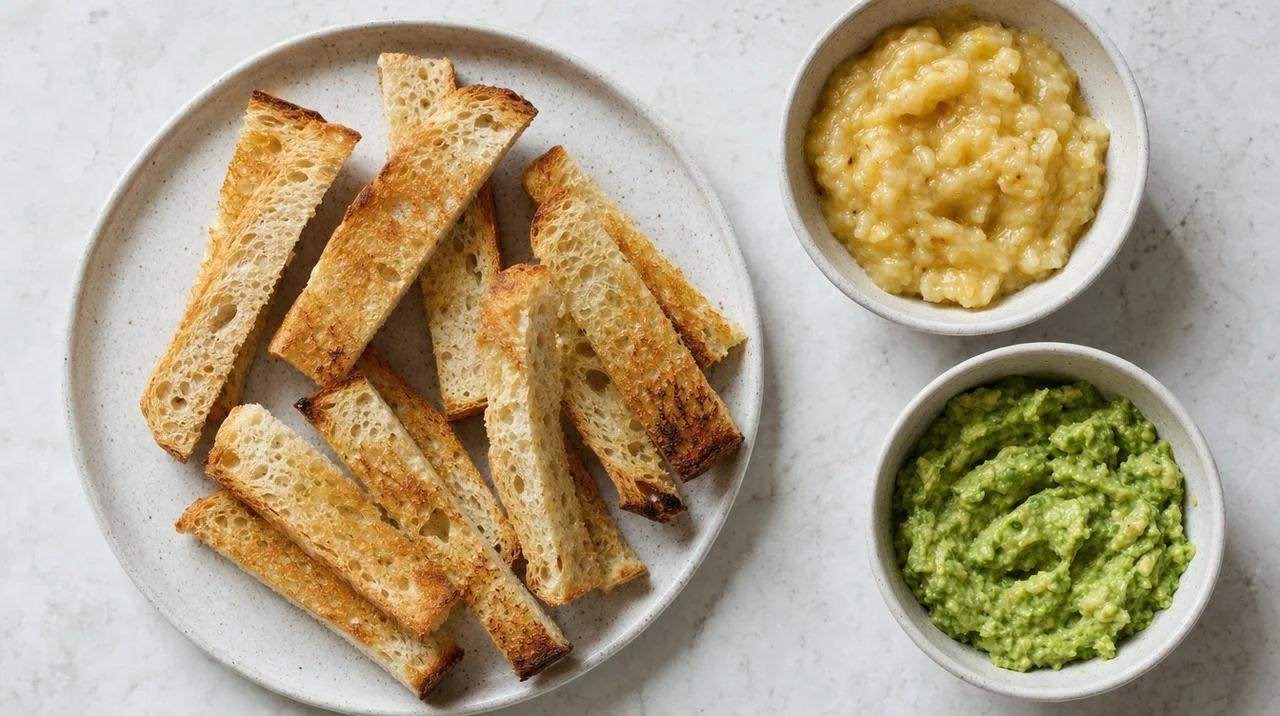
Lightly toast the bread until it’s firm but not hard, and pick a loaf with a soft crust.
Toasting dries the surface just enough that the slice holds together instead of turning into a wet lump in your baby’s mouth. Very hard, crunchy bread can hurt gums and break into tough bits, so aim for golden, not dark.
2. Cut Sourdough Into Baby-Friendly Shapes
Cut the toast into finger-sized strips, about the width of two adult fingers.
At around 6 months, babies grab with their whole fist, so a strip that sticks out of the top of their hand gives them something to bite and gnaw. Tiny squares are harder to hold and easier to swallow whole.
Usually around 9 to 12 months, you can offer smaller, bite-sized pieces as your baby’s pincer grasp develops. Always stay close while they eat.
3. Avoid Soft, Gummy Pieces
Fresh, soft bread is the riskiest form for young babies because it can squash into a sticky ball that clings to the roof of the mouth, and babies can’t easily move it around yet. That makes it a real choking risk.
Lightly toasted strips are the safest default. Many feeding specialists suggest sticking with toast until around 18 months, when most toddlers can chew soft bread well.
Is Sourdough Bread Safe for Babies?
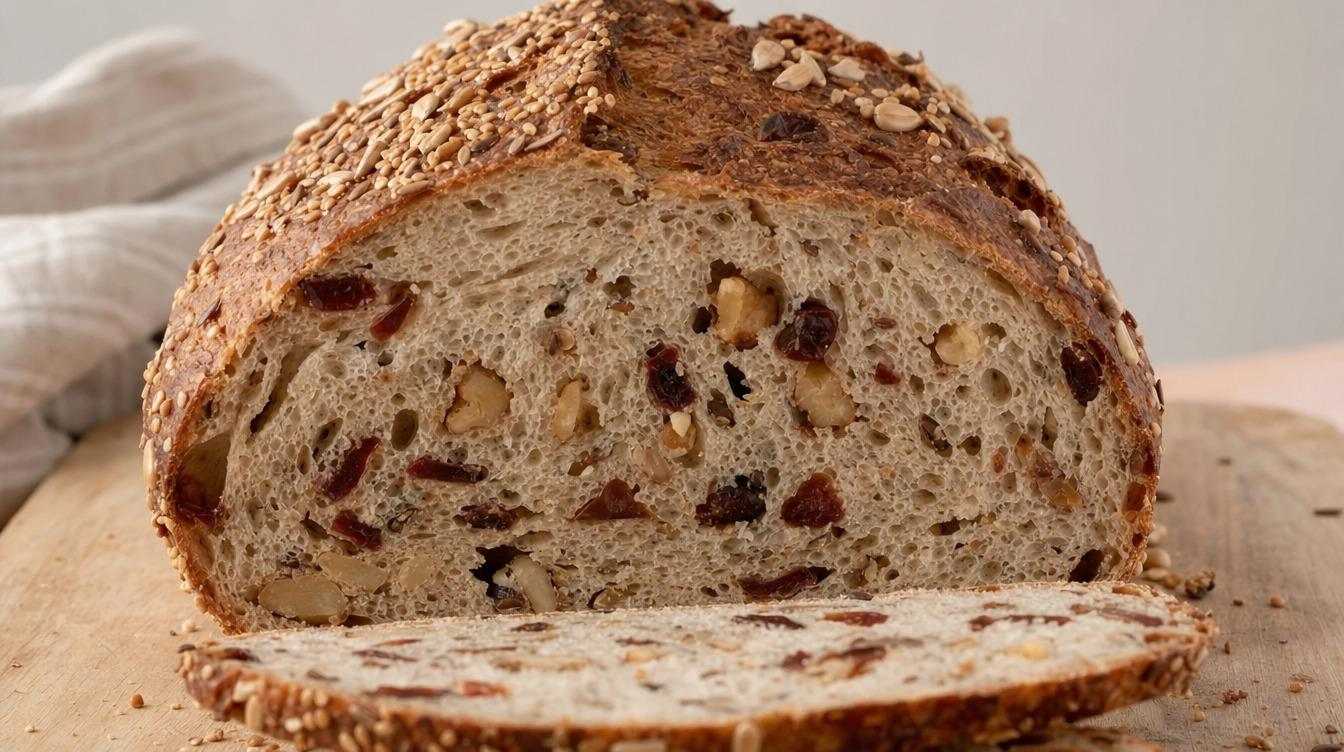
Yes, sourdough is safe for most babies from around 6 months, as long as it is lightly toasted and the ingredients are simple.
Choking is the main risk, because dry, chewy bread can turn into a sticky ball in a baby’s mouth. Avoid small, hard pieces of crust at first, offer lightly toasted finger strips, and keep your baby upright while you stay close.
Wheat is a common allergen, but the AAP’s advice on introducing wheat is that there’s no need to delay it.
Introduce it on its own and watch for hives, vomiting, diarrhea, swelling, or a runny nose.
In rare cases, a severe reaction (anaphylaxis) can cause difficulty breathing, throat swelling, or a sudden drop in energy.
If your baby has any difficulty breathing after eating wheat, call 911 immediately. Sourdough isn’t gluten-free either, so it isn’t suitable for a baby with celiac disease.
Check the label too. Store-bought loaves can be salty, which is hard on a baby’s kidneys, and some contain seeds, nuts, or dried fruit.
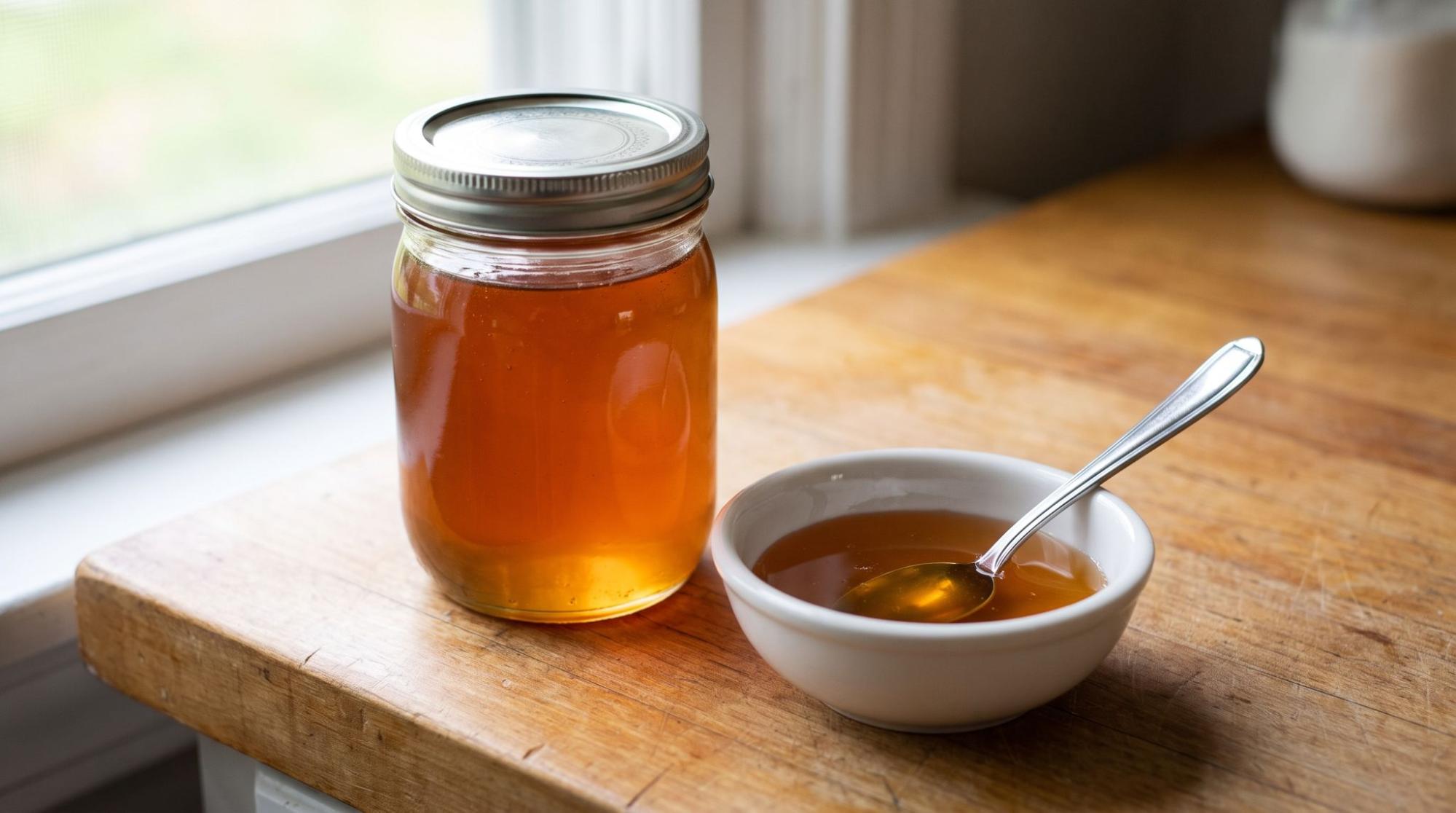
Avoid any loaf made with honey, because babies under 12 months can get infant botulism from it.
And with all these revelations, it comes down to our primary marker…
Is Sourdough Better for Babies Than Regular Bread?
Sometimes, but only by a small margin. Real sourdough is fermented for hours, and that long rise breaks down phytic acid, a compound in grains that can get in the way of your baby absorbing iron and zinc.
This finding comes from lab tests on bread, not studies in babies, so it isn’t a strong reason to choose sourdough over other bread.
Sourdough still contains wheat, so it isn’t right for a baby with a wheat allergy, and it isn’t gluten-free, whatever you may have read.
Salt matters just as much as the starter. A bakery loaf can be as salty as supermarket bread, and some “sourdough” on store shelves is regular dough with a sour flavor added.
What Kind of Sourdough Bread Is Best for Babies?
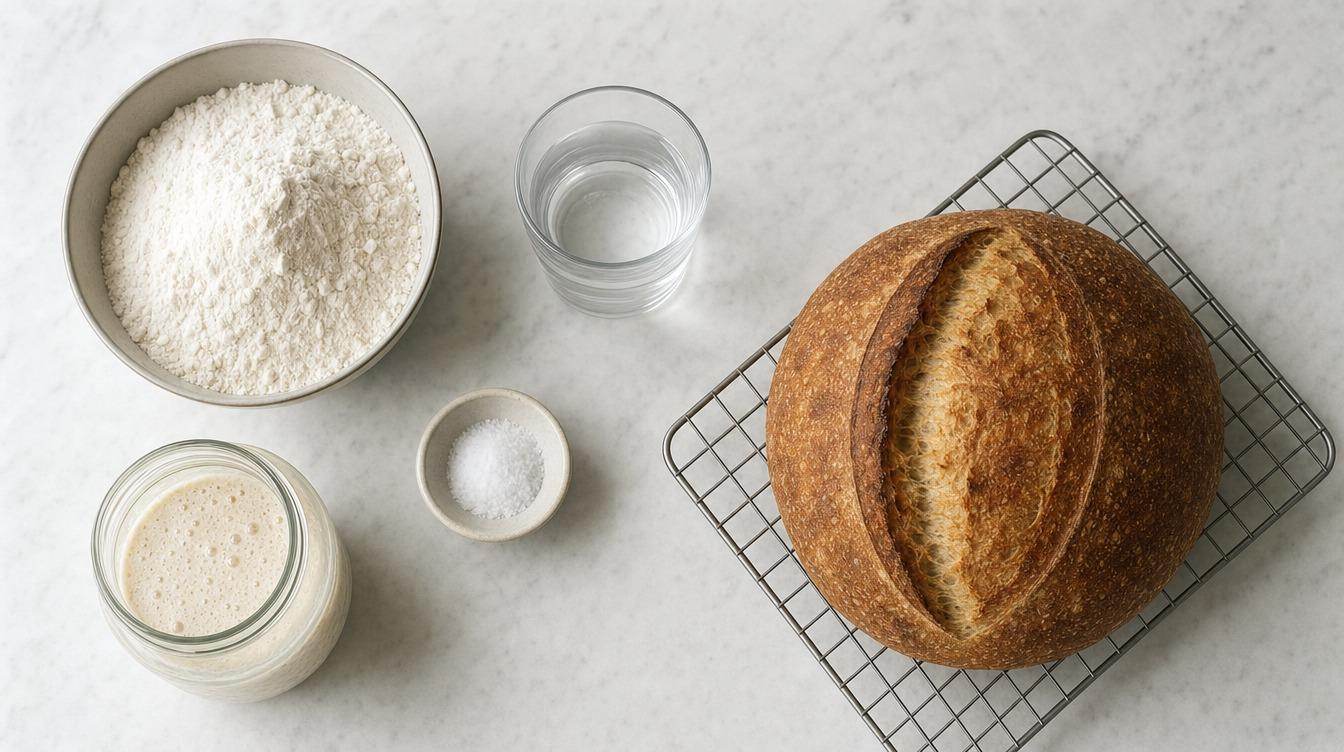
Keep it plain and simple. Pick a soft loaf with a short ingredient list and low salt, and leave the fancy loaves for later.
- Simple ingredients: You want flour, water, salt, and a starter, nothing more. If the label has a long list of ingredients you don’t recognize, skip it.
- Low salt: Babies can’t handle much salt. Check the label before you buy, or bake at home so you control how much goes in.
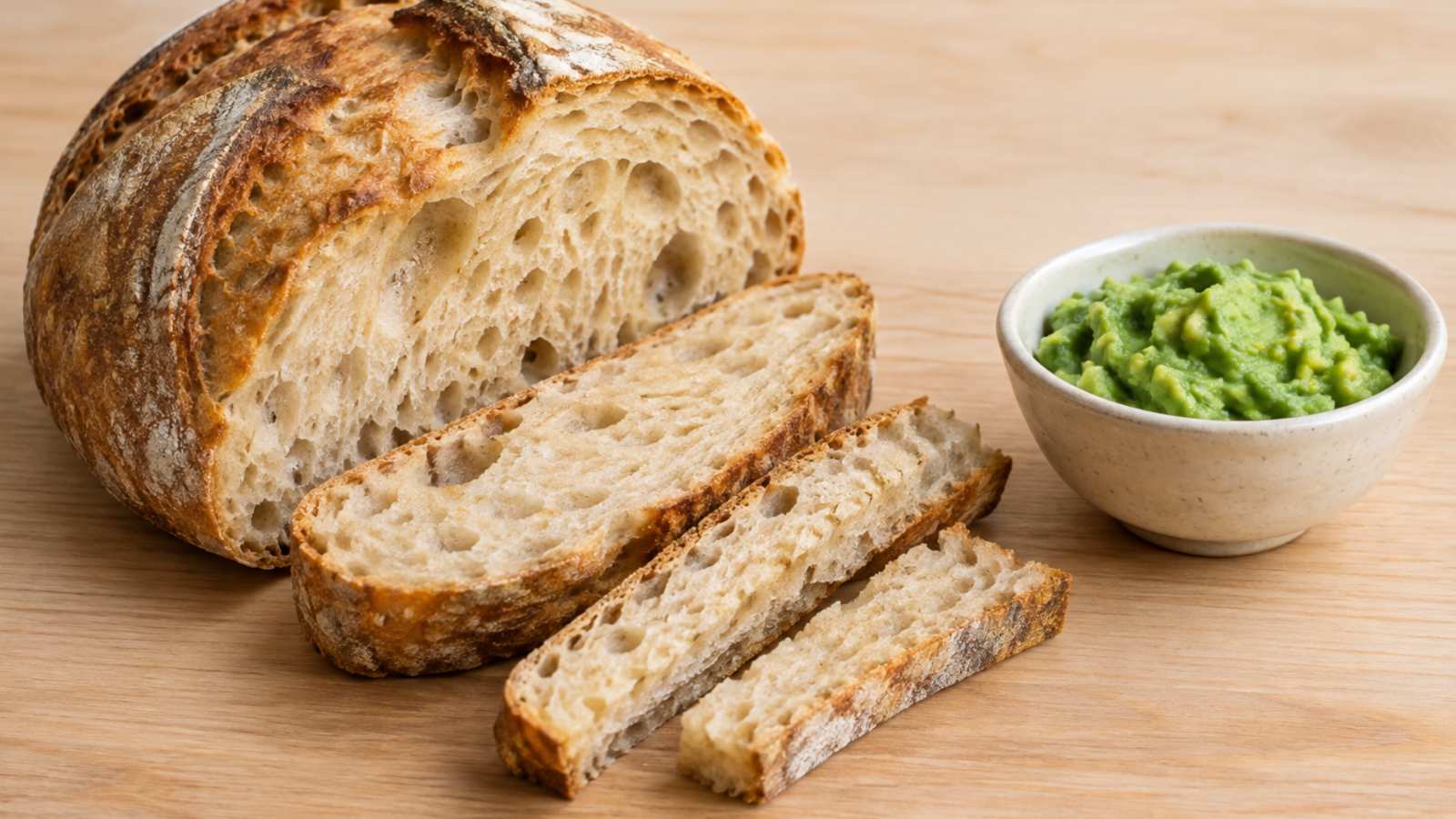
- Soft texture: Look for bread that’s soft inside. Avoid small, hard crust pieces, and lightly toast the bread so it doesn’t go soggy in your baby’s mouth.
- No extras: Avoid loaves with seeds, nuts, dried fruit, or honey. These can be a choking risk and often add extra salt or sugar too.
The Bottom Line
So, can babies have sourdough bread? Yes, from around 6 months.
The bread you pick and how you serve it matter just as much as the age. Go plain and low-salt, toast it lightly, and cut it into strips your baby can hold.
Avoid honey before 12 months, including honey baked into bread, and always check the label for salt.
Skip the seedy, fruit-filled loaves for now and stick to the basics. Those small steps make sourdough a safe and easy first food that fits right into family meals.
Before your next grocery run, compare the sodium on two or three sourdough labels and take home the lowest one.
Frequently Asked Questions
Can babies have rye sourdough bread?
Yes, rye sourdough can be offered from around 6 months, just like wheat sourdough. Rye bread is denser and can turn gummy, so serve it lightly toasted in strips and check the sodium.
What is the unhealthiest type of bread?
For babies, the least suitable breads are ones made with honey, which is unsafe before 12 months, plus loaves high in salt or added sugar, such as sweet rolls and cinnamon swirl bread.
What is the #1 healthiest bread?
No single bread is the healthiest for every baby. A plain whole grain or sprouted grain loaf with no honey, low sodium, and no added sugar is a good everyday choice for babies.