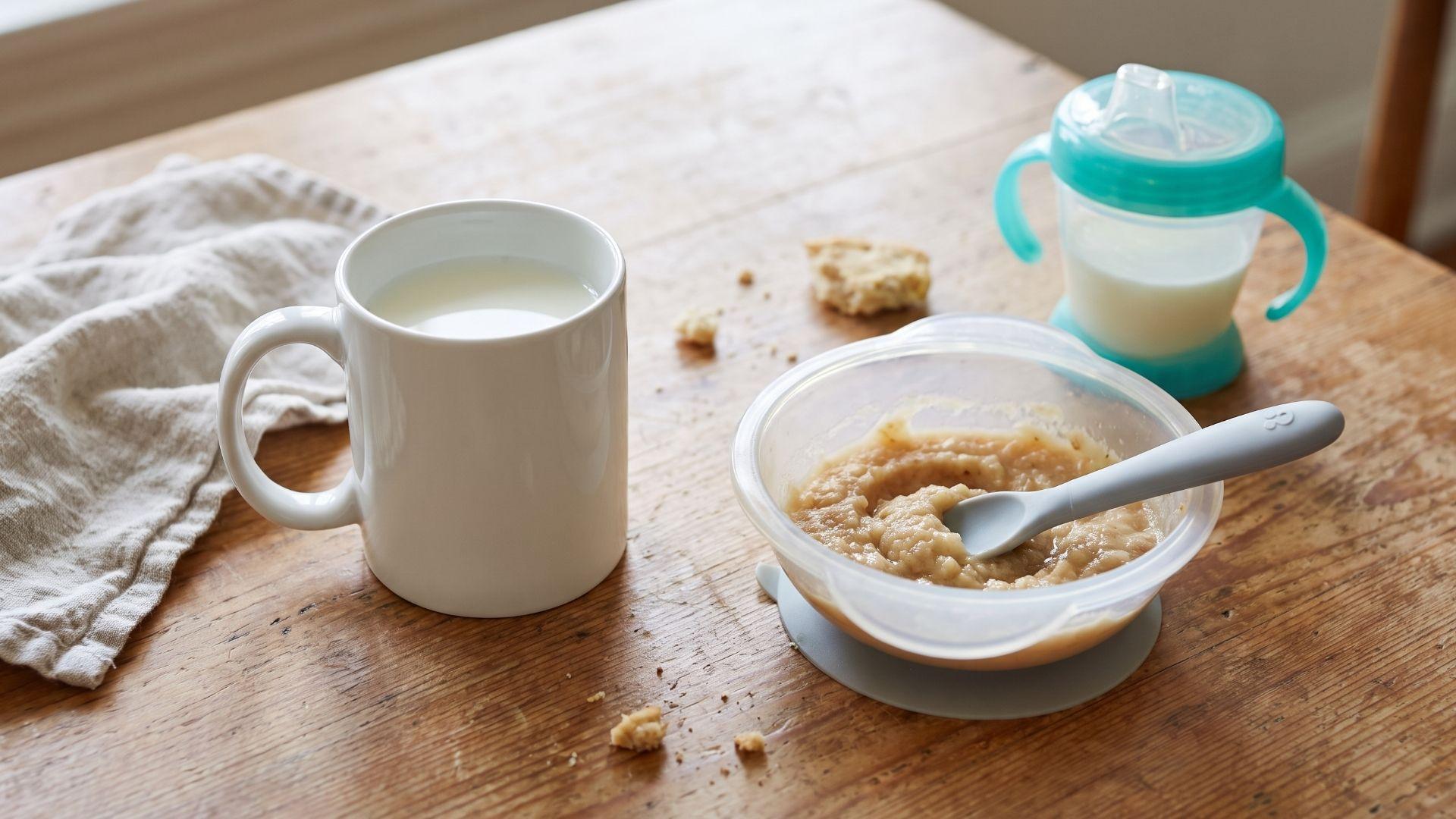
When my child turned one, I suddenly found myself asking, “What kind of milk for a 1 year old is actually right?”
I had heard that whole milk was the usual choice, but I wanted to understand why before making it part of our daily routine.
I learned that the fat in whole milk can provide important energy and nutrients during this stage of rapid growth and development.
At the same time, I realized that milk is only one part of a balanced diet, and too much can replace other nutritious foods. Here’s what helped me make sense of it all.
What Kind of Milk Does a 1-Year-Old Actually Need?
When I started looking into what kind of milk for 1 year old was right, I also wondered, when do toddlers stop drinking milk? At 12 months, I found the answer was simpler than the dairy aisle made it seem.
For most children, the main options are whole pasteurized cow's milk and continued breastfeeding. If breastfeeding is going well, there is no need to stop.
I chose whole milk because the fat provides important energy and nutrients during this stage of rapid growth. I also learned that lower-fat milk is not automatically healthier for a newly turned one-year-old.
Why Whole Milk, Not 2% or Skim

When I compared whole milk with 2% and skim milk, I realized the higher fat content is there for a reason. For most 1-year-olds, whole milk better fits their energy and nutrient needs at this stage.
| Milk Type | For a 1-Year-Old | Key Difference |
| Whole milk | Usually recommended | Higher fat and calories |
| 2% milk | Only if advised | Less fat than whole milk |
| Skim milk | Generally not recommended | Very little fat |
I learned that whole milk is not simply about adding extra calories. The fat provides energy and supports normal growth and development during the toddler years.
The reason fat matters so specifically at this age comes down to brain development.
A child’s brain grows faster in the first two years of life than at any other stage, and dietary fat plays a direct role in building myelin, the insulating layer around nerve fibers that supports normal neurological development.
Switching to low-fat milk before age two does not just reduce calories; it changes the type and amount of fat available to the brain during a developmental window that does not repeat.
Reduced-fat milk can still be nutritious, but it may not meet the same needs for a typical 1-year-old.
How Much Milk a Day, and Why Too Much Is a Real Problem
I found that the right amount of milk matters just as much as choosing the right type. Too much milk can fill up a toddler and leave less room for the solid foods they need.
Aim for 16 to 24 ounces daily: This is roughly 2 to 3 cups of milk per day.
Milk provides key nutrients: It supplies fat, protein, calcium, and vitamin D that support growth and development.
Too much milk can reduce appetite: A toddler who fills up on milk may eat less during regular meals.
Solid foods provide important iron: Meat, lentils, eggs, and iron-fortified cereals help support iron needs during this stage.
Serve milk with meals: Offering milk alongside food instead of before meals or as a snack helps keep it from replacing nutritious solid foods.
The same thinking applies in the evening, and knowing when nighttime milk ends helps you decide whether that bedtime cup is supporting routine or building a habit that becomes harder to drop later.
If Your Child Can't Have Dairy: What Actually Works
When I looked for dairy-free options, I found that the plant-based milk aisle can be surprisingly confusing.
Some options are much closer to whole milk nutritionally, while others are not suitable as a main milk drink for a 1-year-old.
- Fortified soy milk is one of the closest dairy-free options to whole milk. A full-fat, fortified version can provide around 7 to 8 grams of protein per cup.
- Pea milk can also work well, especially for children who cannot have soy. Some fortified brands provide protein and fat levels that are closer to whole milk than many other plant milks.
- Almond and oat milk usually provide much less protein and fat than whole milk. Because of that, they should not automatically be treated as a one-to-one replacement for cow's milk.
- Rice milk is best avoided for young children because it can contain inorganic arsenic, and young children are more sensitive to arsenic exposure than adults.
- Food safety authorities found inorganic arsenic across every product tested, making the rice milk arsenic risk significant enough that official guidance extends the warning to children up to four and a half years old, not just infants.
- Check the nutrition label carefully to look for fortified options that provide protein, fat, calcium, and vitamin D rather than choosing a milk based only on its plant source.
What Milk Should a 1-Year-Old Avoid?
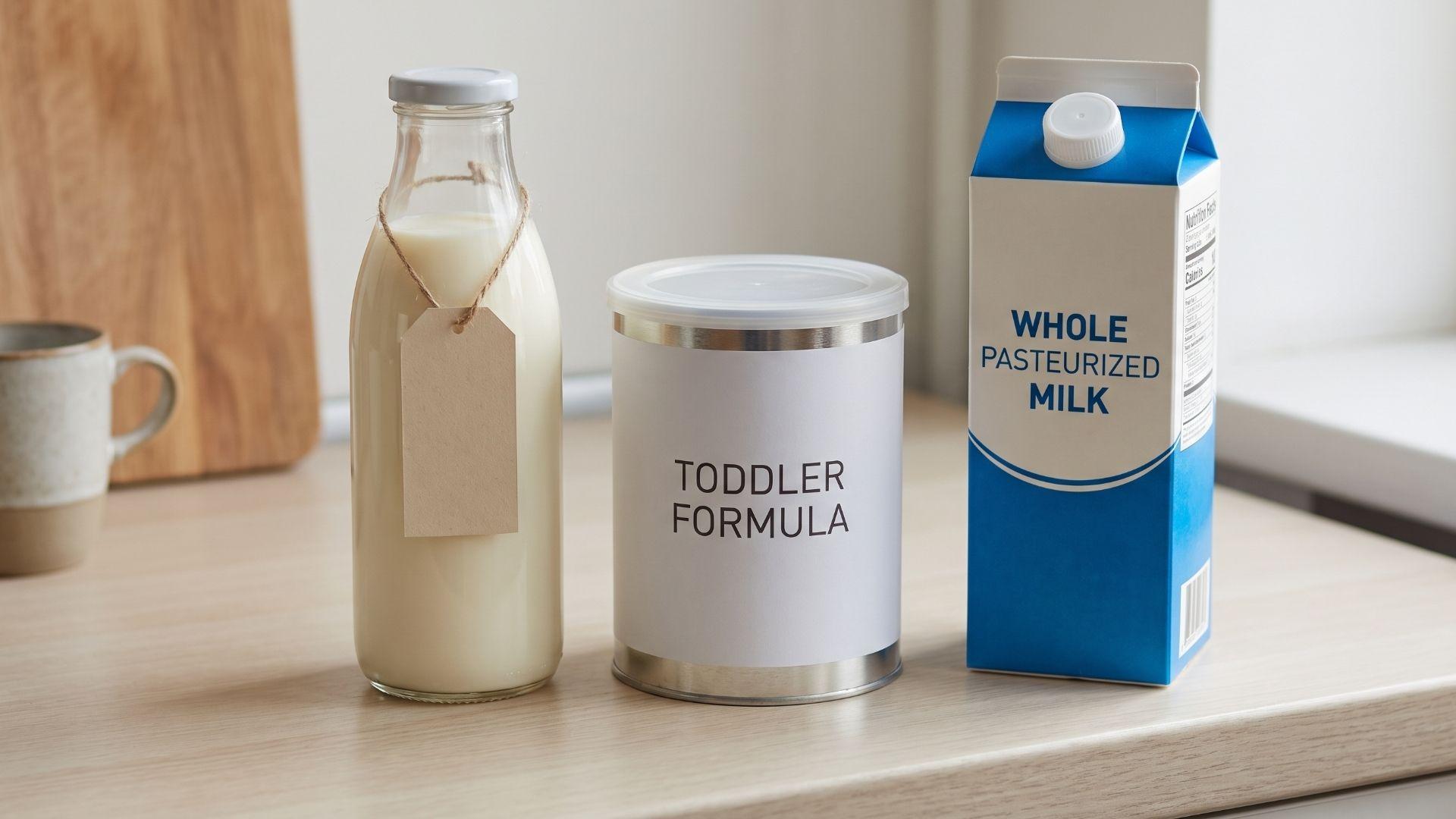
When I looked at milk options for my 1-year-old, I found that some products marketed for toddlers were not necessary.
Toddler formulas and growing-up milks are generally not recommended by pediatric guidance and can be expensive, with some containing added sugars.
The AAP’s 2023 clinical report confirmed that toddler milks add sugar while delivering less protein than whole cow’s milk, which is exactly why pediatricians consistently point back to whole milk as the more reliable choice at this age.
Raw or unpasteurized milk was another easy one to cross off because it can carry harmful bacteria such as Salmonella, E. coli, and Listeria.
I also learned that low-fat and skim milk are usually not the right choice before age 2 unless a doctor recommends them. For most 1-year-olds, whole pasteurized milk is the simpler choice.
Final Thoughts
Choosing milk after the first birthday does not have to be complicated. The key is understanding how milk fits into a balanced diet and choosing options that provide the nutrients a growing child needs.
Portion size matters too, since too much milk can reduce appetite for iron-rich solid foods. For children who cannot have dairy, fortified alternatives can provide useful nutrition, but not every plant-based option is suitable.
It is also important to avoid raw milk and unnecessary toddler drinks. Every child has different needs, so discuss allergies, growth concerns, or dietary restrictions with a pediatrician. Share this guide with another parent navigating this transition.
Frequently Asked Questions
Is 2% milk safe for a 1-year-old?
It is not harmful, but whole milk is the recommended choice at this age. Stick with whole milk unless your pediatrician specifically advises otherwise based on your child's growth.
Should a 1-year-old have formula or cow's milk?
At 12 months, whole cow's milk replaces infant formula for most children. Toddler formulas are not the same and are not recommended by major pediatric guidelines.
What is the best type of milk for a baby over 1 year old?
Whole pasteurized cow's milk is the standard recommendation. If dairy is not an option, fortified soy milk is the closest plant-based alternative nutritionally.
Should I warm cow's milk for a 1-year-old?
There is no nutritional reason to warm it. If your child resists cold milk during the transition, warm it gently in a cup of hot water. Avoid the microwave.
How much milk should a 1-year-old drink on the NHS?
The NHS recommends around 350ml of milk per day, roughly equivalent to 12 ounces, as part of a balanced diet that includes a variety of solid foods.