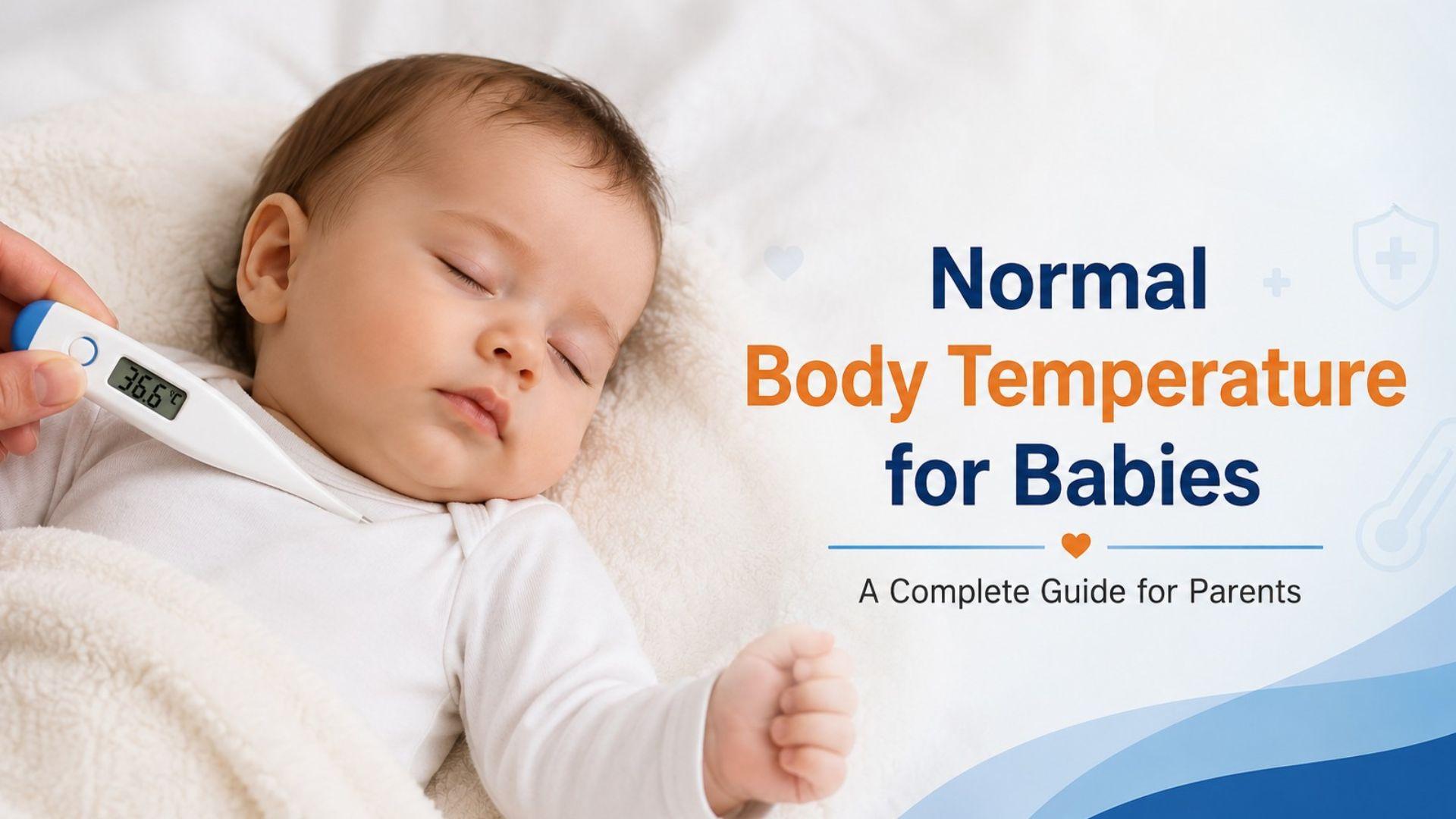


You take your baby's temperature twice and get two different numbers, and a quick check suddenly feels like a puzzle.
That can happen because a reading depends on where you measure and how old your baby is.
A normal infant temperature is a range, and it is judged with the method attached to every number, while newborns have a few extra rules of their own.
What I most want you to take from this guide is that knowing the method and the age turns a confusing reading into a clear next step, so let's begin with what those ranges look like.
This article is general information and is not a substitute for medical advice. If you are worried about your baby, call your pediatrician or seek emergency care.
What Is a Normal Infant Temperature?
A normal infant temperature is a range, and 98.6°F (37°C) is only the traditional average. Pediatric sources don't publish one official range, but their call lines point to a usable window.
Nemours KidsHealth suggests calling the doctor for a rectal reading below 97°F (36.1°C), and the fever line is 100.4°F (38°C).
That puts a normal rectal temperature at about 97°F to 100.3°F (36.1°C to 37.9°C). The Children's Hospital of Philadelphia lists nearly the same window (97.7°F to 100.3°F) for babies under 2 months.
You'll see other upper limits online, such as 99.5°F or 100°F. Most of that disagreement comes from the method behind each number, because rectal, armpit, ear, and forehead readings don't measure the same thing.
So a number is only useful when it travels with its method.
The fixed reference point is 100.4°F (38°C) rectal, the fever cutoff pediatric groups, including the American Academy of Pediatrics, use for babies.
Best Methods for Baby Temperature Reading
A rectal reading is considered the most reliable because it reflects core temperature. Armpit and forehead readings reflect the skin and can shift with room temperature, sweat, and swaddling.
Layers matter too, so our guide on dressing a baby for weather can help you avoid over-bundling before you check.
Ear readings come from the eardrum, but they are not accurate in young babies. Age matters as well, since some thermometers are not recommended for the youngest babies
1. Normal Rectal Temp for a Baby
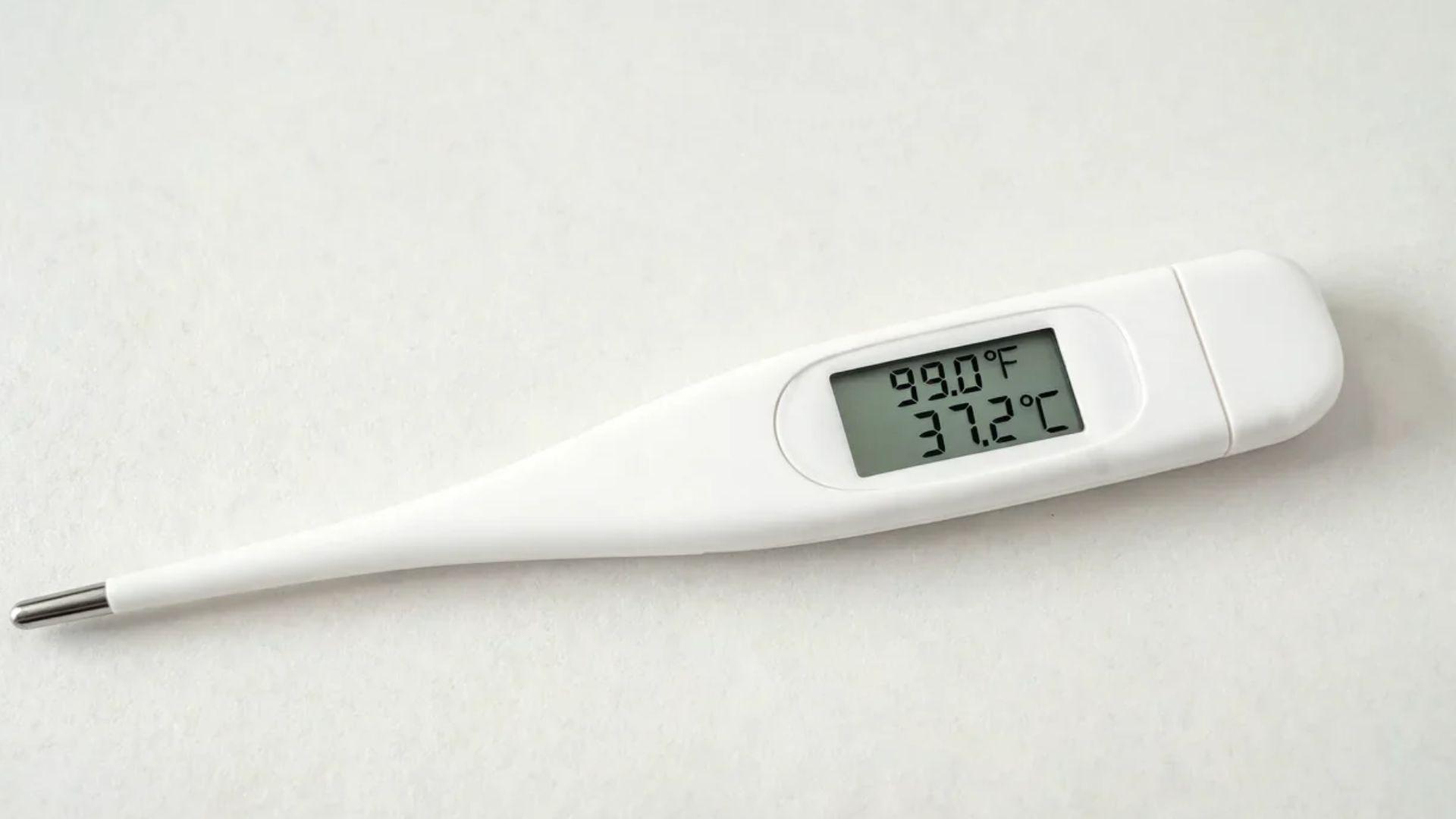
The rectal route is the one pediatric sources lean on for babies, and the American Academy of Pediatrics advises that it is the most accurate method for young children, especially babies up to 3 months.
The working range from the sections above applies here, so a normal rectal temp for a baby runs from about 97°F to 100.3°F (36.1°C to 37.9°C).
A reading in the upper part of that range is not a fever, although I would retake it with the same method before deciding anything.
2. Armpit (Axillary) Temperature
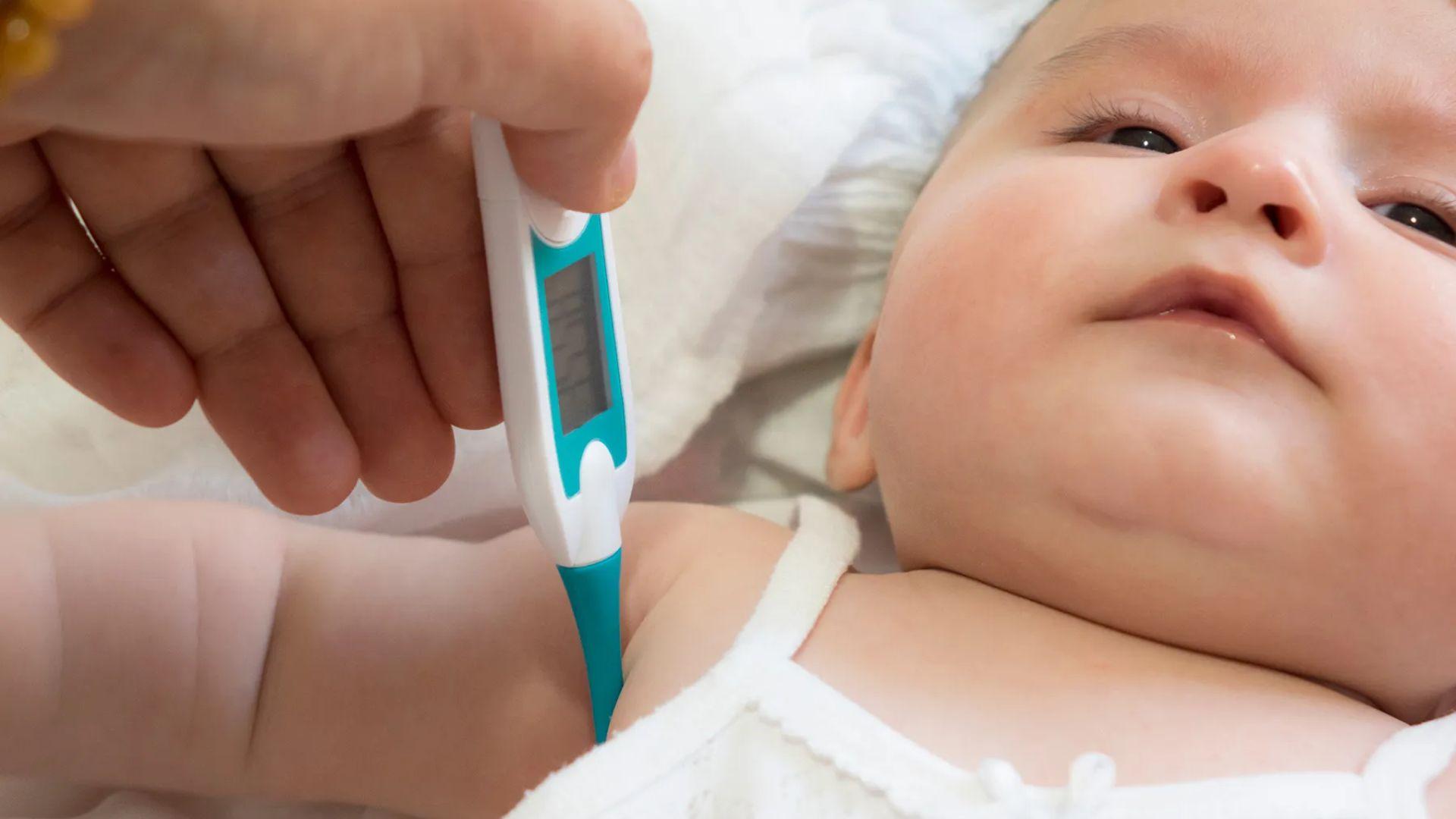
The armpit is the easiest place to check and the least precise.
Typical normal readings run from roughly 97.7°F to 99.3°F (36.5°C to 37.4°C), and some sources put the top closer to 99.5°F. Seattle Children's uses 99°F (37.2°C) as the fever line under the arm.
That can look like a contradiction, because the top of normal and the start of fever almost touch.
The simplest way to read it is to treat 99°F under the arm as a "recheck" number, not a diagnosis.
Seattle Children's calls the armpit a good screening method at any age, including under 3 months, and says to recheck a high armpit reading with a rectal one. If your baby is young, or the number stays high, confirm it rectally.
3. Forehead and Ear Temperature
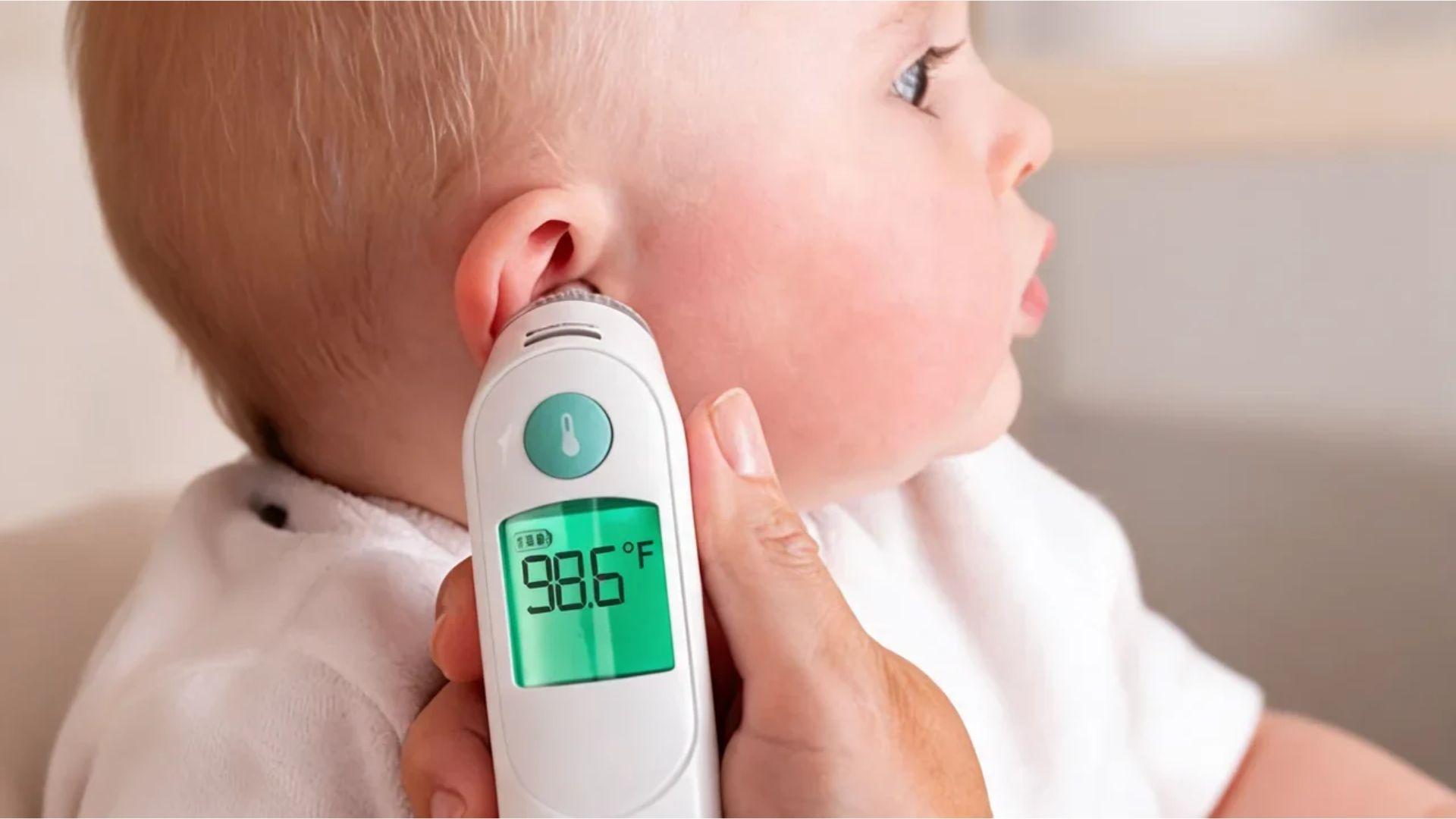
Seattle Children's and Mayo Clinic both list 100.4°F (38°C) as the fever line for forehead and ear readings.
Ear thermometers are not accurate before 6 months. They read heat from the eardrum, and earwax or a small, curved ear canal can throw the result off.
Forehead guidance is less settled under 3 months.
Mayo Clinic and Seattle Children's say a forehead (temporal artery) thermometer may be accurate in newborns, while other hospital handouts say to use it from 3 months and only as a first pass in a younger baby who seems ill.
Because sources differ, treat a forehead or ear reading below the fever line in a baby under 3 months as unconfirmed. It does not rule out a fever, so confirm it rectally or call your doctor.
4. Oral (Mouth) Temperature
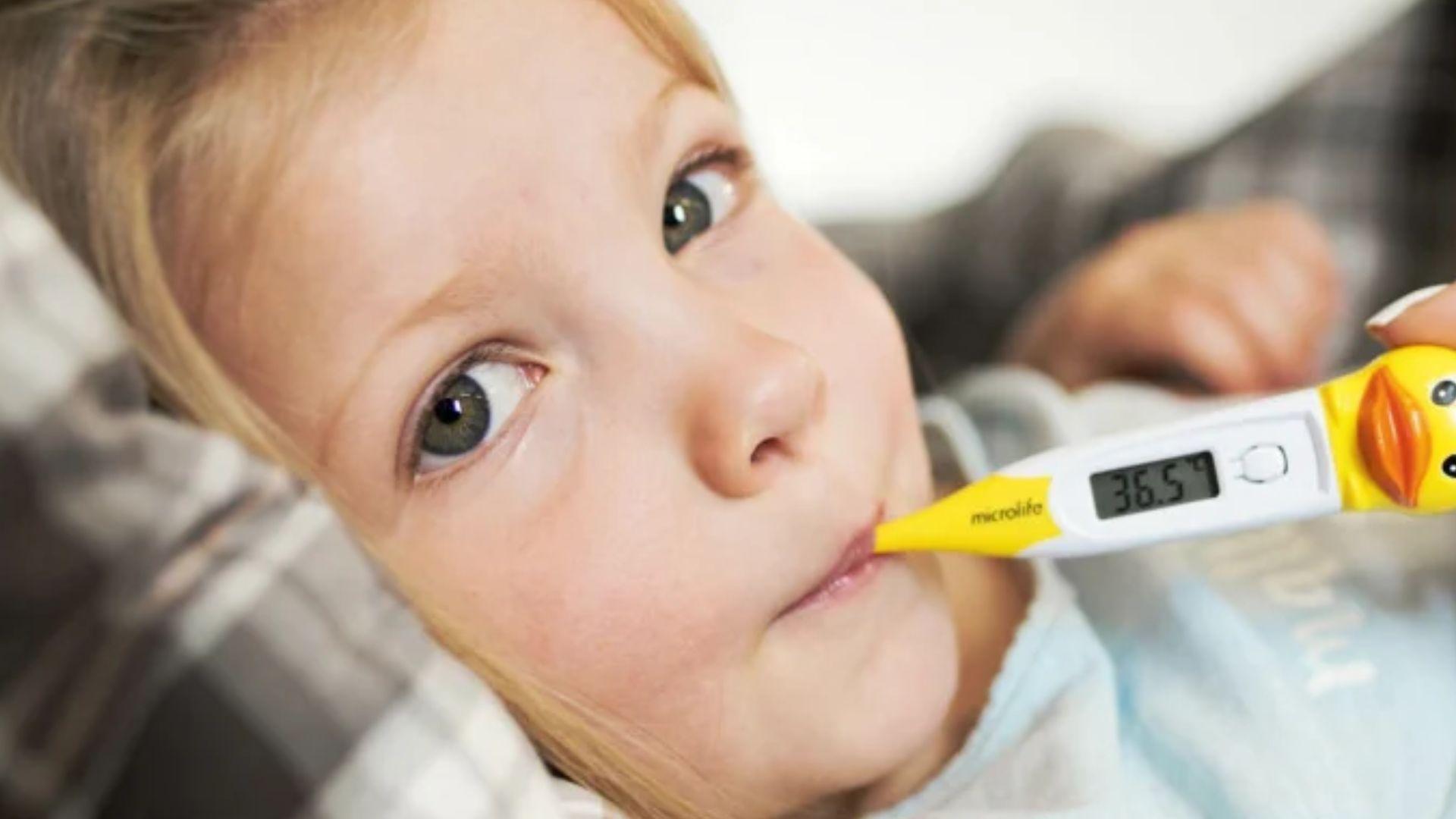
Oral readings are not used for babies or toddlers.
Seattle Children's lists oral temperatures as age 4 and older, because a child has to hold the thermometer under the tongue with their lips closed.
The oral fever line of 100°F (37.8°C) applies to older children, so if you see an oral number quoted for an infant online, set it aside and use a rectal reading instead.
Why Does a Baby's Temperature Change Through the Day?
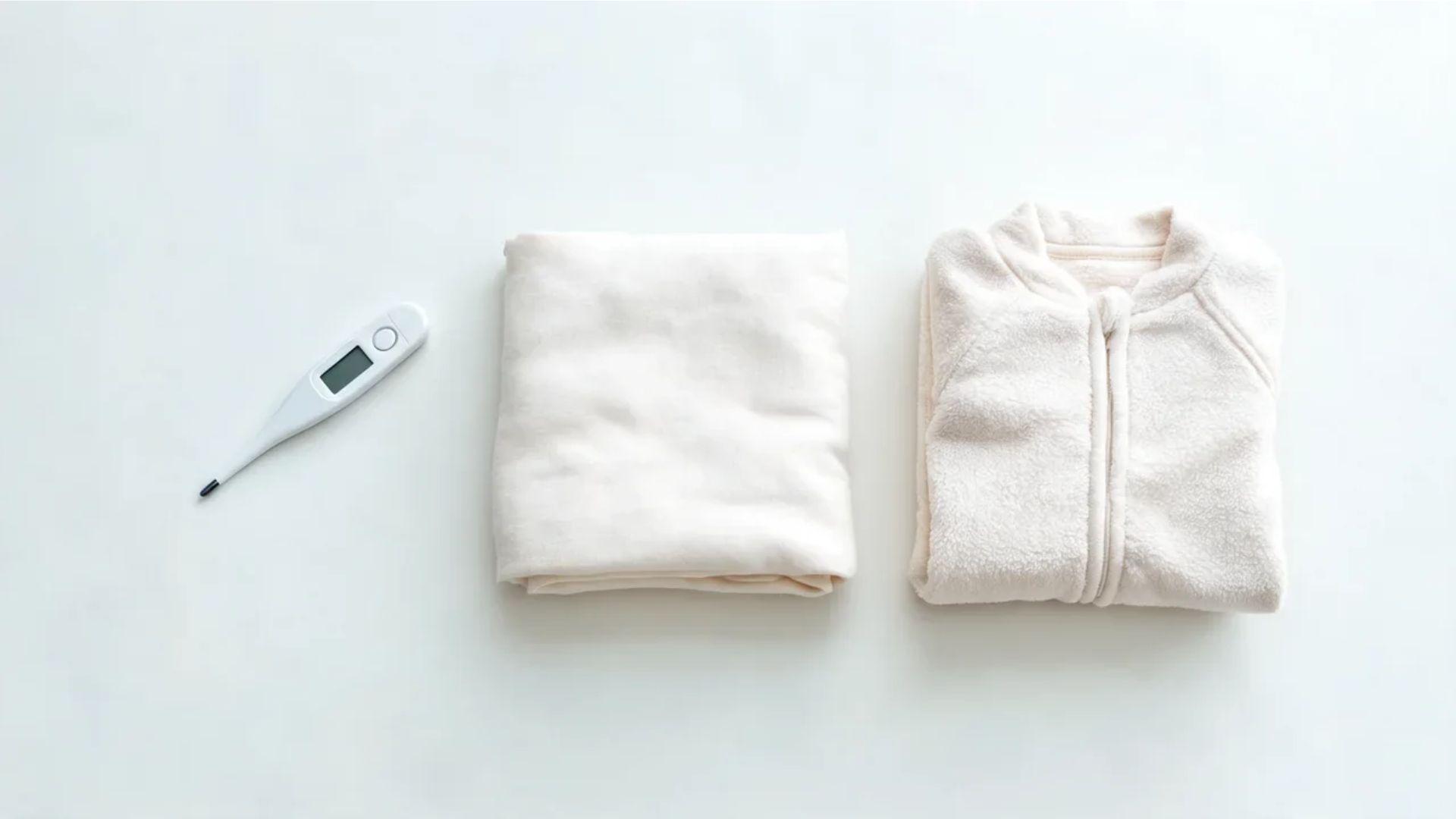
A baby's temperature changes during the day depending on the time, what the baby is doing, and what the baby is wearing.
It usually runs lowest in the morning and highest in the late afternoon and evening, so a normal reading can look a little different each time you check.
A warm room, thick clothes, a swaddle, crying, a recent bath, or a recent feed can also make the reading go up. If the number looks high, take off a layer, wait about 15 minutes, and check again.
Use the same method both times, because a rectal reading and an armpit reading cannot be compared with each other.
The 15 minutes is a simple tip, not an official rule, and a baby's temperature is only useful when it comes from one method.
Never use this rechecking for a baby under 3 months with a rectal reading of 100.4°F or higher. That baby needs a call to the doctor right away.
What If Your Baby's Temperature Is Too Low?
A low temperature matters in babies, especially young ones, and it can be as important as a high one.
Nemours advises calling your health care provider for a rectal temperature below 97°F (36.1°C).
For newborns under 28 days, neonatal guidance uses 36.5°C (97.7°F) under the arm as the lower limit of normal.
First, check the basics. A cold room or wet clothes can pull a reading down, so make sure your baby is dry and dressed.
Then warm your baby gently:
- Hold your baby skin-to-skin against your chest and cover you both with a blanket, and stay awake and alert while you do.
- Add a light layer and a hat, and change anything damp.
- Avoid heating pads or direct heat, which can burn a baby's skin.
- Recheck with the same method after a few minutes.
Call your doctor if the temperature stays low after warming.
Call right away, or seek emergency care, if your baby is limp, hard to wake, feeding poorly, has a weak cry, pale or cool skin, or any trouble breathing.
These are signs of hypothermia in babies.
What Temperature Counts as a Fever in a Baby?
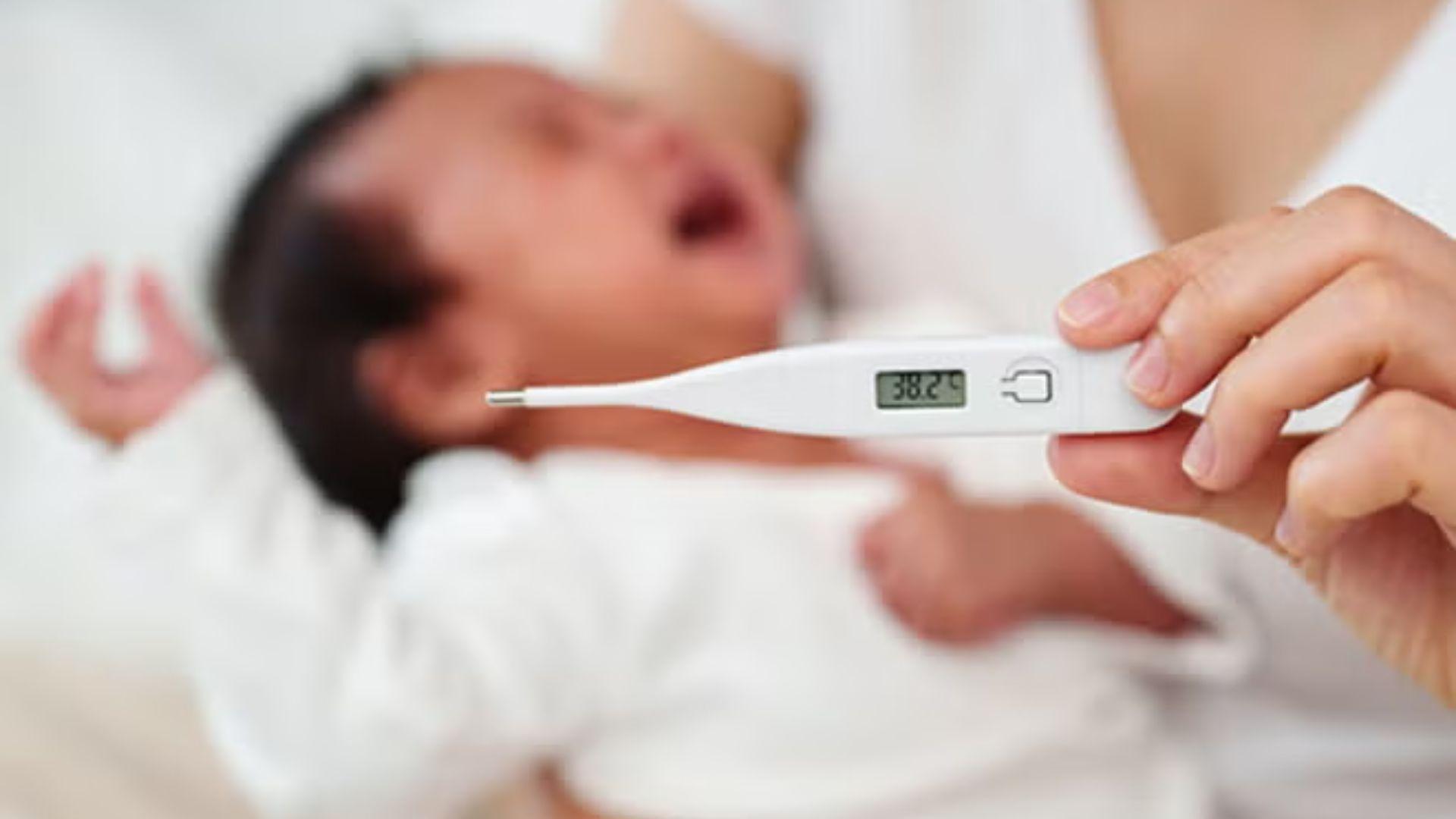
A fever in a baby starts at a rectal temperature of 100.4°F (38°C), and a rectal reading is also the most reliable method for babies.
Seattle Children's and Mayo Clinic use the same 100.4°F (38°C) for ear and forehead readings and 99°F (37.2°C) under the arm. The 100°F (37.8°C) oral line applies only to older children.
Because armpit, ear, and forehead readings are less dependable in young babies, I would confirm any high or doubtful number with a rectal reading.
If your baby is under 3 months and the rectal reading is 100.4°F (38°C) or higher, call your doctor right away, even if your baby seems well.
When Should You Call the Doctor?
Take a baby under 3 months with a rectal temperature of 100.4°F (38°C) or higher to a doctor or the ER right away, even if the baby seems well.
The same goes for a low reading that stays low after warming. Do not give fever medicine before speaking to a doctor.
For babies 3 months and older, call thresholds vary by source and by how the baby looks, so your pediatrician's numbers come first.
For example:
- Nemours suggests calling for a rectal temperature of 102.2°F (39°C) or higher in a baby older than 3 months.
- Mayo Clinic suggests contacting your care team at 3 to 6 months if the rectal temperature is up to 102°F (38.9°C) and your baby is unusually irritable, lethargic, or uncomfortable, or if it is higher than 102°F.
- For babies older than 6 months, many pediatric sources suggest calling if a fever lasts longer than one day, or sooner if your baby seems unwell.
Call your pediatrician at any age if your baby seems less hungry, cranky, or less active than usual.
Go to the ER for trouble breathing, blue or gray lips, a limp or hard-to-wake baby, or a seizure. For help choosing where to go, read our guide on urgent care for a baby's fever.
Final Takeaway
A Normal Infant Temperature depends on where you measure, so a number only helps when you know its method.
Rectal readings are the most reliable, while armpit, forehead, and ear readings are best treated as quick checks that you confirm rectally if they look off.
Fever starts at 100.4°F (38°C) rectally, and a reading below 97°F (36.1°C) also deserves a call to your doctor.
Babies under 3 months with a fever need that call right away, even if they seem well. Before your next check, pick one method, use it each time, and keep your pediatrician’s number saved in your phone.
Frequently Asked Questions
Is 98.6°F normal for a baby?
Yes, it falls inside the normal range, but it is only an average. A healthy baby can read a little above or below it, depending on the method and the time of day.
Is 99.5°F a fever in a baby?
Not rectally, since the rectal fever line is 100.4°F. Under the arm, 99.5°F is above Seattle Children's 99°F line, so recheck it, ideally rectally, especially if your baby is under 3 months.
Is 97°F too low for a baby?
It sits at the edge for a rectal reading, since Nemours advises calling for anything below 97°F. Under the arm, warm your baby, recheck with the same method, and call if the reading stays low.