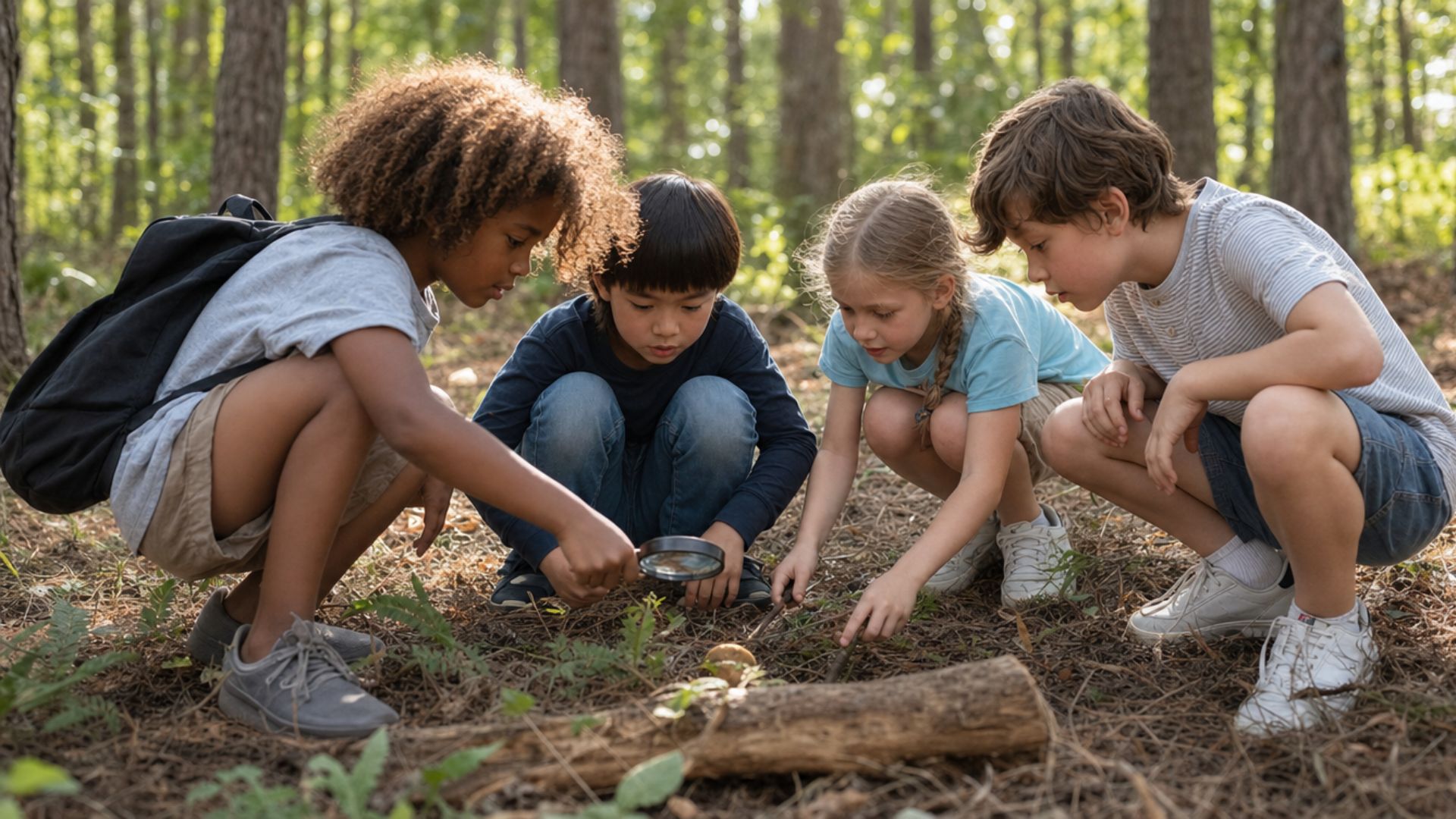
Kids feel overwhelmed too, and most of them don’t have the words to say it yet. Instead, they act out, shut down, or get stuck in worry.
That usually means they haven’t learned what to do with the feeling.
And that is the time when mental health activities for kids play that role, what conventional consoling actions from parents fail to do.
With regular practice, these habits turn into coping skills a child can use when frustration, worry, or disappointment shows up.
I learned this firsthand when I became a father. The advice I found in books, from relatives, and online often contradicted itself, and very little of it told me what to do once a feeling was already in charge.
That experience pushed me to study family dynamics more closely.
For more than 11 years since, I’ve worked with parents and caregivers on exactly these moments: meltdowns, emotional regulation, and how to talk with kids when feelings run high.
Below, you’ll find 15 mental health activities for kids, from breathing games and drawing to free play and daily check-ins.
What Are Mental Health Activities for Kids?
Mental health activities for kids are short, low-pressure practices that help children name their feelings, manage stress, and return to calm.
They include deep breathing, drawing or journaling, free play, movement, time in nature, and simple talks about the day.
None of them require a therapist or special equipment, and most fit into a few spare minutes.
These activities are practice for the emotional side of life. A child doesn’t learn to read in one sitting, and emotional regulation works the same way: a little at a time.
Each round of slow breathing, or each time a child points to “mad” on a feelings chart, adds some self-awareness that can make the next hard moment easier to handle.
How you use them depends on age. Toddlers and preschoolers usually need an adult to lead and model each activity. School-age kids can gradually start using them on their own.
It also helps to start from what’s already working. If your child is naturally curious, creative, or quick to bounce back, your child’s emotional strengths give you a ready starting point that these coping skills for kids can build on.
Think of them as practice for the emotional side of life. Just as kids build reading skills a little at a time, these activities gradually build resilience, self-awareness, and calm through practice.
15 Mental Health Activities for Kids
Kids deal with stress too, whether it comes from school, friendships, or changes at home.
The good news is that supporting their mental health doesn’t have to be complicated or feel like therapy. Some of the best mental health activities for kids look a lot like play.
These 15 ideas help children build emotional awareness, learn to manage big feelings, and develop healthy coping habits they can carry with them for life.
1. Feelings Charades
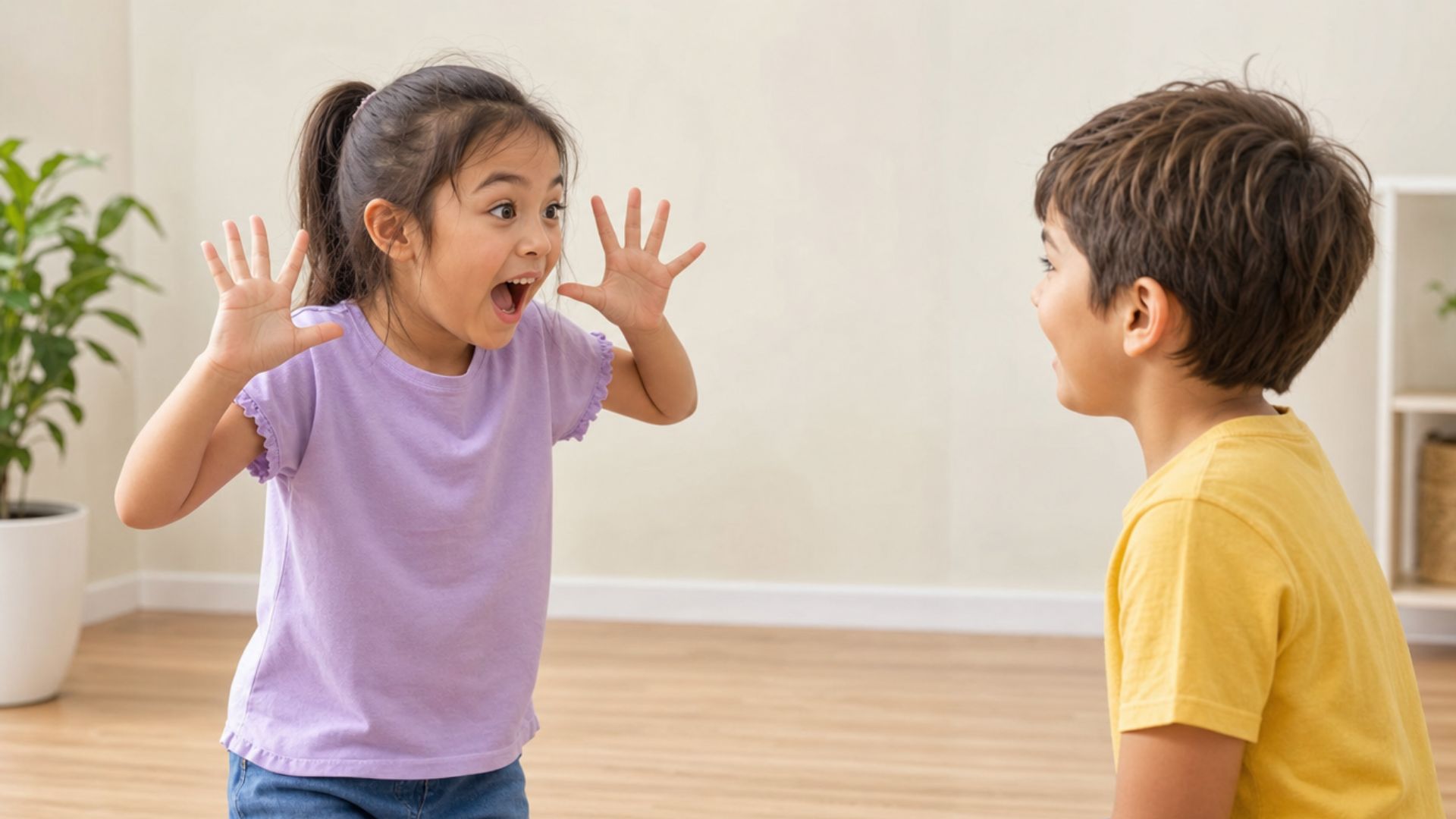
Feelings charades helps kids recognize emotions through body language, which is a foundational skill for emotional health.
One child picks an emotion and acts it out using only their face and body, no words allowed. Everyone else tries to guess the feeling. Then they switch.
Include a wide range of emotions, not just happy or sad. Try nervous, proud, jealous, or confused to help kids build a richer emotional vocabulary.
2. Emotion Drawing
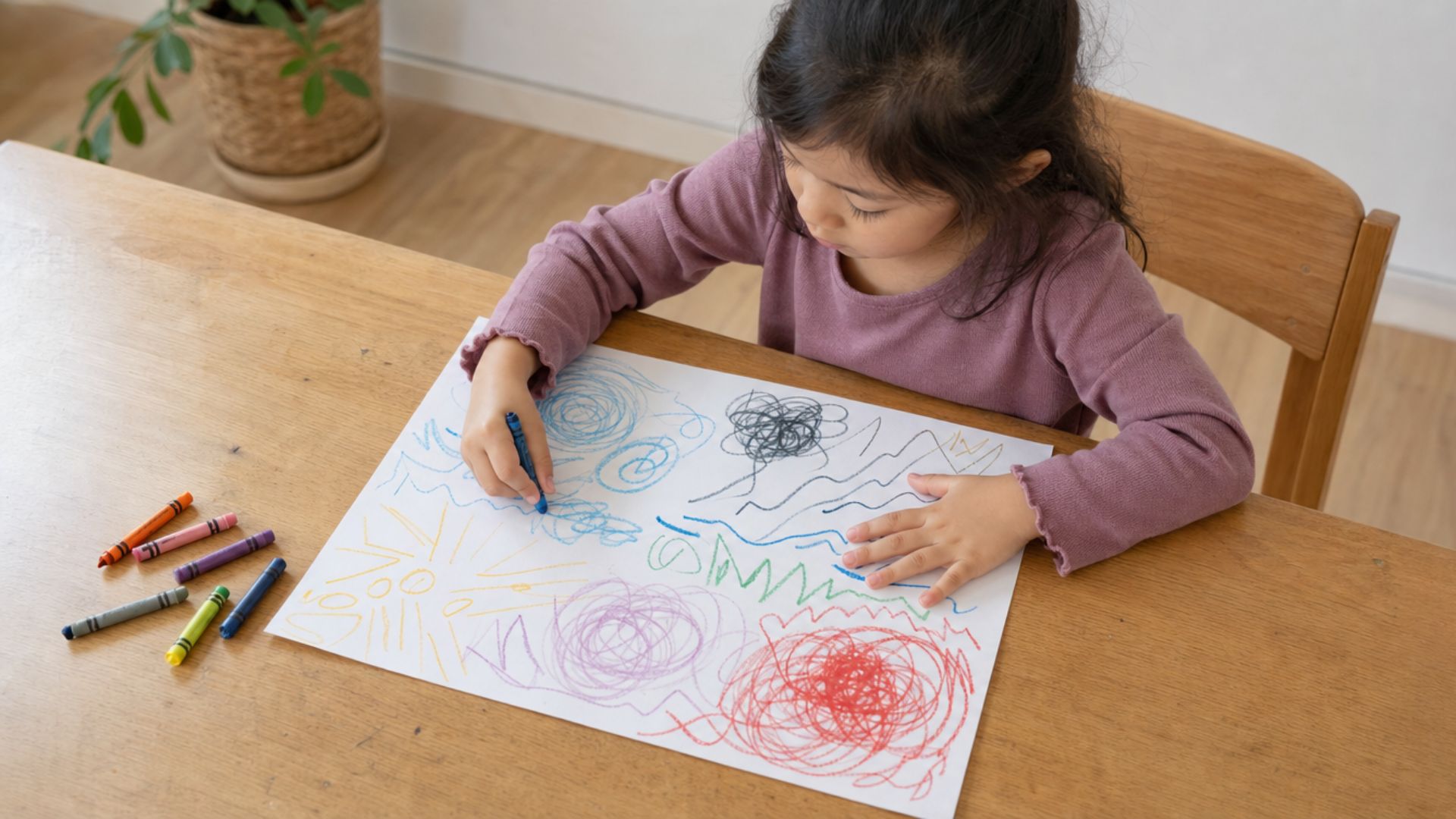
This activity gives kids a non-verbal way to express what’s going on inside. Give your child paper and colors and ask them to draw what their emotion looks like, not their face, but the actual feeling.
Anger might look like sharp red lines. Worry might be a tight, swirling knot. When they’re done, invite them to tell you about it.
There’s no right or wrong here. The goal is simply to get the feeling out of their head and onto paper.
3. Feelings Check-In
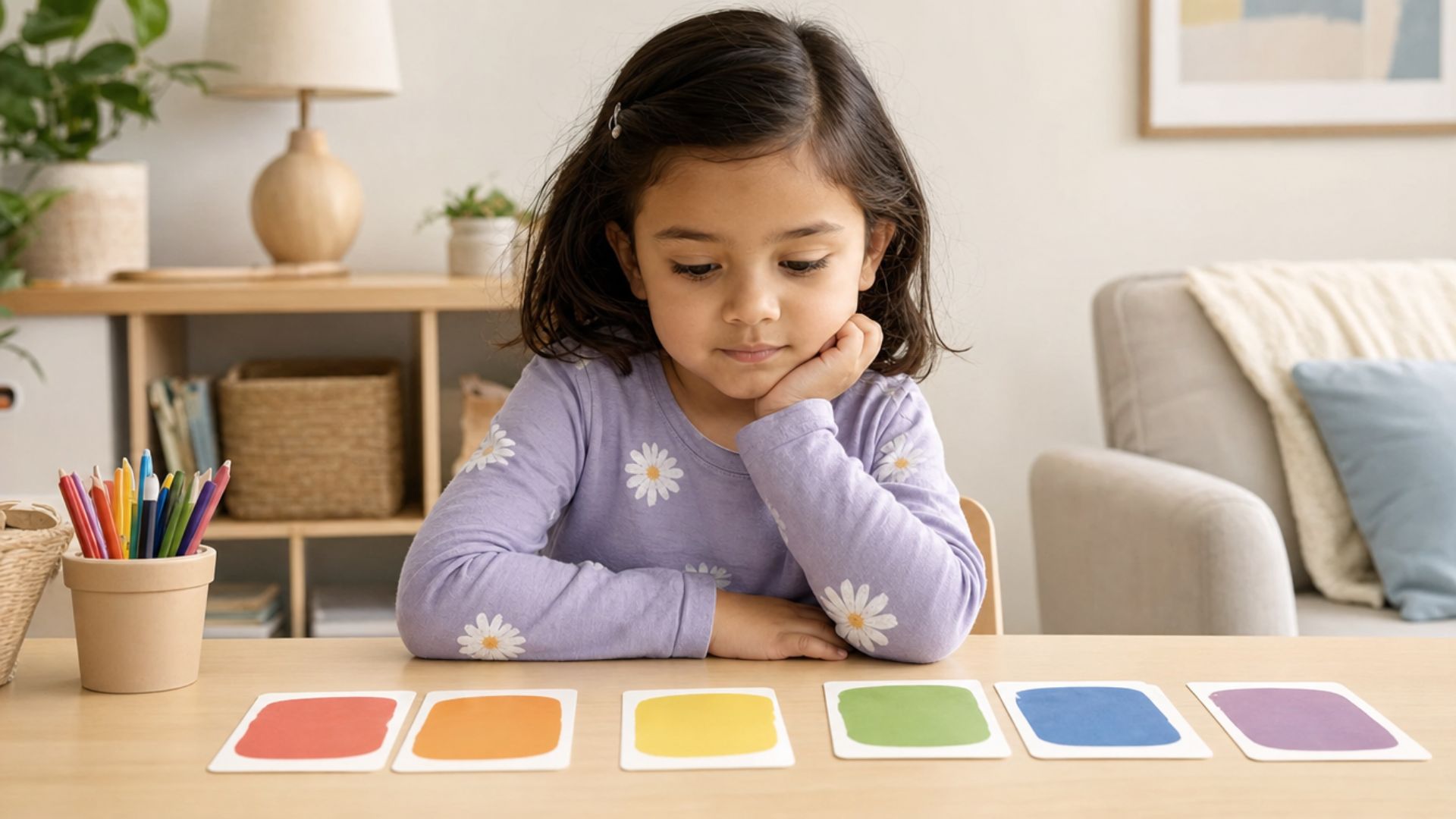
A daily feelings check-in teaches kids to notice their emotional state before it becomes overwhelming.
Once a day, usually in the morning or at bedtime, ask your child to name or point to how they’re feeling using a simple feelings chart or a color that matches their mood.
Keep it short and low-pressure. No deep discussion is needed unless they want to talk. Done consistently, this small habit builds real self-awareness over time.
4. Color Breathing
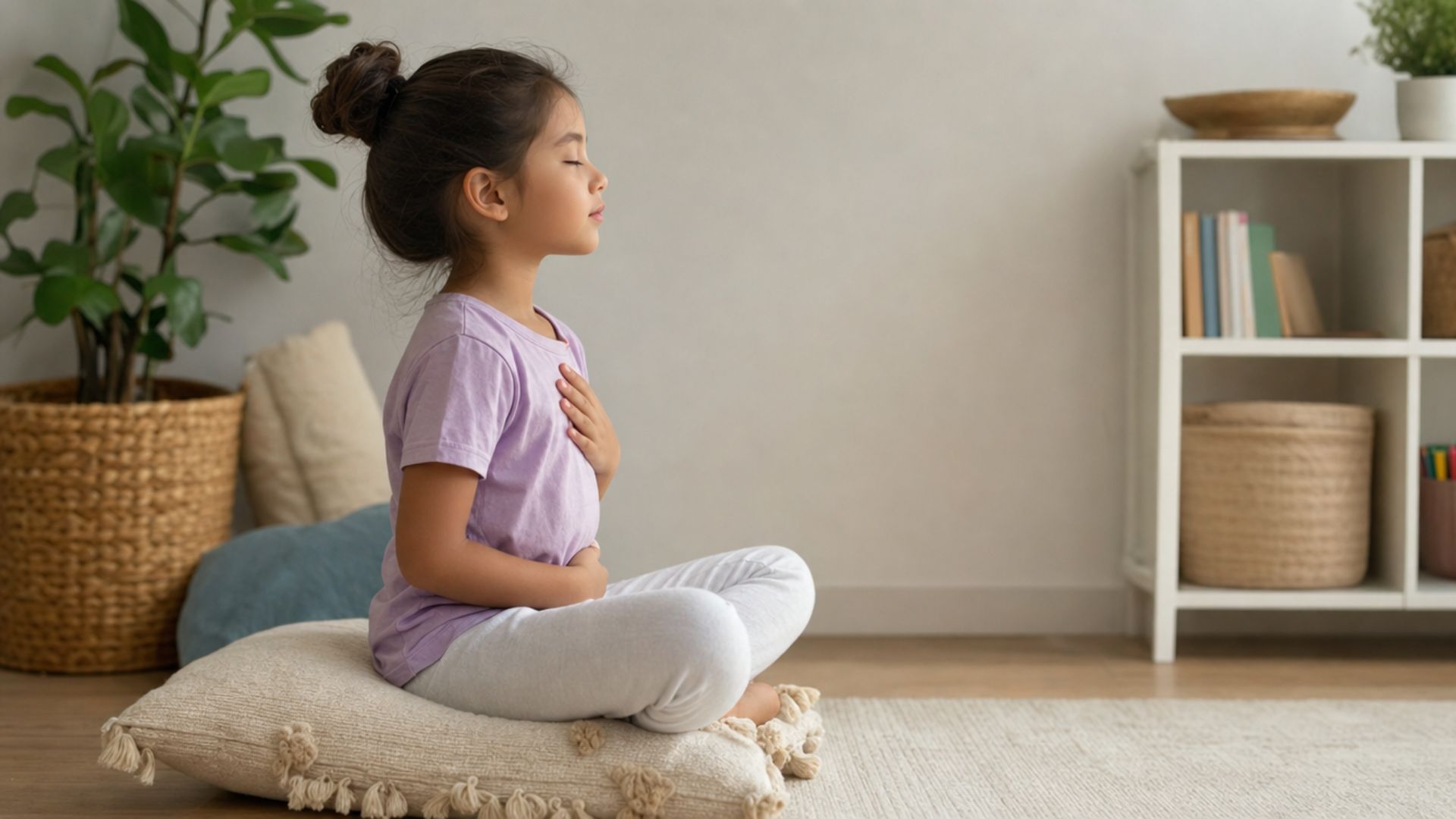
Color breathing makes slow, deep breathing feel more imaginative and accessible for young kids. Ask your child to choose a calming color, maybe blue or green.
Tell them to breathe that color in slowly for four counts, imagining it filling their chest with calm.
Then breathe out a color they associate with stress or worry for four counts, letting the bad feeling leave with it. Repeat four or five times. It works best sitting quietly in a comfortable spot.
5. Finger-Tracing Breathing
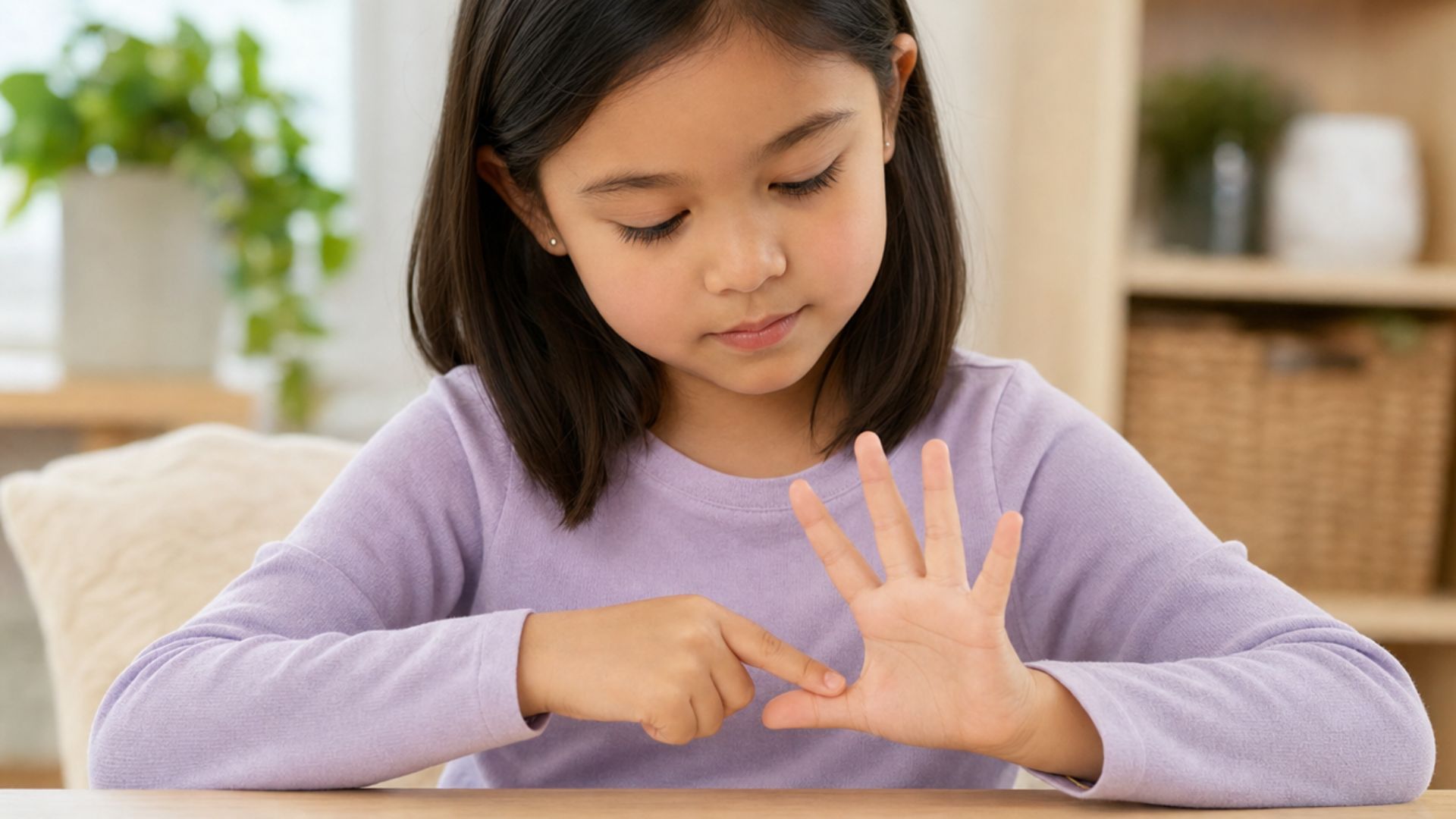
This is one of the easiest breathing tools because kids can do it anywhere without anyone noticing. Have your child hold one hand up with fingers spread apart.
Using the pointer finger of the other hand, they slowly trace up the outside of their thumb while breathing in, then down the other side while breathing out.
They continue across each finger. Five fingers equal five slow, calming breaths. It gives anxious hands something to focus on, which helps the whole body settle.
6. Glitter Jar
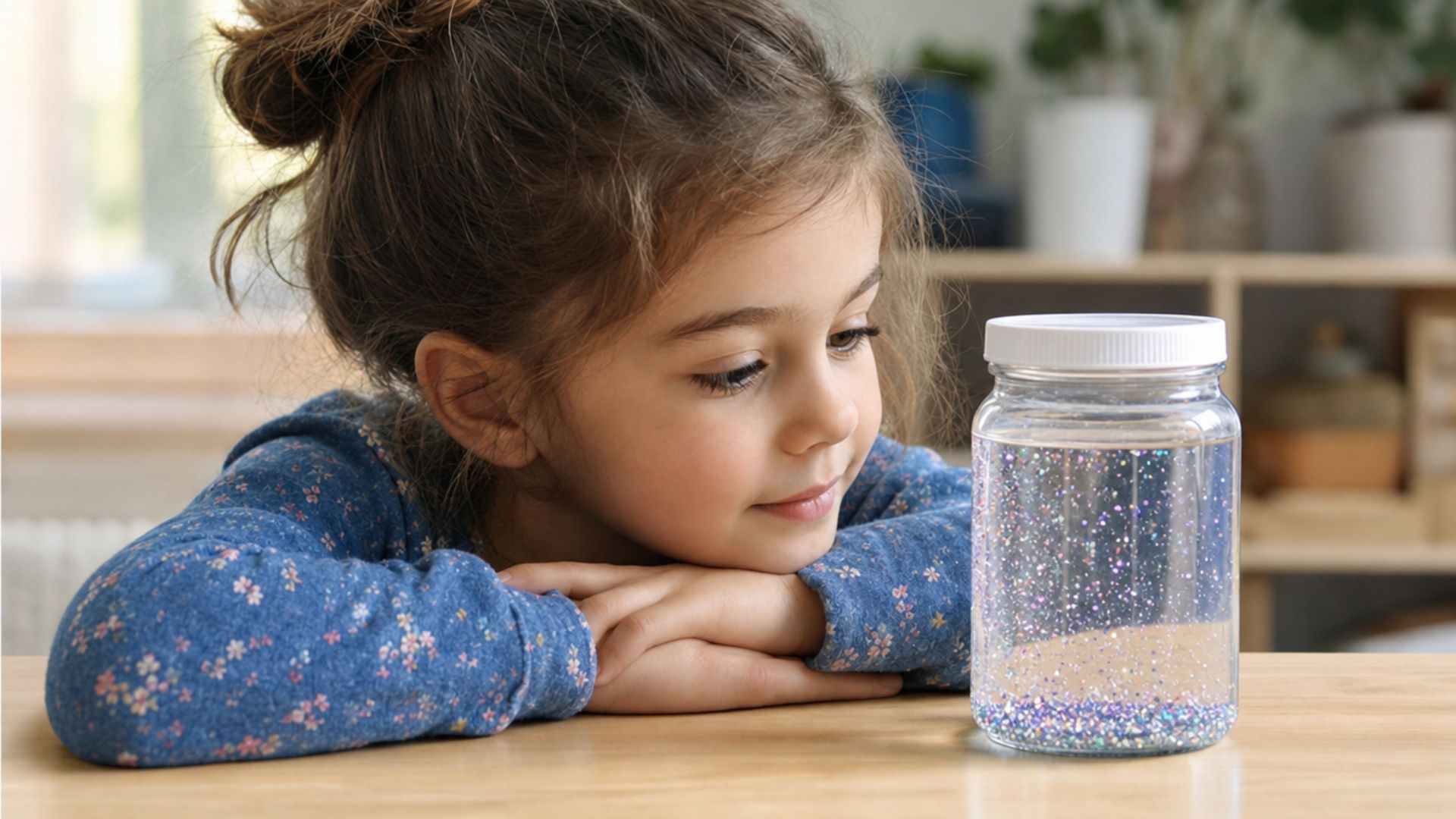
A glitter jar is a simple, visual tool that helps kids understand and manage overwhelming emotions. Fill a clear jar with warm water, a spoonful of glitter glue, and fine glitter.
Seal the lid tightly. When your child is feeling worked up or scattered, let them shake the jar hard, then sit quietly and watch the glitter swirl and slowly settle.
Use it as a metaphor:their thoughts and feelings are like that glitter. Busy and chaotic at first, but they settle when given time and space.
7. Blowing Bubbles
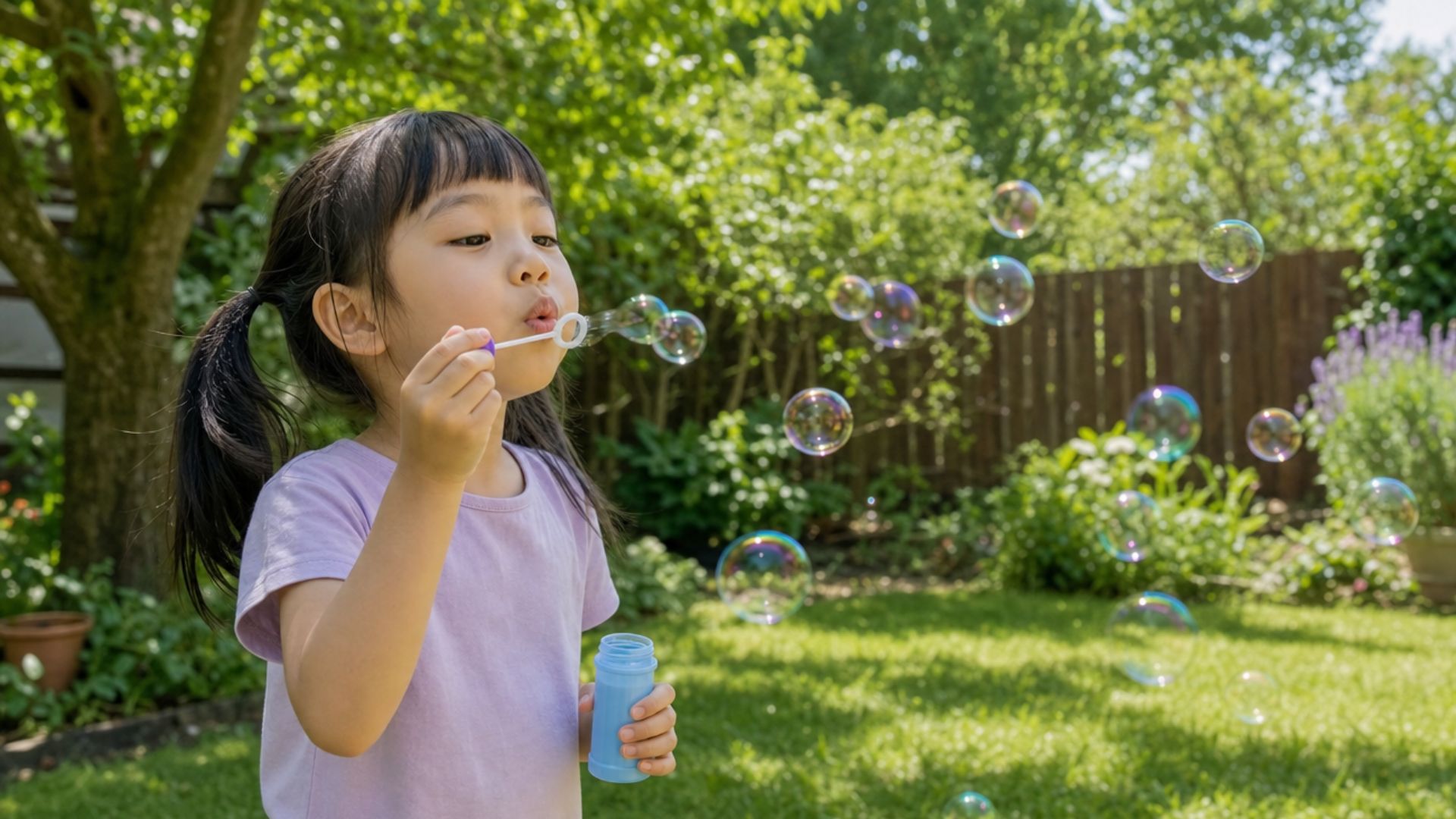
Blowing bubbles naturally encourages the kind of slow, steady exhales that calm an anxious or upset nervous system.
Give your child a bottle of bubbles and encourage them to blow as slowly and gently as possible.
The goal is big, long-lasting bubbles, which only happen when they control their breath. Let them do it for a few minutes without any pressure or goal.
It feels playful, which is exactly the point. Kids don’t realize they’re doing something that genuinely helps.
8. Worry Box
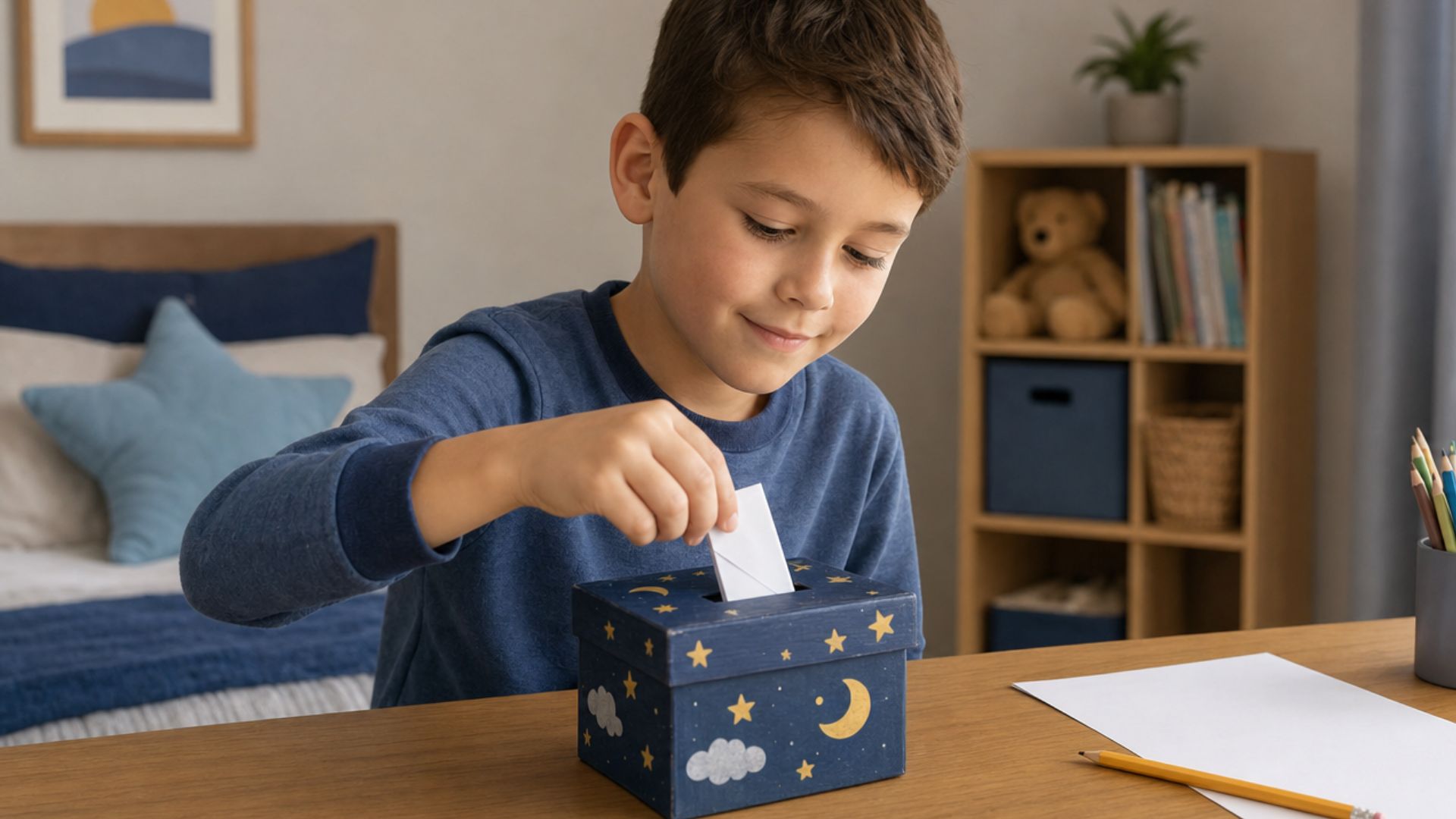
A worry box gives kids a physical way to release the thoughts that keep circling in their heads. Find a small box and decorate it together so it feels personal and meaningful.
Keep slips of paper and a pencil nearby. Whenever something is worrying your child, they write or draw it, fold the paper, and place it inside the box.
Once it’s in the box, the rule is it stays there. You can set aside a specific time each week to open it together, talk through any worries that still feel big, and let go of the ones that passed.
9. Sensory Play
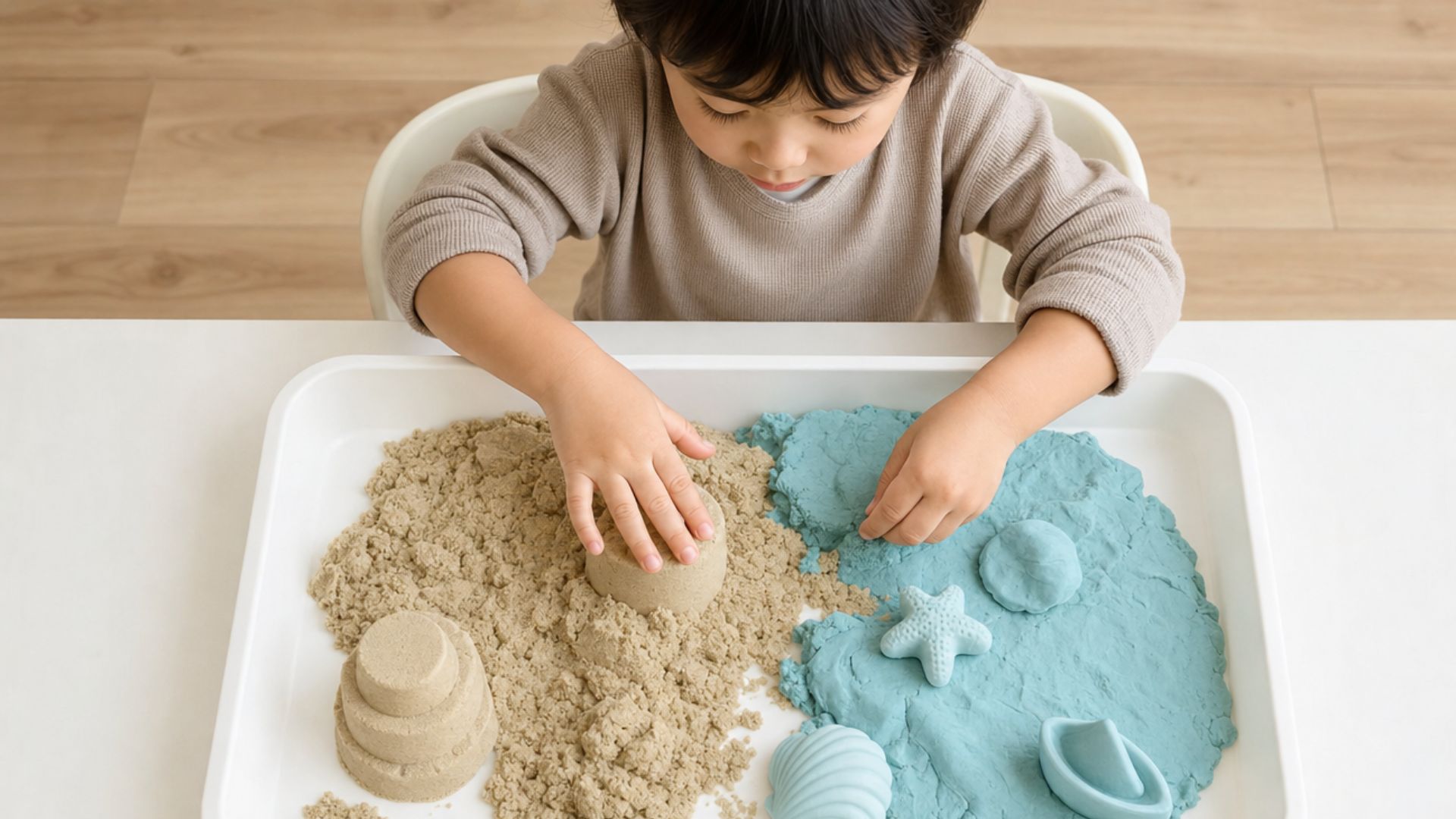
Sensory play pulls kids into the present moment in a way that feels completely natural. Set up a tray or bin with something tactile, kinetic sand, water beads, clay, slime, or even dry rice.
Let your child dig, squeeze, shape, or pour freely with no specific goal or end product. Encourage them to notice how the material feels in their hands, the texture, the temperature, the weight.
Ten to fifteen minutes of focused sensory play is usually enough to bring an overstimulated or emotionally exhausted child back to calm.
10. Guided Visualization
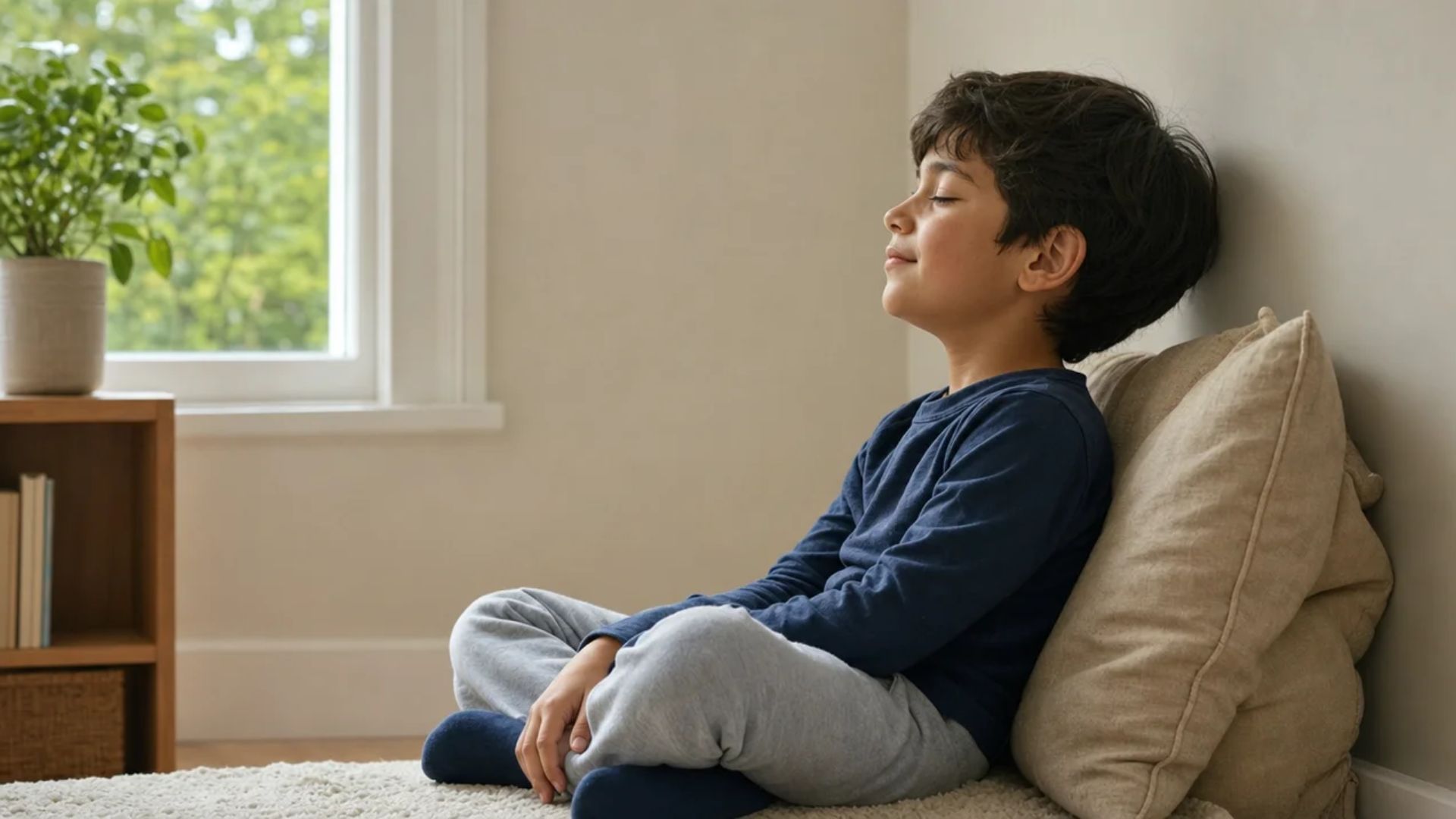
Guided visualization helps kids mentally travel to a safe, calm place when the real world feels too big. Ask your child to sit or lie down comfortably and close their eyes.
Slowly describe a peaceful place in detail: a quiet beach, a cozy blanket fort, a sunny meadow. Tell them what they can hear, smell, and feel there.
Speak slowly and leave pauses between sentences. Keep the whole thing under five minutes and gently bring them back at the end. It works best in a quiet space, away from screens and distractions.
11. Gratitude Journal
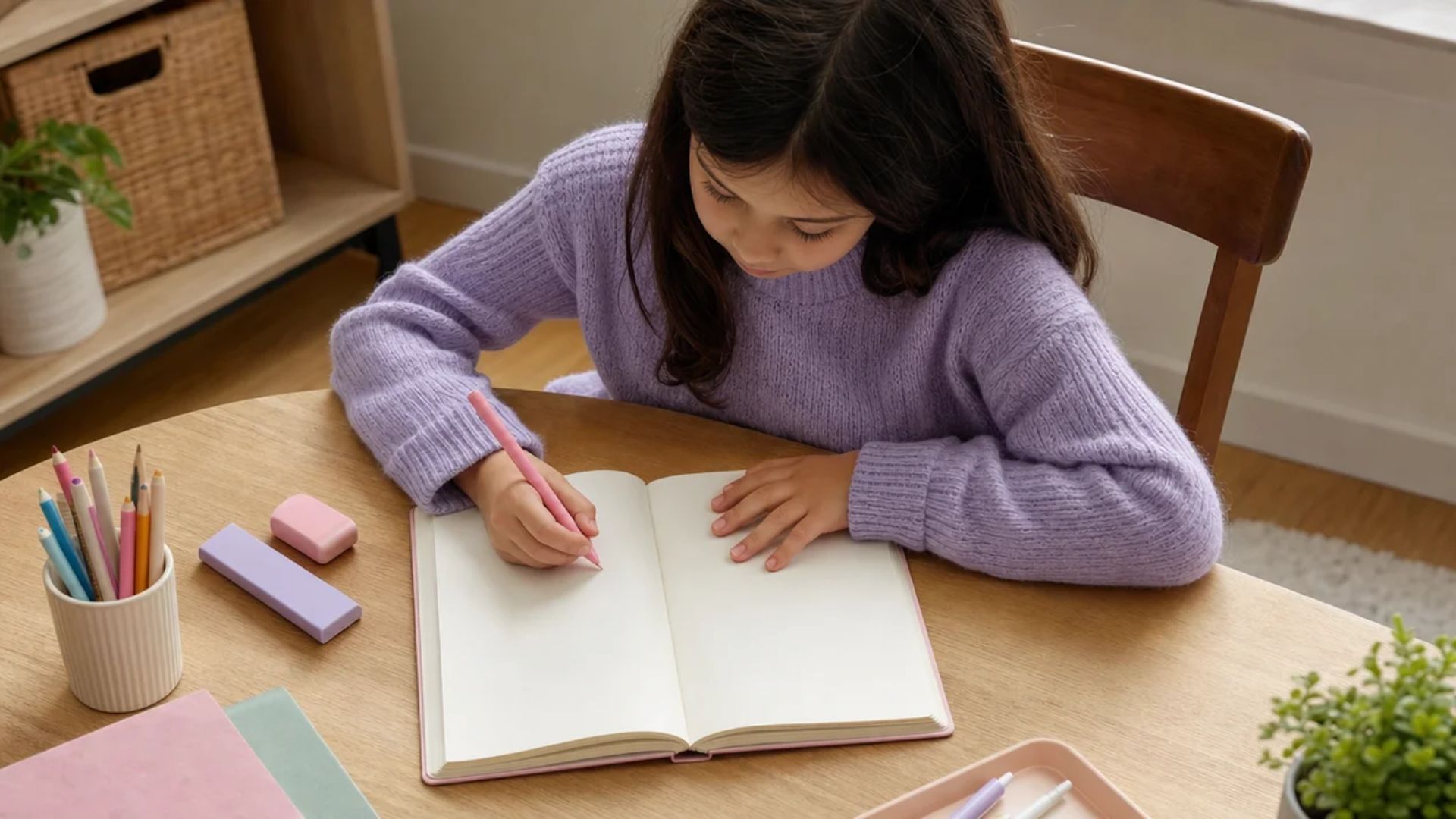
A gratitude journal works not because it forces positivity, but because it trains the brain to notice good things that would otherwise go unseen.
Give your child a dedicated notebook. Each day, they write or draw three things they’re grateful for.
Keep the entries honest and small. A warm lunch counts. A funny moment with a friend counts. The size of what they write doesn’t matter.
The daily habit of looking for something good is what shifts how kids interpret their experiences over time.
12. Kindness Mission
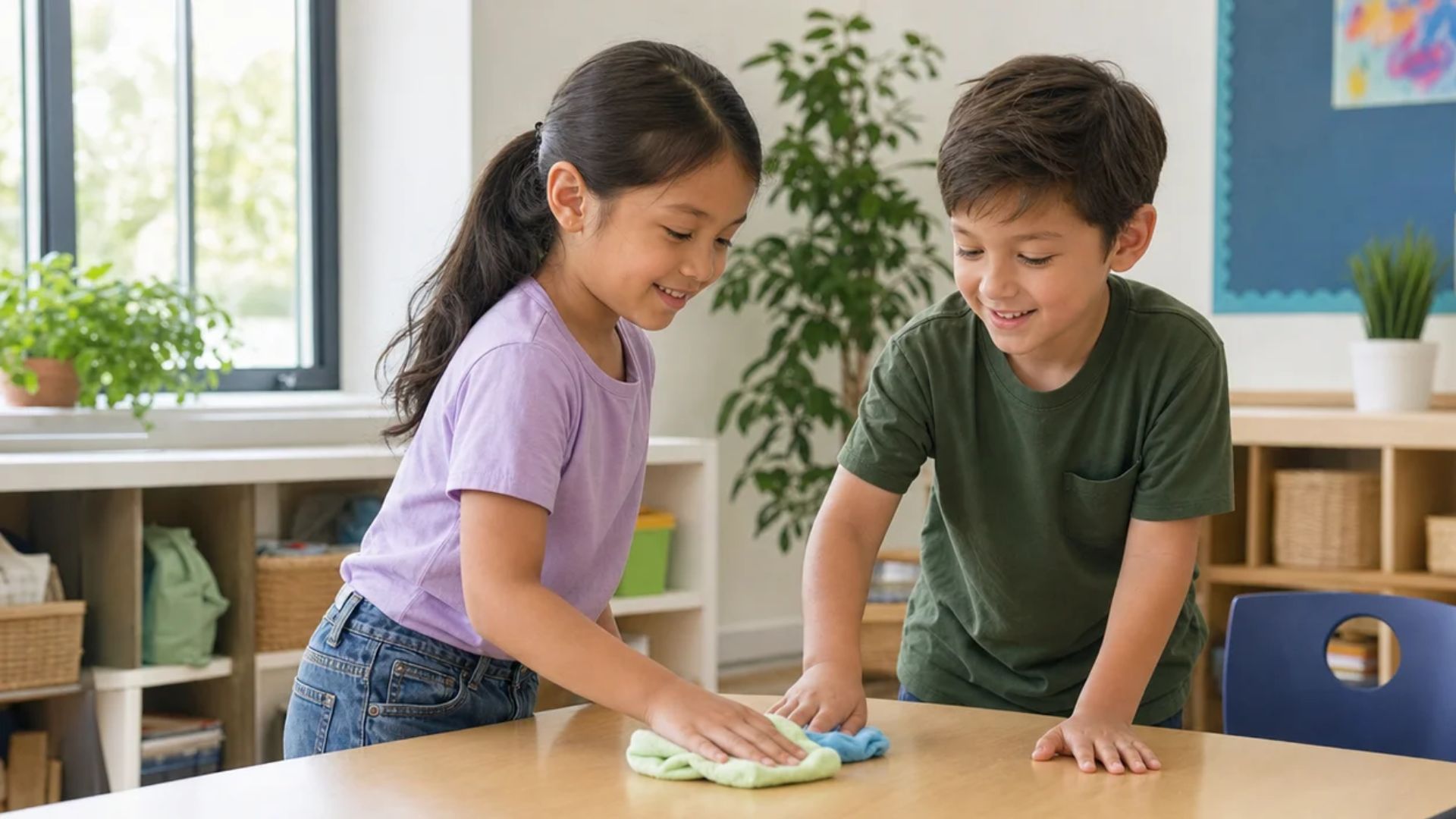
According to research published by the American Psychological Association, performing acts of kindness boosts happiness in the giver, not just the receiver
Each morning, give your child one simple kindness goal for the day. Hold a door open, say something encouraging to a classmate, or help without being asked.
At the end of the day, ask how it went. Keep the goals manageable and rotate new ideas each week.
Kids also start to see that their actions affect others positively, which builds empathy alongside emotional well-being.
13. Imaginative Yoga
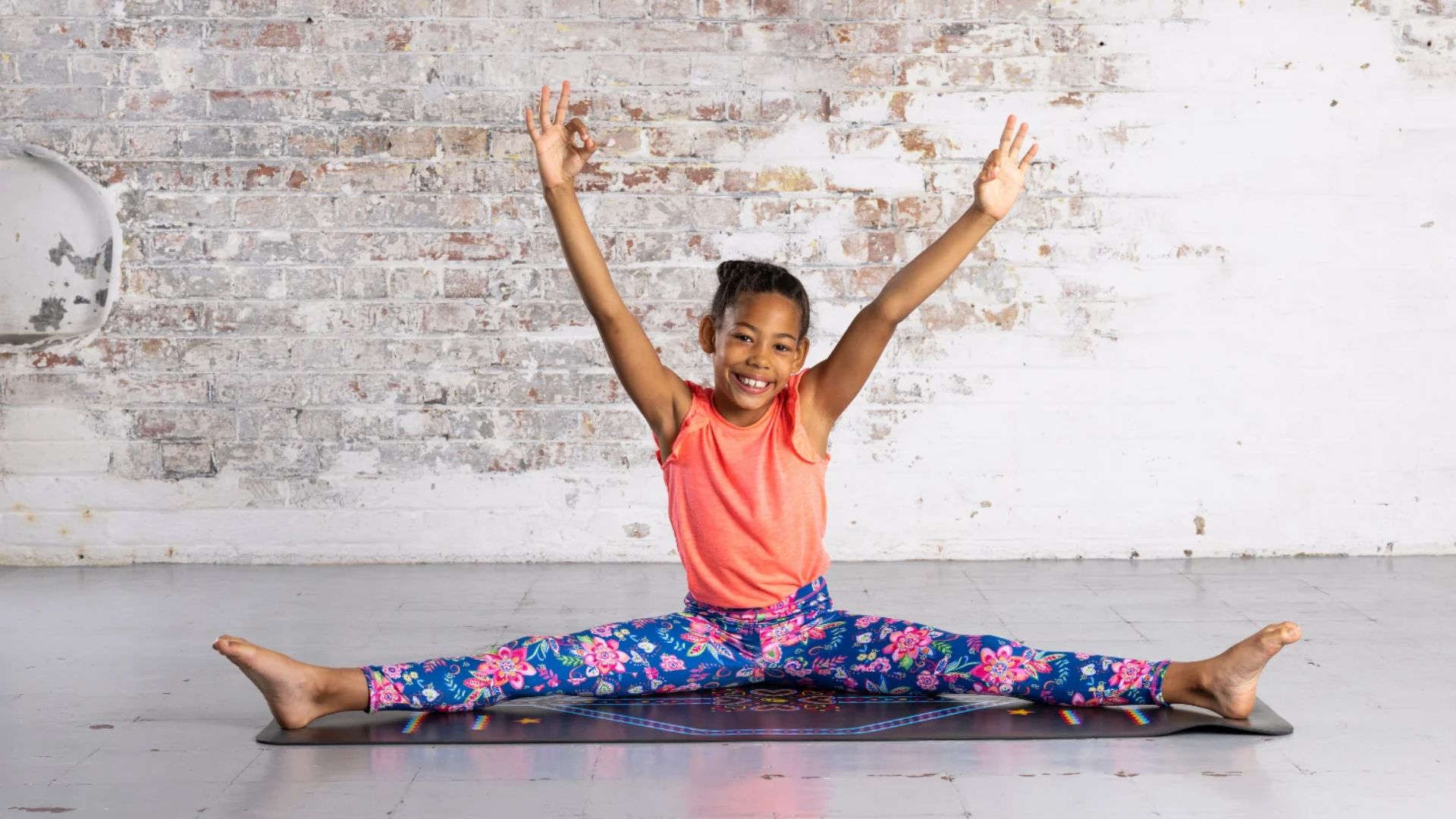
Yoga is good for kids’ mental health, but traditional poses can feel too structured or boring for younger children. Imaginative yoga solves that by tying movements to animals or characters.
Guide your child through a sequence:stretch tall like a giraffe, curl up small like a hedgehog, balance on one leg like a flamingo, sway gently like a tree in the wind. Move slowly between each one and remind them to breathe.
No mat or equipment needed. Kids who resist sitting still almost always respond to this better than they do to standard yoga.
14. Nature Scavenger Hunt
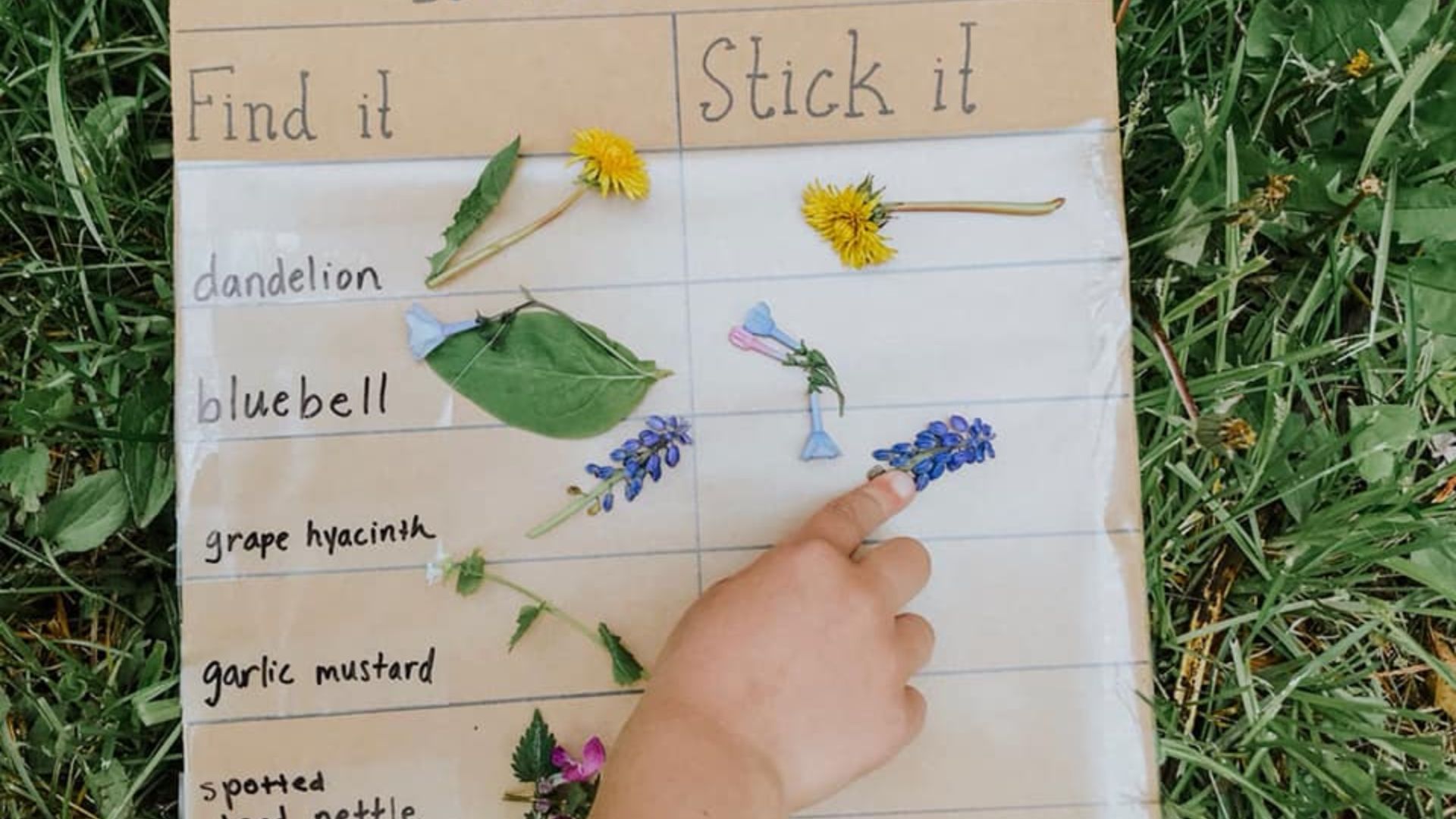
Spending time outside and focusing attention on small, concrete things is a reliable way to pull kids out of anxious thoughts and back into the present.
Write a simple list of sensory things to find: something rough, something yellow, something smaller than your thumb, something that makes a sound. Hand it to your child and head outside together.
Let them lead the search. The combination of fresh air, movement, and focused curiosity works as a natural mood reset, and it’s easy to adjust for any age.
15. Dance or Movement Break
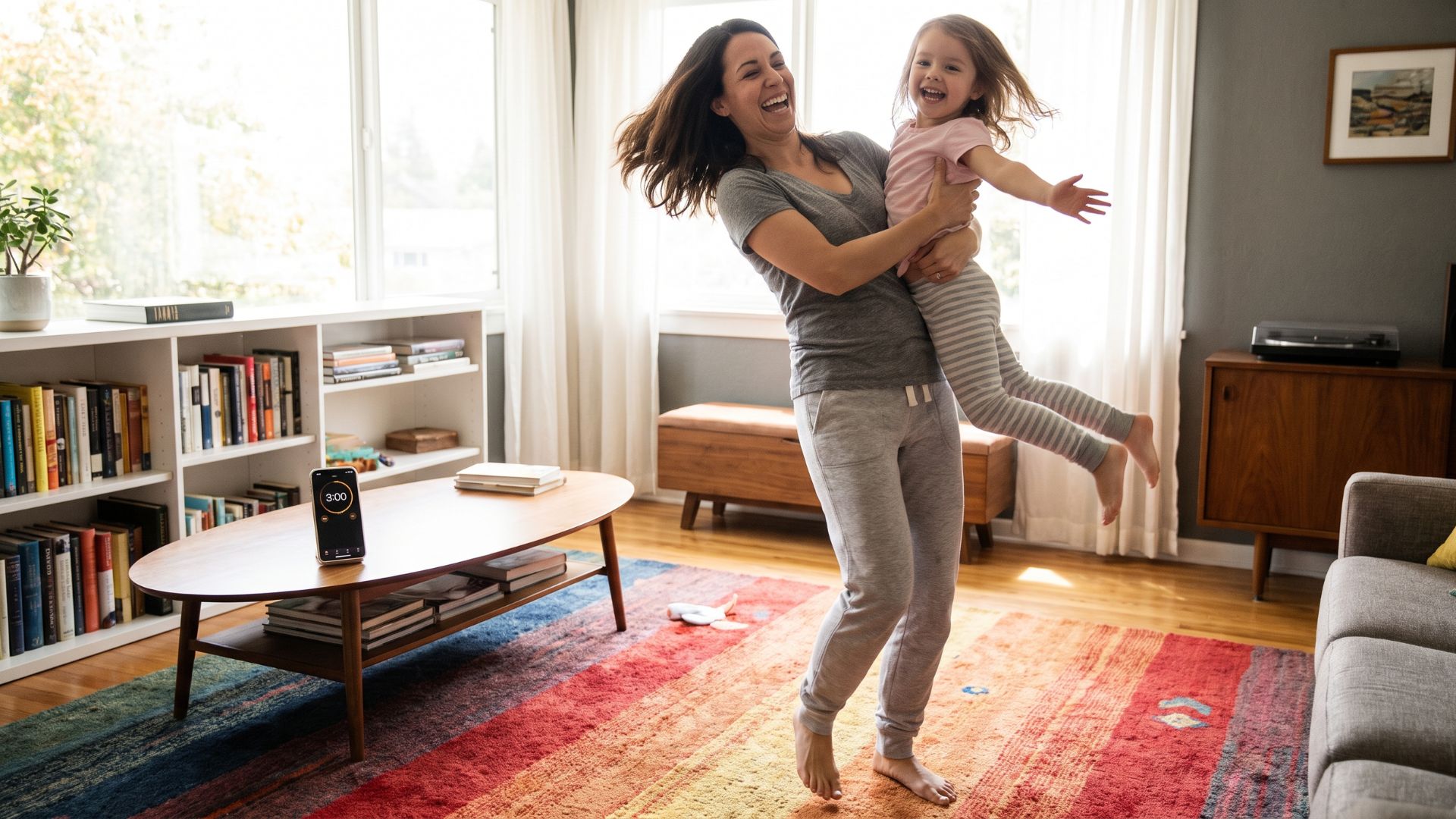
Movement releases tension that builds up in the body throughout the day, and for many kids, physical release is what they need most when emotions feel too big for words.
Put on a song your child loves and turn it up. The only rule is to move however feels good. Jump, spin, stomp, shake, anything goes.
Set a timer for three to five minutes and join in if you can. This works best as a regular daily habit, like right after school, rather than only pulling it out when things go wrong.
How to Adapt Mental Health Activities for Different Ages
Not every activity works for every kid. A breathing exercise that calms a five-year-old might make a twelve-year-old roll their eyes.
Age shapes how children understand emotions, express them, and respond to support, so matching the activity to the child actually matters.
| Activity Type | Younger Children (3–6) | School-Age Children (7–10) | Older Children & Preteens (11–13) |
| Expressing Emotions | Drawing faces or using emotion cards | Journaling with prompts | Free writing or private journaling |
| Breathing & Calm-Down | Bubble breathing or blowing pretend candles | Box breathing with counting | Guided breathing apps or mindfulness exercises |
| Physical Movement | Dancing, jumping, shaking it out | Yoga for kids, nature walks | Sports, running, stretching routines |
| Creative Outlets | Finger painting, playdough, sensory play | Crafts, storytelling, music | Art, music, writing, or digital creativity |
| Talking About Feelings | Simple “how does this make you feel?” questions | Role-play or puppet scenarios | Open conversations, shared problem-solving |
| Relaxation | Storytime, soft music, comfort objects | Progressive muscle relaxation | Body scan meditations, quiet alone time |
| Social Connection | Parallel play, group games | Team activities, cooperative games | Peer conversations, group projects |
| Routine & Predictability | Visual schedules with pictures | Checklists they help create | Goal-setting and self-monitoring |
Choose what feels like the best fit for your child’s age and go from there.
When Should a Child Get Additional Mental Health Support?
Sometimes activities and good routines aren’t enough, and that’s completely okay to admit. If you’re noticing these patterns, it helps to know the signs your child needs a therapist so you can act with confidence instead of second-guessing yourself.
According to the National Institute of Mental Health, persistent emotional symptoms lasting more than two weeks warrant professional attention
The same goes for sudden behavioral shifts, trouble sleeping, refusing to go to school, or emotional reactions that feel way bigger than the situation actually calls for.
Physical complaints like frequent stomachaches or headaches with no clear medical cause can also be a sign that something deeper is going on, and disrupted sleep often goes hand in hand, so exploring natural sleep remedies for kids may also be worth a look.
You know your child better than anyone else does. Trust that instinct. A pediatrician or child therapist isn’t a last resort; it’s simply the next, smarter step when everyday support and mental health activities stop being enough on their own.
Final Thoughts
Mental health activities for kids are not just fun extras. They are real tools that help children understand their emotions, handle stress, and grow stronger from the inside out.
I hope this guide gives you practical ideas you can actually use, whether at home or in school.
Start small, stay consistent, and pay attention to what works for your child. If this was helpful, share it with another parent who needs it. You both deserve the support.
Frequently Asked Questions
What is the 3-3-3 rule in mental health?
The 3-3-3 rule is a simple grounding technique used to manage acute anxiety, stress, or panic by shifting your focus from racing internal thoughts to your immediate physical surroundings
How to teach coping skills to kids?
Teaching Coping Skills to Kids: Practice breathing and grounding techniques during calm moments, name emotions together, and model healthy stress responses in your daily routine.
What are some good coping skills for kids?
Good coping skills for kids help them calm their bodies, release big emotions, and handle stress in healthy ways.
What are the 5-4-3-2-1 coping skills for children?
The 5-4-3-2-1 technique is a sensory grounding exercise that helps children manage stress, anxiety, meltdowns, or big emotions by shifting their focus from internal distress to the physical present moment.