Your baby keeps swatting at toys but cannot quite hold on, and you're starting to wonder if that's normal. Or maybe your little one grabs everything within reach, from your glasses to your hair, and you are trying to keep up.
If you're asking when babies start grabbing things, the short answer is that most babies begin reaching for objects around 3 to 4 months and start grabbing them intentionally between 4 and 6 months.
According to the Centers for Disease Control and Prevention (CDC), reaching for toys is an important developmental milestone during this stage.
This guide explains what to expect, how fine motor development progresses, when delays may need medical attention, and simple ways to encourage healthy hand coordination at home.
Typical Age Babies Begin Reaching and Grabbing
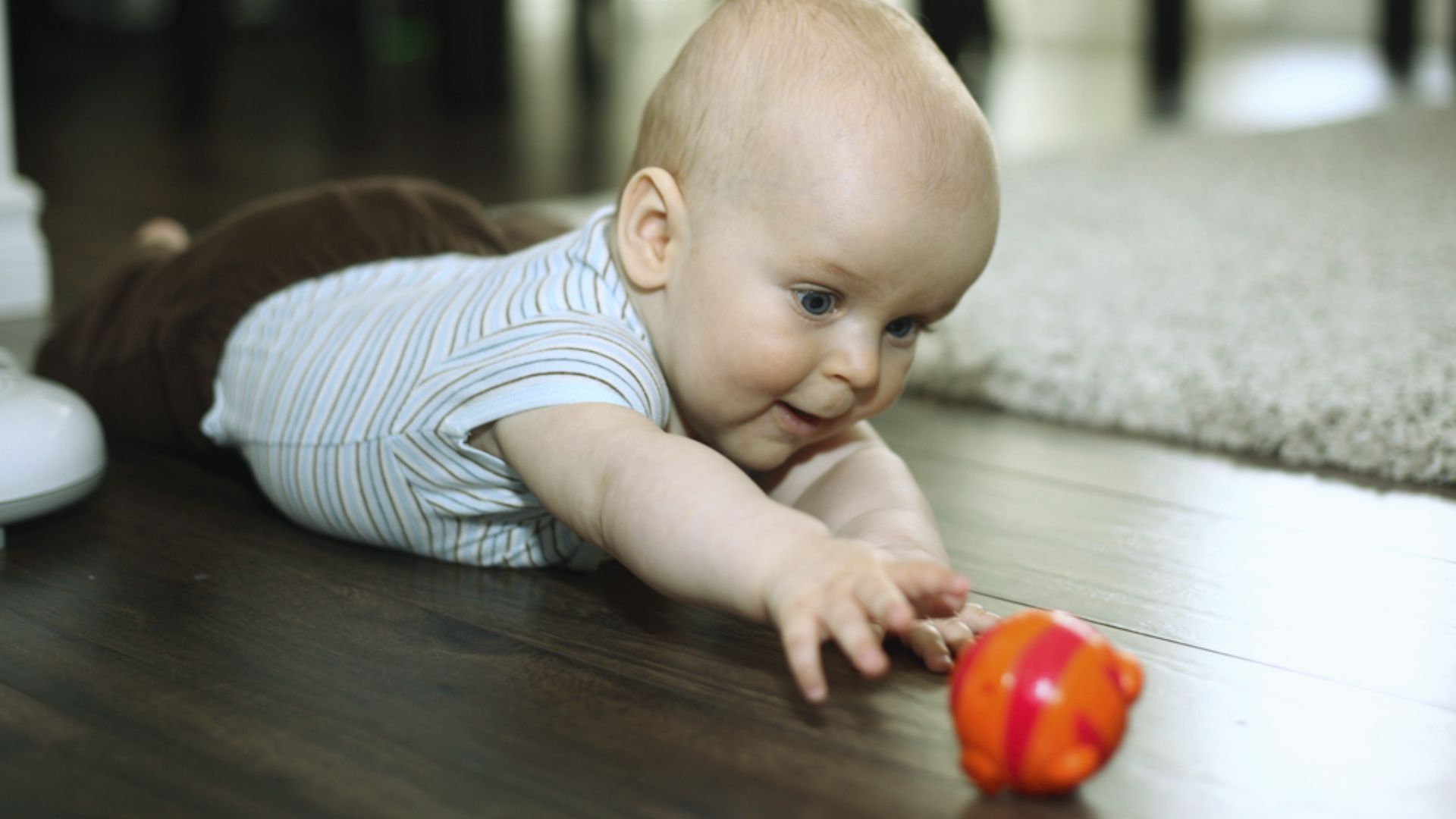
Most babies start reaching for objects around 3 to 4 months and begin grabbing them intentionally between 4 and 6 months.
Reaching and grabbing are early fine motor skills that develop as your baby's vision, muscles, and nervous system mature. During the first few months, hand movements are mostly reflexes rather than intentional actions.
As coordination improves, babies begin reaching for objects with purpose, laying the foundation for later skills like self-feeding, stacking toys, drawing, and using utensils.
Is It Normal If Your Baby Isn't Grabbing Yet?
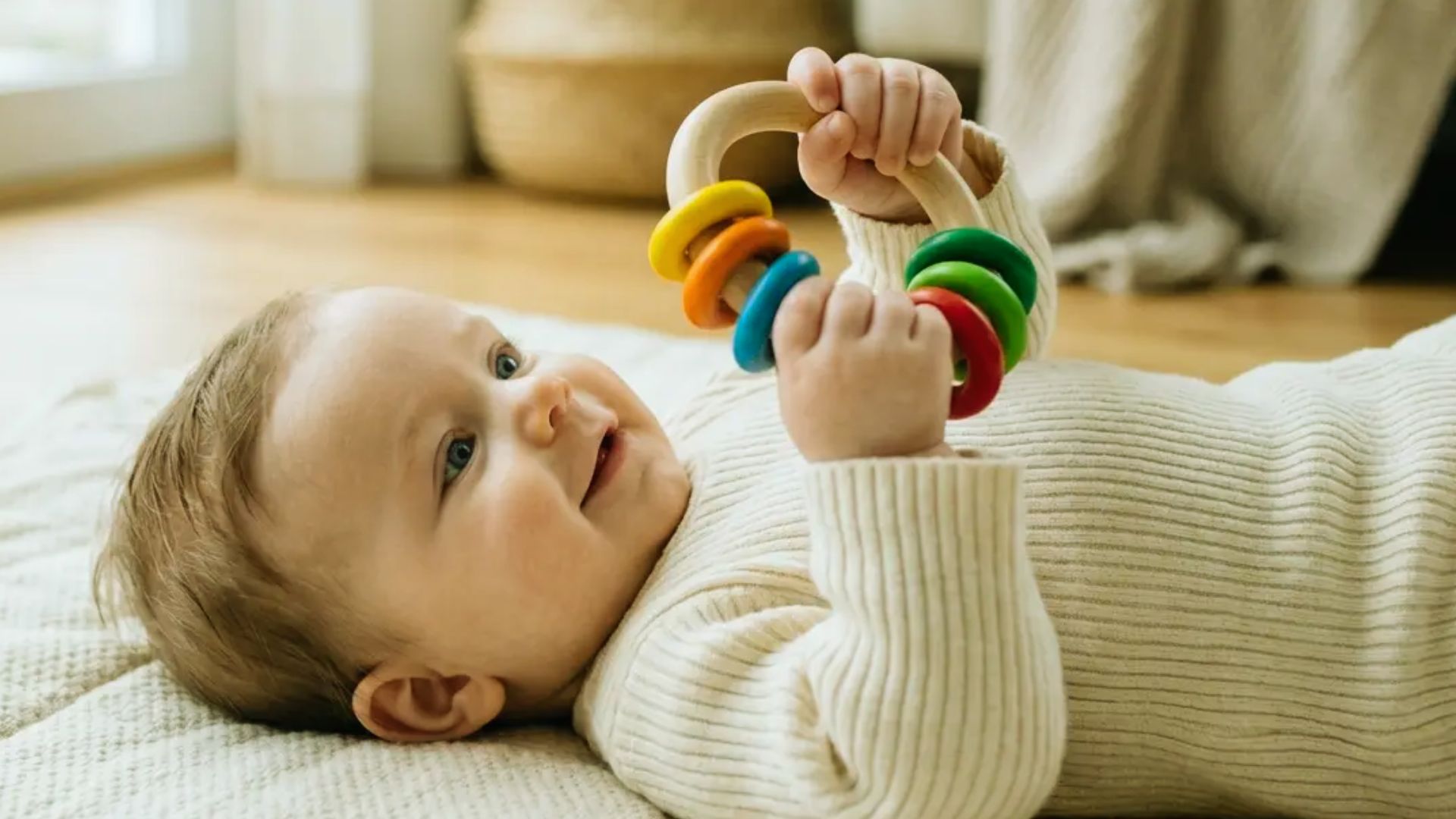
Every baby develops at a slightly different pace, so it is common for reaching and grabbing milestones to vary by a few weeks.
Instead of focusing on one exact age, look at your baby's overall progress and interest in interacting with people and objects.
Developmental Milestones by Age
By 3 months, many babies begin opening their hands more often, watching their hands closely, and swiping toward nearby objects. Around 4 months, they can usually hold a lightweight toy for a few seconds if someone places it in their hand.
By 6 months, most babies intentionally reach for toys, grasp them securely, and often bring them to their mouth to explore different textures and shapes.
The CDC includes reaching for toys as a developmental milestone around this age.
Normal Differences vs. Possible Delays
A baby who reaches a little earlier or later than others is often developing normally. What matters most is steady progress over time. Babies who regularly look at toys, attempt to reach toward them, or move both hands equally are generally developing appropriate hand-eye coordination.
If your baby shows little interest in using their hands by 5 to 6 months, it is worth discussing their development with a pediatrician.
When to Talk to a Pediatrician
Contact your pediatrician if your baby:
- Is not reaching for nearby objects by around 5 months
- Keeps both hands tightly closed after 4 months
- Uses only one hand consistently while ignoring the other
- Appears unusually stiff or very floppy during movement
- Shows little interest in interacting with toys or people
A healthcare provider may assess muscle tone, reflexes, vision, and overall motor development to determine whether additional evaluation is needed.
If your baby was born early, your pediatrician will likely track these milestones using their adjusted age rather than their actual birth date.
Baby Grabbing Milestones by Age
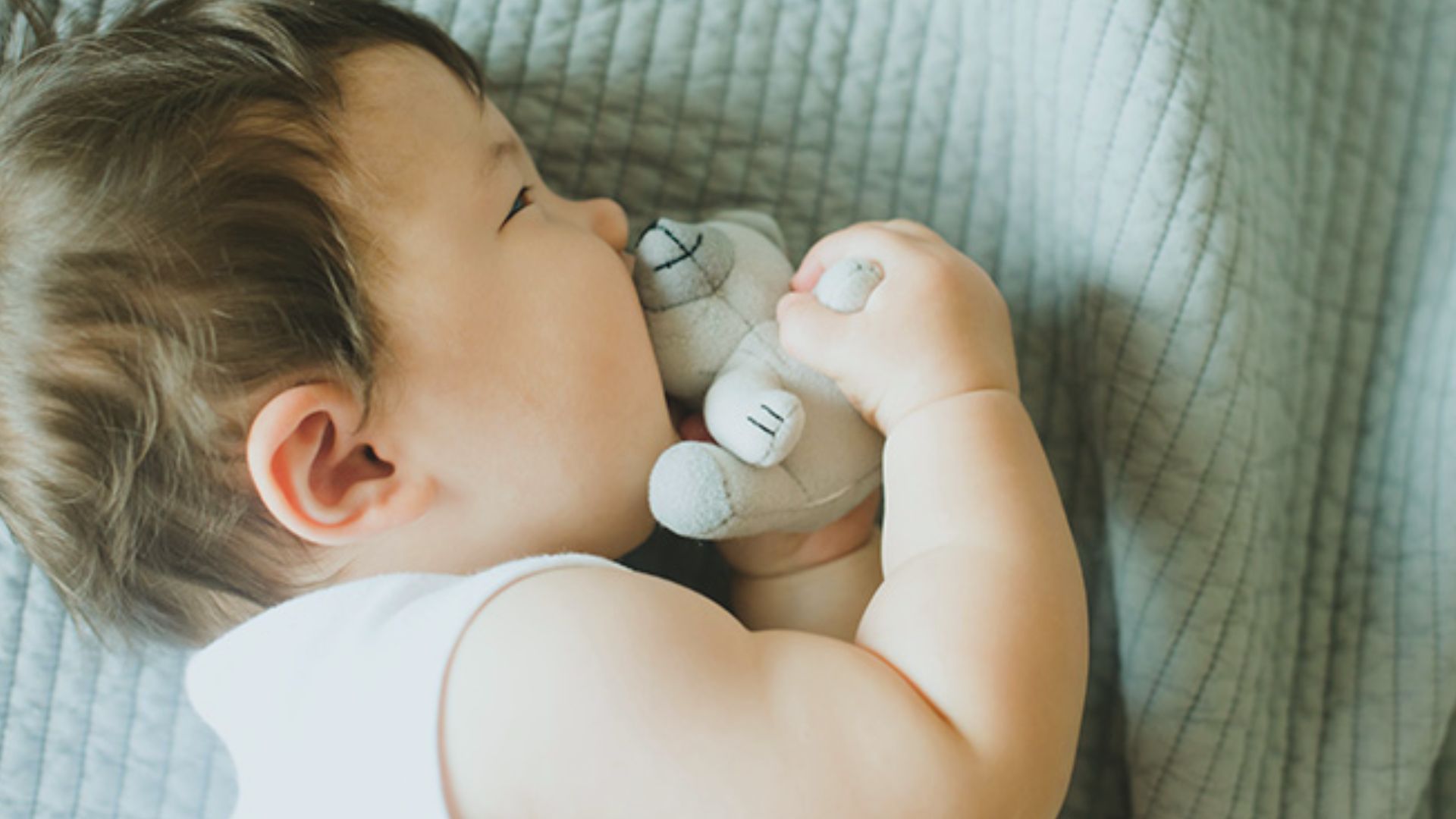
Grabbing develops gradually as babies gain better control over their muscles and improve their hand-eye coordination.
Each stage prepares them for the next, making steady progress more important than reaching milestones on an exact date.
Newborn to 2 Months
During the first two months, babies usually keep their hands closed most of the time because of the palmar grasp reflex. When something touches their palm, their fingers automatically wrap around it.
Although this grip can feel surprisingly strong, it is an involuntary reflex rather than intentional grabbing. Babies also begin spending more time looking at their own hands, an early step in developing hand awareness.
3 to 4 Months
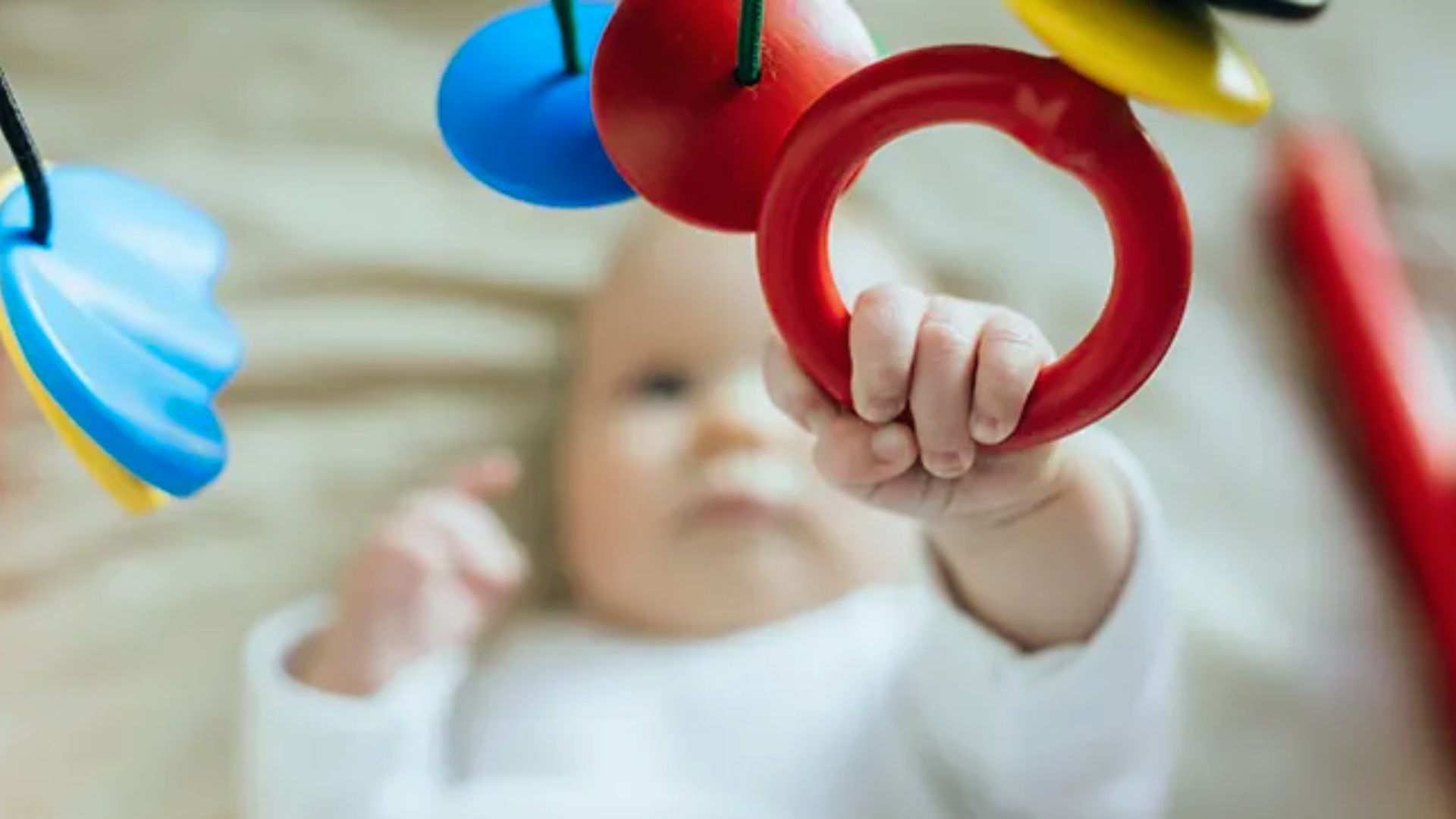
Between 3 and 4 months, babies start opening their hands more frequently and making purposeful movements toward nearby objects. Their reaching attempts may still miss the target because vision and coordination are developing together.
During this stage, many babies also bring their hands together, watch them closely, and begin exploring how they move.
5 to 6 Months
Intentional grabbing usually develops between 5 and 6 months. Babies can now see a toy, reach toward it, and close their fingers around it with much better accuracy. Most also enjoy transferring lightweight toys toward their mouth to explore them through touch and taste.
This is also when many babies start noticing cause and effect, like realizing that shaking a rattle makes a sound. These actions strengthen fine motor skills and help babies learn about different shapes, sizes, and textures.
7 to 9 Months
By 7 to 9 months, babies become much more skilled at handling objects. They often pass toys from one hand to the other, release objects intentionally, and begin developing the pincer grasp, which allows them to pick up small items using their thumb and index finger.
Around this age you may also notice early object permanence, since babies will reach for a toy even after it's partly hidden under a blanket. This advanced grasp supports later skills such as self-feeding, waving, pointing, and eventually holding crayons or utensils.
How Babies Learn to Reach and Grab
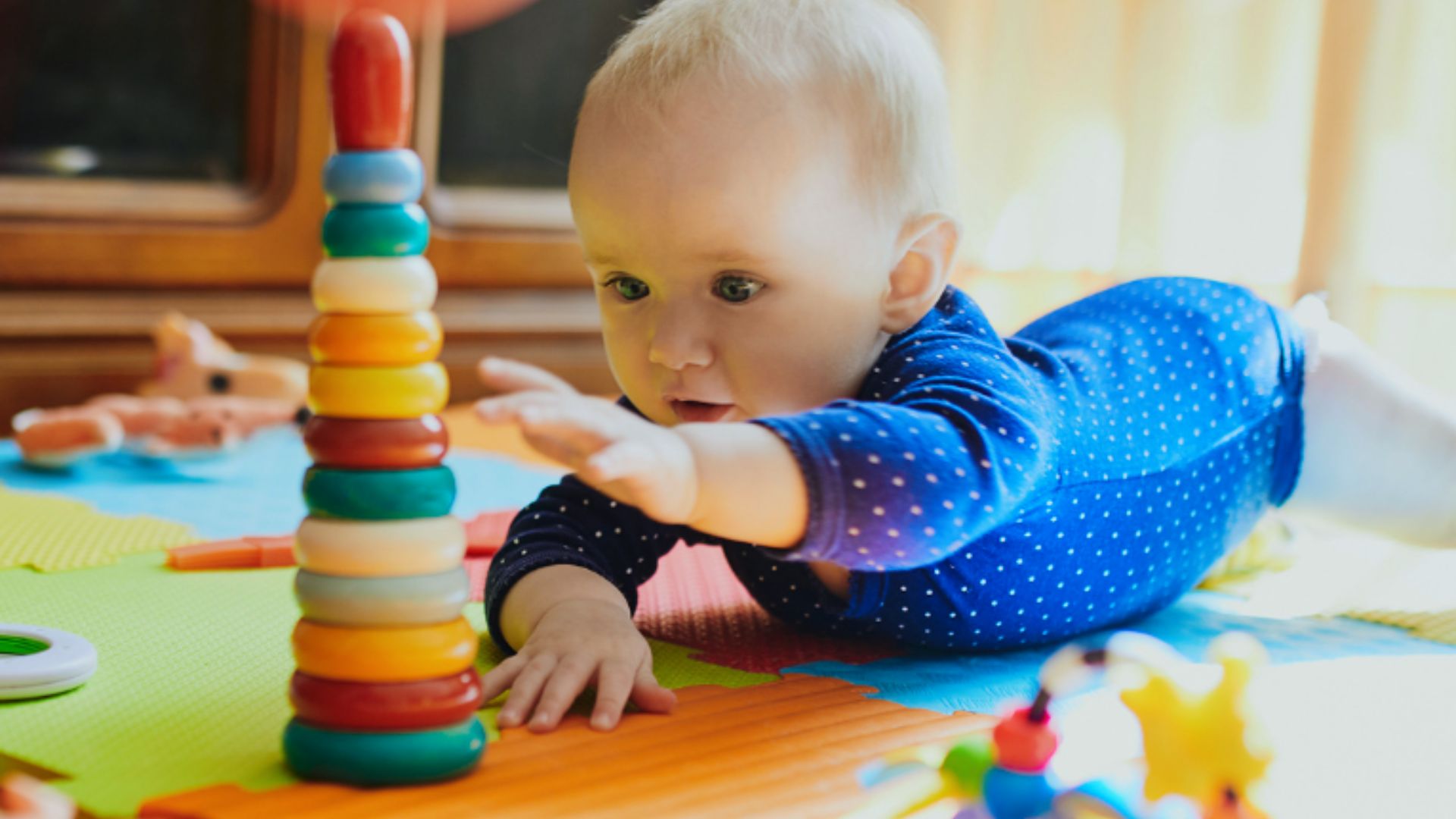
Learning to grab objects requires several developmental systems to work together. As vision sharpens, muscles strengthen, and coordination improves, babies become more confident reaching for and holding objects around them.
Clear vision is important because babies first need to focus on an object before reaching toward it. As their eyesight develops during the first few months, the brain becomes better at judging distance and directing the hands accurately.
At the same time, stronger shoulders, arms, wrists, and core muscles provide the stability needed to reach forward without losing balance.
Daily movement also plays an important role in baby hand development. Regular tummy time strengthens the neck, shoulders, arms, and upper body muscles used for reaching.
Simple activities such as placing a colorful toy just beyond your baby's reach encourage stretching, grasping, and repeated practice in a safe and enjoyable way.
Babies also build these skills through simple back-and-forth interaction with caregivers, sometimes called serve and return, where you respond to their coos or reaches and they respond back.
These everyday experiences gradually improve infant hand coordination and prepare babies for more advanced fine motor milestones.
According to HealthyChildren.org, the American Academy of Pediatrics' parent education website, everyday play and responsive interactions are important for supporting healthy motor development during infancy.
Comparison: Baby Grabbing Milestones by Age
Comparing developmental milestones side by side can help you understand how reaching, grabbing, and other hand skills typically progress during the first year.
While every baby develops at their own pace, these milestones provide a helpful general guide.
| Age | Reaching | Grabbing | Transferring Objects | Releasing Objects |
| 0–2 months | No | Reflex only (palmar grasp) | No | No |
| 3–4 months | Beginning to reach | Occasional brief grasp | No | No |
| 5–6 months | Reaches intentionally | Yes, with improving accuracy | Beginning | Limited |
| 7–9 months | Confident reaching | Strong grasp | Yes | Yes, on purpose |
As babies gain better fine motor development, these skills build on one another. Reaching develops first, followed by intentional grasping.
Once babies can hold an object securely, they learn to transfer it between hands before eventually releasing it on purpose.
This sequence also prepares them for later milestones such as self-feeding, pointing, waving, and early drawing skills.
Signs Your Baby's Fine Motor Skills Are Developing Well
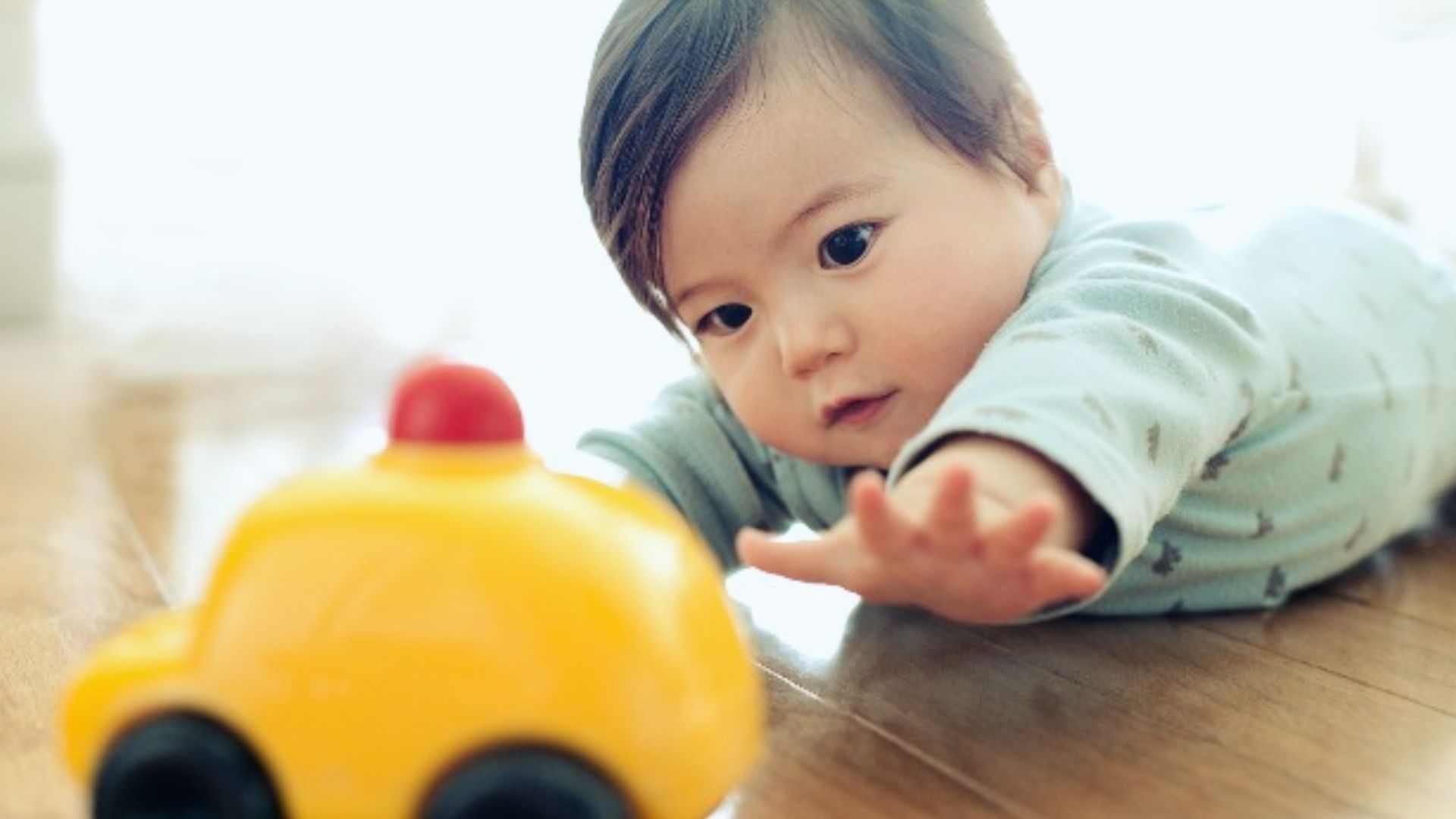
Strong babies reaching milestones involve more than simply grabbing a toy. As coordination improves, babies begin using their hands in different ways to explore their surroundings.
Watching these small changes together provides a better picture of healthy development than focusing on a single milestone.
Healthy hand development often includes:
- Opening and closing the hands frequently
- Watching their own hands with curiosity
- Bringing hands or toys to the mouth
- Reaching toward nearby objects
- Grasping lightweight toys with increasing control
- Shaking, banging, or rotating objects while playing
- Passing toys from one hand to the other by around 7 to 9 months
These skills show that vision, muscle strength, and coordination are developing together. Over time, they also prepare babies for future milestones such as clapping, feeding themselves, pointing, and holding crayons.
How to Encourage Your Baby to Start Grabbing Things
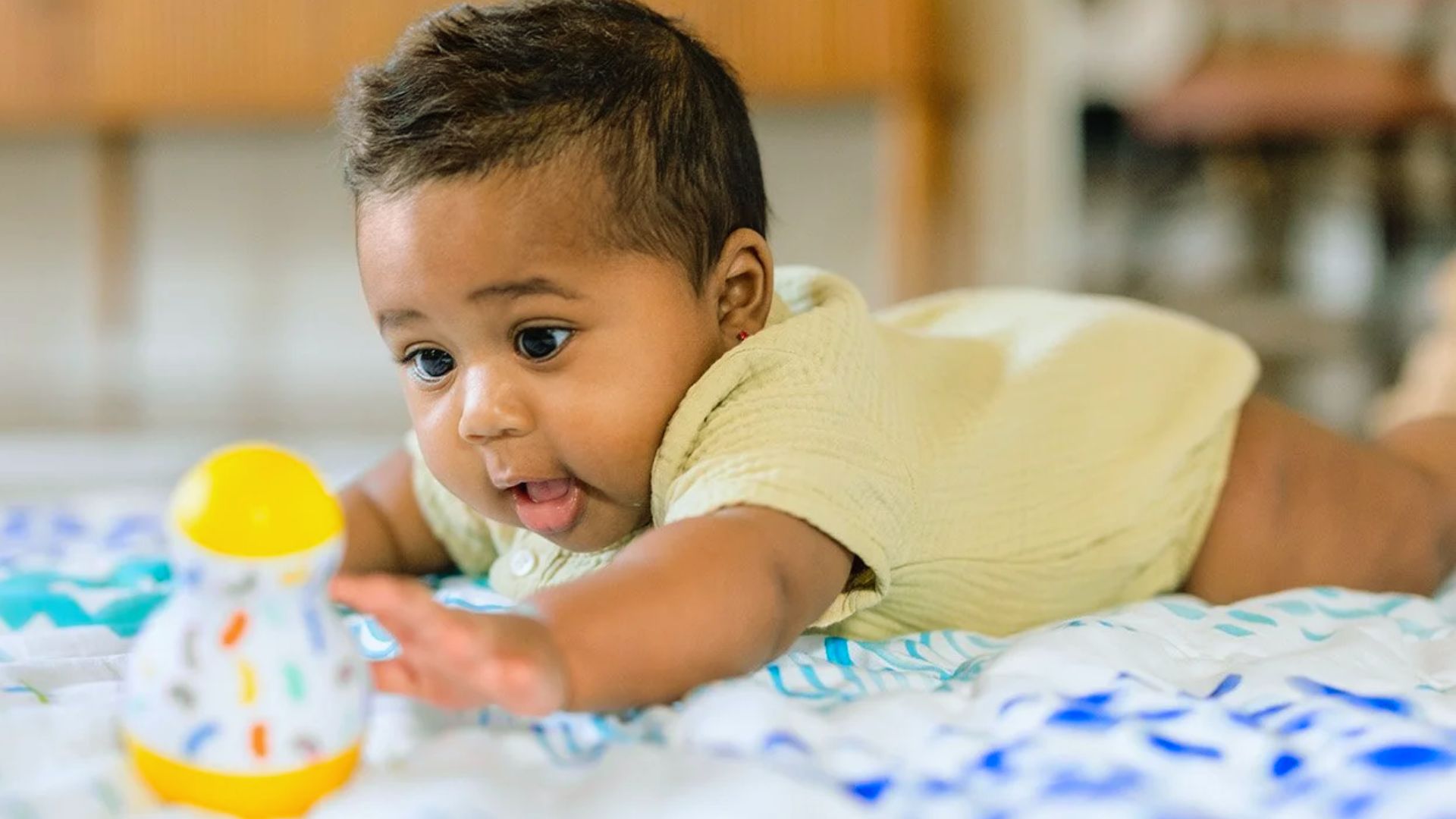
Although development cannot be rushed, daily play gives babies plenty of opportunities to strengthen their muscles and improve coordination. Consistent practice through simple activities is often more effective than buying expensive toys.
Choose lightweight rattles, soft rings, textured balls, or teething toys that are easy for small hands to hold.
The American Academy of Pediatrics recommends simple, open-ended toys like these over toys that light up or play music on their own, since babies learn more when they do the reaching and grasping themselves.
Place toys slightly within reach rather than directly in your baby's hands so they have a reason to stretch and grasp independently. Moving toys from one side to the other also encourages babies to use both hands equally and improves bilateral coordination.
Short, supervised tummy time sessions remain one of the best ways to strengthen the shoulders, arms, neck, and core muscles that support reaching and grabbing. Several shorter sessions throughout the day are usually more effective than one long session.
Can Babies Grab Things Too Early?
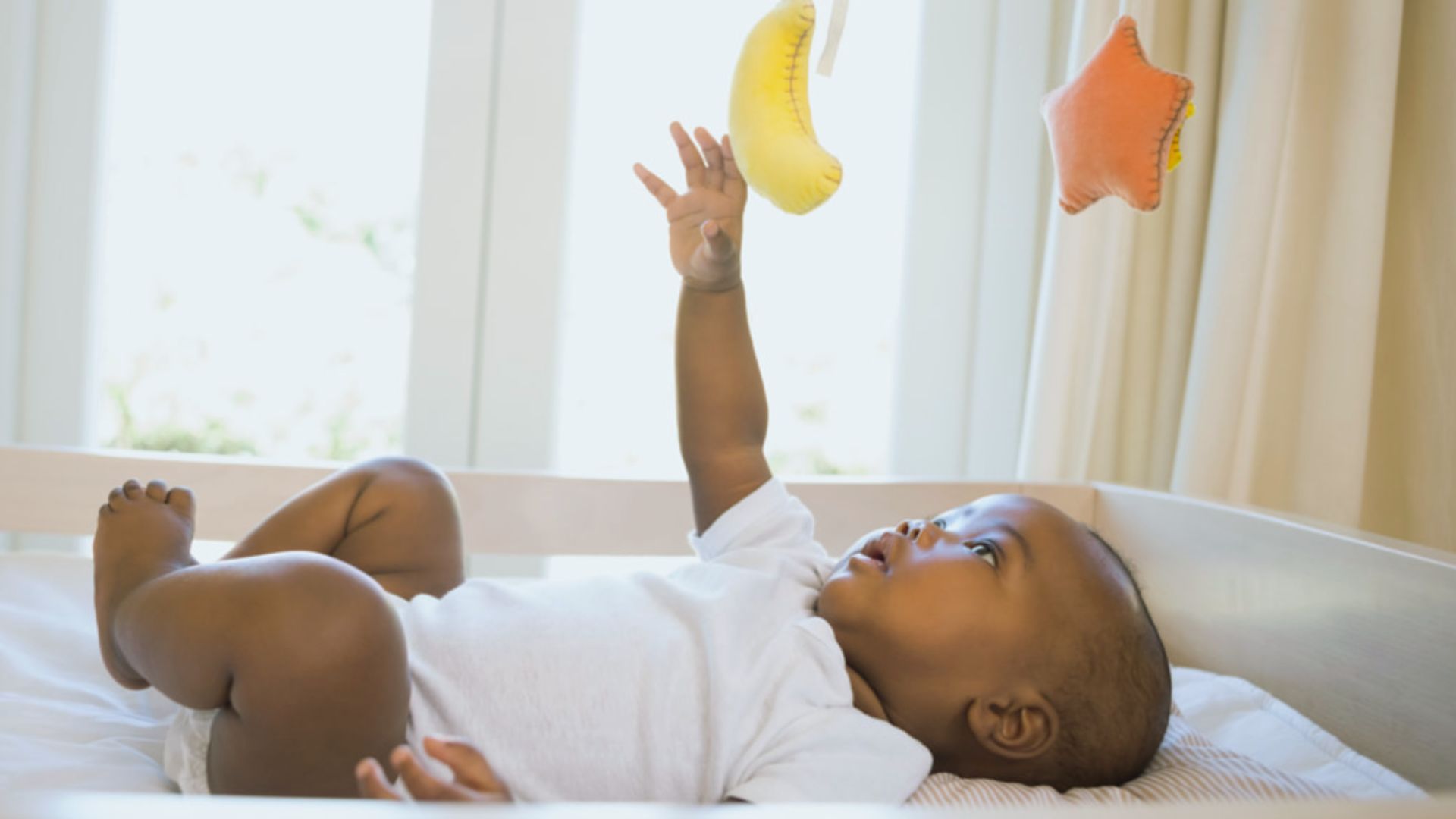
Some parents are surprised when their newborn seems to hold a finger tightly or briefly grip a toy. In most cases, this does not mean the baby has developed intentional grabbing early.
Newborns are born with the palmar grasp reflex, an automatic response that causes their fingers to close around anything touching the palm. This reflex is strongest during the first few months of life and gradually fades as babies gain voluntary control of their hands.
Intentional grabbing usually develops between 4 and 6 months, when babies can see an object, reach toward it, and choose to hold it.
Understanding the difference between reflexive gripping and purposeful grabbing helps parents recognize normal development without unnecessary concern.
Common Reasons Babies Reach Milestones at Different Times
Although developmental milestones follow a general pattern, several factors can influence exactly when a baby begins reaching and grabbing objects.
- Premature birth: Babies born early often reach milestones based on their adjusted age rather than their birth date.
- Muscle tone: Naturally tighter or looser muscle tone can slightly affect the pace of motor development.
- Daily practice: Babies who enjoy regular tummy time and supervised floor play often have more opportunities to strengthen their muscles.
- Vision development: Improving eyesight helps babies judge distance and reach more accurately.
- Individual growth: Every baby follows a unique developmental timeline, so small differences are expected and usually normal.
Expert Tips to Support Healthy Hand and Motor Development
Small daily activities can make a meaningful difference in your baby's fine motor development. The goal is not to speed up milestones but to provide safe opportunities for practice as your baby's coordination naturally improves.
- Give your baby supervised floor time every day instead of relying heavily on swings, bouncers, or infant seats, which limit free movement.
- Place toys at chest level or slightly within reach to encourage stretching without causing frustration.
- Rotate toys with different textures, shapes, and sizes so your baby practices adjusting their grip.
- Encourage reaching with both hands by placing toys on alternating sides during playtime.
- Allow your baby a few moments to solve simple movement challenges before helping, as repeated practice builds strength and coordination.
- Schedule several short tummy time sessions throughout the day instead of one long session.
These simple habits support healthy baby hand development while making playtime enjoyable and engaging.
Conclusion
If you've been wondering when babies start grabbing things, remember that most babies begin reaching for objects around 3 to 4 months and intentionally grabbing them between 4 and 6 months.
Every baby develops at their own pace, and small differences in timing are often completely normal. Regular tummy time, supervised floor play, and age-appropriate toys help support healthy hand and motor development as these skills naturally progress.
If you ever have concerns about your baby's development or notice missed milestones, speak with your pediatrician for personalized guidance.
For more expert-backed baby milestone guides and practical parenting tips, explore our other resources to help you support your child's development with confidence.
Frequently Asked Questions
Can babies grab things with their feet before their hands?
Yes. Some babies begin holding toys or pulling at socks with their feet around 4 to 6 months as their overall coordination improves. This development can occur alongside improvements in hand control.
Does thumb sucking affect a baby's ability to grab objects?
No. Thumb sucking is a natural self-soothing behavior and does not usually interfere with hand strength, coordination, or fine motor development.
Why does my baby grab toys and immediately throw them?
Throwing objects often begins around 8 to 9 months. It is a normal part of learning cause and effect while improving hand control and coordination.
Should I worry if my baby only grabs with one hand?
A mild preference can occur occasionally, but a strong preference before 12 months, especially if the other hand is rarely used, should be discussed with a pediatrician.
Can premature babies catch up on grabbing milestones?
Yes. Many premature babies reach developmental milestones later when measured by their adjusted age rather than their birth date. Your pediatrician can help track progress using the appropriate timeline