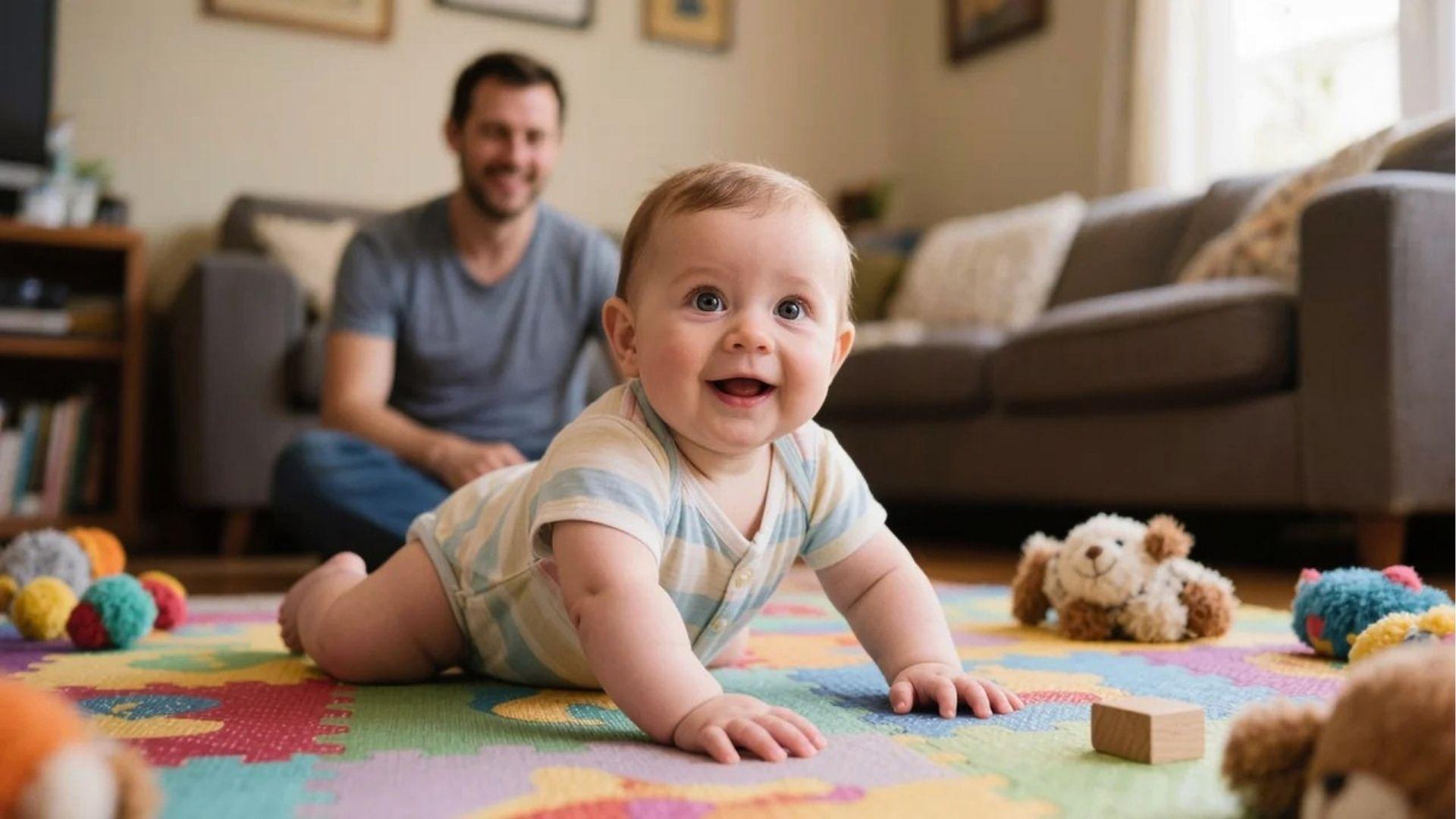
Your baby just pushed up on straight arms for the first time, and now every wiggle on the play mat feels like a countdown.
Sooner or later, a parent in that spot types when does a baby crawl into a search bar, often late at night, and ends up comparing their baby with a neighbor’s.
What rarely comes up in those searches is that early attempts at moving sometimes go backward, sideways, or in small circles before they go anywhere useful.
Below you’ll find the typical timeline, the early signs, and a calmer way to read your own baby’s pace.
When Does a Baby Crawl?
Most babies start crawling between 7 and 10 months, but some crawl earlier, later, or skip this stage entirely.
The NHS puts the usual window at around 7 to 10 months, and some babies get going closer to 6 months while others wait until nearly their first birthday.
Timing depends on strength, coordination, and how much time a baby gets to practice moving on the floor, which is why two babies of the same age can look so different.
Crawling is also not a required stage, since some babies shuffle on their bottoms or go from sitting straight to pulling up and taking their first steps.
CDC dropped crawling from its milestone checklists in its 2022 update because little data exists on when it should happen.
When Do Babies Start Crawling? Signs to Watch For
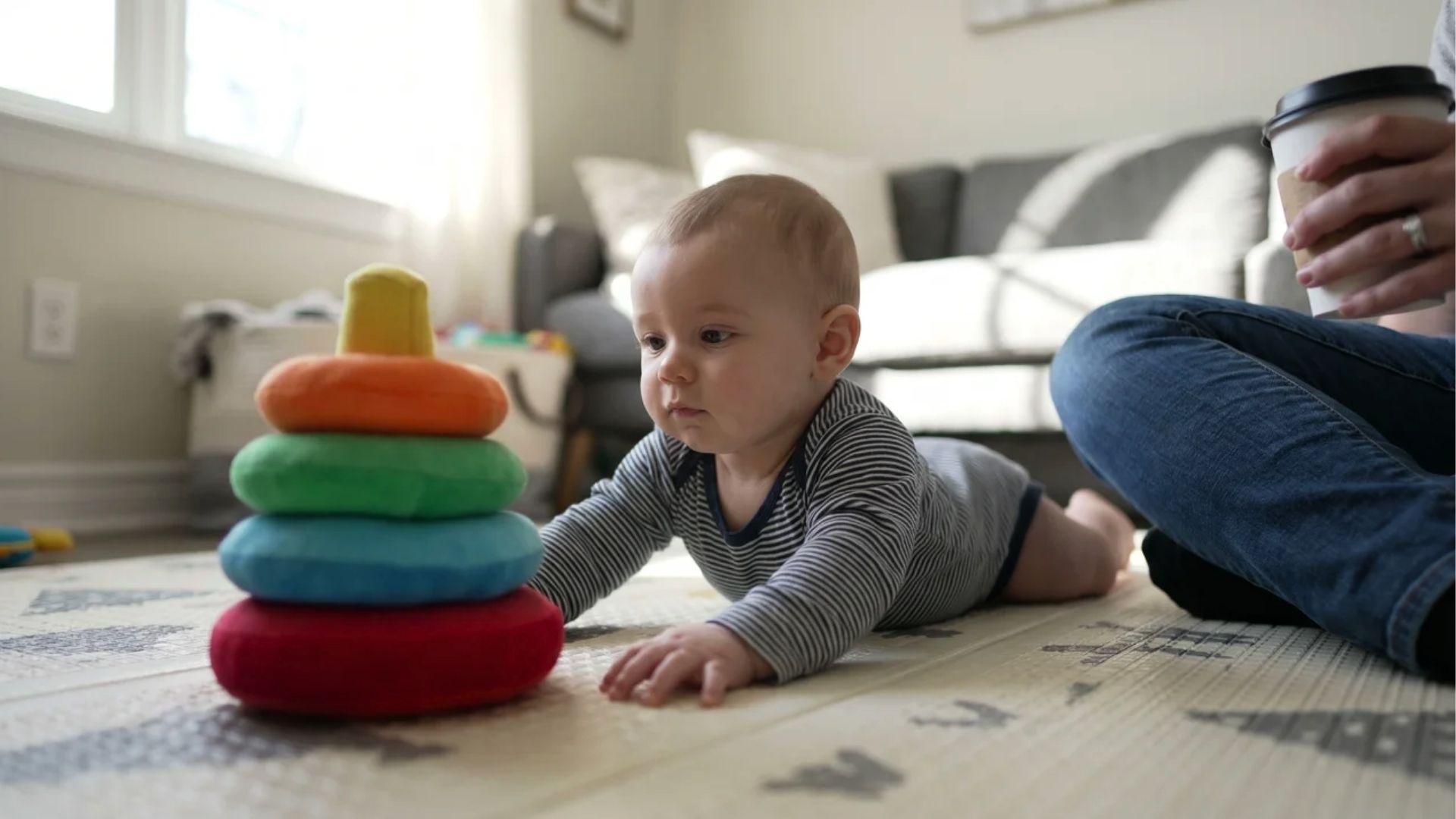
Before crawling, babies usually develop:
- Better head control
- Upper-body strength
- The ability to shift their weight while playing on the floor
Babbling often builds alongside these physical skills, which is why many parents start wondering when kids start talking around the same time.
How Does Tummy Time Prepare Babies for Crawling?
Tummy time works the neck, shoulder, and arm muscles a baby later uses to hold their body up on the floor.
NICHD's tummy time guidance explains that supervised tummy time strengthens these muscles so a baby can start to sit up, crawl, and eventually walk.
A few basics make it easier to get started:
- Begin with short sessions and lengthen them as the baby gets older
- Keep the baby awake during tummy time
- Stay within sight and reach for the whole session
What Does Pre-Crawling Look Like?
Pre-crawling shows up as a series of small moves that build on each other.
Watch for these:
- Pushing up on straight arms while on the tummy
- Rocking back and forth on hands and knees, which some babies do for a while before they move at all
- Tucking the knees underneath the body, then staying in place or sliding backward before moving forward
- Reaching for a nearby toy, which tips the weight forward and creates that first bit of progress
Once those pieces come together, babies find their own way across the floor, and the styles vary a lot from one baby to the next.
What Are the Different Types of Baby Crawling?
Many babies move from one style to another as their strength and coordination develop, and scooting or other styles are often just a baby's own way of getting around.
If it helps to see the differences, you can watch these styles in action before reading how each one works.
1. Belly Crawling (Army or Commando Crawling)
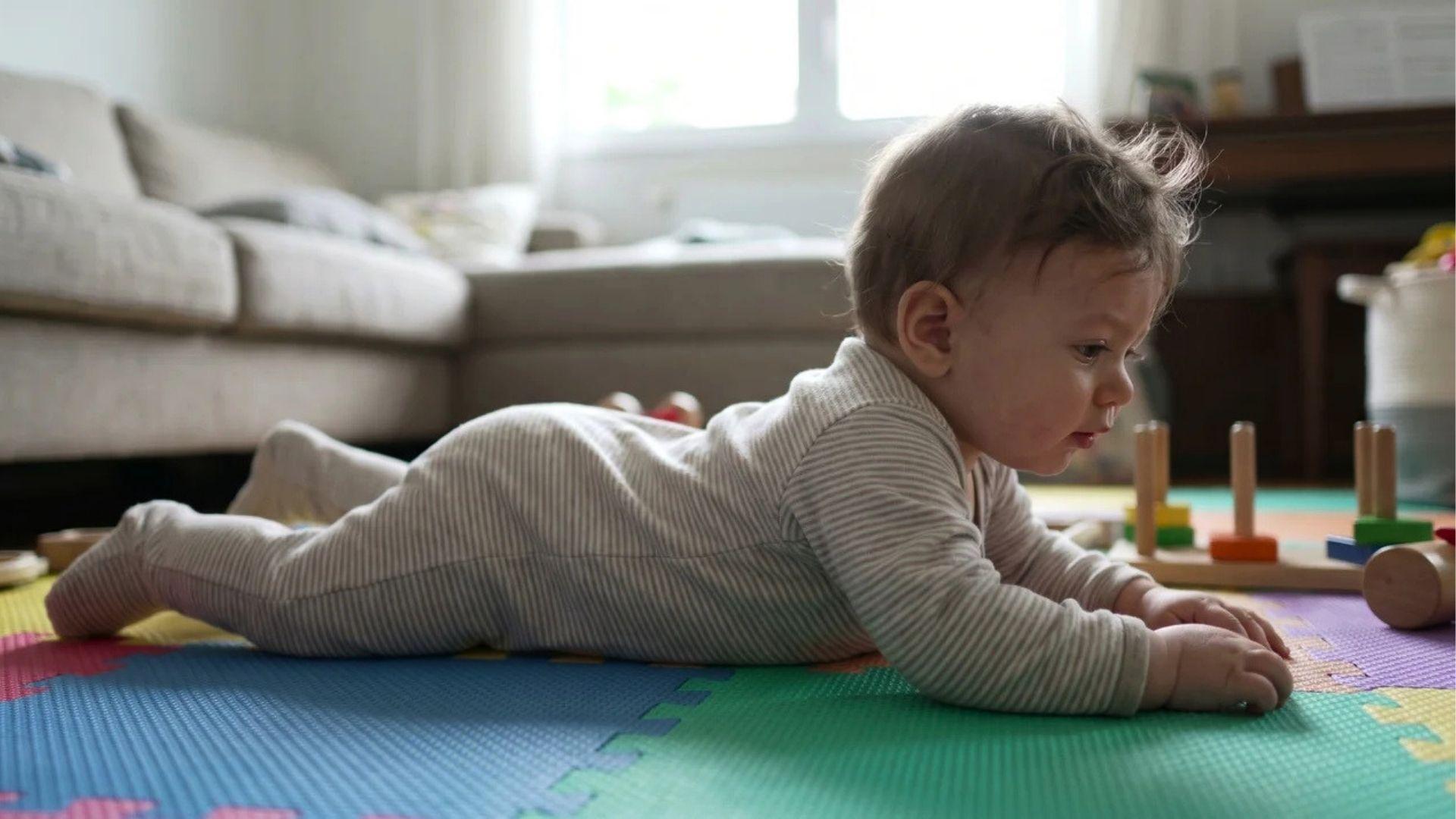
Belly crawlers pull themselves forward with their arms while the stomach stays close to the floor.
The legs may trail behind or help push along, and the movement can look more like a slow glide than a crawl.
Many babies move on to hands-and-knees crawling as their arms and core get stronger, though not every baby follows that order.
2. Hands-and-Knees Crawling
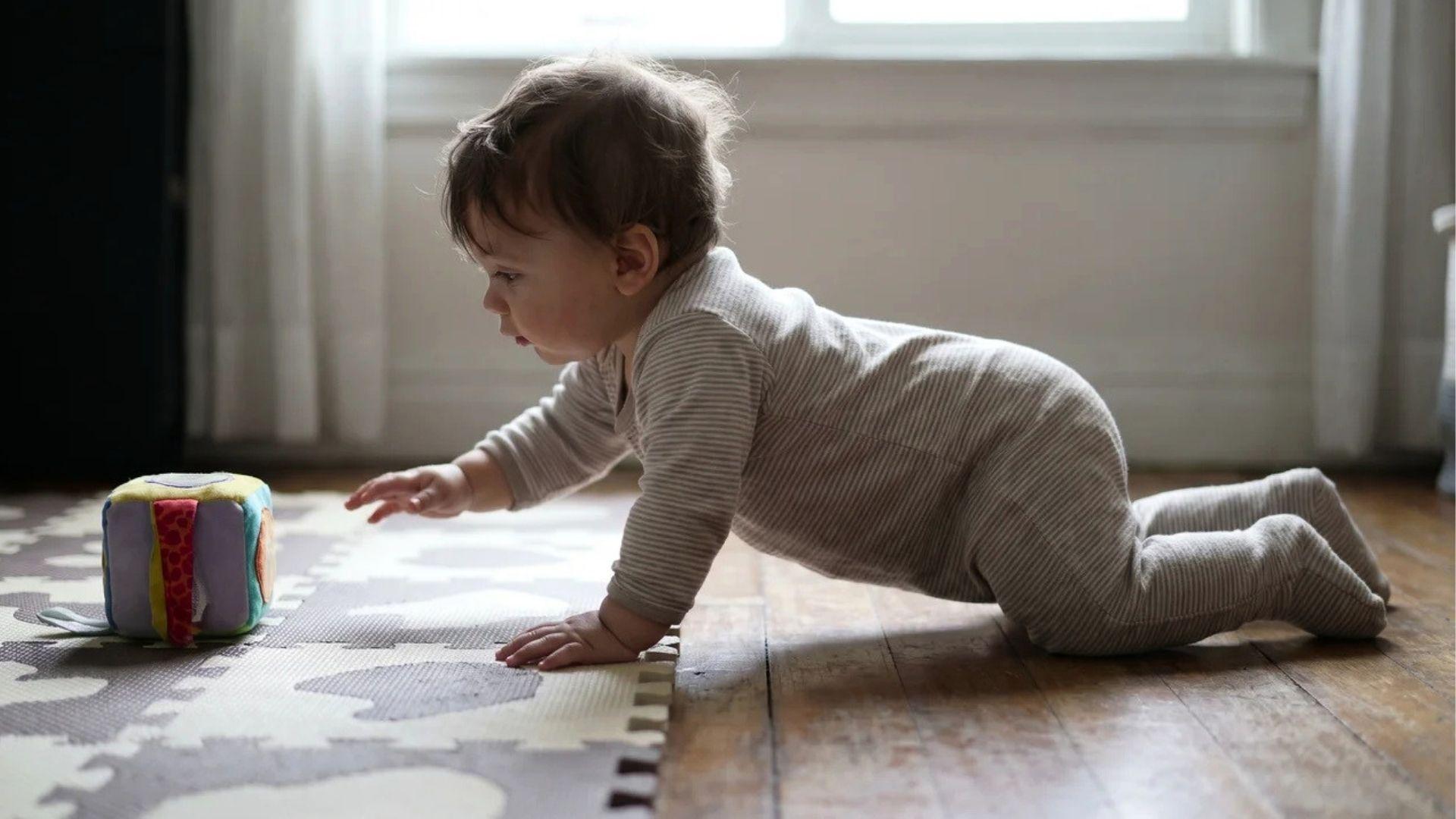
In this style, the stomach lifts off the floor, and opposite limbs move together, such as the left hand forward with the right knee, while the other hand and knee hold the baby's weight.
It asks for more balance and coordination than belly crawling, since the baby has to shift weight with every move. Many babies get faster with practice, so a clear floor space helps.
3. Bear Crawling
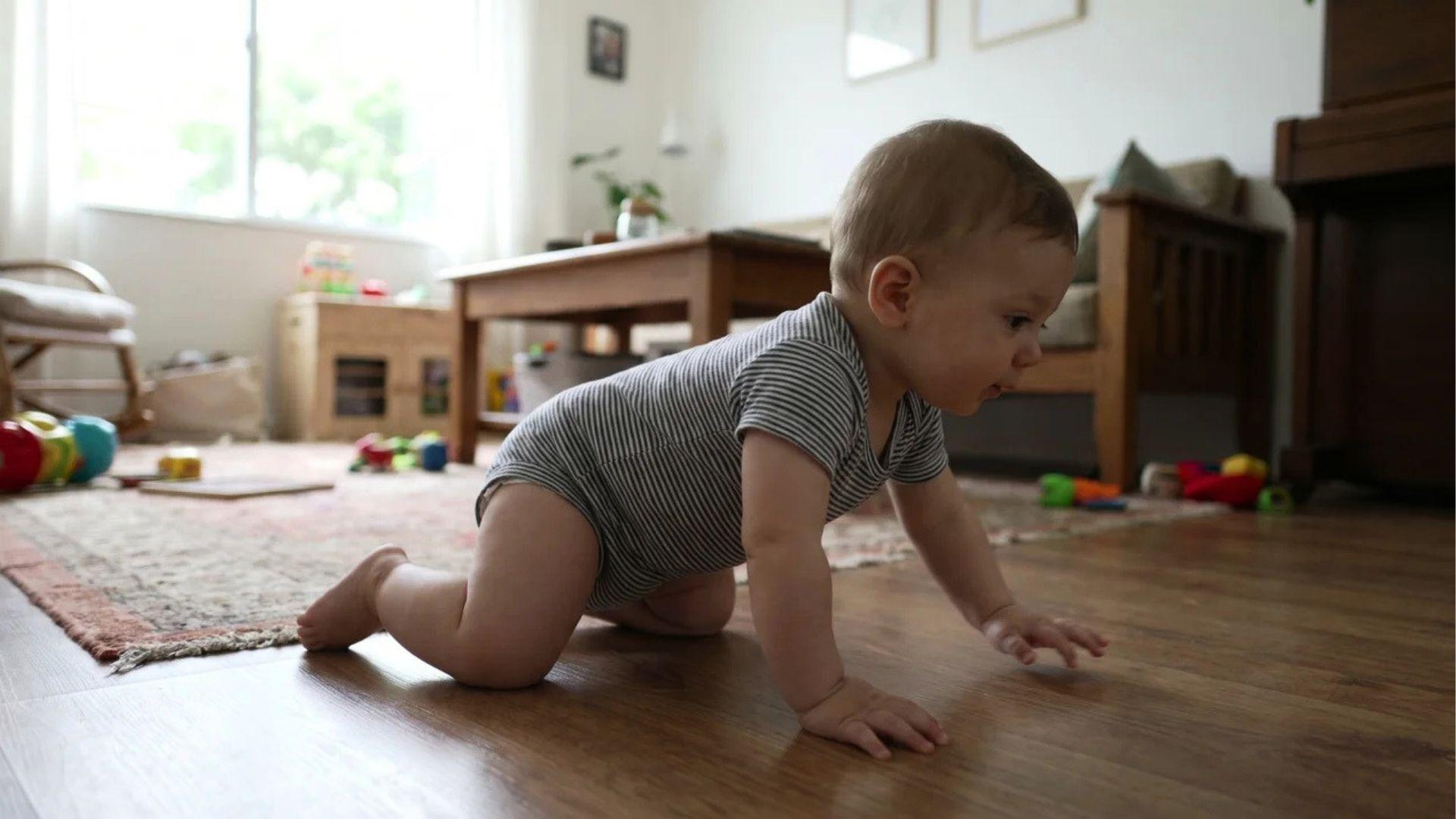
Bear crawlers move on their hands and feet with the knees off the floor and the bottom raised, a bit like a yoga pose.
It takes arm strength and steady balance, since the baby supports their weight on straight arms and legs while moving.
Not every baby tries this style, and a baby who does may switch between bear crawling and other styles from day to day.
4. Bottom Scooting
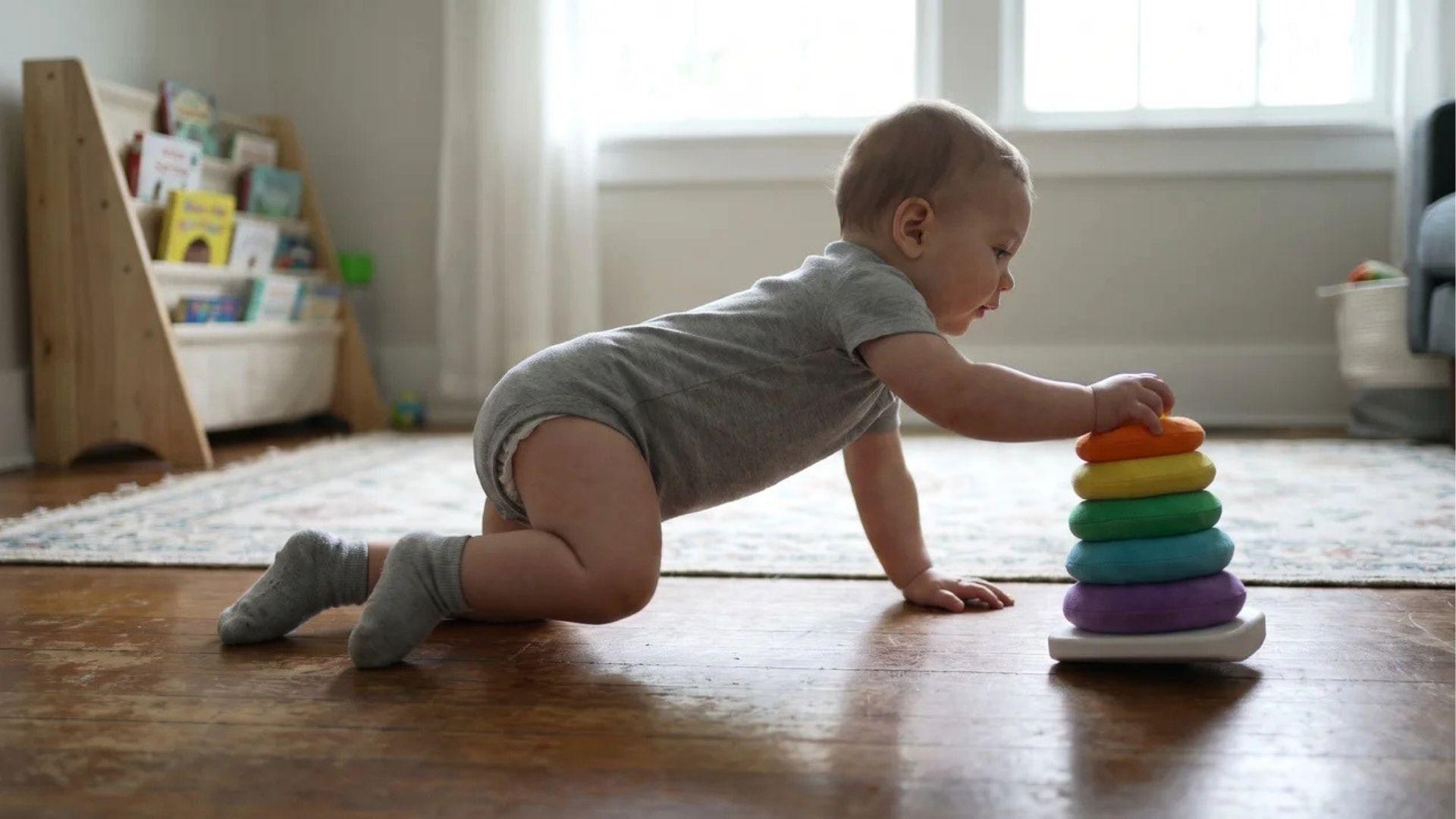
Bottom scooting babies stay seated and move forward or sideways by pushing with their legs, sometimes using a hand for help.
It is a common way to get around, and some babies scoot instead of crawling. Because their hands stay free, scooters can often hold or carry a toy while they travel across the floor.
Whatever style a baby picks, the floor setup and playtime around them shape how much practice they get, and small changes to both are easy to make.
How Can You Encourage Your Baby to Start Crawling?
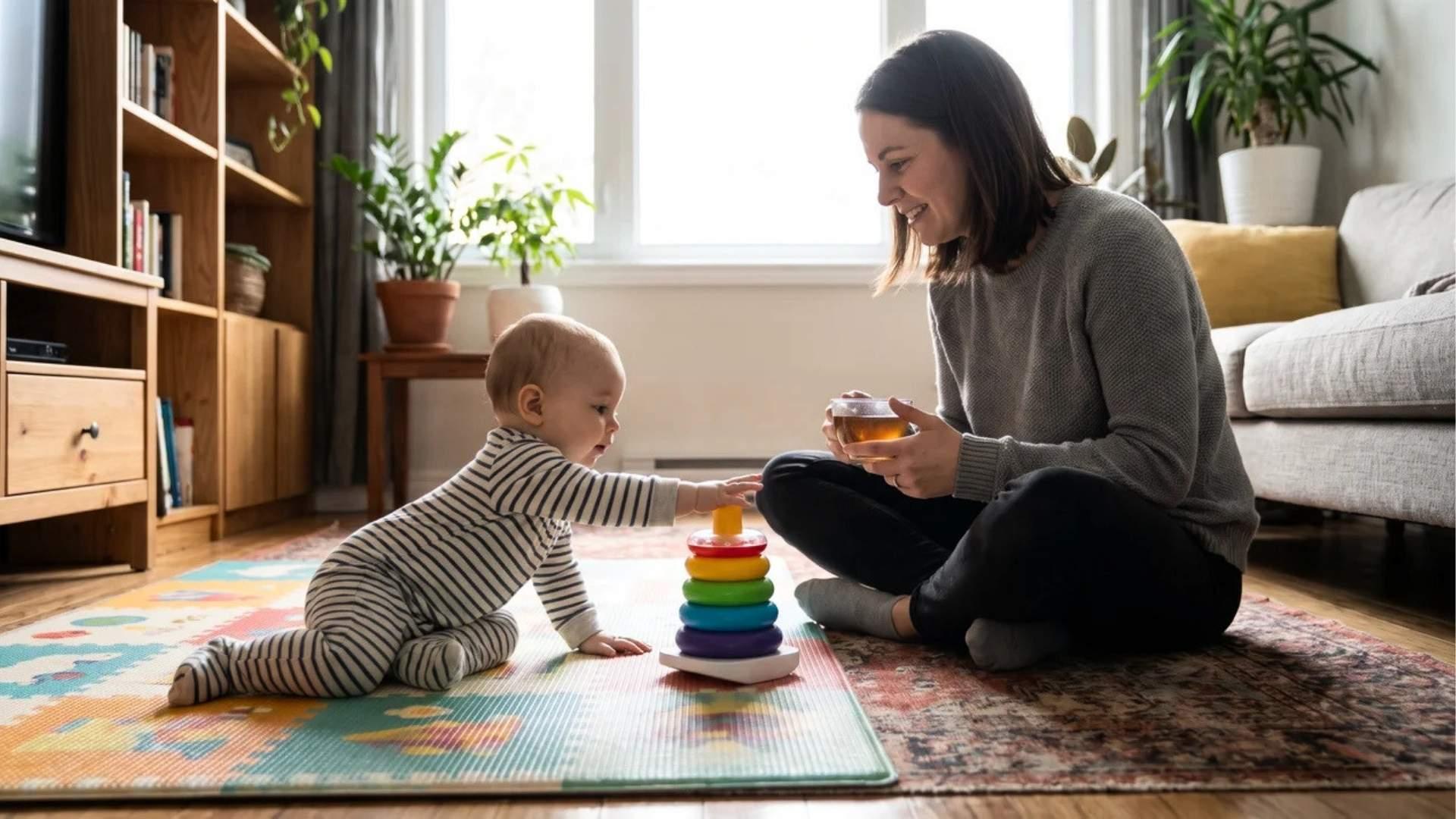
Supervised floor play, tummy time, and age-appropriate toys can help babies practice the strength and coordination used in crawling.
No special equipment is needed, and the pace is up to the baby.
Use Toys to Encourage Reaching and Movement
Place a toy just ahead of the baby, close enough to see and almost reach.
The CDC's tips for 9-month-olds suggest setting toys a little out of reach and cheering when the baby gets to them. That small gap gives a reason to reach, shift weight, and move forward.
Create a Safe Space for Floor Play
A flat, firm floor with open room gives a baby space to practice, and an adult within arm's reach keeps floor play safe.
Before playtime, scan the area for:
- Small objects that could be a choking hazard
- Sharp or hot items
- Open stairs, which need a gate
Even with plenty of floor time, some babies take their own route to moving, and that does not always mean something is off.
Knowing the few signs worth a closer look makes it easier to relax about the rest.
When Should You Worry If Your Baby Is Not Crawling?
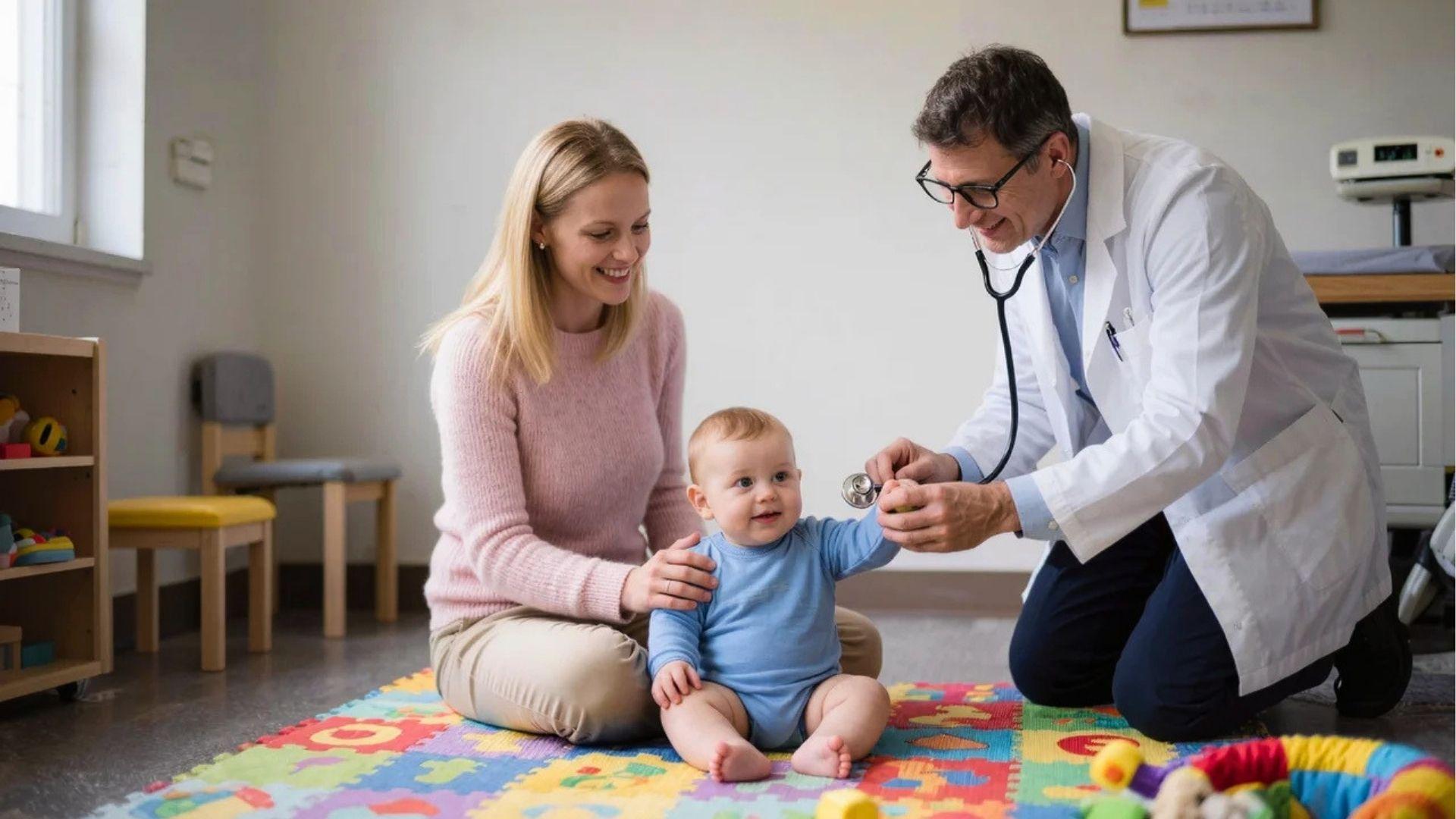
Not every baby crawls, but parents should discuss limited movement progress, unusual asymmetry, or other developmental concerns with a pediatrician.
Not crawling by 10 or 12 months does not automatically point to a developmental delay, particularly when a baby is rolling, sitting, and finding other ways to move.
These are the patterns worth raising at a well-child visit, based on NICHD's early signs guidance:
- Consistently favoring one side of the body, or moving in a lopsided way
- Dragging one arm or leg while moving
- Little progress in independent movement
Scooting alone is common, but it is worth mentioning if it is the only way a baby moves after about 10 months.
A pediatrician can look at the full picture, including sitting, pulling up, and how a baby uses both hands, which no crawling age can do on its own.
Also mention it if a baby loses a skill they once had.
Final Takeaway
The short answer to when does a baby crawl is a range, not a date, and a baby at either end of it may just be moving at their own pace.
Floor time is the most useful thing a parent can offer: a safe space, a few toys, and patience for the backward scoots and sideways wobbles that come first.
Watching how a baby moves over several weeks gives a clearer picture than one missed month.
At the next well-child visit, mention anything that has been nagging at you, and bring a short video of how your baby moves.
Frequently Asked Questions
Can a Baby Crawl at 4 Months?
Crawling at 4 months is earlier than usual. At this age, babies are more likely to lift their heads and push up onto their forearms during tummy time than to move across the floor.
Do Babies Who Bottom Shuffle Walk Later?
Sometimes. Bottom shuffling is a normal variation, though shufflers may start walking a little later than crawlers. If you are worried about walking, talk with your pediatrician.
How Long Do Babies Crawl Before Walking?
There is no set length of time. Some babies crawl for several months before they walk, while others move through this stage quickly, so the gap varies from baby to baby.