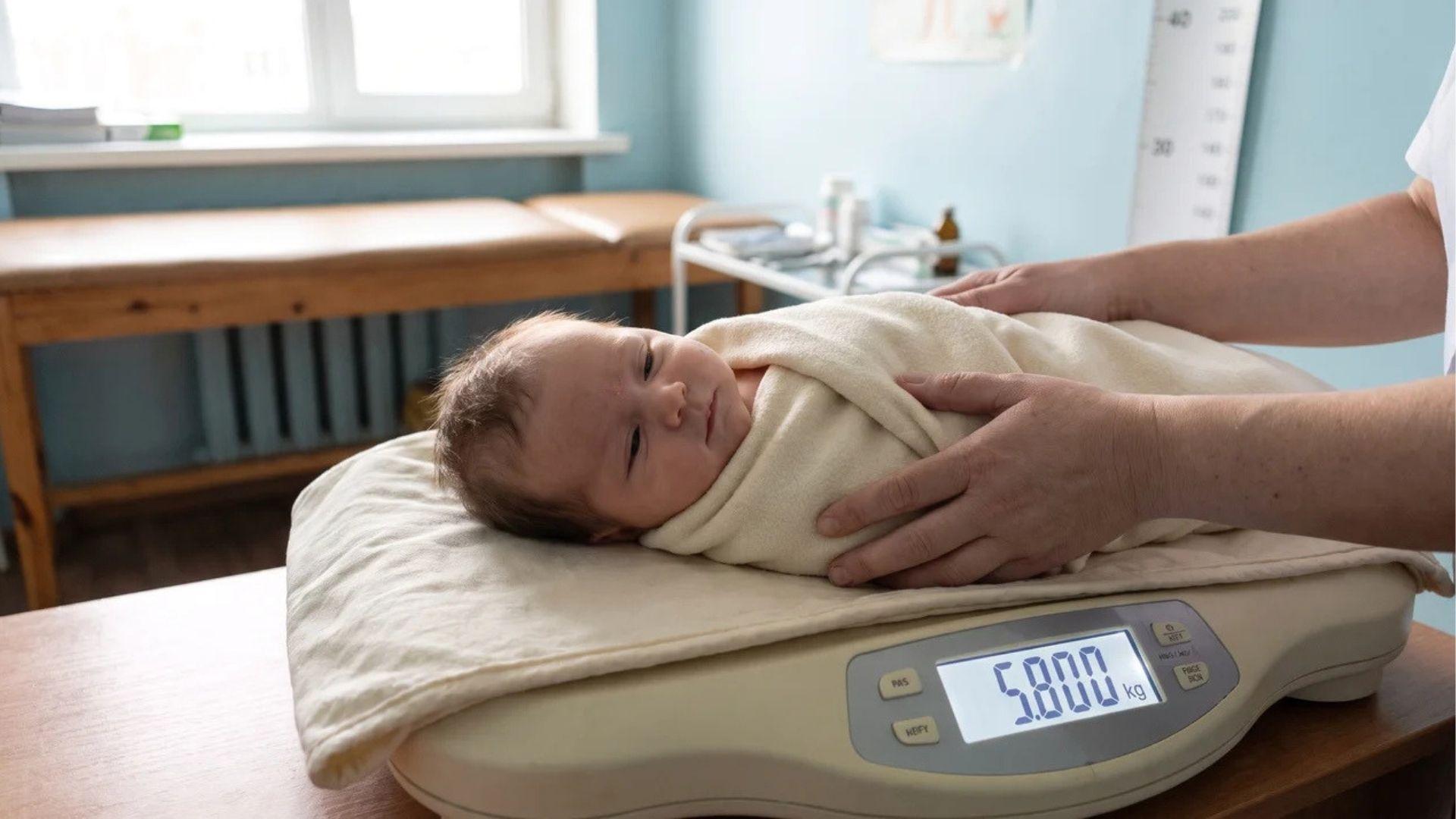



You just finished feeding your baby, settled them against your shoulder, and within minutes they brought it all back up.
If this keeps happening, you may be searching for how to stop your baby from vomiting after feeding.
Usually, it comes down to a small stomach, swallowed air, or feeding too quickly, not anything serious.
Still, the difference matters. Spit-up is usually effortless, small, and doesn’t bother your baby. True vomiting is more forceful, larger in volume, and may come with fussiness or arching.
Here, you’ll learn why babies vomit, which feeding changes help, and when to call your pediatrician.
This article is for informational purposes and is not a substitute for professional medical advice. Always consult your pediatrician with questions about your baby’s health.
Why Do Babies Vomit So Much?
Babies often vomit because their stomachs are small and the muscle that keeps food down, the lower esophageal sphincter, is still developing.
This makes it easy for milk to come back up, especially if a baby is overfed, swallows air while feeding, or is laid down too soon afterward.
In most cases, this is simple reflux rather than a sign of illness, and babies usually outgrow it by their first birthday as their digestive system matures and they spend more time upright.
How to Stop a Baby From Vomiting After Feeding
Spitting up after a feed is common in babies and usually isn't caused by anything you're doing wrong. A few small changes around feeding can often help reduce it.
1. Feed Smaller Amounts, More Often

A newborn’s stomach is very small, often compared to a cherry on day one, a walnut by day three, and an apricot by the end of the first week.
These are rough guides, not exact measurements.
Even so, it stays small for weeks, which is why overfeeding causes so much spit-up early on.
Try offering less milk at each feeding and feeding more often throughout the day.
This keeps your baby's stomach from getting overly full, which is one of the most common reasons milk comes back up after a feed.
2. Keep Baby Upright During and After Feeding

Gravity helps keep milk down, so hold your baby in an upright position while feeding and for 20 to 30 minutes afterward.
Avoid laying them flat right after a meal, since this makes it easier for milk to flow back up the esophagus.
Holding your baby against your shoulder works well during this window. If you use a baby carrier, keep your baby’s face visible and chin off their chest so their airway stays clear.
3. Burp Your Baby Frequently

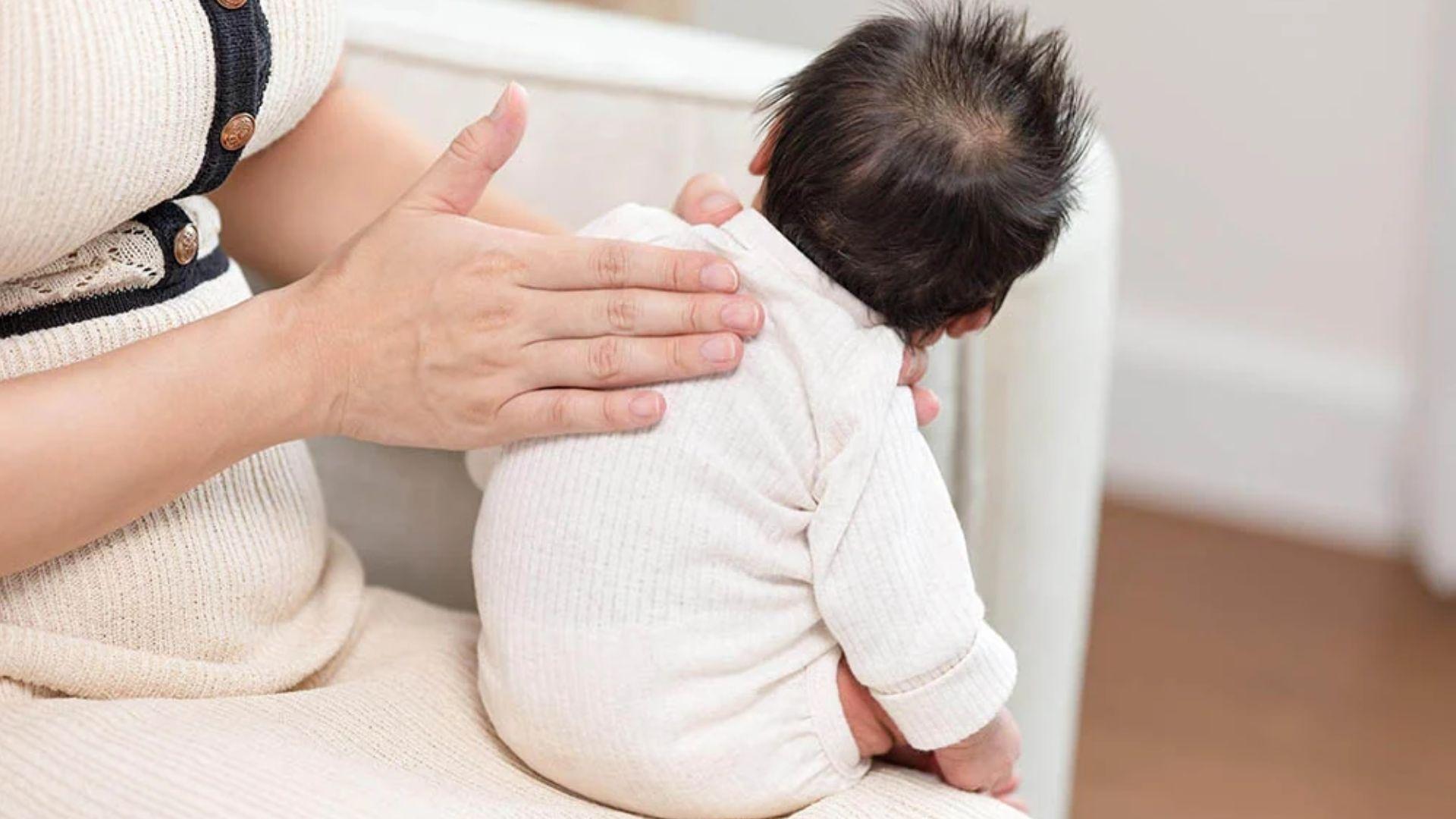
Babies swallow air while feeding, and that trapped air can push milk back up along with it. Pause halfway through the feed to burp your baby, then burp again once the feed is finished.
Gently patting or rubbing their back while holding them upright usually brings up any trapped air within a few minutes.
4. Slow Down the Flow (Bottle-Feeding Tips)
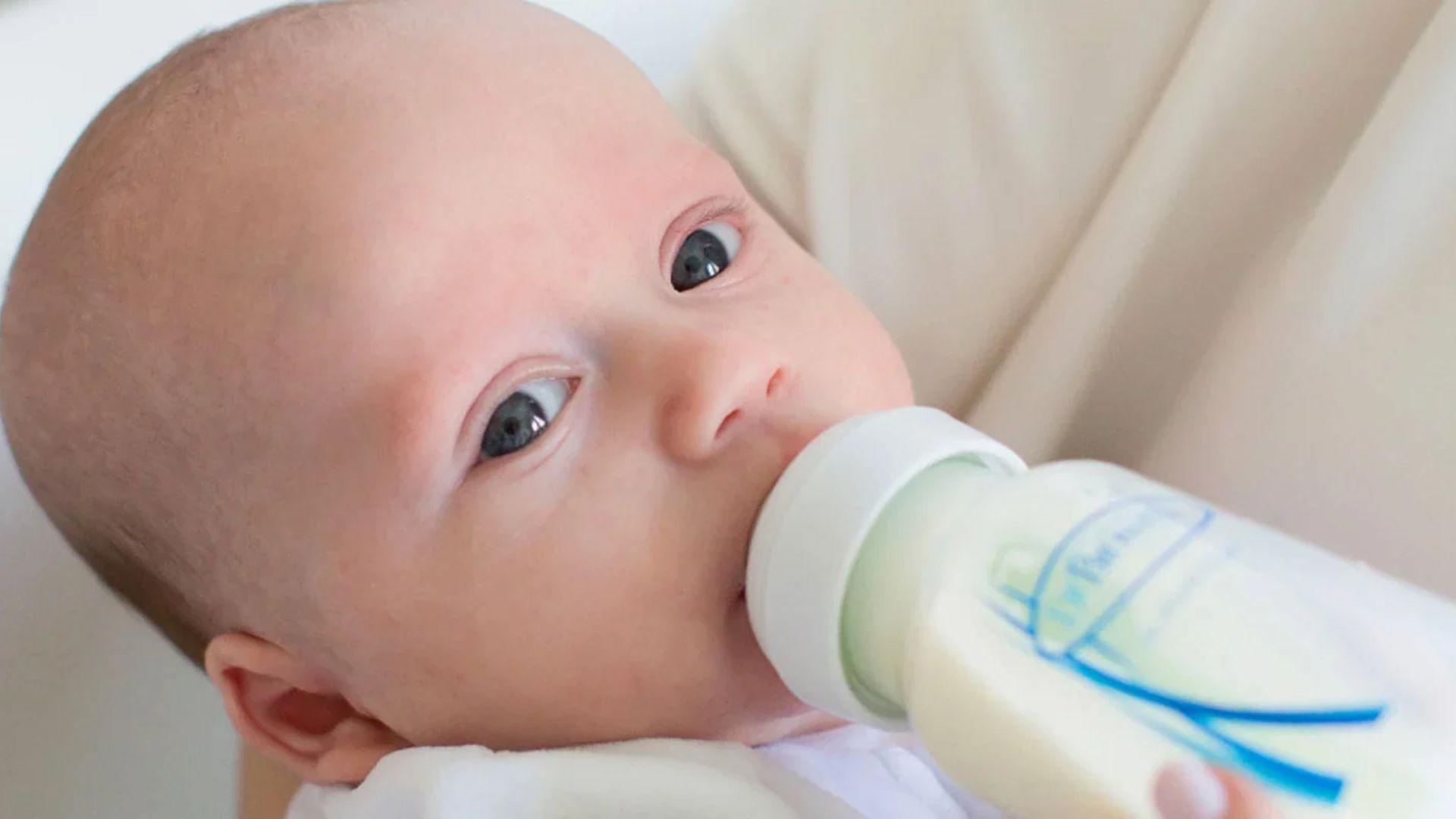
If you are bottle-feeding, choose a slower-flow nipple so your baby can keep pace without gulping air along with the milk.
Hold the bottle at an angle so the nipple stays filled with milk rather than air.
Pacing the feed with small breaks also helps your baby's stomach keep up and reduces the chance of vomiting afterward.
5. Avoid Active Play Right After Feeding

Bouncing, swinging, or vigorous movement right after a feed can unsettle a baby's stomach and bring milk back up.
Give your baby at least 20 to 30 minutes of calm, upright time before placing them in a bouncy seat or starting tummy time.
Quiet activities like gentle rocking or simply holding your baby are safer choices during this period.
Breastfeeding vs. Formula-Feeding: What Changes
The core advice stays the same for both feeding methods, but a few details shift depending on how your baby eats.
| Aspect | Breastfeeding | Formula-Feeding |
| Air swallowed | Usually less, since the baby controls the flow | Usually more, due to bottle flow |
| Key fix | Let baby set the pace; check the latch if baby gulps or chokes | Use a slow-flow nipple and tilted angle |
| Burping | Burp when switching sides | Burp every 2 to 3 ounces, or more often if your baby spits up a lot |
| Feed pacing | Follow baby’s natural sucking rhythm | Take short pauses during the bottle |
Baby Throwing Up After Eating Is It Normal?
Yes, in most cases. Spit-up is extremely common in the first few months.
About half of babies spit up at least once a day in the first three months, rising to about two-thirds by 4 months, when it usually peaks
This is usually just mild reflux rather than true vomiting.
Spit-up tends to come out gently, happens soon after a feed or during burping, and does not seem to bother your baby much.
As long as they keep gaining weight, feed and sleep normally, and show no signs of dehydration or distress, this is a normal part of early infancy that typically improves on its own by around 12 months of age.
What to Do If Your Baby Vomits After Feeding

Stay calm. While your baby is awake, sit them upright or turn them onto their side to help clear their airway. Once they are settled, always place them on their back to sleep.
Wipe their mouth and check that they are breathing comfortably before doing anything else.
If it was a one-time vomit and your baby seems fine afterward, you can offer a smaller feed after about 30 minutes, once they show hunger cues again, and most babies recover from a single episode without any further issue.
Watch closely over the next few hours and contact your pediatrician if you notice:
- Vomiting happens more than once or keeps repeating after each feed
- Your baby seems unusually fussy, weak, or difficult to settle
- Signs of dehydration appear, such as fewer wet diapers or a dry mouth
- Your baby refuses to feed again or seems increasingly unwell
How to Calm Your Baby's Stomach After Vomiting
Once the vomiting has stopped, give your baby's stomach a short break before feeding again so it has time to recover.
- Wait about 30 minutes after the last vomit before offering more milk so your baby’s stomach has time to settle
- Start with a smaller amount than usual and feed slowly, pausing to burp often
- Keep your baby upright and calm rather than active during this time
- Return to their normal feeding routine gradually over the next feed or two, once they keep milk down and seem comfortable
When to Call a Doctor
Most spit-up and occasional vomiting is harmless, but a few signs need medical attention.
Go to the ER or call emergency services right away if:
- The vomit is green or bright yellow-green, which can signal a blocked or twisted bowel. If you are not sure about the color, treat it as green.
- The vomit contains blood or coffee-ground-like material.
- Your baby is under 3 months old with a rectal temperature of 100.4°F (38°C) or higher, which can signal a serious infection.
- Do not wait for office hours. These are medical emergencies.
Call your pediatrician the same day if:
- The vomiting is forceful or projectile.
- Your baby is not gaining weight.
- You notice fewer wet diapers, a dry mouth, or a sunken soft spot.
- Your baby seems extremely tired or cries constantly.
- These signs can point to pyloric stenosis, dehydration, or an infection that needs prompt care.
About pyloric stenosis:
- Pyloric stenosis typically appears between 2 and 12 weeks of age, most often around 3 to 5 weeks.
- It is rare at birth and rare after 3 months, though not impossible.
- If your baby has forceful, projectile vomiting in this window, especially if they seem hungry again right after vomiting, call your pediatrician the same day.
Final Takeaway
How do you stop my baby from vomiting after feeding? I’d start with smaller feeds, an upright hold, and burps.
These habits ease most spit-up while your baby’s stomach matures.
Most babies outgrow it by 12 months. Knowing normal spit-up from true vomiting matters, because it keeps you calm and helps you act when something is wrong.
Green or bright yellow-green vomit, blood in the vomit, or a rectal temperature of 100.4°F (38°C) or higher in a baby under 3 months needs emergency care right away.
Forceful vomiting or fewer wet diapers needs a call to your pediatrician the same day.
At the next feed, try one change and watch how your baby responds. If the vomiting keeps happening, book a check-up so your baby gets the right care.
Frequently Asked Questions
What should I do if my baby is vomiting after feeding?
Keep your baby upright, wipe their mouth, and check that they're breathing comfortably. If it was a single episode, offer a smaller feed after about 30 minutes, and call your pediatrician if the vomiting repeats or is forceful.
Should you refeed a baby after vomiting?
Yes, in most cases. Wait about 30 minutes, then offer a smaller feed once your baby shows hunger cues. Call your pediatrician if they vomit it back up again or refuse to feed.
Are babies hungry again after they throw up?
Often yes, since the stomach has emptied. But if your baby is hungry right after every forceful, projectile vomit, call your pediatrician the same day to rule out pyloric stenosis.