
Figuring out how many baby clothes do I need is one of those questions that seems simple but quickly gets overwhelming.
You don't want to over-buy and waste money, but you also don't want to run out of clean clothes at 2 AM.
This article breaks down exactly how many pieces you need by size, age, and clothing type. It also covers what affects the number and what most parents get wrong when shopping.
Whether you are a first-time parent or adding to your family, having a clear plan makes shopping much less stressful.
Having guided many parents through this process, the advice here is practical and based on real experience. No guesswork, no overspending, just a clear plan that works.
How Many Baby Clothes Do I Need?

Most parents overbuy before the baby arrives and underbuy the sizes their baby actually wears longest. Start with 7 to 10 outfits per size that covers most families without overdoing it.
A few things directly change how many clothes you actually need. Laundry frequency matters the most.
Washing every day means you can get by with fewer pieces, while washing twice a week means you need a bigger rotation.
How messy your baby is plays a big role too, since some babies spit up after every feed while others barely make a mess.
Diaper blowouts add to this fast, and most babies have at least one a day in the early weeks. Your lifestyle shifts the number as well.
Staying home most days means less variety, but frequent outings call for more outfits. Cold weather adds another layer since bundling up means more pieces overall.
A starting point of 7 to 10 outfits per size gives you enough to rotate through the week with room for unexpected messes, without stuffing a drawer full of clothes your baby may never actually wear.
How Many Baby Clothes by Size and Age

Babies grow through sizes quickly, so buying in bulk for any one size is rarely a good idea. Here's a realistic breakdown.
Newborn (NB)
Buy the least here. Newborn size fits babies up to about 8 to 9 pounds, and many babies skip it entirely.
If your baby arrives early or at a low birth weight, look for preemie sizing first and transition up when they gain weight.
If your baby is expected to be average or larger, skip newborn altogether or buy just 3 to 5 outfits. You can always get more if needed.
0 to 3 Months
This is the first size most babies actually wear. Aim for 7 to 10 onesies, 4 to 6 sleepers, and a few extras like pants and hats.
Babies this age go through multiple outfits a day, so having enough to last 3 to 4 days between washes is practical.
3 to 6 Months
Babies wear this size for roughly 2 to 3 months. You can build out more variety here. Eight to 10 outfits work well.
Include a mix of easy-on pieces since babies become more active and diaper changes get more frequent.
6 to 12 Months
This range covers several sub-sizes (6M, 9M, 12M). Buy gradually as your baby grows. Around 8 to 10 pieces per sub-size is plenty.
Focus on durable, easy-wash items since babies this age are messier and more mobile.
How Many of Each Baby Clothing Item?

Instead of thinking in outfits, it helps to break it down by clothing type. Here's what a solid baby wardrobe looks like per size.
Onesies and Bodysuits
These are your everyday go-to. Aim for 6 to 8 short-sleeve onesies and 4 to 6 long-sleeve onesies per size. They work alone in warm weather or as a base layer in colder months.
Look for styles with envelope necklines or overlap shoulders, since these let you slide the bodysuit down off the baby's legs during a blowout instead of pulling it over their head.
Sleepers and Pajamas
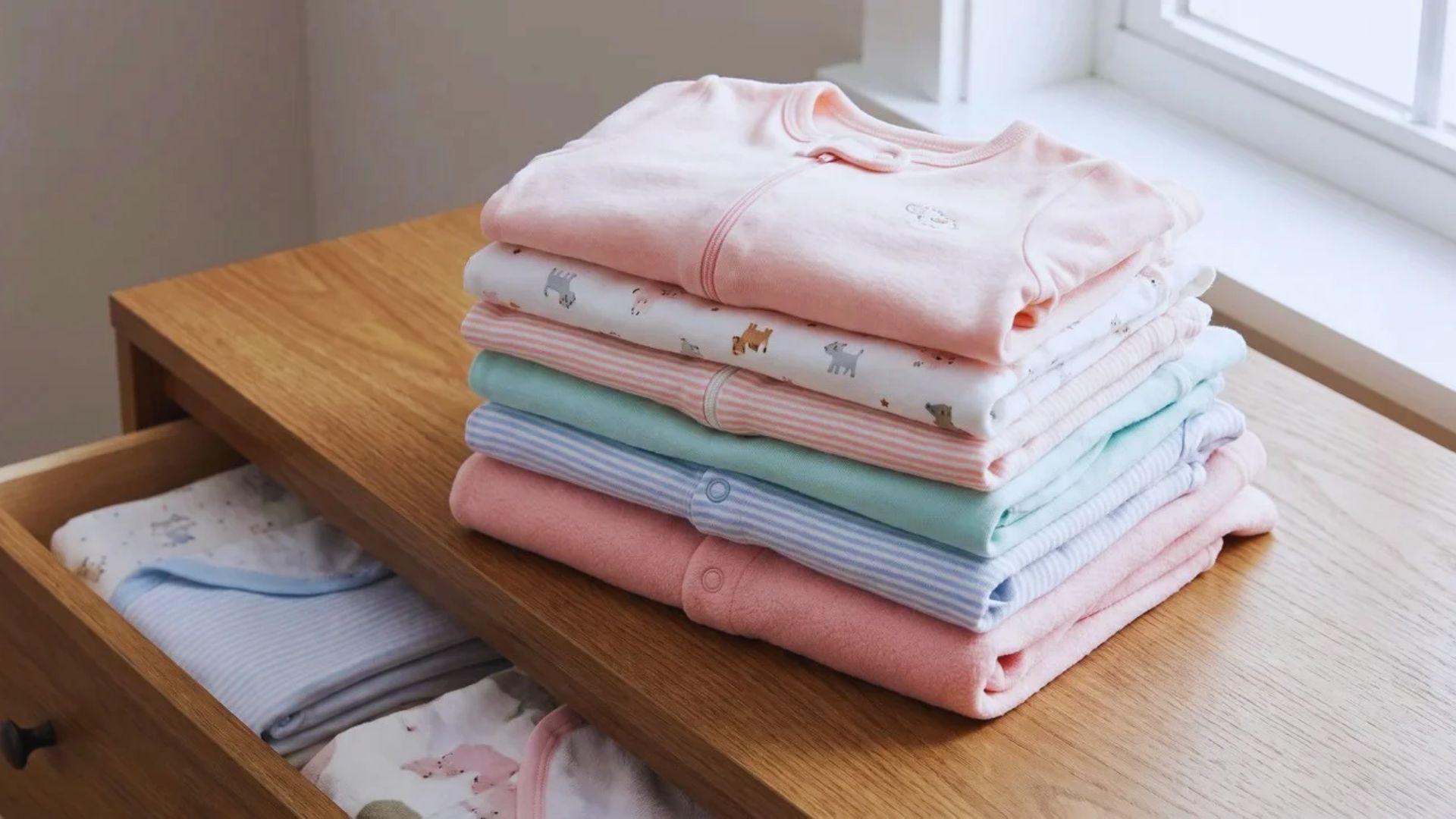
Babies wear these around the clock in the early weeks. Keep 4 to 6 sleepers on hand. Zip-up styles are easier than snaps at 3 AM, and footless options last longer as babies grow.
Sleeper gowns with open bottoms are also worth having for quick nighttime diaper changes. Once your baby shows signs of rolling, swap swaddles for a sleep sack to keep sleep time safe.
Swaddles
Have 2 to 3 swaddle blankets on hand for the newborn stage. They pair with sleepers for nap time and help settle a fussy baby. Muslin cotton works well since it is breathable and easy to wash often.
Pants, Tops, and Outfits
These are more for going out or variety. Three to 5 pairs of pants and 3 to 4 tops or full outfits per size is enough. Don't overload here. Babies don't care what they're wearing.
Socks, Bibs, Hats, and Mittens
- Socks: 6 to 8 pairs. They get lost constantly.
- Bibs: 6 to 10 for heavy droolers and feeders, fewer for newborns.
- Hats:2 to 3 per season.
- Mittens: 2 to 3 pairs for newborns to prevent scratching.
What Changes How Many Baby Clothes You Need?

Your specific situation matters more than any general rule. A few real-life factors shift the number significantly.
How Often You Do Laundry
If you can run a load every day or two, you can get by with 5 to 7 outfits per size. If you prefer washing once or twice a week, bump that up to 10 to 14 pieces so you're never scrambling.
Using a fragrance-free or hypoallergenic detergent is a good idea for babies with sensitive skin, and it doesn't change how many clothes you need, just how you wash them.
Spit-Ups and Daily Outfit Changes
Some babies go through 3 to 4 outfits a day due to spit-up, blowouts, or drool. If your baby is a heavy spitter, add 3 to 5 extra onesies and sleepers to your count.
This is probably the biggest variable most parents underestimate.
Weather and Seasonal Clothing
Dressing a baby in winter means more layers, including undershirts, pants, socks, and a heavier sleeper or jacket.
One important note: bulky outerwear can prevent a car seat harness from fitting snugly, so dress your baby in thin, warm layers for car rides and add a blanket over the harness instead.
Summer simplifies things. Factor in the season your baby will be in each size when buying.
Daycare, Travel, and Time Away from Home
Daycare usually requires extra sets of clothes kept there at all times. Add 2 to 3 outfits to your regular count per size if your baby will be in daycare.
Traveling also means packing extras for spills and mess.
Should You Buy More or Wait?

Buying everything upfront feels safe, but it often leads to waste. Here's how to think about it before and after your baby arrives.
Buying Before Your Baby Arrives
Stock up on the sizes most babies actually wear, 0 to 3 months and 3 to 6 months. Keep tags on and receipts handy so you can exchange sizes if needed.
If you have set up a baby registry, check what has already been purchased before filling your own cart. Resist the urge to fill an entire dresser before your due date.
What Experienced Parents Recommend
Most parents who've done this before say the same thing buy less, wash more. They recommend starting small and adding when you actually know what your baby needs.
Buying too much before birth is the most common regret.
How Gifts and Hand-Me-Downs Affect Your Shopping
Baby clothes are a common gift. Before buying everything yourself, wait and see what comes from your baby shower.
Hand-me-downs from friends or family can also cover a lot of the first year at no cost.
Choosing gender-neutral styles in simple colors makes it easier to reuse clothes for a second child later. Factor these in before spending.
Common Mistakes When Buying Baby Clothes
Even well-prepared parents make a few of the same shopping mistakes. Knowing them in advance saves money and drawer space.
Buying Too Many Newborn Outfits
This is the most common mistake. Newborn size fits for a very short window, sometimes only a week or two. Many babies are born at a size that skips it entirely.
Limit newborn purchases to 3 to 5 pieces at most, or skip them and buy a few after birth if needed.
Ignoring Fast Growth and Size Changes
Babies can grow through an entire size in 6 to 8 weeks. If you stock up heavily on one size, half of it may never get worn. Buy in smaller batches and size up sooner than you think you need to.
Choosing Cute Clothes Over Daily Needs
Fancy outfits are fun, but babies spend most of their time in onesies and sleepers. Spending most of your budget on outfits that get worn once or twice is a common trap.
Focus on everyday basics first, then add a few nicer pieces for special occasions.
Tips to Buy the Right Number of Baby Clothes
A clear approach makes the whole process easier and keeps costs in check.
- Buy a basic set before your baby arrives, enough for about one week with regular laundry, then see what you run out of and fill in the gaps from there.
- Onesies, sleepers, swaddles, and socks are what you will reach for every single day, so stock these well before spending on anything else.
- Cute outfits and seasonal novelty pieces can wait until the everyday basics are fully covered and your baby's needs are clearer.
- A simple rotating wardrobe with 7 to 10 well-chosen pieces per size is far easier to manage than an overstuffed drawer.
- Less clutter means you can actually see what your baby has and use everything before they outgrow it, which saves money in the long run.
Conclusion
Knowing how many baby clothes do I need keeps you from overspending and under-preparing.
The answer depends on your laundry habits, your baby's size, and your daily routine, but a starting point of 7 to 10 pieces per size works for most families.
Focus on basics like onesies, sleepers, and swaddles, buy in smaller amounts, and add more as you go. Don't let the cute outfits distract you from what you'll actually use every day.
If this helped you, share it with another parent who's figuring out the same thing, or leave a comment with your own experience below.
Frequently Asked Questions
Can I use gender-neutral baby clothes for future children?
Yes, neutral colors and simple patterns work well for multiple children regardless of gender. They save money and stay practical for years.
How long do babies typically stay in each clothing size?
Most babies spend four to eight weeks in each size during the first year, though growth rates vary greatly between individual children.
Are second-hand baby clothes safe to use?
Yes, if they are clean, free of damage, and meet current safety standards. Avoid second-hand sleep items with loose parts or worn fabric.
Do I need separate clothes for daytime and nighttime?
Not strictly. Sleepers work day and night for newborns. Separate day and night clothes become more useful around three to four months.
What fabric is best for everyday baby clothing?
100% cotton is soft, breathable, and easy to wash. It works well for sensitive skin and handles frequent laundering better than synthetic blends. Organic cotton is worth considering if your baby has extra-sensitive skin.