Kids who don’t brush their teeth are rarely being defiant for its own sake.
Most are reacting to something specific, such as a strong toothpaste flavor, scratchy bristles, end-of-day exhaustion, or a growing need to be in charge of their own bodies.
When you find that reason and pair it with a calm, predictable routine, brushing usually stops being a nightly standoff.
As a dad and a parenting mentor who has worked with families for more than 11 years, I’ve watched the toothbrush become the biggest fight of the evening in plenty of homes, and I’ve watched it settle down once parents stopped pushing harder and started asking why.
Below, you’ll find the common reasons kids resist, what skipped brushing does to teeth, fixes from toddlers to tweens, fair consequences, and the signs that it’s time to call a pediatric dentist.
Why Do Some Kids Refuse to Brush?
Most children who refuse to brush are responding to discomfort, fatigue, or a need for control rather than plain stubbornness.
Mint can feel spicy, bristles can feel scratchy on tender gums, and a tired child has little patience left at bedtime.
Cavities also feel abstract to young kids, so brushing seems pointless to them. The way your child resists often points to the cause.
A child who clamps their mouth shut the moment the brush touches their gums may be reacting to sensation, while a child who runs giggling down the hallway is usually testing who’s in charge.
Kids also read the room, so if brushing has turned into a nightly argument, the tension itself becomes one more reason to dig in.
Before trying a fix, it helps to know what’s at stake when brushing keeps getting skipped.
What Happens When Kids Don’t Brush Their Teeth?
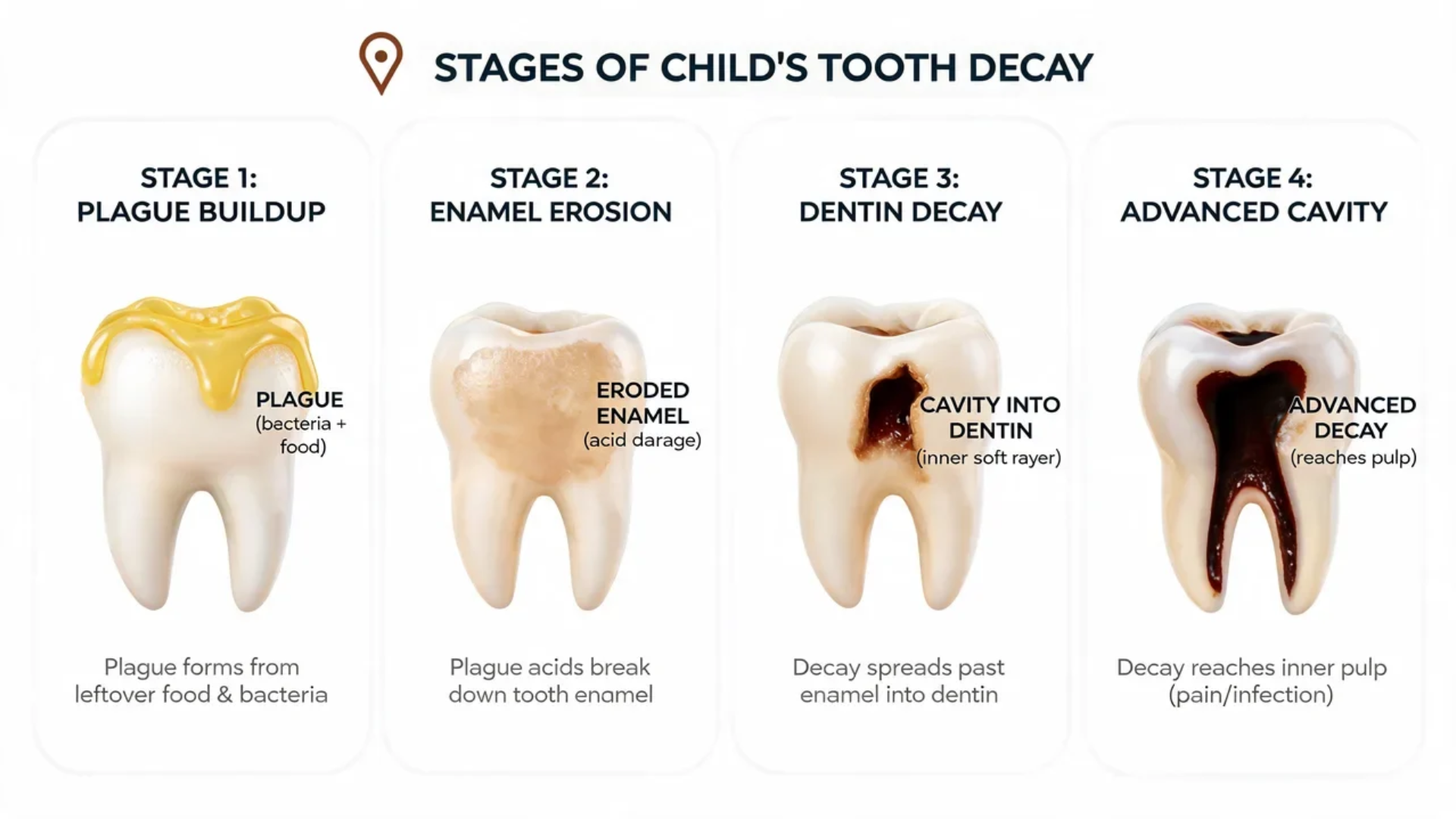
Missing one night won’t ruin a child’s teeth, but when kids don’t brush their teeth regularly, plaque, a sticky film of bacteria, stays on the teeth.
Those bacteria turn sugar into acid that wears down enamel.
According to Nationwide Children’s Hospital, baby teeth have thinner enamel than permanent teeth, so cavities can form faster in them.
| Stage | What’s Happening | What You May Notice |
| Plaque buildup | Bacteria feed on leftover sugar and release acid | Bad breath that water and mints don’t fix |
| Gum irritation | Plaque along the gum line irritates the gums | Red, puffy gums or bleeding while brushing |
| Enamel damage | Acid wears away the hard outer layer, which can’t grow back | Chalky white or brown spots, sensitivity to cold or sweets |
| Cavity | Decay breaks into the softer layers of the tooth | Visible holes or dark spots, pain when chewing |
| Infection | Deep decay reaches the nerve and can spread to the gums or jaw | Swelling, constant pain, or fever |
Untreated decay is more common than many parents expect. The CDC’s 2024 oral health report found that about 11% of children ages 2 to 5 had at least one untreated cavity in their baby teeth, and nearly 17% of children ages 6 to 9 had untreated decay.
Baby teeth also hold space for adult teeth, and the AAP notes that when baby teeth are lost early to decay, permanent teeth can come in crooked because there isn’t enough room.
Knowing the stakes helps, but stakes alone rarely change a child’s behavior, so the next step is making brushing easier to say yes to.
Practical Ways to Get Kids Brushing Again
For kids who won’t brush, what works in most families I mentor is a calm, predictable routine that gives children some control, because kids cooperate more when they know what comes next and feel they have a say.
If you’re starting with a little one, our guide to getting your toddler to brush covers positions and tools in more detail.
1. Keep the Routine the Same Every Night
Brush at the same point in the evening and in the same order, such as bath, pajamas, brushing, and then a story.
The AAP recommends brushing twice a day, usually after breakfast and before bed, and linking it to steps that already happen helps the habit stick.
Placing brushing right before books means it leads to something your child enjoys. If siblings share the sink, give each one a turn at the mirror so brushing doesn’t become a race.
2. Give Your Child Small Choices
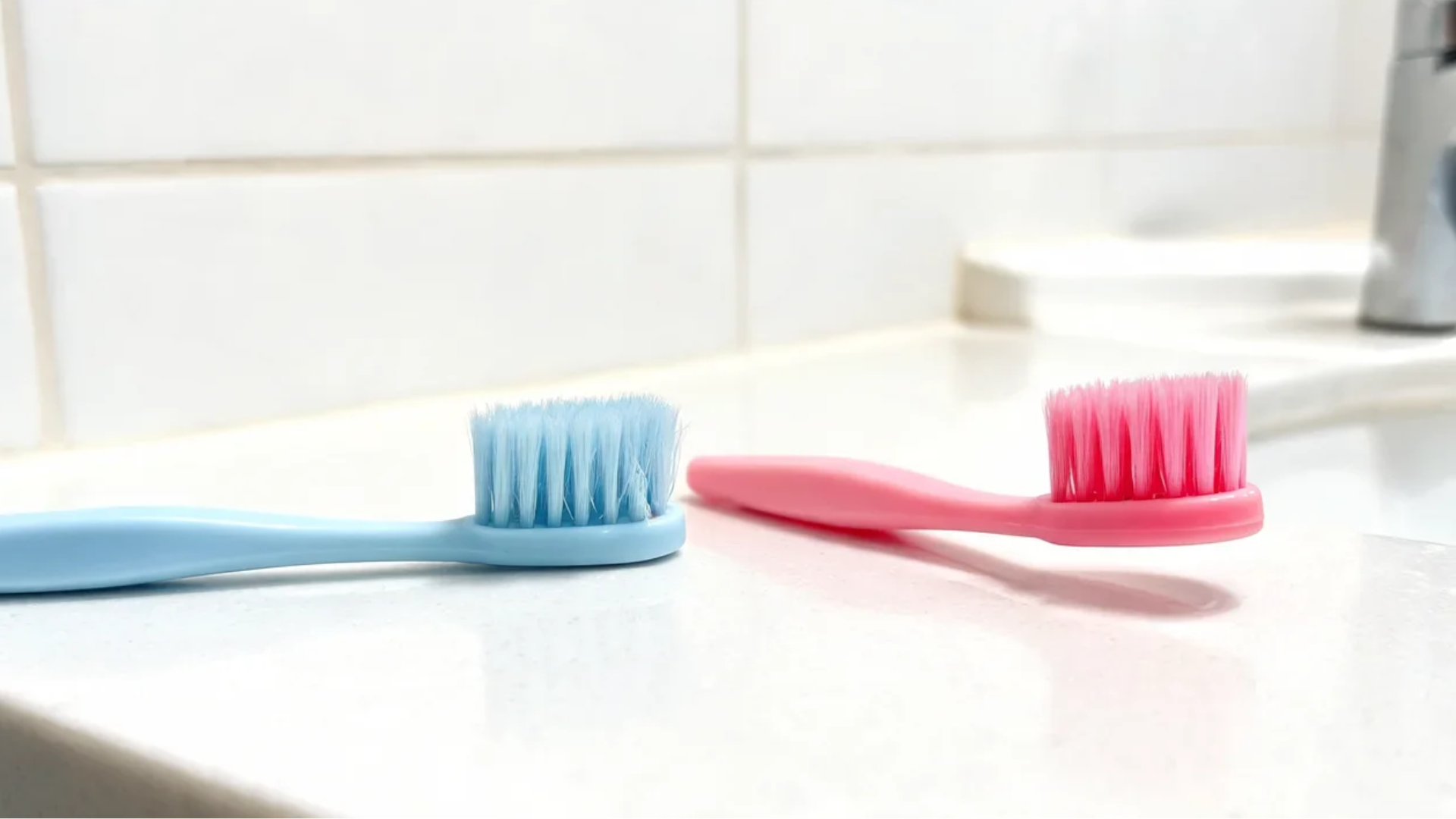
Let your child pick between two toothbrushes, two fluoride toothpaste flavors, or the song that plays for the two minutes of brushing.
A small choice turns “you have to” into “I get to,” while brushing itself stays non-negotiable.
If you use a brushing app as a timer, keep it tied to brushing so the phone doesn’t become a new screen-time negotiation.
Watch the amount of toothpaste, too: the AAP advises a rice-grain smear for children under 3 and a pea-sized amount for ages 3 to 6, and our guide on switching kids to adult toothpaste explains what changes as they grow.
3. Brush Together
Brush your own teeth beside your child, since kids copy what they see far more than what they hear.
Playful touches help, like hunting for “sugar bugs” or letting your child brush your teeth for a turn, an idea the AAP also suggests.
Younger children still need you to finish the job, so let them go first and then take your turn with the brush.
4. Brush Earlier When Bedtime Is Too Hard
If your child falls apart at bedtime, try brushing right after dinner, before the bedtime routine starts.
Long, active days, like the ones my family spends on local trails, can leave kids running on empty by evening. If you move brushing earlier, offer only water afterward so the clean teeth stay clean.
5. Praise Effort, Not Perfection
Notice what your child does well, like opening wide or holding the brush, and say so in a calm voice. Specific praise builds confidence, while bribes and threats usually make the standoff worse.
Some nights will still go badly, and that’s normal, so let the routine come back the next evening without a lecture. Consistency over weeks builds the habit far more than any single good night.
How Brushing Battles Change by Age

What drives the resistance shifts as children grow, so the fix should shift too.
1. When a 1-Year-Old Won’t Let You Brush His Teeth
When a 1-year-old won’t let you brush his teeth, the protest is often about being held still with something in his mouth.
The AAP notes that lying down is usually the easiest position for infants and toddlers, so try sitting on the floor with your child’s head in your lap.
Use a soft, small-headed toothbrush, keep sessions quick, and sing the whole way through.
The AAP, the American Academy of Pediatric Dentistry, and the ADA recommend a first dental visit by the first birthday, which is a good time to ask for hands-on tips.
2. When an 11-Year-Old Won’t Brush Teeth
When an 11-year-old won’t brush teeth, skill is rarely the issue, and the fight tends to be about independence, packed schedules, or forgetting. Lectures and shaming often backfire at this age.
Talk with your child instead of at them: ask what gets in the way, agree on a plan together, and connect brushing to things they care about, like fresh breath around friends.
A phone reminder they set themselves, plus a quick nightly check-in, respects their independence while keeping you involved.
What If Your Child Won’t Let You Brush Their Teeth?
When a child fights the toothbrush itself, figure out first whether you’re facing a power struggle or a sensory problem, because each calls for a different response.
1. When It’s a Power Struggle
Toddlers and preschoolers push back on being told what to do, which is a normal part of growing independence.
Offer choices about how brushing happens, not whether it happens, such as which teeth go first or who gets the first turn.
Stay calm and brief, because the less emotional energy the standoff gets, the less interesting it becomes.
2. Appropriate Consequences for Not Brushing Teeth
An appropriate consequence for not brushing teeth is calm, connected to brushing, and explained ahead of time.
The AAP’s discipline guidance favors natural and logical consequences over punishment, but the natural consequence here is cavities, which no child should learn the hard way. A logical consequence works better.
For a toddler or preschooler, that means a grown-up does the brushing, kindly and quickly, because teeth get brushed either way.
For a school-age child, if stalling eats into the evening, there’s less time for a story before lights out.
State it once and follow through without anger, and skip anything that turns the toothbrush into a penalty, like extra brushing.
At What Age Should a Child Brush Their Own Teeth?
Most children need hands-on help until around age 8, according to the AAP’s toothbrushing tips for parents.
A handy sign of readiness is when your child can tie their own shoelaces. Even after that, check in to make sure they’re brushing for the full two minutes and reaching the back teeth.
Guidance varies a little by source, and Boston Children’s Hospital puts the usual age for brushing and flossing alone at around 6 or 7.
Either way, independence comes in stages, moving from your child brushing while you finish, to brushing while you watch, to a quick check.
Flossing starts as soon as two teeth touch and usually needs adult help for longer because it takes more dexterity.
When Should You Talk to a Pediatric Dentist?

Call your child’s dentist if tooth pain, swelling, or bleeding gums keep coming back, or if you see dark spots, chalky white patches, or holes on the teeth, because decay doesn’t stop on its own.
Ongoing sensitivity to hot or cold, bad breath that brushing doesn’t fix, and months of a child refusing to brush despite several approaches are also worth a visit.
Some signs need faster help. Mayo Clinic advises going to the emergency room if facial swelling comes with a fever and you can’t reach the dentist, and right away for any trouble breathing or swallowing. Call 911 if your child is struggling to breathe.
Building a Brushing Habit That Lasts
Kids that don’t brush their teeth usually have a reason, whether it’s a sensitive mouth, a tired body at bedtime, or a strong wish to be in charge.
Once you know which one you’re facing, the response gets clearer: a steady routine, small choices, brushing together, and calm, logical follow-through.
Setbacks are part of the process, and a habit built on connection holds up better than one built on nightly arguments.
Tonight, pick one change from this guide, such as a new toothpaste flavor or brushing before pajamas, and give it a full week before judging whether it works.
Frequently Asked Questions
Is It Common for Kids to Not Brush Their Teeth?
Yes. A 2019 CDC report based on 2013 to 2016 national survey data found that only 60.5% of children ages 3 to 15 brushed twice a day, so about four in ten fell short.
Why Do ADHD Kids Not Brush Their Teeth?
Brushing is a repetitive task with no instant reward, which can be harder for kids who struggle with attention and planning. A 2020 review found children with ADHD may have poorer oral hygiene.
Do Autistic Toddlers Brush Their Teeth?
Yes, with an adult doing the brushing, as with any toddler. Many families build tolerance in small steps over weeks, starting with the brush touching the lips, then one tooth, then a few more.