Every parent has stood in a bathroom at 8 pm, toothbrush in hand, wondering how something this simple turned into a daily battle.
Knowing how to get your toddler to brush their teeth isn’t just about the brushing technique. It’s about control, who has it, and how you work with that instead of against it.
Get that part right, and the technique becomes straightforward. Get it wrong, and no amount of flavored toothpaste or singing timers will fix the nightly standoff.
Here’s what actually works and why it works, so you can stop dreading the bathroom every night.
How to Get Your Toddler to Brush Teeth
Getting a toddler to brush their teeth means solving two problems at once.
- Physical: using the right technique to actually clean small teeth well.
- Behavioral: getting a resistant child to open their mouth and stay still long enough for it to matter.
Most parents hit both on the same night.
If you’ve been dealing with this for a while, you already know what kids that don’t brush their teeth are up against and why sorting it out early matters more than most parents expect.
When brushing goes wrong, it’s usually one of two things. The setup is off, or the child has decided they’re not doing it.
Fixing your technique won’t help if your toddler is clamping their mouth shut. And a cooperative child doesn’t matter if you can’t see what you’re doing.
The steps below tackle setup first, then resistance, in that order.
One more thing worth knowing: toddlers don’t have the hand control to brush their own teeth properly. You’ll need to finish the job for them until around age 8.
The two problems are clear. Now here is how to solve both of them, in the right order.
Each step below builds on the one before it, so work through them in sequence rather than picking the parts that seem easiest.
Step-by-Step: Brushing Your Toddler’s Teeth
Follow these steps in order. Skipping the setup or the choice stage makes the brushing stage harder, not easier. Each step is a gate; get it right before moving to the next one.
Step 1: Set Up the Right Tools and Let Them Choose
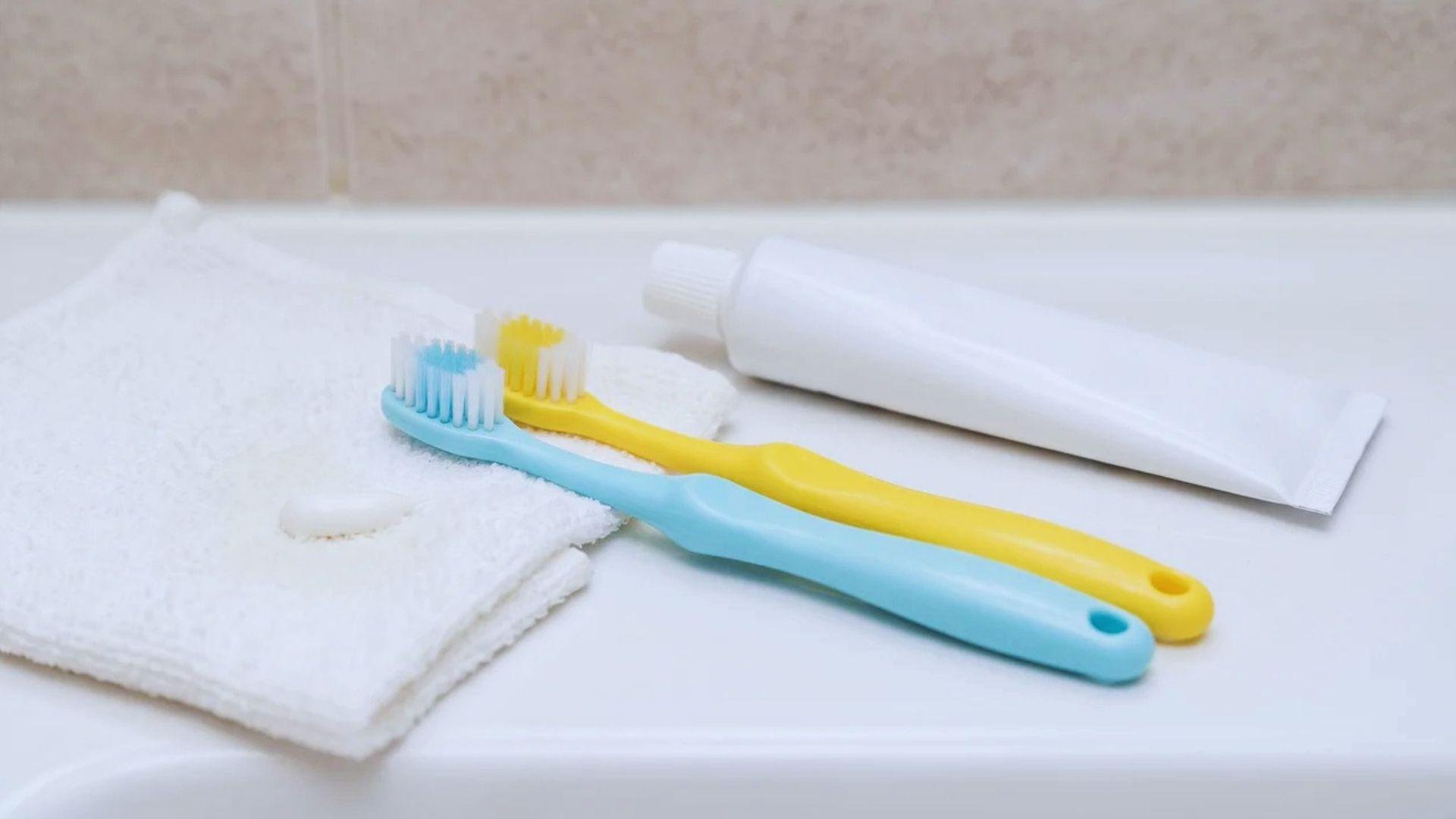
Before you call your toddler over, have everything ready. The right tools make the physical part easier. The choice part makes everything after it easier.
Here’s what you need:
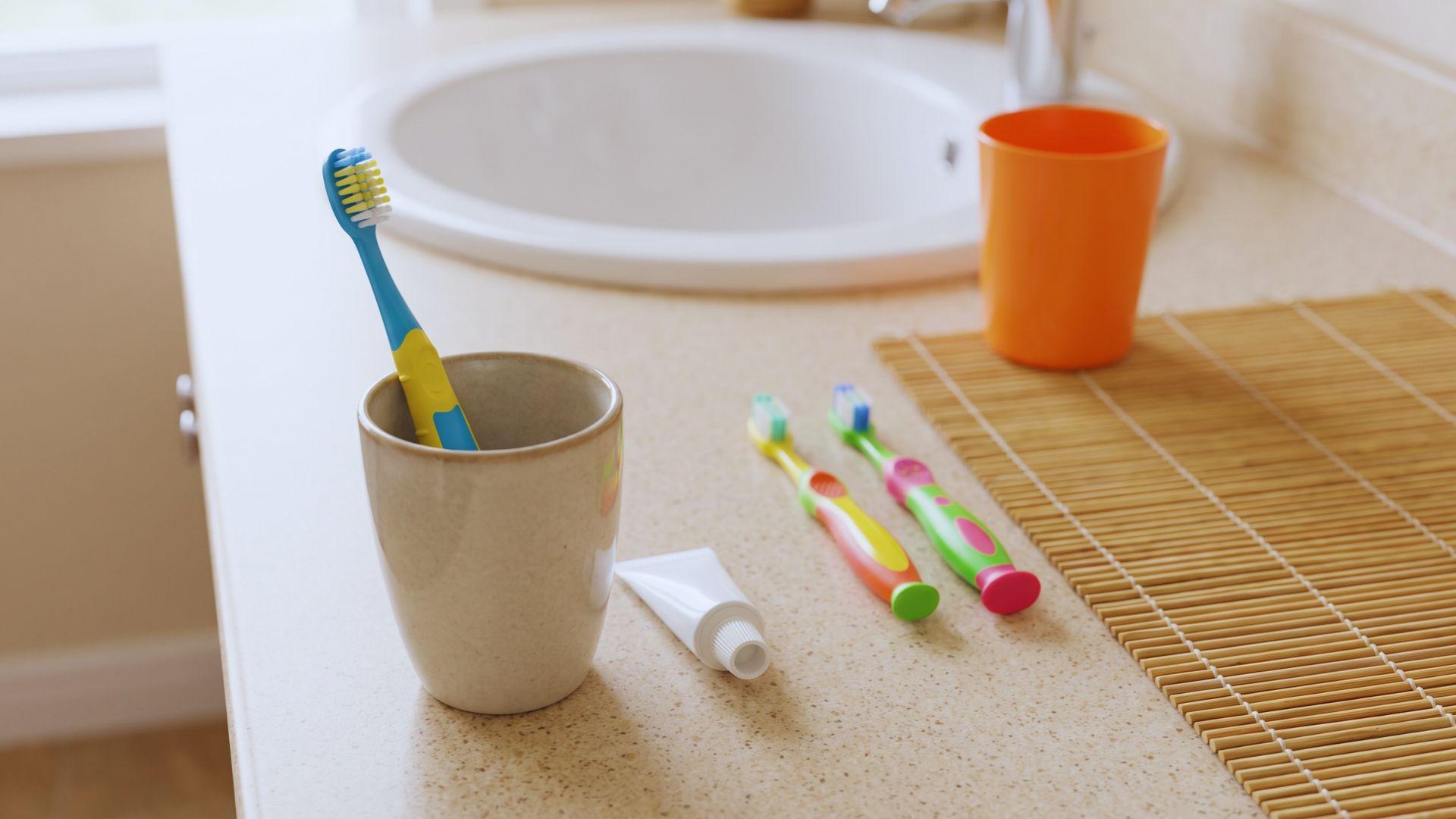
- A soft-bristled children’s toothbrush
- A rice-grain smear of fluoride toothpaste for children under 3
- A pea-sized amount for ages 3 to 6
Offer the choice before any resistance starts. Two toothbrushes, two toothpaste flavors, their call. A child who chose the toothbrush has already made one small commitment.
That commitment matters when you ask them to open their mouth thirty seconds later.
Step 2: Position Them Correctly

Lay your toddler flat on the floor or a bed with their head in your lap, facing up. Sit with your legs in a loose V-shape around their body. For an active child, gently tuck their arms under your thighs.
This position works for three reasons. You get a direct sightline into their mouth. Their head rests on your lap, so you’re not holding it and holding the brush at the same time.
Their arms are settled without anything touching their face.
Most parents struggle because they’re standing over a squirming child with no control and no clear view. The lap position fixes both at once.
If your child rolls sideways, don’t restart. Place one hand gently under their chin to guide the head back. That’s usually enough.
Step 3: Brush With the Right Technique
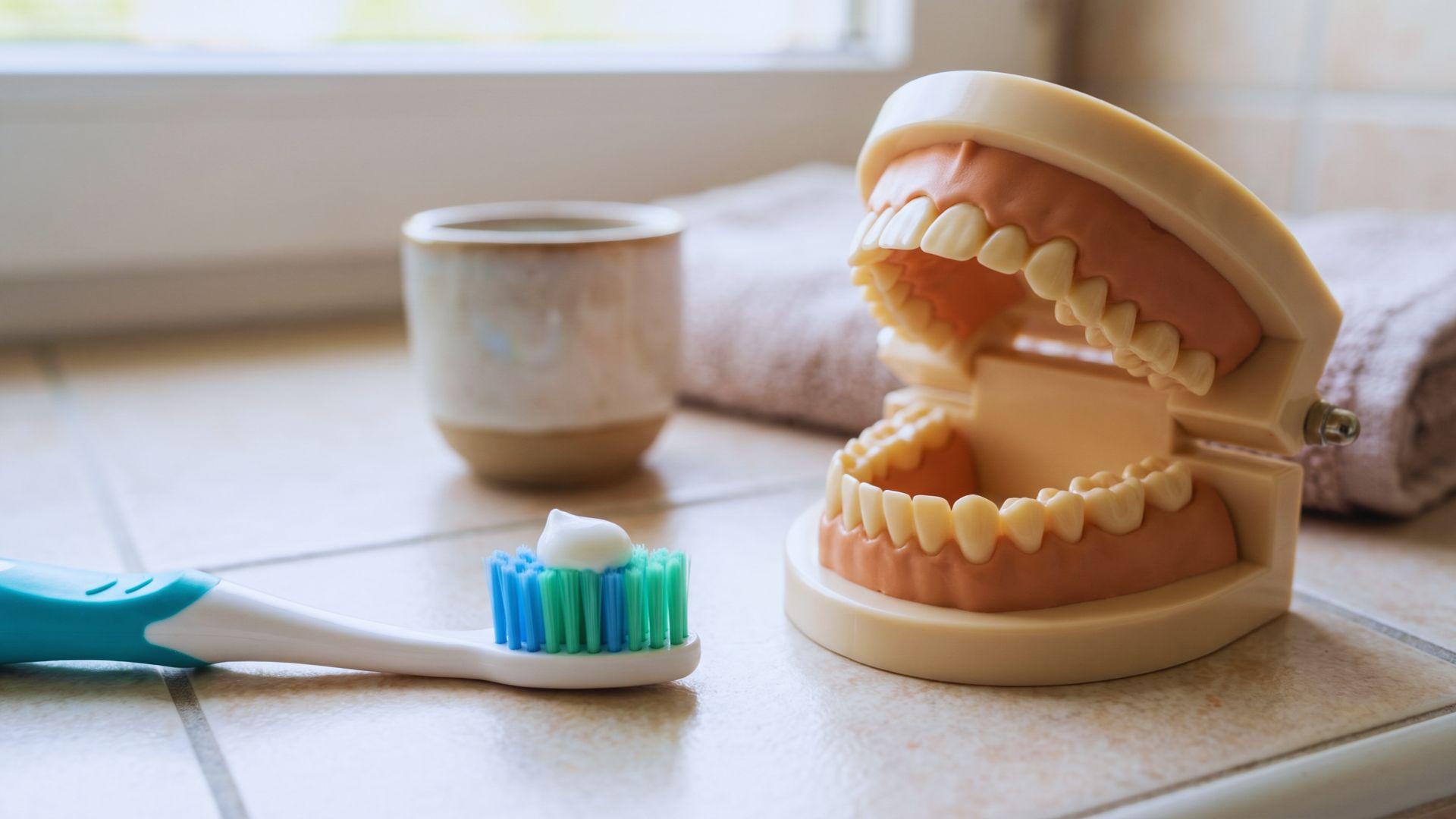
Start at the gum line. This is where plaque builds and where decay starts. Don’t skip it because the child is wriggling.
Work across all three surfaces of every tooth:
- Outer face:Small circular motions along the gum line
- Inner face:Same circular motion, angled inward
- Chewing surfaces:Gentle back-and-forth
Two minutes total. When you’re done, ask them to spit out the leftover toothpaste. Don’t rinse with water afterward.
The fluoride that stays on the teeth keeps working after brushing. Rinsing removes it before it can do anything useful.
Step 4: Handle Resistance Without a Fight
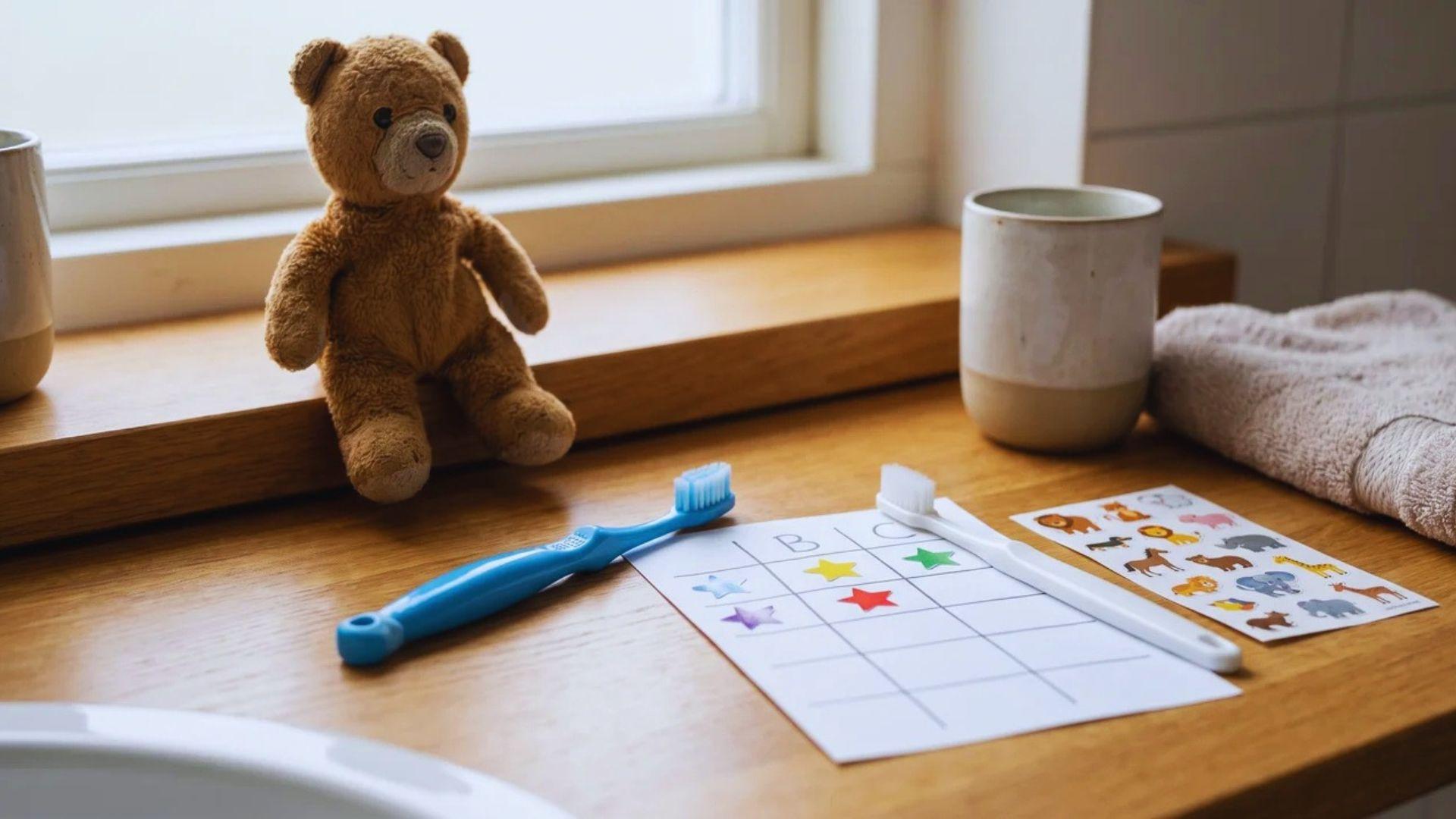
If your toddler refuses to open their mouth, don’t push into a standoff.
Let them go first. They can brush your teeth, a stuffed animal’s teeth, or their own, however they want. Then you take your turn to finish properly.
Two things help when resistance is high:
- A two-minute song or brushing app gives them a visible endpoint they can track
- A sticker chart that rewards showing up, not performing correctly
Hold firm on one thing: The routine ends at the same point every night. The moment you skip a step to stop the crying, the child learns the routine has an exit.
That’s harder to undo than one difficult night.
Step 5: Close the Routine the Same Way Every Night
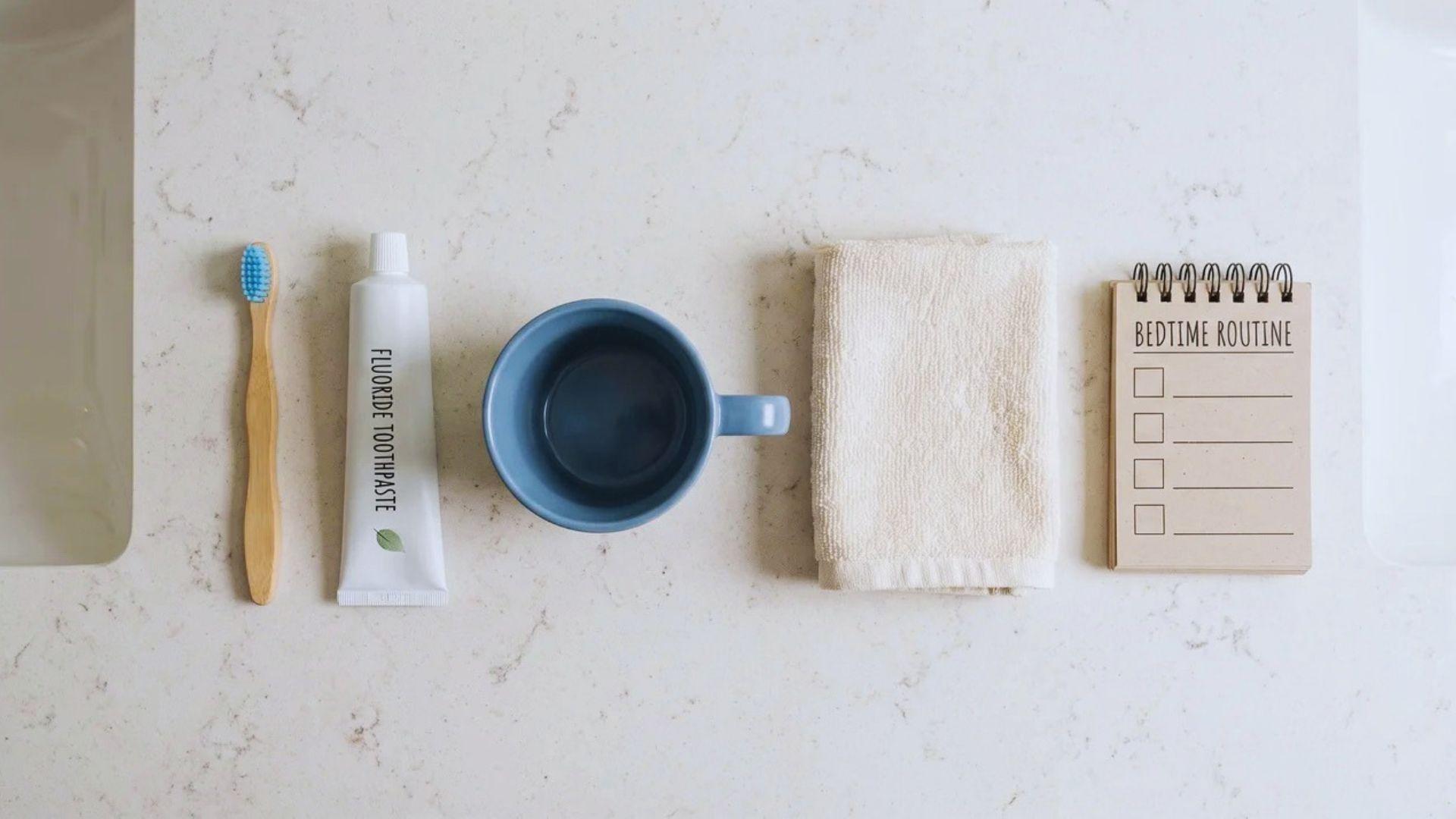
Consistency is what makes the routine stick. When brushing happens at a fixed point every night, it stops being a daily decision. It becomes what happens next.
Keep it simple:
- Same time every night
- Same order within the bedtime routine
- Same phrase or signal to end it
Save any praise for after it’s done, not during. And don’t skip on the hard nights. One missed session won’t harm their teeth.
But it does teach your toddler that a difficult enough reaction gets them out of it.
The steps above give you the process. But if your toddler fights brushing every single night, the technique alone won’t fix it.
The resistance usually has a specific cause, and knowing what it is changes how you respond to it.
Why Toddlers Resist Brushing (and What Actually Helps)
Toddler resistance to teeth brushing is almost always about control, not the brushing itself. Toddlers resist for the same reason they resist getting dressed or stopping a game.
It’s happening to them, not with them. That need for autonomy is developmental; it peaks in the toddler years, and it’s not going away.
Distraction alone doesn’t hold because of this. A song buys you thirty seconds. The moment the child realizes brushing is still happening regardless, the resistance returns.
Choice-giving and turn-taking work because they shift the child from passive to participating. That’s a real change in their experience, not a trick.
One exception: Some toddlers resist because of sensory sensitivity to texture or taste.
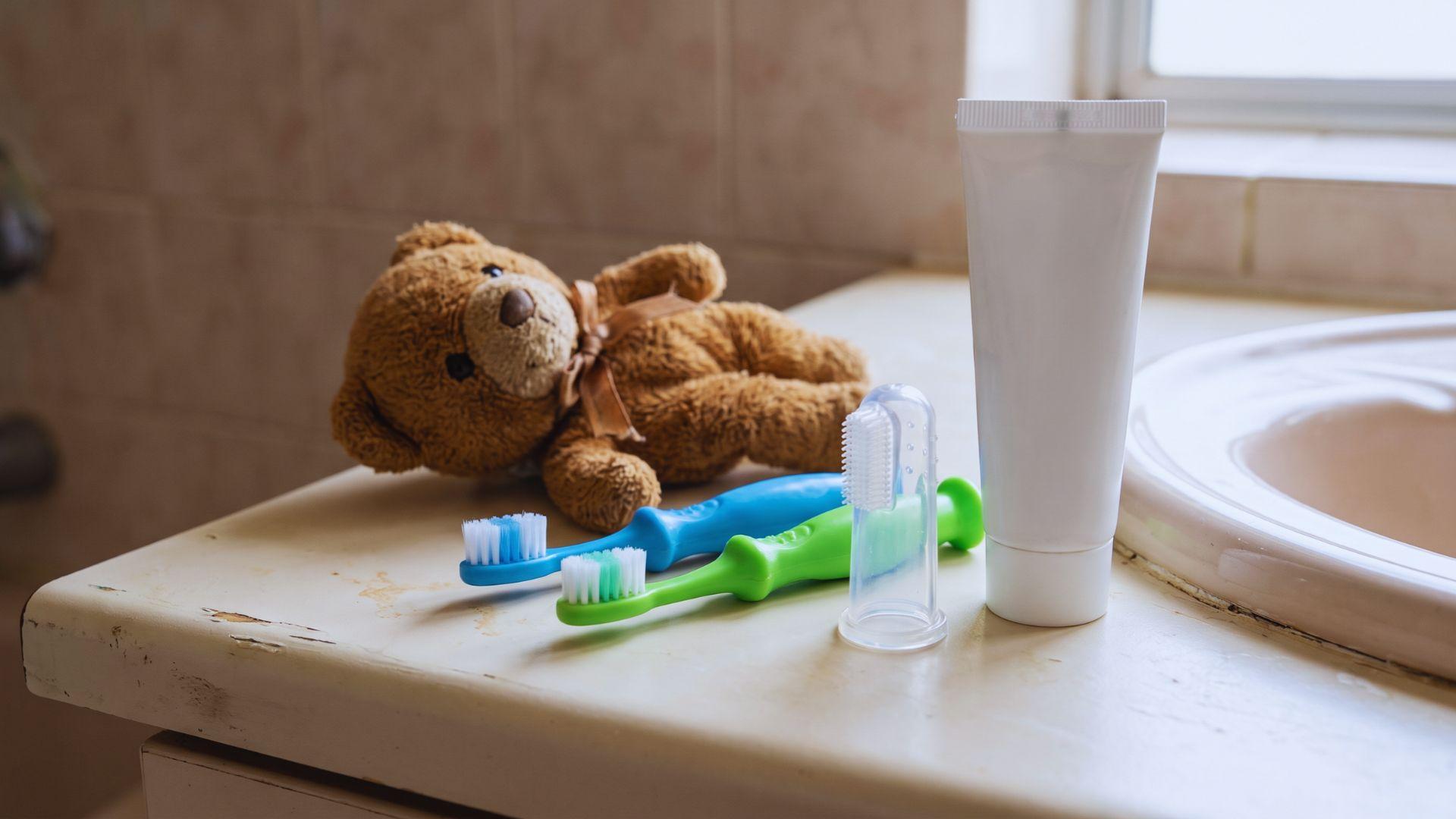
If your child gags consistently or reacts before the brush even reaches their teeth, start with a silicone finger brush and unflavored toothpaste. Get the sensation tolerable first.
Working with your toddler’s need for control solves most of the resistance. What keeps it going, though, is often something the parent is doing without realizing it.
A few common habits quietly make each session harder than the last.
Common Mistakes That Make Toddler Teeth Brushing Harder
Several habits parents use to get through a difficult brushing session actually make the next one harder. These are the five worth fixing first.
- Using too much toothpaste. More than a rice-grain smear causes foaming and gagging. That physical discomfort builds a negative association over time.
- Rinsing with water after brushing. It feels like the natural finish but washes away the fluoride before it can protect the teeth. Spit, don’t rinse.
- Negotiating past two minutes. Every extension teaches the child the routine has an exit. The next night they’ll push for it again.
- Brushing standing up. No clear sightline, no control over head movement. You’re working blind while the child squirms.
- Skipping on hard nights. One missed session won’t harm their teeth. But it signals the routine is optional, and that’s harder to undo than one difficult night.
The fix for most of these isn’t a new strategy. It’s stopping the habit that’s keeping the resistance alive.
Final Verdict
Parents often make toddler teeth brushing harder than it needs to be, not because they’re doing it wrong, but because they’re fighting the wrong problem.
Knowing how to get your toddler to brush teeth comes down to one shift: stop trying to win the battle and start making the routine something they’re part of.
Do that consistently, and the nightly standoff fades on its own.
Starting tonight. Pick two toothbrushes, let them choose, and try the lap position. One good session builds the next one.
Frequently Asked Questions
At what age should I start brushing my toddler’s teeth?
Start as soon as the first tooth appears, typically around six months. Children brushed from infancy tend to resist less as toddlers than those who start later.
How much toothpaste should a toddler use?
A rice-grain smear for children under three, and a pea-sized amount for ages three to six. Using more causes foaming and gagging, which builds resistance over time.
Can toddlers get cavities in baby teeth?
Yes, and baby teeth matter more than most parents expect. Decay in baby teeth can affect the spacing and health of permanent teeth coming in behind them.
What if my toddler refuses completely every single night?
Try a new toothbrush, a different toothpaste flavor, or let them brush a toy’s teeth first. If refusal continues beyond a few weeks with signs of sensory distress, speak to a pediatric dentist.