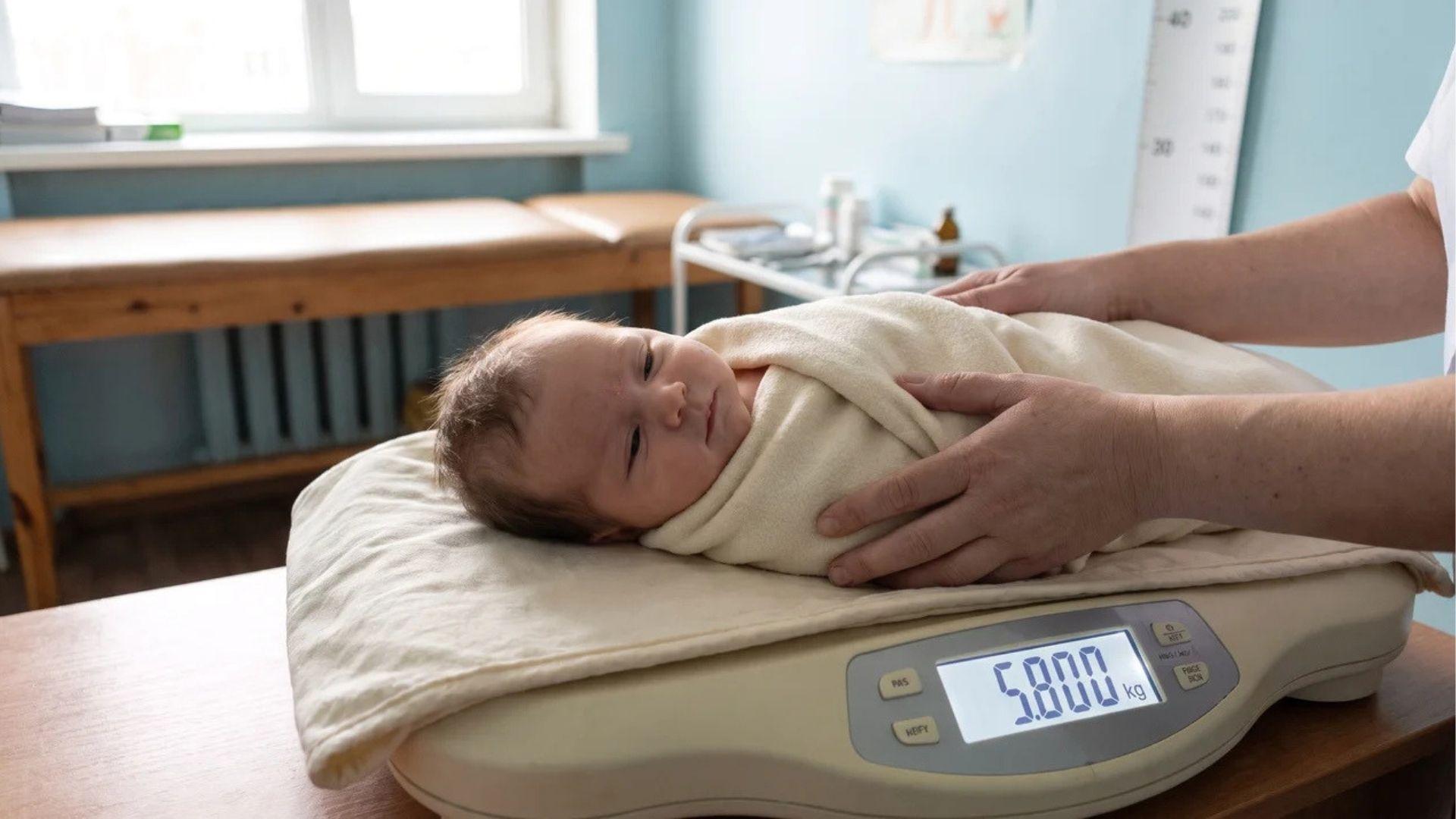
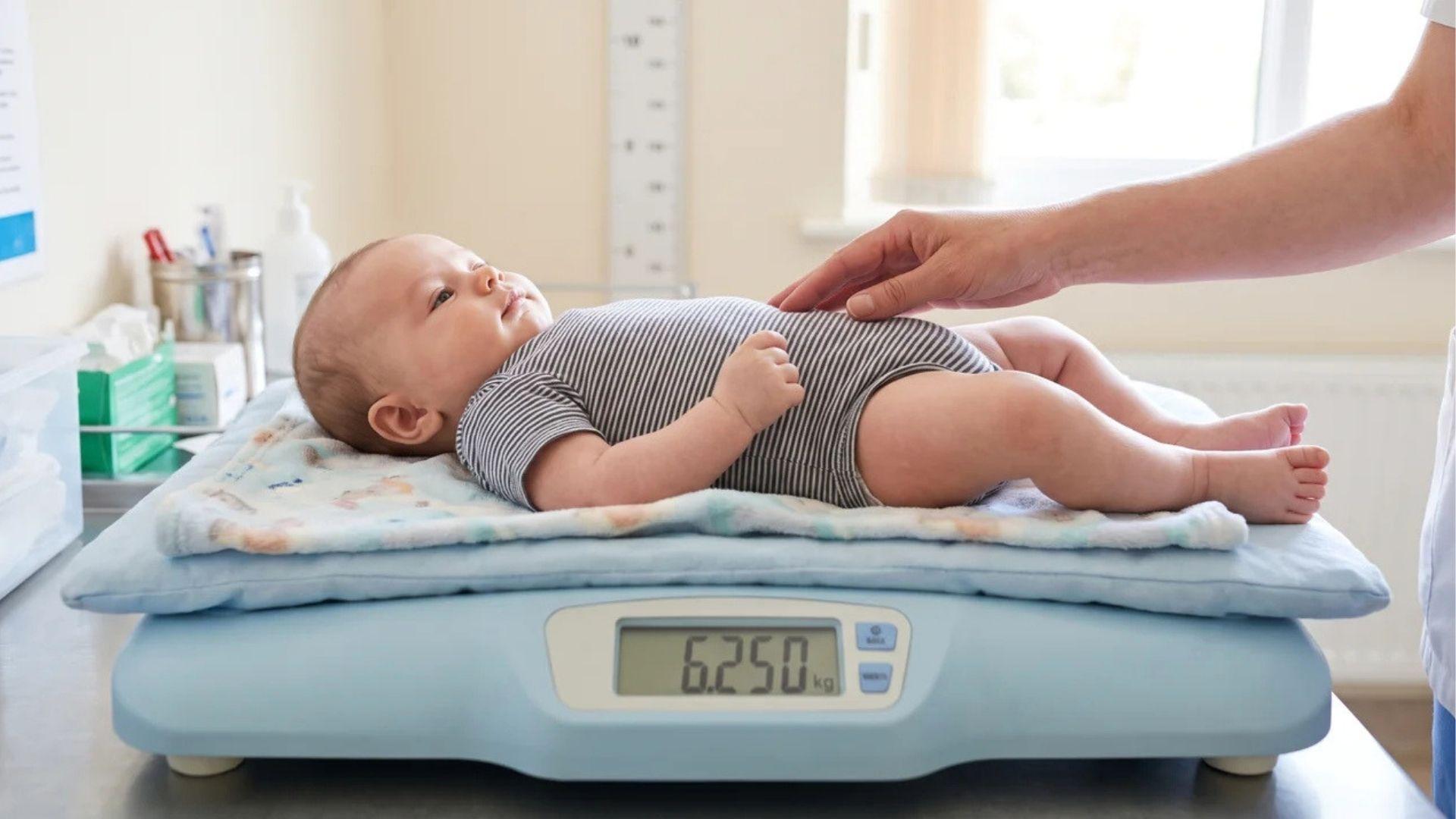


You towel your baby off after bath time, step on the bathroom scale together, and the number doesn’t match what your sister’s baby was doing at this age.
Your stomach drops a little.
Every parent compares notes, yet infant bodies rarely move at the same pace.
What catches new parents off guard: weight gain isn’t a straight line. It climbs fast early on, then eases off for reasons that have nothing to do with how well you’re feeding your baby.
Understanding how fast do babies gain weight at each stage changes how you read every number on that scale.
How Fast Do Babies Gain Weight During the First Year?
Most babies gain weight fastest during their first three months, then the pace slows gradually for the rest of the year.
This catches a lot of parents off guard.
The baby who outgrew outfits weekly at two months can seem to plateau by nine months, and that's not a problem at all.
A baby's body puts the most energy into growth early on, then shifts that fuel toward movement, coordination, and exploring the world around them.
None of these numbers are rules every baby has to hit. They're averages from large groups of healthy infants, and a baby who runs a bit above or below the pattern can still be right on track.
For a quick look at average weights at every age, this weight chart by month shows boys’ and girls’ numbers side by side.
Baby Weight Gain Chart by Age
| Age Range | Typical Daily Gain | What's Happening |
| 0 to 3 Months | About 1 ounce (28 to 30 grams) a day | The fastest stretch of growth outside the womb, fueled by feeding every two to three hours |
| 4 to 6 Months | About half an ounce to three-quarters of an ounce a day | Most babies double their birth weight in this window, usually by 5 to 6 months |
| 7 to 12 Months | About a third to half an ounce a day | Growth shifts toward length and head size as a mobile, crawling baby burns more of what they eat; most babies triple their birth weight by their first birthday |
A baby tracking anywhere near these ranges at their regular checkups is growing as expected.
Those averages describe a baby who's already settled into a steady growth pattern. Newborns work through a different script in their very first weeks, before any of that steady pace kicks in.
How Much Weight Should a Newborn Gain Each Week?
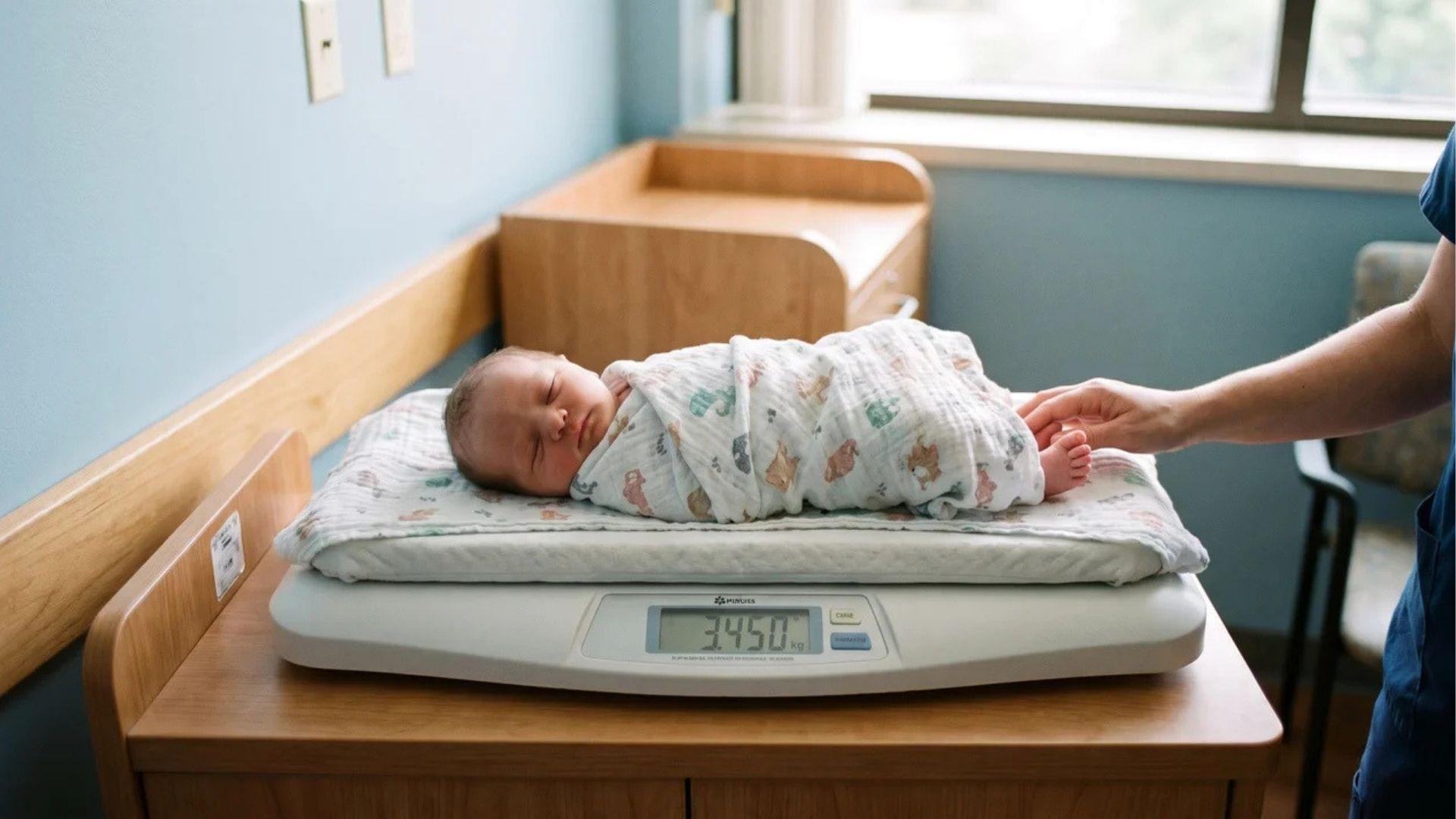
Most newborns lose some weight in the first few days.
That drop looks alarming on a hospital printout, but it's expected and tracked closely by nurses and pediatricians.
Once a baby is past that early dip, weight gain follows a fairly predictable pattern:
- Weekly gain: around 5 to 7 ounces, or 140 to 200 grams, a week for the first couple of months
- Daily average: works out to close to an ounce a day
A few things shift these numbers. Breastfed and formula-fed babies can track slightly differently.
How often a baby feeds, whether they were born early, and even what time of day they're weighed can all nudge the number at any single visit.
One light week rarely means anything on its own. Pediatricians look at the trend across several visits, not one scale reading.
When Should a Newborn Regain Birth Weight?
Most newborns regain their birth weight by 10 to 14 days old.
The early dip, usually 5 to 10 percent of birth weight, happens because newborns are born carrying extra fluid that shifts out in the first days, while feeding is still getting established.
A baby who hasn't returned to their birth weight by the two-week mark should be checked by a pediatrician for a feeding evaluation.
Steady weekly gains like these are what pediatricians expect to see.
Unusually fast gain is a separate pattern, and it's worth understanding what the research actually says about it.
Can Rapid Baby Weight Gain Increase the Risk of Childhood Obesity?

Rapid weight gain during infancy has been linked to a higher risk of childhood obesity in several studies, including NIH-funded research. The studies point to an association, not a guarantee.
A single fast-growing month doesn't mean a baby is headed toward being overweight.
Growth naturally comes in spurts, and most babies speed up and slow down several times in their first year.
What researchers are watching more closely is a pattern of consistently crossing into higher percentile lines on a growth chart over several months.
Weight on its own tells only part of the story.
Pediatricians look at weight alongside length and age, because a baby who's gaining weight and growing longer at a similar pace is generally following a healthy, proportional curve.
None of this is something a parent needs to diagnose at home. It's a reason to bring growth chart trends up at checkups, not something to assume from one heavy week.
Why Can Excessively Rapid Infant Weight Gain Matter?
Several studies, including NIH-funded research, have found that infants who gain weight unusually fast, particularly in the first six months, show a higher likelihood of being overweight by early childhood.
Researchers describe this as an association rather than a direct cause. Genetics, feeding patterns, and overall growth all play a role too.
The takeaway for parents isn't to restrict a growing baby's intake, but to track the overall pattern with a pediatrician rather than judging any single week alone.
Does Fast Weight Gain Always Mean a Baby Is Overweight?
No. Babies grow in uneven bursts, and a faster week or month is common and usually temporary.
What matters more is the overall trend across a growth chart, plus how weight compares to length.
A baby gaining weight and length at a proportional pace is typically following a healthy curve, even if a single data point looks high.
Pediatricians are trained to read that full pattern, which is far more reliable than comparing one scale reading to another baby's numbers.
Spotting a genuine pattern, fast or slow, comes down to the same tool pediatricians already use at every visit: The growth chart.
How Can Parents Tell If Their Baby's Weight Gain Is on Track?
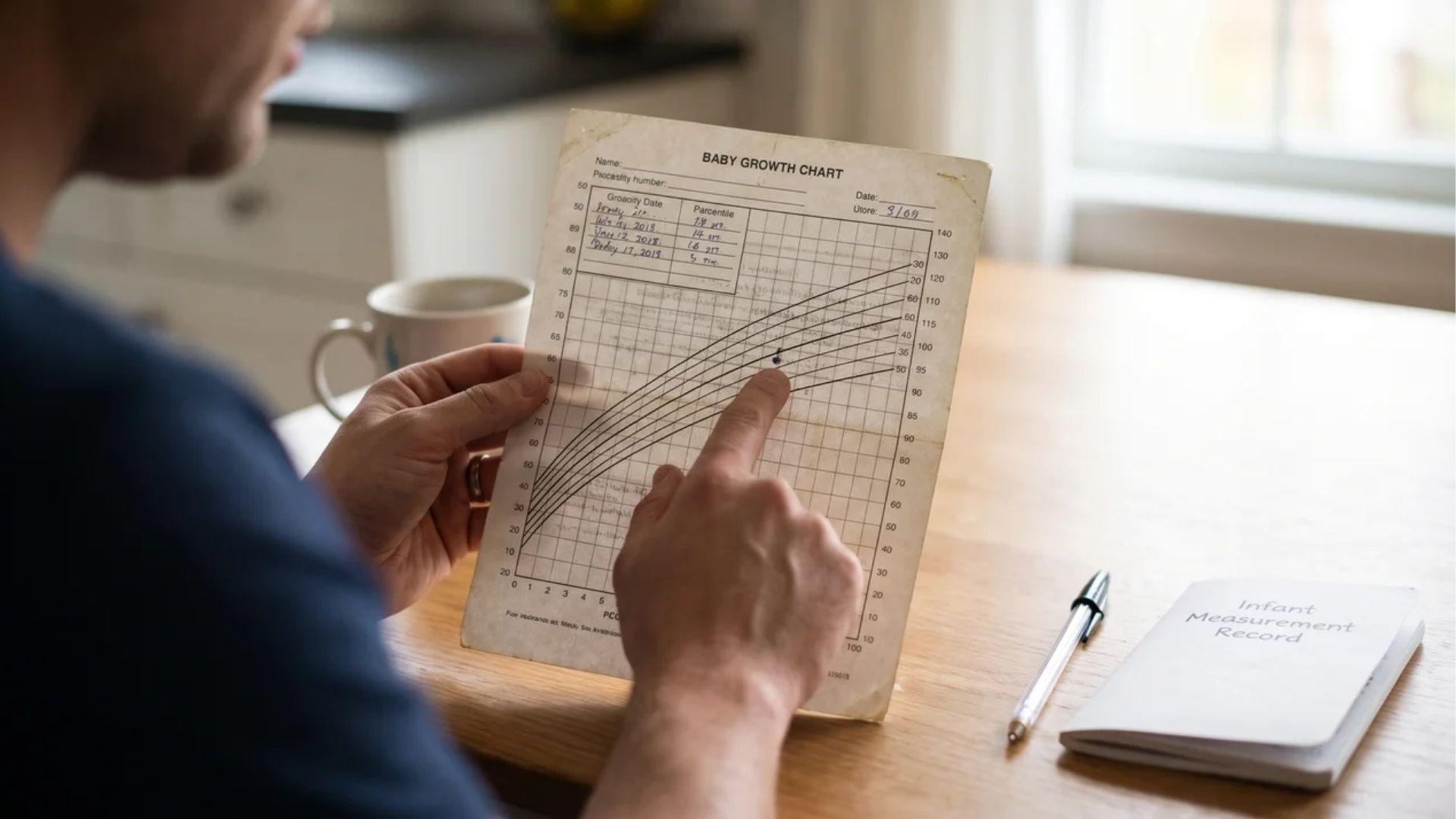
A baby's weight gain is best read through repeated measurements on an age-appropriate growth chart, not one number from one visit.
Pediatricians plot each weight against standardized percentile curves, most often the WHO growth standards CDC recommends for babies under two.
What matters is whether a baby is roughly following their own curve over time, not which percentile they land on.
Breastfed and formula-fed babies often grow a little differently, especially after the first few months, when breastfed babies tend to gain a bit more slowly.
That difference is expected and isn't, by itself, a sign of a problem.
A few patterns are worth flagging to a pediatrician:
- Weight that drops across two or more percentile lines
- Not regaining birth weight by two weeks old
- Ongoing feeding struggles, like a poor latch, frequent spit-up tied to weight loss, or very few wet diapers
Any of these is a reason to call, not a reason to worry alone at home.
How Do Growth Charts Track Baby Weight Gain?
Growth charts plot a baby's weight, length, and head size against percentile curves built from large groups of healthy infants.
The CDC recommends WHO growth standards for children under two. A baby doesn't need to sit at the 50th percentile to be healthy.
What matters is a consistent curve over repeated visits, since one measurement alone can't show whether a baby is actually on track.
When Should Parents Be Concerned About Weight Changes?
A pediatrician should be looped in if a baby crosses two or more percentile lines downward, hasn't returned to birth weight by two weeks old, or shows signs of feeding trouble like poor latch, limited wet diapers, or ongoing fussiness during feeds.
Sudden weight loss after a period of steady gain is also worth a call.
None of these signs mean something is seriously wrong on their own, but they're the kind of pattern a pediatrician can evaluate properly instead of guessing from a home scale.
Weight gain is just one piece of the full picture. What it comes down to for most parents is simple: watch the trend, not the single number.
The Real Takeaway on Baby Weight Gain
The detail parents miss: How fast do babies gain weight says less about any single number than about the direction that number moves over time.
A baby doesn't need to hit a textbook average every week to be healthy. They need a steady, proportional climb that a pediatrician can track visit to visit.
That shift in thinking, from chasing a perfect number to watching a pattern, takes a lot of pressure off bath time scale checks.
Bring your baby's growth chart to your next checkup and ask your pediatrician to walk you through exactly what their curve is showing.
Frequently Asked Questions
Can a Baby Gain 2 Pounds in a Week?
That's well above typical infant weight gain and worth a prompt call to the pediatrician, since a single reading can be skewed by clothing or timing.
Do Premature Babies Follow the Same Weight Gain Pattern?
They often gain weight on a shifted timeline, catching up gradually against their adjusted age rather than their birth date.
Can Teething Slow Down a Baby's Weight Gain?
Teething can cause a short dip in appetite, but it rarely affects weight gain in any lasting way or needs special attention.
Does Starting Solid Foods Change How Fast a Baby Gains Weight?
Not right away. Solids are usually introduced at about 6 months, and not before 4 months. Breast milk or formula still supplies most of a baby’s calories at first.