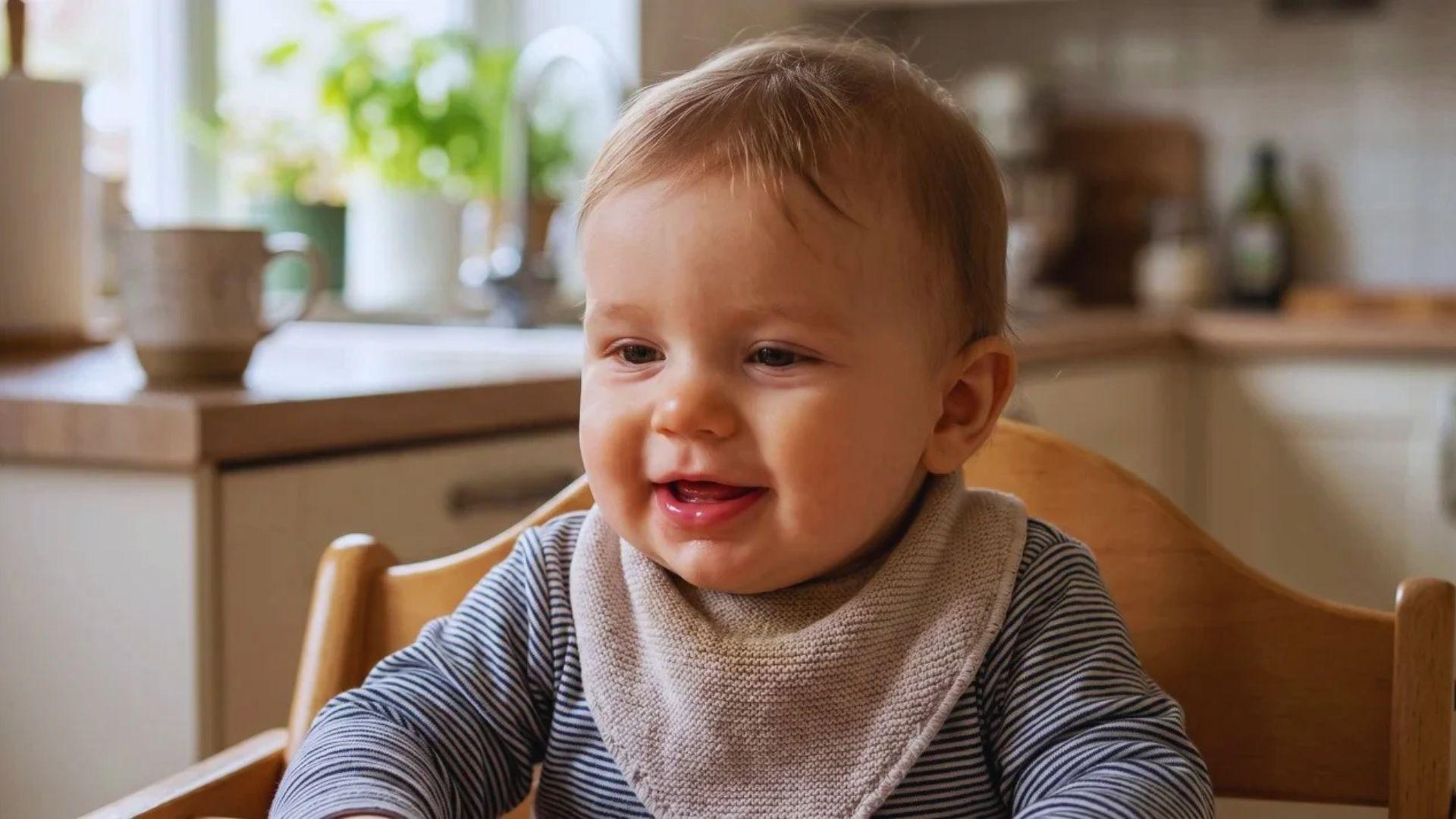
Swollen gums in a baby can stop a parent cold, especially when you spot redness, a puffy ridge, or a bluish bump and can’t tell how worried to be.
Over more than 15 years of caring for children, I’ve answered countless questions from parents, and many of them begin with the same four words: “Should I be worried?”
With swollen gums, the answer is usually no, because the swelling is most often a normal part of teething that settles once the tooth breaks through.
Still, the swelling doesn’t always look the same, and sudden puffiness after a fall means something different from slow swelling that shifts around the mouth over months.
Below, you’ll find what normal teething gums look like, the other causes worth knowing, safe ways to soothe sore gums, and the signs that mean it’s time to call your pediatrician or dentist.
What Do Swollen Baby Gums Look Like?
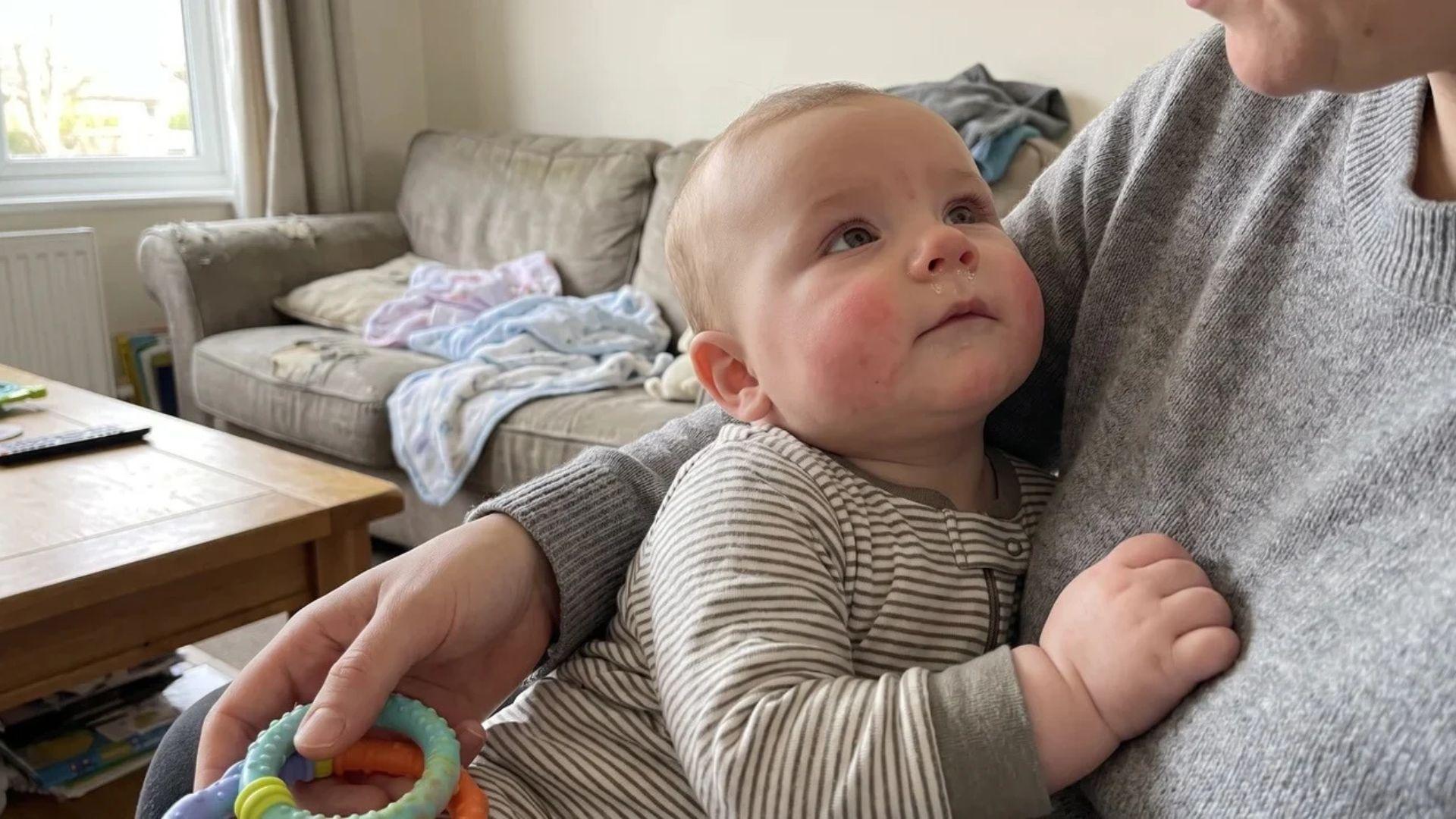
Teething gums look red, puffy, and slightly raised over the spot where a new tooth is pushing through.
The tissue often looks shiny and stretched, and it may feel firmer and more tender than the gum around it. This swelling usually covers a stretch of gum rather than one sharp, defined spot.
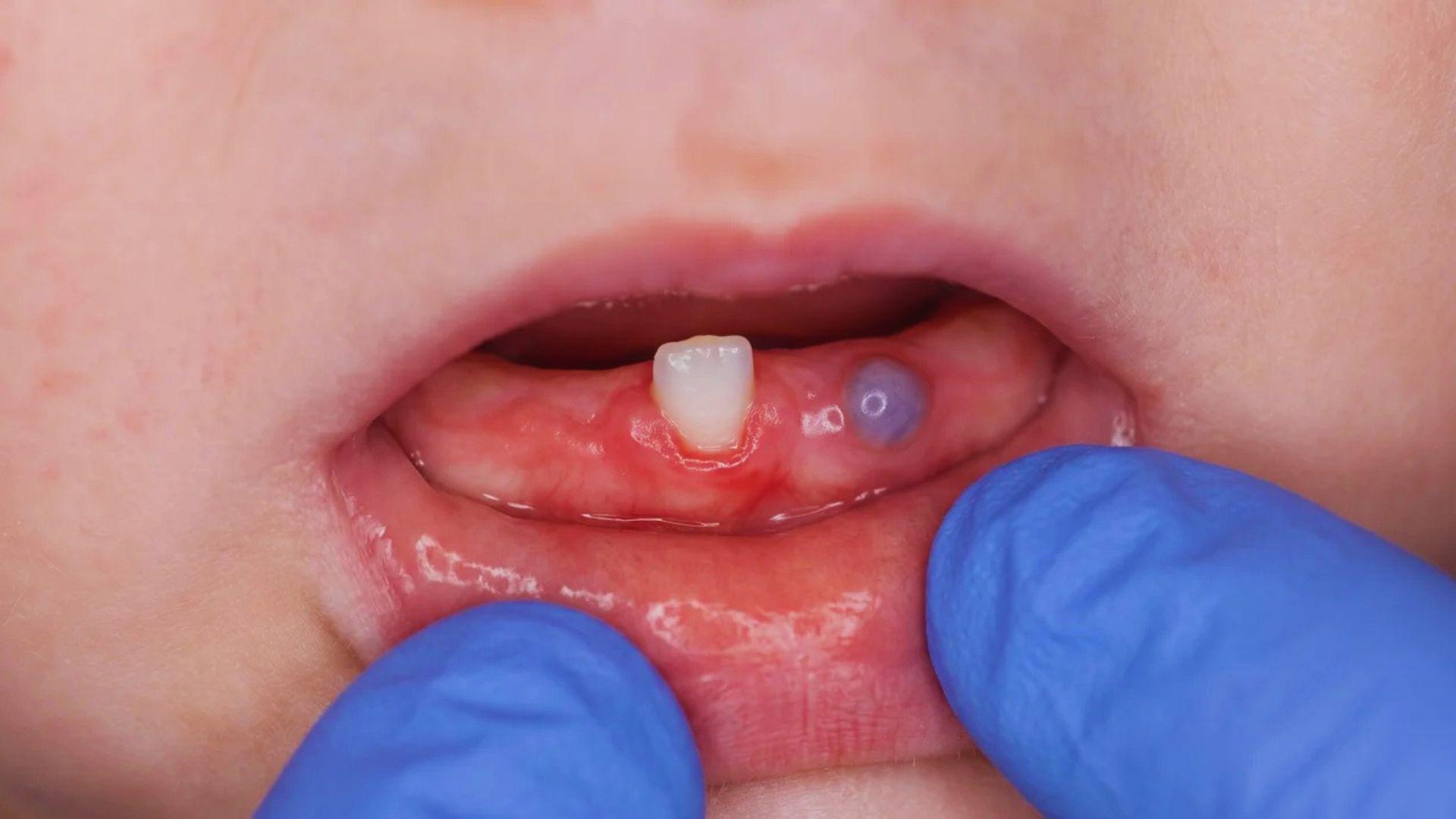
Sometimes you’ll also notice a bluish or purple tint just under the surface.
This usually means a little fluid or blood has collected over the incoming tooth, which is called an eruption cyst, and it’s covered in more detail below.
The swelling also doesn’t stay in one place. It appears in one area, eases once the tooth comes through, and then shows up somewhere else weeks or months later.
That moving, temporary pattern is typical of baby gums before teeth erupt, with swelling tied to wherever the next tooth is pushing up.
Knowing what swollen gums look like is the first step, and understanding what’s driving the swelling tells you whether it needs attention or just time.
What Causes Swollen Gums in Babies?
Teething is the reason in most cases, but a few other causes are worth knowing, especially if what you see doesn’t match the typical pattern.
1. Teething
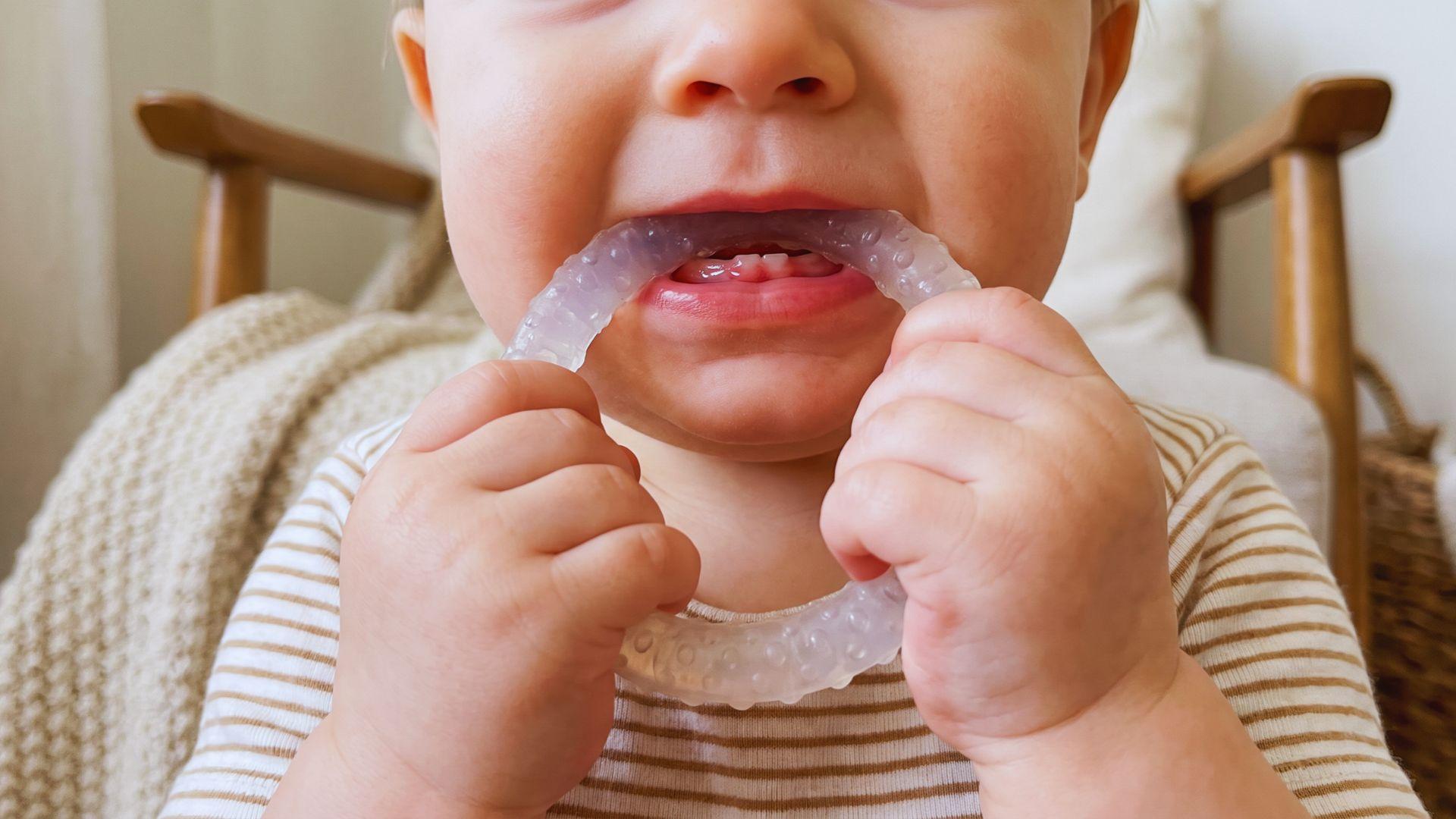
Teething is the most common cause of swollen gums in babies.
Most babies start teething around 6 months, although the timing varies widely, and the AAP notes that teething discomfort can begin as early as 3 months, before any tooth is visible.
As a new tooth develops, it moves through the bone and gum toward the surface.
That steady pressure leaves the gum above it red, tender, and swollen. This is the swelling you’re seeing, and it isn’t an infection or a sign that something is wrong.
The swelling settles once the tooth breaks through, and then the next tooth starts moving.
That cycle repeats with each new tooth until all 20 primary teeth are in, with the back teeth arriving last, as our guide on when molars come in explains.
2. Eruption Cysts
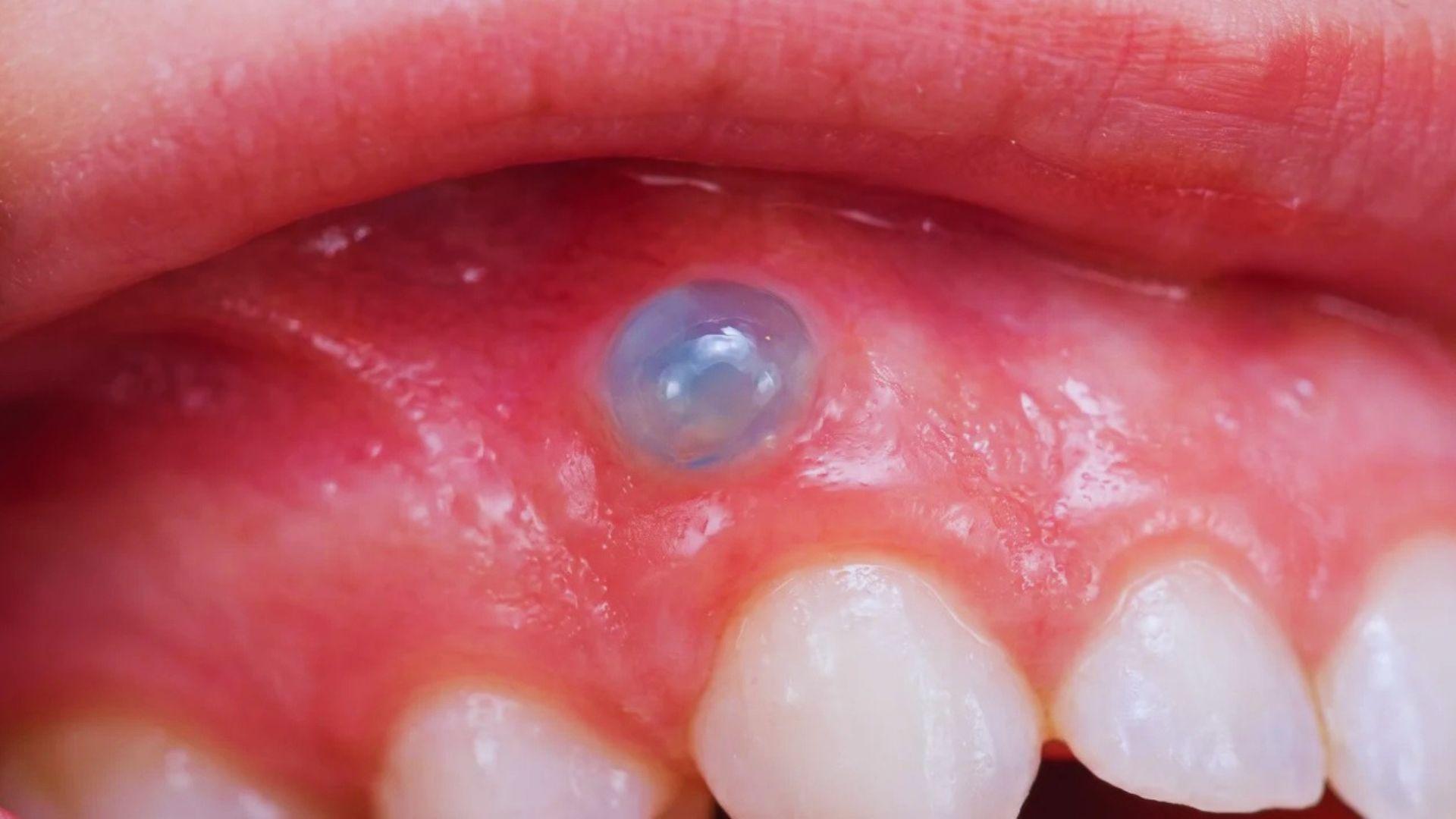
Sometimes a small, fluid-filled pocket forms directly over an incoming tooth. It sits on the gum surface and usually looks bluish, purplish, or clear.
This is called an eruption cyst. When a little blood mixes with the fluid, it can look darker and is sometimes called an eruption hematoma.
According to the American Academy of Pediatric Dentistry, it forms when fluid collects between the top of the incoming tooth and the gum tissue around it.
The tooth is still coming, and the cyst is a visible sign of that process. Most eruption cysts are painless and clear up on their own as the tooth breaks through.
If one keeps growing, looks infected, or the tooth doesn’t seem to come through, see a pediatric dentist, who can check it and treat it if needed.
3. Minor Injury and Oral Hygiene

Babies fall, and they chew on hard things. A bump to the mouth or a hard toy can bruise gum tissue and cause swelling that appears suddenly, usually in one small spot.
It stays confined rather than spreading and gradually eases as the bruise heals.
If the gum is bleeding, press a piece of cold, wet gauze on the area and call your child’s dentist to have the mouth checked.
If the fall could have hurt your baby’s head, call your pediatrician or go to the emergency room.
As teeth start breaking through, bacteria can also build up along the gumline and irritate the tissue, which can make existing swelling worse.
Keeping the gums clean, as described in the soothing steps below, helps prevent this.
These causes, along with the less common chance of a gum infection, don’t always announce themselves clearly. Here’s how to tell them apart by what you can see.
How Can I Tell What’s Causing My Baby’s Swollen Gums?
When parents describe a baby’s swollen gums to me, I start with three questions: where is the swelling, what color is it, and how quickly did it appear? Together, the answers usually point to a tooth on its way, a fluid-filled bump over an incoming tooth, a bruise from a fall, or, less often,
- Teething swelling: Builds slowly and covers a stretch of gum rather than one precise spot. You’ll often notice extra drooling and a strong urge to chew alongside it.
- An eruption cyst: This looks different. It’s a raised bump with distinct edges, usually bluish or clear, sitting directly on the gum surface, while teething swelling is a gradual puffiness without that concentrated shape. If you see a defined bump appear gradually and your baby seems fine, a tooth is most likely on its way.
- Injury-related swelling: It shows up fast. If your baby fell or chewed something hard, the gum in that exact spot may swell quickly, and the swelling stays in that one place rather than spreading.
- Gum infection:Begins from plaque buildup, called gingivitis, is less common than teething in babies. The swelling tends to be widespread and stays red, and you may also notice bad breath or visible buildup along the gumline. If the swelling is broad, red, and not tied to a clear cause, call your child’s dentist. Swollen gums that come with a fever or mouth sores point to a different problem, and that’s a call for your pediatrician.
Once you know what you’re dealing with, the next question is what to do about it, and for most cases the answer starts at home.
How to Soothe Swollen Baby Gums at Home
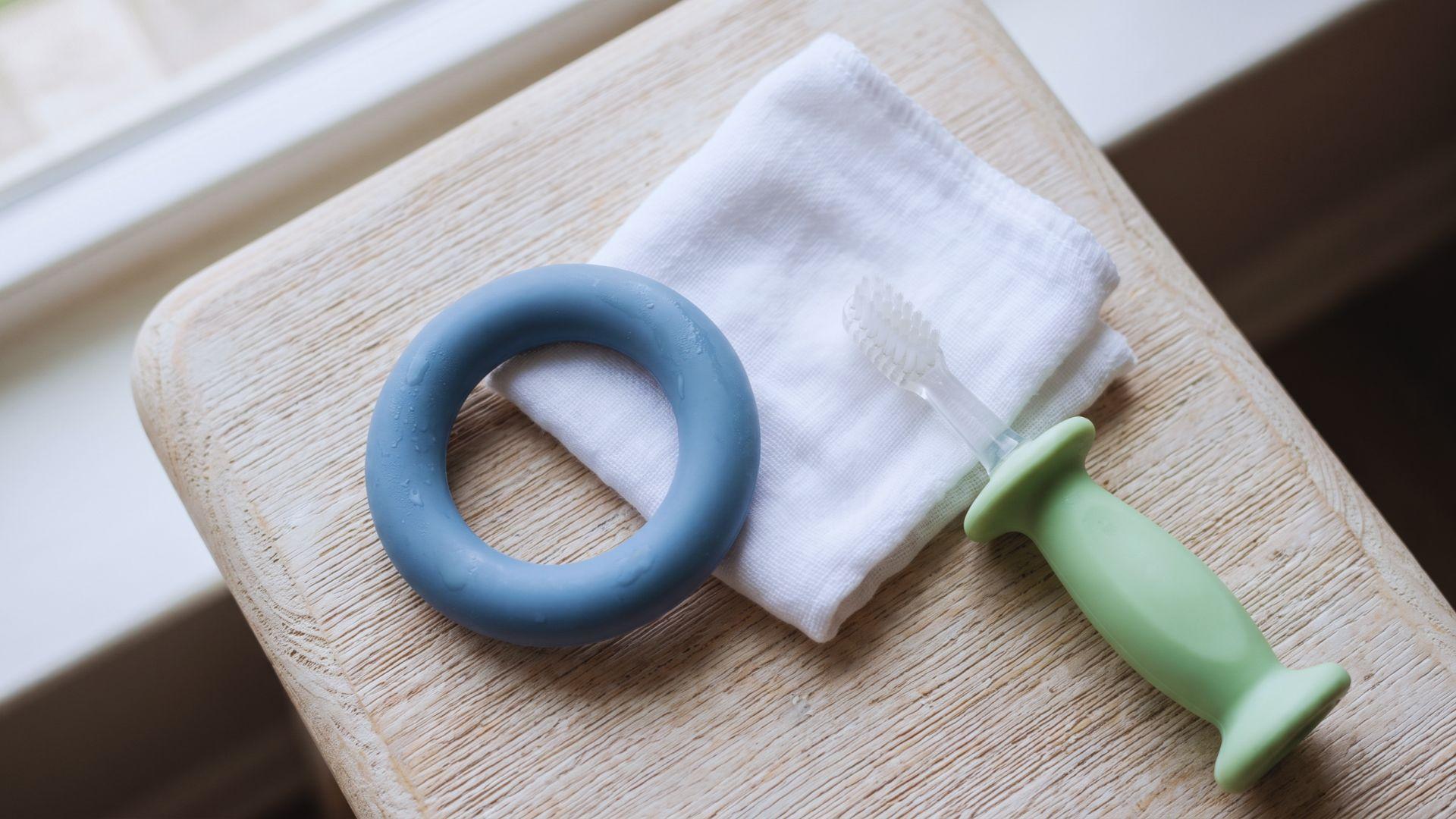
Gentle gum massage, a chilled teether, and clean gums are simple, safe ways to ease teething discomfort at home.
Each works a little differently, and you can use all three from the first signs of swelling, leaning on whichever one your baby responds to best.
- Massage the gums: Use a clean finger or a damp washcloth and rub gently along the swollen area. Light pressure on a sore gum can ease the ache, and you can repeat it as often as your baby finds it soothing.
- Use a chilled teether: Put a solid silicone or rubber teether in the refrigerator, not the freezer, because a teether frozen solid is too hard for a baby’s gums. Stay close while your baby chews on it.
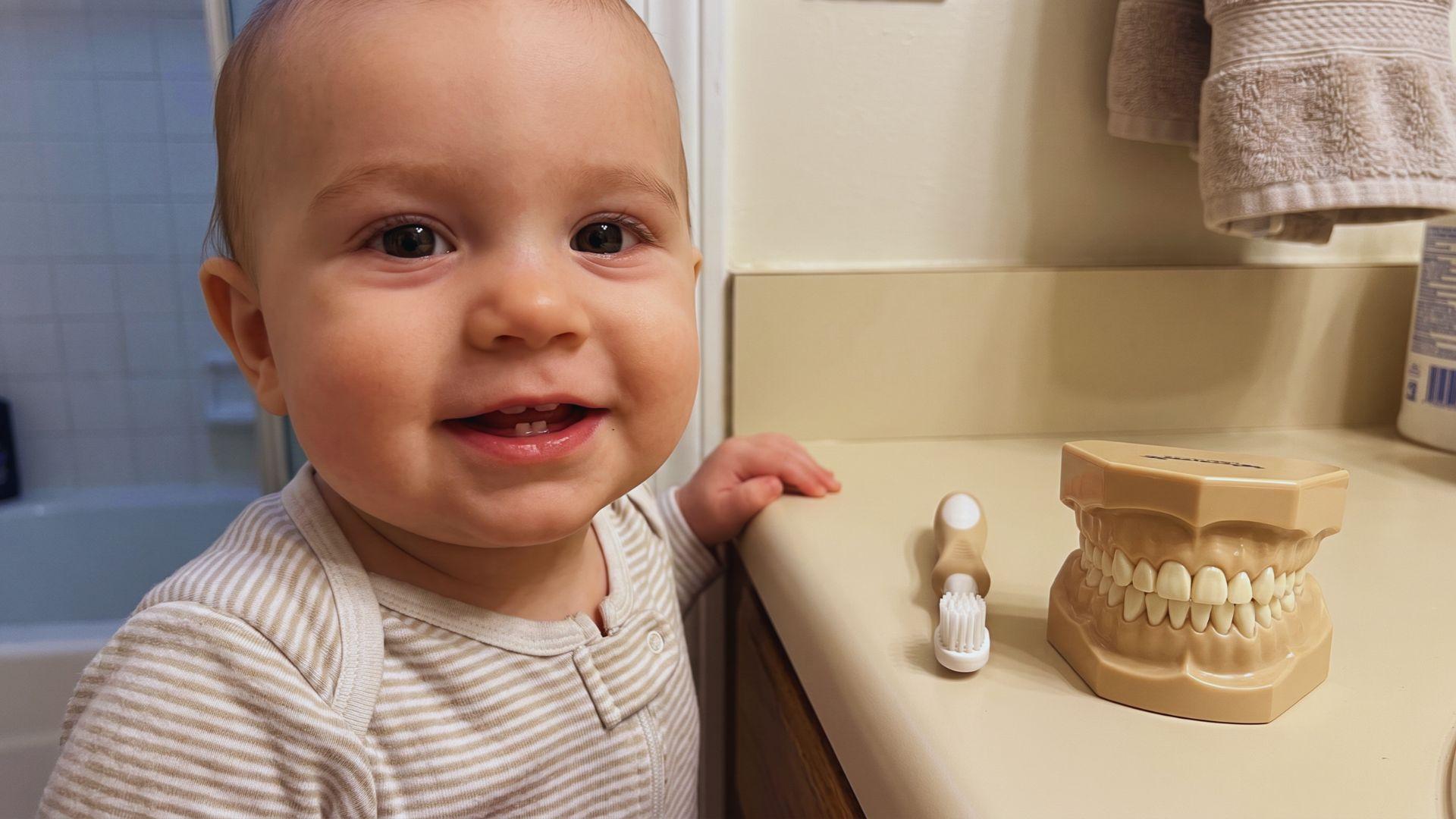
- Keep the gums clean: Wipe your baby’s gums with a clean, damp cloth at least twice a day, since bacteria that collect around new teeth can irritate the gums and add to the swelling. Once the first tooth appears, the AAP fluoride toothpaste advice is to brush twice a day with a soft infant toothbrush and a smear of fluoride toothpaste the size of a grain of rice.
- Skip these remedies: The FDA warns against over-the-counter teething gels containing benzocaine for children under 2 and against homeopathic teething tablets and gels. Teething necklaces and bracelets made of amber, wood, or silicone carry a choking and strangulation risk, as the AAP’s teething pain guidance explains.
None of these steps require a prescription, and used consistently, they handle most of what teething throws at you.
If your baby is still clearly in pain despite all three, call your pediatrician before giving any pain reliever.
Home care handles most of teething, but some signs mean it’s time to stop managing this yourself.
When to Call the Doctor or Dentist
If your baby has a fever of 100.4°F (38°C) or higher, don’t put it down to teething.
According to the AAP, a temperature that high isn’t caused by teething, and Seattle Children’s notes that blaming fevers on teething can delay care for infections such as ear infections.
A slightly fussier baby is normal during teething, but a true fever is a separate issue that needs its own explanation and a call to your pediatrician.
Contact your pediatrician or pediatric dentist if your baby has:
- A fever of 100.4°F (38°C) or higher, and call right away if your baby is younger than 3 months
- Refusal to nurse or take a bottle, or signs of dehydration such as fewer wet diapers, no tears when crying, or a dry mouth
- Gum bleeding that doesn’t stop with gentle pressure
- Vomiting, diarrhea, a rash, or mouth sores along with the swollen gums
- An eruption cyst that keeps growing or looks infected, or a tooth that doesn’t seem to come through
Call 911 if your baby has trouble breathing. The feeding sign matters more than it might seem.
If you do call, it helps to have a few details ready, since they’re the same ones I’d want to know: when the swelling started, whether your baby has had a fever and how high it went, how feeding and wet diapers have changed, and whether there was a fall or a new bump.
It’s also worth asking your pediatrician which signs should prompt a call back, so you know exactly what to watch for over the next few days.
Knowing What’s Normal Makes Swollen Gums Easier to Read
Swollen gums in babies rarely signal something serious, and in most cases they are the visible side of teething.
What helps most is knowing what normal looks like: broad, red puffiness that moves with each new tooth, a bluish bump that clears once the tooth is through, or a bruise after a fall.
That way, a fever, mouth sores, feeding refusal, or swelling that keeps growing stands out quickly.
If something still doesn’t look right, call your pediatrician, and plan your baby’s first dental visit by the first birthday or within six months of the first tooth, as the AAP advises.
This guide is for general information and doesn’t replace advice from your child’s pediatrician.
Frequently Asked Questions
Do Babies’ Gums Always Swell When Teething?
Not always. Some babies teethe with little visible swelling or discomfort, while others have red, tender gums before each tooth. Both patterns are normal, and gum pain during teething is usually mild.
Can Teething Affect My Baby’s Sleep?
It can. Teething discomfort can wake a baby at night. The AAP suggests comforting your baby while sticking to the usual bedtime routine, which keeps nights predictable through each new tooth.
Why Does My Baby Have Swollen Gums and Sores Around the Mouth?
Swollen, red gums with blisters or sores on the lips, tongue, or gums, often with fever, may point to a viral mouth infection such as herpetic gingivostomatitis. Call your pediatrician, and watch for dehydration.
At What Age Do Babies Finish Teething?
Most children have all 20 baby teeth by age 3. The upper second molars usually arrive last, typically between 25 and 33 months, according to the American Dental Association’s eruption chart.