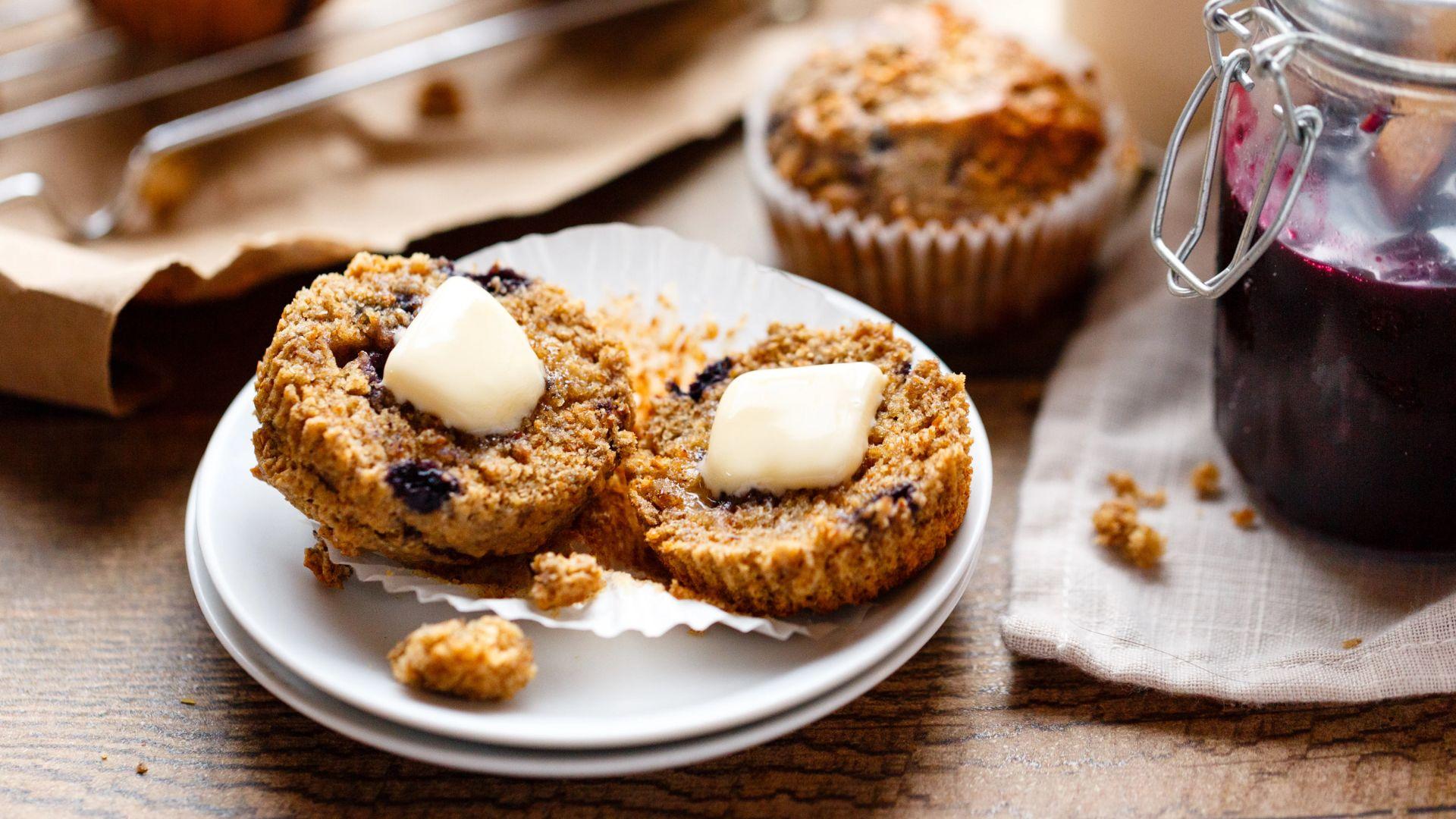
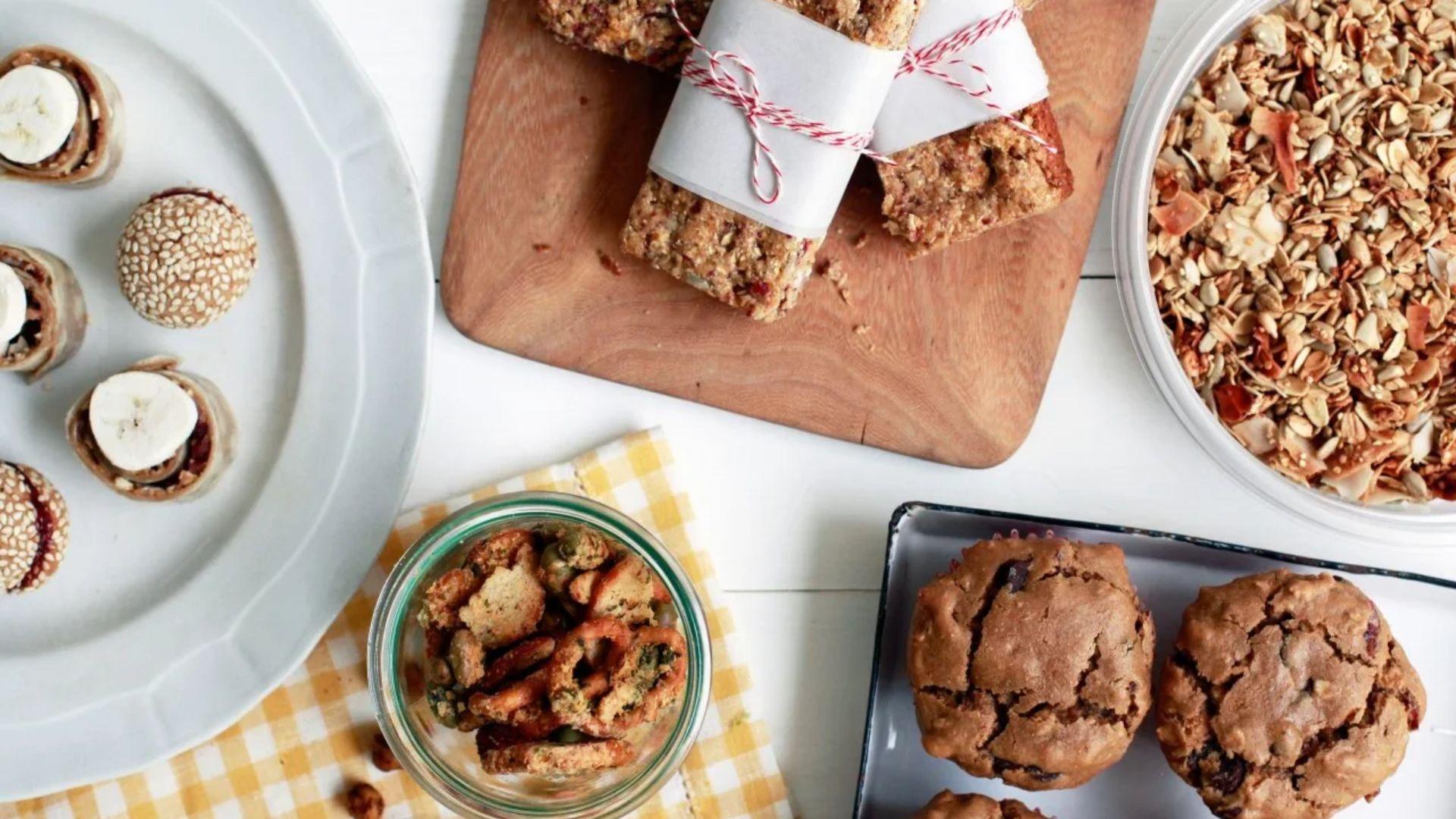


Does your child ask for another snack right after finishing the last one? That usually means the snack was missing protein or fat.
Easy healthy snacks for kids: Add one of those to a fruit, vegetable, or whole grain, so your child stays full for longer.
Since many schools do not allow nuts, this guide uses only nut-free snacks for kids, like sunflower seed butter, yogurt, cheese, eggs, and hummus.
You will get 12 snacks that work for lunchboxes and after school, each with simple steps, plus tips for store-bought options and younger kids.
First, let’s look at what makes a snack easy and healthy.
What Is an Easy Healthy Snack for Kids?
An easy, healthy snack for kids pairs a protein or healthy fat with a fiber food, takes about ten minutes to make, and has little added sugar.
Protein and fat help a child feel full for longer, and fiber adds bulk, which is why an apple with seed butter lasts longer than an apple alone.
Every snack here is written without peanuts or tree nuts, and sunflower seed butter takes the place of nut butter.
Sweetened yogurt, granola, and dried fruit can add more sugar than you expect, so check the label.
For more protein options by age, read these protein ideas for toddlers. Choking advice here follows the American Academy of Pediatrics.
Fruit and Veggie Snacks with Dips
These four snacks start with a product a child already recognizes and add a creamy dip for protein, which puts fiber and protein on one plate in about five minutes.
1. Apple Slices with Sunflower Seed Butter

Spread a thin layer of sunflower seed butter on apple slices, or serve it in a small dip cup.
Wash the apple and cut it into thin wedges, and leave the peel on for extra fiber.
One to two tablespoons of butter is enough for a medium apple, so the whole snack takes about three minutes.
Parent tip: apples suit children who like a crisp bite, and lemon juice keeps the slices from browning in a lunchbox.
Nutrition note: the butter supplies fat and protein while the apple supplies fiber, which is the pairing rule in action.
For children under 4, cut the slices thin and spread the butter thinly instead of serving spoonfuls.
Lunchbox check: packs well without a cold pack when the seed butter travels in its own small container.
2. Frozen Yogurt Banana Bites

Dip banana slices in plain Greek yogurt, set them on parchment, and freeze them for about two hours.
Cut the banana into coins about half an inch thick and coat each one with a fork so the yogurt forms an even layer.
Once frozen, move the bites to a container with parchment between the layers so they do not stick together.
Parent tip: these work well as a swap for ice pops on warm afternoons.
Nutrition note: Greek yogurt adds protein, and choosing plain yogurt keeps added sugar low. Let the bites soften for a minute or two before serving so younger children can bite through them.
Lunchbox check: best as an after-school snack at home, since the bites soften quickly once they leave the freezer.
3. Fruit Kabobs

Thread grapes, melon, and strawberries onto sticks for a snack that looks like a treat.
Cut the melon into small cubes and the strawberries into halves, then slide a few pieces of each onto a short stick in a repeating pattern.
The bright colors catch a child's eye, and a short stick is easy for small hands to hold.
Parent tip: Letting a hesitant eater choose the fruit order or build the kabob makes new fruit feel like a game instead of a request.
Nutrition note: For children under 4, cut grapes lengthwise into quarters, as the American Academy of Pediatrics advises, cut melon into pieces no larger than half an inch; and use blunt-ended sticks with an adult nearby.
Lunchbox check: Pack the cut fruit in a rigid container with a cold pack, and thread it onto sticks at snack time if sticks are not allowed at school.
4. Veggie Sticks with Hummus or Bean Dip

Cucumber, carrot, and bell pepper strips pair well with hummus or a smooth bean dip.
Cut each vegetable into sticks about the length of a finger so they are easy to grab and dip.
Spoon a few tablespoons of dip into a small bowl and let your child pick which vegetable to try first.
Parent tip: For a child who loves chips, keep the crunch and change the pairing, because a veggie stick scooped through dip gives the same dunk-and-crunch.
Nutrition note: Hummus and bean dip add protein and fiber, and carrots should be cooked tender or cut into thin strips for children under 4.
Hummus is usually made with tahini, which is sesame, so look for a tahini-free version if your school restricts sesame.
For babies, the guide on whether babies can eat hummus explains how to start.
Lunchbox check: Send the dip in a small leak-proof cup beside the sticks, with a cold pack to keep it fresh.
Protein Snacks with Cheese, Eggs, and Meat
Savory snacks built on cheese, eggs, or deli meat give kids the protein that fruit alone lacks. All four come together in minutes, and the only cooking involved is one batch of boiled eggs.
5. Ham and Cheese Pretzel Roll-Ups

Wrap a slice of ham and cheese around a pretzel stick, or roll them in a soft tortilla for younger children.
Lay the cheese on top of the ham, place the pretzel stick or tortilla edge at one end, and roll it up tightly. Each roll-up takes about a minute to make, so a small batch is ready in five minutes.
Parent tip: Assemble a few in a container before pickup so they are ready the moment your child walks in.
Nutrition note: Deli meat is salty, so treat this as a sometimes snack and use a lower-sodium turkey swap when you can.
Hard pretzel sticks are a choking hazard for young children, so the tortilla version suits them better, and the pretzel label should be checked for nut warnings.
Lunchbox check: Needs a cold pack because of the ham and cheese.
6. Ants on a Log

Fill a celery stick with sunflower seed butter or cream cheese and line raisins or dried cranberries along the top.
Cut each washed stalk into pieces about three inches long, so they fit easily in small hands and lunchboxes.
Both fillings are spread with a butter knife, and the sweet fruit balances the plain crunch of the celery.
Parent tip: Let children assemble it themselves, since a child who builds the snack tends to be more willing to eat it.
Nutrition note: Sunflower seed butter keeps this snack free of peanuts and tree nuts, but some schools also limit seeds, so check the school's rules first.
Keep the dried fruit portion small, because raisins and dried cranberries are concentrated sources of sugar.
For children under 4, cut the celery into short pieces and remove the strings, or use a split banana as the log, since raw celery and whole raisins are both choking hazards at that age.
Lunchbox check: The seed butter version holds at room temperature, while the cream cheese version needs a cold pack.
7. Cheese and Veggie Bento Box

String cheese or cheese cubes, baby carrots, cucumber slices, and whole-grain crackers fill a bento box in under five minutes.
Use a box with small compartments so the foods stay separate, and the crackers stay crisp.
Fill each section with a small portion, which makes it simple to refill only what your child finishes.
Parent tip: portion the week's boxes on Sunday and keep them in the refrigerator, so each afternoon is a grab-and-go instead of a build.
Nutrition note: this box teaches a template of one protein item, one produce item, and one grain, which you can repeat with new ingredients.
For a snack-board variation, spread the same pieces on a plate with a small bowl of dip. Children under 4 do best with cheese cut into thin strips and carrots cooked soft or sliced thin.
Lunchbox check: An ice pack keeps the cheese cold in a lunch bag, and the cracker label should be checked for nut warnings.
8. Make-Ahead Hard-Boiled Eggs

Boil a dozen eggs once, cool them, and keep them in the refrigerator for up to a week.
Cook the eggs in boiling water for about 10 to 12 minutes, then move them to a bowl of ice water so they stop cooking and peel more easily.
When your child is hungry, peel one, which takes less than a minute.
Parent tip: batch-boil on the weekend and store the eggs in their shells until needed, so they stay fresh and peel cleanly.
Nutrition note: eggs are one of the simplest protein sources, and a side of fruit or whole-grain toast covers the fiber. Cut eggs into wedges for younger children, and skip this snack if your child has an egg allergy.
Lunchbox check: pack peeled eggs with an ice pack, since eggs should stay cold until they are eaten.
Make-Ahead Snacks for the Week
One batch session on the weekend can cover snacks for the whole week, which helps most on days when time is short.
These four ideas store well in the refrigerator or freezer and travel in a lunchbox. They also work for the car, and you can find more in these healthy road trip snacks for kids .
9. No-Bake Energy Balls

Mix 1 cup of oats, ½ cup of sunflower seed butter, and 3 tablespoons of honey, then stir in ¼ cup of nut-free mini chocolate chips last.
Roll the dough into balls about an inch wide and chill them until firm. Store the balls in a covered container in the refrigerator.
Parent tip: If the mix is too dry, add more seed butter, and if it is too sticky, add more oats.
Nutrition note: The CDC and American Academy of Pediatrics advise against giving honey before 12 months, so use mashed banana for babies, and keep the chocolate chips modest for older children.
Lunchbox check: Pack with a cold pack in warm weather so the balls stay firm.
10. Greek Yogurt Parfaits

Layer plain or vanilla Greek yogurt with berries and a small handful of cereal or granola.
Use a clear cup or small jar so your child can see the layers, starting with yogurt, then berries, and finishing with the crunchy topping.
Half a cup of yogurt with a handful of berries makes a snack-size serving.
Parent tip: Pack the crunch in a separate small container and add it right before eating so the cereal stays crisp.
Nutrition note: Plain yogurt controls added sugar, while vanilla yogurt and granola can raise it, so compare labels and let the berries provide the sweetness. Check cereal and granola labels for nut warnings, and halve or lightly mash berries for children under 4.
Lunchbox check: Needs a cold pack, with the crunchy topping packed separately.
11. Homemade Granola Bars
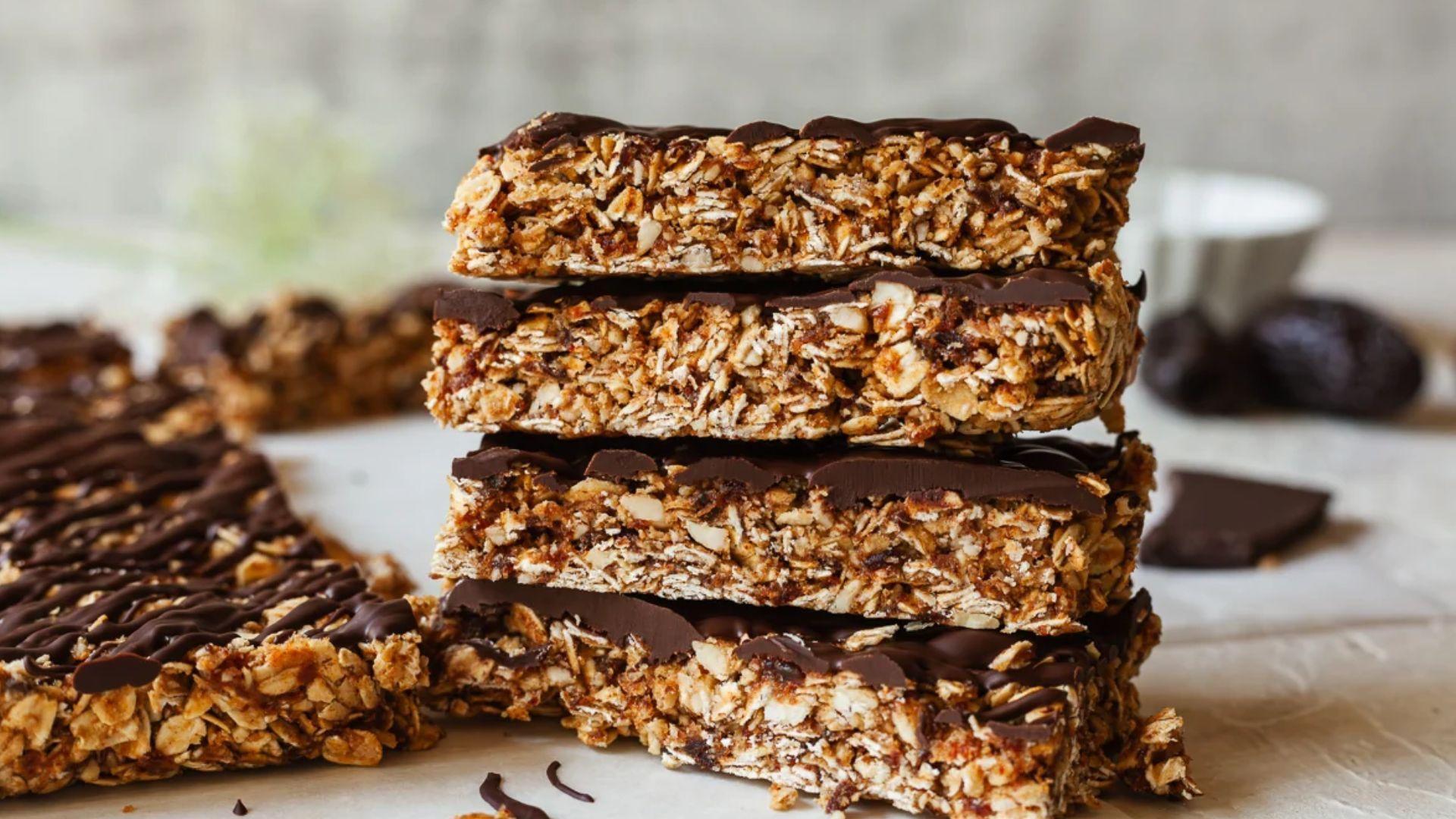
Mix 2 cups of rolled oats, ½ cup of sunflower seed butter, ⅓ cup of honey or maple syrup, and ¼ cup of nut-free mini chocolate chips or chopped dried fruit.
Press the mixture firmly into a parchment-lined 8-inch pan so the bars hold together. Chill for at least an hour, then cut into bars.
Parent tip: Wrap each bar individually after cutting so the week's snacks are ready to grab.
Nutrition note: Homemade bars let you control the sugar and ingredients compared with many packaged bars. Use maple syrup instead of honey for children under 12 months.
Lunchbox check: Wrapped bars travel well at room temperature, and extras keep best in the refrigerator.
12. Freezer-Friendly Mini Muffins

Mix 1½ cups of rolled oats, 1 cup of plain yogurt, 1 egg, ⅓ cup of maple syrup, 1 teaspoon of baking powder, and ½ teaspoon of baking soda, then fold in 1 cup of blueberries.
Fill a greased mini muffin tin and bake at 350°F for 12 to 15 minutes, which makes about 24 muffins.
Cool them completely, then freeze them in a single layer on a tray for an hour before moving them to a bag.
Parent tip: Move a muffin from the freezer to the lunchbox in the morning, and it thaws by snack time.
Nutrition note: The blueberries and oats add fiber, and the recipe uses less added sugar than a typical bakery muffin. The egg and yogurt make these unsuitable for children with egg or dairy allergies.
Lunchbox check: A frozen muffin works as a cold pack and is ready to eat by snack time.
Store-Bought Nut-Free Snacks
Store-bought snacks can fill the gaps on busy weeks, and the label is where nut-free is decided.
Packaged foods in the United States must name peanuts and tree nuts when they are an ingredient, but "may contain" warnings are voluntary, so a missing warning does not guarantee a nut-free product, as the FDA label guidance explains.
Look for products made in a nut-free facility, and contact the maker if the label is unclear.
Handy shortcuts include plain Greek yogurt cups on top with berries, string cheese, single-serve applesauce, whole-grain crackers, pre-peeled boiled eggs, and single-serve sunflower seed butter, as long as your school allows seeds.
How to Choose the Right Snack for Your Child

The best snack depends on your child's appetite, age, and allergies, so use this list to match the idea to the situation.
- Lunchbox with no cold pack: Choose snacks 1, 6 (seed butter version), 11, or 12, which travel well at room temperature or thaw by snack time.
- After school at home: Choose snacks 2, 7, 8, or 10, because cheese, eggs, and yogurt hold a child over until dinner.
- Cautious eaters: Start with snacks 1, 2, or 4, where the child controls the dipping, and place one new food next to a familiar one.
- School that limits seeds: Read the rules, then choose snacks 2, 3, 7, 8, or 10, which use no seed butter.
- Egg or dairy allergy: Snacks 2, 5, 7, 8, 10, and 12 need swaps, so lean on snacks 1, 3, and 4 and check every label.
- Children under 4: Quarter grapes lengthwise, cut cheese and carrots thin, spread seed butter thinly, and skip hard pretzels and whole raisins.
- Babies under 12 months: Leave the honey out of snacks 9 and 11.
- Busy weeks: Batch snacks 9 through 12 on the weekend.
Final Takeaway
Easy healthy snacks for kids come down to one pairing: a protein or healthy fat plus a fiber food.
I built every idea in this guide around that rule, and I used sunflower seed butter in place of nut butter so each snack fits a nut-free lunchbox.
The pairing helps your child stay full longer, which means fewer snack requests before dinner.
Each snack takes about ten minutes, and a quick label check keeps added sugar and hidden nuts out.
Pick one snack from this list, prep it tonight, and read the label on any packaged ingredient before it goes in tomorrow’s lunchbox.
Frequently Asked Questions
What Snack Brands Are Nut-Free?
Brands that make snacks in dedicated peanut- and tree nut-free facilities include Enjoy Life, 88 Acres, SunButter, and WowButter, but check each label because manufacturing can change.
What Candy Is Safe for Kids with Nut Allergies?
Smarties, Dots, and Swedish Fish are commonly listed as free of peanuts and tree nuts, but check the label each time since recipes and facilities can change.
What Snacks Are Good for Kids with Tree Nut Allergies?
Fruit, vegetables, cheese, yogurt, eggs, and sunflower seed butter are good options, and your allergist can tell you whether peanuts, coconut, or seeds are okay for your child.