When I test recipes for my own children, salt is the first thing I leave out of a baby hummus recipe. It is a small change, but it is the one I would make first for any baby just starting solids.
Your baby is ready to explore new textures and flavors, yet store-bought hummus is rarely made with babies in mind.
Many tubs add salt, raw garlic, and a thick texture that suit adult snacking better than first bites.
Getting a baby-friendly version right is simpler than it sounds, as long as you know why each ingredient changes.
Here in the section below, I have made an effort to explain when your babies can start hummus.
How to adjust every ingredient, a simple recipe, and how to serve it safely from 6 months onward.
When Can Babies Have Hummus?
So, can babies eat hummus? Yes, from around 6 months, once your baby has started solid foods, though age alone is not the only thing to consider.
Understanding how babies handle hummus gives more context on exactly why texture, allergen order, and timing all carry real weight before that first taste.
The texture needs to be smooth and thin, and sesame, found in tahini, is the ingredient to introduce on its own first, as the next section explains.
Chickpeas are not one of the major US allergens, but any new food can cause a reaction, so start with a small amount.
After 12 months, babies handle hummus much more easily, and the recipe can gradually shift closer to what the rest of the family eats.
Ingredients and Why Each One Is Adjusted
Every ingredient in a baby-friendly hummus has a reason behind it, and knowing that reason helps you make smarter swaps when needed.
Chickpeas and the Salt Question

Regular canned chickpeas carry about 246 mg of sodium per 100 grams once drained, a little under half a cup, according to USDA FoodData Central.
For comparison, the National Academies set the adequate sodium intake for babies 7 to 12 months at 370 mg for the whole day.
Draining and rinsing canned beans can cut their sodium by about 41%, according to University of Tennessee research, and a no-salt-added can is better still.
If you cook dried chickpeas from scratch without salt, you control everything, which makes it the cleanest choice for younger babies.
Tahini and Sesame Allergy
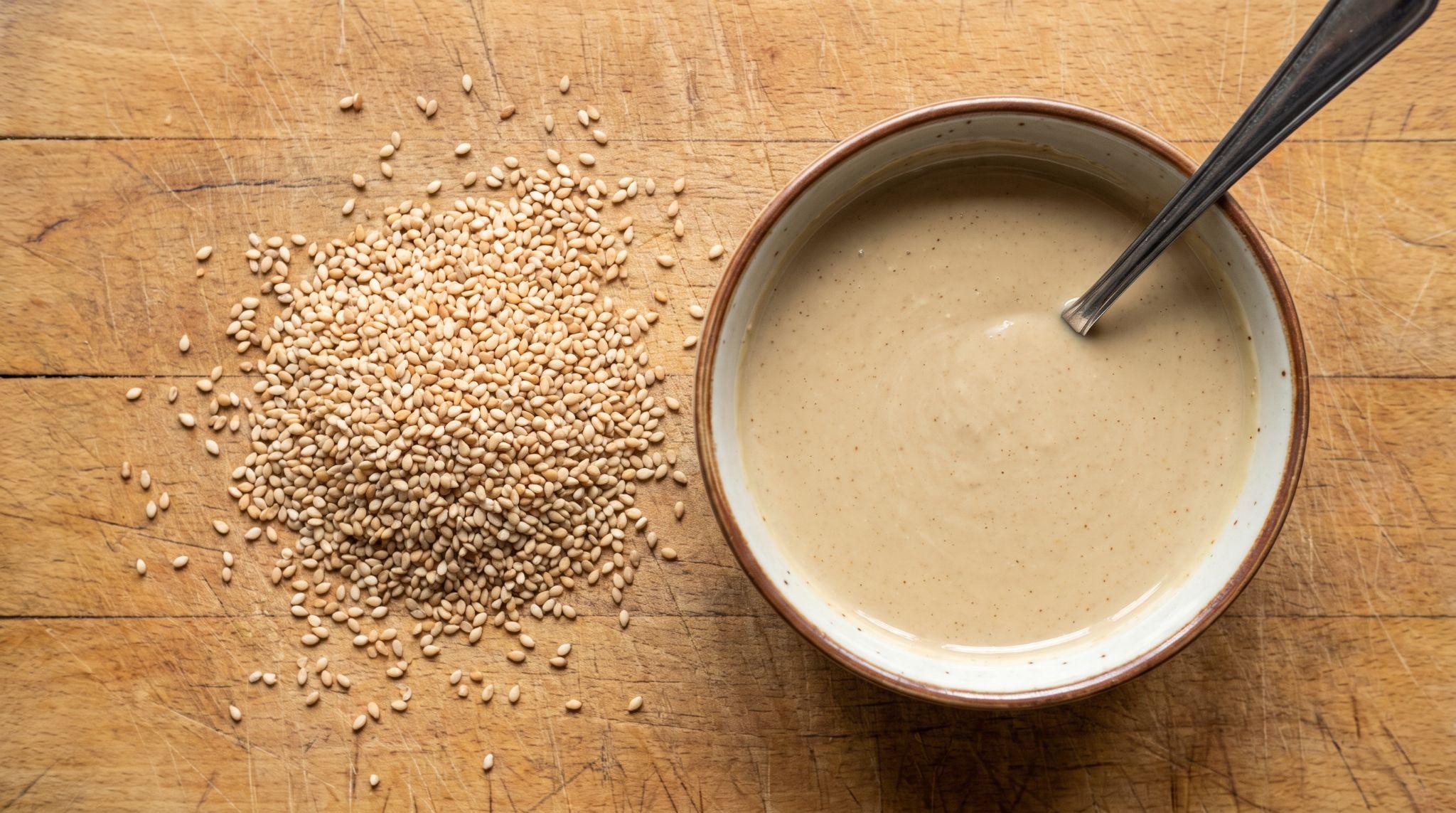
Sesame became the ninth major food allergen in the US on January 1, 2023, under the FASTER Act, so packaged foods must now name it clearly on the label.
Like peanut, it is one of the foods current guidance encourages parents to introduce early rather than delay.
Before adding tahini to any mixed recipe, offer your baby a small taste on its own, thinned with water so it isn’t thick or sticky.
Watch for about 2 hours for hives, swelling, or vomiting, and call 911 if your baby has trouble breathing or swelling of the lips or face.
If there is no reaction, you can include tahini in the hummus and keep offering sesame a few times a week, since regular exposure helps maintain tolerance.
For babies under 9 months, one teaspoon per full batch is enough.
Garlic Raw vs Roasted

Raw garlic has a sharp, pungent bite that can be too strong for a baby who is just learning new flavors.
Roasting mellows that bite and brings out natural sweetness, which makes it an easier first taste.
Wrap one clove in foil with a drop of olive oil and roast at 375°F (190°C) for 20 minutes. One clove per batch is plenty.
Lemon Juice and Olive Oil
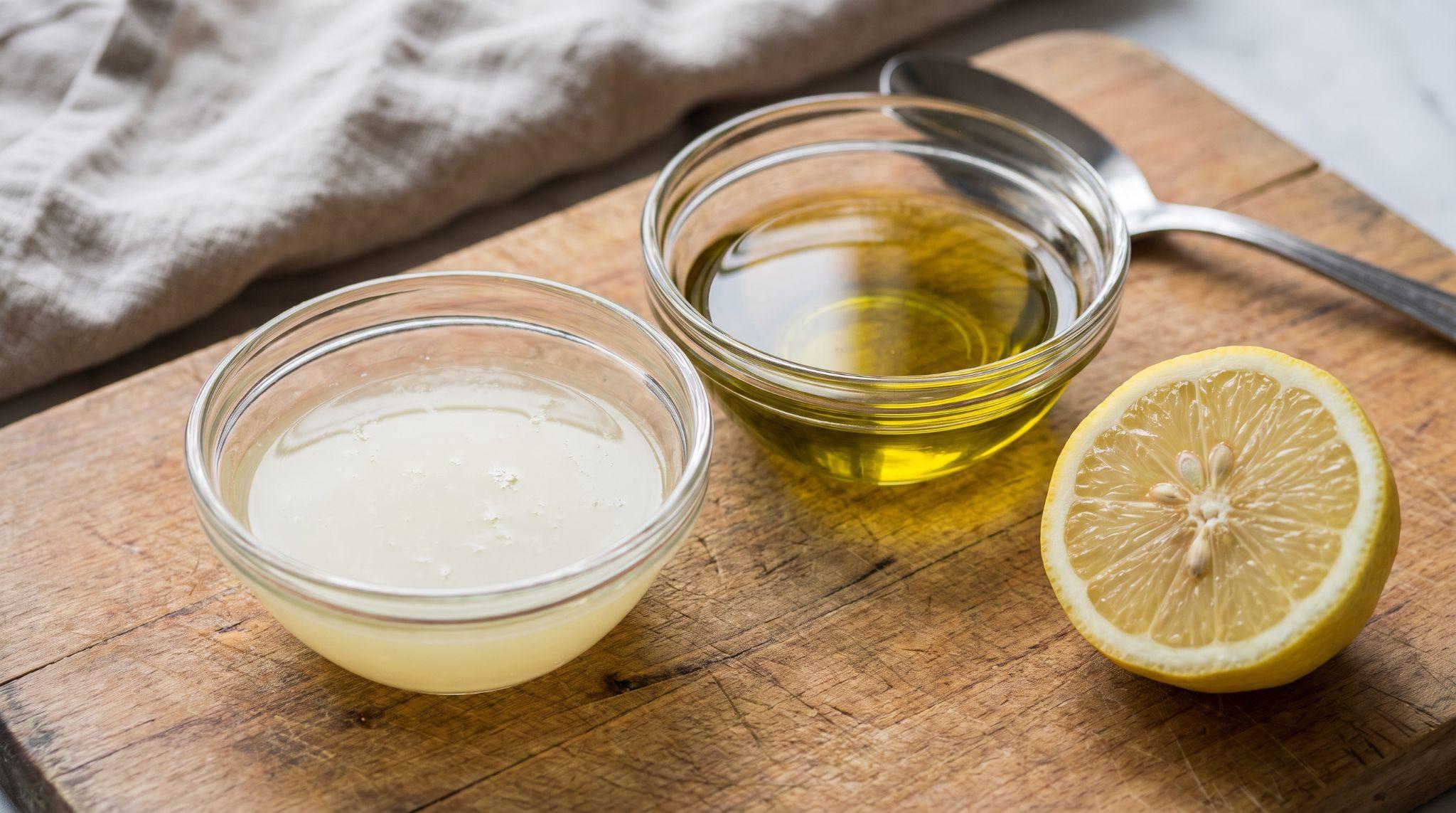
Fresh lemon juice adds brightness, and one teaspoon per batch is enough.
More than that can make the flavor too sour for a new eater.
For oil, a strong extra virgin olive oil can overpower the other flavors.
A light olive oil or avocado oil blends in smoothly without changing the taste, which works better for babies still adjusting to new flavors.
Baby Hummus Recipe
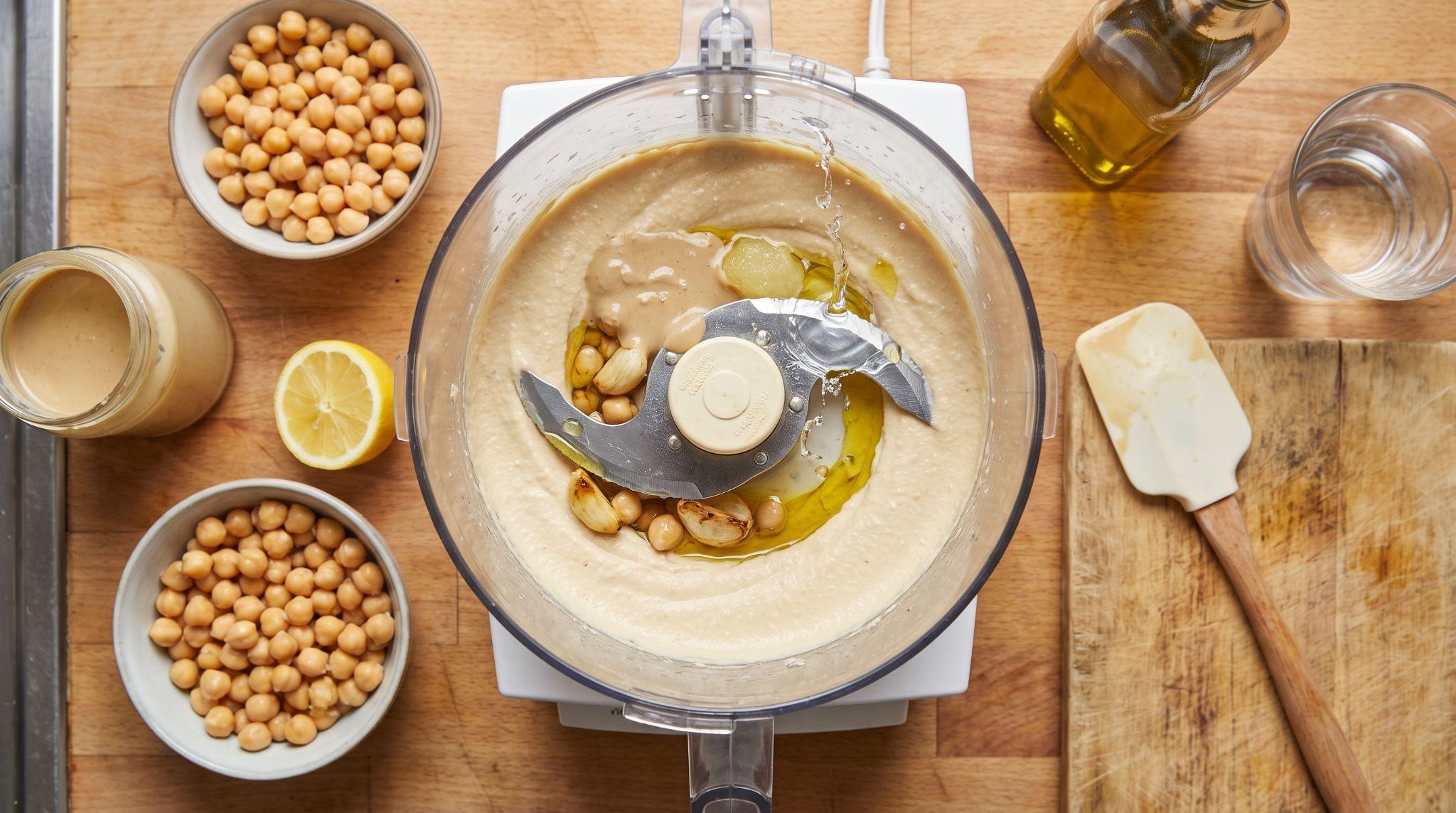
Here is everything you need to make a smooth, baby-friendly hummus in about 10 minutes, once the garlic is roasted.
What You Need
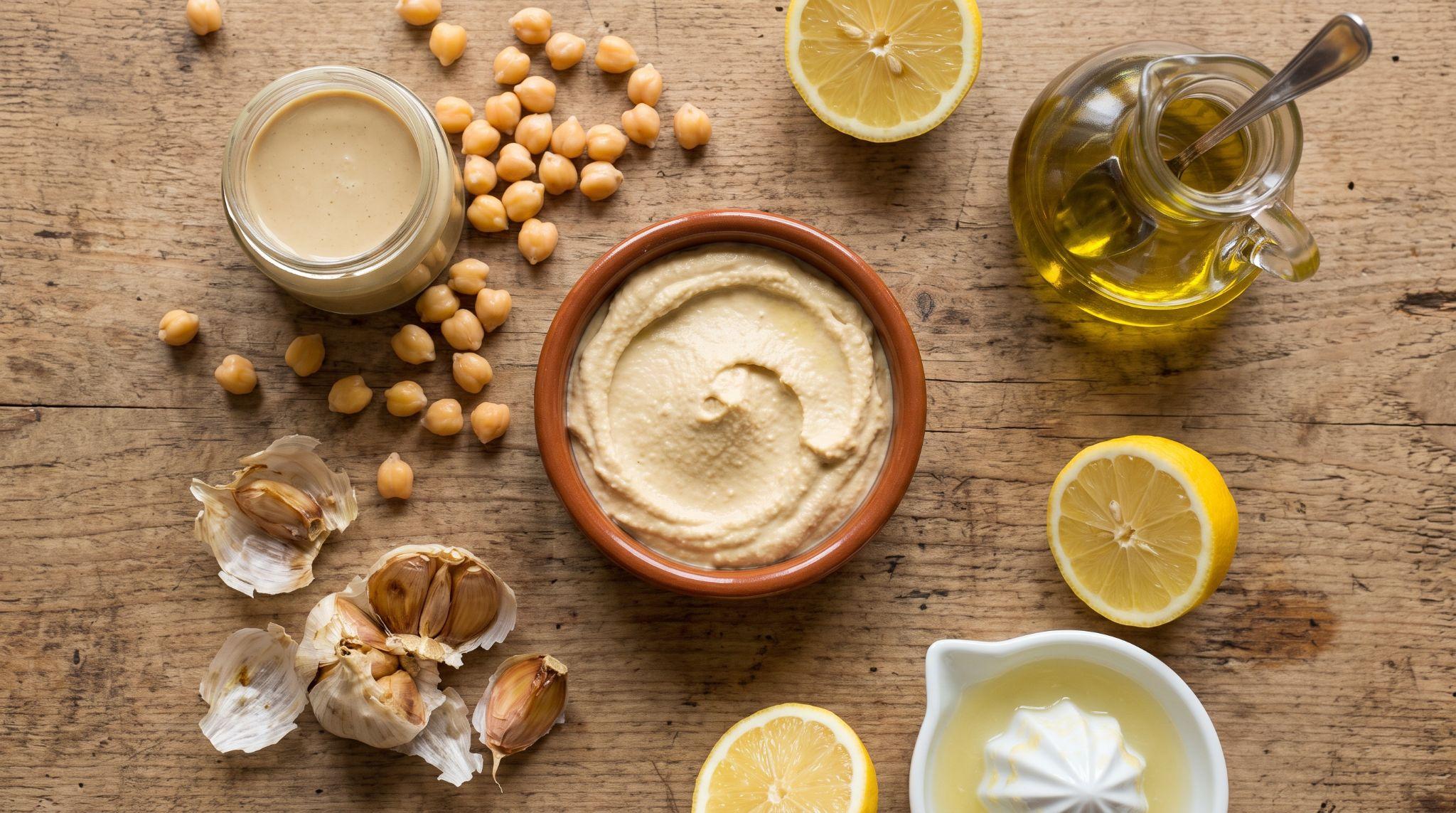
- 1 can (15 oz/425 g) no-salt-added chickpeas, drained and rinsed well
- 1 small roasted garlic clove
- 1 tsp tahini (introduce sesame separately before using)
- 1 tsp fresh lemon juice
- 1 tbsp olive oil or avocado oil
- 3 to 4 tbsp water (add more for a thinner consistency)
How to Make It
- Add the rinsed chickpeas to a blender or food processor. For babies under 9 months, removing the outer skins from each chickpea makes the texture noticeably smoother. It takes a few minutes but is worth it.
- Add the roasted garlic, tahini, lemon juice, and oil. Blend on high for 30 to 40 seconds.
- Add water one tablespoon at a time while blending until you reach the right consistency. For younger babies, it should be almost runny. For older babies and toddlers, a thicker dip works fine.
- Taste before serving. It will taste bland compared to adult hummus. That is exactly right. Babies do not need seasoning the way we do.
- Store in an airtight container in the fridge for 1 to 2 days, or freeze in ice cube trays for up to one month.
How to Serve Hummus to a Baby
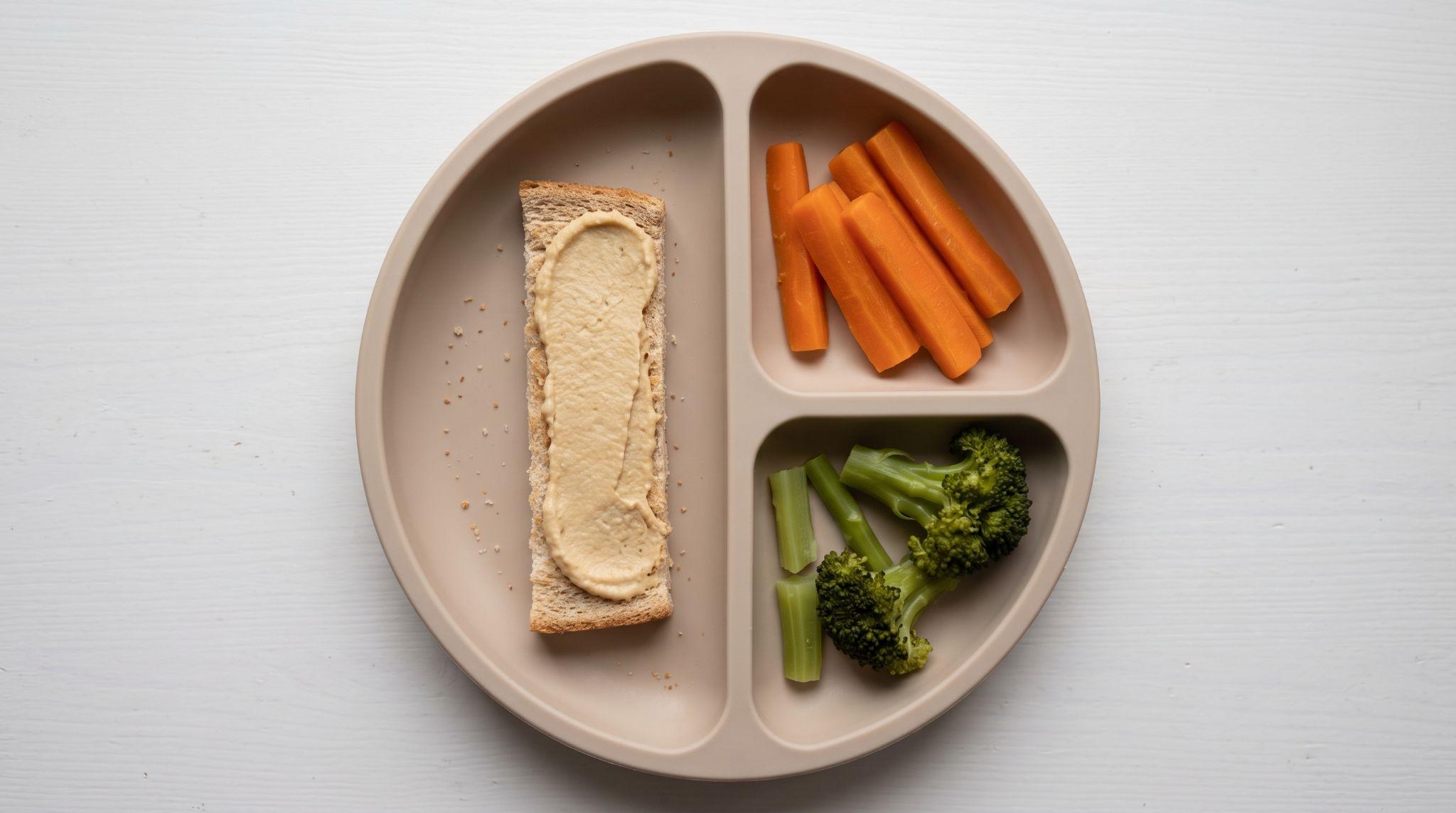
Spread it thin on soft food or use it as a dip, because the serving method matters as much as the recipe itself.
For babies around 6 to 8 months, spread a thin layer on a soft strip of toast or on carrot or broccoli steamed until it squashes easily between your fingers.
This gives them something to grip and gum without needing teeth.
After 9 months, babies can start dipping soft pita triangles or soft-cooked vegetable sticks on their own, while hard raw vegetables are best avoided, since the CDC lists them as choking hazards.
By 12 months, hummus works with rice cakes, soft crackers, or small finger foods as part of a balanced plate. Keep your baby seated upright and stay with them for every meal.
Final Takeaway
Making hummus for your baby is one of those things that feels harder than it actually is.
Once you understand why each ingredient is handled differently- the salt in chickpeas, the sesame in tahini, the sharpness of raw garlic- the recipe makes complete sense on its own.
This baby hummus recipe is one I come back to regularly because it works at every stage, from first tastes at 6 months to toddler lunches that the whole family ends up eating.
If you tried this with your little one, I would love to know what they thought, and if you know another parent just starting solids, this might be exactly what they need to see.
Frequently Asked Questions
What kind of hummus can babies eat?
Plain hummus works best. Skip flavored tubs with spicy toppings, whole pine nuts, or honey before age 1, and thin any hummus with water or breast milk so it isn’t thick and sticky.
Can a 6-month-old eat hummus?
Yes. Start with a teaspoon or two, thinned until smooth. If your baby pushes it out, keep offering, since it can take 8 to 10 tries before a baby accepts a new food.
Can you give a 1-year-old hummus?
Yes. From ages 1 to 3, the National Academies advise reducing sodium if intake goes above 1,200 mg a day, so a small serving of store-bought hummus fits, but homemade keeps more room.
What is a kid-friendly recipe for hummus?
Blend in roasted sweet potato, beet, or avocado for color and a milder taste. These versions can tempt toddlers who refuse plain hummus, though avocado versions are best eaten fresh.
Is store-bought hummus safe for babies?
In small amounts, yes. Check the sodium per serving and pick the lowest option, then serve only a thin smear. Once opened, keep it refrigerated and use it within the window printed on the tub.