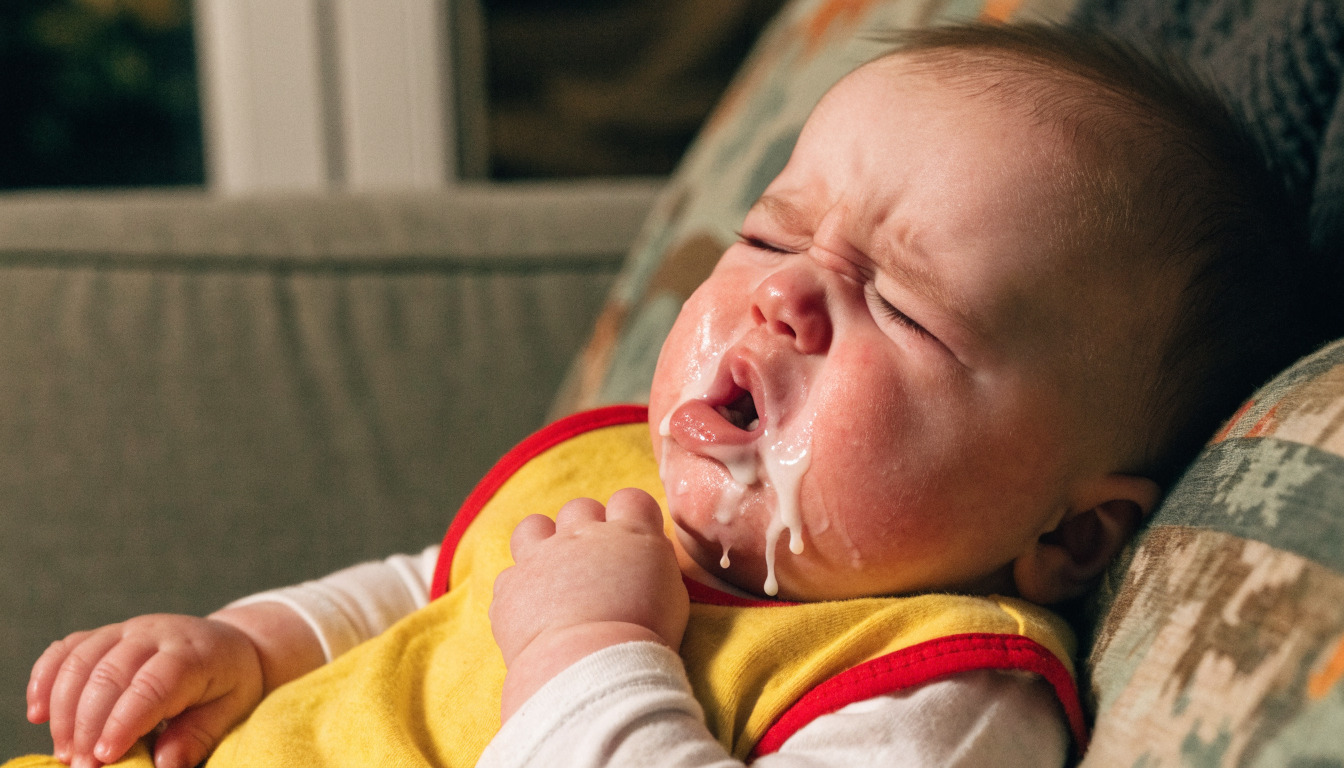
The bibs are soaked, every toy ends up in your baby’s mouth, and you’ve been checking their gums for that first little tooth. Then your baby throws up, and the explanation seems to write itself: it must be teething.
When parents bring me a worry like this, it usually starts with the same question: “Should I be worried?” So, does teething cause vomiting?
The good part? No. Researchers who tracked hundreds of tooth eruptions don’t mention anything to be worried.
That means something else is behind it, most often a common infection that happened to arrive at the same time as the tooth.
Below, you’ll find what teething really does to a baby’s body and which symptoms get blamed on new teeth by mistake.
You’ll also learn how to care for a baby who is throwing up and which signs mean it’s time to call your pediatrician.
What Is Teething?
Teething is the process of a baby’s first teeth pushing up through the gums. According to the AAP’s teething guidance, most babies start teething at around 4 to 7 months.
The timing varies a lot from baby to baby, and a later start usually isn’t a sign that anything is wrong.
The front teeth tend to come in first, and most children have all 20 baby teeth by around their third birthday.
The AAP describes the typical signs as mild irritability, extra drooling, a strong urge to chew on something hard, and gums that look swollen and feel tender.
Some babies also have a slight rise in temperature, but the AAP notes it should stay below 101°F (38.3°C).
Drooling often starts weeks before a tooth appears, so it isn’t a reliable sign that one is close. Our guide on when babies start drooling explains that timeline.
Look closely at that list, and a pattern stands out. Every proven teething sign centers on the mouth, and the only body-wide change, a slight temperature rise, is small.
Does Teething Cause Vomiting?
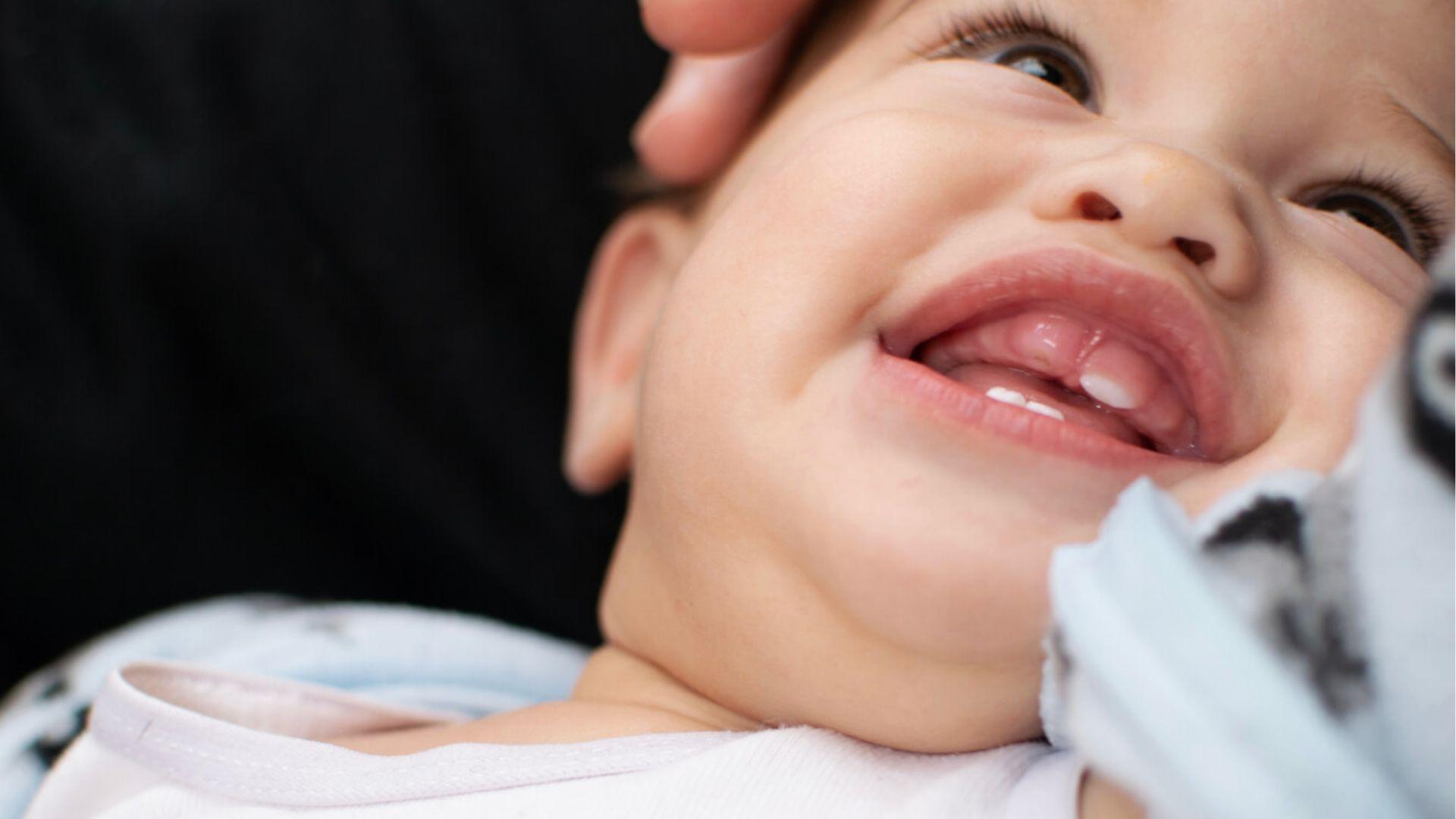
No, teething does not cause vomiting. A prospective study published in Pediatrics in 2000 followed 125 infants through 475 tooth eruptions and found that vomiting was not linked to teething.
If your teething baby is vomiting, an illness or another cause is responsible, and it deserves attention on its own.
The same study did find a handful of real teething signs: drooling, gum rubbing, irritability, less interest in solid foods, and a mild temperature rise.
The researchers concluded that teething does not cause severe symptoms and that serious ones shouldn’t be put down to teething.
Later reviews made a related point: no symptom pattern can reliably tell teething apart from the early stage of an infection. That is why pediatricians look for another cause before giving teething the credit.
Why Teething and Vomiting Get Confused
Timing explains most of the mix-up. Babies are born with antibodies passed from their mother during pregnancy, and that protection gradually fades over the first several months of life.
The fading happens right around when the first teeth arrive.
It is also when babies start mouthing toys, hands, and anything else within reach. A stomach bug and a new tooth can easily land in the same week, and the tooth gets blamed.
Teething itself doesn’t make a baby more likely to catch an illness, according to Seattle Children’s Hospital. The overlap comes from a baby’s age, not from the tooth.
1. Can Teething Cause Diarrhea, Fever, or a Runny Nose?
Vomiting isn’t the only symptom that gets pinned on new teeth.
Seattle Children’s teething guide states that teething does not cause fever, diarrhea, diaper rash, or a runny nose. When those show up, they point to something else.
2. Can Teething Cause Fever?
A slight temperature rise can happen around the time a tooth breaks through, but a true fever is a different matter. The AAP says a temperature above 101°F (38.3°C) is probably not from teething and is a reason to call your pediatrician.
If you’re deciding whether a fever needs to be seen tonight, our guide on urgent care for baby fever walks through that choice.
3. Can Teething Cause Diarrhea?
No. Diarrhea in a teething baby usually comes from a stomach virus, another infection, or a reaction to a new food.
Watch it closely, because babies with diarrhea can lose fluids quickly, especially if they are vomiting too.
4. Teething and Runny Nose
A runny nose or stuffiness during teething is usually a cold or another virus rather than the tooth. Diaper rash also has its own causes, such as frequent loose stools irritating the skin.
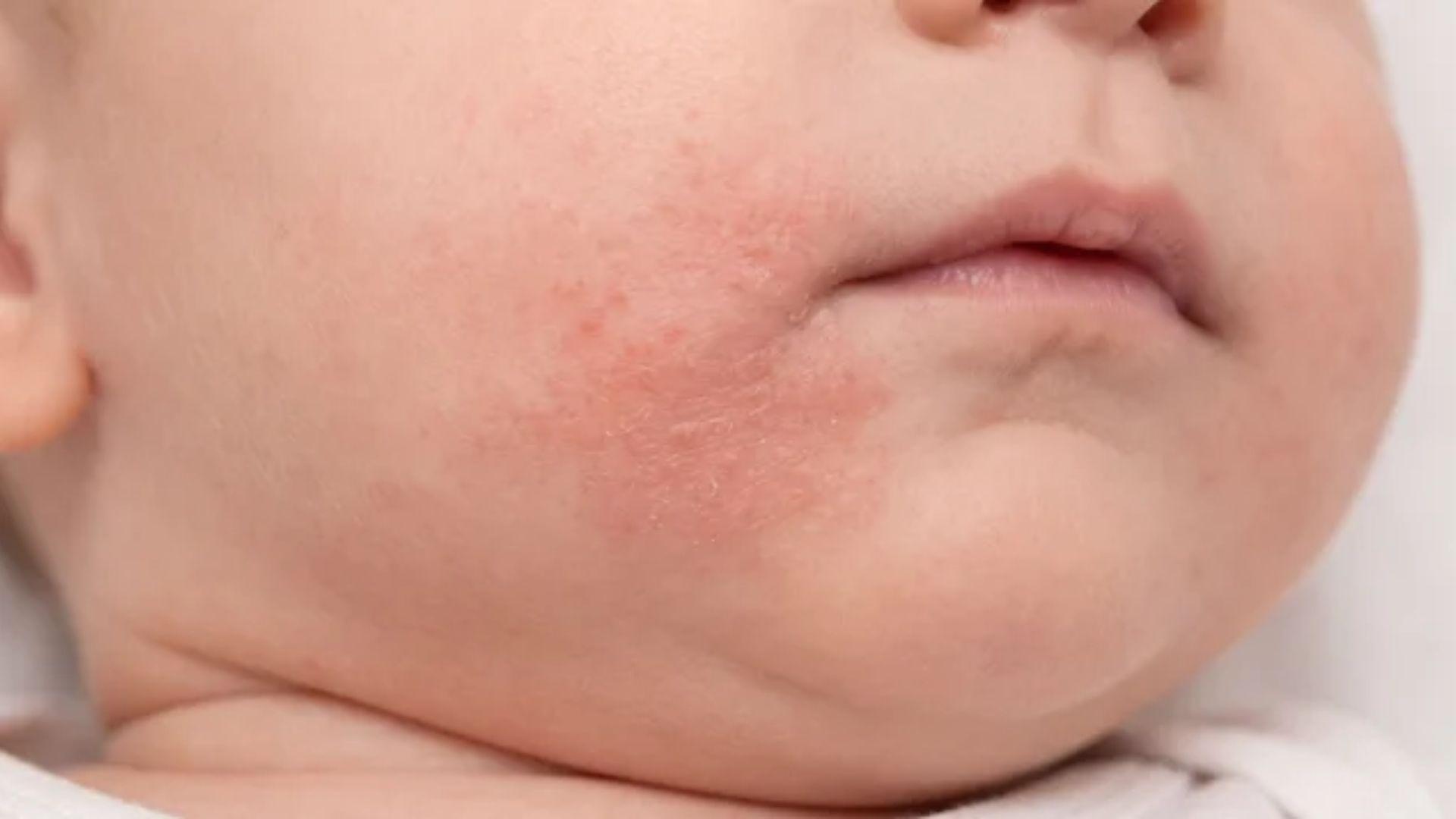
The one rash that is linked to teething is the red, chapped patch on the chin and neck caused by constant drool.
Why Might a Baby Vomit While Teething?
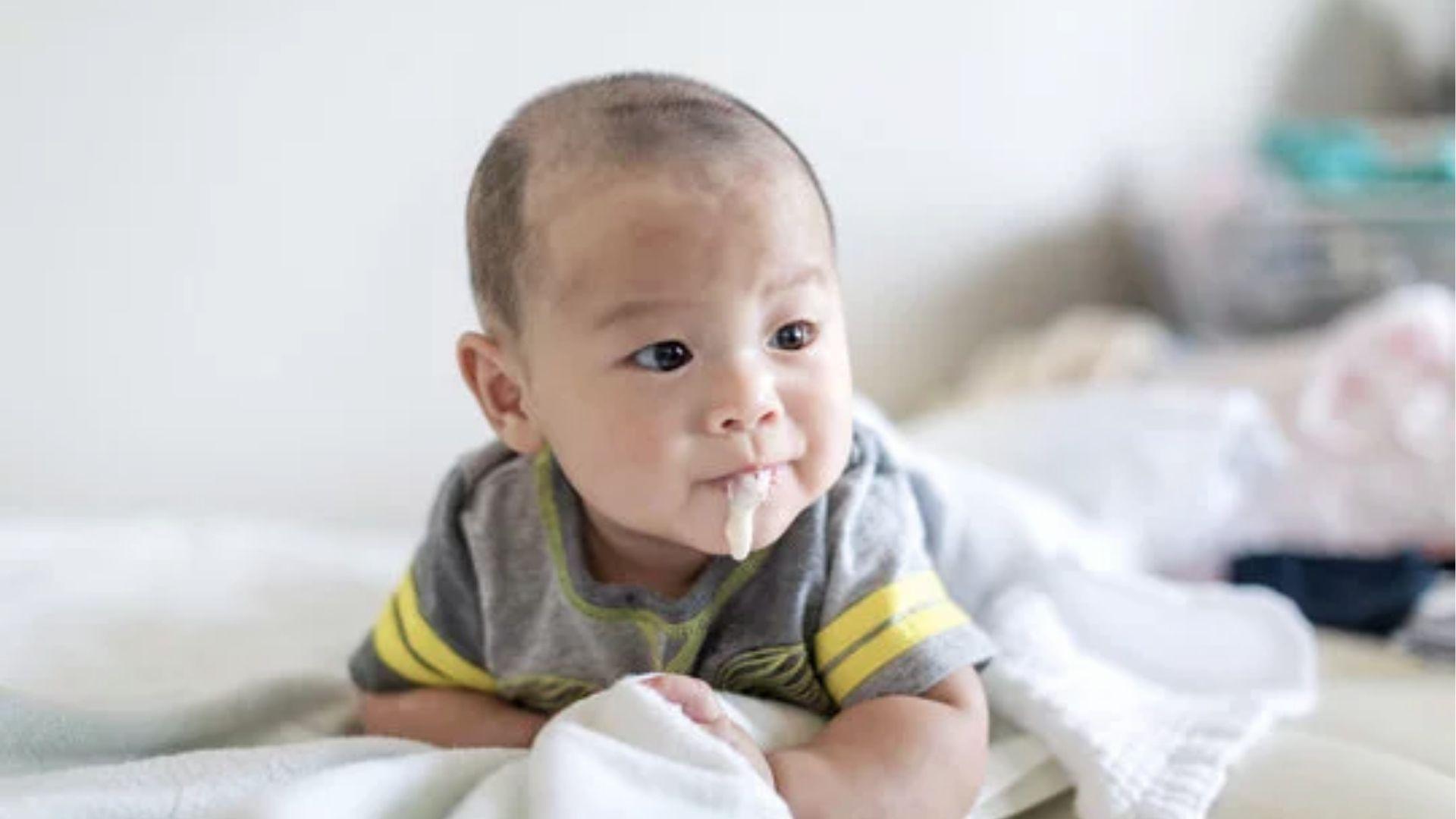
If teething isn’t the cause, the answer is usually something common and short-lived, though a few causes need a doctor’s eye.
1. Stomach Infections
Viral stomach bugs, which doctors call gastroenteritis, are one of the most common reasons babies vomit.
They often bring diarrhea and fussiness with them.
Kaiser Permanente’s care guidance for babies 3 months to 1 year notes that with home care, the vomiting will likely stop within about 12 hours, while loose stools may last a few days or more.
2. Other Infections and Food Reactions
Ear infections, urinary tract infections, and respiratory infections can all cause vomiting in babies.
Some of them can cause baby vomiting with no fever, so a normal temperature doesn’t rule them out.
A food allergy or intolerance is another possibility, especially if the vomiting began soon after your baby tried a new food.
Sudden vomiting with hives, facial swelling, or trouble breathing can signal a severe allergic reaction, so call 911 right away.
3. Can Teething Cause Spit-Up? Vomiting vs. Spit-Up
Spit-up and vomiting are different. Spit-up usually happens shortly after a feeding, flows gently out of the mouth, and doesn’t keep going.
Vomiting is forceful, takes visible effort, often brings up more, and tends to repeat.
A teething baby may spit up just like any other baby, but forceful, repeated vomiting has a cause other than teething.
Teething Symptoms vs. Signs of Illness
Use this side-by-side view when you’re trying to sort out what’s going on. If most of what you’re seeing falls in the right column, call your pediatrician.
| More Typical of Teething | May Point to Illness |
| Extra drooling | Repeated or forceful vomiting |
| Chewing or biting on objects | Fever above 101°F (or 100.4°F under 3 months) |
| Tender or swollen gums | Diarrhea |
| Mild fussiness | Runny nose or cough |
| Less interest in solid foods | Refusing fluids |
| Slight temperature rise under 101°F | Fewer wet diapers |
| Drool rash on the chin or neck | Unusual sleepiness or weakness |
How to Care for a Baby Who Is Vomiting
For most babies, vomiting from a stomach bug can be managed at home, and the main goal is preventing dehydration.
For children eating solids, the AAP advises holding off on solid foods for roughly the first 24 hours of a vomiting illness.
Instead, offer small, frequent amounts of an electrolyte solution your pediatrician recommends. Small sips are less likely than food to trigger more vomiting.
If your baby is breastfed or formula-fed, ask your pediatrician how to adjust feeds while they’re sick.
Don’t give anti-nausea or other over-the-counter medicines unless your pediatrician recommends them.
Count wet diapers, too, since fewer of them is one of the earliest signs that fluids aren’t keeping up.
How to Soothe Teething Discomfort Safely
Teething discomfort is real, and simple comfort measures usually work best.
The AAP suggests gently rubbing your baby’s gums with a clean finger or offering a firm rubber teething ring.
Chill teethers in the refrigerator rather than the freezer, because frozen ones get hard enough to hurt tender gums.
Some popular remedies are best avoided. The AAP warns against numbing teething gels, which in rare cases can stop the blood from carrying oxygen properly.
It also notes that homeopathic teething tablets offer no benefit and that amber teething necklaces have caused choking and strangulation.
Before giving any pain reliever, such as infant acetaminophen, check with your pediatrician or pharmacist about whether it suits your baby’s age and weight.
When Should You Call a Doctor About Vomiting?

Call your pediatrician if your baby can’t keep fluids down, shows signs of dehydration, or is still vomiting after about 12 hours.
Call right away for green or bloody vomit, forceful projectile vomiting, or a baby who is unusually sleepy or hard to wake.
Any fever in a baby younger than 3 months also needs prompt medical care.
Signs of dehydration in a baby include a dry or sticky mouth, crying without tears, and far fewer wet diapers than usual.
Kaiser Permanente’s guidance for babies 3 to 12 months flags no wet diaper for 6 hours as a warning sign.
Call 911 if your baby is having trouble breathing, has a seizure, or won’t wake up.
If you think your baby swallowed medicine, a teething gel, or another harmful product, call Poison Control at 1-800-222-1222.
Fever Guidelines by Age:
Fever thresholds change with age, so use your baby’s age to decide how quickly to call:
- Under 3 months: A temperature of 100.4°F (38°C) or higher, taken rectally, needs a call to your doctor or a trip to the emergency room right away.
- 3 to 6 months: Call for a temperature of 102°F (38.9°C) or higher, or for a lower fever if your baby seems sick.
- 6 to 24 months: Call if a temperature above 102°F lasts more than a day, even with no other symptoms. Call sooner if other symptoms come with it.
Questions to Ask Your Pediatrician:
A few notes make the call more useful. Write down when the vomiting started, how many times it has happened, whether it was forceful, and how many wet diapers your baby has had today.
Then ask what the most likely cause is, how much fluid your baby should be getting, which signs mean you should come in, and when the vomiting should stop.
The Takeaway on Teething and Vomiting
Teething can make your baby drool, chew, and fuss, and it may nudge their temperature up slightly, but it doesn’t cause vomiting.
When the two happen together, the vomiting has its own cause. Most often that is a short-lived infection that arrived at the same age as the first teeth.
Treat the vomiting as a separate problem. Offer fluids in small amounts, keep an eye on wet diapers, and call your pediatrician if your baby can’t keep fluids down or seems unwell.
When you’re torn between waiting and calling, make the call. Save the fever guidelines above so they’re easy to find the next time a new tooth and a tummy bug show up together.
Frequently Asked Questions
How Long Does Teething Sickness Last?
Teething doesn’t cause sickness. In the 2000 Pediatrics study, signs tied to teething appeared only in a short window of days around each new tooth, so symptoms that drag on point elsewhere.
Can Teething Cause Vomiting at Night?
No. Vomiting at night has the same causes as daytime vomiting. Many pediatric offices run an after-hours nurse line, so you don’t need to wait until morning to ask whether your baby needs care.
Can Teething Make a Baby Throw Up From Drooling Too Much?
Swallowing extra drool may make a baby gag or bring up a little milk now and then. That is spit-up, not true vomiting. Repeated or forceful vomiting needs a different explanation.