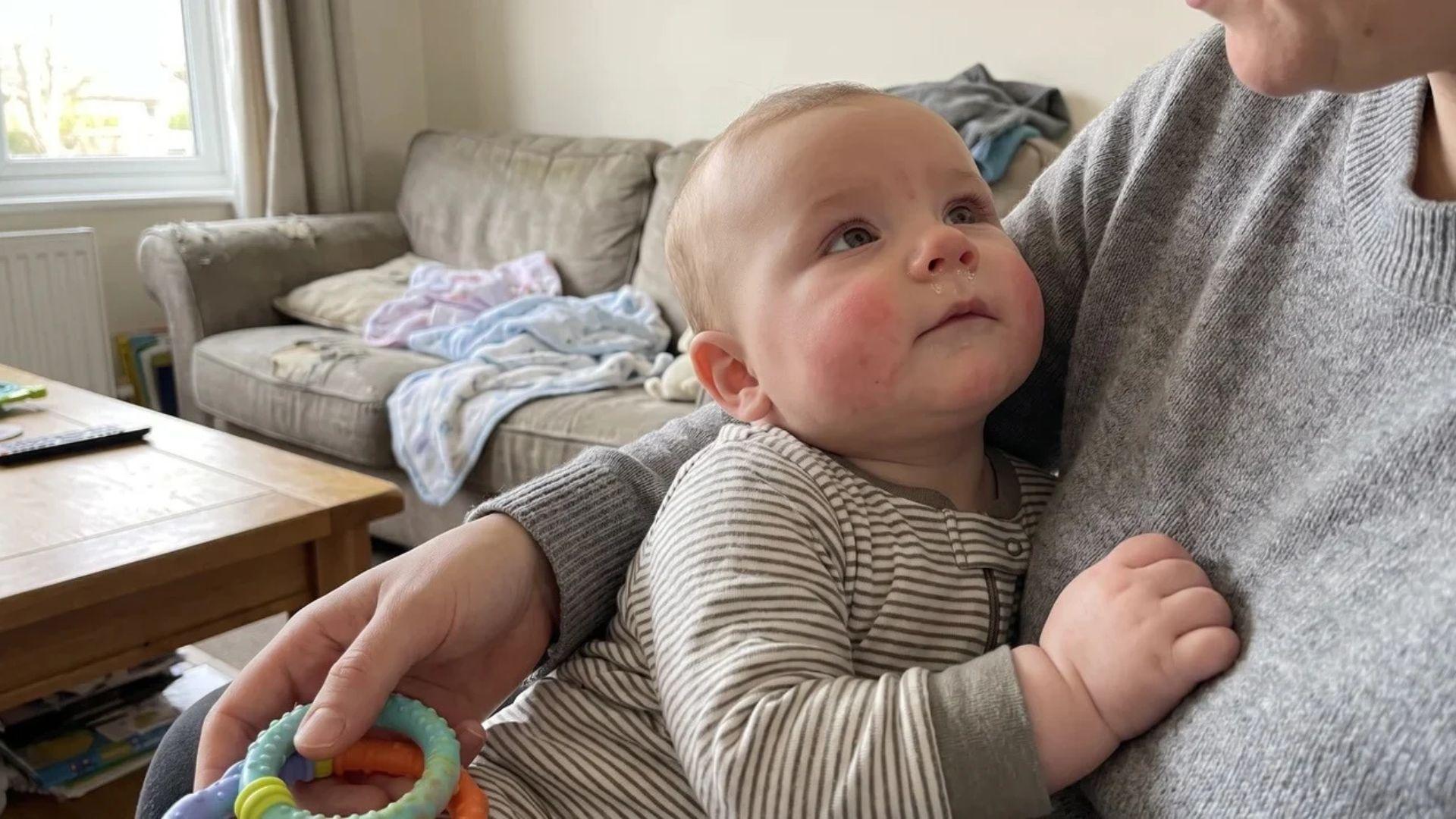
You notice a runny nose and immediately wonder if your baby is getting sick. Then you remember they’ve been drooling more, gnawing on everything in reach.
A teething runny nose is one of the most common concerns parents bring up. But the reason the two show up together is not what people expect.
Understanding what’s actually driving the symptoms changes how you respond to them and when a doctor’s visit genuinely makes sense.
That assumption is worth looking at more closely.
Teething and Runny Nose: What’s Actually Happening

Teething does not cause a runny nose. Not directly, anyway.
Parents ask the same about other symptoms too; many also wonder does teething cause vomiting, and that one follows the same indirect logic.
What it does is set the stage for one. Two things happen at the same time teething starts, and both make a runny nose more likely.
Timing: Babies begin teething between four and seven months. That’s the same window when the antibodies passed from mother to baby start to wear off. Their immune system hasn’t fully taken over yet, so they catch viruses more easily.
Behavior: A teething baby puts everything in their mouth. Every toy, every finger, every surface. That’s a lot of virus exposure for an immune system that’s already running lean.
There’s also a smaller local effect. Inflammation around the gumline can mildly irritate nearby tissue.
This sometimes produces a brief, clear nasal drip for two to three days right as a tooth breaks through. It’s not a cold. It clears on its own.
So the runny nose is real. The connection to teething is real. But teething isn’t the cause. It’s the condition that makes everything else more likely.
The immune window and the hand-to-mouth habit each play a specific role in why this happens. Here is how they work together.
Why Teething and Runny Nose Overlap So Reliably
Two things converge during the teething window: a dip in immune protection and a sharp rise in hand-to-mouth behavior. Together, they make a runny nose almost predictable.
1. The immune window. When a baby is born, they carry antibodies passed from their mother. These offer early protection against common viruses.
But they don’t last. Between four and seven months, those antibodies begin to fade. The baby’s own immune system is still developing. That gap leaves them more exposed to whatever is circulating around them.
2. The hand-to-mouth habit. Teething babies chew on everything. It soothes the pressure in their gums. But every object they put in their mouth is a potential source of viral or bacterial exposure.
This happens constantly, and it happens right in the middle of the immune window. That combination is why so many babies get sick during teething.
There’s also a third, smaller factor. When a tooth is pushing through the gum, the local inflammation can mildly irritate the surrounding tissue.
This sometimes triggers a brief, clear nasal drip. It typically lasts two to three days and resolves once the tooth breaks through.
That drip looks like a cold. It isn’t. It’s shorter, clearer, and tied directly to the eruption. A true viral runny nose lasts longer and often comes with other symptoms.
The overlap is predictable, but that does not mean every runny nose during teething is harmless. The symptoms themselves tell you which one you are dealing with.
Teething Runny Nose vs. Cold: Difference
The most reliable sign is the mucus itself. Clear discharge that resolves within two to three days points toward teething. Thick, colored mucus that lingers points toward a cold.
Use this table to read the full picture.
| Symptom | Likely Teething | Likely Cold or Infection |
| Mucus | Clear and watery: Local irritation, not infection | Yellow or green: Immune response to a virus or bacteria |
| Duration | Resolves in 2–3 days as the tooth breaks through | Persists or worsens beyond three days |
| Temperature | Slight rise but stays below 100.4°F (38°C) | True fever at or above 100.4°F (38°C) |
| Accompanying signs | Drooling, gum tenderness, increased chewing | Cough, wheezing, diarrhea, vomiting |
One thing worth knowing: teething and a cold can happen at the same time. Seeing cold symptoms doesn’t mean teething has stopped. It just means something else is also going on.
When to Call Your Pediatrician
Most teething runny noses resolve on their own. But some situations need a doctor’s attention, not a wait-and-see approach.
- Fever at or above 100.4°F (38°C) in a baby under three months. Call immediately, regardless of other symptoms.
- Fever that persists beyond two to three days in older infants, even if it stays mild.
- Mucus that worsens or changes color after day three instead of clearing.
- Any breathing difficulty or wheezing. This falls outside teething entirely.
- The baby seems genuinely unwell beyond normal fussiness: not eating, not settling, unusually lethargic.
Pediatricians hear these questions every day. If something feels off, calling is always the right move.
If the symptoms point toward teething, there are a few straightforward ways to help your baby through it safely.
How to Help a Baby With a Runny Nose During Teething

Relief here works on two fronts: Clearing the nasal discharge and soothing the gums driving most of the discomfort.
For the runny nose:
- Use saline nasal drops to loosen the discharge first.
- Follow with a gentle bulb suction or nasal aspirator to clear the passages.
- No medication needed. Saline is safe, effective, and enough for mild discharge.
For the gums:
- Offer a chilled rubber teething ring. Cold reduces inflammation. Frozen is too hard and can damage tender gum tissue.
- Gently rub the gums with a clean finger. The pressure helps more than most parents expect.
What to avoid:
Three product categories are flagged as unsafe by pediatric health authorities.
- Numbing gels containing benzocaine or lidocaine
- Homeopathic teething tablets
- Amber teething necklaces
None of these are safe for infants. Skip them entirely, regardless of what you see recommended online.
Final Verdict
A teething runny nose is rarely a reason to panic. Now you know why it happens, what it looks like, and what actually needs attention.
The bigger shift is this: Once you stop treating every sniffle as a problem to solve, you get better at spotting the ones that are.
Watch the mucus, check the temperature, trust what you’re seeing.
And when something feels off beyond the usual fussiness, call your pediatrician. That’s not overreacting. That’s exactly what they’re there for.
Frequently Asked Questions
How long does a runny nose from teething last?
The clear drip tied to teething typically clears within two to three days of the tooth breaking through. Anything longer than that is worth paying attention to.
Can teething cause a runny nose in a 2-year-old?
Yes, the same pattern can happen when molars come in, usually between 13 and 19 months and again around age two to three. The symptom checklist for telling teething from illness applies at any age.
Should I take my baby to the doctor for a runny nose during teething?
Clear discharge on its own doesn’t need a doctor visit. Go if the mucus turns yellow or green, if a true fever develops, or if your baby seems unwell beyond normal teething fussiness.
Does teething cause congestion at night?
Teething doesn’t directly cause congestion, but increased drooling can make breathing sound noisier than usual. If congestion is significant or keeps your baby from sleeping, a cold is the more likely cause.