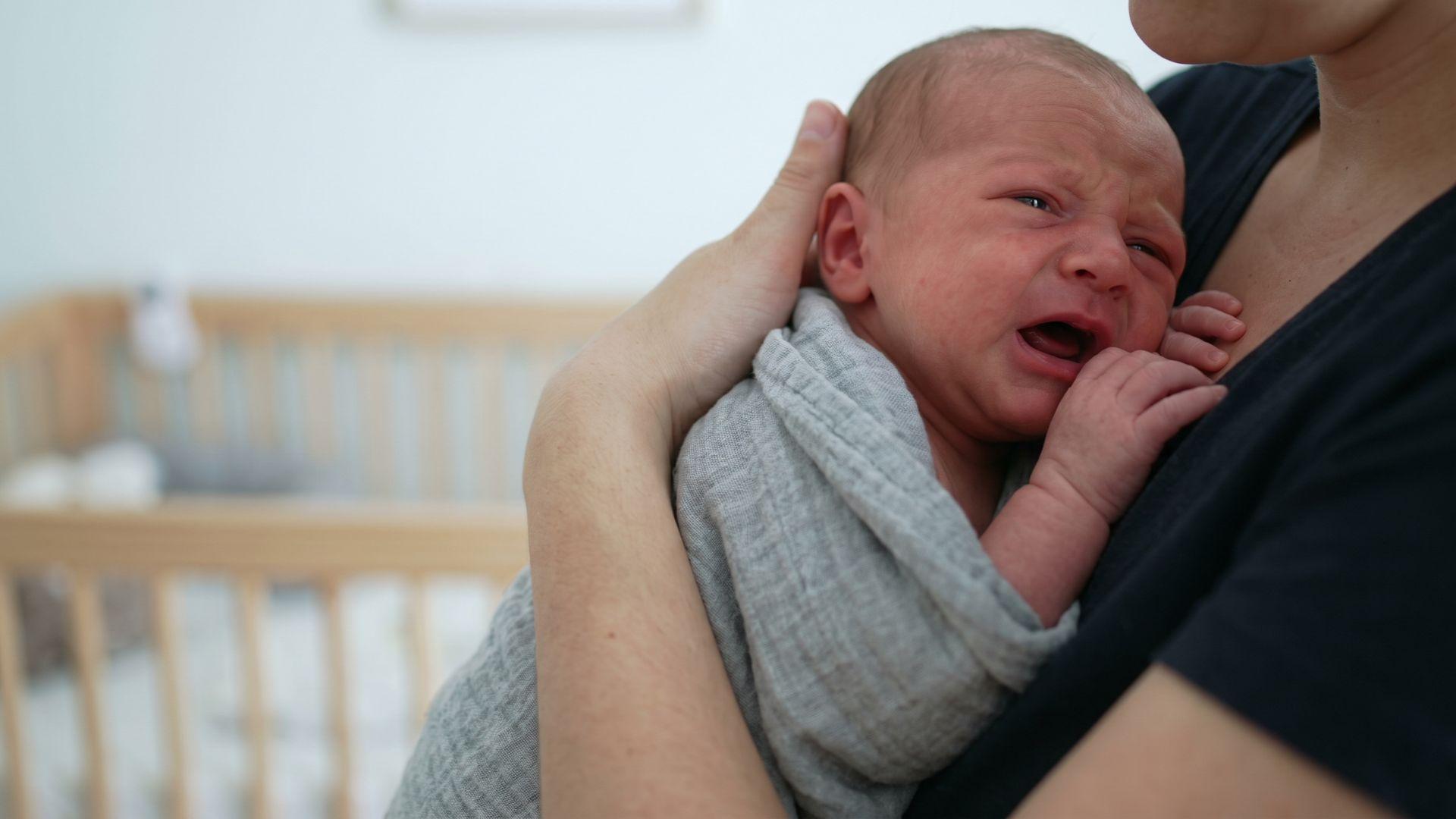
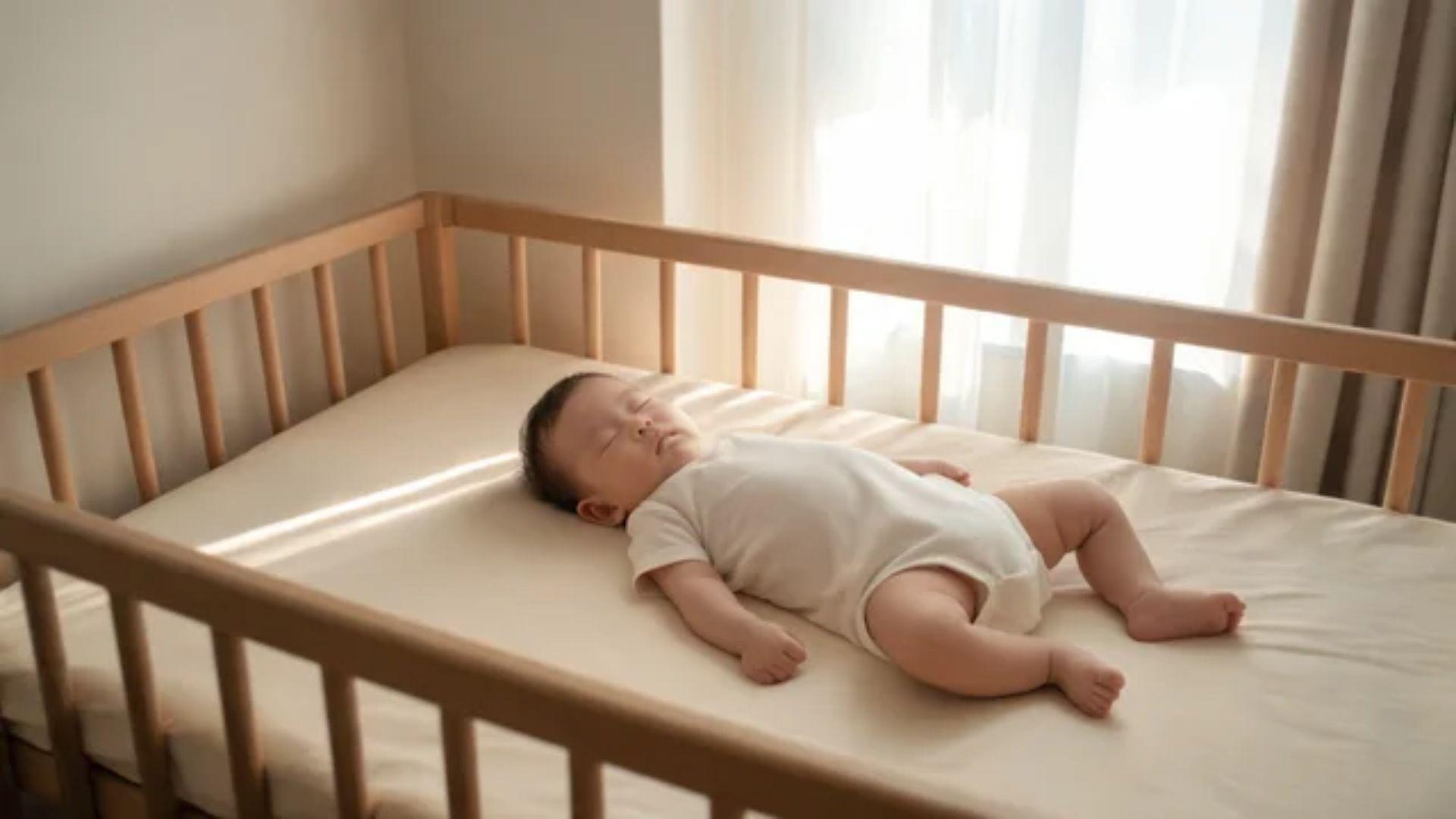
It’s 8:10 am, and the only sound in your house is the fridge humming. Your baby is still asleep. You stand in the hallway and think, “Should I let my baby sleep late in the morning?”
Parents ask me this after weeks of poor sleep, and the worry is always the same. Wake them and risk a cranky day, or let them sleep and pay for it at bedtime.
The answer rarely comes from the clock at all. It starts with your baby’s age, so let’s begin there.
Should I Let My Baby Sleep Late in the Morning?
Whether you should let your baby sleep late in the morning depends on age. Newborns are woken for feeds, while healthy older babies have real flexibility.
Late is measured from bedtime, not the clock. A baby who went down at 8:30 pm and woke at 8 am had a normal night.
The 7 to 8 am wake-up is a rule of thumb. A sleep-in only becomes a problem when naps and bedtime slip later. If they do slip, gentle ways to support sleep are a better first step than forcing an early wake-up.
How Many Hours Does a Newborn Sleep Before a Feed?

KidsHealth cites the National Sleep Foundation for 14 to 17 hours a day, though some newborns reach 18 or 19. The normal range is wide.
That sleep comes in short blocks because a newborn’s stomach is tiny. Breastfed babies usually feed every 2 to 3 hours, bottle-fed babies every 3 to 4.
So feeds, not sleep, set the schedule. Wake a long sleeper every 3 to 4 hours until your pediatrician confirms steady weight gain.
A newborn can’t tell day from night yet, so there’s no morning to sleep through, only the next feed.
When Can Babies 4 Months and Older Sleep In?
After about 4 months, babies have a steadier day and night rhythm, so a sleep-in becomes a real choice.
If your baby is healthy, growing well, and getting enough sleep over 24 hours, a later wake-up is usually fine. Nothing in a baby’s body requires waking at 7 am.
The advice to wake by 8 am isn’t about the hour itself. It’s about keeping the day steady.
Taking Cara Babies suggests starting the day no later than 8 am, which works out to about 12 to 12.5 hours after a typical 7:30 or 8 pm bedtime. That cap protects a healthy bedtime, so a sleep-in works best when it stays inside it.
Extra sleep also helps after an illness, during a growth spurt, or after a rough night. In those cases the sleep-in is recovery, not a habit, and your baby needs it.
If nights suddenly fall apart around this age, it may be one of the predictable rough patches in sleep babies go through, not a scheduling mistake.
Why Does Sleeping Late Push Naps and Bedtime Back?
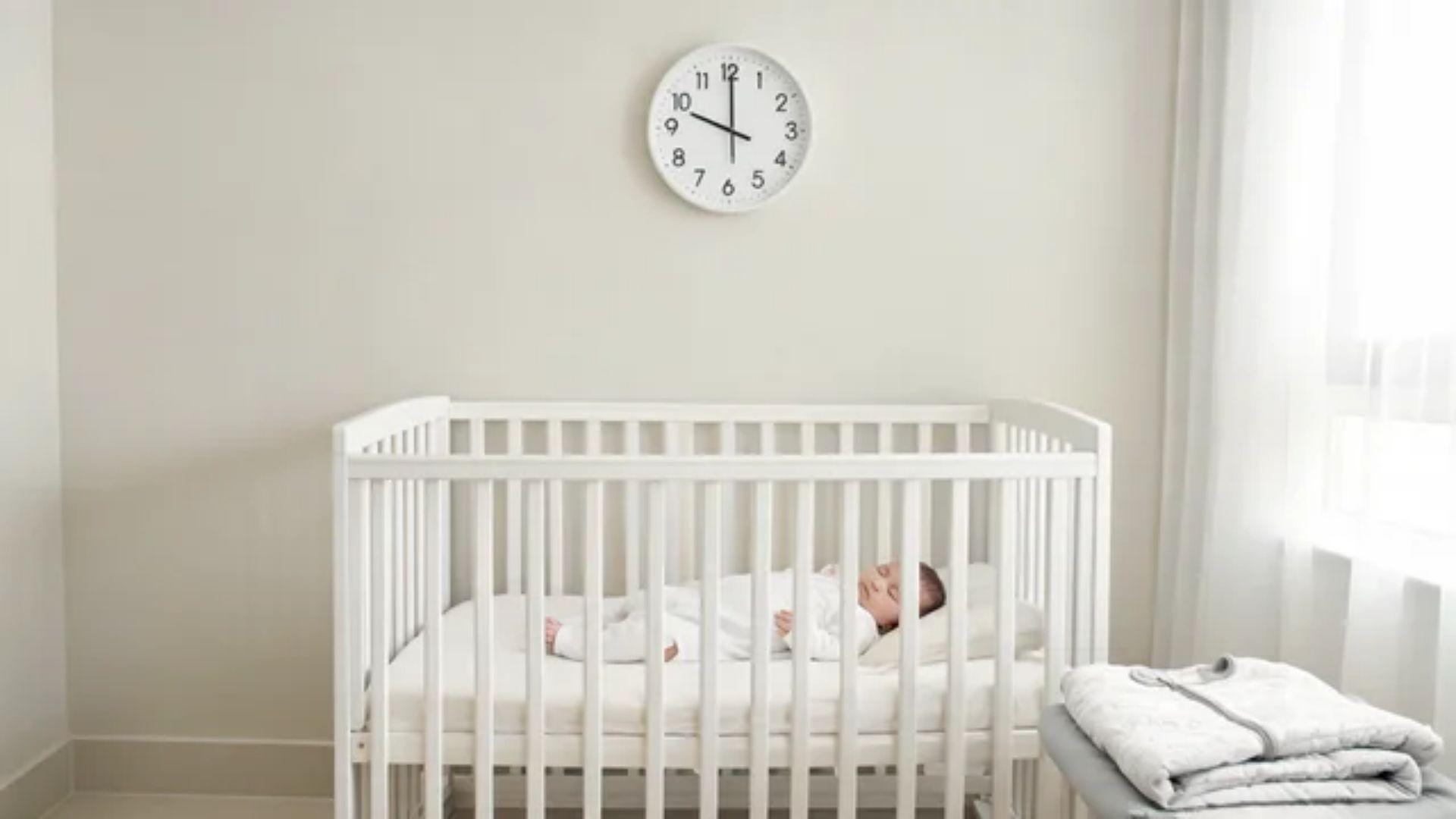
Waking later pushes the first nap later, and that pushes bedtime later too. The reason is sleepiness, which builds the longer your baby stays awake.
Say your baby wakes at 8:30 instead of 7:00. Sleepiness starts building an hour and a half later, so the first nap lands later too.
Each nap clears some of that sleepiness, so a later nap shifts the whole afternoon. By evening, your baby has less built up. Bedtime comes later, or night sleep gets lighter.
As babies grow into toddlers, a later bedtime often turns into dragging out the bedtime routine, one more drink or story at a time.
Your baby’s circadian rhythm is the body clock that sets when they feel alert or sleepy. A steady wake time gives that clock a fixed starting point each day.
This is why one sleep-in rarely matters, while a daily one does. One late morning after a rough night barely moves the body clock.
The same late wake every day gives the clock a new starting point, and the whole schedule shifts to match.
How Can You Tell If Sleeping In Is Fine for Your Baby?
A sleep-in is fine when your baby is healthy, feeding well, and sleeping steadily afterward. It’s a cue to adjust when bedtime or naps start slipping.
You’re probably asking whether this is normal. The clock can’t answer that, because an 8:30 wake-up can mean three different things.
Start with the cause:
- A normal night that ran later: Bedtime was later, so the wake-up was too. Nothing needs fixing.
- A catch-up after a short or broken night: Your baby is repaying lost sleep, and the extra hours are doing their job.
- A sick day or growth spurt:The sleep-in is recovery. Babies often sleep more for a few days and then settle back on their own. If your baby is sick, still offer feeds, and call your pediatrician if they’re hard to wake or feeding poorly.
Same wake time, three stories. Only the first one is your baby’s regular rhythm.
For toddlers around 14 to 18 months, there’s one more cause worth watching. A late wake-up, a skipped morning nap, and a pushed-back afternoon nap together often mean dropping the morning nap is on the horizon, not that your child is sleeping wrong.
How Can You Use Your Baby’s Sleep-In to Rest Safely?
The safest way to rest during your baby’s sleep-in is in your own bed, with your baby on their back in a separate, firm, flat sleep space.
The couch is risky: The American Academy of Pediatrics says never put a baby to sleep on a sofa or cushioned chair. If you doze off together, move your baby to their own bed when you wake.
Treat a sleep-in as an occasional bonus, not the plan. A cold or a new tooth can end it overnight, so going to bed earlier works better than hoping for one extra hour.
The Short Version for Tired Parents
Whether you should let your baby sleep late in the morning depends on age. It also depends on what the sleep-in does to naps and bedtime.
Judge each sleep-in by its cause and by what follows. A steady day afterward means it was fine.
To rest during one, use your own bed, with your baby in their own sleep space.
Write down wake time, naps, and bedtime for the next few days. A sleep-in that leaves all three steady is one you can keep.
Frequently Asked Questions
How Long Should I Let My Baby Sleep In in the Morning?
Aim to wake a healthy baby within 30 minutes of their usual wake time. The Pediatric Sleep Council recommends the same window.
Should I Wake My Baby if He Sleeps Too Long During the Day?
For older babies, yes, gently, once a nap passes about two hours. On a 1 nap schedule, wait until about three.
When Can You Stop Waking a Baby to Feed Every 3 Hours?
Usually within the first couple of weeks, once your baby gains weight well and your pediatrician agrees. After that, follow hunger cues, not the clock.