
Braces for kids can feel like a big financial unknown, especially when every quote seems different.
The cost depends on more than just the type of braces. Treatment complexity, where you live, your child’s age, and your insurance plan all pull the number up or down.
This guide breaks it down so you walk into your child’s consultation with a real sense of what to expect, what questions to ask, and how to budget for the full picture, not just the starting price.
Let’s start with the number most parents want first.
What Parents Can Expect to Pay for Braces
In the U. S., braces for kids generally fall somewhere between $3,000 and $7,500, though costs can go higher depending on the treatment type and case complexity.
It’s worth knowing:Published cost ranges online often vary quite a bit, and they shouldn’t automatically be read as a current national average. Prices shift by region, practice, and year.
Two kids in the same town can get very different quotes. One might have mild crowding that resolves quickly. Another might need a more involved bite correction over two or more years.
An orthodontic consultation is the only reliable way to get a personalized estimate for your child.
Quick Cost Snapshot
| Treatment | Typical Cost Range (U. S.) |
| Metal braces | $3,000 to $7,500 |
| Ceramic braces | $4,000 to $8,000 |
| Clear aligners | $3,000 to $7,000 |
| Lingual braces | $5,000 to $13,000 |
These ranges come from published U.S. cost summaries and are not a national average. Prices change by region and by year, so your child’s quote may fall above or below them.
What Affects the Cost of Braces?
No single factor sets the price. It’s usually a combination of several:
- Type of appliance: Metal braces sit at the lower end. Ceramic, clear aligner, and lingual options cost more.
- Complexity of the bite or alignment: A simple spacing issue is a much lighter lift than a significant overbite or crowding problem. More complex cases take longer and cost more.
- Length of treatment: Longer treatment means more appointments, more adjustments, and a higher total fee.
- Geographic location: Orthodontic fees in high cost-of-living cities tend to run higher than in rural or suburban areas.
- The practice itself: Overhead, experience level, and technology vary between offices.
- Phase 1 (early) treatment: Some children need a first phase of treatment around ages 7–10 to address jaw development, before full braces later. This adds a separate cost.
How Much Do Different Types of Braces Cost?
| Type | Cost Range | What to Know |
| Metal braces | $3,000 to $7,500 | Generally the lower-cost option, durable and effective |
| Ceramic braces | $4,000 to $8,000 | Tooth-colored brackets blend in more, usually costs more than metal |
| Clear aligners | $3,000 to $7,000 | Removable trays, cost varies significantly by case complexity |
| Lingual braces | $5,000 to $13,000 | Placed behind the teeth, typically the most expensive option |
Fee surveys such as the American Dental Association’s Survey of Dental Fees do report average orthodontic fees, but those figures trail current prices and vary by region.
Only a consultation with a licensed orthodontist can give you an accurate estimate for your child’s case.
A few things to keep in mind:
- Metal braces remain the most widely used option for kids. They’re effective across a wide range of cases and carry a lower price point than the alternatives.
- Ceramic braces look more discreet but require more care, they can stain if not cleaned well.
- Clear aligners work well for moderate cases but may not be suitable for more complex bite issues.
- Lingual braces offer full concealment but come with a higher cost and a longer adjustment period for the child.
How Much Do Braces Cost With Insurance?
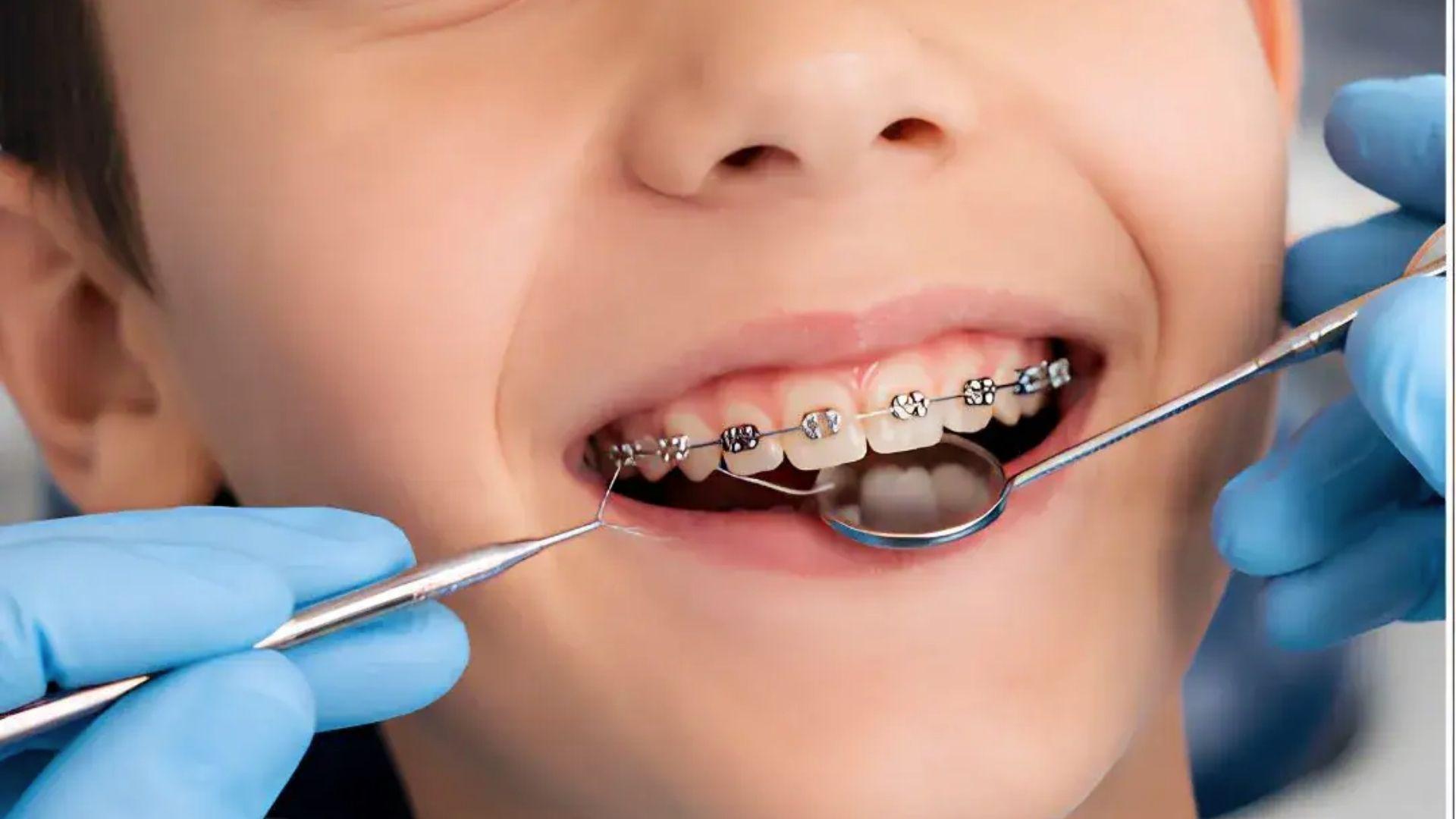
Coverage for braces varies significantly from plan to plan. Many dental insurance plans don’t cover orthodontic treatment at all. For those that do, coverage is usually partial.
Lifetime orthodontic maximum: Most plans that include orthodontic benefits come with a lifetime maximum, the total amount the insurance will ever pay toward that person’s orthodontic care.
According to MetLife, this is often between $1,000 and $2,000. Once that cap is hit, insurance pays nothing more, even if treatment is still ongoing.
Unlike annual dental maximums that reset each year, orthodontic lifetime maximums usually do not renew.
Age restrictions: Many plans limit orthodontic benefits to dependent children under age 19, which matches the age range the Affordable Care Act uses for pediatric dental coverage.
Some plans keep children on dental coverage until age 26 but still end orthodontic benefits at a younger age, so check the orthodontic age limit in your plan documents.
Coverage percentage: If a plan covers orthodontics at 50%, it pays half of eligible costs but only up to the lifetime maximum.
So on a $5,000 treatment, a $1,500 lifetime max means insurance covers $1,500, and you pay the remaining $3,500.
Before your child starts treatment, call your insurer and ask what’s covered, what the lifetime max is, and whether earlier orthodontic work, such as Phase 1 treatment, has already used part of it.
Also ask what happens if you change jobs or plans mid-treatment, since many plans stop orthodontic payments once coverage ends.
What Other Braces Costs Should Parents Expect?
The quoted treatment fee usually covers the core treatment, but not always everything. It’s worth asking your orthodontist specifically what’s included.
- Consultation and diagnostic records: X-rays, photos, and molds used to plan treatment. Some offices include these; some charge separately.
- Adjustment appointments: Routine visits every 4 to 8 weeks throughout treatment. Most practices bundle these into the overall fee, but confirm.
- Retainers: After braces come off, your child will need a retainer, which is sometimes included in the quoted fee and sometimes not. Replacing a lost or broken retainer is usually billed separately, and many dental plans won’t pay for it, so ask the office for its replacement fee up front.
- Emergency visits: A broken bracket or loose wire between appointments can mean an unplanned office visit. Fees vary.
- Additional appliances: Palatal expanders, headgear, or other devices sometimes needed alongside braces carry their own costs.
Knowing what the quote does and doesn’t cover helps you avoid surprises at the end of treatment.
How Can Parents Pay for Braces?

The sticker price doesn’t have to be paid all at once.Most families use one or more of these options:
- In-office payment plans: Many orthodontic practices offer monthly payment plans spread over the length of treatment, sometimes with little to no interest. Ask about this directly.
- HSA or FSA accounts: If your employer offers a Health Savings Account or Flexible Spending Account, orthodontic treatment is a qualified expense. You use pre-tax dollars, which effectively reduces your out-of-pocket cost.
- Third-party financing: Companies like CareCredit offer financing for healthcare expenses. Terms vary, and it’s worth reading the fine print on interest rates before committing.
- Practice discounts: Some orthodontic offices offer a discount for paying in full upfront, or reduced fees for siblings. It’s always worth asking.
When Should a Child See an Orthodontist?

The American Association of Orthodontists (AAO) recommends a first orthodontic check-up as soon as a problem is noticed, and no later than age 7, as explained in the AAO’s child orthodontics guide.
That might seem early, but by age 7 most kids have a mix of baby and permanent teeth. An orthodontist can spot developing problems, like jaw width issues or crowding that are easier to manage at that stage.
An evaluation at age 7 does not mean braces start at age 7.
According to the AAO, only a few orthodontic problems need correction around age 7. Most children are simply monitored and return when they’re developmentally ready.
Treatment timing comes down to your child’s specific needs, not a fixed age.
Some kids start braces at 9 or 10 during Phase 1 treatment. Others wait until 12 or 13 when all permanent teeth are in. The consultation gives you that roadmap.
What Should Parents Ask Before Paying for Braces?
Before you sign anything, make sure you have clear answers to these:
- What is the total treatment cost?
- What does the quoted price include? (Records, adjustments, retainers, emergencies?)
- How much will our insurance cover?
- What will we pay out of pocket after insurance?
- Are retainers included, or do we pay separately?
- Could additional appliances like an expander increase the cost?
- What payment options are available?
A good orthodontist will walk you through all of this without you having to push. If the answers feel vague or rushed, it’s completely reasonable to get a second opinion.
Final Takeaway
Knowing what braces for kids cost and what drives that number puts you in a much better position when it comes to planning and budgeting.
The range is wide, insurance coverage is limited, and extra costs can sneak in if you’re not asking the right questions.
Get a consultation, know what your insurance actually covers, and go in with a clear list of questions.
The more informed you are upfront, the fewer surprises you’ll face later. If you found this guide helpful, check out our other articles on kids’ dental health and how to pick the right orthodontist for your child.
Frequently Asked Questions
Is Phase 1 treatment always needed before full braces?
No. Phase 1 is recommended only when early intervention can prevent a more serious problem. Many children go straight to full braces when they’re developmentally ready.
Do braces cost more for younger kids than older kids?
Not necessarily based on age alone. Cost is driven more by case complexity, treatment length, and appliance type than by the child’s age.
Can I negotiate the cost of braces with an orthodontist?
Some practices will offer flexibility, especially on payment plans or upfront payment discounts. It’s reasonable to ask, but not all offices negotiate fees.
Does Medicaid cover braces for children?
Yes, when it is medically necessary. Medicaid’s EPSDT benefit requires every state to cover medically necessary orthodontic care for enrollees under 21, but each state sets its own criteria for what qualifies.
How long do kids typically wear braces?
Treatment length varies by case. Most children wear braces for one to three years, depending on the complexity of their bite or alignment issues.