
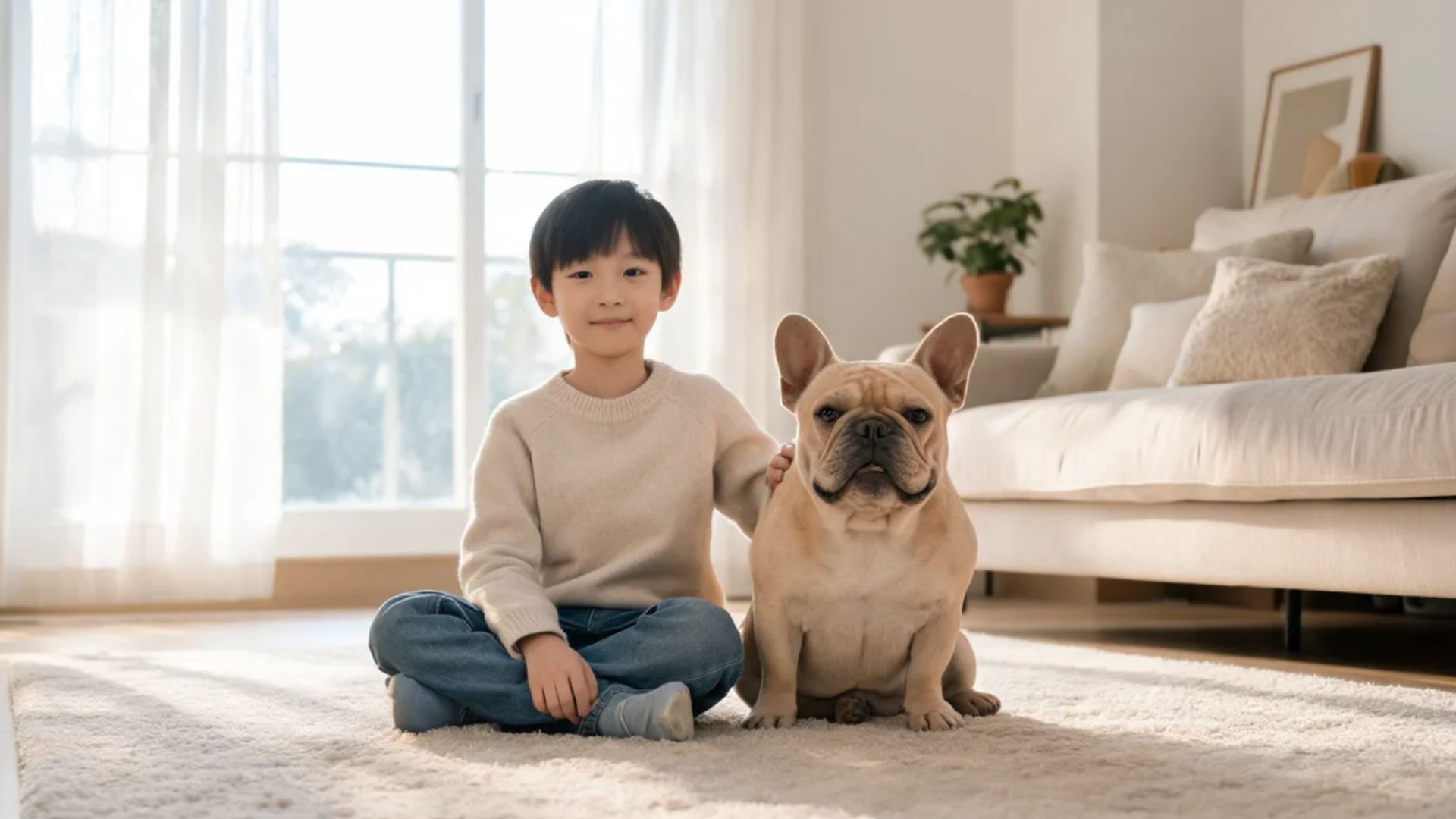


Your kids have been begging for a dog, and a French Bulldog keeps showing up in every photo you scroll past, with that wrinkled face and a personality that seems bigger than the dog itself.
It looks like the ideal family companion, yet cute doesn’t automatically mean kid-friendly, and plenty of parents only discover the details after the puppy has already moved in.
After over a decade working with parents and what I have researched, I can tell you most Frenchies are a cool companion, as long as the family respects their limits around heat, exercise, and rough handling
Here is what to know about their temperament, the risks worth considering, and the steps that help kids and Frenchies get along.
How Do French Bulldogs Fit Into Family Life With Kids?
French Bulldogs tend to be affectionate, playful, and patient, which is a big reason so many families end up falling for them.
They form strong bonds with the people they live with and love being included in whatever the household is doing, whether that means a gentle game of fetch or a long cuddle on the couch.
Their sturdy build, usually around 12 inches tall and 16 to 28 pounds, makes them less fragile than toy breeds while still being small enough for children to be around comfortably.
Their energy comes in short bursts of play followed by long naps, so they match the pace of most family routines without needing hours of exercise.
They also tend to bark far less than many small dogs, which keeps the home calmer and helps younger children feel at ease around them.
What Parents Need to Know at a Glance: Pros and Cons

French Bulldogs can suit families well, but the rewards come with responsibilities. Here is a quick look at both sides.
| Factor | Pros | Cons |
| Affection | Loving with the whole family | Dislikes being left alone |
| Size | Sturdy yet compact | Can be hurt by rough handling |
| Noise level | Rarely barks | Snores and snorts loudly |
| Energy | Short play, long naps | Tires quickly during active play |
| Health | Cheerful and adaptable | Prone to spine and breathing issues |
| Cost | Modest food needs | Vet bills add up quickly |
| Supervision | Patient with gentle kids | Needs close watching |
Knowing these tradeoffs early helps parents decide with confidence instead of relying on guesswork.
Are French Bulldogs Good With Babies and Toddlers?
French Bulldogs can live happily with young children, but how well it works depends on the child’s age. Babies, toddlers, and older kids each need different precautions, so here is what to expect at every stage.
1. Newborns

Most Frenchies adjust well to a newborn when the introduction is calm and gradual, but they should never be left alone with a baby, even for a moment.
Let your dog sniff a blanket carrying the baby’s scent before the first meeting, and keep the dog on a leash for that first greeting.
Some Frenchies feel jealous or confused by the sudden change, so keep up their usual walks and attention, and watch for stiff posture, growling, or hiding. Keep the crib off limits as well.
2. Toddlers And Preschoolers

As a parent, I know how quickly a toddler can go from a gentle pat to a full-body hug, so plan for it before it happens.
Toddlers are the trickiest age, because they grab, hug tightly, and tumble onto dogs without meaning any harm.
A Frenchie’s back is delicate, so an accidental fall onto the dog or a rough pick-up can cause a painful injury.
Teach little ones to pet gently on the chest or shoulders, and never let them climb on, ride, or lift the dog.
Always keep an adult within arm’s reach, and make sure your Frenchie has a quiet crate or bed where children are not allowed to follow.
3. School-Age Kids
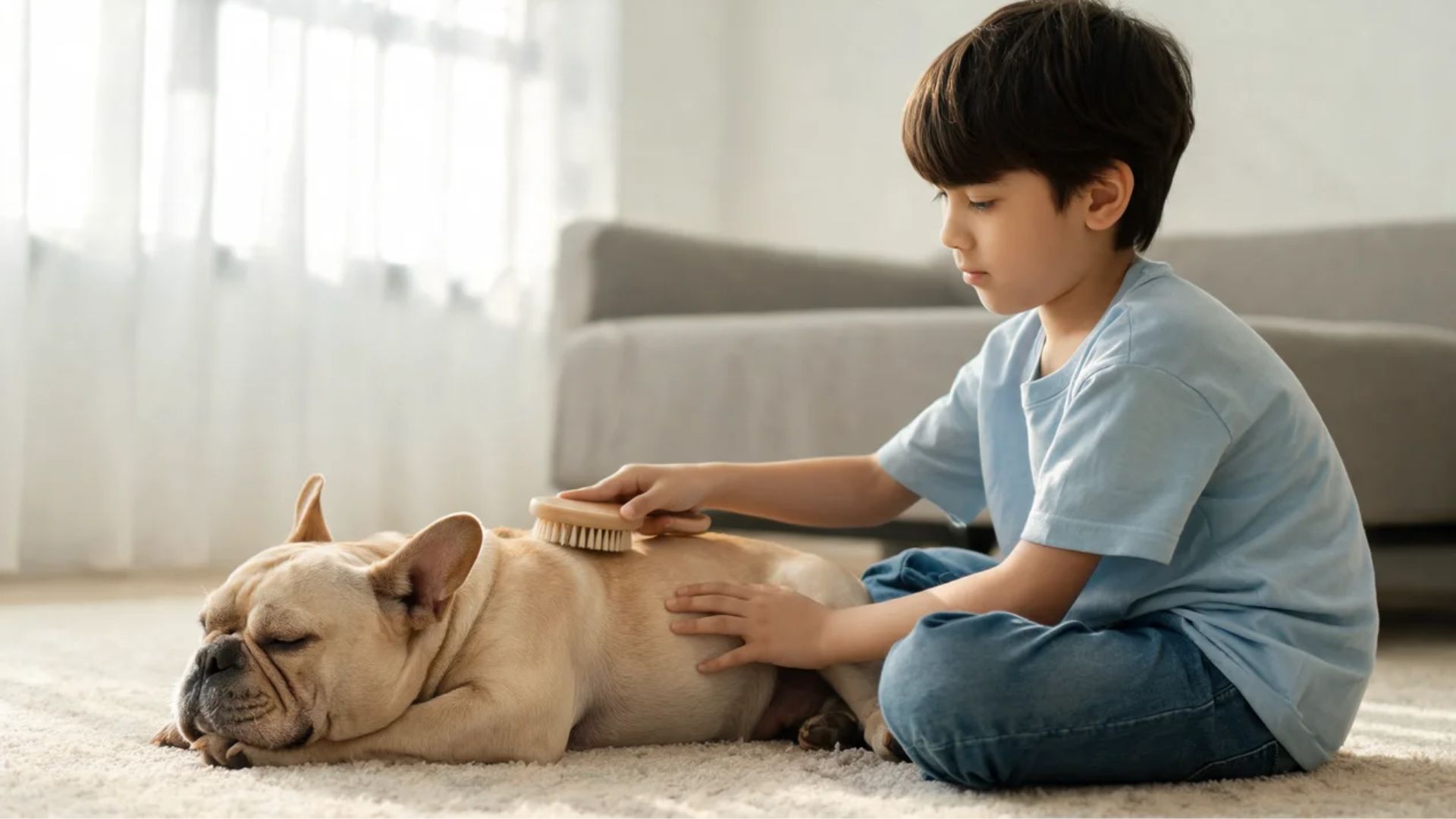
School-age children are usually the best match for a Frenchie, since they can follow rules and enjoy the dog’s playful side.
Kids around five and older can help with feeding, brushing, and short walks, which builds responsibility and strengthens the bond.
They also learn to read the dog’s body language, such as knowing when a tired Frenchie wants to be left alone. Keep play gentle, avoid long runs in hot weather, and remind children that the dog’s food bowl and sleeping spot are off limits.
What Are the Cons of French Bulldogs for Families?
French Bulldogs are lovable, but they come with real health and care needs that parents should understand before bringing one home.
Most of the drawbacks come from the breed’s flat face and short, stocky body, so knowing them early helps you plan for the cost and daily care.
Back and spine injuries (IVDD) explained

IVDD stands for intervertebral disc disease, a condition in which the cushioning discs between the spine’s bones bulge or burst and press on the spinal cord.
Frenchies are more prone to it because of their long backs and short legs, and jumping or rough handling raises the risk.
Signs include yelping, a stiff or hunched back, reluctance to use stairs, and wobbly back legs; in serious cases, the dog may suddenly become weak or unable to walk.
Call a vet right away if you see these signs. At home, use ramps for the couch and bed, keep your dog at a healthy weight, and make sure only adults lift the dog, supporting both the chest and the hindquarters.
Breathing problems and overheating

Frenchies have a short skull, which often means narrow nostrils and a long soft palate that partly blocks the airway.
This condition is called brachycephalic obstructive airway syndrome (BOAS), and it is why many Frenchies snore, snort, and pant harder than other dogs. In hot or humid weather, or during hard play, it can lead to overheating very quickly.
Warning signs include loud or struggling breaths, panting that does not settle, gagging, and gums that look blue or very pale, which is an emergency.
Keep walks short and during cooler hours, offer shade and fresh water, never leave your dog in a parked car, and teach kids to stop games when the dog starts panting heavily.
Food possessiveness

Some Frenchies guard their food, treats, or toys, a behavior called resource guarding, and it can lead to growling, snapping, or nipping if a child gets too close.
Not every Frenchie does this, but it matters in homes with small children who move fast and don’t always notice a dog’s warnings.
Feed your dog in a quiet spot away from the kids, and set a firm rule that nobody touches the bowl, bones, or chews during meals.
Never punish growling, because it is a warning, and removing it makes a bite more likely. If you notice guarding, a certified positive reinforcement trainer can help your dog feel relaxed when people walk past.
Vet costs and ongoing care

Frenchies often need more vet visits than many other breeds, and the costs add up over the years.
Their skin folds and narrow ear canals trap moisture, which makes ear infections and skin irritation common.
Food and skin allergies are also frequent, and they can mean medicated shampoo, ear drops, allergy medicine, or a special diet.
The wrinkles on the face need regular cleaning and drying, and back or breathing problems can lead to surgery that costs thousands of dollars.
Many families buy pet insurance while the dog is young and healthy, since most plans do not cover conditions that already exist, and it also helps to set aside a monthly care budget before you commit.
Are French Bulldogs Too Fragile for Rough Play?

True, with a clear limit. French Bulldogs are sturdy for their size, but their long backs, short legs, and flat faces make rough play a poor fit for them.
Wrestling, jumping off furniture, being picked up awkwardly, or chasing games in warm weather can lead to back injuries or breathing trouble, so these are best avoided with children.
The good news is that Frenchies enjoy gentle play very much, and short games of fetch, tug on the floor, or indoor hide-and-seek keep them happy and safe.
Teach kids to let the dog set the pace, and end any game as soon as your Frenchie starts panting heavily or walks away.
How to Keep Kids and Your Frenchie Safe: Tips and Cautions
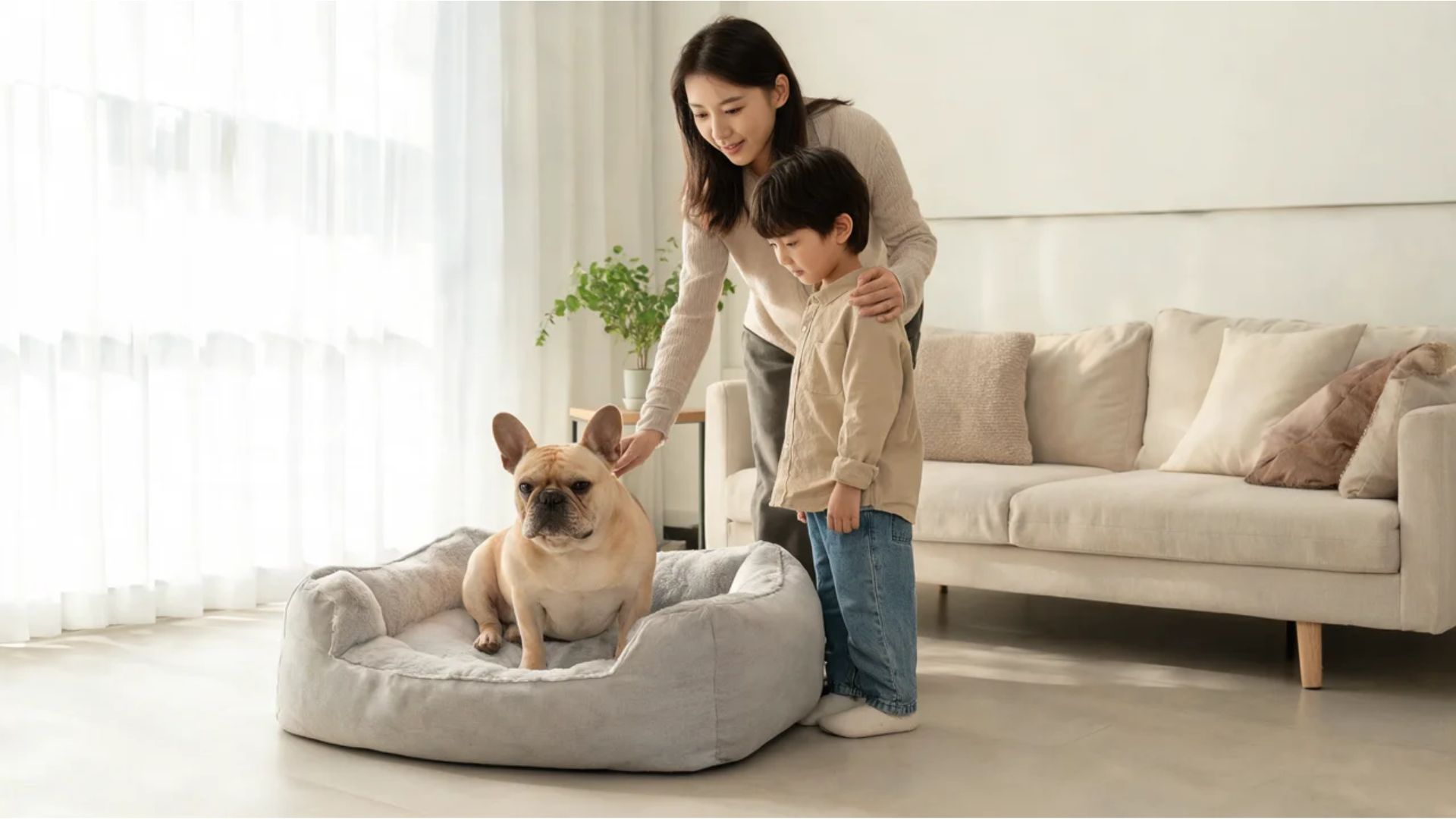
A few clear habits keep both children and dogs safe, and they work best when everyone in the house follows them.
Rules for kids
- Pet gently: Stroke the chest or shoulders and avoid pulling ears, tails, or skin folds.
- Never lift the dog: Only adults should pick up a Frenchie, since a wrong grip can hurt the back.
- No climbing or riding: Sit on the floor to play instead.
- Respect space: Leave the dog alone while eating, sleeping, or walking away.
Rules for the dog
- Basic commands: Sit, stay, and leave it keep your dog calm around kids.
- Safe space: A crate or bed in a quiet corner gives your Frenchie a place to rest.
- Calm rewards: Treats and praise teach your dog that gentle moments bring good things.
- Daily routine: Regular walks, meals, and naps help your dog stay relaxed around children.
Safety cautions around heat, stairs, furniture, and mealtimes
- Heat: Keep walks short in warm weather, offer shade and water, and never leave your dog in a car.
- Stairs: Use a baby gate, since steps and falls can injure the spine.
- Furniture: Provide ramps for the couch and bed so your dog avoids jumping.
- Mealtimes: Feed your dog in a quiet spot away from children, and pick up bowls afterward.
How to Introduce a French Bulldog Puppy to Your Children
A calm, well-planned introduction helps your puppy and your kids build trust from the very first day. Follow these steps to get started.
- Prepare the kids first. Explain that the puppy is small and still learning, so everyone needs to stay quiet and gentle during the first meeting.
- Keep the first meeting calm. Let the puppy explore the room on its own after a walk or potty break, since a tired puppy is usually more relaxed.
- Have the kids sit down. Have children sit on the floor or a couch and let the puppy come to them, so the puppy doesn’t feel crowded.
- Teach gentle touch. Show kids how to pet the chest or shoulders with one slow hand, and never pick the puppy up at this stage.
- Keep sessions short. Limit early visits to five or ten minutes a few times a day, and end them while everyone is still happy.
- Use rewards. Give the puppy a small treat for calm behavior around the kids, and let children toss treats gently so the puppy links them with good things.
- Set up a safe retreat space. Provide a crate or bed in a quiet corner, and make it a firm rule that children never disturb the puppy there.
An adult should always be present during these early sessions. For more ideas on keeping children safe around dogs, read our guide on teaching kids dog safety.
Is a French Bulldog Right for Your Family?
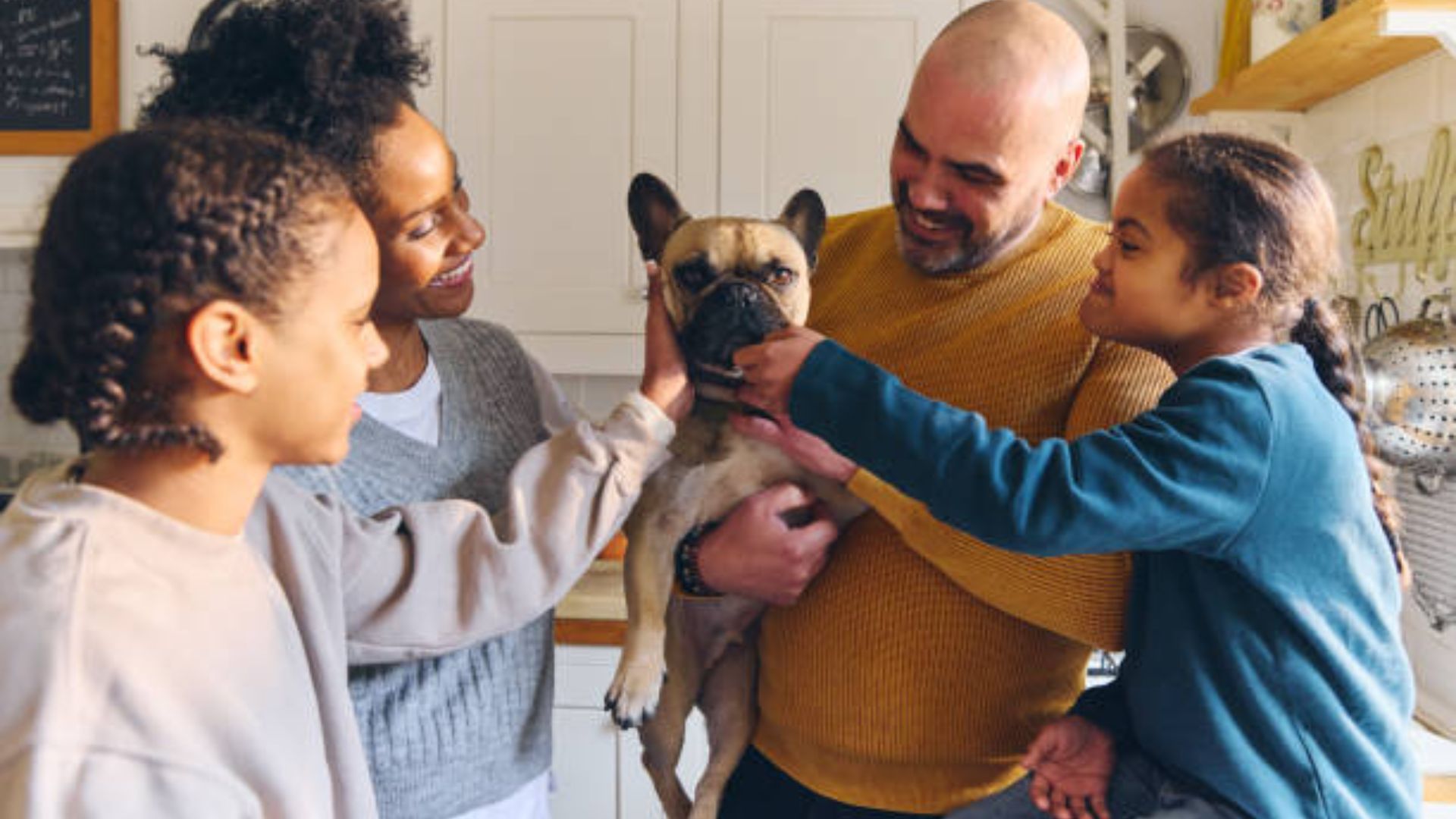
A French Bulldog suits some families beautifully, but only when the household matches the breed’s needs.
Before you decide, think about whether your budget can cover regular vet visits, allergy care, and an emergency fund, and whether you can keep your home cool through the summer. It also helps to have someone around for most of the day, since Frenchies dislike being left alone.
Your children should be old enough to follow gentle handling rules, and an adult needs to be ready to watch every interaction.
If most of these fit your family, a Frenchie is likely to thrive with you, but if several don’t, waiting or choosing another breed may be kinder for everyone.
The Bottom Line
So, are French Bulldogs good with kids? Yes, most are, as long as your family can meet their needs. Frenchies are affectionate, patient, and quiet, and they suit gentle play well.
But their fragile backs, breathing limits, and vet costs mean they are not right for every home.
I think the setup matters as much as the breed. Supervise every interaction, teach kids simple rules, and keep play calm.
Your next step is to talk with your vet about breed health before you buy. Then meet the dog with your kids present and find a local trainer. For more help, read our guide on teaching kids dog safety.
Frequently Asked Questions
Is a boy or girl Frenchie better?
Neither is better; males tend to be a bit larger and more playful, females slightly calmer and more independent, but training and socialization shape temperament more than gender.
Can French Bulldogs be left alone for 8 hours?
No, Frenchies are people-oriented dogs prone to separation anxiety, so leaving them alone for 8 hours is not recommended.
Do French Bulldogs bark a lot?
No, French Bulldogs bark very little compared to other small breeds, which makes them well-suited to apartments.