



It’s 3:40 a.m., you have just settled your baby, and an hour later you are standing over the crib again.
When a baby waking up every hour becomes routine, even a patient parent starts wondering what went wrong, and the answer is often less alarming than it feels.
Babies stir many times each night, so the gap between a baby who drifts back down and one who calls out often comes down to whether they can settle without help.
Sorting out what sits behind those wake-ups starts with the most common triggers.
Why Is Your Baby Waking Up Every Hour?
A baby may wake up every hour because their sleep is still maturing, because something in their body or surroundings is bothering them, or because they have not yet learned to settle back to sleep without help.
Which explanation fits best depends on your baby’s age, feeding, sleep habits, and any symptoms that appear alongside the waking.
Hourly waking usually comes from a mix of these, so fixing one factor may help only a little.
Hunger and Frequent Night Feedings

Newborns have small stomachs, so they often need to feed through the night, sometimes more often than every two to three hours.
The NHS baby sleep guidance explains that babies wake at night because they need feeding, and that they need fewer night feeds as they grow.
Growth spurts can bring night hunger back. If feeds become noticeably shorter or less frequent, mention it to your pediatrician.
Overtiredness and Daytime Sleep Patterns

A baby who stays awake too long or misses a nap may reach bedtime wound up rather than sleepy, and that sleep can be lighter and more broken.
Short or irregular naps add to the problem, since the shortfall tends to carry into the night.
Newborns can usually manage only about 45 to 90 minutes awake, and those stretches lengthen over the first year.
Early tired cues, such as yawning and eye rubbing, are a better signal than crying.
Sleep Associations and Settling Difficulties

Babies often fall asleep during a feed, while being rocked, or while being held, and for a newborn, that is normal and comforting.
Settling without help is a skill that develops gradually over the first year, so needing a feed or a rock to fall asleep is not a problem in itself.
The sleep cycles section below explains why this matters at night.
Teething, Gas, Reflux, and Physical Discomfort

Teething discomfort may wake some babies, since sore, swollen gums can make it harder to settle.
Gas can leave a baby squirming, and reflux, which is common in babies under 1, can make lying flat uncomfortable.
Propping up the head of the crib is not a safe fix, because the NIH Safe to Sleep guidance notes that inclined sleep surfaces could block a baby's breathing.
Persistent discomfort deserves a conversation with your pediatrician.
Room Temperature and Other Environmental Factors

The NHS notes that both heat and cold can disturb a baby's sleep, and the NIH's Safe to Sleep campaign asks parents to watch for overheating, such as sweating, flushed skin, or a hot chest.
It advises no more than one layer more than an adult would wear to be comfortable. Noise, bright light, and a wet diaper can also wake a baby.
None of these causes look the same at every age.
A newborn who wakes hourly and a nine-month-old who does it are usually dealing with different things.
How Does Your Baby's Age Affect Hourly Night Wakings?

A baby's age plays an important role in nighttime waking because sleep cycles, feeding requirements, and developmental changes continue to evolve during the first year.
Newborns wake mainly to feed, and a body clock takes a few months to develop.
In those early weeks, evening witching hour crying can look similar to night waking, though it follows an evening-only pattern.
After that, new skills and shifting feeding patterns keep reshuffling the pattern, which is why a baby who slept well last month can start waking again this month.
Why Is My 5-Month-Old Waking Up Every Hour?
Around five months, a baby's sleep is reorganizing, which can make the brief awakenings between sleep cycles easier to notice.
The change often called the four-month sleep regression is linked to sleep maturing into more distinct stages.
A baby who falls asleep only with feeding or rocking may call out at every stir, and hunger or a skipped nap can add to it.
Hourly waking at this age may reflect a changing sleep pattern, not a lasting problem.
Why Is My 9-Month-Old Waking Up Every Hour?
Newcastle Hospitals notes that waking often picks up again at 8 to 9 months, and the cause at this age is often developmental instead of a sleep-cycle issue.
Separation anxiety, which the NHS describes as a normal part of development, can make a baby cry for a parent the moment they stir.
New skills such as crawling and pulling up to stand may get practiced at night, and teething can add to the restlessness.
Starting more solids or dropping a milk feed can also shift when a baby gets hungry.
How Night Wakings Change During the First Year
Newborns wake every two to three hours, mostly to feed.
By 3 months, some babies skip a night feed, but the Newcastle Hospitals infant sleep guidance notes that many begin waking more again at 4 to 5 months, and that by 5 months about half of babies settle for 8 hours on some nights.
Waking can pick up again at 8 to 9 months. Because feeding needs and development shift at different times for each baby, no single age gives a reliable explanation.
Because feeding needs and development shift at different times for each baby, age alone rarely explains hourly waking.
The gaps can be as short as an hour because of how a baby’s sleep is built.
How Do Baby Sleep Cycles Lead to Hourly Waking?
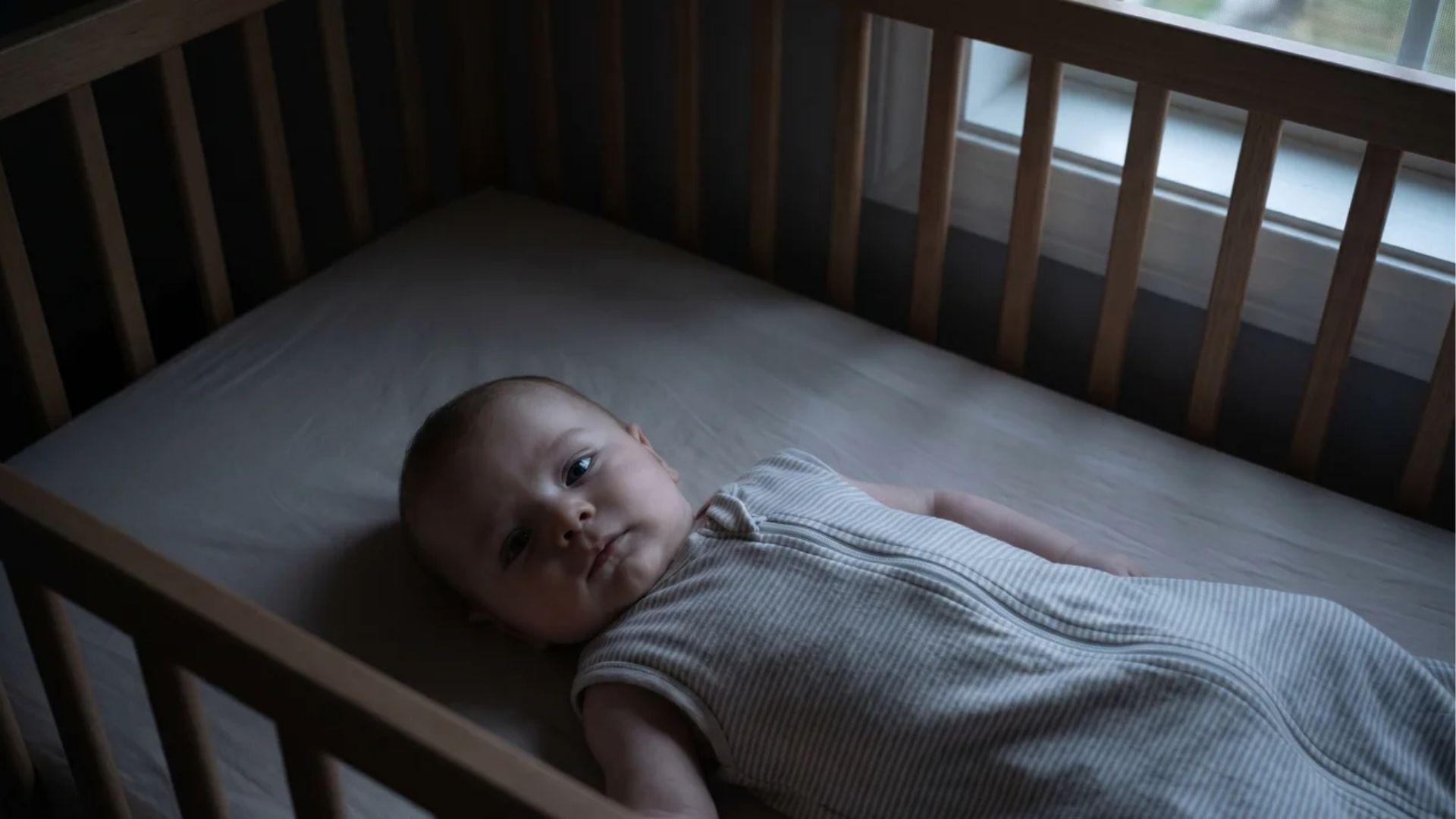
Babies naturally move between different sleep stages throughout the night, and these transitions can cause brief awakenings that sometimes become full wake-ups.
A baby who fell asleep while feeding, rocking, or being held may need that same setup again once the cycle ends, which is why the same stir can pass unnoticed for one baby and become a full wake-up for another.
What Happens During a Baby's Sleep Cycle?
Infant sleep moves between active sleep and quiet sleep. In active sleep, which resembles REM sleep, a baby may twitch, frown, smile, make sucking movements, or breathe unevenly.
Newborns tend to enter this stage first, which is why they rouse easily early in a nap. In quiet sleep, the body is still, and breathing is regular.
Because so much early sleep looks restless, a noisy, wriggling baby may still be asleep.
Why Do Babies Wake After 45 to 60 Minutes?
The NHS Bradford infant sleep guidance puts infant sleep cycles at about 45 to 60 minutes, compared with roughly 90 minutes for adults, and says they lengthen gradually over the first year.
At the end of each cycle, a baby surfaces briefly, and during developmental stretches those moments can turn into full wake-ups.
Because a cycle lasts less than an hour, a baby who needs help at each transition can look like they are waking close to every hour.
Most of this is ordinary development. A handful of signs point somewhere else, and they are worth knowing before you write the nights off as a phase.
When Does Waking Up Every Hour Become a Concern?

Frequent night waking is not always a health concern, but waking every hour alongside feeding difficulties, poor weight gain, persistent discomfort, or breathing problems warrants medical attention.
Hourly waking on its own is often tied to development, but the signs below are reasons to call your pediatrician instead of waiting for the phase to pass.
- Poor weight gain or weight loss, which the NHS reflux guidance lists as a reason to see a doctor
- Ongoing feeding difficulties, such as refusing feeds or frequent vomiting
- Loud snoring, labored breathing, or pauses in breathing during sleep
- Constant crying or discomfort that nothing eases
- A sudden change in your baby's condition, such as unusual drowsiness or a fever
If breathing looks labored or your baby's color changes, seek emergency care right away. A short log of wake times, feeds, and symptoms gives your pediatrician useful detail.
If none of those signs fit your baby, the pattern most likely reflects age and habits, which both change with time.
A few leftover questions about sleep length, safety, and pacifiers come up often, so the next section answers them.
What to Track Before Your Next Pediatrician Visit
A baby waking up every hour rarely has a single cause.
Often, short sleep cycles, hunger, a new skill, or a habit of needing help to settle combine, and the pattern shifts as your baby grows.
The most useful detail is not the clock but what happens around each wake-up: When your baby last ate, how they fell asleep, and how the room felt.
Tonight, start writing down wake times, feeds, and anything unusual for one week.
A week of notes shows whether the pattern is easing, and it gives your pediatrician something concrete if it is not.
Frequently Asked Questions
Does a Bedtime Routine Help Babies Sleep Longer?
A regular bedtime appears to help, since a 2021 CDC report found that infants with one were more likely to get enough sleep. A consistent routine makes that bedtime easier to keep.
How Many Hours of Sleep Does a Baby Need?
The CDC lists 12 to 16 hours per 24 hours, including naps, for babies aged 4 to 12 months. For newborns up to 3 months, the National Sleep Foundation lists 14 to 17 hours, though sleep varies widely from baby to baby.
Is It Safe to Put a Baby to Sleep on Their Stomach?
The NIH's Safe to Sleep campaign recommends placing babies on their backs for every sleep, including naps, because sleeping on the stomach carries the highest risk of sudden infant death syndrome (SIDS).
Is It Safe to Give a Baby a Pacifier at Night?
The NIH recommends a dry pacifier without a string at naps and night to reduce SIDS risk, once breastfeeding is going well. If it falls out during sleep, it need not go back in.