

Pickup time often brings a paper plate covered in glue and glitter, along with a child who says they spent the morning making a sandwich.
It looks like play, so plenty of parents end up asking, What should a child learn in preschool?
Federal early learning guidance offers a useful angle, because it treats development as connected, so one glue project can involve language, finger control, and cooperation at once.
That view makes the craft table easier to read and gives you better questions for the teacher.
First, a look at the main areas preschool covers.
What Should a Child Learn in Preschool?
Children should begin developing communication, early literacy, basic math, social interaction, emotional regulation, physical coordination, and self-care skills during preschool.
Programs introduce these foundations through activities matched to a child's age, so a three-year-old and a five-year-old in the same school will be working on different things.
Since every program sets its own cutoff, parents often compare the age to start preschool before deciding how early to enroll.
The Head Start learning framework, which Head Start programs use, groups early learning into five central areas: Approaches to learning, social and emotional development, language and literacy, cognition, and perceptual, motor, and physical development.
Expectations also shift with a child's development and earlier experiences, such as time spent around books or other children.
At this stage, the goal is readiness and confidence rather than mastery of advanced school subjects.
Those five areas can sound abstract on paper, so here is what each one looks like on an ordinary classroom day.
What Do Kids Learn in Preschool Across Different Developmental Areas?
Preschoolers learn through a mix of skills that build on one another and help them become more confident and independent.
These areas grow together rather than as separate subjects, and play, stories, classroom conversation, and hands-on activities carry most of the teaching.
Children also develop at their own pace, so starting to use a skill counts for more than getting it right the first time.
To spot which of these skills your child already uses, this checklist for preschool readiness turns them into simple everyday examples.
1. Social and Emotional Skills
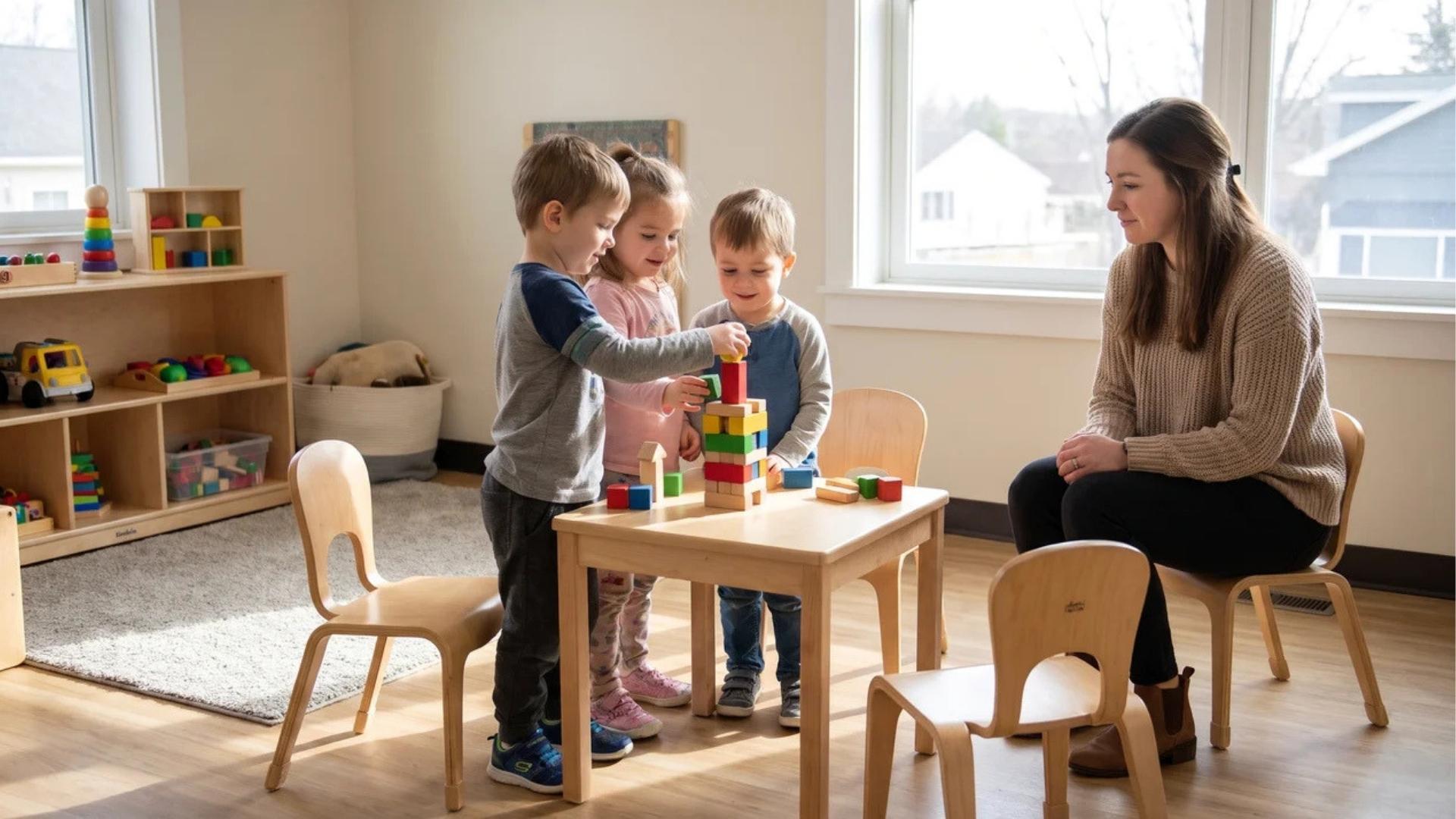
Preschool is often the first place a child practices sharing a toy truck, waiting for a turn at the water table, and working with classmates on a block tower.
Teachers also help children put feelings into words, such as saying "I'm mad" instead of grabbing, and they walk children through simple disagreements.
Routines like circle time and cleanup add more practice.
A practice guide from the Institute of Education Sciences, Preparing Young Children for School, recommends regular practice of social-emotional skills in preschool and notes that children entering kindergarten are expected to ask for help, take turns, and interact positively with others.
2. Language and Early Literacy Skills
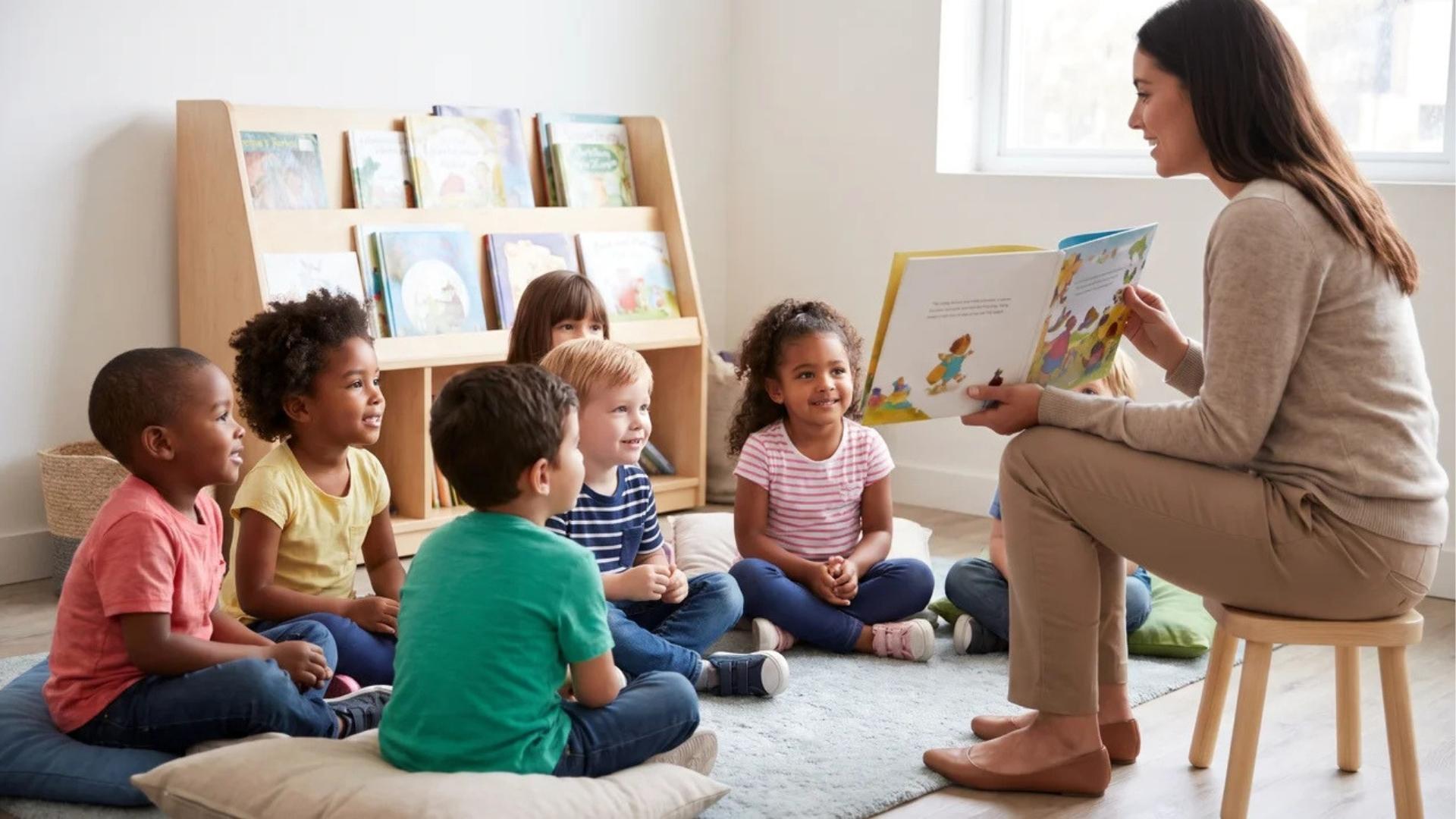
Preschool classrooms are full of talk. Children hear new words during stories and songs, practice listening, and move from short phrases to full sentences as they describe their day.
During story time, they begin to follow what happens in a book, spot the letters in their own name, and notice that letters stand for sounds, such as the b in ball.
Some children recognize more letters than that, though how many varies a lot.
Early writing starts well before neat handwriting, with drawings and scribbles that a child will happily "read" back to you.
3. Early Math and Cognitive Skills
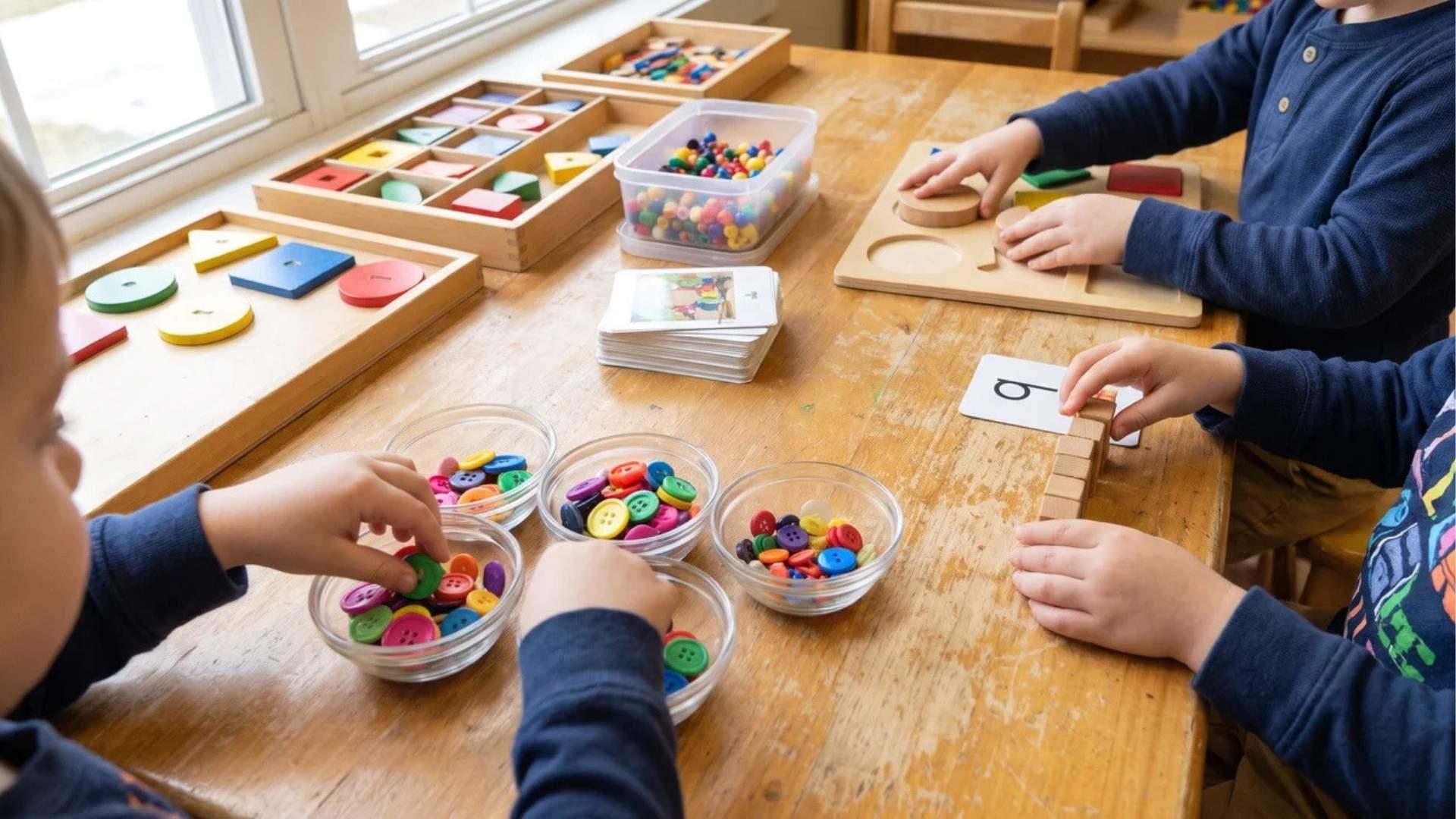
Math in preschool is hands-on. Children count blocks and snack crackers, match written numbers to groups of objects, and sort buttons by color or size.
They build simple patterns such as red, blue, red, blue, compare which tower is taller, and name the circles and triangles they spot around the room.
Puzzles call for turning pieces and trying again, which gives children practice with problem-solving.
Questions are part of the work too, since "why" and "what happens if" drive much of the early science that happens during play.
4. Physical and Motor Skills

Fine motor skills grow through small, repeated jobs like squeezing playdough, threading beads, drawing with crayons, and cutting along a line with child-size scissors.
These movements build the hand control children use later for writing and fastening clothes. Big movements count as well.
Running, jumping, climbing, and balancing on a low beam or a painted line give children practice with coordination and body awareness.
Both kinds of skills come together in everyday tasks like carrying a tray or pouring water into a cup.
5. Creativity and Exploration
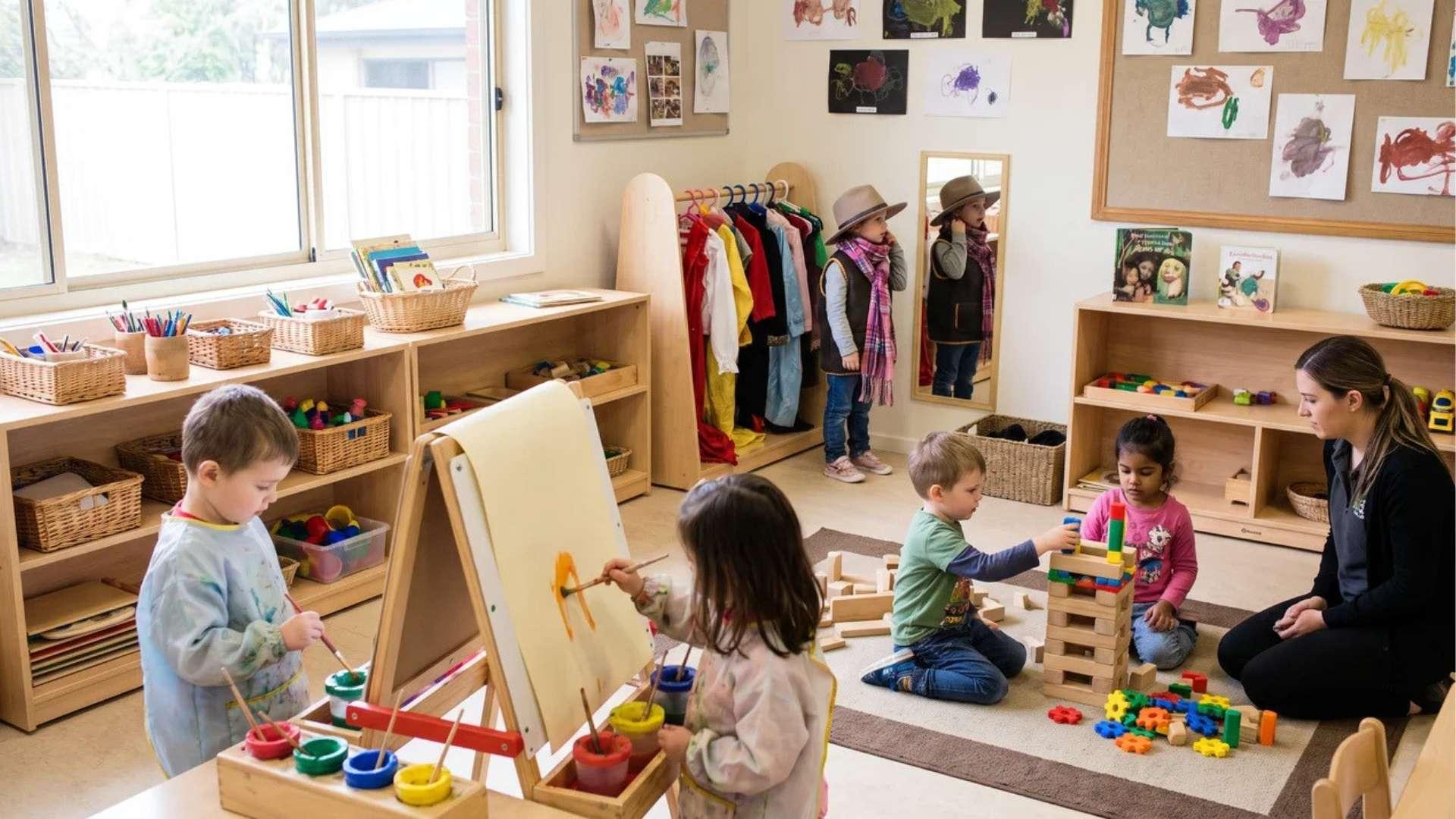
Art tables, music corners, and dress-up areas give children room to try ideas and see what happens.
Painting and drawing let them make choices about color and shape, while songs add rhythm and memory, and pretend play lets a child run a restaurant or a rescue team using words and plans.
Building with blocks or mixing sand and water invites small experiments, such as what holds a tower up or how much water fills a cup.
These activities support imagination, curiosity, and problem-solving as children test their own ideas.
6. Self-Care and Independence Skills
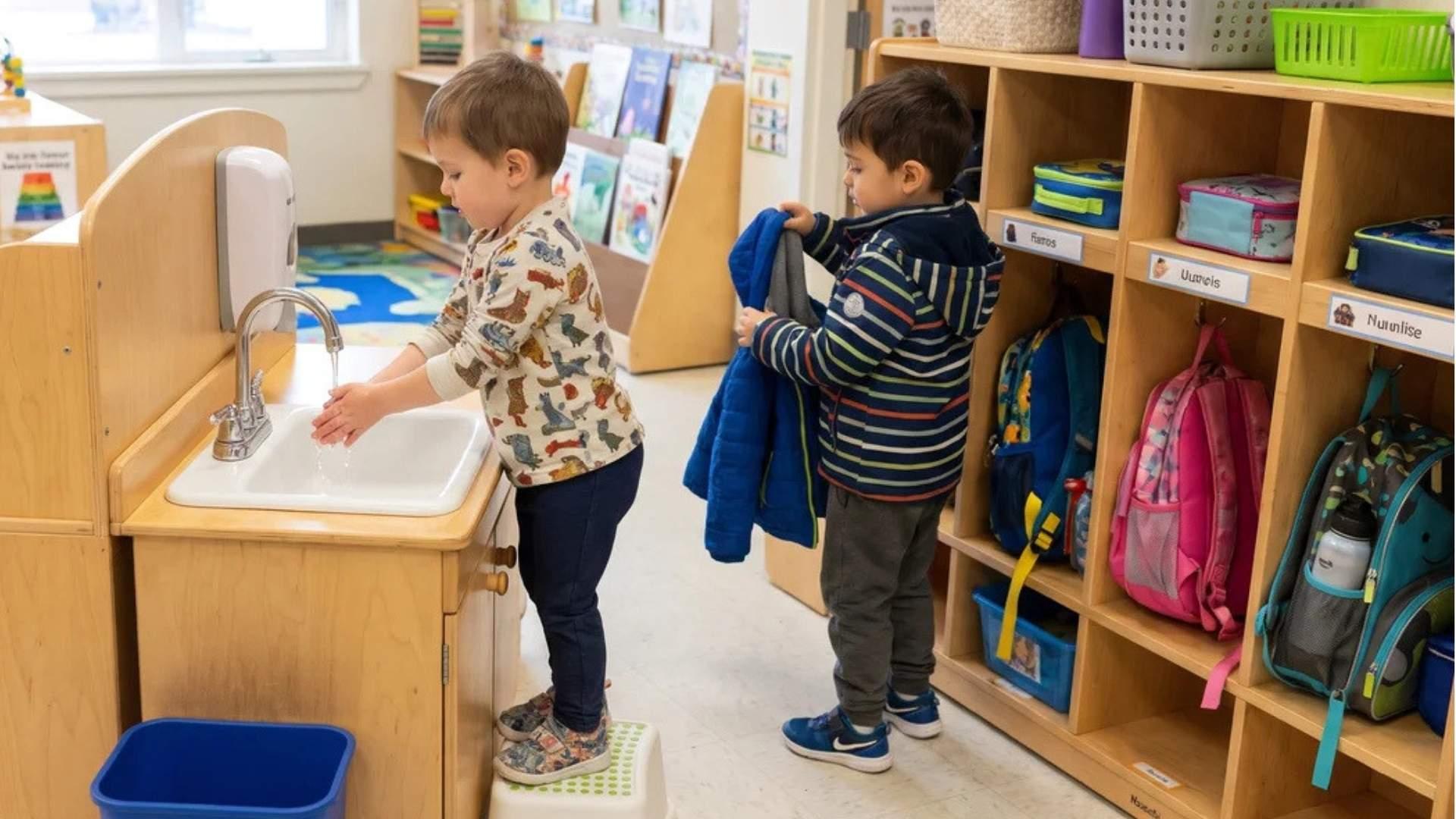
Self-care is where preschool and home overlap most, since children practice the same tasks in both places.
Adults usually help a lot at first, and teachers tend to let children try before stepping in.
Common skills include:
- Washing hands before snack and after outdoor play
- Eating independently, such as using a spoon or opening a lunch container
- Putting on shoes and coats, with help for zippers and laces
- Handling bathroom routines with reminders
- Keeping belongings in a cubby or backpack
- Finishing small classroom jobs, like passing out napkins or watering a plant
Most of these skills get practiced at the same moment, not one by one, so the next section shows how that plays out in activities you would see on any classroom tour.
What Does Preschool Teach Through Everyday Activities?
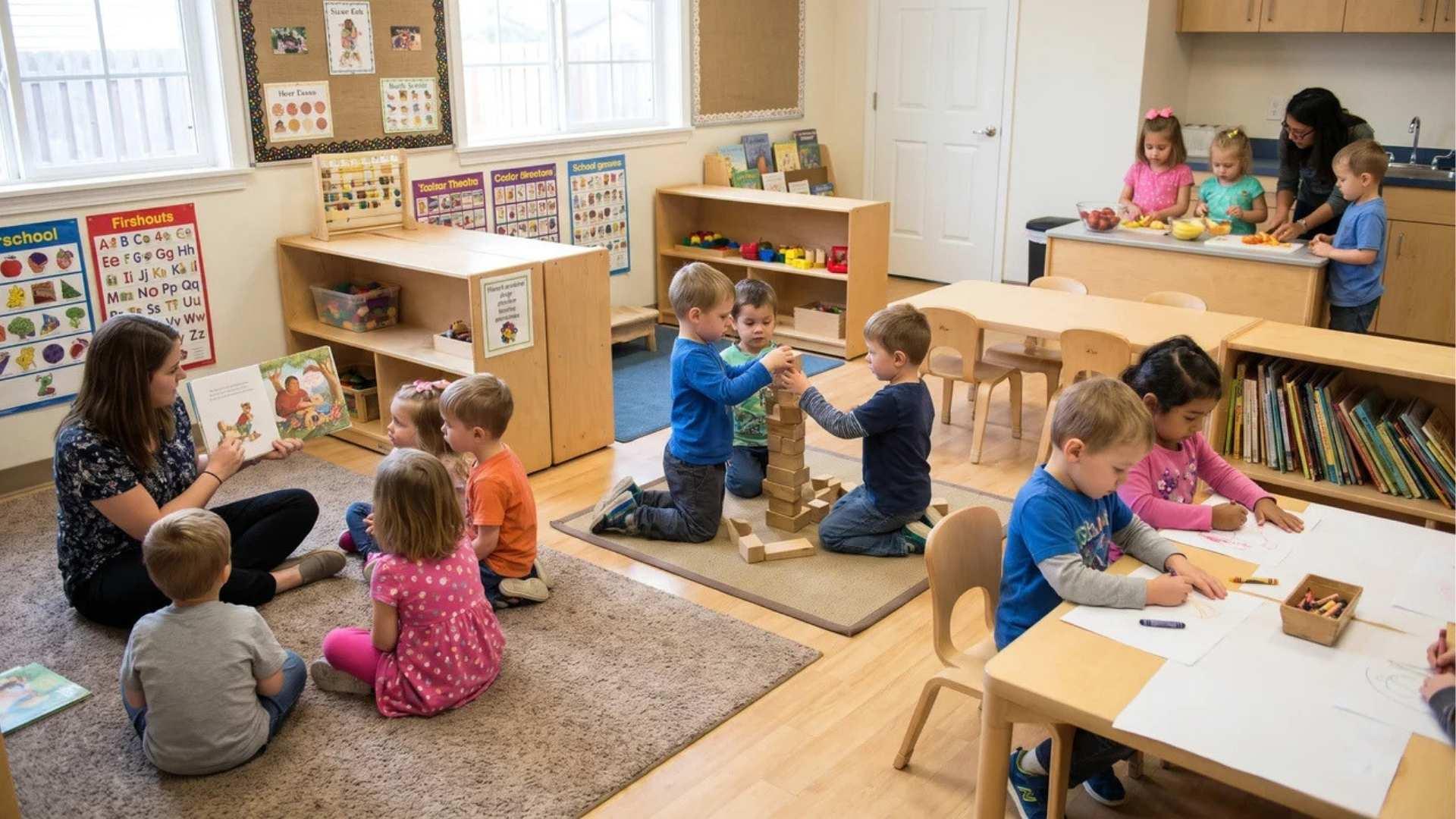
Preschool teaches children through everyday experiences rather than formal lessons, and most of what they learn happens during ordinary parts of the day.
Storytime alone builds listening, vocabulary, comprehension, and early literacy, since children hear new words, follow a plot, and point out pictures or letters.
Activities pull in several areas at once, depending on how a child joins in.
Learning Through Play and Group Activities
Pretend play at a make-believe grocery store builds language and turn-taking, while blocks and puzzles bring in spatial thinking and finger control.
Music and singing games add rhythm, memory, and listening, and outdoor games work on balance and following rules.
A group mural asks children to share space and agree on ideas.
How a child takes part changes what that child practices, so the same puzzle may build patience for one child and teamwork for another sitting beside them.
Learning Through Classroom Routines
Routines turn ordinary moments into practice.
Cleanup time teaches responsibility and cooperation, since every child has a job, and snack time builds independence along with conversation skills.
Story circles ask children to sit, listen, and wait to speak. Even the shift between activities gives them a chance to follow directions and handle a change in plans.
The last year of preschool is when parents start thinking about kindergarten, so the next section sorts out which skills help with that move and which can keep growing afterward.
Which Skills Should a Child Have Before Starting Kindergarten?

Before kindergarten, children benefit from a basic foundation in how they connect with others and approach learning, but they do not need to master every preschool skill.
CDC’s 5-year milestones describe what most children do by that age across how they play, learn, speak, act, and move.
They are better read as a general picture than as a pass-or-fail list.
Social and Everyday Readiness
Useful readiness skills include following simple directions, taking turns, and telling an adult what you need. Separating from a caregiver at drop-off helps too, even if it takes a hug and a minute.
Basic self-care with age-appropriate support, such as using the bathroom or putting on a coat with a little help, rounds out the picture.
Teachers expect to help, so complete independence is not the goal.
Early Academic Readiness
A child who enjoys books, counts small groups of objects, and knows a few colors and shapes is well placed for kindergarten.
Recognizing some letters, including the ones in their own name, and holding a crayon with a comfortable grip also help the transition.
Curiosity counts as much as any of these. None of this is a strict entrance requirement, and children arrive at kindergarten with a wide mix of skills.
None of these skills has to be finished by the first day of school, and the signs of progress are easy to spot once you know where to look.
Preschool Learning Shows Up in Small Moments
Parents who ask, What should a child learn in preschool? often expect a checklist, but the better answer is a direction of growth.
A child who asks for a turn instead of grabbing, or zips a coat with only a little help, is showing the kind of progress that matters at this age, and it rarely looks like a worksheet.
Those small moments tell you more about readiness than a recited alphabet does.
This week, ask your child’s teacher to describe one activity from the day and the skills it was building, then watch for that skill at home.
Frequently Asked Questions
What age do children start preschool?
Most preschool programs serve children ages 3 to 5. Head Start preschool serves the same range, though entry dates vary by community, and Early Head Start covers children from birth to age 3.
What is the difference between preschool and daycare?
Preschool usually centers on planned early learning for ages 3 to 5, while daycare often focuses on all-day care for a wider age range, though many programs offer both.
What is the most important skill for a 3-year-old in preschool?
Communication and play with peers are good starting points. CDC lists joining others in play and holding a conversation as among what most 3-year-olds do.
How can I support preschool learning at home?
Keep reading together, sing songs and rhymes, and ask what might happen next in a story. CDC also suggests letting preschoolers help with simple chores.