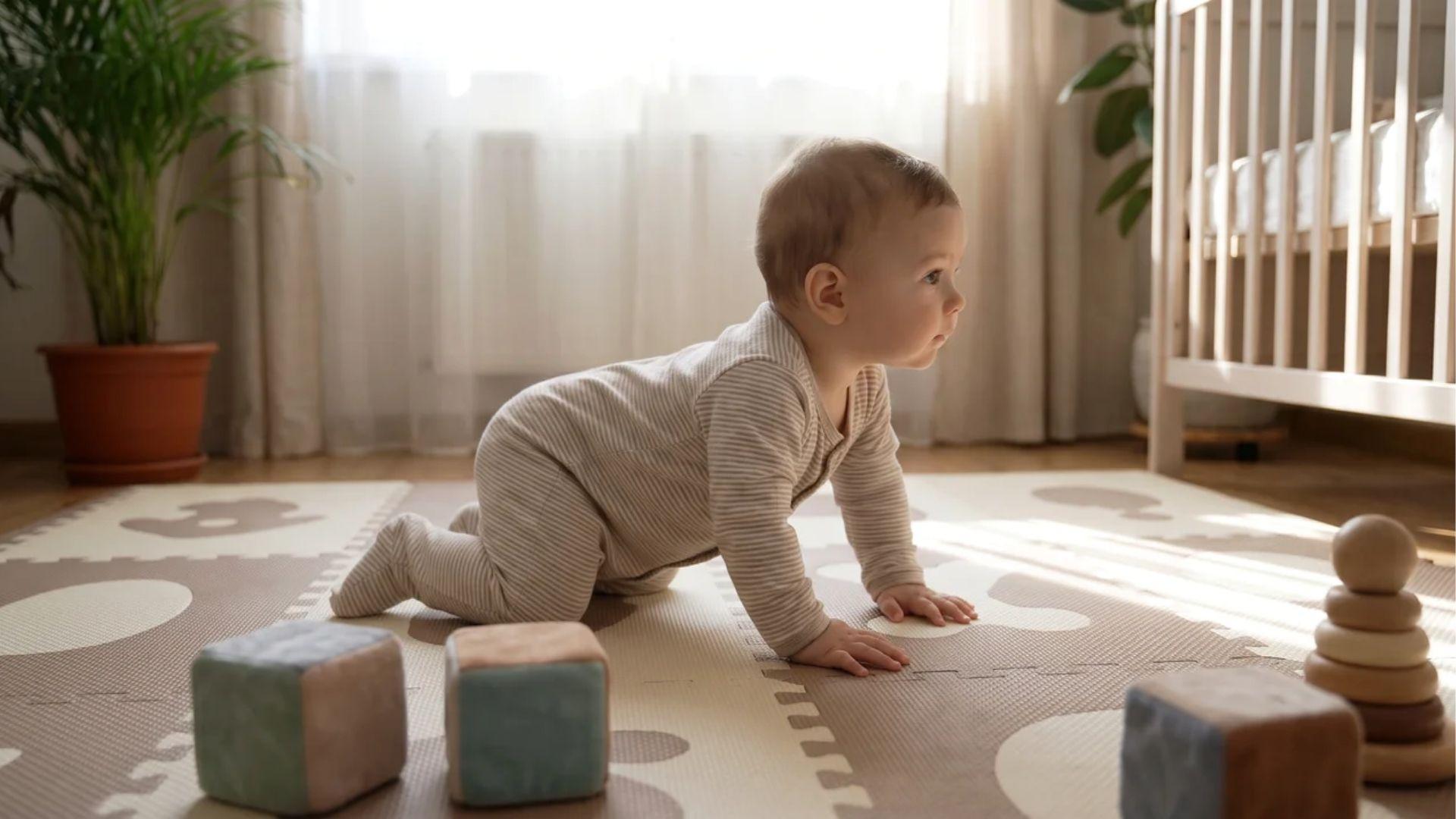


Picture the week before drop-off: alphabet flashcards on the table and a child who would rather build a block tower.
Parents open a preschool readiness checklist at that moment and wonder whether the flashcards matter.
A common misconception is that readiness means reciting letters, yet a first week usually depends on smaller skills, like asking for help or hanging up a jacket.
Spotting those skills early can turn worry into a few calm habits that fit into an ordinary day.
First, it helps to see what a checklist covers.
What Is Preschool Readiness?
Preschool readiness is a child’s ability to take part in basic classroom routines, interact with other children, and communicate everyday needs, even if they still want a reminder or a helping hand.
A preschool readiness checklist is the everyday skills children use to communicate, play, learn, and manage those routines.
This checklist sorts those abilities into five areas: Self-care, social-emotional development, communication, cognitive development, and motor skills.
Together, they describe how a child handles an ordinary day rather than how much a child has memorized.
Readiness also rests on abilities that are still developing.
Children arrive with some areas stronger than others, so a checklist works best as a way to notice progress, not as something to master before enrollment.
For a bigger picture of the learning goals in preschool, it helps to see how classrooms build on these everyday skills.
Five areas can sound abstract, so here is what each one looks like in real life, starting with the daily routines that come up first.
Preschool Readiness Checklist: Skills to Look For
Children approaching preschool age may show readiness in many small, everyday ways.
Look for examples from ordinary routines instead of perfect performance, since a skill that is still developing counts as progress.
Occasional difficulty with any single item does not mean a child is unprepared for preschool, and most of these abilities keep growing after the first day.
1. Self-Care and Independence Skills
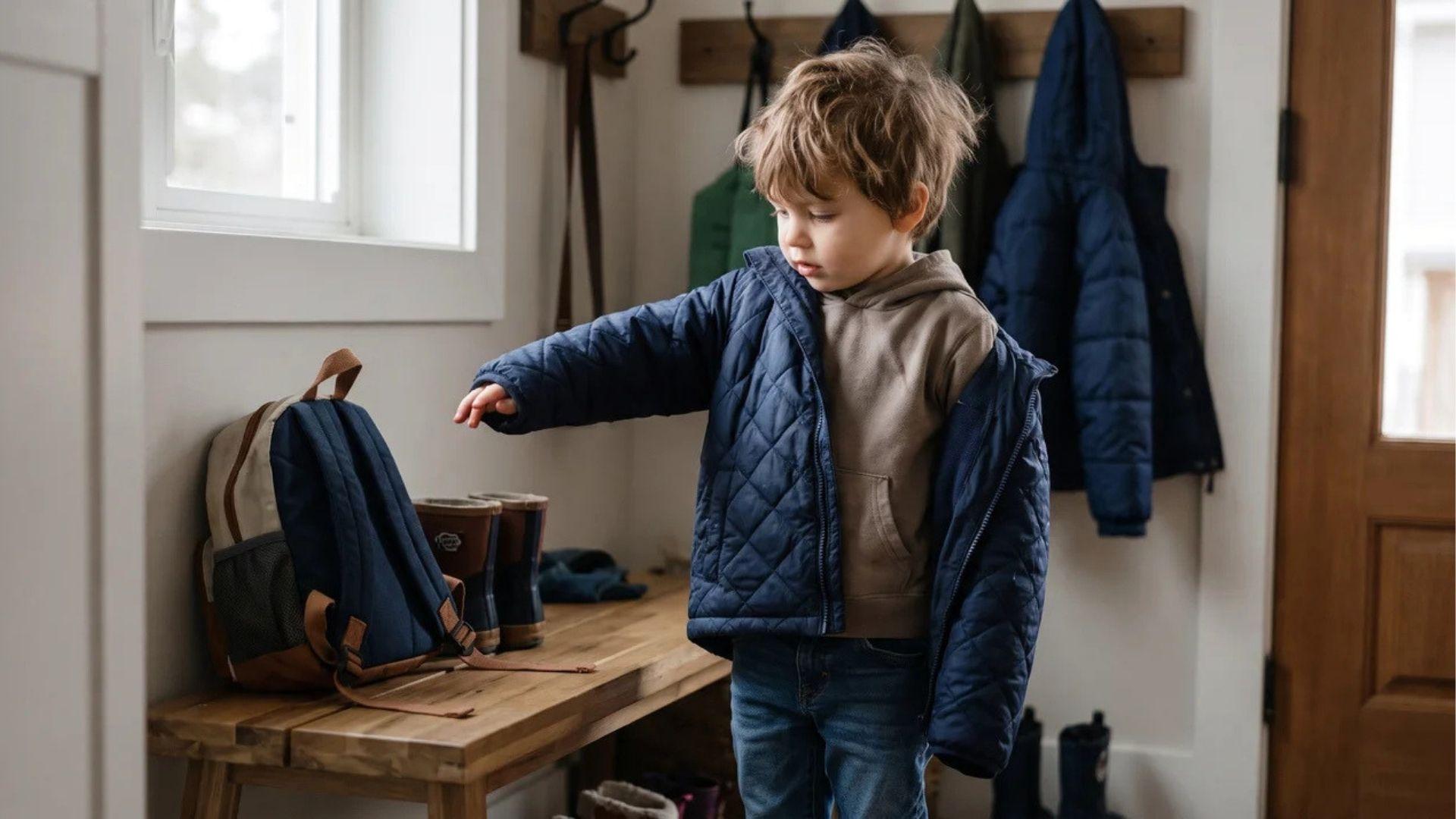
Day one runs on small routines, so independence with them makes a practical difference.
Look for a child who can:
- use the toilet with support and tell an adult when they need to go
- wash and dry their hands
- feed themselves with a spoon or fork
- put on a jacket or loose pants, with a little help
- put toys and belongings back where they go
Children do not need to manage every step alone.
Trying, asking for help, and trying again all count as independence, and a child who is still learning in one area can be strong in another.
2. Social and Emotional Skills

Separating from a caregiver without lasting distress can be the first hurdle, and our guide on why toddlers get so clingy explains what that stage can look like at home.
Beyond drop-off, preschool asks children to play alongside others, share materials, take turns, and wait a moment with a group.
It also helps when a child can name a feeling, such as mad or sad, and cope with a change in routine, like moving from free play to cleanup.
None of this needs to go smoothly every time. A child who protests a transition but settles with a familiar phrase or a hug is practicing the skill.
3. Communication and Language Skills
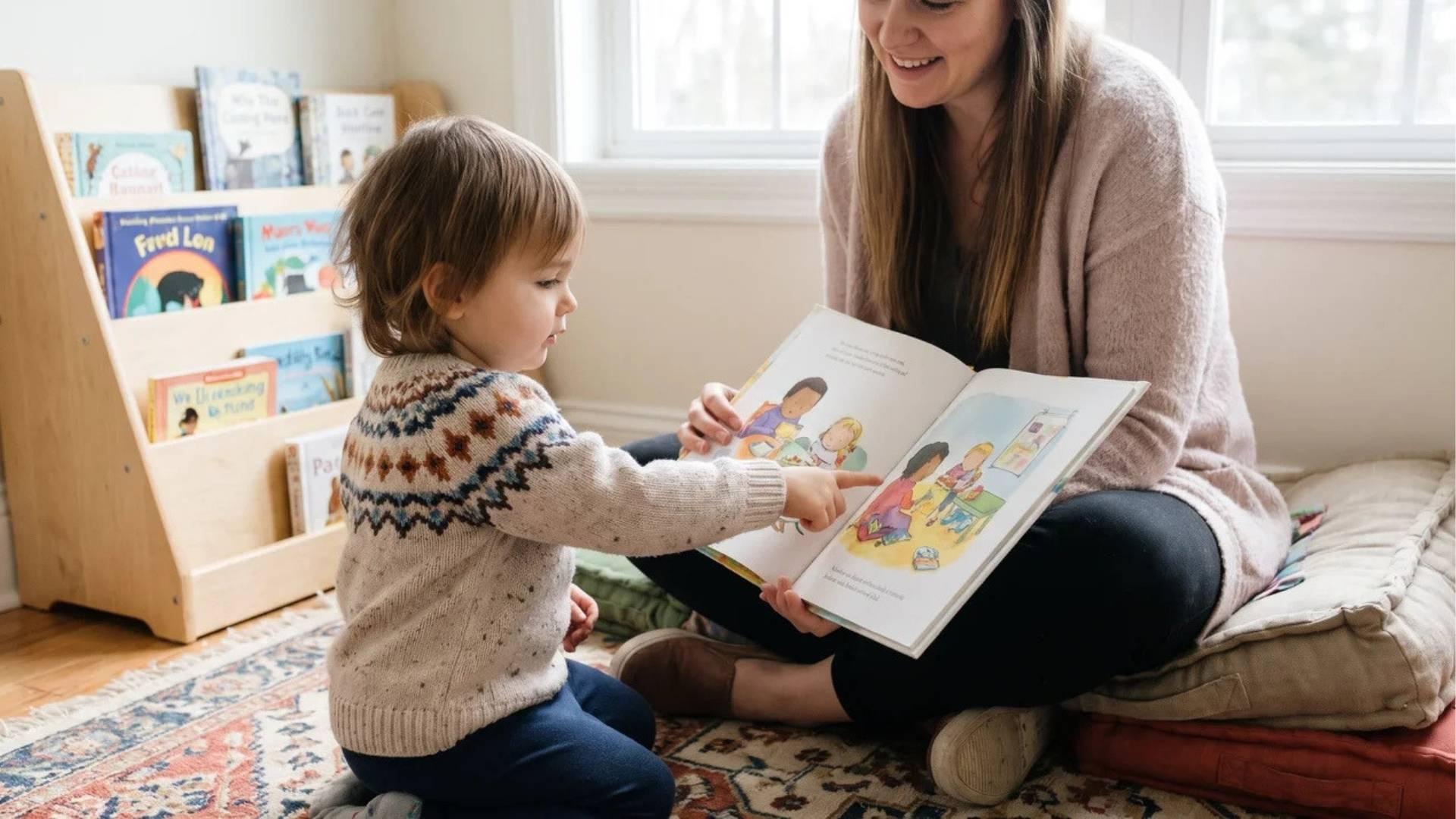
Preschool days run on talking and listening, so look for a child who can tell an adult what they need, such as water, help, or the bathroom, even if it takes gestures or a few words.
Understanding a simple instruction like “get your shoes, then come to the door” matters too, along with responding when a familiar adult speaks.
Curious questions are a good sign, and our post on when kids start asking why shows how that habit grows.
Listening to a short story or singing along with a song for a few minutes rounds out this area, and it can start with one favorite book.
4. Cognitive and Early Learning Skills
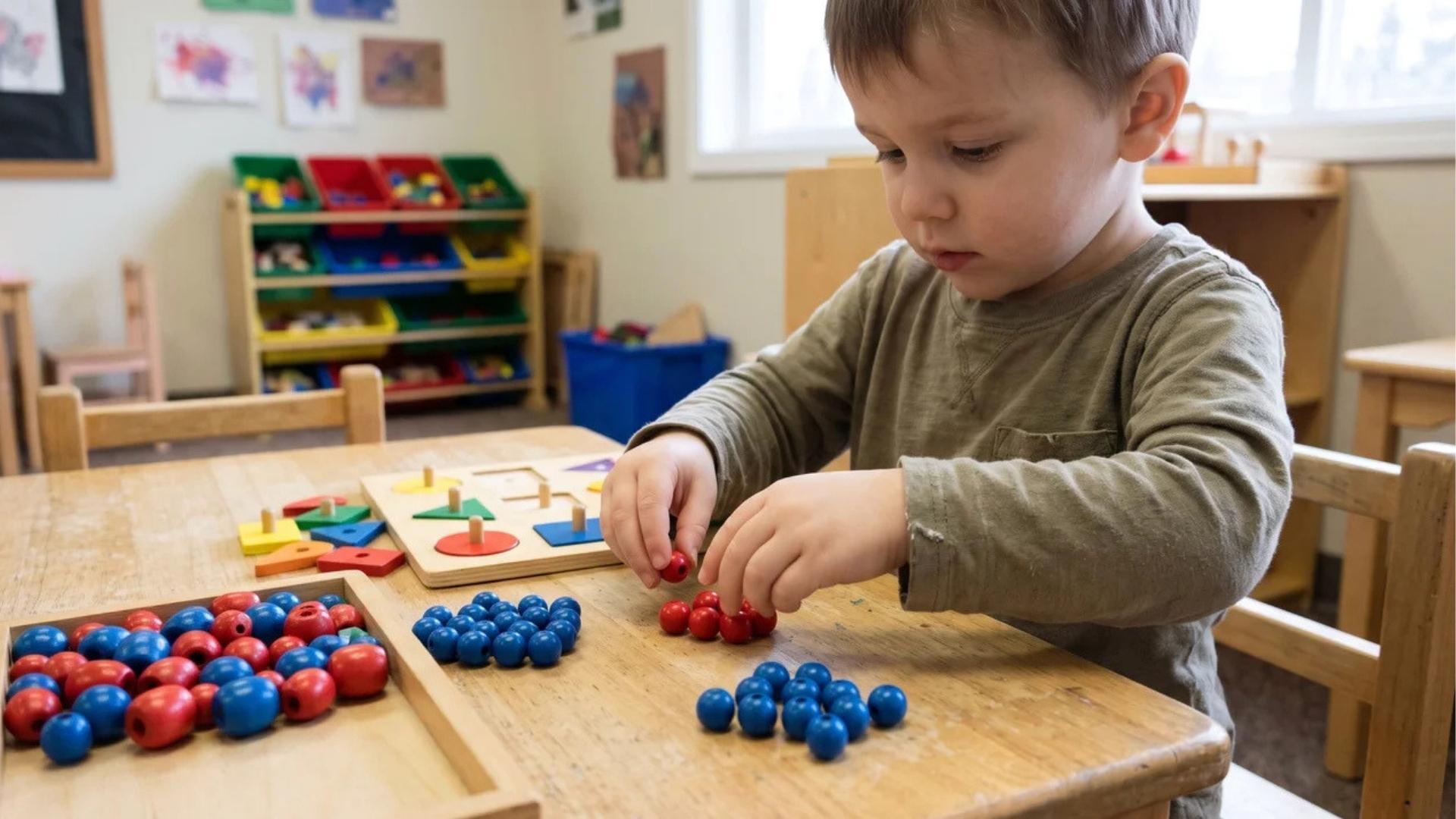
Early learning skills show up as curiosity and problem-solving long before they look like schoolwork.
Children may notice simple patterns, such as red-blue-red-blue beads, sort toys by color or size, and name a few basic shapes and colors.
Trying a puzzle piece in different spots, or stacking blocks again after they topple, is early problem-solving, and our guide to the age for a 24-piece puzzle gives a sense of how that grows.
Beginning ideas about letters and numbers belong here too, such as recognizing the first letter of a name or counting a few objects, but these are starting points rather than requirements.
5. Fine and Gross Motor Skills

Gross motor skills use the large muscles, so look for running, jumping, climbing playground steps, and using stairs, often with a hand on the rail.
Fine motor skills use the hands and fingers, and they show up when a child holds a crayon, turns the pages of a board book, draws lines or circles, and handles simple play materials such as blocks, clay, or large beads.
Children build these skills at different speeds.
A child who still grips a crayon in a fist is still developing that skill, and plenty of drawing and active play at home gives natural practice.
A 3-year-old and a 4-year-old won’t tick the same boxes, so here is how expectations shift between the two.
How Can Parents Understand Preschool Readiness by Age?

Preschool readiness expectations vary by age, but children develop skills at different rates, so no single milestone determines when a child is ready.
Experience, exposure, development, and individual learning rates all shape when a child picks up a skill. Treat age ranges as general guides and look at what your child can do.
Preschool Readiness Around Age 3
CDC lists skills that most children, meaning 75% or more, can do by 3 years, such as holding a back-and-forth conversation, using a fork, putting on a jacket, joining other children’s play, and calming down within 10 minutes after a caregiver leaves.
See CDC’s 3-year milestone list, and talk with your child’s doctor if you have concerns.
Preschool Readiness Around Age 4
By 4 years, CDC lists skills such as speaking in sentences of four or more words, pretending during play, asking to play with other children, naming a few colors, and unbuttoning some buttons.
Check CDC’s 4-year milestone list for the full set, and remember these are common skills, not a pass-or-fail test.
Age ranges only help if you know what to do with them, so here is how to practice at home without turning the day into a drill.
How Can Parents Prepare a Child for Preschool?

Parents can support preschool readiness by practicing everyday routines, encouraging communication, and providing regular opportunities for independent play.
The easiest practice happens inside the day you already have:
- Wash hands before meals and after play
- Eat with a spoon or fork and drink from a cup at the table
- Choose and put on a jacket or shoes
- Visit the bathroom at regular times, with patience for accidents
- Put toys into a bin before starting something new
Beyond routines, reading together, pretend play, and one-step instructions such as “bring me your cup” give children practice with language and listening.
Short playdates, library story times, and park visits add practice with other children.
CDC’s tips for 4-year-olds also mention reading together and role play to help children get comfortable with new places and people.
Keep practice gradual and warm, and praise effort instead of pushing for mastery before the first day.
Practice at home covers the entry skills, but preschool itself teaches plenty that children don’t need to arrive knowing.
What Should a Child Learn in Preschool?
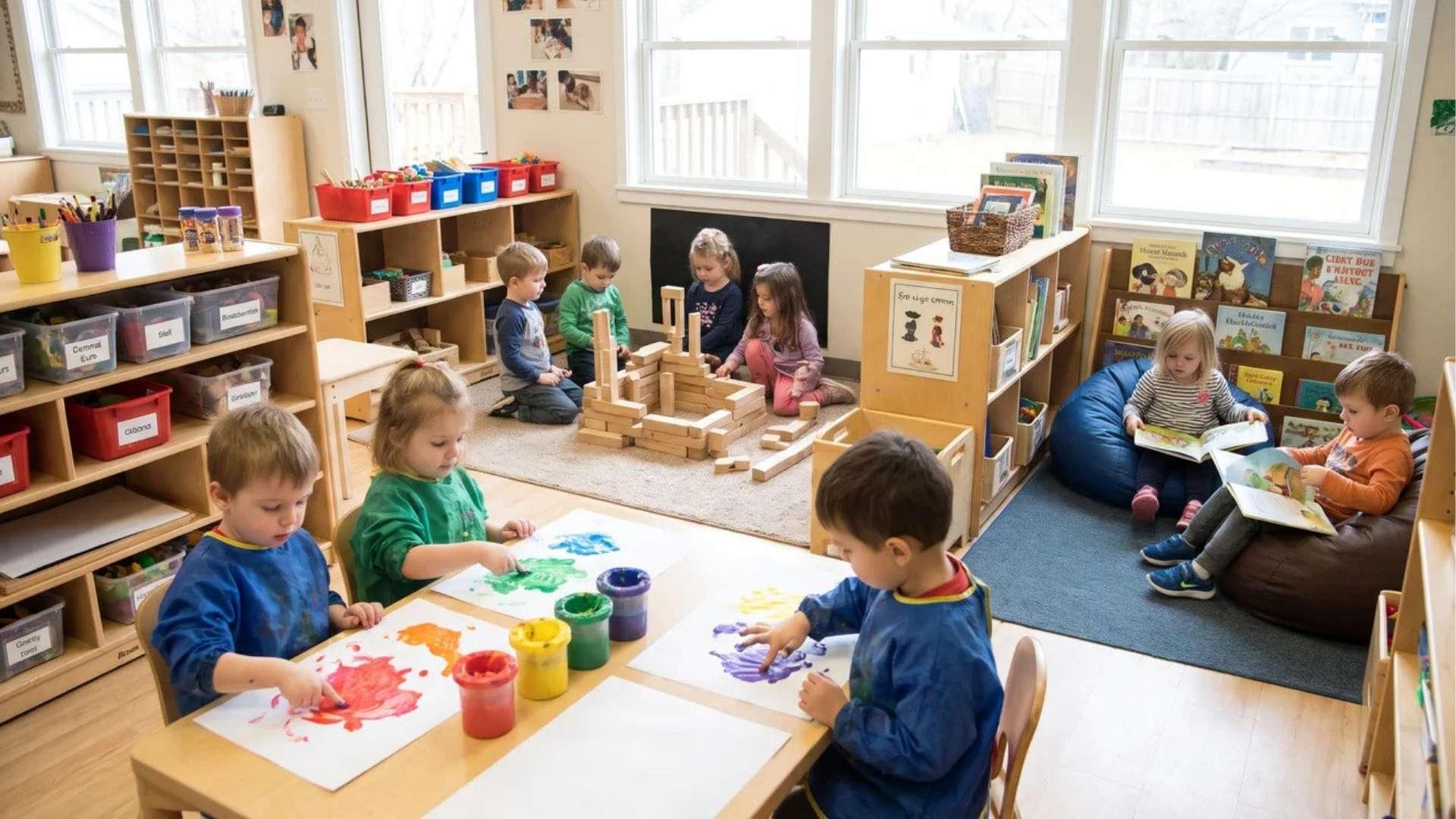
Preschool helps children develop early academic, social, creative, and practical skills through guided activities, play, and classroom experiences.
The Head Start Early Learning Outcomes Framework, a federal guide for early childhood programs, describes the skills, behaviors, and knowledge that programs build with children.
Day-to-day, a program introduces:
- Early literacy, such as noticing letters and print
- Counting and early number ideas
- Shapes and colors
- Creative activities, such as painting and music
- Basic problem-solving
Learning happens through structured play, group activities, stories, songs, and hands-on experiences.
Children generally do not need to read, write, or do advanced math before starting, since preschool is where those foundations begin.
Programs differ, so asking the school what it teaches and expects is the most reliable way to know.
Final Takeaway
A preschool readiness checklist works best as a conversation starter, not a score.
The most useful skill on any list is often a child’s willingness to try and ask for help, which grows through ordinary days of handwashing, story time, and play.
Notice where your child is strong, practice gently where a skill is new, and trust that classrooms are built to teach the rest.
This week, pick one routine from the checklist, such as handwashing, and practice it together for a few minutes a day.
Frequently Asked Questions
Does a Child Need to Be Fully Potty Trained Before Preschool?
Not always, since toilet-training policies differ between preschools and some accept children who are still learning. Check the school’s policy before enrolling, and keep practicing regular bathroom routines at home.
How Do I Choose the Right Preschool for My Child?
Visit more than one program and watch how teachers talk with children. Ask about the daily schedule, how the school handles separation, and how it keeps parents informed.
What Should My Child Bring on the First Day of Preschool?
Schools send their own supply lists, so follow that first. Lists often include a labeled change of clothes and a water bottle, but confirm details with your child’s teacher.
What Is the Difference Between Preschool and Daycare?
Programs overlap, and names vary by school and state, so the label alone says little. Ask each program about its daily structure, learning activities, staff training, and hours.