
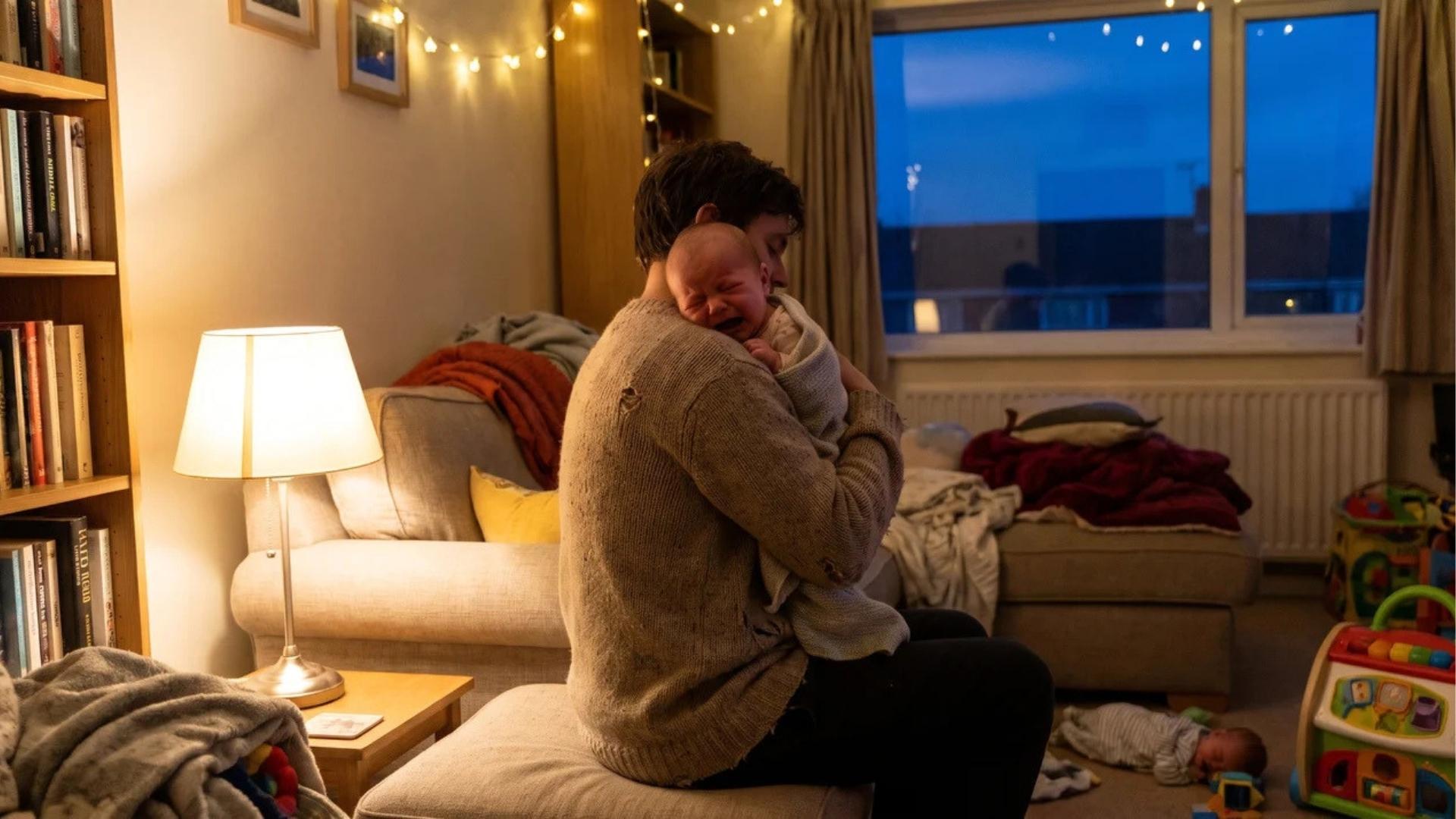


Your baby napped well, fed calmly, and smiled through the afternoon, then turned red-faced and inconsolable the moment dinner prep began.
Plenty of parents replay the day at that point, hunting for the mistake that caused it.
Often the baby witching hour has little to do with anything a parent did, since evening crying in young babies is not caused by parenting mistakes.
With a clearer picture of the pattern, you can plan your evenings instead of dreading them.
First, the label itself deserves a closer look.
What Is the Witching Hour for Babies?
The baby witching hour is a period of intense fussiness or crying that commonly occurs in the late afternoon or evening, even when a baby has been relatively calm earlier in the day.
It tends to affect otherwise healthy babies, and medical references describe a fussy period in the evening as normal for infants.
Parents usually notice a recognizable set of behaviors:
- Prolonged crying that is hard to interrupt
- Difficulty settling, even in familiar arms
- Frequent requests to feed
- Restlessness and squirming
- A strong wish for constant physical contact
The phrase is a nickname for this common pattern rather than a formal medical diagnosis, and not every baby goes through it.
Some babies stay fairly even-tempered all evening, which is equally typical.
If several of these signs arrive around the same time each day, you are probably seeing this pattern, though your pediatrician is the right person to ask about any worry.
Recognizing the signs is one thing, but the clock matters too. Most parents want to know what time it usually starts and when it eases up.
When Does the Baby Witching Hour Usually Happen?
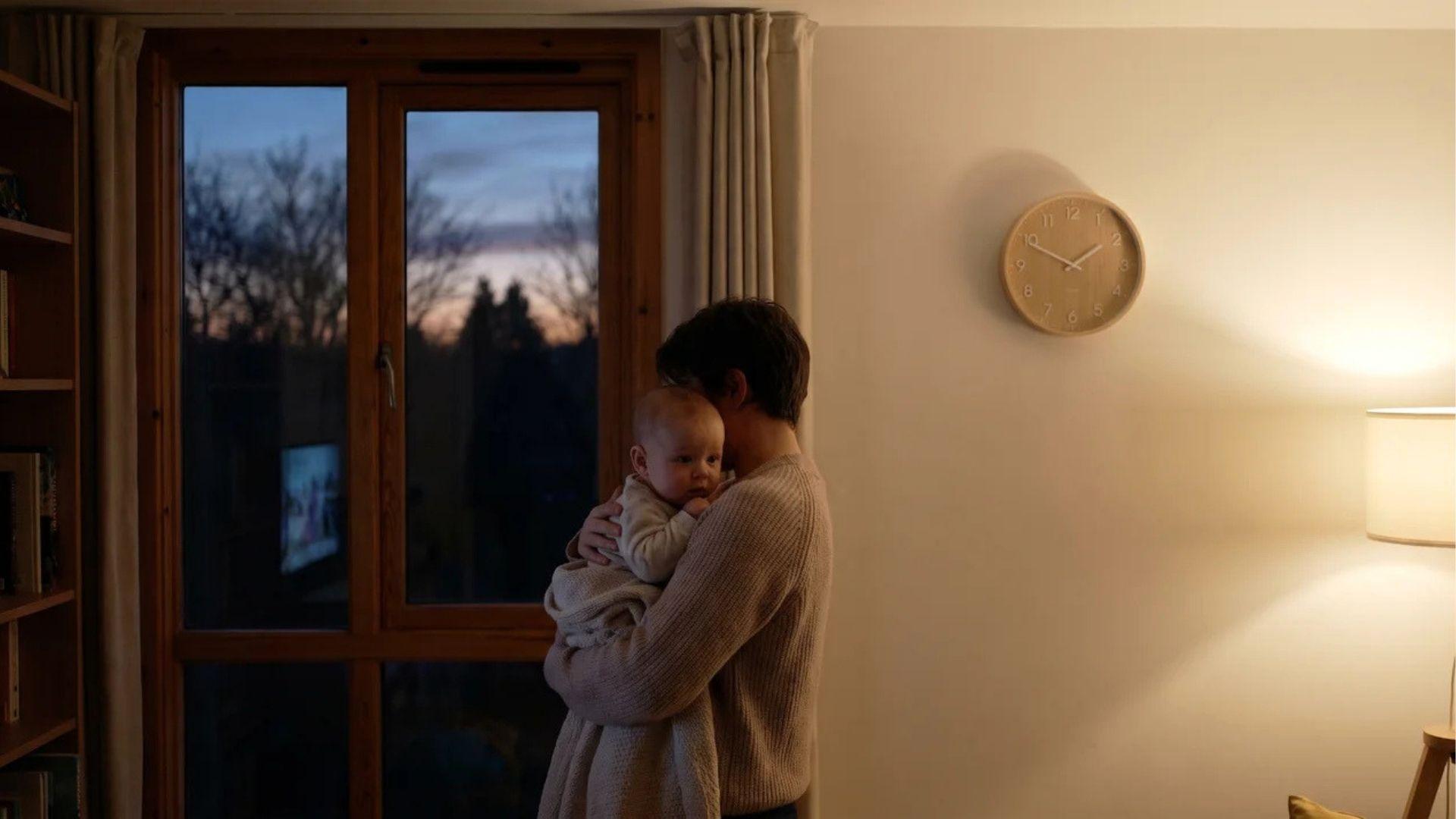
The baby witching hour usually shows up between about 5 p.m. and 11 p.m., although some babies become fussy earlier or later in the day.
Parents commonly describe episodes that last up to two or three hours, and many notice the same rhythm on several evenings in a row, which makes the clock feel predictable even when the crying is not.
The term refers to evening fussiness, so a baby who wakes and cries at 3 a.m. does not automatically fit the pattern.
Night waking has its own set of reasons, and the two can overlap without being the same thing.
If your baby settles after the evening storm but then keeps waking up every hour overnight, that pattern has its own set of triggers.
Because timing differs from one household to the next, a few days of watching when the fussiness begins can tell you more than any fixed schedule.
When Does the Newborn Witching Hour Start, Peak, and End?
Evening fussiness may begin around 2 to 3 weeks of age and often becomes more noticeable over the following weeks.
Infant crying in general peaks at 6 to 8 weeks and improves by 3 to 4 months, according to a review of infant colic hosted by the National Institutes of Health.
Babies vary, so treat these ages as rough guides rather than deadlines. A baby who starts a little earlier or settles a little later is not breaking any rule.
Timing explains when the crying shows up, but not why it shows up. That part comes down to a few ordinary things stacking on top of each other by evening.
Why Does the Baby Witching Hour Happen?
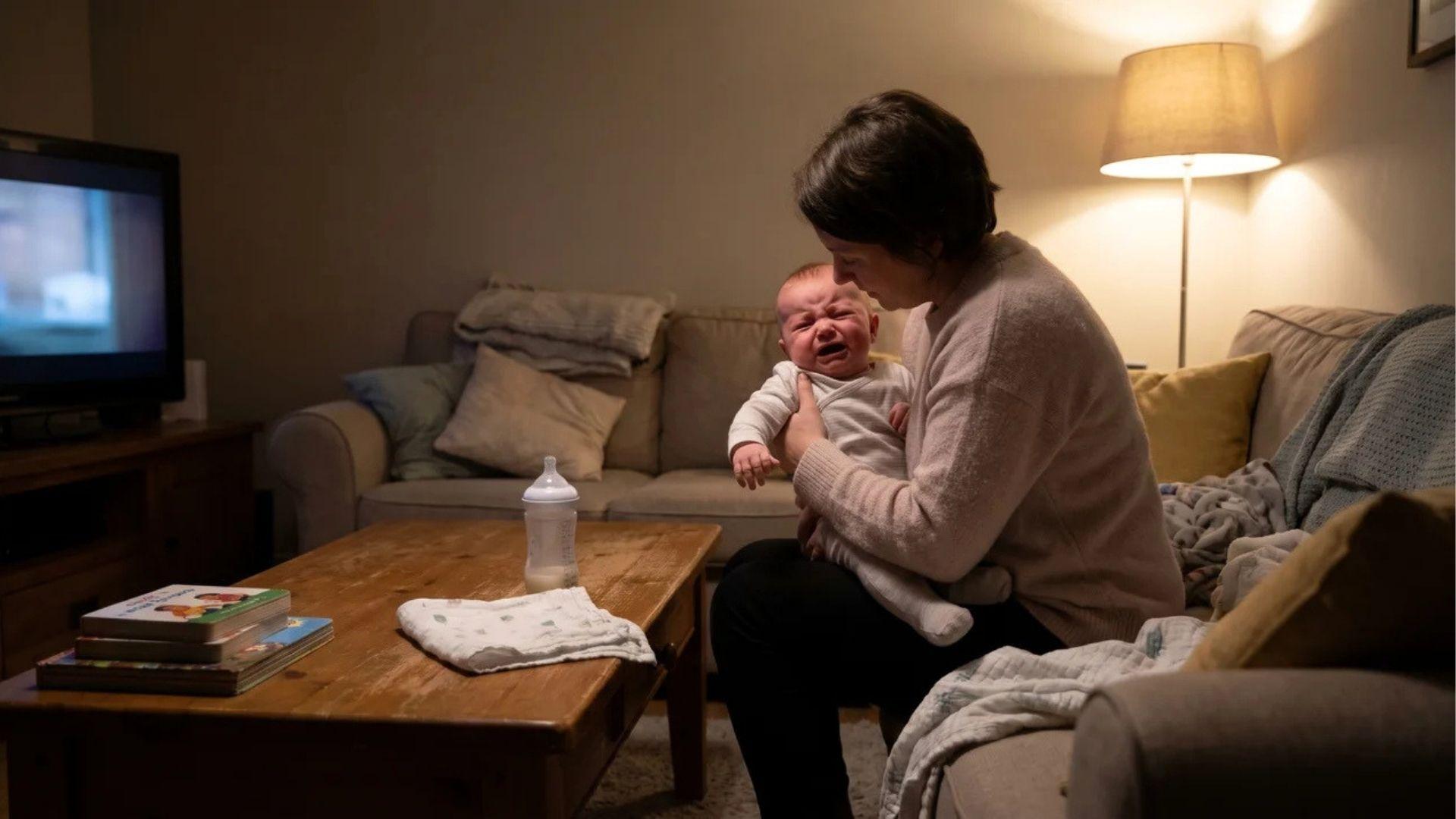
The baby witching hour can happen when overstimulation, tiredness, hunger, frequent feeding, and digestive discomfort combine toward the end of the day.
There is rarely one cause to point to, which is why two babies in the same house can have very different evenings.
By late afternoon, a day of sounds, lights, and handling may make it harder for a young baby to settle.
Each added strain makes the others harder to fix.
An overtired baby may struggle to feed calmly, while a hungry baby may grow more upset with every attempt to settle.
How Do Overstimulation and Overtiredness Affect Babies?
Repeated sights, sounds, and interactions can pile up over a day, and a baby who cannot yet tune things out may reach a point where one more voice or light tips them into crying.
Prolonged wakefulness and missed sleep can make settling harder too, because the longer a baby stays awake past a comfortable window, the more wound up they may become.
Tiredness also does not always look like sleepiness.
Many babies show it through crying and restlessness instead of calmly drifting off, which is why an overtired baby can appear to fight sleep right when they need it most.
Can Hunger, Cluster Feeding, and Gas Contribute to Witching Hour?
Many newborns want to feed more often in the evening, and a few things tend to overlap at that time:
- Cluster feeding: several short feeds close together rather than a single regular feed. The CDC notes that some babies feed as often as hourly at times.
- Swallowed air: air taken in during crying or feeding can add to the fussiness.
- Digestive discomfort: normal gas and tummy discomfort can add to it further.
Frequent feeding or evening crying alone does not prove that a baby has a milk supply problem or a digestive condition.
Weight gain, wet diapers, and how content a baby seems between feeds tell parents more, and a pediatrician or lactation consultant can review any concern.
How Is Baby Witching Hour Different From Colic?

Baby witching hour and colic can both cause intense crying, but witching hour usually follows an evening pattern, while colic involves prolonged and recurring crying.
Witching hour tends to gather in a predictable window and then pass, whereas colic describes repeated episodes of long, hard-to-soothe crying in a baby who is otherwise healthy.
Colic is traditionally described by the rule of threes, which looks for crying that lasts more than three hours a day, on more than three days a week, for longer than three weeks.
A hard evening, or even a hard week, does not by itself add up to colic.
The two patterns are not interchangeable diagnoses, and only a pediatrician can tell them apart.
Crying that lasts, keeps getting worse, or leaves you worried deserves a professional assessment.
Most fussy evenings stay on the ordinary side of that line. A handful of symptoms, such as fever or feeding refusal, point to something else and call for a different response.
When Should Parents Be Concerned About Baby Witching Hour?

Evening fussiness is common in young babies, but crying that comes with fever or other warning signs needs medical attention.
Fever calls for the quickest response.
MedlinePlus, the National Institutes of Health's consumer health site, advises contacting a provider or going to the emergency room for a baby younger than three months with a rectal temperature of 100.4°F (38°C) or higher.
Beyond fever, these signs are good reasons to call a pediatrician promptly:
- Blood in the stool
- Repeated vomiting
- Refusal to feed
- Unusual lethargy, such as being hard to wake
- Crying that starts suddenly, sounds unusually intense, keeps going, or feels noticeably different from your baby's normal behavior
You know your baby's usual pattern better than anyone, and a phone call to the pediatrician costs little compared with the peace of mind it can bring.
Most of the time none of these signs appear, and what remains is a tiring evening rather than a risky one. That makes planning more useful than worrying.
Making Peace With the Baby Witching Hour
The baby witching hour is hard on everyone in the room, but it is also one of the more predictable parts of early infancy, and that predictability works in a parent's favor.
Because the fussiness tends to arrive at a familiar time, you can prepare for it by sharing the load with a partner, eating dinner earlier, or expecting a longer stretch of holding.
Treating it as a daily appointment rather than an ambush changes how those hours feel.
Tonight, pick the window when your baby usually melts down and hand one task to someone else.
Frequently Asked Questions
What Helps a Baby During the Witching Hour?
Many parents try one calming approach at a time, such as gentle rocking, steady white noise, skin-to-skin contact, or a warm bath. What works varies from baby to baby.
Is It Okay to Step Away From a Crying Baby?
If your baby is fed, changed, and safe in their crib, it is okay to step away for a few minutes to calm down, then check on them again. Never shake a baby.
How Can I Tell If My Baby Is Full During Evening Feeds?
Fullness cues include turning the head away, pushing the bottle away, slowing or stopping sucking, or falling asleep at the end of a feed. Follow these cues rather than a set amount.
Should I Keep a Diary of My Baby's Evening Crying?
A short note on when crying starts, how long it lasts, and what came before can reveal a pattern. Bring the notes to your child's next checkup.