
Have you ever bought a brand-new educational toy, only to watch your preschooler spend the afternoon playing with the box?
It happens in more homes than you might think, and developmental research explains why.
At this age, children build thinking, language, and social skills by touching, sorting, pouring, and pretending, so the best preschool activities are the ones that put their hands to work.
The good news is that these activities do not need expensive toys or hours of preparation, because paper cups, spoons, and old cardboard can teach just as much.
Parents and educators will find easy, low-cost ideas here that make learning feel like play.
What Are Some Common Activities in Preschool?
Common preschool activities fall into a few familiar groups, including literacy games, counting and sorting, fine motor and movement play, simple science, art, and feelings activities.
Each one looks like plain fun to a child, yet each is also building something important underneath.
Play lets preschoolers practice language, test ideas, manage big feelings, and cooperate with others, all at a pace that suits their stage of development.
That is why a child stacking blocks or pouring water is doing real learning, even when it does not look like a lesson.
Literacy and Language Activities
Early literacy grows through playful exposure to letters, sounds, and stories long before formal reading begins.
These activities help preschoolers recognize letters, build vocabulary, and enjoy language, using simple materials most homes and classrooms already have.
1. ABC Scavenger Hunt
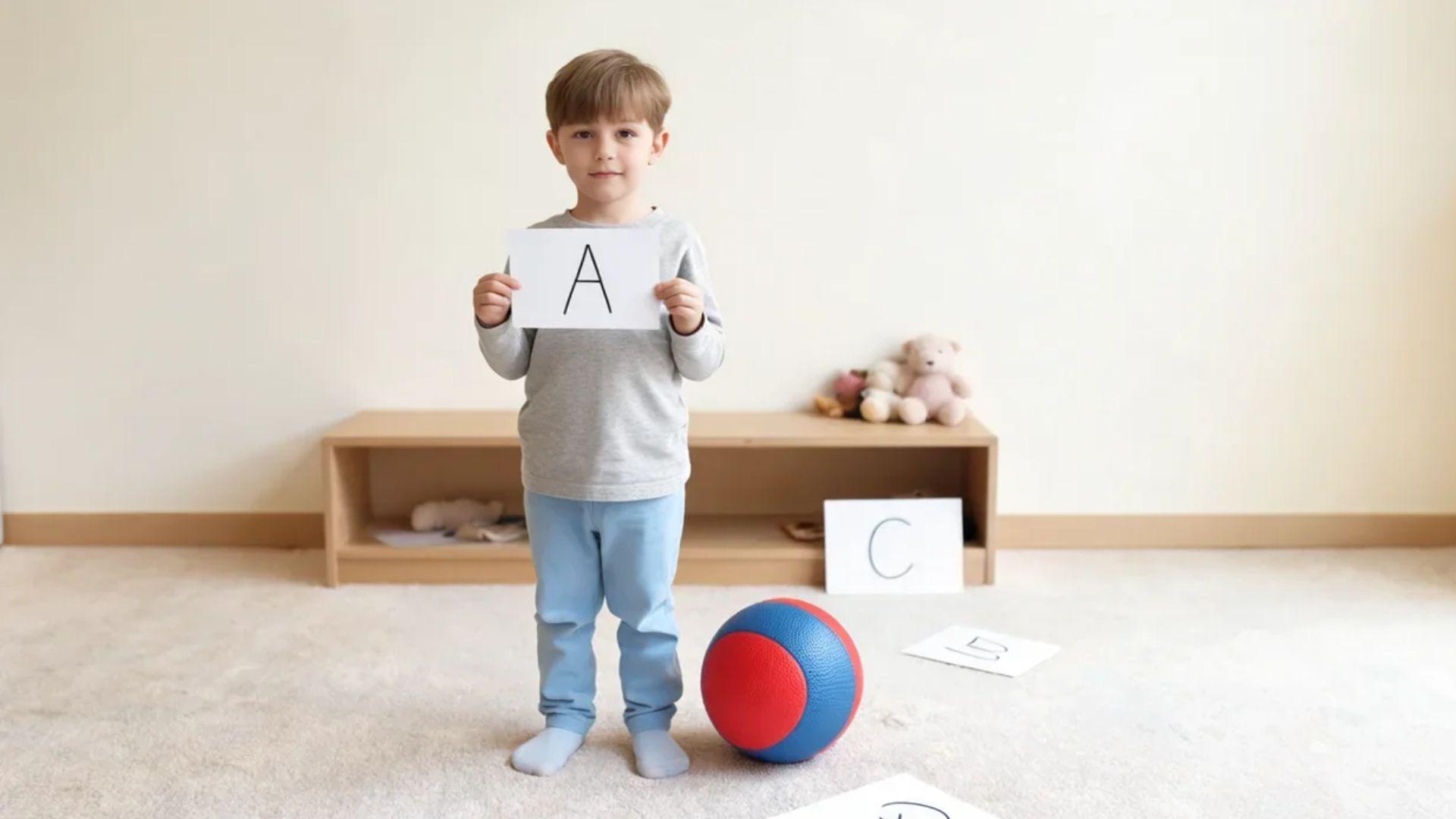
Write letters on index cards and hide them around a room, then invite your child to find each one and say its name aloud.
Ask for a word that starts with the letter they discover, such as B for ball. This activity builds letter recognition and beginning sound awareness while keeping children moving.
Start with five or six letters so the game feels achievable, and add more as your preschooler grows confident.
2. Name Recognition Game
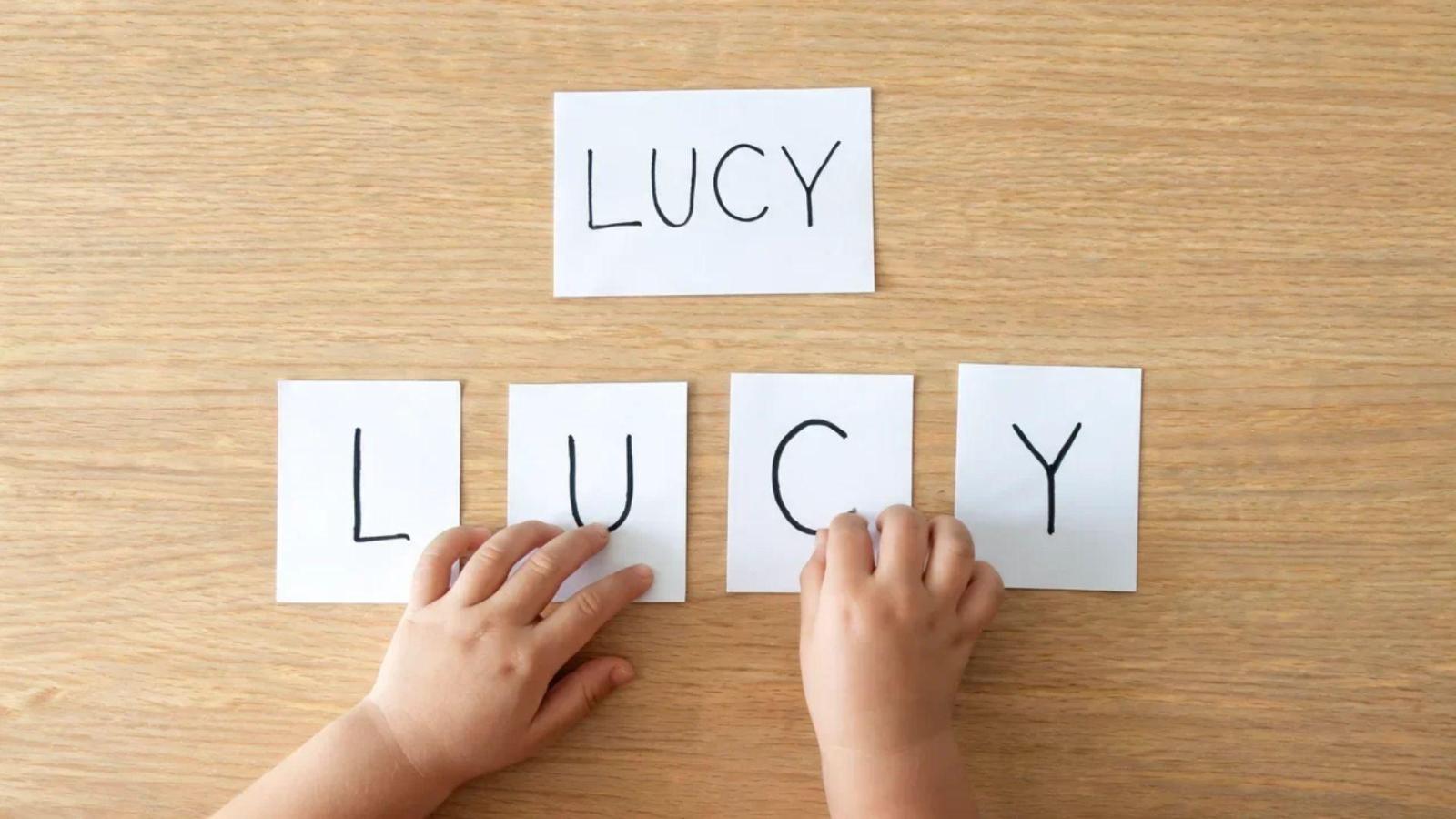
Write your child's name on cards, one letter per card, and mix them up for them to arrange in the correct order.
Using a name card as a guide makes the first attempts easier. Names are meaningful to preschoolers, so they tend to stay motivated while learning letter order and shapes.
Once they succeed, try a friend's or family member's name to stretch their skills and encourage curiosity about how words are built.
3. Storytelling with Picture Cards

Lay out three or four picture cards and invite your child to invent a story that connects them. Ask gentle questions such as what happens first and how the character feels.
This builds vocabulary, sequencing, and the ability to express ideas in complete thoughts.
Writing down their story and reading it back shows them that spoken words become print, which is a powerful early literacy lesson that children often love hearing repeated.
Math and Counting Activities
Preschool math is about noticing quantity, shape, and pattern in everyday objects.
These hands-on activities turn counting and sorting into play, helping children build number sense and logical thinking without worksheets or pressure.
4. Color and Shape Sorting

Gather blocks, toy animals, or paper shapes and let your child sort them into bowls by color, then sort again by shape.
Ask how they decided where each piece belongs, since explaining their thinking strengthens reasoning.
Sorting teaches children to compare, classify, and notice what makes things alike or different, which forms the foundation for later math.
Offer a mix of items with more than one feature to make the game more interesting as they improve.
5. Counting with Building Blocks
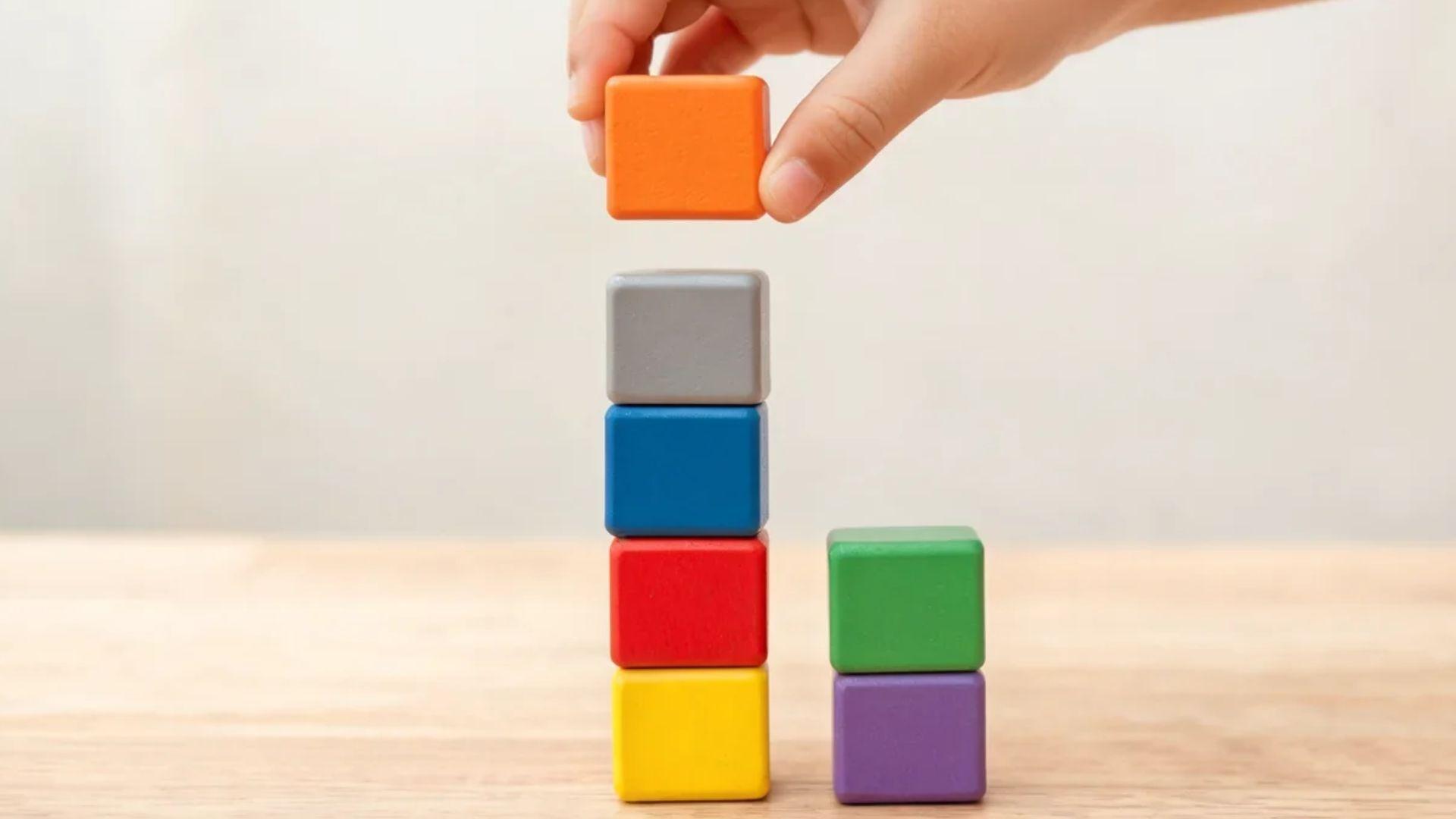
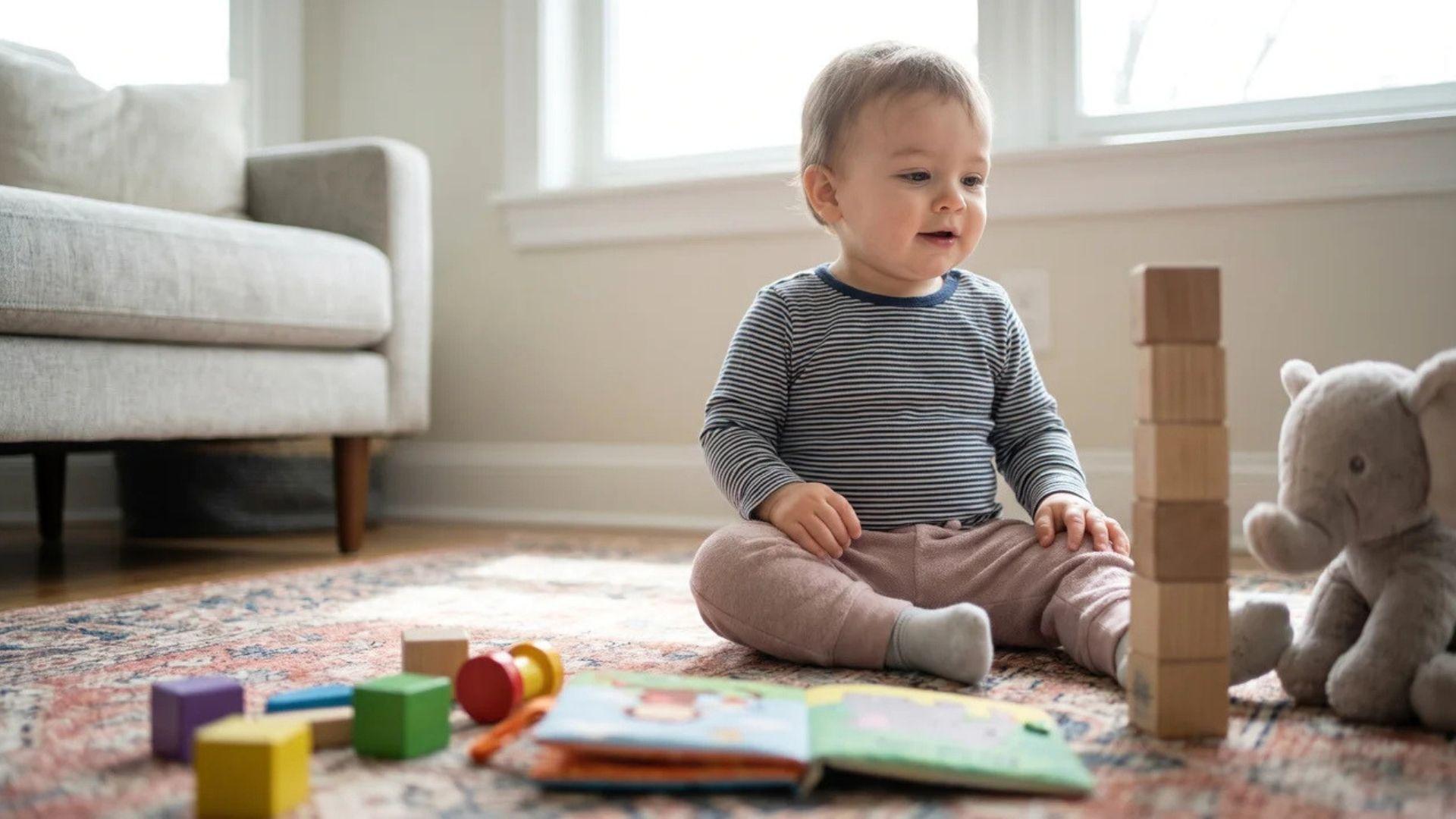
Ask your child to build a tower using exactly five blocks, then count each one aloud as it goes on top. You can also make two towers and compare which is taller or has more blocks.
Touching each block while counting helps children link the number word to a single object, a skill called one-to-one correspondence.
Increase the numbers slowly, and celebrate their counting rather than correcting small slips right away.
6. Popsicle Stick Patterns
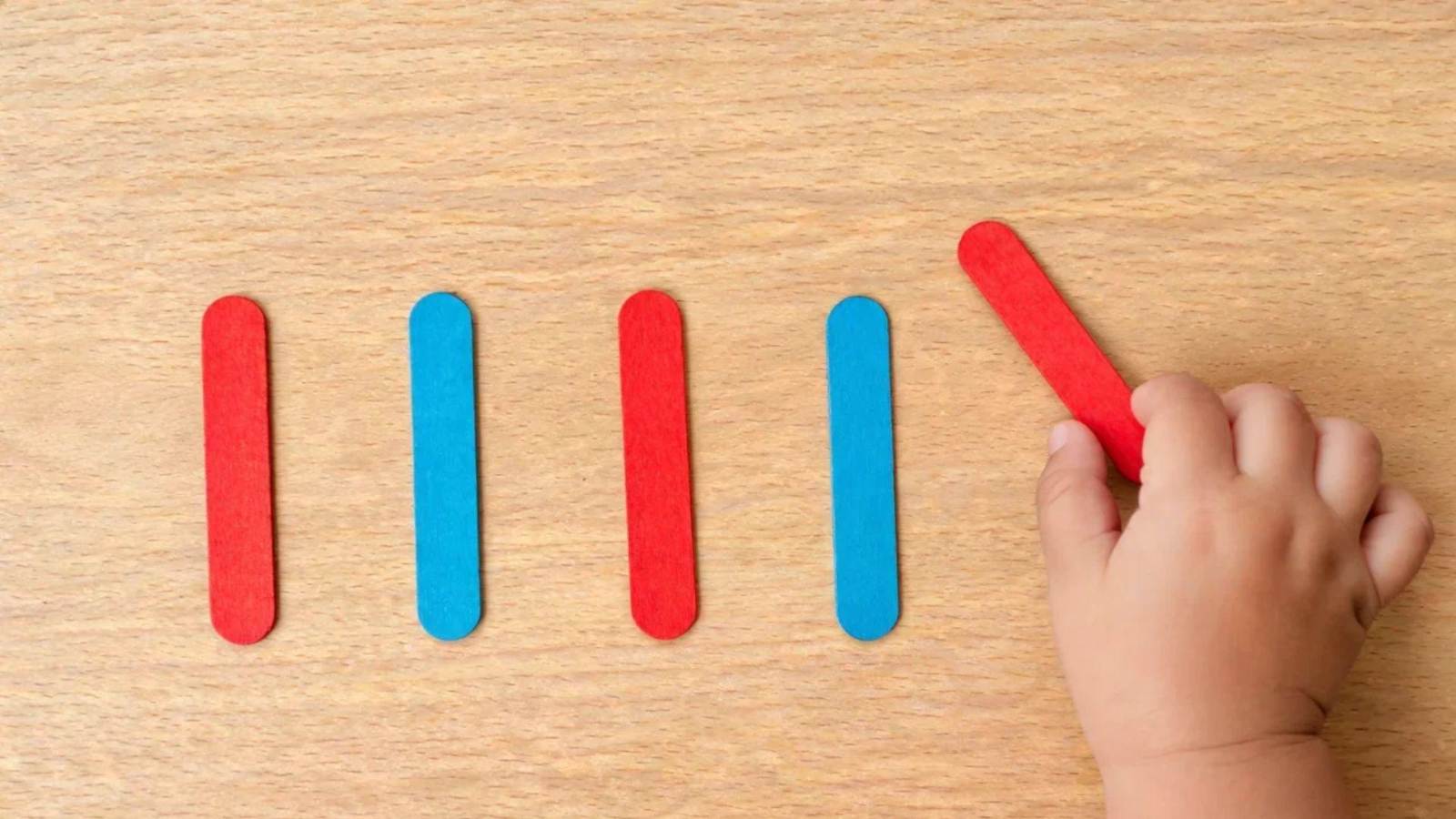
Color popsicle sticks in two or three colors, then start a pattern such as red, blue, red, blue, and ask your child to continue it.
Once they are comfortable, let them create a pattern for you to finish.
Patterns help children predict what comes next, which is a thinking skill linked to early math and problem-solving.
Begin with simple alternating patterns before moving to ones with three colors, so success comes early and confidence builds.
Fine Motor Skill Activities
Fine motor skills involve the small muscles of the hands and fingers, which children need for writing, buttoning, and using utensils.
These activities strengthen grip and coordination through play, using materials that are easy to find.
7. Play Dough Creations

Give your child a ball of play dough and invite them to roll, pinch, flatten, and squeeze it into snakes, pizzas, or animals.
Adding safe tools like plastic cookie cutters and rolling pins makes the play richer. Squeezing and shaping dough strengthens the hand muscles needed for holding a pencil later on.
Keep a few simple prompts ready, such as making a bowl of spaghetti, to spark imagination whenever your child seems unsure.
8. Scissor Cutting Practice

Start by letting your child snip strips of paper, then move to cutting along straight lines and gentle curves drawn with a marker.
Child-safe scissors with rounded tips are ideal. Cutting develops hand strength, finger control, and the ability to use both hands together, all of which prepare children for writing.
Remind them to keep the thumb on top, and always supervise closely so the activity stays safe and relaxed.
9. Pom-Pom Transfer
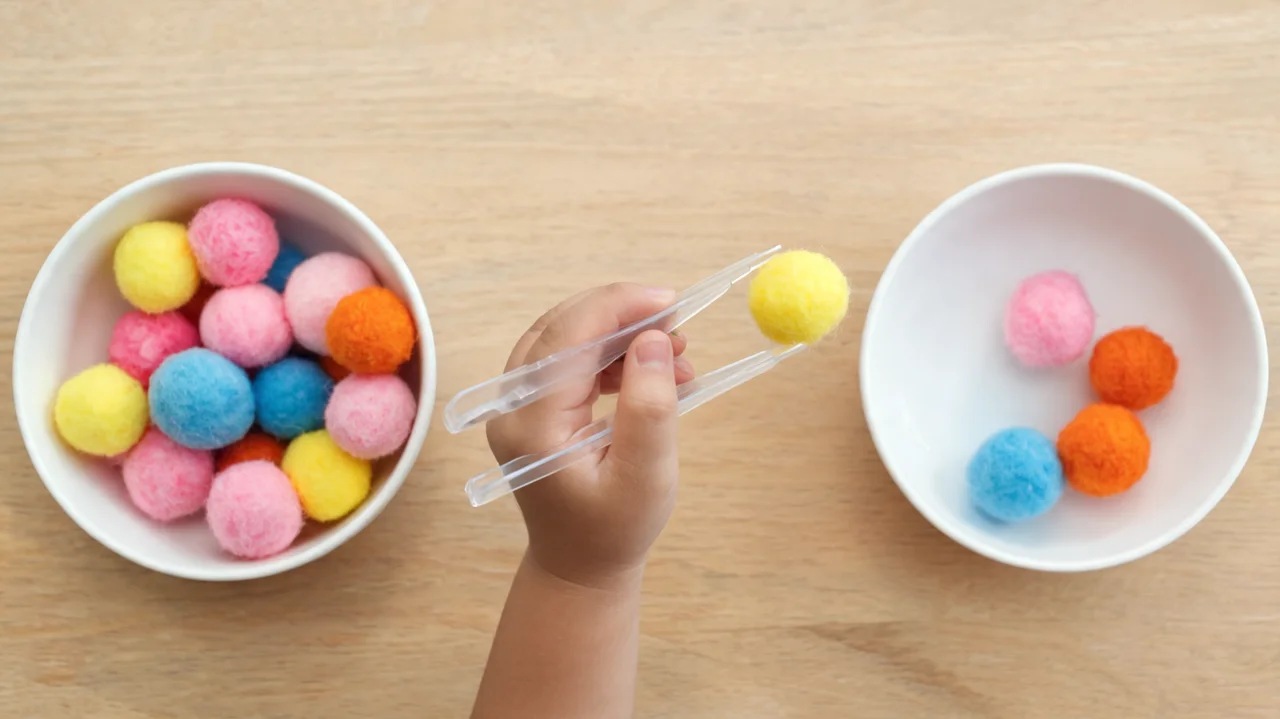
Place a bowl of pom-poms beside an empty bowl and show your child how to move them across using tweezers, tongs, or a large spoon, since switching tools changes the challenge.
This activity refines the pincer and tripod grasps and builds the finger strength that later supports a pencil grip, along with hand-eye coordination.
Count the pom-poms together or sort them by color to add a little math, and keep the pieces large enough to be safe for young children.
Gross Motor Skill Activities
Gross motor skills use the large muscles of the arms, legs, and core, and they support balance, strength, and coordination.
These activities let preschoolers burn energy while building the physical confidence they need for daily life.
10. Indoor Obstacle Course
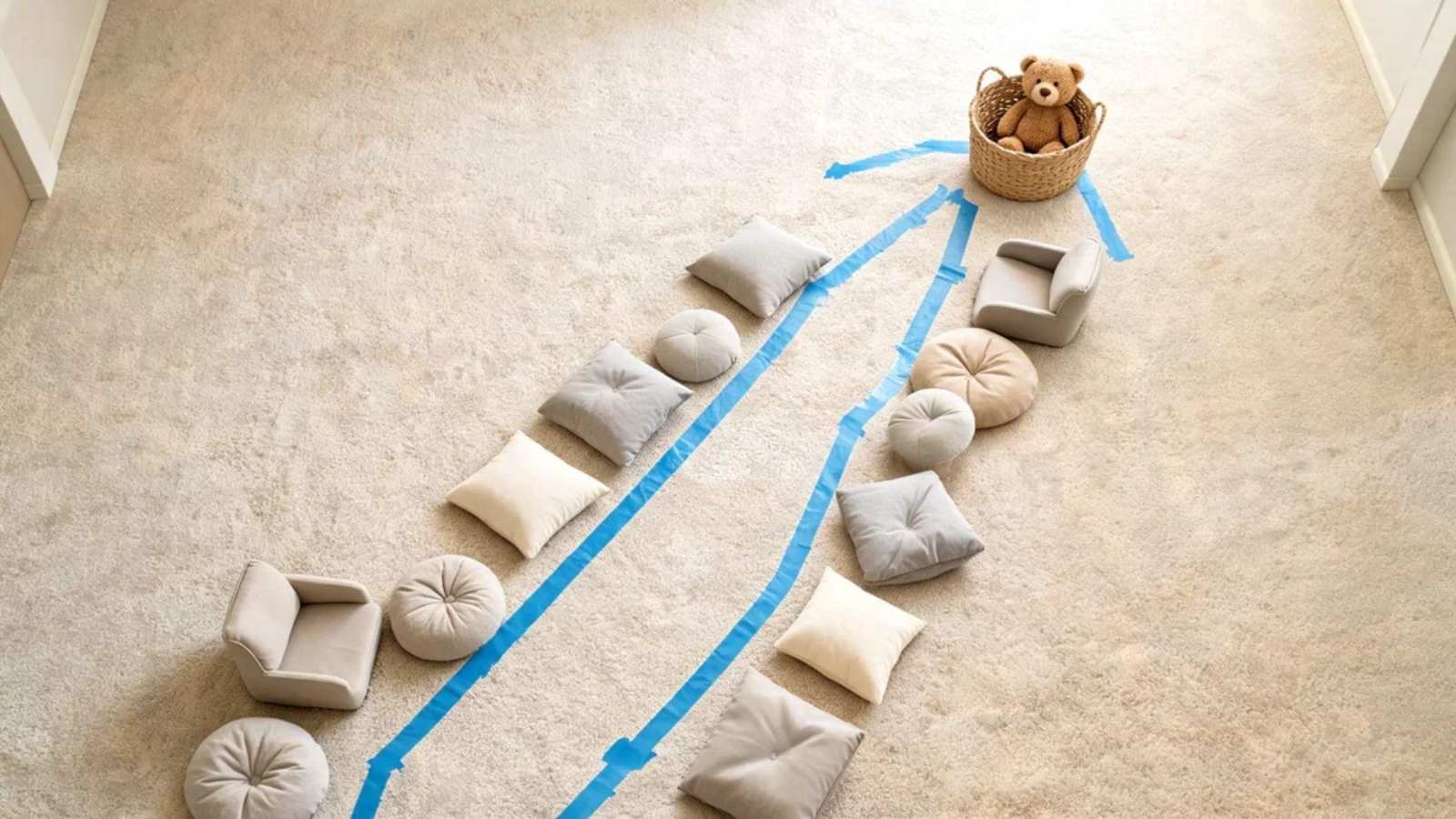
Use cushions, pillows, chairs, and tape to create a path where your child crawls under, steps over, and walks around items.
Add a simple goal at the end, such as dropping a soft toy in a basket.
Obstacle courses build balance, body awareness, and planning skills as children figure out how to move through each stage.
Change the layout often to keep things fresh, and let your preschooler help design the next course.
11. Hopscotch
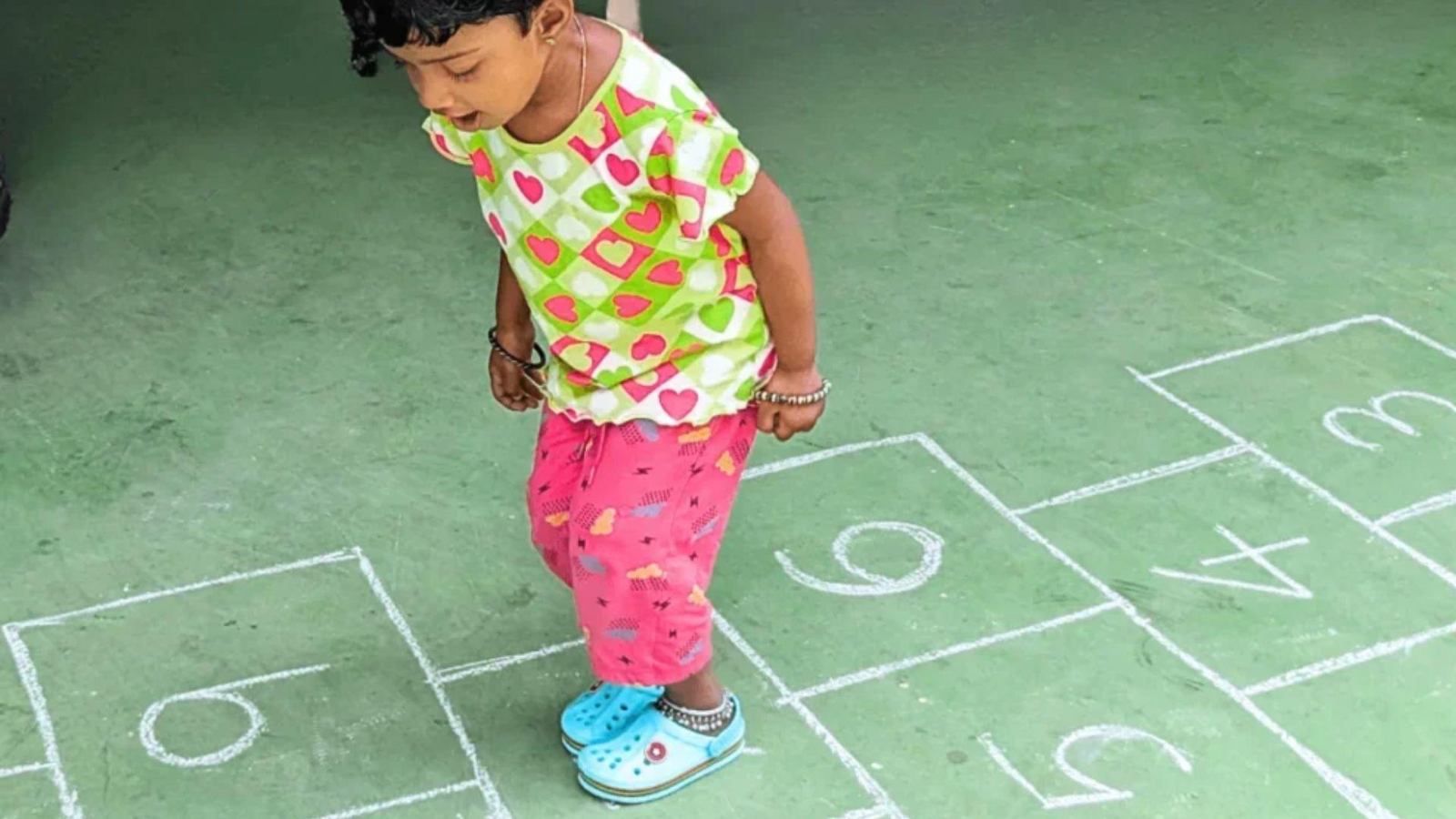
Draw a hopscotch grid with chalk outside, or use tape indoors, and number each square from one to ten.
Show your child how to toss a marker, then hop through the squares on one foot or two. Hopscotch builds balance, leg strength, and number recognition together.
Many 4-year-olds manage a few one-footed hops, and most children hop reliably by 5, so younger preschoolers may need to jump with both feet at first
That is perfectly typical, so let them practice at their own pace.
12. Freeze Dance
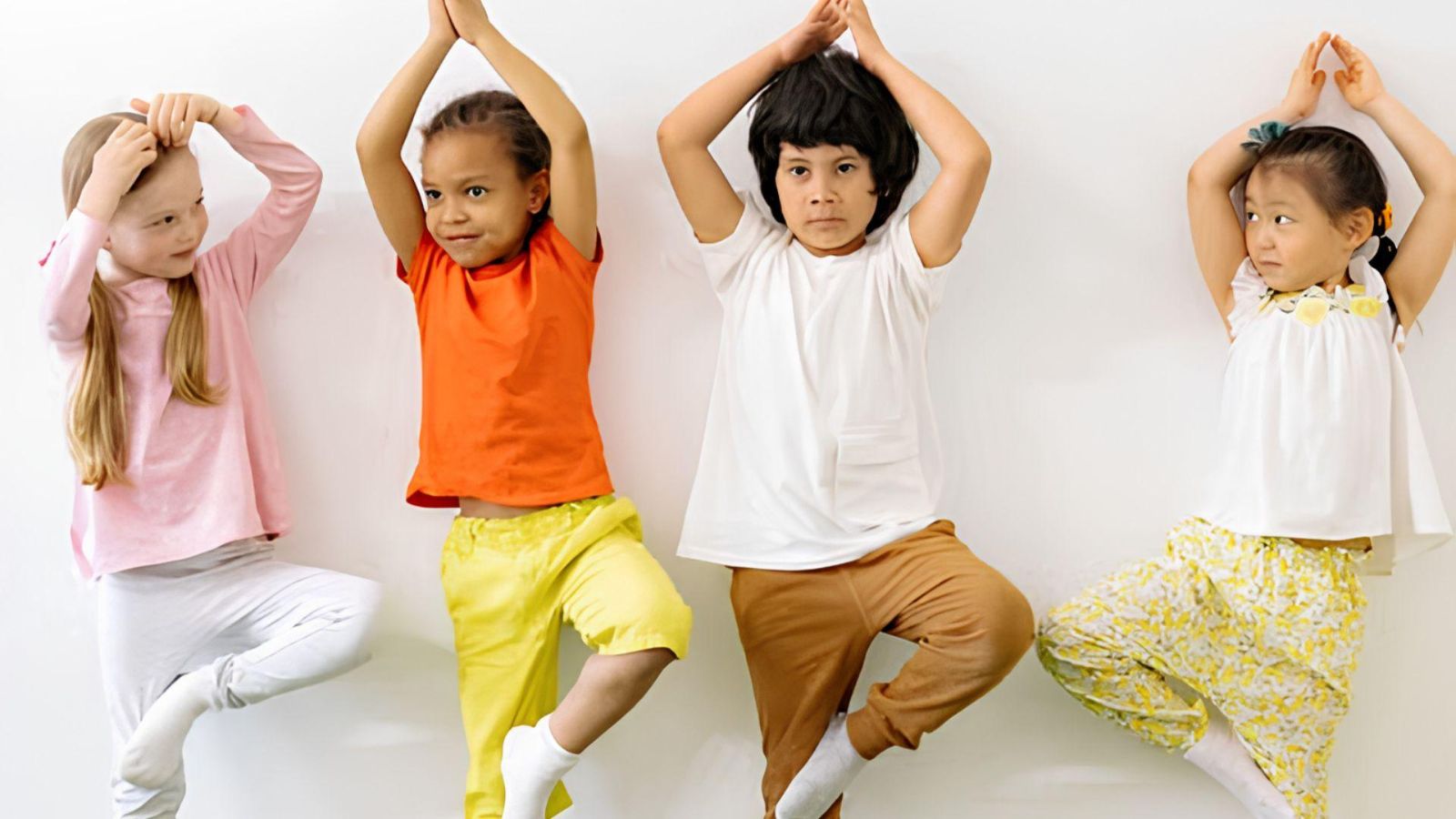
Play lively music and let your child dance freely, then pause the music and call out freeze so they stop in place, then resume the music and repeat.
The game builds listening skills, impulse control, and body awareness, since children must respond quickly to a signal.
Try asking for different dance styles, like slow or tiptoe movements, to add variety, and let your child take a turn controlling the music so they practice giving directions too.
STEM and Sensory Activities
Simple experiments and sensory play invite preschoolers to ask questions, make predictions, and explore with all their senses.
These activities build early science and engineering thinking using water, ice, and household items.
13. Sink or Float Experiment
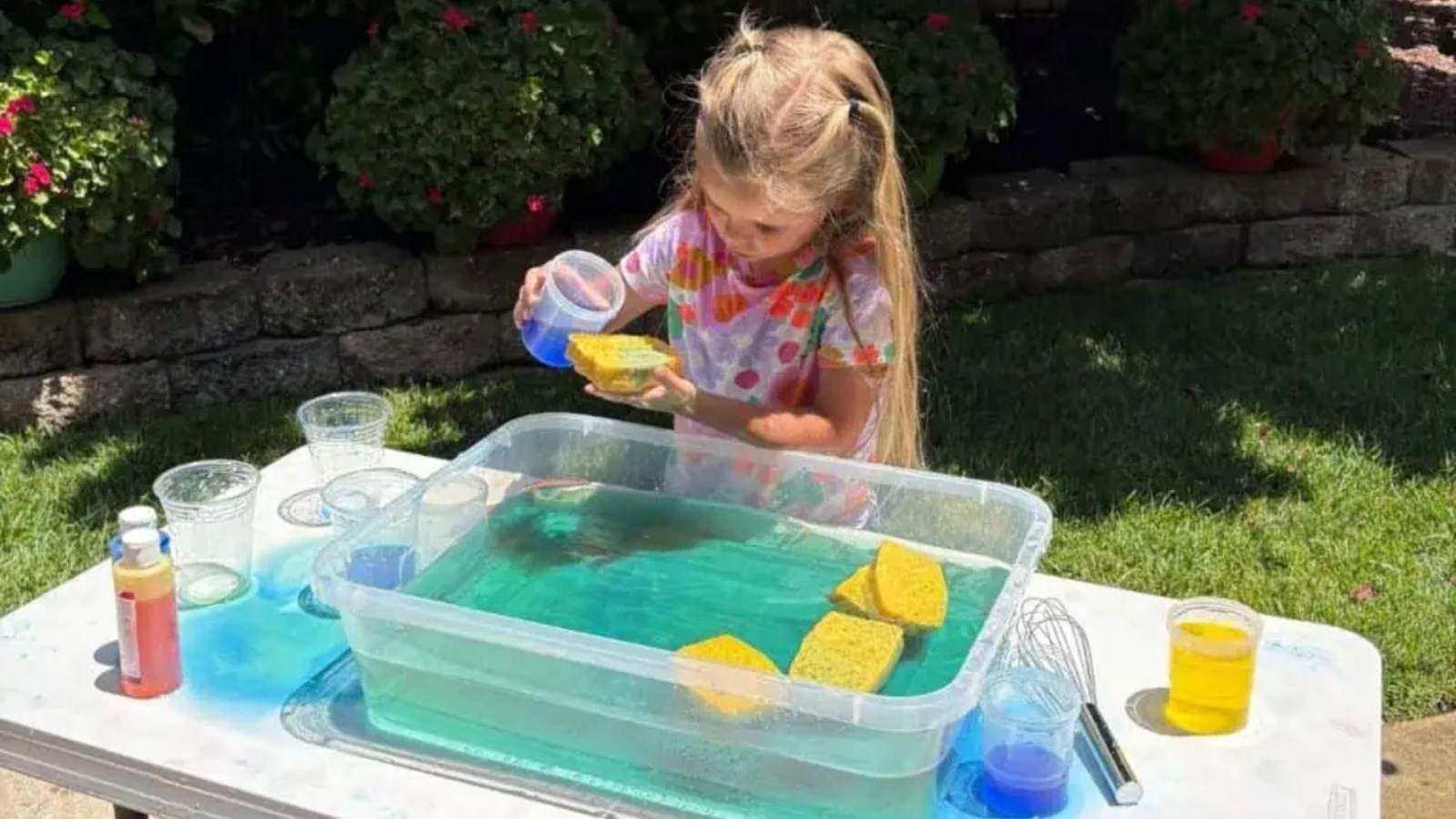
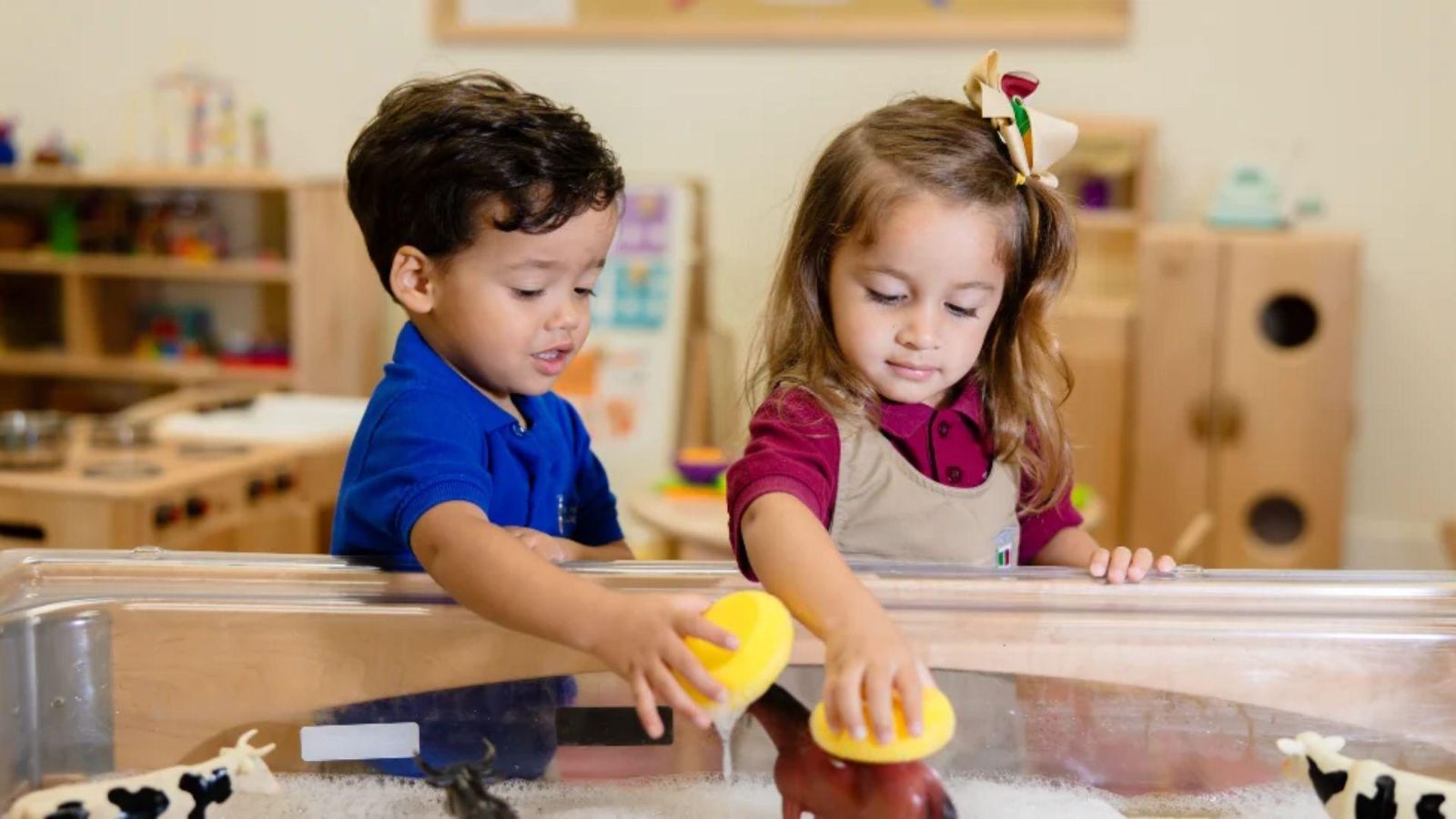
Fill a tub with water and gather items like a spoon, a cork, a sponge, and a plastic toy. Ask your child to guess whether each will sink or float, then test it together while you stay close.
Predicting and checking is the heart of scientific thinking, and it helps children notice that size, shape, and material all affect the result.
Some heavy things float and some light things sink, which makes for great surprises.
Record results on a simple chart with pictures, and encourage them to explain surprises in their own words.
14. Ice Rescue Activity

Freeze plastic animals inside a block of ice, then give your child warm water in a cup along with a spoon or a dropper to free them.
They will watch the ice melt and work out which tools help most. This activity combines sensory play with early science ideas about melting, temperature, and cause and effect.
Talk about what they notice as it happens, and let them try salt as a second tool if they want to experiment further.
15. Sensory Bins
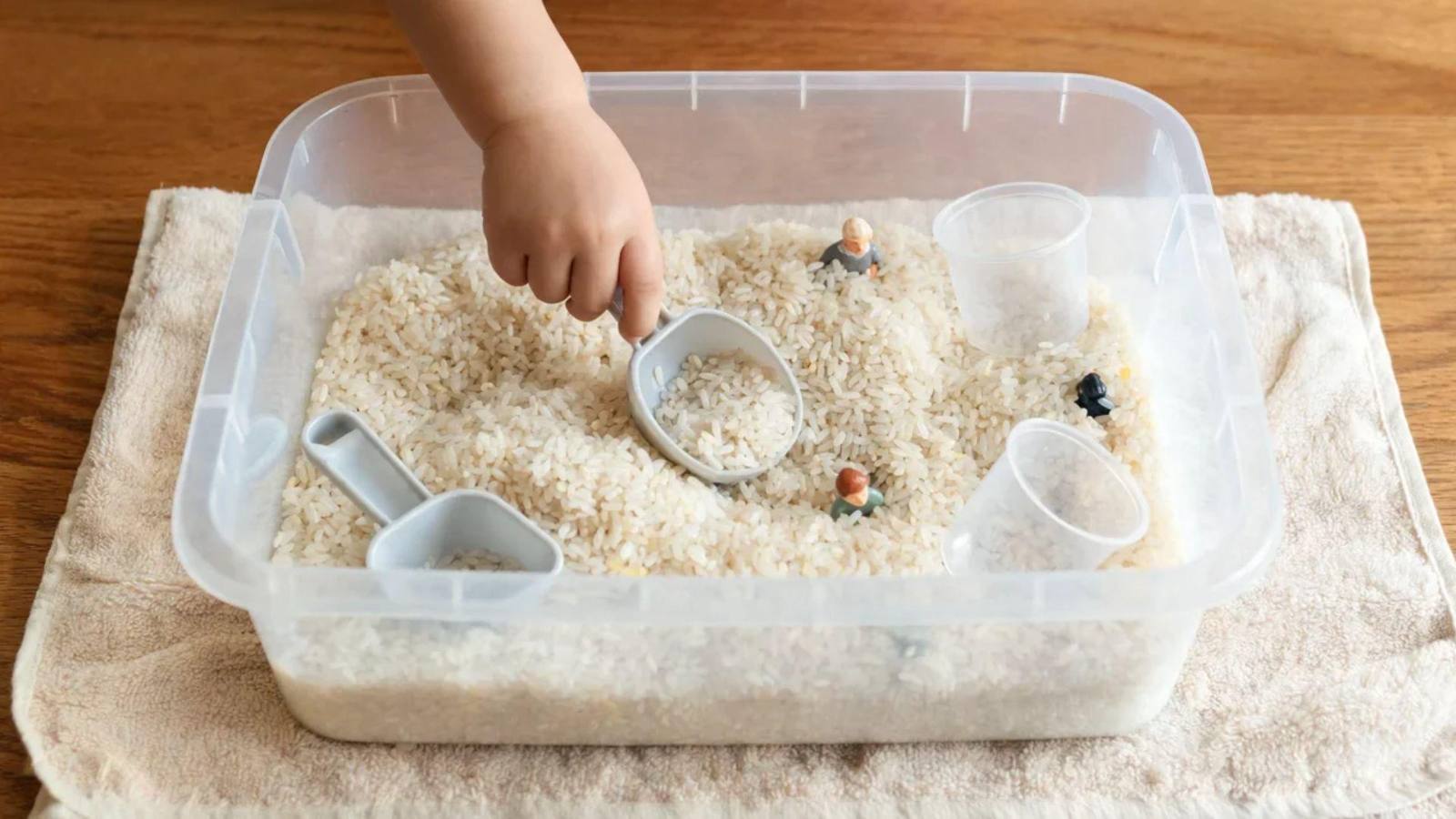
Fill a shallow bin with a base such as dry rice, oats, or dry pasta, then add scoops, cups, and small figures for your child to explore, and let them pour, dig, and hide objects.
Sensory bins keep children engaged while building vocabulary for textures and early ideas about volume and capacity.
Always supervise, choose materials that are safe if tasted, and keep a towel or mat underneath to make cleanup easier.
Easy Preschool Activities That Require Little Preparation
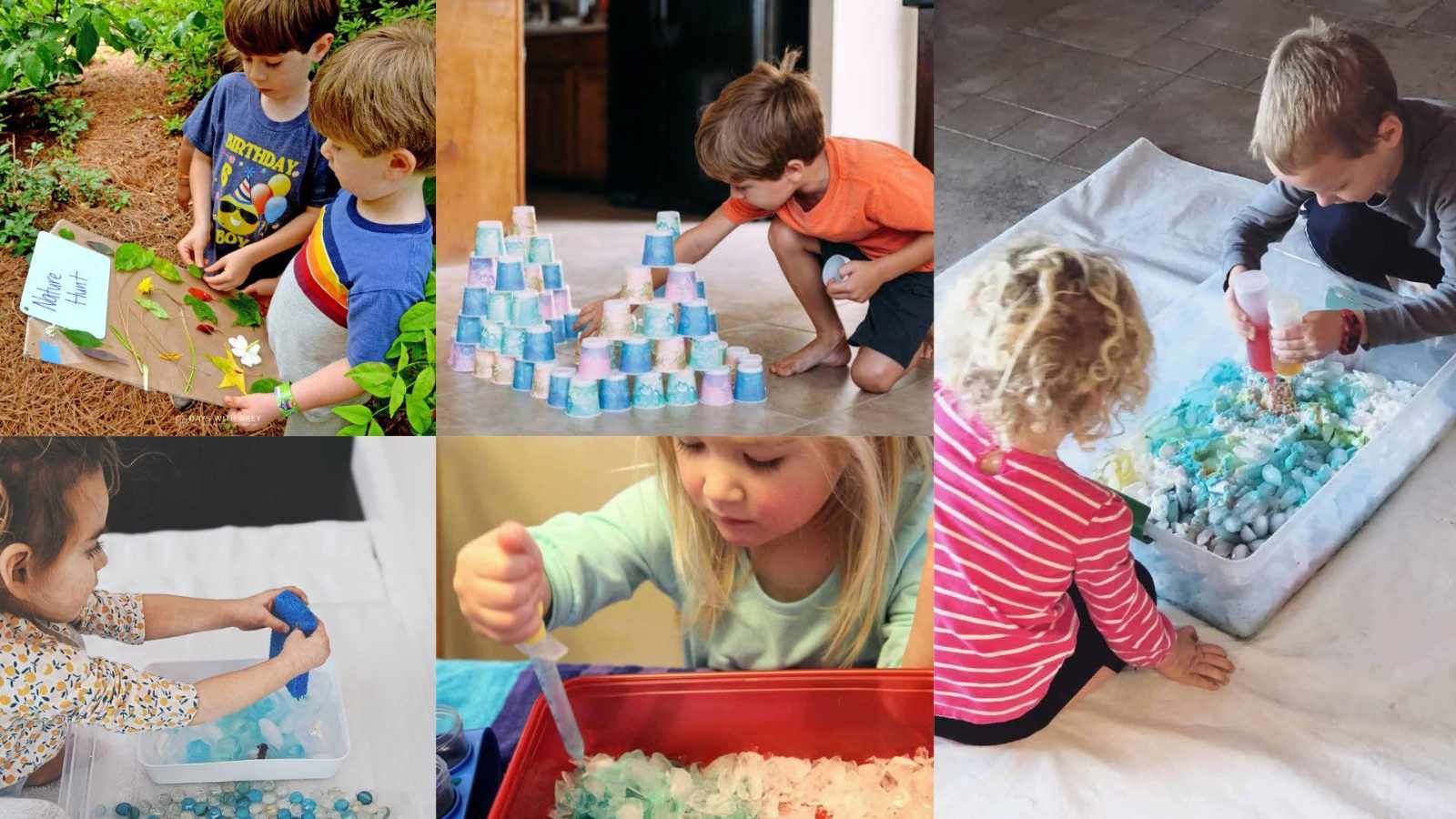
Easy preschool activities work best when they can be set up in minutes with items you already own.
These ideas keep children engaged without long preparation, which makes them practical for busy mornings and unplanned gaps in the day.
- Activities using household materials. Spoons, plastic cups, and empty boxes can become tools for pouring, stacking, and pretend play. Children discover that ordinary objects hold plenty of learning potential, and you save the cost of buying anything new.
- Quick sorting and matching games. Mix up socks, spoons, or colored paper and ask your child to pair or group them by color, size, or shape. These games take a minute to set up and strengthen the comparing and classifying skills that support early math.
- Simple drawing and coloring. A few crayons and a sheet of paper are enough to get started. Drawing builds hand strength and self-expression, and asking your child to describe their picture adds language practice without any extra effort.
- Indoor scavenger hunts. Ask your child to find something red, something soft, or something round around the house. The hunt encourages observation and listening, and it works well on rainy days when everyone needs a reason to move.
- Movement games. Hopping, marching, or copying your actions needs no materials at all. Movement releases energy, supports coordination, and helps children reset before a calmer activity.
No-Cost Preschool Activities for Home and Classroom
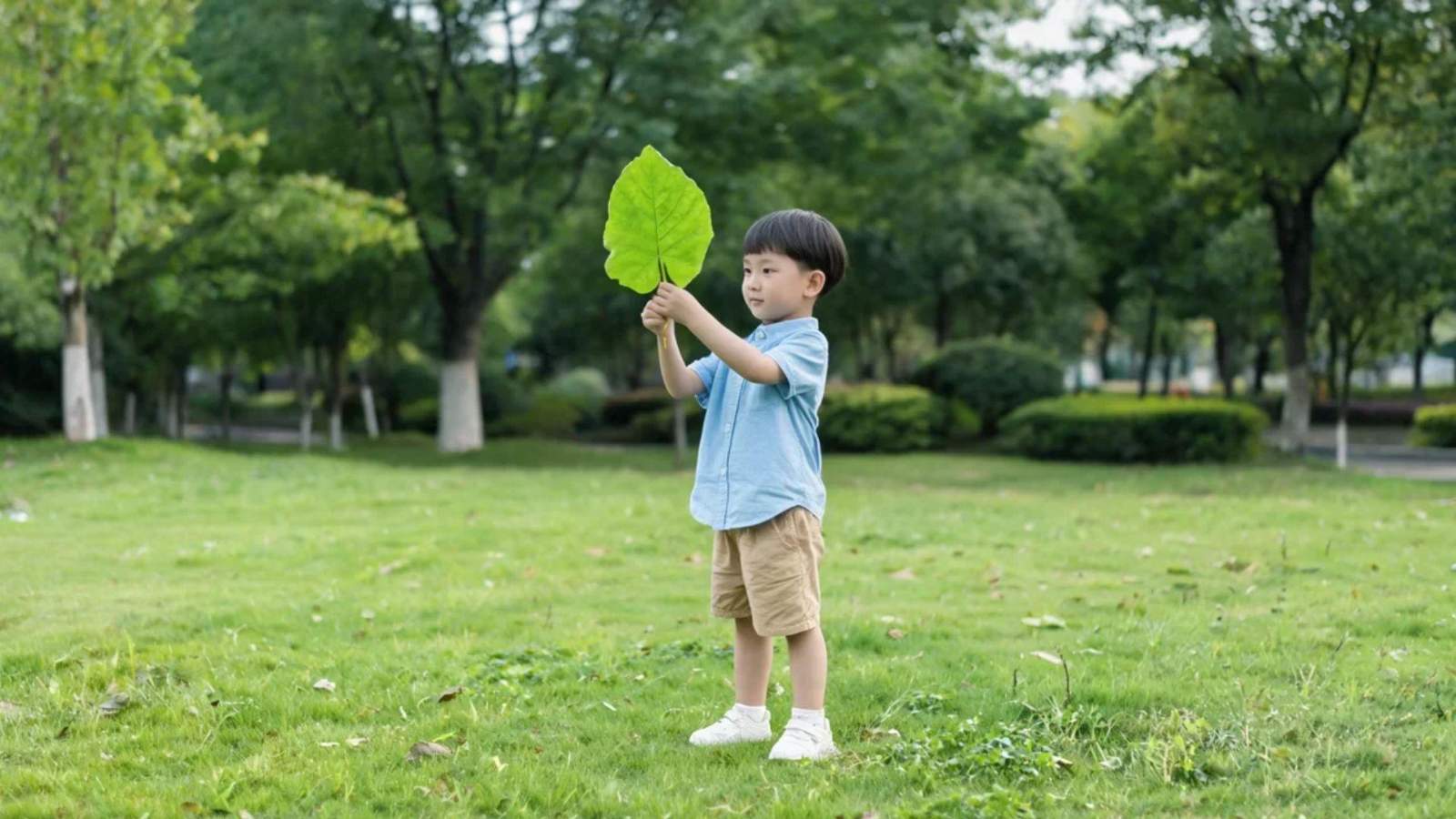
Some of the best learning opportunities cost nothing at all. These no-cost preschool activities rely on time, attention, and everyday surroundings, which makes them easy to use at home, in a classroom, or anywhere in between.
- Nature walks. A short walk around the yard, park, or school grounds gives children plenty to notice, from leaf shapes to bird sounds. Ask what they see, hear, and feel so the walk becomes a lesson in observation and vocabulary.
- Storytelling. Invent a story together by taking turns to add one sentence each. This builds imagination, listening, and sequencing, and it can happen in the car, at the table, or during circle time.
- DIY obstacle courses. Arrange pillows, chairs, and blankets into a path to crawl, step, and balance through. Children practice coordination and planning, and they enjoy helping redesign the course each time.
- Household item sorting. Let children sort laundry, utensils, or toys into groups by size, color, or purpose. Sorting develops early math thinking and gives them a real job that makes them feel capable.
- Counting everyday objects. Count stairs, apples, steps to the door, or toys on a shelf. Counting real things during daily routines helps numbers feel meaningful.
Final Takeaway
The best preschool activities are simple, hands-on, and built around play.
Letters, numbers, movement, science, art, and feelings can all be taught this way, and most of the activities above need nothing more than paper, cups, or items you already own.
This matters because preschoolers learn most when they touch, move, and explore. You do not need a big budget to help them grow.
Pick one activity from this guide that fits your child's age and interests, then try it this week.
Which activity will you start with? Leave a comment and tell me which one your child asked to repeat. Your story can help another parent choose.
Frequently Asked Questions
What Should a 4-Year-Old Be Doing in Preschool?
A 4-year-old should be learning through play, such as sharing, pretending, counting small groups, and speaking in longer sentences. They also practice drawing, cutting with safe scissors, and following simple two- or three-step directions.
What Are Some Creative Activities for Preschoolers?
Finger painting, paper collage, Play-Doh, and nature art are easy creative options. Each one builds imagination and hand strength using materials most homes already have.
What Do 4-Year-Olds Do for Fun?
They enjoy pretend play, obstacle courses, dancing, building with blocks, and listening to stories. Active and imaginative play keeps them happy while they build new skills.