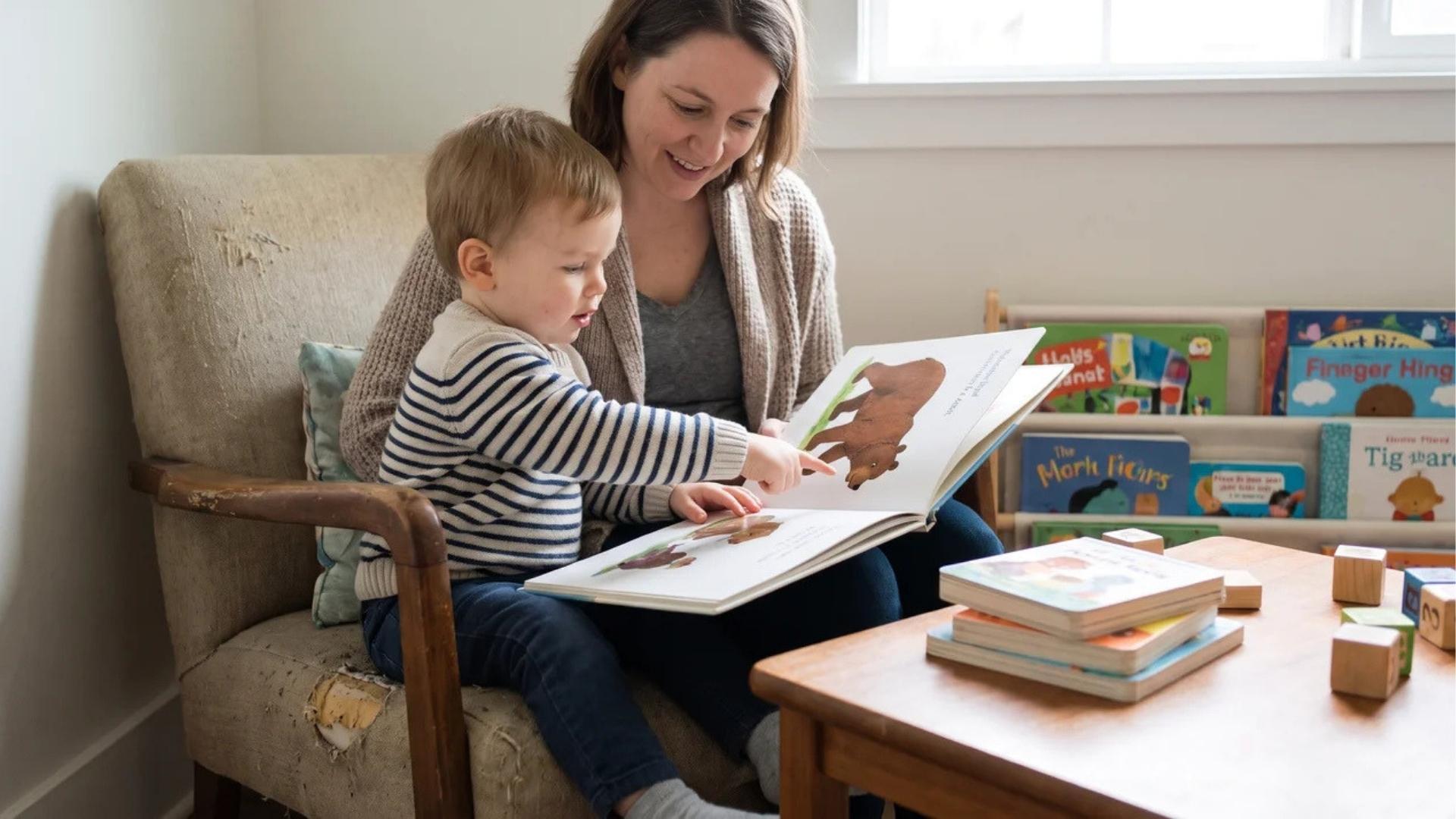



Your baby is on the changing table, legs kicking at the ceiling, while a friend’s baby the same age already holds both toes.
That comparison is usually when the question lands: When do babies start grabbing their feet, and is mine on track?
Researchers who study infant motor development describe babies reaching with their feet slightly earlier than they reach with their hands.
That suggests the early kicks may be useful practice, and the timing is more flexible than comparisons suggest.
The typical age range is the best place to start.
When Do Babies Start Grabbing Their Feet?
Many babies start grabbing their feet between 4 and 6 months old, although the exact timing varies from one baby to another.
NHS Trust guidance on early development, such as Buckinghamshire Healthcare’s, lists grasping feet with hands among the things most babies can do by 6 months.
Some babies show interest in their feet a little earlier, while others take longer to get there.
Grabbing the feet, holding the toes, and bringing a foot toward the mouth are related, but they are separate stages:
- Grabbing the feet: A hand touches a foot or ankle.
- Holding the toes: The fingers close around them.
- Bringing a foot to the mouth: The foot travels all the way up.
Knowing the age range is useful, but the skills behind it matter as much. Eyes, arms, belly muscles, and hips all have to work together before a foot gets caught.
How Do Babies Learn to Reach and Grab Their Feet?
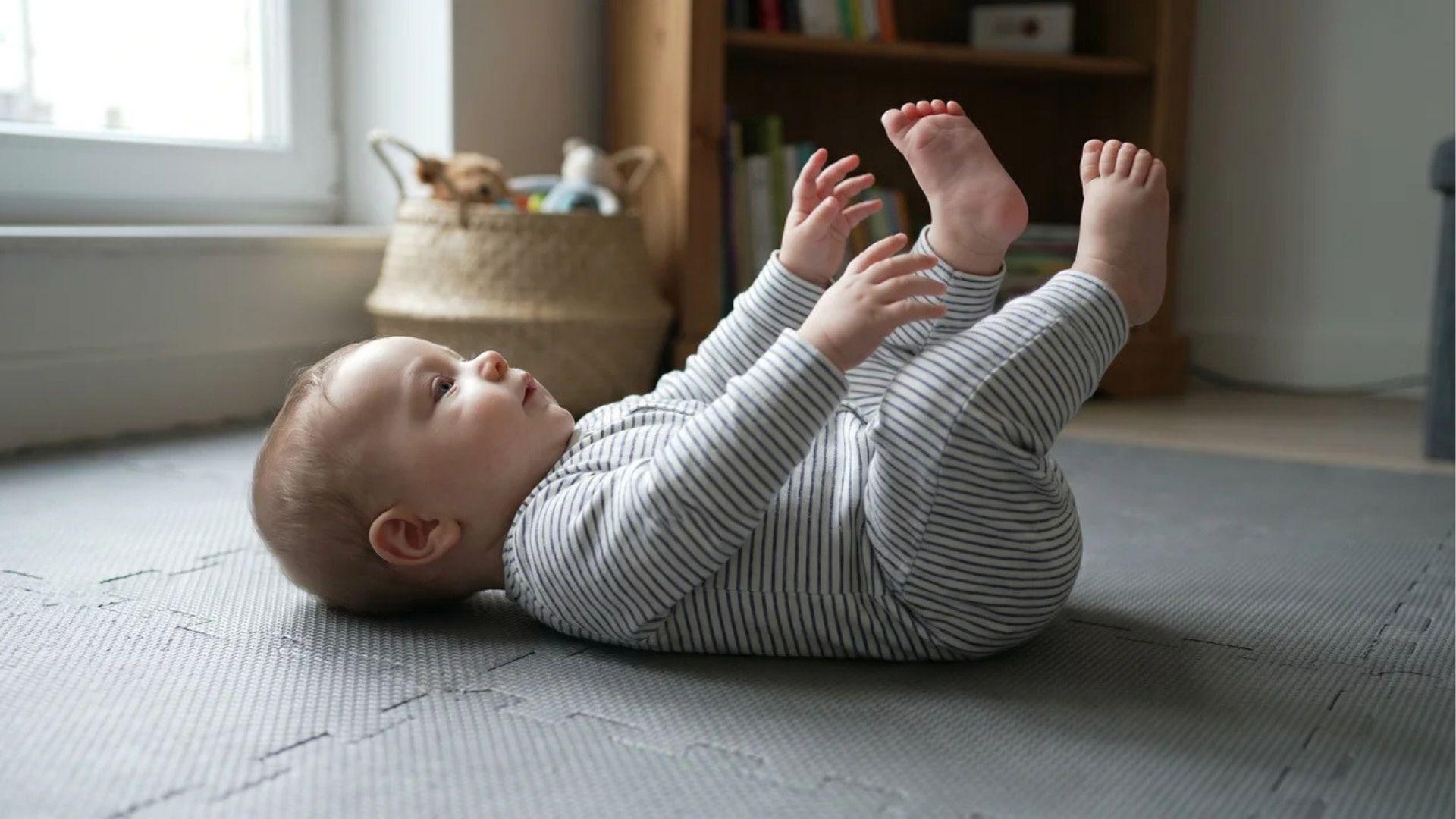
Babies learn to grab their feet as their coordination, core strength, and control over their arms and legs improve.
Reaching, grasping, and bringing a foot toward the mouth develop as connected skills rather than one single milestone.
These movement skills also grow alongside baby language development, as little ones start to babble, respond to voices, and join in simple sound games.
How Does Hand-Eye Coordination Help Babies Grab Their Feet?
Before a hand can find a foot, the eyes have to spot it. Babies first notice their own hands and feet, then start swiping at things that catch their attention.
With practice, they aim their arms more accurately, the same skill covered in our guide to when babies start grabbing things.
Once the eyes and arms cooperate, a waving foot is within reach.
How Do Core Strength and Hip Movement Help Babies Reach Their Feet?
On their back, a baby has to lift both legs off the floor before the hands can meet them, which takes strength through the belly and hips.
Kicking and floor play build that strength gradually, and NHS guidance recommends regular tummy time to build the muscles babies need for sitting and crawling.
As the hips tilt and the knees bend, the feet drift closer to the hands, and a grab becomes possible.
Foot grabbing is only one piece of a busy stretch of development.
Reaching, rolling, and recognizing familiar faces are all in progress around the same time.
What Other Developmental Milestones Happen Around the Same Age?
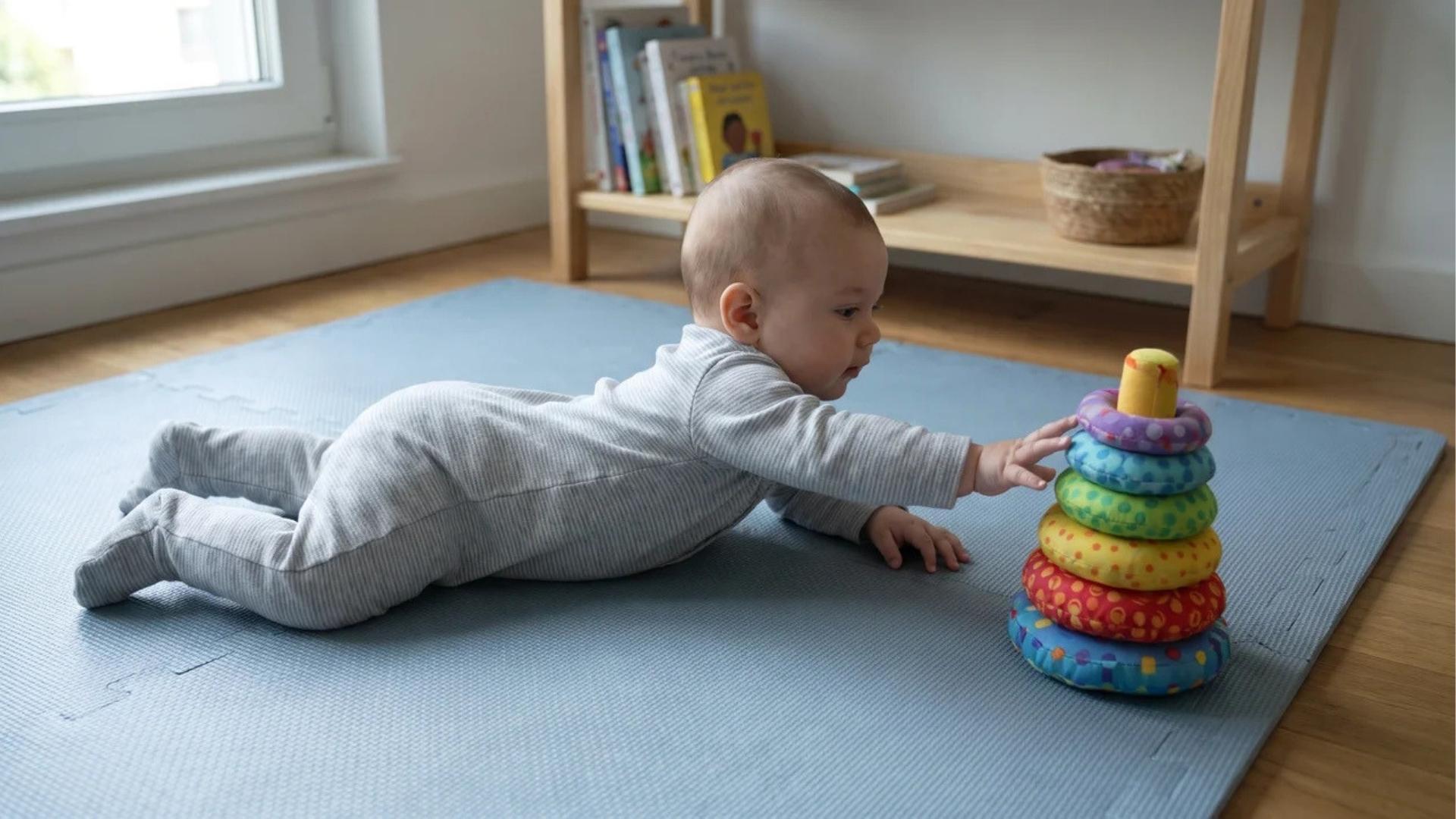
Around the same period that babies discover their feet, they also develop other reaching and movement skills.
How Does Foot Grabbing Connect to Reaching and Rolling?
Reaching for objects, bringing both hands toward the middle of the body, and exploring the feet all improve together as movement control develops.
By 6 months, CDC’s milestone checklist includes reaching to grab a toy they want and rolling from tummy to back.
Grabbing the feet may appear around the time babies begin preparing to roll, but it does not mean rolling will happen right away.
When Do Babies Start Reaching for People?
Reaching for people is a separate skill from grabbing feet, because it draws on social engagement as well as arm control.
CDC lists knowing familiar people as a milestone by 6 months, and in the months leading up to it, you may see your baby stretch their arms toward a parent.
Timing varies from baby to baby.
How Can You Encourage Your Baby to Grab Their Feet?
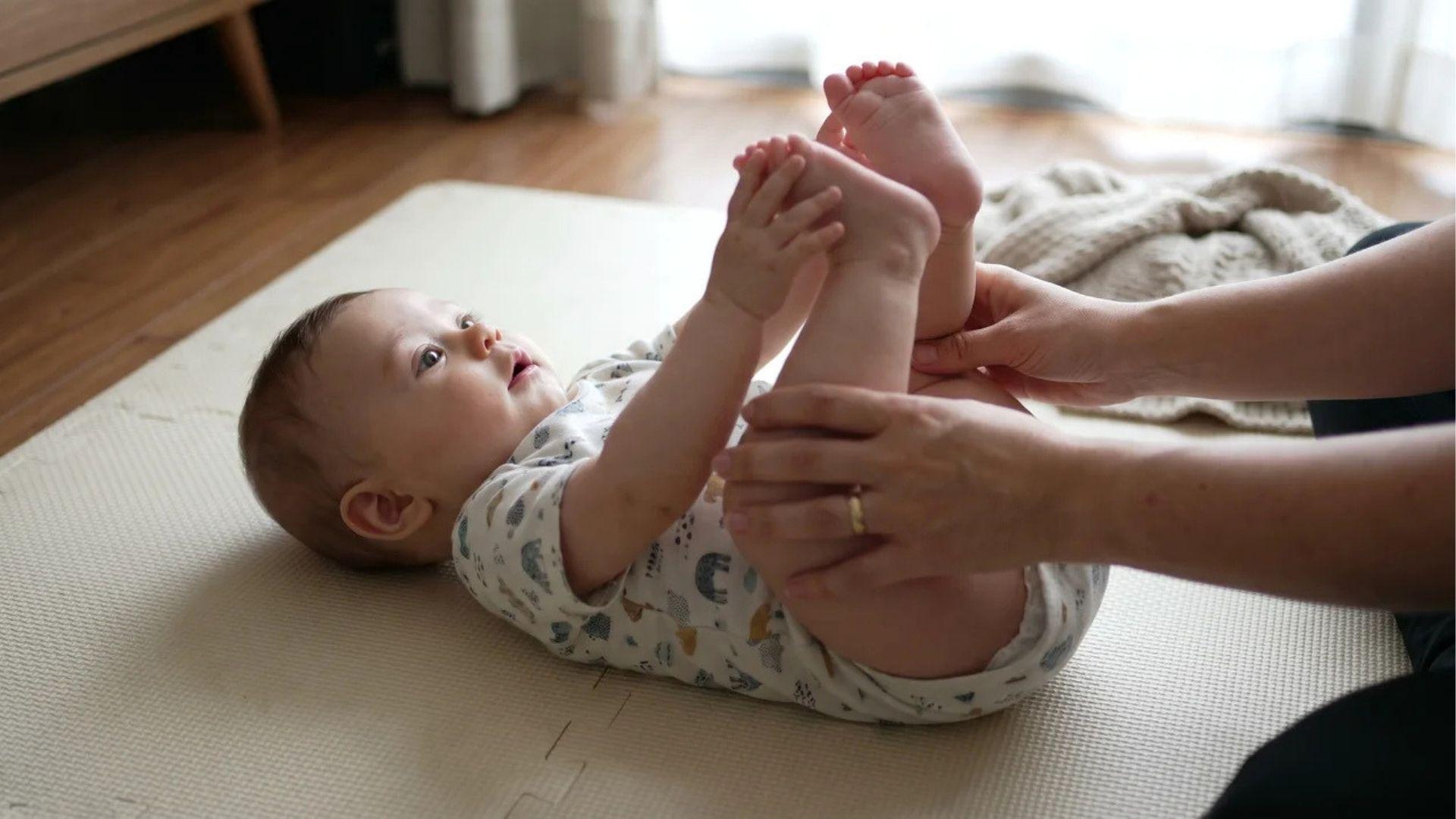
Parents can encourage babies to explore their feet through supervised floor play and gentle opportunities to reach and move.
Start with time on a firm, flat surface while your baby is awake and you are right beside them.
Lying on their back, with their legs in clear view, gives them the chance to notice their feet, swipe at them, and start exploring.
You can also bring their feet within reach yourself, as long as you keep it gentle:
- During a diaper change or play, guide their knees up toward the tummy so the feet rest near their hands.
- Stop if your baby resists.
- Never pull or press their legs or hips into position.
Let your baby set the pace, because grabbing on demand is not the goal. Relaxed play gives them room to find their feet when they are ready.
Let Your Baby Find Their Feet at Their Own Pace
Anyone asking when do babies start grabbing their feet will usually hear an age range of 4 to 6 months, but the grab is only the last step of a chain that starts with kicking and reaching well before.
That means your baby is already doing the work when their feet wave overhead, even if the toes stay out of reach.
Watching the effort, rather than waiting for a milestone, makes these months easier to enjoy.
Next time your baby is on their back, set a few safe toys within kicking distance and see what they go for first.
Frequently Asked Questions
Is Grabbing Their Feet a Developmental Milestone?
CDC’s 4-month and 6-month checklists do not list foot grabbing. They track related skills, such as looking at hands with interest and bringing hands to mouth.
Is It Normal If My Baby Is Not Grabbing Their Feet at 6 Months?
Timing varies, and foot play is only one of many reaching skills. Share any concerns about your baby’s overall development with their pediatrician, who can look at the full picture.
How Can I Encourage My Baby to Grab Their Feet?
Give your baby supervised floor time on a blanket with safe toys to reach for and kick at. Short sessions of tummy time and playtime on the back both add practice.
When Do Babies Start Putting Their Feet in Their Mouth?
NHS Norfolk guidance lists feet in the mouth at 6 to 9 months. Babies also explore through their mouths, and CDC lists mouthing objects as a 6-month milestone.