

Coconut water has become a popular drink for adults, so it makes sense that parents wonder if babies can have it too.
Can babies have coconut water safely, or is it better to wait? As a parent, getting this right matters, and the confusion around it is real.
This guide covers everything you need to know, including the right age to introduce it, how much is safe, the benefits, the risks, and what to watch for.
With input from pediatric guidance and real parenting experience, this article helps you make a confident, informed choice for your baby.
Can Babies Have Coconut Water?
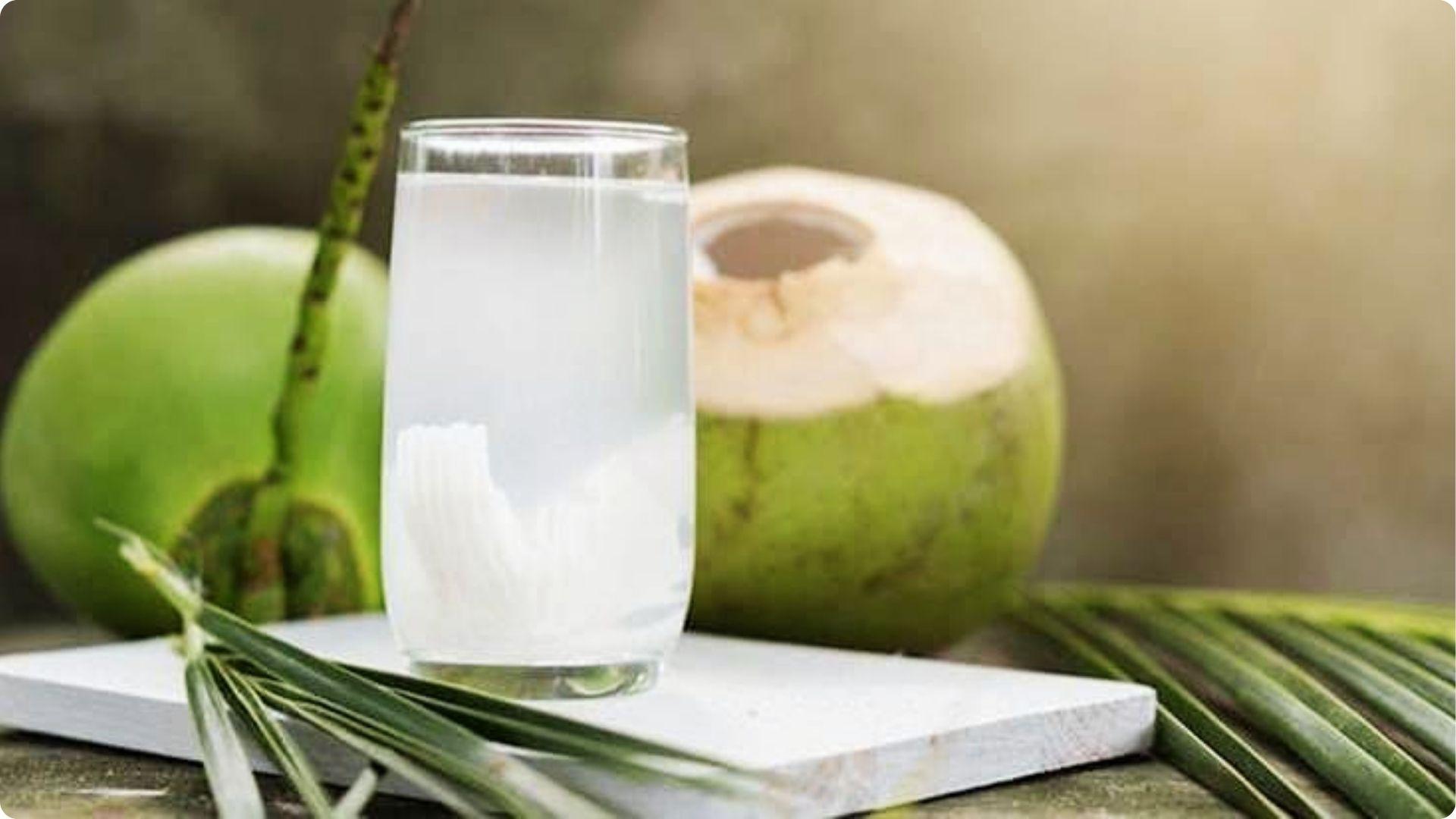
Coconut water is not something babies need in their early months, but it can be introduced carefully after a certain age.
Babies under 6 months should only have breast milk or infant formula. Their digestive systems are not ready for anything else, including coconut water.
Exclusive breastfeeding for the first six months is recommended by most pediatric guidelines, and even plain water is off the table during this stage.
After 6 months, when solid foods begin, some parents consider adding coconut water in very small amounts.
However, most pediatricians recommend waiting until at least 12 months before introducing it regularly.
Coconut water is the clear liquid found inside a young coconut. It is different from coconut milk, which is made from the flesh of a mature coconut and has a higher fat content.
Coconut milk can actually be used as an ingredient in soft baby foods from around 6 months, but it should not be offered as a drink before 12 months.
Coconut flesh is the solid white part. Knowing this difference helps parents make the right choice for their baby.
Coconut water should never replace breast milk, infant formula, or plain water. It is a supplement at best, and even then, only in small, careful amounts.
When Can Babies Have Coconut Water?

The age at which you introduce coconut water matters more than most parents realise.
Babies under 6 months should not have it at all since breast milk or formula is all they need, and adding anything else can interfere with feeding and nutrition.
At 6 months, when solids begin, plain water is still the better hydration choice over coconut water.
By 9 months, a few small sips of plain, unsweetened coconut water a couple of times a week can be offered carefully while watching for reactions.
After 12 months, toddlers can have it more regularly in small amounts, though plain water and whole milk should still cover most of their daily fluid intake.
How Much Coconut Water Can a Baby Have?
Less is always better when starting out, especially with a new drink for a baby.
For babies between 6 and 12 months, a few small sips, around 30 to 60 ml at most, is a reasonable starting point if you choose to introduce it at all. This is not a daily requirement.
For toddlers over 12 months, up to 100 to 120 ml a couple of times a week is generally considered safe, provided it is plain and unsweetened.
Starting with a small amount lets you check how your baby's body responds before offering more. If there are no issues after a few days, you can continue in moderation.
Keep in mind that coconut water can fill up a small stomach quickly, which may cause your baby to feed less from breast milk or formula. If you notice reduced feeding after offering coconut water, cut back on the amount.
Can Babies Drink Coconut Water Instead of Water or Milk?
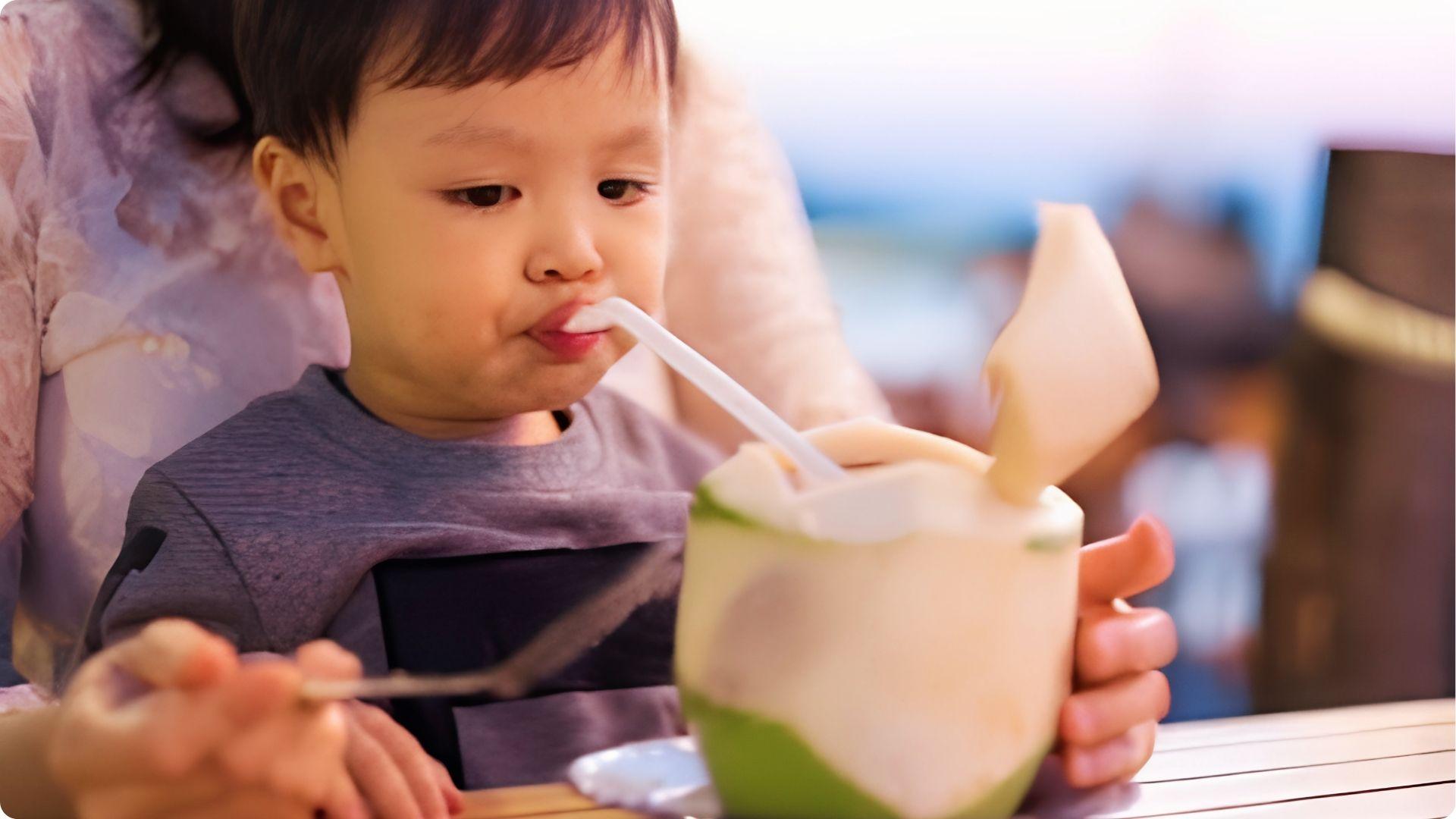
No, coconut water should not replace breast milk, infant formula, or plain water.
Breast milk and infant formula are complete sources of nutrition for babies. They provide protein, fat, vitamins, and everything a baby needs to grow. Coconut water does not come close to matching this.
Plain water becomes appropriate after 6 months and is the safest way to hydrate your baby beyond milk. It has no sugar, no electrolytes to worry about, and no risk of digestive reactions.
Coconut water sits somewhere between a natural drink and a supplement. It has some nutritional value, but not enough to serve as a main drink for babies. Offering it as an occasional addition to a balanced diet is the right way to think about it.
What Are the Benefits of Coconut Water for Babies?
Coconut water does offer some benefits, though they should not be overstated.
Does Coconut Water Help Keep Babies Hydrated?
Coconut water contains water and electrolytes like potassium and sodium, which can support hydration.
However, for healthy babies, plain water and milk are sufficient for hydration. Coconut water is not a replacement but can be a gentle supplement in hot conditions.
Does Coconut Water Provide Nutrients for Babies?
Coconut water contains small amounts of potassium, magnesium, calcium, and vitamin C. These are not present in large quantities, but they add a little nutritional variety when given in moderation.
It also contains cytokines, which are compounds known to support cell health, and lauric acid, which has natural antibacterial and antimicrobial properties.
It should not be seen as a nutrient-dense drink for babies, but these qualities do add some value when introduced carefully.
Is Coconut Water Good for Babies in Hot Weather?
In hot weather, babies may need extra fluids. While plain water is the first choice, a small amount of coconut water can help replace electrolytes lost through sweat.
This is more relevant for older toddlers than young babies. Always consult your pediatrician before making changes during very hot conditions.
Can Babies Have Coconut Water During Fever, Vomiting, or Diarrhea?
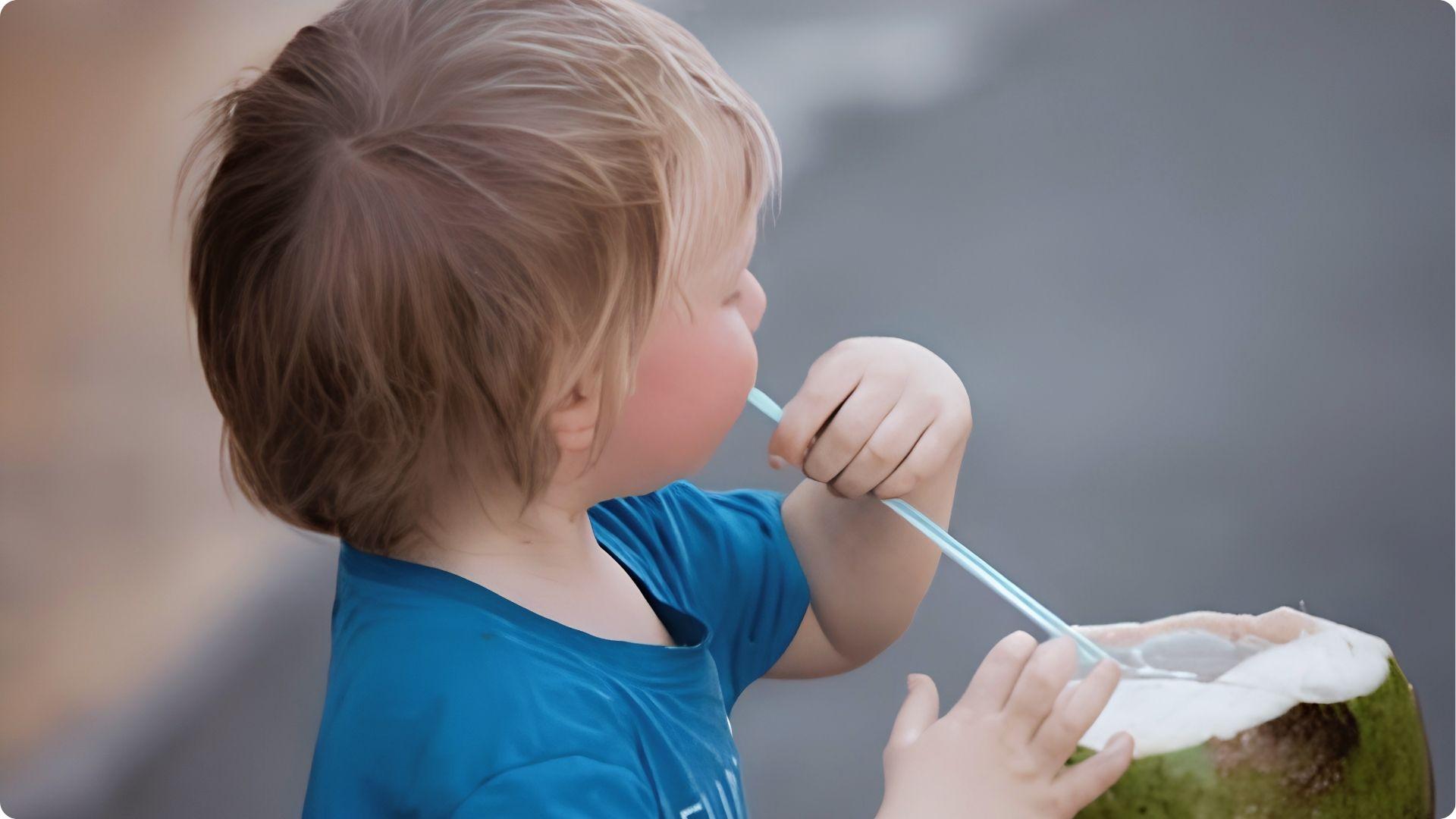
Many parents reach for coconut water when their baby is unwell, but this is not always the right call.
During illness, babies lose fluids quickly. The instinct to replace those fluids is correct, but the method matters.
Coconut water is not a medically approved oral rehydration solution. It does not have the right ratio of electrolytes and glucose to effectively manage dehydration in babies.
While some studies have looked at young coconut water for mild rehydration in older children with gastroenteritis, this does not make it a safe substitute for medical care in infants.
If your baby has a fever, vomiting, or diarrhoea, the first step is to continue breastfeeding or formula feeding as normal.
For babies over 12 months, plain water can help. If dehydration is a concern, a pediatrician-recommended oral rehydration solution is far more appropriate than coconut water.
Never use coconut water as a substitute for medical care when your baby is unwell. If symptoms persist or worsen, contact your doctor.
How Should You Introduce Coconut Water to a Baby?
Introducing coconut water the right way reduces the risk of reactions and helps your baby adjust to the new taste.
Start With a Small Amount
Offer just a few sips the first time. There is no need to give a full serving immediately. A small amount allows you to see how your baby responds without overwhelming their system.
Choose Plain, Unsweetened Coconut Water
Always read the ingredient list. The only ingredient should be coconut water. Avoid any product with added sugar, flavourings, or preservatives.
Natural is always the better option for babies. If you are using fresh coconut water, strain it before serving to remove any small coconut pieces that could pose a choking risk.
Introduce One New Food or Drink at a Time
Introducing coconut water alongside other new foods makes it hard to identify what caused a reaction if one occurs.
Space out new introductions by a few days so you can track any changes clearly. Repeating the same drink for about three days before adding anything new is a sensible approach.
Watch for Allergic or Digestive Reactions
After offering coconut water, observe your baby for the next 24 to 48 hours. Look for rashes, hives, swelling, unusual fussiness, changes in stool, or vomiting. If anything seems off, stop and speak to your pediatrician.
Fresh vs Packaged Coconut Water for Babies: Which Is Better?
Not all coconut water is the same, and the type you choose matters when it comes to your baby.
| Type | What It Is | Safe for Babies? | What to Watch For |
| Fresh Coconut Water | Taken directly from a young green coconut | Yes, preferred option | Ensure the coconut is fresh and stored properly before use. Strain to remove coconut pieces before serving |
| Packaged Coconut Water | Processed and bottled for convenience | Yes, if pure and unsweetened | Check the label for added sugars, flavourings, or preservatives. Choose 100% pure coconut water only |
| Flavored or Sweetened Coconut Water | Coconut water with added sugar or artificial flavourings | No, avoid completely | Added sugar and artificial ingredients offer no benefit and may cause harm to babies |
What Should Parents Look for When Choosing Coconut Water?
Reading the label is the single most important step when buying coconut water for a baby.Check the ingredient list first. It should say only coconut water. If you see sugar, glucose, fructose, or any flavouring listed, put it back.
Look at the sodium content. Some coconut water products are higher in sodium than others. Lower sodium options are safer for young babies.
Check for preservatives or additives. Products with citric acid or other additives are best avoided for babies.
Once opened, coconut water should be refrigerated and used within 24 to 48 hours. Do not leave it at room temperature for long periods, as bacteria can grow quickly.
Freshness matters. For packaged products, check the expiry date and avoid anything that smells sour or looks discoloured.
What Are the Common Mistakes When Giving Coconut Water to Babies?
Avoiding these mistakes helps keep your baby safe and healthy.
- Giving Coconut Water Too Early: Offering coconut water before 6 months is not safe. Babies at this age need only breast milk or formula.
- Replacing Breast Milk or Formula With Coconut Water:Coconut water cannot provide the complete nutrition that breast milk or formula offers. This is one of the most important points to remember.
- Giving Large Amounts:Even for toddlers, large quantities of coconut water are unnecessary and can cause digestive upset or place strain on the kidneys due to electrolyte imbalance.
- Choosing Sweetened or Flavored Coconut Water:Added sugars and flavours are not appropriate for babies and can contribute to poor eating habits early in life.
- Using Coconut Water to Treat Dehydration Without Medical Advice:This can delay proper treatment. Always speak to a doctor if you are concerned about dehydration.
When Should You Avoid Giving Coconut Water to Your Baby?
There are specific situations where coconut water should not be offered, and parents should know them.
Stop giving coconut water and speak to your pediatrician if your baby shows signs of an allergic reaction, such as a rash, hives, or swelling after drinking it.
Avoid offering coconut water if your baby has persistent vomiting or diarrhoea. In these cases, medically appropriate rehydration solutions should be used instead.
If your baby is showing signs of dehydration, such as a dry mouth, no tears when crying, fewer wet nappies, or unusual lethargy, seek medical advice immediately rather than relying on coconut water.
Poor feeding, significant weight loss, or unusual symptoms after introducing coconut water are also reasons to pause and consult a healthcare professional.
What Should You Do If Your Baby Reacts to Coconut Water?
Knowing how to respond quickly can make a big difference if your baby has a reaction.
Signs of a Possible Allergic Reaction
These can include skin rashes, hives, swelling around the mouth or face, difficulty breathing, or unusual crying shortly after drinking coconut water. Take these signs seriously.
Signs of Digestive Upset
Loose stools, bloating, excessive gas, or vomiting after giving coconut water may suggest your baby's stomach is not ready for it. Stop offering it and give things a few days to settle.
When to Contact a Pediatrician
If symptoms are mild but persistent, contact your baby's doctor for advice. Do not continue offering coconut water until you have spoken to a professional.
When a Reaction Needs Urgent Medical Care
If your baby shows breathing difficulty, severe swelling, or loses consciousness after drinking coconut water, call emergency services immediately. These are signs of a serious allergic reaction that requires urgent attention.
Coconut Water vs Other Drinks for Babies: Which Is Best?
Knowing how coconut water compares to other drinks helps you make the right choice for your baby at every stage.
| Drink | Best For | Nutritional Value | Can It Replace Coconut Water? |
| Plain Water | Everyday hydration for babies over 6 months | Calorie-free, sugar-free, no electrolytes | Yes, plain water is the safer daily choice |
| Breast Milk | Complete nutrition in the first year of life | Full nutrition including fat, protein, and vitamins | Yes, always comes first before any other drink |
| Infant Formula | Babies who are not breastfed | Specially designed to meet all baby nutritional needs | Yes, formula is the right choice over coconut water for non-breastfed babies |
| Oral Rehydration Solution | Managing dehydration during illness | Medically balanced ratio of salts, fluids, and glucose | Yes, far more appropriate than coconut water when a baby is unwell |
Can Babies Eat Coconut Along With Drinking Coconut Water?
Coconut flesh and coconut water are different things, and both need careful introduction.
Coconut flesh is solid, chewy, and rich in fat and fibre. For babies, it can be introduced after 6 months in a soft, pureed form.
Finely shredded coconut can be stirred into warm cereals or soft purees as an early option. Raw coconut flesh in strips or chunks is a choking risk and should not be given to young babies.
Coconut chips, which are large baked or toasted flakes, should be avoided until a child has a full set of molars and more mature chewing skills.
As babies grow into toddlers, small, soft pieces of coconut flesh can be offered. Always cut them into very small, manageable pieces to reduce choking risk.
Coconut water and coconut flesh can both be part of a healthy toddler diet when introduced correctly and in appropriate amounts.
They do not need to be introduced at the same time. Take it step by step and follow your baby's cues.
Conclusion
Can babies have coconut water? Yes, but only at the right age and in the right amount. Babies under 6 months should stick to breast milk or formula only.
After 12 months, small amounts of plain, unsweetened coconut water can be offered occasionally as part of a varied diet.
Always introduce it slowly, read the label carefully, and watch your baby for any reactions. When in doubt, your pediatrician is the best person to guide you.
If this guide helped you, share it with another parent who might need it, drop a question in the comments below, or check out our related articles on starting solids and baby hydration.
Frequently Asked Questions
Can I mix coconut water with baby food?
Yes, a small amount of plain coconut water can be mixed into purees for babies over 6 months. Use it sparingly and avoid sweetened versions.
Does coconut water affect a baby's sleep?
There is no strong evidence that coconut water directly affects sleep. However, large amounts close to bedtime may cause digestive discomfort in some babies.
Can I give my baby coconut water daily?
Daily coconut water is not recommended for babies. Occasional small amounts are fine for toddlers, but plain water should be the primary drink.
Is tender coconut water the same as packaged coconut water for babies?
Fresh tender coconut water is generally purer than packaged versions, which may contain additives. Fresh is the better option when available for babies.
Can coconut water cause constipation in babies?
Coconut water is more commonly linked to loose stools than constipation. However, every baby responds differently. Stop if you notice any digestive changes.