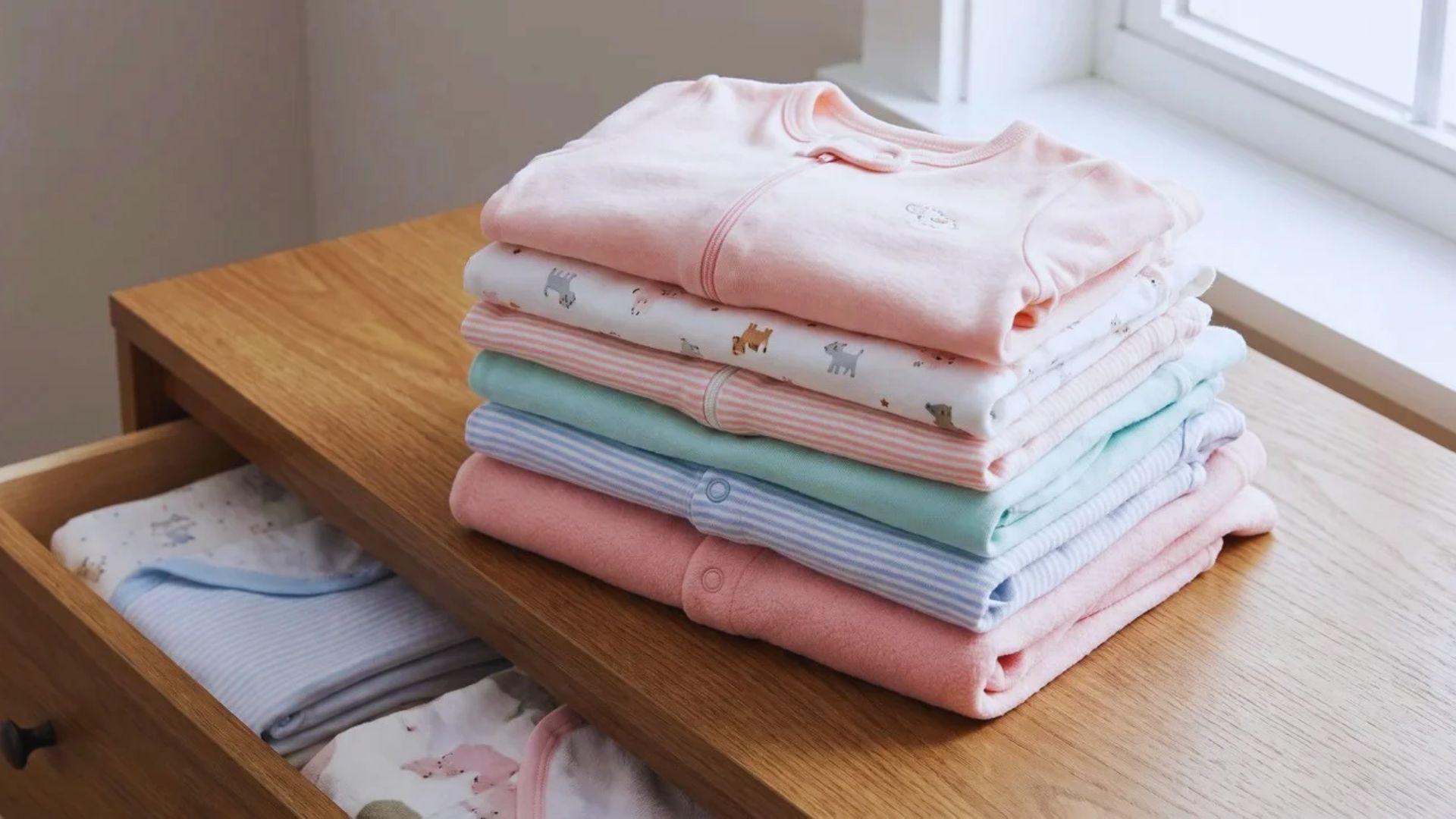
Picking a sleeper count feels like any other registry decision. Guess a number, round up slightly, and figure it'll be fine.
What gets missed is that newborn sleepers aren't just pajamas. Your baby wears them all day, not just at night.
That one fact changes how many you need. So how many sleepers does a newborn need? It comes down to how often your baby needs a change and how often you plan to do laundry.
Get those two numbers right, and the rest is straightforward.
How Many Sleepers Does a Newborn Need?
A newborn needs about 6 to 8 sleepers in most households. That covers daily changes, spit-up, and diaper blowouts without forcing a laundry run every day.
No pediatric group sets an official count, so this range is a practical estimate built on how often your baby needs a change and how often you wash.
If you wash daily, 4 to 5 sleepers can work, though you’ll have little room for a messy afternoon.
That’s also why sleepers take up the largest share when you’re deciding how many baby clothes to buy before your due date.
Six to eight leaves a buffer, so a blowout followed by spit-up in the same afternoon won’t leave you without a clean option.
The exact number depends on how often you do laundry. Washing daily, five sleepers can work. Washing every two to three days, you need eight.
What Determines How Many Sleepers You'll Actually Go Through?
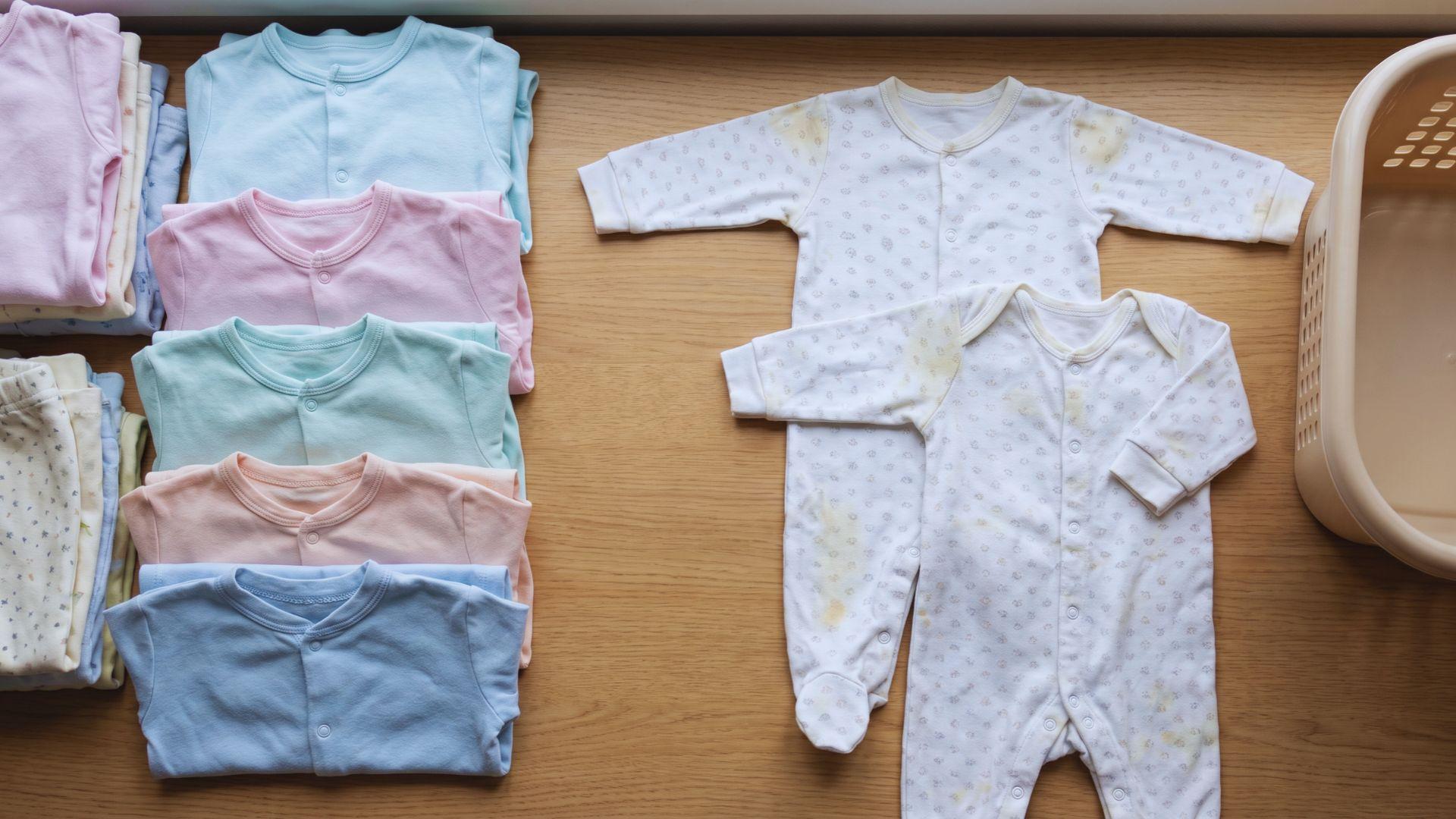
How many sleepers you need comes down to a simple calculation. Take how many changes happen each day, multiply by how many days you want between laundry loads.
Every number you've seen, 4, 6, or 8, comes from some version of that math.
The two things that push the number up most are:
- spit-up frequency
- diaper blowouts
Some newborns spit up or leak through diapers far more than others, and you won’t know which pattern yours follows until they arrive.
Planning for 2 to 3 changes a day is a sensible starting point, and you can adjust in the first week or two once you see your baby’s real pattern.
The only way to handle the uncertainty is to start with a mid-range stock and adjust early on. Your laundry routine determines the final number more than anything else.
The numbers below show exactly what each routine requires.
How Laundry Frequency Shapes the Number
The difference between washing daily and washing every three days comes out to several sleepers. It also means a very different experience when your baby has a rough day.
Here's how each routine translates into a number:
- Daily laundry: Plan for 2 to 3 changes per day. Four to five sleepers is workable, but you’ll have almost no buffer on hard days.
- Every two days: At 3 changes per day, you’ll go through 6 sleepers between washes, so 7 to 8 gives you a clean option while the load runs.
- Every three days: Three changes per day add up to 9 before the next load, so plan for 9 to 10.
Families land somewhere between daily and every two days. Six to eight covers that range without cutting it close.
How Should You Split Between Newborn and 0-3 Month Sizes?
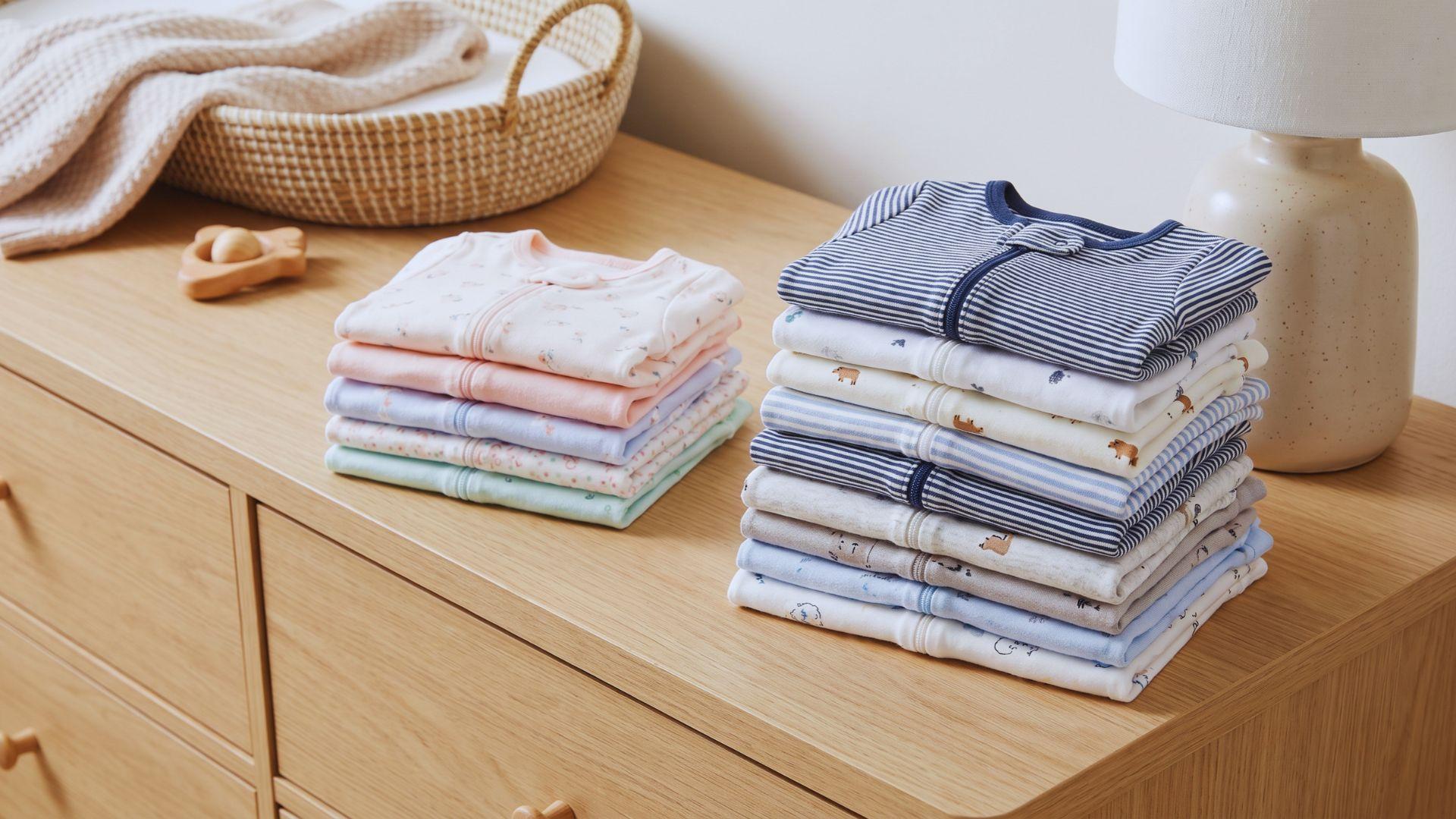
Most of your sleeper stock should be in 0-3 month sizing, because newborn sizes may fit for only a few weeks.
After regaining their birth weight by about 2 weeks, many babies gain roughly 5 to 7 ounces (140 to 200 grams) a week, so a newborn sleeper can turn snug quickly.
Size labels vary by brand, and newborn sizing often tops out around 8 pounds (3.6 kg).
If your baby arrives near or above that weight, newborn sleepers may never fit, so check the brand’s size chart before buying a full stack.
A practical split looks like this:
- Newborn size: 2 to 3 sleepers only
- 0-3 month size: 5 to 6 sleepers
Getting the sizing split wrong costs more than getting the total count slightly off, since six newborn sleepers and two 0-3 month sizes can leave you with little that fits by week five.
Once you have the right count and sizes, knowing how to fold baby clothes efficiently keeps the drawer manageable.
If your baby looks likely to run large, buy newborn sizes after birth, once you know the actual birth weight.
What Should You Look for When Buying Newborn Sleepers?
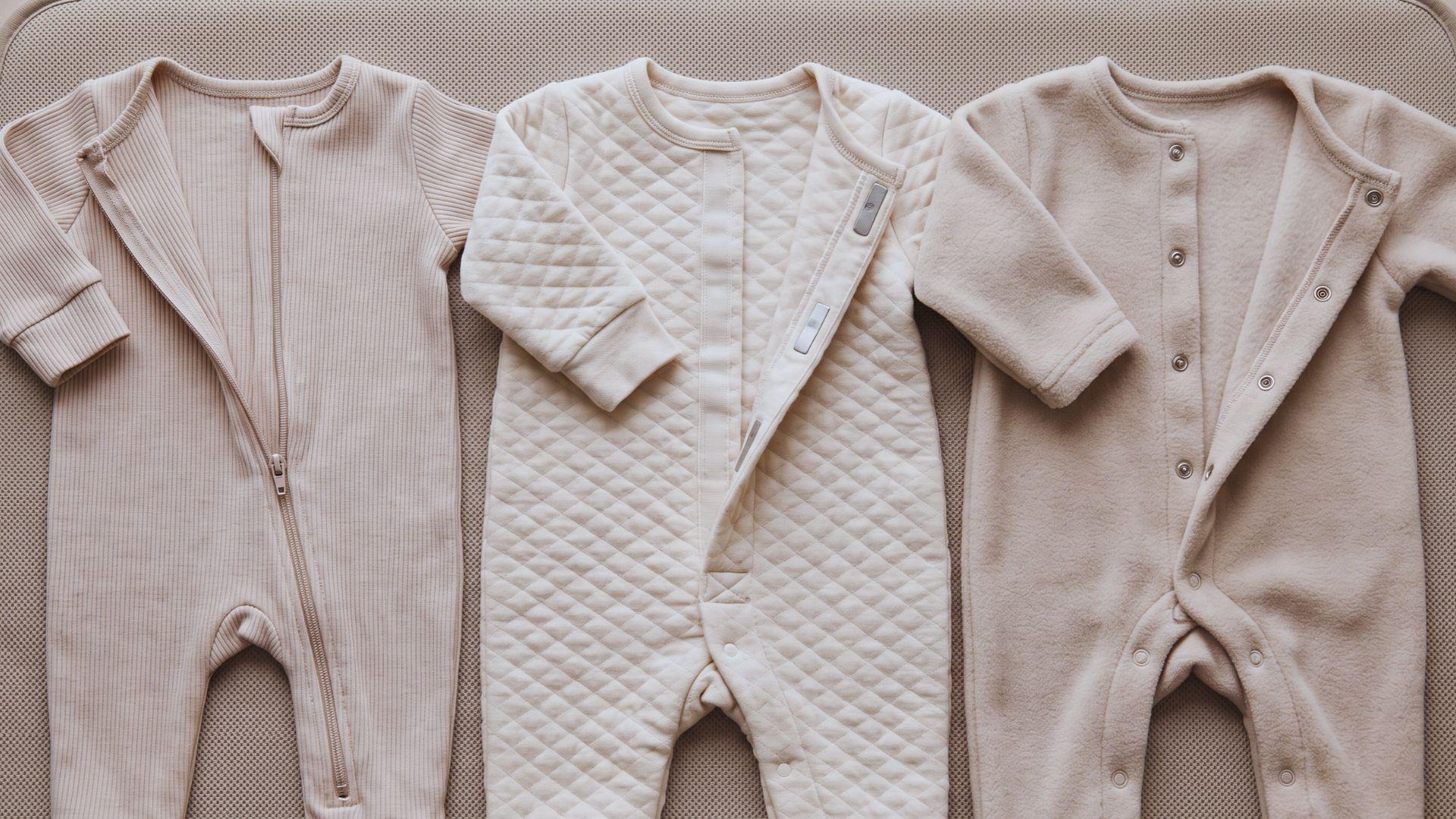
The closure type matters more than brand or price. It's the one feature that affects every single diaper change, including the ones at 3 am.
Here's how the three main closure types compare:
- 2-way zip: Opens from the bottom only. The baby stays covered, and you never disturb the top half.
- Magnetic closure: Same bottom-up access as a zip, but faster. No alignment needed in the dark.
- Snap-based: Requires undoing the full garment and redoing it. Manageable in daylight, frustrating at night.
Zips and magnetic closures cost slightly more than snaps. Across 6 to 8 sleepers, the price difference is small. Factor it in from the start.
For fabric weight, match the sleeper to your home’s temperature rather than the season.
The AAP’s 2022 safe sleep guidance warns against overheating and suggests dressing a baby in no more than one layer beyond what an adult would wear in the same room.
Keep loose blankets out of the crib for the first year, and if your baby needs more warmth, add a wearable blanket over the sleeper instead.
Skip weighted sleepers and weighted sleep sacks entirely, as this goes against the AAP’s advisory.
It is thus very important to check on two things before buying: ‘The Closure Type’ and the ‘Fabric Weight’ for your home's temperature. Everything else is secondary.
Final Thoughts
How many sleepers does a newborn need? The answer depends less on a magic number and more on how your baby lives in those first weeks and how your household runs.
The parents who get this right aren’t the ones who buy the most, but the ones who buy the right sizes in the right quantities.
Start with 6 to 8 sleepers, weight your stock toward 0-3 month sizing, and pick closures you can manage at 3 a. m.
Then check your laundry routine and adjust in the first week or two. If you’re still building your list, use the same count-and-wash math for bodysuits and burp cloths.
Frequently Asked Questions
Is 3 Newborn Sleepers Enough?
Three can work only as a bare minimum. You can stretch a small stack by keeping a few short-sleeve bodysuits and footed pants on hand, which cover a mess while sleepers wash.
When Do Babies Stop Fitting Newborn Sleepers?
It depends on birth weight and growth rather than age. Footies pressing on toes, snaps straining at the chest, or a zipper that pulls when your baby stretches all signal it’s time to size up.
Should You Wash Newborn Sleepers Before the Baby Wears Them?
Yes. The AAP suggests washing all new baby clothes before first use. A regular detergent is usually fine, and you can switch to a fragrance-free one if your baby’s skin gets irritated.
How Long Do 0-3 Month Sleepers Last Before Sizing Up?
Fit depends on growth more than the label. Many babies double their birth weight by 3 to 4 months, so plan to have 3-6 month sleepers ready by then, or sooner for a larger baby.