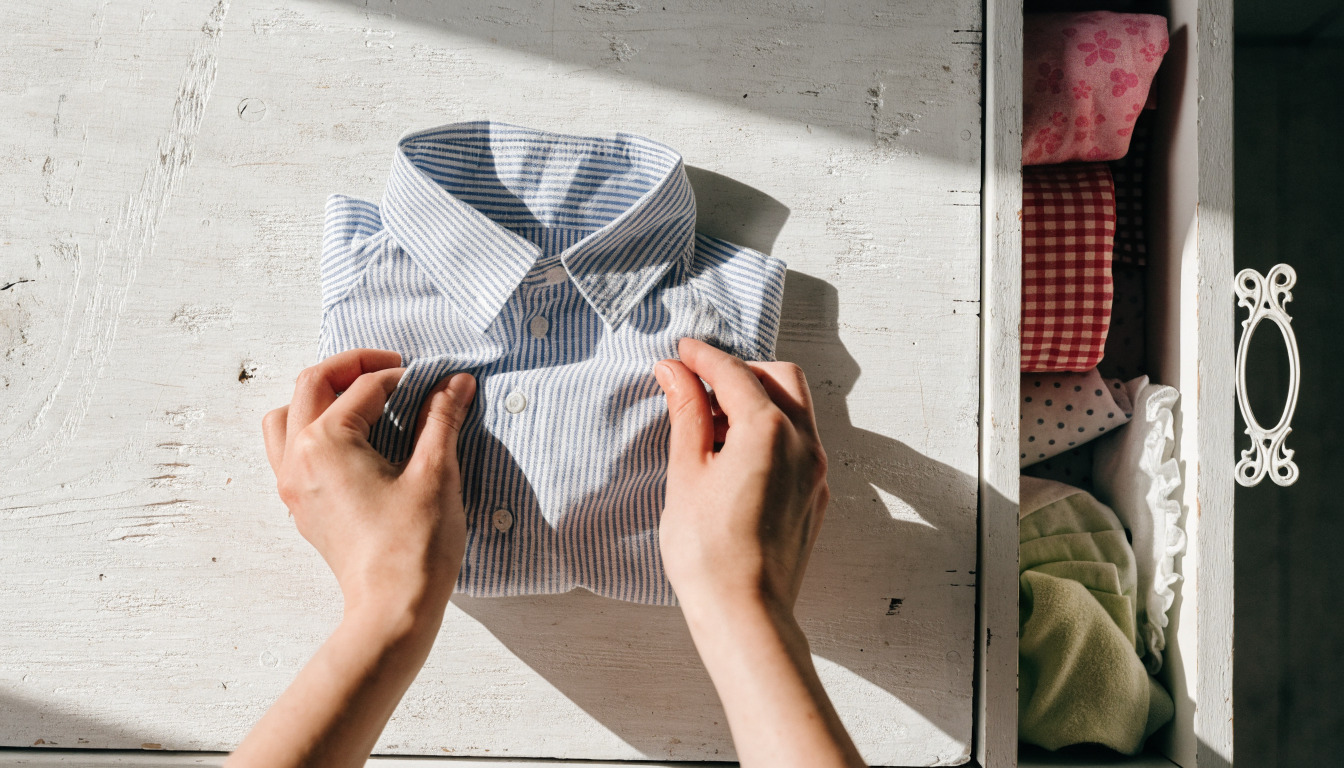
When I became a dad, the dresser was the first thing to fall apart. Between spit-up and leaky diapers, babies go through a lot of outfits, so clean laundry piles up fast, and finding one sleeper in a messy drawer takes forever.
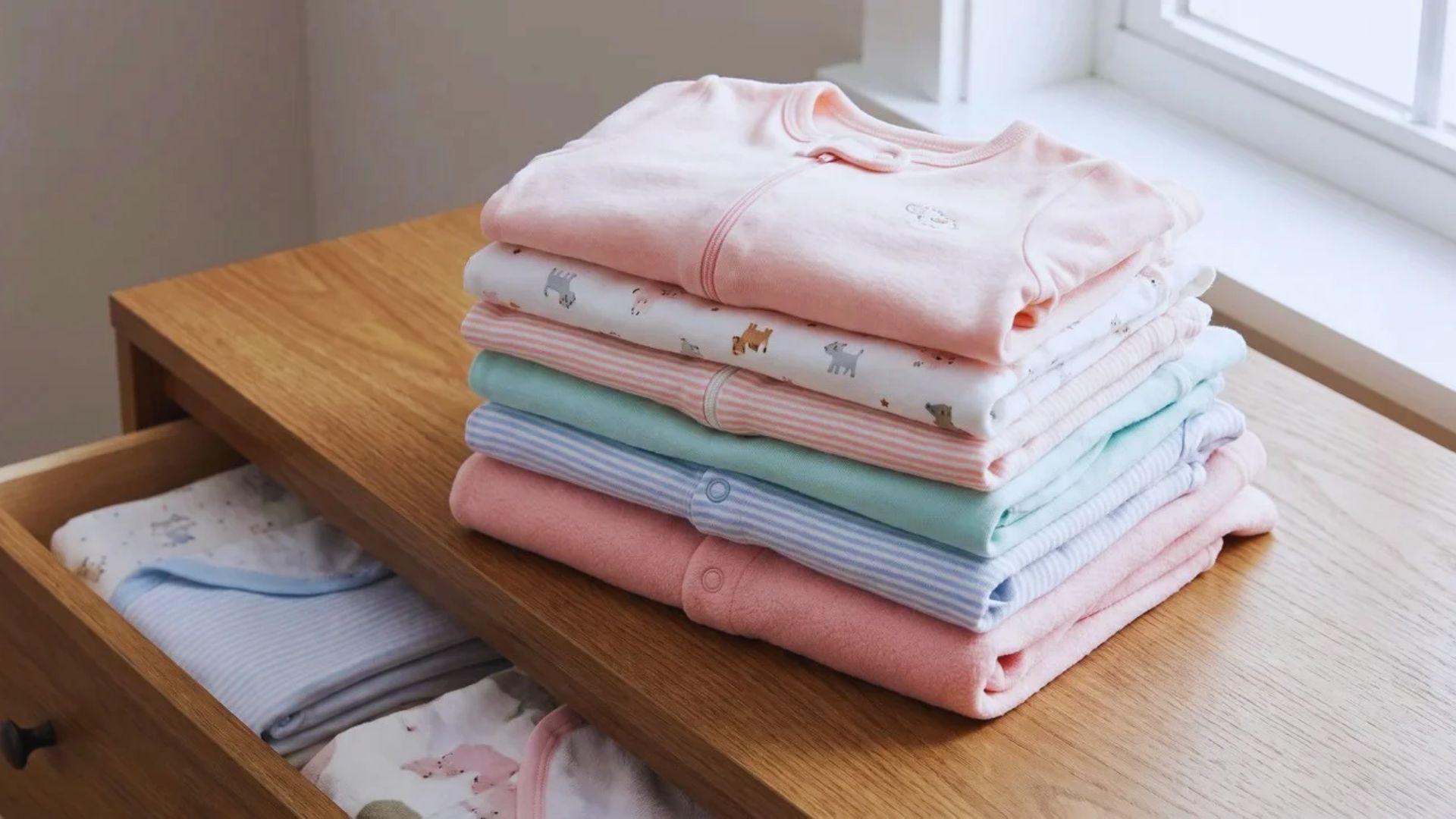
Learning how to fold baby clothes into small, upright rectangles changed that, because you can see every outfit the moment the drawer opens.
After 11-plus years of mentoring parents, I care less about picture-ready folds and more about a routine you can keep up on a tired weeknight. Below, I’ll share my core method, folds for onesies, sleepers, and pants, space-saving ideas, and tips for travel, gifts, and outgrown clothes.
What Is the Best Way to Fold Baby Clothes?
The best way to fold baby clothes for most families is the file fold.
Lay the piece flat, fold the sleeves and sides toward the center, then fold it from the bottom up into a small rectangle that stands on its edge.
Upright folds stay tidy, use drawer space well, and let you see every item at once.
Baby clothes are small and soft, so loose edges tend to unroll. Tucking them inside the rectangle is what holds each piece in shape.
How the KonMari File Fold Works for Baby Clothes
The upright style comes from Marie Kondo, who introduced it in her book The Life-Changing Magic of Tidying Up.
According to the official KonMari guide, standing folds help prevent wrinkles and save space.
Children’s clothes use the same technique with fewer folds because they are smaller.
You do not need to measure anything, so fold until the piece stands on its own and stop there.
After more than 11 years of working with parents and caregivers, I have found that families stick with the systems that feel doable at 10 p.m., not the ones that look best on social media.
How to Fold Baby Clothes Step by Step
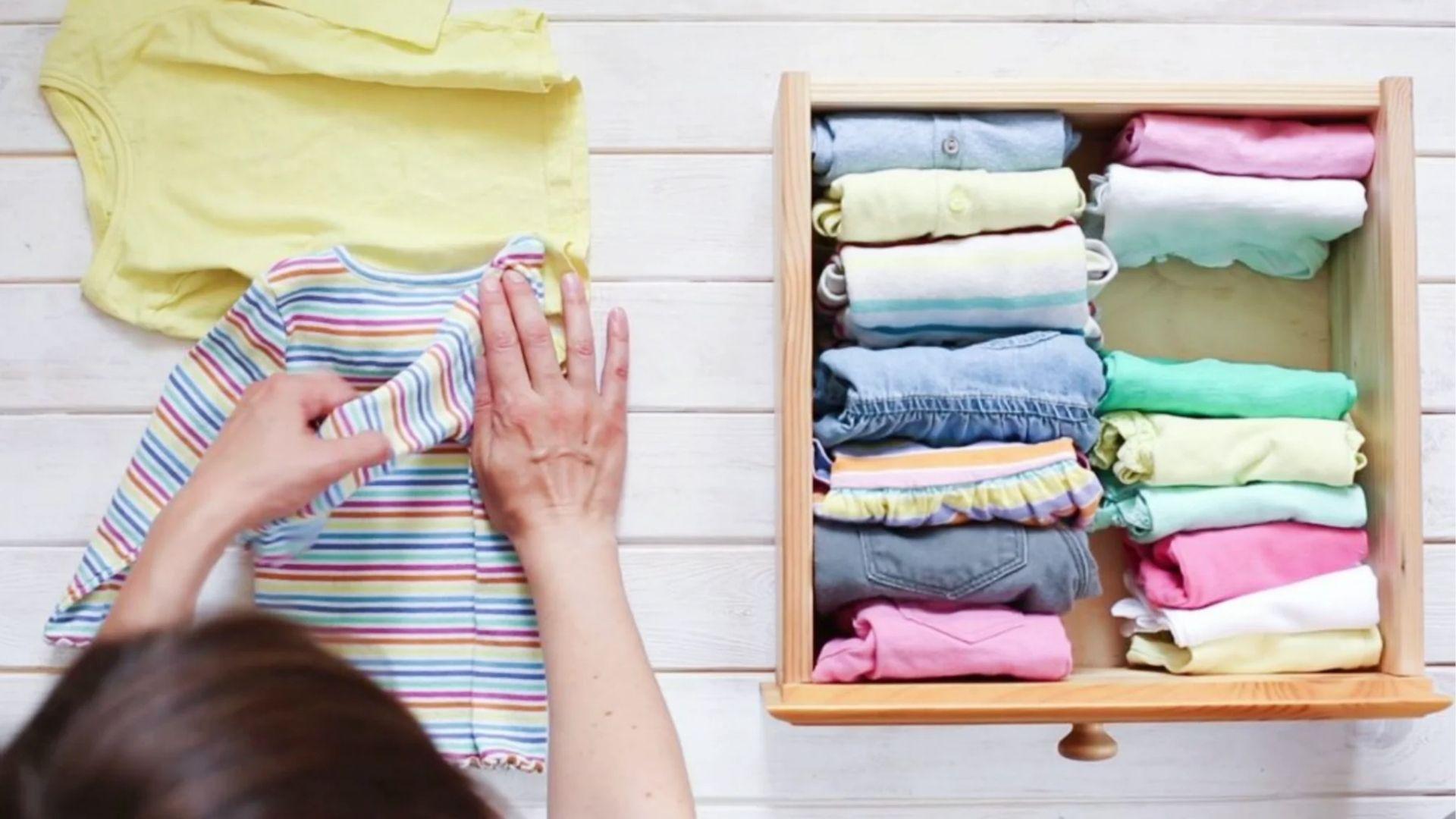
These four steps work for most tops and one-piece outfits. Once they feel natural, you can adjust them for other garments.
Step 1: Lay the Clothing Flat
Smooth the garment front side up on a clean table or bed. Fold it only once it is fully dry, because damp fabric will not lie flat. Close any snaps or zippers first, so they do not catch and pull the fold out of shape.
Step 2: Fold the Sleeves and Sides Inward
Bring each sleeve across the body, then fold both sides toward the center. Keep the sides even, because a lopsided rectangle leans and tips over in the drawer.
Step 3: Fold Into a Compact Rectangle
Fold the bottom up to meet the neckline, and fold once more if the piece is long. Press down lightly with your palm, since soft baby fabrics hold a fold better when flattened.
Step 4: Store It Flat or Upright
When you fold baby clothes for drawers, let the drawer depth decide the style. In a deep drawer, stand folds in rows.
In a shallow drawer, keep stacks short so the bottom pieces stay within reach. If you are still setting up the nursery, check drawer depth before you buy dividers.
With the basic method in place, the next step is adjusting it for the pieces you fold most often.
How to Fold Different Types of Baby Clothes
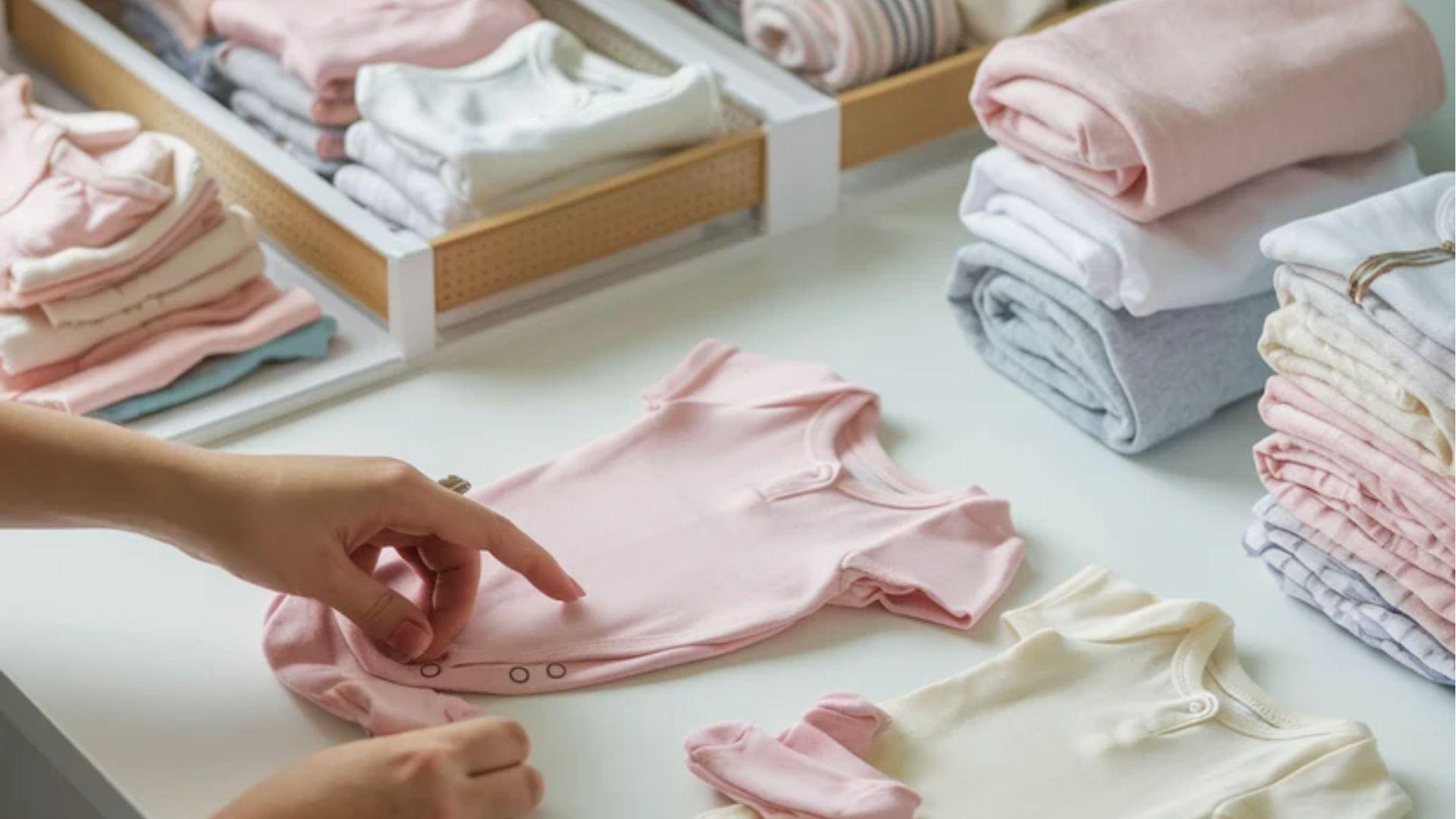
Each piece below uses the same rectangle idea. Only the first few folds change, based on how the garment is cut.
1.How to Fold Baby Onesies (Short and Long Sleeve)
To fold baby onesies, lay the bodysuit face down and close the bottom snaps. Fold the snap flap up so it does not hang below the fold.
Fold each side in to make a narrow strip, then fold it from the bottom up two or three times until it stands.
Short sleeves tuck in with the sides. For long-sleeve onesies, fold each sleeve straight down along the side edge before you fold the sides in, so the cuffs do not poke out of the finished square.
2.How to Fold Baby Pants and Bottoms
Lay the pants flat and fold one leg over the other. Tuck the small triangle at the crotch inward so both edges run straight.
Fold the cuffs up to the waistband, then fold again in half or thirds. Flatten stretchy waistbands first, so they do not spring open.
3.How to Fold Baby Sleepers, Pajamas, and Rompers
To fold baby sleepers, zip or snap them closed and fold the arms across the back. Bring the legs up toward the chest with the footed ends tucked inside.
Then fold once more so the sleeper stands upright, and keep any romper ties inside the fold.
If you are still stocking the drawer, this guide on how many sleepers newborns need can keep you from overbuying.
4.T-Shirts and Socks
Tees and socks need fewer steps, so a quick reference works better than separate sections.
| Item | How to fold it | Where it goes | Tip |
| T-shirts | Fold both sides toward the center, then fold in half or thirds | Standing upright in a row | Fold the neckline flat so it does not stick out |
| Socks | Match the pair, lay them flat, and fold once at the heel | A small divider or bin section | Pair socks right after laundry so none go missing |
Folding each piece well is only part of the job. The way you arrange those folds decides how much room you have left.
How to Fold Baby Clothes to Save Space
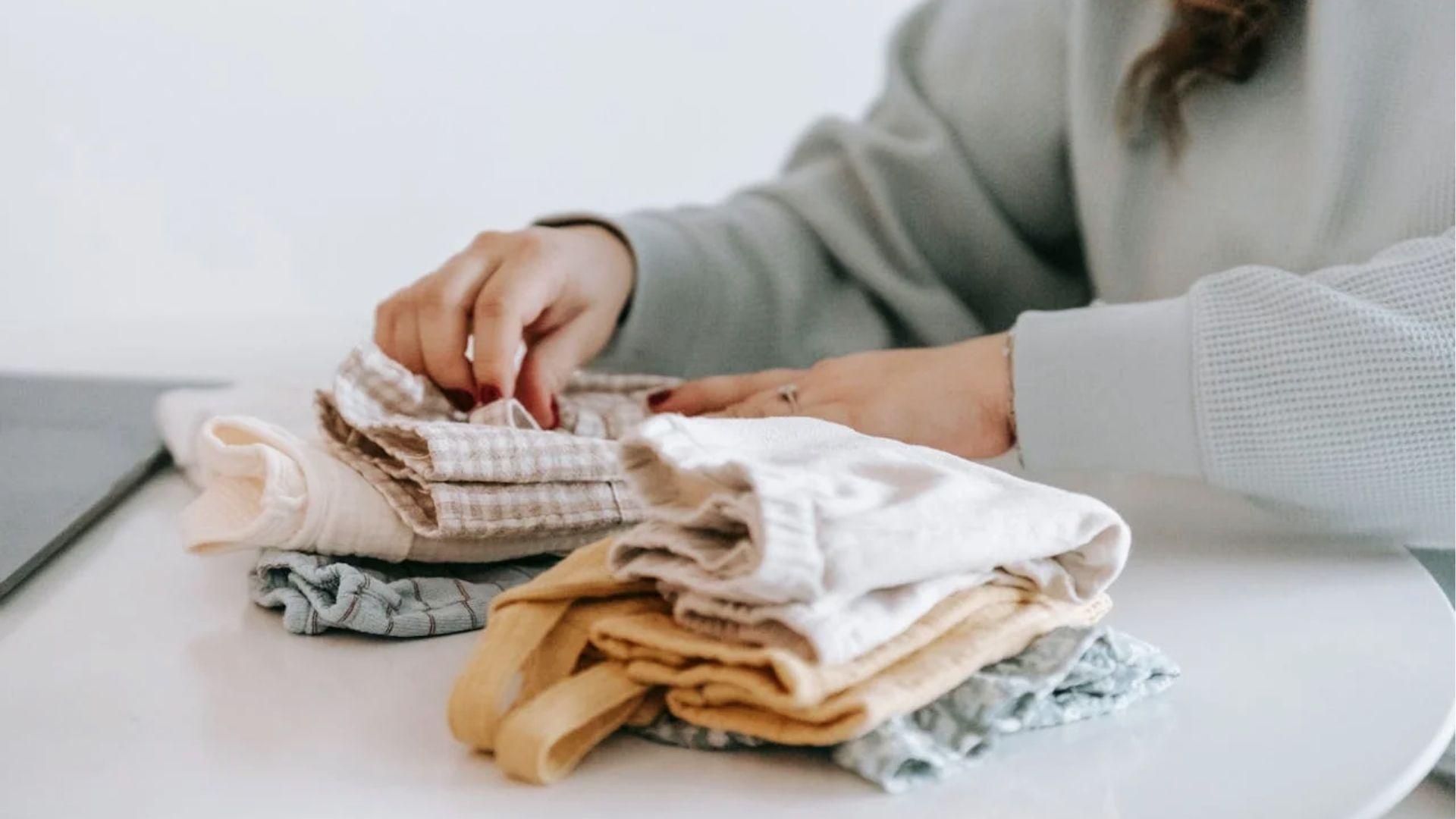
To fold baby clothes to save space, file fold everyday items and stand them upright in rows, roll stretchy pieces to fill small gaps, and keep flat stacks only for bulky items.
Upright rows use the full depth of a drawer, so you fit more pieces without burying any of them.
| Method | How it works | Space use | Best for | Watch out for |
| Traditional | Fold and stack flat | Lowest, bottom pieces get buried | Shallow drawers, small piles | Pulling from the bottom messes up the pile |
| Vertical | Fold into a rectangle and stand upright | Highest, shows every piece | Deep drawers and bins | Folds can tip over without dividers |
| Rolling | Roll each piece tightly | Moderate, fills small gaps | Odd-shaped bins and bags | Loose rolls can unroll on their own |
Many parents mix methods, standing onesies and pants upright and stacking bulky sweaters flat.
In a small nursery, keep only the current size in the dresser and move the next size to a labeled bin on a closet shelf.
Shoeboxes can stand in for dividers, and an over-the-door organizer can hold socks, hats, and bibs.
Owning fewer pieces saves the most room, so check how many baby clothes you need before the next shopping trip.
How to Organize Folded Baby Clothes in Drawers
A good drawer setup lets you grab an outfit with one hand while you hold your baby.
Give onesies, pants, sleepers, and accessories their own sections and keep daily pieces at the front.
Do a two-minute reset whenever the drawer starts to look messy.
Folding can also become a family job. The American Academy of Pediatrics (AAP) notes on HealthyChildren.org that most preschoolers can start helping with simple household tasks, and it advises parents not to expect perfection.
A preschooler can match socks or carry a stack to the drawer. Praising the effort rather than the fold keeps the moment positive for both of you.
While you fold, take a few seconds for safety checks. Tug lightly on snaps and buttons.
The Consumer Product Safety Commission (CPSC) has recalled baby garments whose buttons or snaps came loose and posed a choking hazard.
Check toddler jackets and sweatshirts for neck or hood drawstrings, which federal rules classify as a strangulation hazard in children’s upper outerwear sizes 2T to 12.
CPSC staff data on drawstrings counts 26 deaths and 73 nonfatal incidents tied to these drawstrings between January 1985 and June 2019, involving children 18 months to 15 years old.
CPSC also urges families to anchor dressers to the wall to prevent tip-overs.
Should Baby Clothes Be Folded or Hung?
Most everyday baby clothes do better folded, and a few dressy outfits are better on hangers.
| Fold | Hang | |
| Best for | Onesies, pants, sleepers, stretchy knits | Dresses, jackets, dressy outfits |
| Storage | Drawers or bins | Closet rod with small hangers |
| Drawback | Can crease if the drawer is overpacked | Soft knits may stretch out on hangers |
| Finding items | Upright rows show everything at once | Easy to scan, but small items slip off |
If drawer space is tight, fold the daily basics. Hang only the pieces that wrinkle or that you want to keep crisp.
How to Fold Baby Clothes for Travel
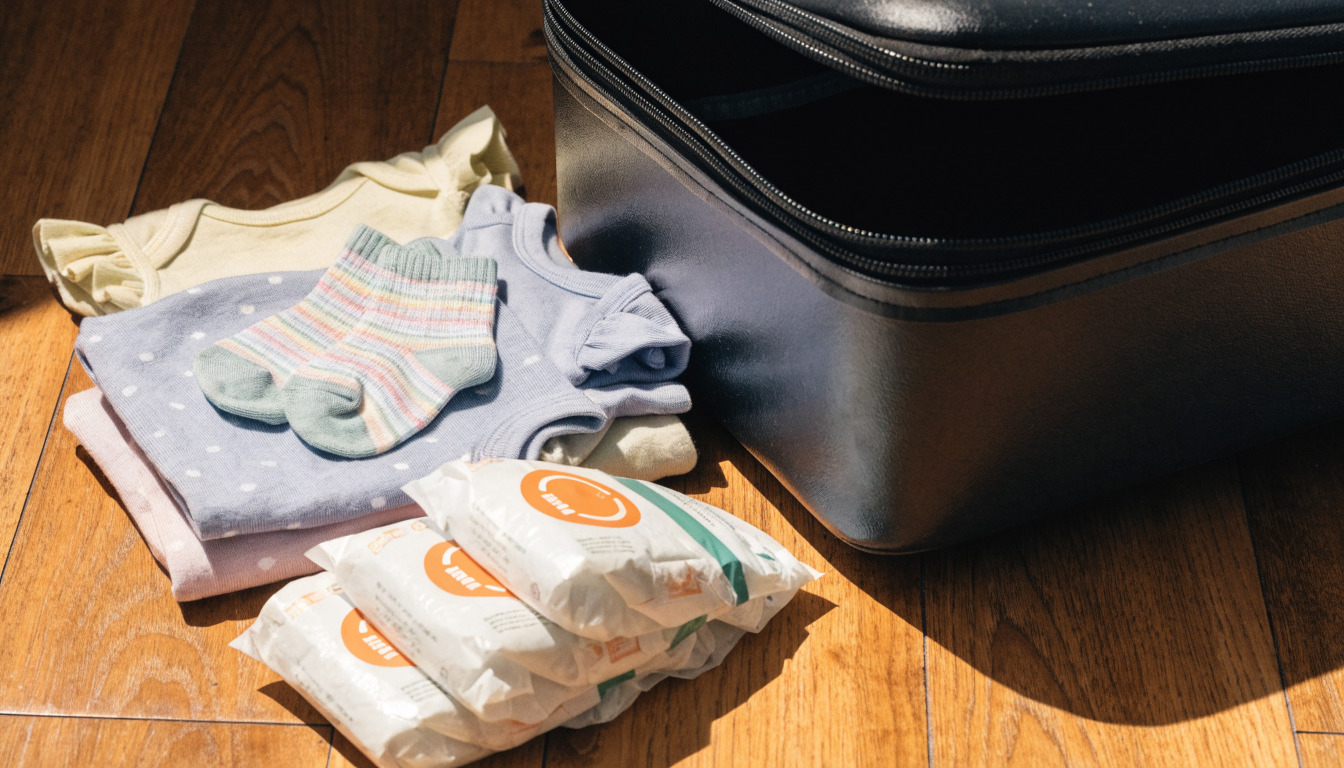
Packing by outfit saves time away from home, whether you are visiting relatives or spending a day at the park. Fold baby pants and shirts together so each bundle is one complete change of clothes.
- Choose a full outfit, such as a onesie, pants, and socks.
- Fold each piece into a small rectangle using the steps above.
- Stack the pieces of one outfit and press them flat.
- Place each bundle in a zip bag or packing cube, standing upright if there is room.
You can then pull out one outfit without unpacking the whole bag. The empty zip bag can hold soiled clothes on the way home.
How to Fold Baby Clothes for a Gift
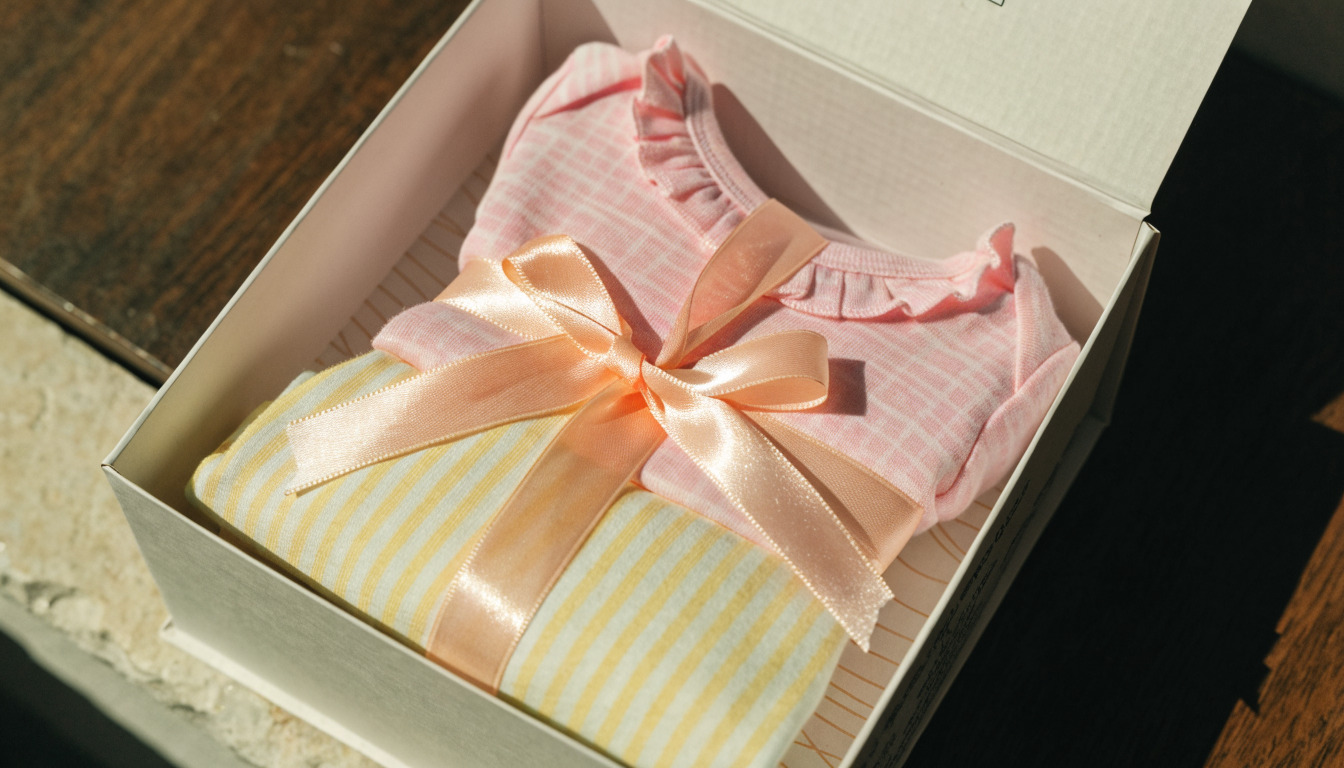
For a baby shower gift, fold each outfit so the front design faces up. Then layer the onesie, pants, and socks into one bundle that looks ready to wear.
Leave the tags on, or tuck a gift receipt inside, so the parents can exchange sizes later.
Tie bundles with ribbon rather than pins, and set them in a box lined with tissue paper.
Group clothes by size, such as 0 to 3 months and 3 to 6 months. That helps new parents put each bundle in the right drawer.
Keep the Folding System Simple
Learning how to fold baby clothes comes down to one habit: shape every piece into a small, even rectangle that fits your drawer.
Upright file folds work for onesies, sleepers, pants, and tees, and flat stacks and rolls fill in where space is tight.
Pair that habit with sorted sections, a quick check of snaps and drawstrings, and a dresser anchored to the wall. Then the drawer stays tidy and safer between laundry days.
Expect the folds to look uneven some weeks, because a routine you can repeat matters more than a showroom drawer.
Start with one drawer this week, fold one category, and expand the system once it feels natural.
Frequently Asked Questions
What Is the Best Way to Store Baby Clothes That No Longer Fit?
Wash and fully dry outgrown clothes, then store them in labeled, lidded bins sorted by size. Keep the bins in a cool, dry closet rather than a damp basement or hot attic.
What Are the Folds on Baby Onesies For?
The overlapping shoulder flaps, called an envelope neckline, let the neck stretch wide. After a diaper leak, you can slide the onesie down over the shoulders instead of pulling it over your baby’s head.
How Do You Roll Up a Baby Onesie?
Lay the onesie flat, fold the sides and sleeves to the center, and fold the snap flap up. Roll tightly from the bottom toward the neckline, then stand the roll on end.