

If you are a new parent, there is a good chance you have typed “why do babies cry so much?” into your phone at 2 a. m.
The short answer is that crying is your baby’s first language, and a newborn has a lot to say before they have any other way to say it.
When the crying feels endless, it is easy to worry that something is wrong. Most of the time, it is not.
In this post, you will learn what crying in a baby means, how much is typical at each age, how to soothe your baby, and which signs need a call to your pediatrician.
As a developmental psychologist, I look at crying in context, since the same cry can mean something different at 2 weeks than at 4 months.
What Does Crying Mean for a Baby?
Crying is a baby’s first form of communication. Before babies can smile on purpose, coo, or reach for you, crying is the one dependable way they have to signal hunger, discomfort, tiredness, or a need to be close, and it gets your attention fast.
Newborns also have little ability to calm themselves once upset.
This emotional self-regulation develops slowly as the brain and nervous system mature, so a young baby often needs your help to get back to calm.
Parents often ask why babies cry so loudly. The AAP notes that as babies mature, their cries become stronger, louder, and more varied, and a hunger cry that goes unanswered can quickly turn into a full wail.
Why Do Babies Cry So Much?
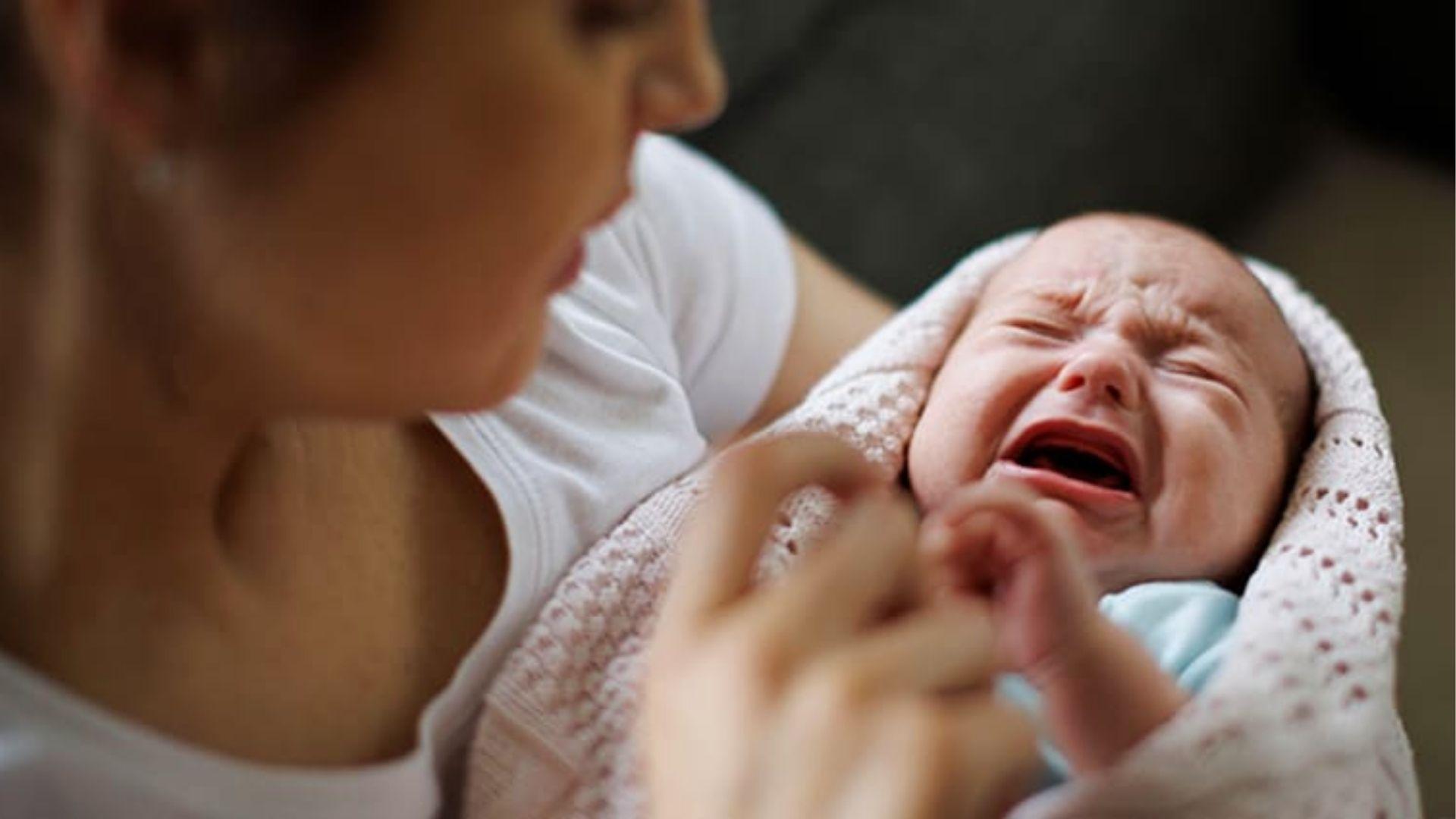
Babies cry so much because crying is how they signal nearly every need, including hunger, tiredness, a wet diaper, gas, feeling too hot or cold, overstimulation, and wanting to be held.
In the first weeks, an immature nervous system and colic can add crying that has no clear trigger at all.
| Possible Reason | What You Might Notice |
| Hunger | Rooting, sucking on hands, turning toward the breast or bottle |
| Tiredness | Rubbing eyes, staring, or going quiet |
| Wet or dirty diaper | Fussing that settles after a change |
| Gas or need to burp | Squirming or pulling up legs after a feed |
| Too hot or too cold | Restlessness, sweating, or cool hands |
| Overstimulation | Turning away, arching, avoiding eye contact |
| Need for comfort | Calming once held or spoken to |
| Illness or pain | A cry that sounds different or comes with other symptoms |
| Colic | Repeated, intense spells in an otherwise healthy baby |
Hunger and trapped air are the easiest causes to rule out first. If feeds seem endless, read our post on when your newborn always seems hungry, and for gas, see our tips for when your baby won’t burp after feeding.
When Do Babies Cry the Most?
Crying usually builds over the first few weeks, stays high through about 6 weeks, and drops after 8 to 9 weeks.
The AAP notes that fussing often peaks at around 3 hours a day by 6 weeks and falls to about 1 to 2 hours a day by 3 to 4 months of age.
A 2017 meta-analysis of crying in The Journal of Pediatrics pooled 28 diary studies covering 8,690 infants.
Average fussing and crying held steady at 117 to 133 minutes a day in the first 6 weeks, then fell to about 68 minutes a day by 10 to 12 weeks.
The review also found wide differences between babies and no single peak at exactly 6 weeks.
That is why I encourage parents to compare their baby with that same baby’s pattern over time, not with a friend’s child.
Why Do Babies Cry So Much at Night?
Many babies have a fussy stretch that the AAP says often falls between 6 p. m. and midnight, right when parents are most tired.
Colic spells also tend to get worse in the early evening, so late-day crying is common even in healthy babies.
If you wonder why babies cry at night even after feeding, a full stomach does not rule out other needs.
Swallowed air may need a burp, and for bottle-fed babies, the AAP suggests a slower-flow nipple to help them coordinate swallowing and breathing.
Many parents reach for gas drops or gripe water next, but the AAP notes that research has never shown either one to work.
Why Do Babies Cry So Much at 3 or 4 Months?
By 3 to 4 months, most babies cry noticeably less, and development is a big part of the reason.
CDC milestone checklists show that by 2 months many babies calm down when spoken to or picked up, and by 4 months many coo and smile on their own to get your attention.
Your baby is gaining new ways to connect, so crying no longer has to do all the work.
If your baby still cries so much at this age, talk with your pediatrician, and if broken sleep is part of it, our guide to baby sleep regression stages can help.
How Can You Tell What Your Baby Needs?

When a baby cries so much, the most reliable clue is the pattern around the crying rather than the sound alone.
Notice what happened right before, how the cry builds, and what settles your baby, because over a few days these patterns tend to point to a specific need.
A cry an hour after a feed means something different from the same cry after a busy afternoon. Your baby’s temperament and surroundings also shape how fast fussing turns into full crying.
Keep in mind that crying is a late hunger cue. Children’s Healthcare of Atlanta notes that hand-to-face movements, rooting, and sucking motions usually come first, so feeding at those signs can head off a harder cry.
How to Soothe a Crying Baby
When your baby cries so much that nothing seems to work, try these steps in order and give each one a few minutes.
- Offer a feed if your baby shows early hunger cues.
- Change the diaper and check clothing and room temperature.
- Burp your baby if they fed recently.
- Hold your baby skin-to-skin, or talk and sing softly.
- Try gentle rocking, a stroller walk, or a car ride.
- Play steady white noise and dim the lights.
- Swaddle in a thin blanket only until your baby shows signs of trying to roll, and always place them on their back to sleep.
- Offer a pacifier, and if you breastfeed, wait until breastfeeding is going well.
Responding quickly matters most in the early months. According to the AAP, you cannot spoil a young baby with attention, and babies whose cries are answered promptly in their first few months tend to cry less over time.
Could Colic Be the Reason Your Baby Cries So Much?
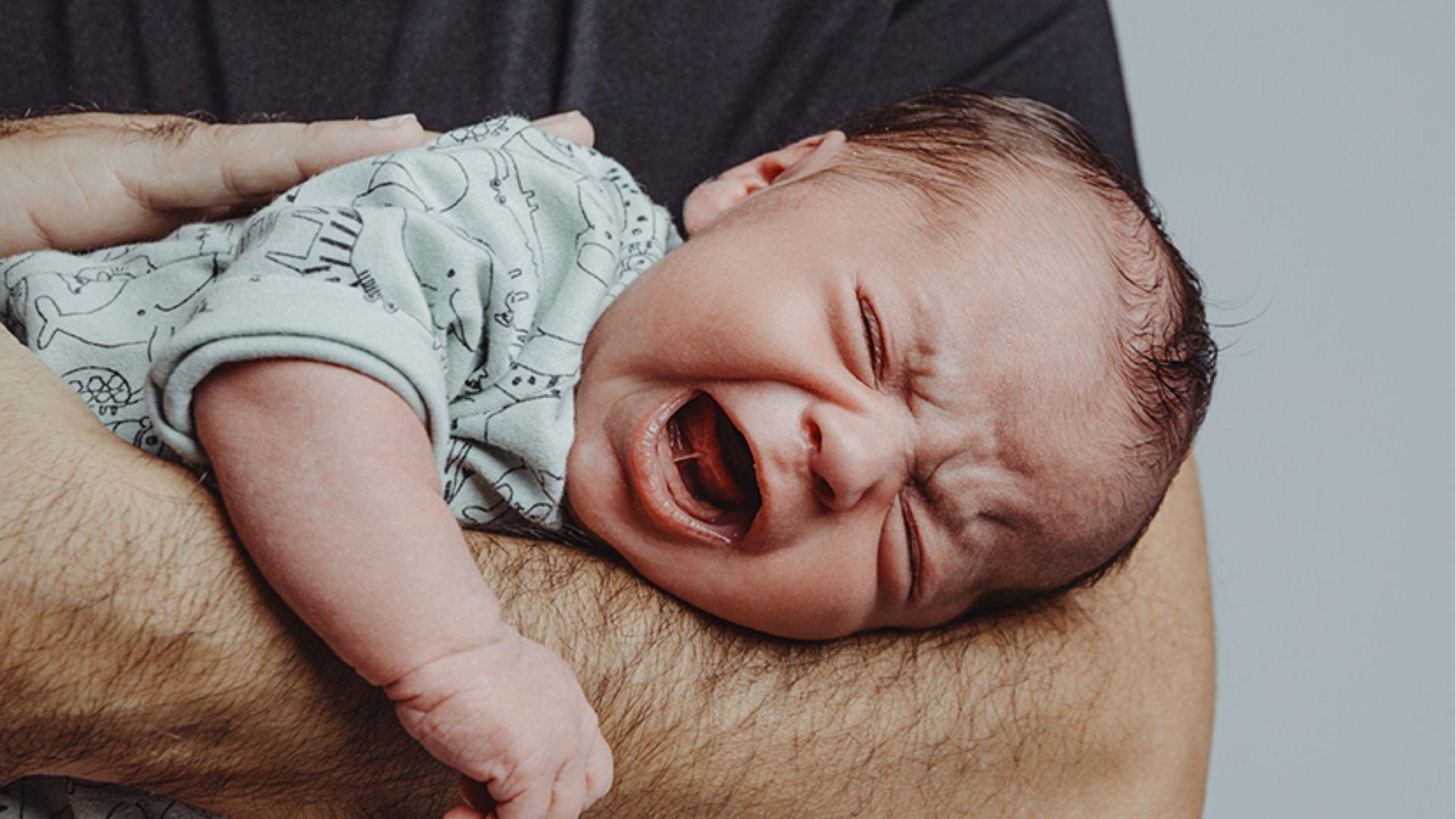
Colic may be the reason your baby cries so much if they are healthy, feeding and growing well, but have repeated, intense crying spells you cannot prevent or calm.
According to the AAP, about one in five babies develops colic, usually starting between the second and fourth weeks of life.
Doctors have long used the “rule of threes” (Wessel criteria): crying more than 3 hours a day, more than 3 days a week, for more than 3 weeks.
The newer Rome IV criteria drop the fixed hours and describe recurrent, prolonged crying with no obvious cause in a baby under 5 months who has no fever, illness, or poor growth.
In the 2017 meta-analysis, colic affected 17% to 25% of babies in the first 6 weeks but only 0.6% by 10 to 12 weeks, with the lowest rates in Denmark and Japan.
That pattern suggests environment and care practices may shape crying alongside biology.
The AAP says colic most often reflects a baby who is unusually sensitive to stimulation, while food sensitivity explains less than 5% of colicky crying.
It is not caused by anything you did, and it generally stops by 3 to 4 months, though it can last until 6 months.
If you suspect colic, ask your pediatrician to check that reflux, a feeding problem, or another condition is not the cause.
When Should You Worry About Your Baby’s Crying?
Call your pediatrician if your baby cries so much that comfort never helps, if the cry sounds different from usual, or if it comes with fever, vomiting, poor feeding, or unusual sleepiness.
For babies younger than 3 months, the AAP says a rectal temperature of 100.4°F (38°C) or higher needs a call right away.
Also contact your pediatrician if:
- The cry is high-pitched or sounds unlike your baby’s usual cry
- Your baby cries harder when touched or moved
- Unexplained, excessive crying does not ease within a day despite your efforts at home
- You feel that something is not right
Call 911 if your baby is limp, unresponsive, hard to wake, or struggling to breathe.
“My Baby Won’t Stop Crying, and I’ve Tried Everything”
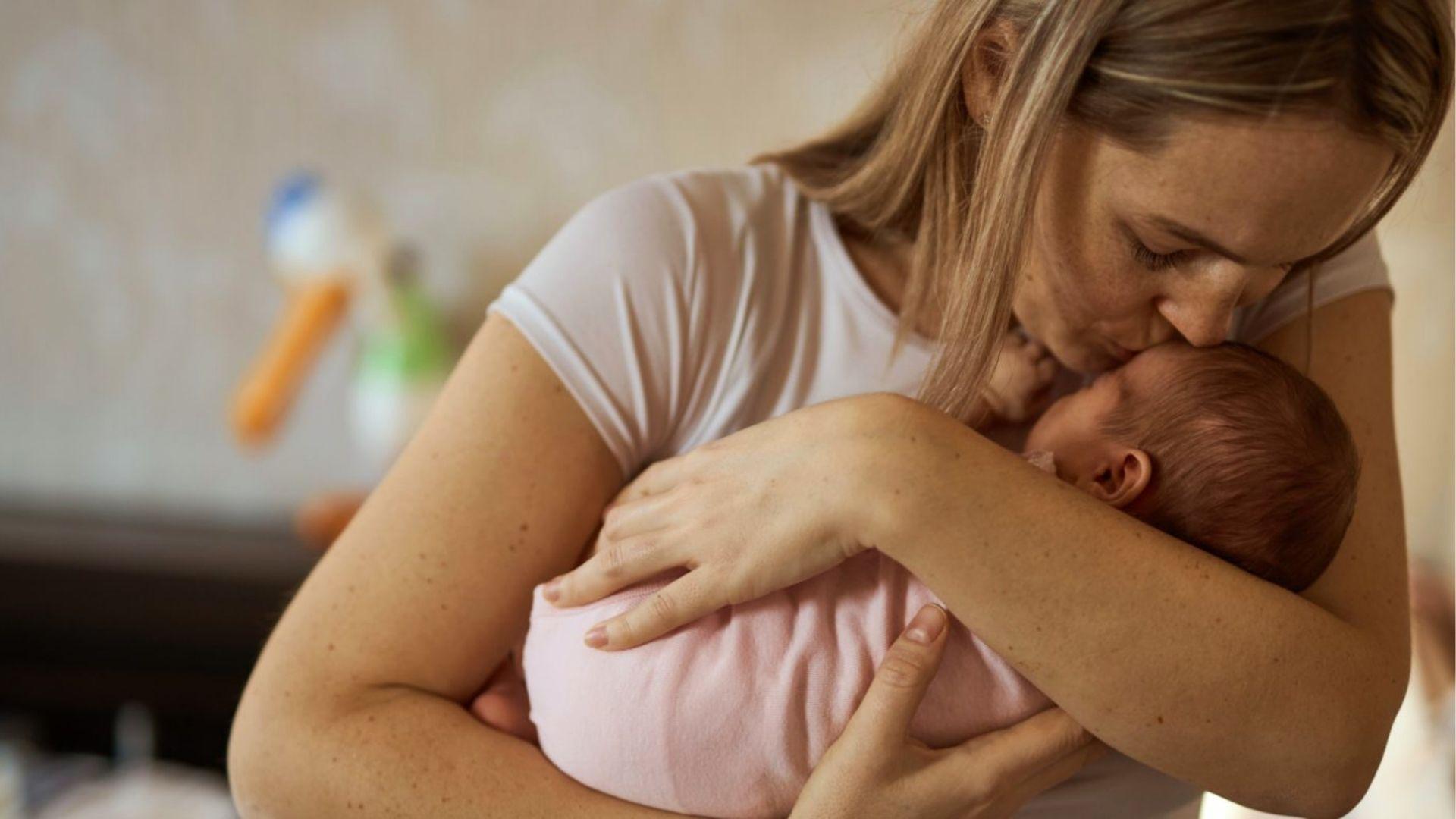
When your baby won’t stop crying, and you have tried everything, the safest step is to place your baby on their back in a crib or other safe sleep space and step away for a few minutes.
Taking a break protects both of you, and it shows good judgment rather than failure.
Feeling frustrated by long crying spells is normal. The CDC notes that abusive head trauma, which includes shaken baby syndrome, often happens when a caregiver becomes angry or frustrated by crying, and babies under 1 year face the greatest risk.
According to CDC’s abusive head trauma facts (2024), as many as one in four babies with this injury dies, and nearly all survivors face serious long-term effects. Never shake a baby, no matter how upset you feel.
If you need a moment:
- Place your baby on their back in a safe crib with nothing else in it
- Leave the room, breathe slowly, and check on your baby every 5 to 10 minutes
- Call a partner, relative, friend, or your pediatrician, or ask someone you trust to take over
If you feel low, anxious, or not like yourself, the National Maternal Mental Health Hotline offers free, confidential support 24/7 by call or text at 1-833-852-6262.
Final Verdict: Crying Gets Easier as Your Baby Grows
The answer to “why do babies cry so much?” comes down to communication and a nervous system that is still maturing.
Crying tends to build over the first weeks and drop by 3 to 4 months, as smiles and coos give your baby new ways to connect.
Most crying is part of typical development, but a cry that changes, will not settle, or comes with fever deserves a call to your pediatrician.
As a next step, keep a log of feeds, naps, and crying spells for a few days, much like the diaries researchers use, and bring it to your baby’s next checkup.
Frequently Asked Questions
What Causes Babies to Cry Excessively?
Excessive crying rarely has a medical cause; a StatPearls review puts organic causes at under 10% of cases. When one exists, it may be an infection, a hernia, or a hair wrapped around a toe.
What Is the Hardest Month With a Baby?
No one month is hardest for every family. For crying, the CDC points to a period of increased infant crying between about 4 and 20 weeks, which overlaps with frequent night feeds and broken sleep.
Why Is My Baby Crying but Nothing Is Wrong?
Some crying has a purpose. The AAP explains that fussy crying can help babies release tension and shut out sights and sounds that feel too intense, and babies may sleep more deeply afterward.