
Your toddler points at the dog, says something that sounds like “dah,” and you wonder if that counts.
If you are asking how many words a 20-month-old should say, you are not alone, and the honest answer comes as a range.
This post draws on CDC milestones and American Academy of Pediatrics guidance, so it sticks to sources parents can trust.
Here is something many guides skip: how your child communicates matters as much as how many words they can list. Let’s start with what language development looks like at this age.
Understanding Language Development at 20 Months
Toddlers learn to talk at different speeds, and that is normal.
Some children say a handful of words at this age, while others already use dozens.
A word count is only one piece of the picture. Understanding what you say, copying sounds, pointing, using gestures, and following simple directions all count as language too.
That is why two toddlers with very different word lists can both be on track. With that in mind, here is the number most parents are looking for.
How Many Words Should a 20-Month-Old Say?
By 18 months, the CDC looks for at least three words besides “mama” or “dada,” and by age 2 it looks for two words put together.
Many 20-month-olds say more than three words, and vocabulary often grows quickly from here.
Treat these as reference points, not requirements. A toddler often understands far more words than they can say out loud.
| Around 20 months | What you may see |
| Spoken vocabulary | At least three words besides “mama” or “dada” by 18 months; many have more |
| Understanding | More words understood than spoken |
| Communication | Words, sounds, pointing, and gestures |
| Directions | Follows simple directions |
| Speech | Words may still be unclear |
| Word combinations | Some toddlers begin combining two words |
What Should a 20-Month-Old Be Able to Say and Understand?
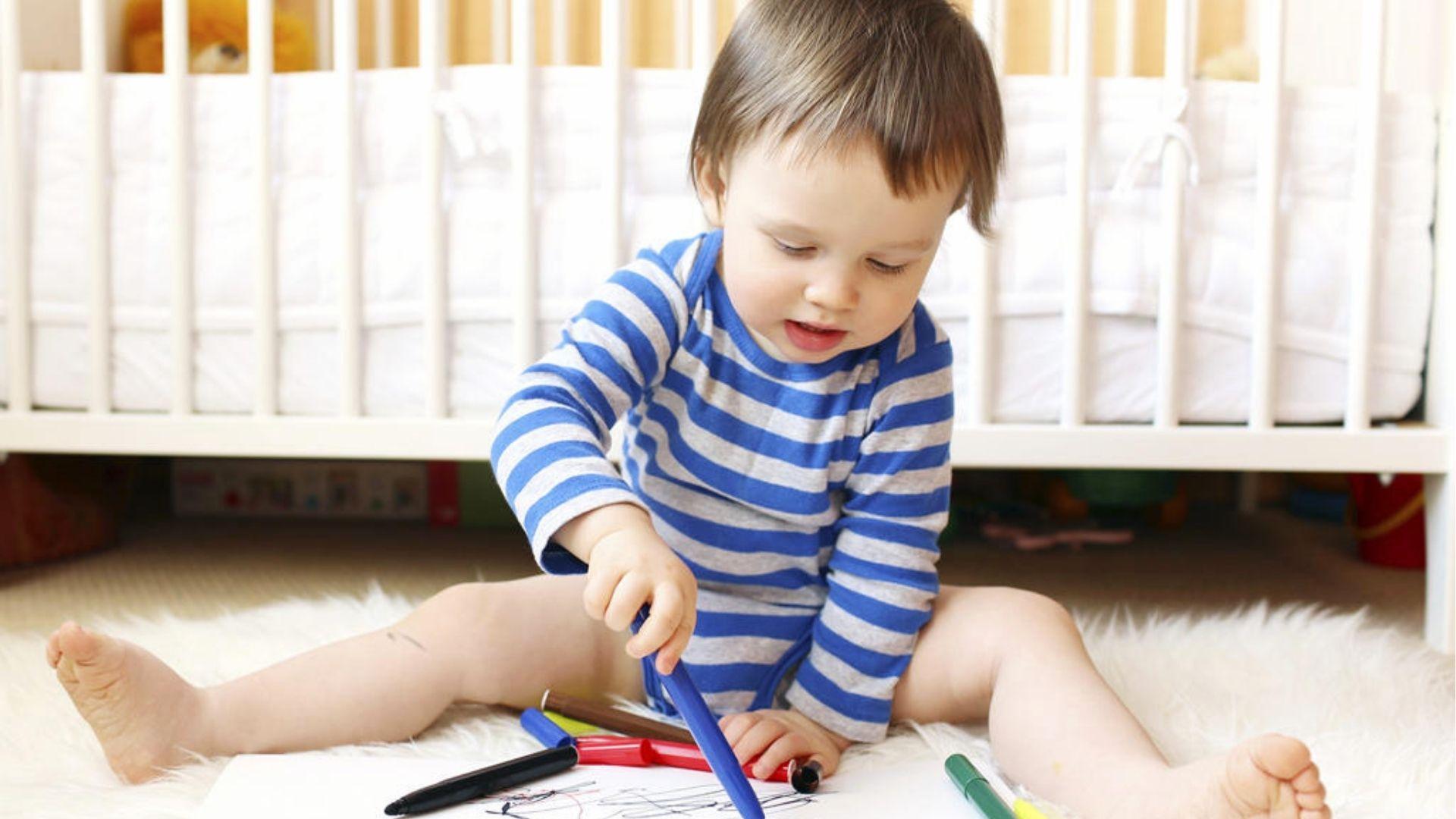
Look at the whole picture of how your toddler communicates, not just spoken words.
At this age, many toddlers say familiar words for people, objects, or activities, and they use the same sound for the same thing each time.
They often copy sounds or words they hear, point to familiar objects when you name them, and follow simple directions like “bring me your shoe.” Gestures usually go along with words, and understanding tends to run ahead of speaking.
If most of this sounds like your child, they are likely building language healthily, even if the word count is modest.
Is Your Toddler Starting to Combine Words?
Some toddlers begin putting two words together around this time, but many do not yet.
You might hear “more milk,” “Daddy bye,” “go outside,” or “doggie go.” Two-word combinations become more common as toddlers get closer to age 2, which matches the CDC milestone for that age.
A 20-month-old who is not combining words yet is not automatically behind, so use this as something to watch for rather than a pass or fail test.
What Counts as a Word at 20 Months?
Your toddler’s words do not have to sound perfect to count.
A word approximation that your child uses consistently counts, such as “ba” for bottle or “wawa” for water. Names like “mama,” “dada,” or a sibling’s name count too.
A consistent sound used to stand for something may count as well, and the same goes for words from any language your child regularly hears.
Keeping a simple running list on your phone can help you see progress over a few weeks and gives you something concrete to share at checkups.
When Should You Be Concerned About Your Toddler’s Speech?
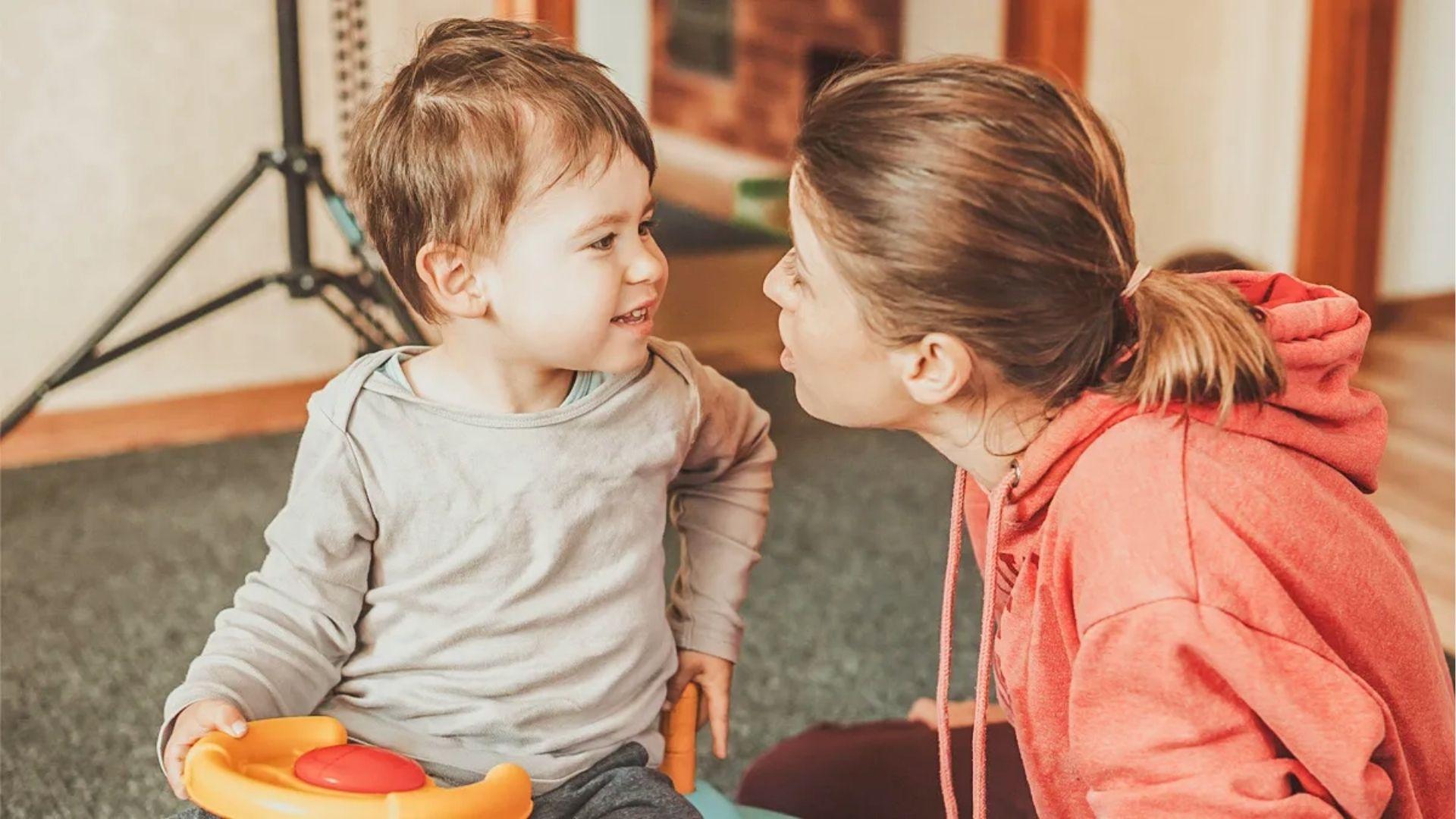
Many late talkers catch up, but it is hard to tell early which ones will, so a few signs are worth a conversation with your child’s doctor.
Talk with your pediatrician if your 20-month-old has very few or no meaningful words, or is not gaining new communication skills over time.
The same goes if they do not seem to understand simple directions, rarely point or use gestures, or do not imitate sounds or words.
Losing words or skills they previously had is the one sign to raise right away rather than waiting for the next scheduled visit.
Word count alone does not diagnose a speech delay. A doctor looks at the full picture, which brings us to what you can do at home.
How Can You Help Your 20-Month-Old Learn New Words?
Everyday moments give toddlers more language practice than any special program.
Here are simple ways to build vocabulary in your normal routine:
- Talk through routines, such as “Let’s wash your hands” at the sink.
- Read together and name the objects and actions on each page.
- Follow their interests by talking about the toy they pick, not the one you chose.
- Expand their words, so “dog” becomes “big dog.”
- Repeat important words naturally, using the same word each time.
- Play together and name objects, actions, and sounds as they happen.
The AAP also suggests choosing high-quality programming and watching with your toddler if you use screens, since talking with an adult is a key part of how toddlers learn language.
When to Talk to a Pediatrician About Speech Development

You can bring up speech concerns at any visit, even well before age 2.
Your pediatrician can look at speech, language understanding, gestures, and overall development.
Your pediatrician may check hearing or refer you for a hearing test, because hearing problems can affect how a child learns to speak and understand.
If a closer look is needed, your child may be referred to a speech-language pathologist for further evaluation.
Asking early costs you nothing, and if everything is fine, you leave with peace of mind.
Final Takeaway
Knowing how many words a 20-month-old should say gives you a helpful reference point, but gestures, understanding, and new sounds matter just as much.
Keep talking, reading, and playing through your day, because that is what builds language. If something feels off, trust your gut and ask your pediatrician now rather than waiting.
Start today by jotting down the words your toddler uses this week, then bring the list to your next checkup. Share this post with another parent who is wondering the same thing.
Frequently Asked Questions
Does using a pacifier delay talking?
Frustration is common because toddlers often know what they want before they have the words for it. Modeling a simple word or gesture, like “help,” may ease it. If tantrums are intense or frequent, tell your pediatrician.
Why does my 20-month-old have tantrums when they can’t say what they want?
Frustration is common at this age because toddlers know what they want before they have the words for it. Offering a simple word or gesture, like “more” or “help”, gives them a way to ask and often eases the meltdown.
Does a family history of late talking matter?
Children with a family history of late talking are more likely to be late talkers themselves. That doesn’t mean your child will have a delay, but tell your pediatrician about it at your next visit.