Finding good activities to do with 1 year old can feel overwhelming. You want something fun, safe, and actually helpful for their growth.
But most ideas online need special toys, complicated setups, or too much prep time that busy parents simply do not have.
This article gives you 11 simple, proven activities that toddlers genuinely enjoy. You will also learn what makes each one great for development and how to keep playtime easy and stress-free every day.
These ideas are based on common parenting practices and basic child development principles. No fancy supplies needed.
No elaborate plans required. Just simple, honest fun that actually works for both you and your little one.
What to Know Before Starting Playtime
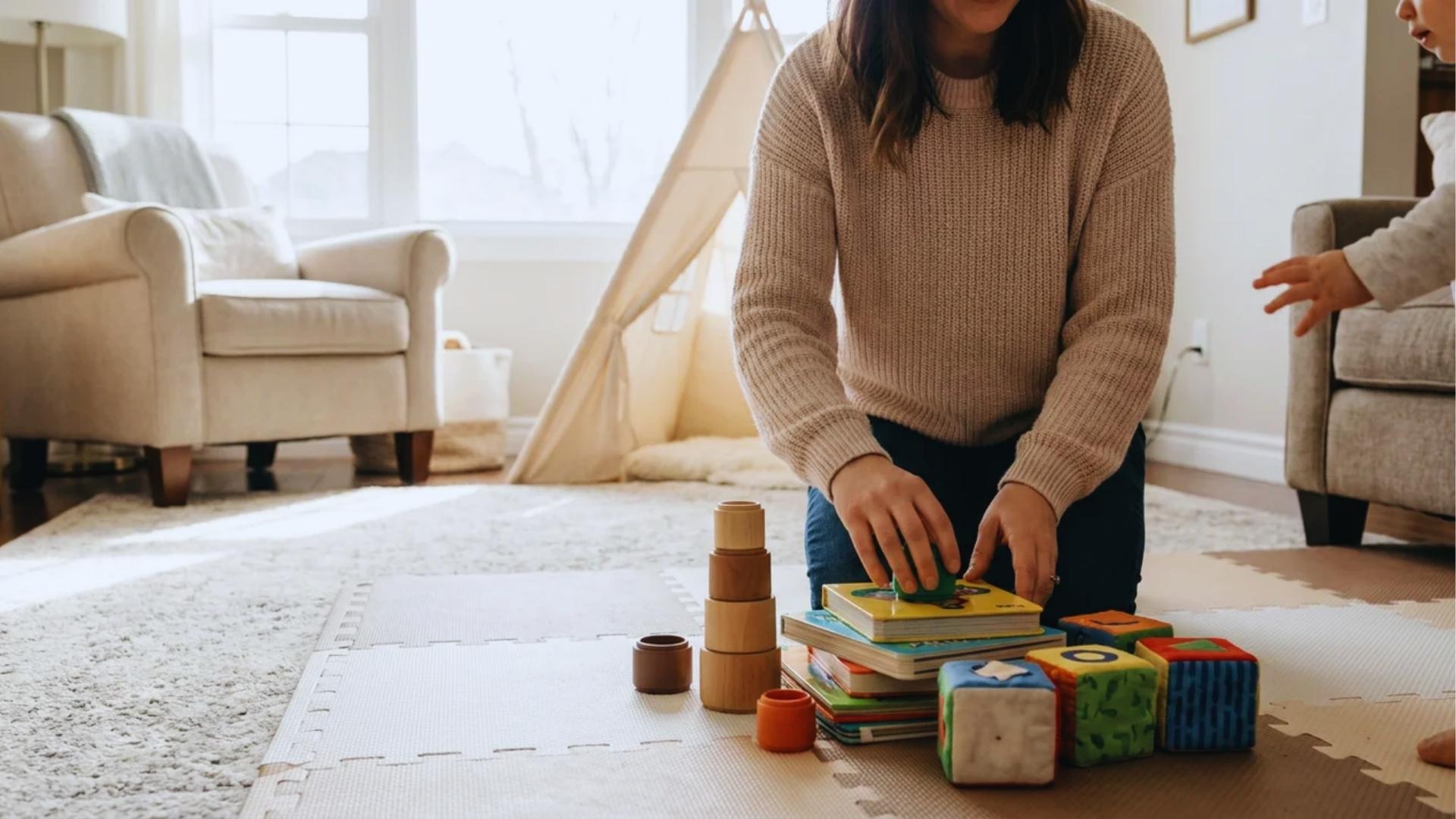
A little prep makes playtime smoother and more enjoyable for both you and your child.
At 12 months, most kids are pulling up, taking first steps, and using their hands more. They are also building neural connections at a fast pace, so every new texture, sound, and action counts.
They love cause-and-effect play like dropping, stacking, and banging things. Pick activities that match what your child can already do, then gently push a little further.
If they can stack two blocks, try three. Avoid activities meant for older toddlers since they can frustrate a 1-year-old fast.
The good news is you do not need to buy anything special. Plastic cups, wooden spoons, old containers, scarves, and board books are all you need.
With close supervision, a simple sensory bin or a tub of water can keep many toddlers engaged for several minutes. The simpler the setup, the better it usually works.
Keep in mind that a short attention span is completely normal at this age. Most 1-year-olds focus for 10 to 20 minutes at a stretch. Plan around that, not against it.
11 Activities to Do With 1 Year Old That Kids Love
Here are 11 tried-and-true activities that toddlers enjoy and that support healthy development at the same time.
1. Sensory Bin Play
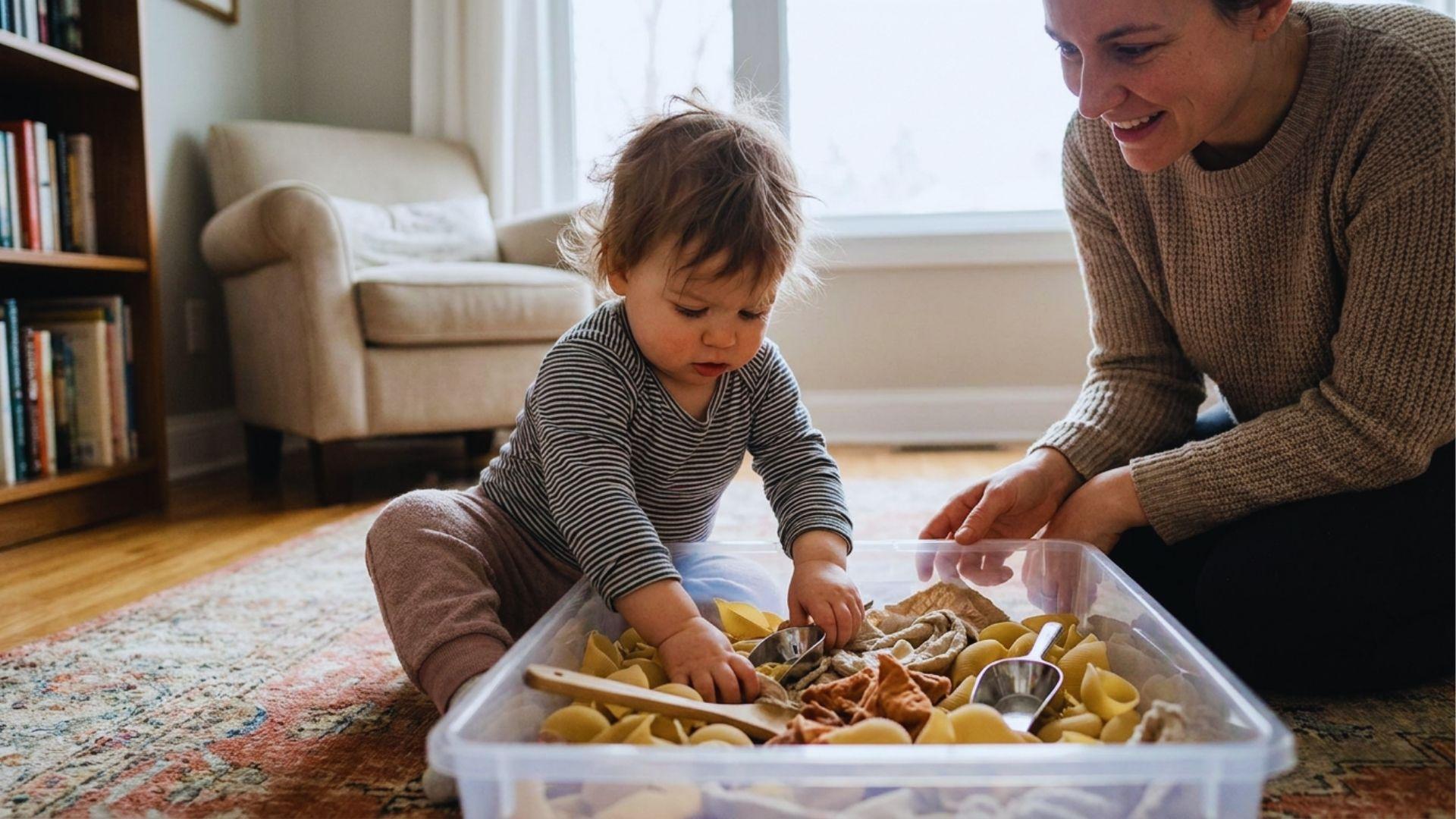
Fill a shallow bin with age-appropriate sensory materials, such as large dried pasta, fabric scraps, or other safe items.
Add a few small cups or spoons, then let your child dig, scoop, and pour while you supervise closely.
Sensory bins keep toddlers engaged because they get to find texture and movement. It also builds hand strength and focus.
You can even tuck a small toy underneath the rice to make it a simple discovery activity. Finding hidden objects is a skill toddlers are actively building at this age.
Always stay close. Small pieces can be a choking risk.
2. Stacking Cups and Blocks
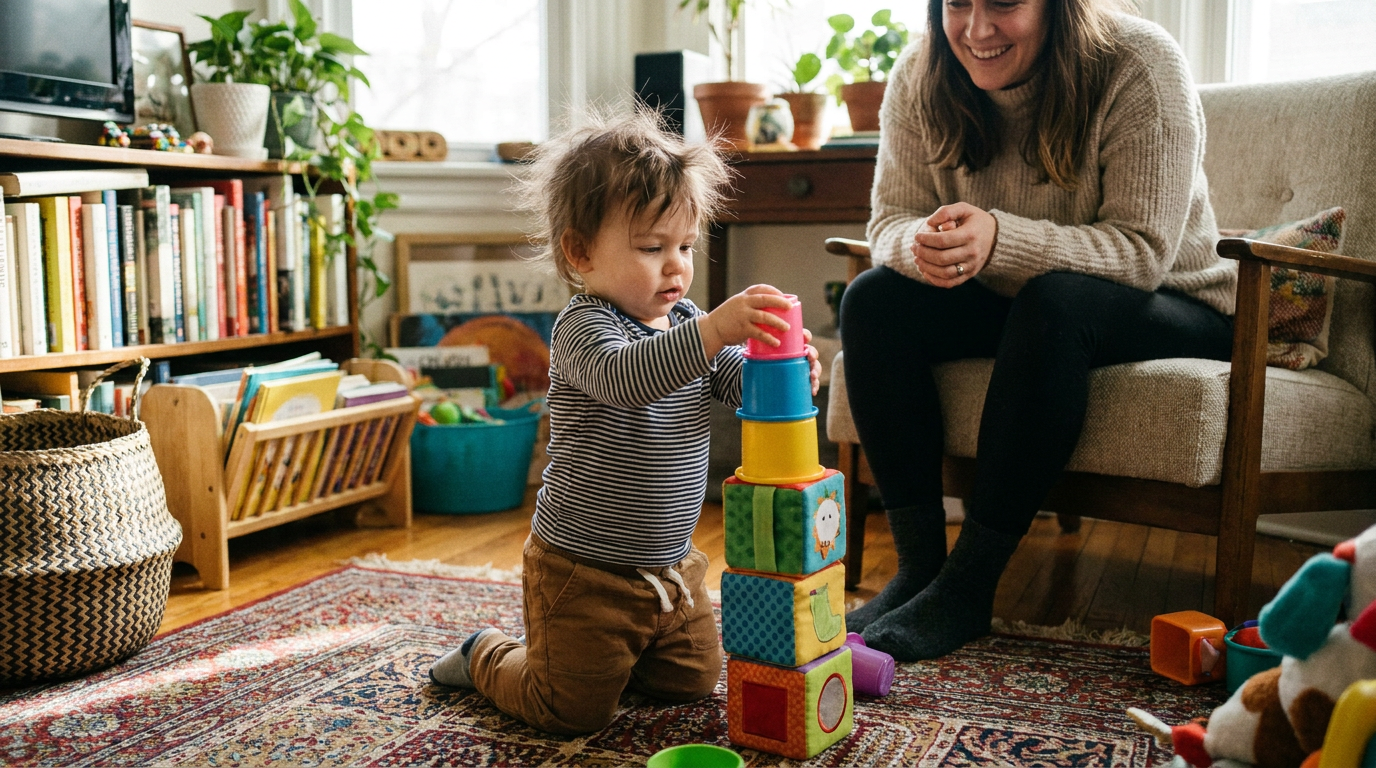
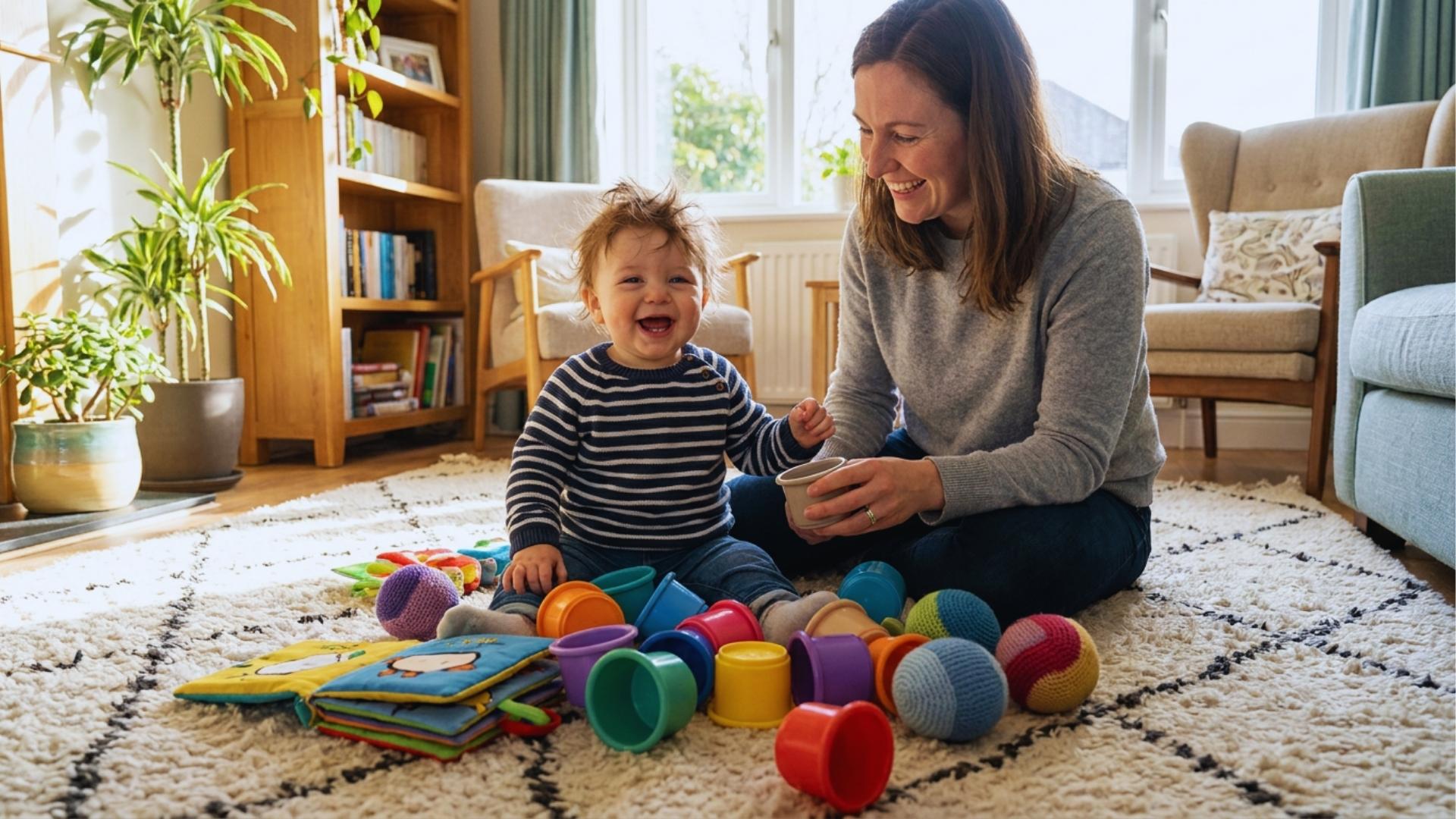
Stacking is one of the best activities for fine motor skills and hand-eye coordination. Give your child a set of plastic cups or soft blocks. Show them how to build a tower. Then let them knock it down.
Toddlers love the crash. It teaches cause and effect and keeps them coming back for more. Start with two or three pieces. Add more as they improve.
3. Water Play With Kitchen Items
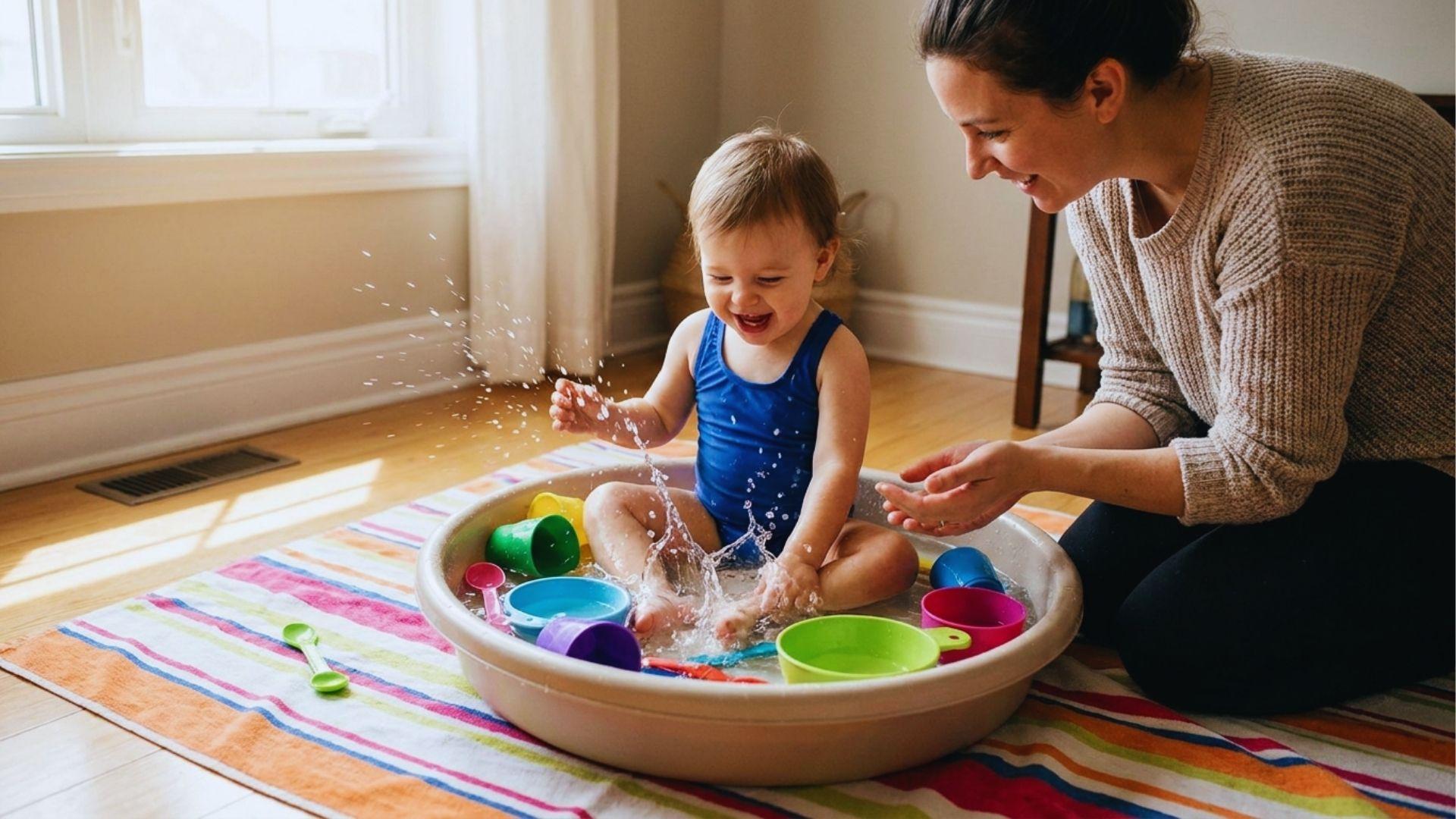
Set up a small bin of water on the floor or in the bathtub. Add plastic cups, a spoon, and a small bowl. Let your child pour and splash freely.
Water play builds coordination and keeps toddlers calm. It also introduces early concepts like full, empty, and heavy.
Put a towel underneath to make cleanup easy.
4. Bubble Chasing
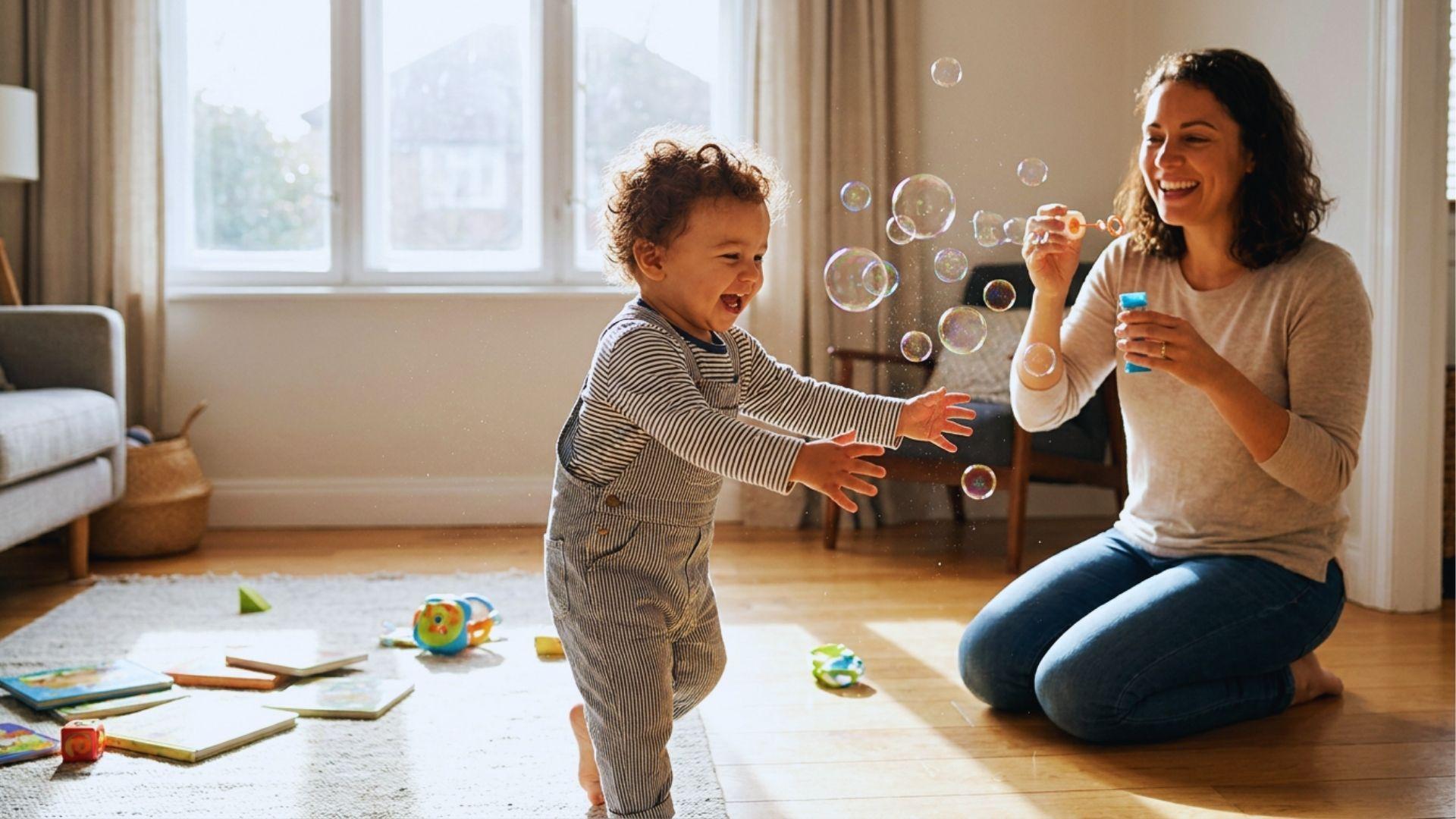
Blow bubbles and watch your child go wild. They will try to catch them, pop them, and follow them around the room.
This is great for gross motor skills. Running, reaching, and squatting after bubbles builds balance and coordination.
Use a baby-safe bubble solution. Keep sessions short so they stay exciting.
5. Board Book Story Time
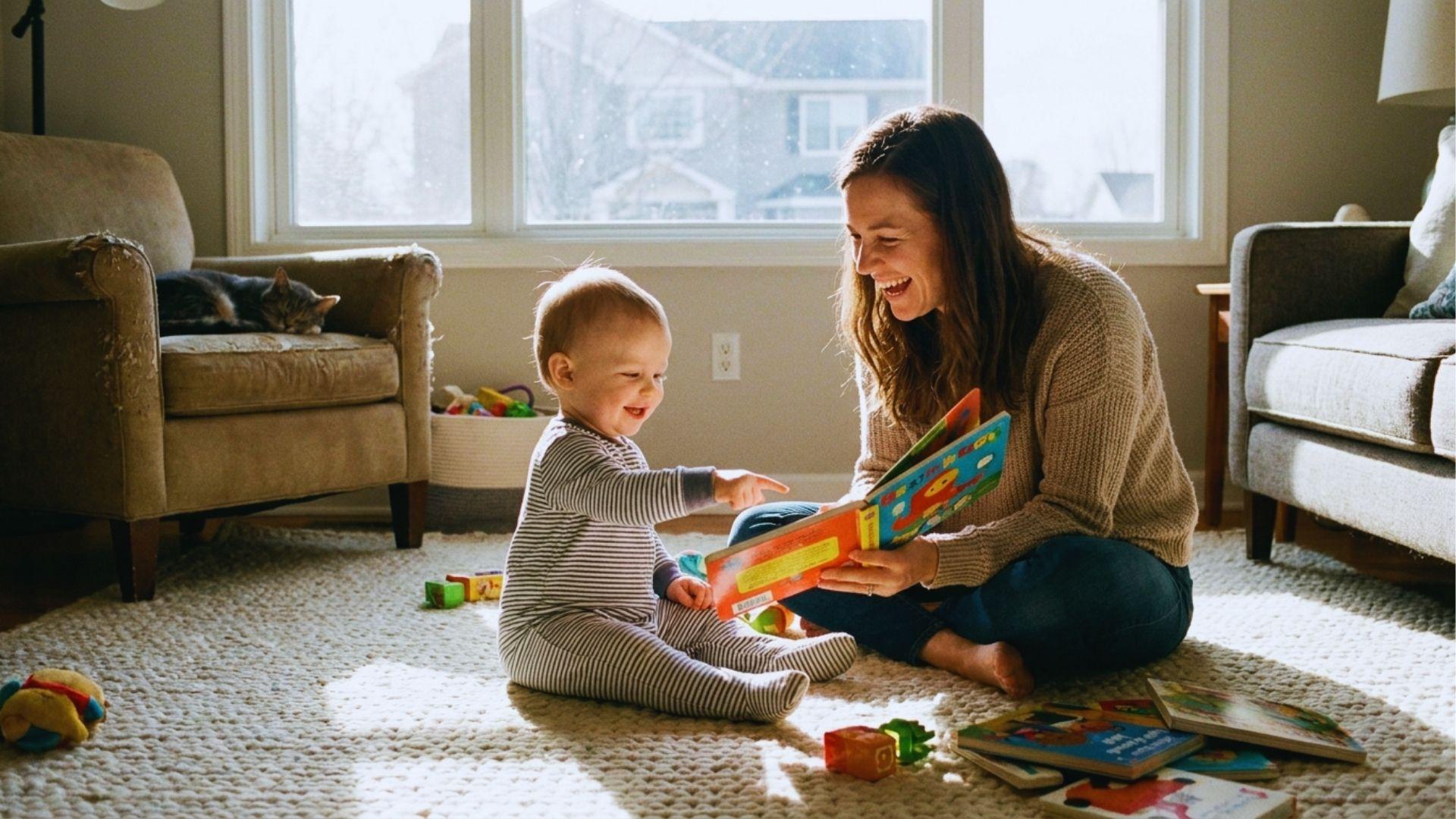
Reading together is one of the most powerful things you can do every day. Choose board books with bright pictures and simple words.
Point to pictures and name them. Make sounds. Ask "where is the dog?" even if they cannot answer yet.
This builds vocabulary, listening skills, and a love of books early on. Narrating what you see on each page is one of the fastest ways to grow a toddler's vocabulary between 12 and 24 months.
6. Music and Dance Games
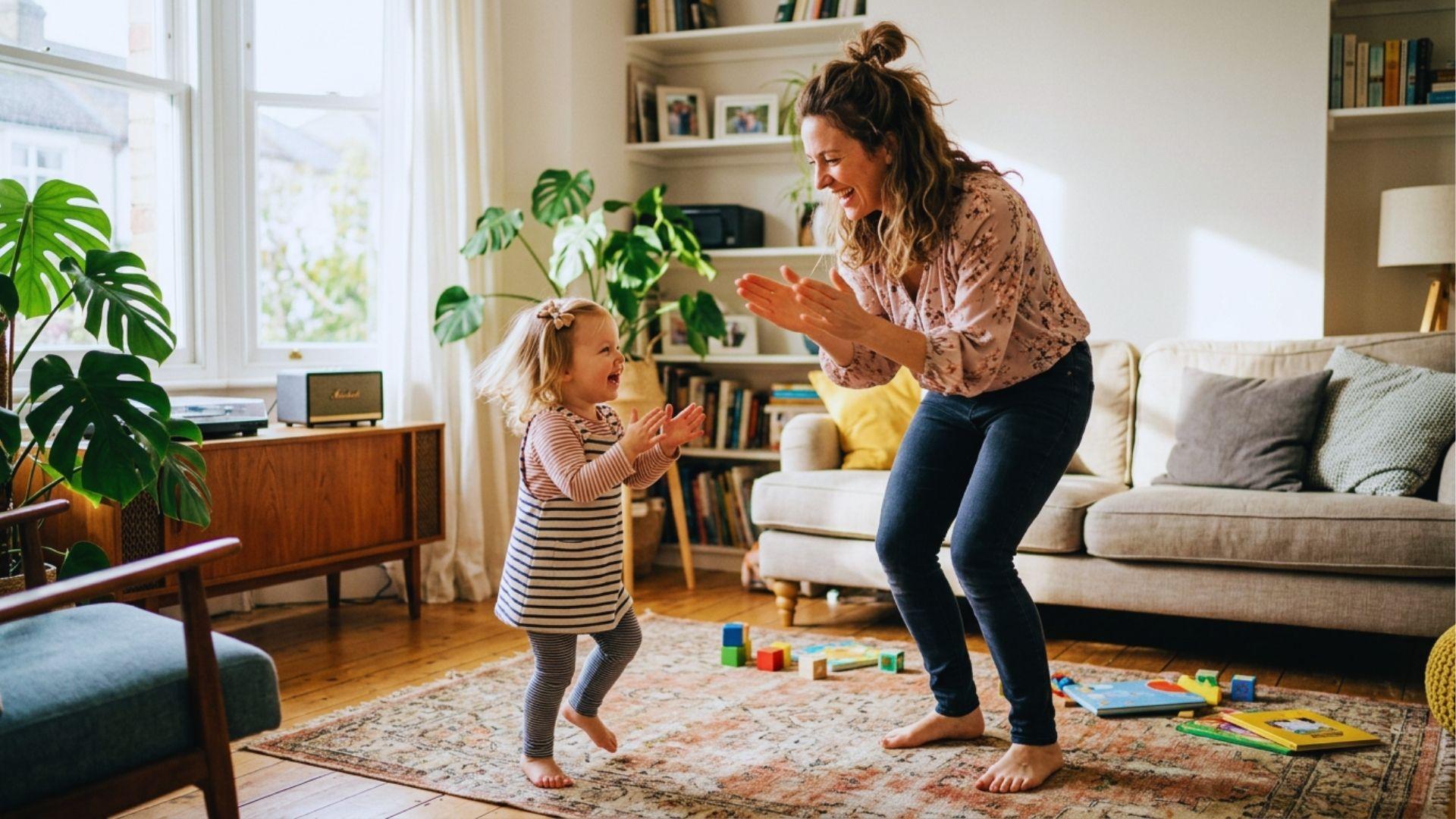
Put on some music and move together. Clap, sway, bounce, or stomp. Toddlers copy what they see, so keep it simple and silly.
Music supports language development, rhythm, and body awareness. It also burns energy, which is always helpful.
You do not need a playlist. Humming or singing nursery rhymes works just as well.
7. Finger Painting With Baby-Safe Paint
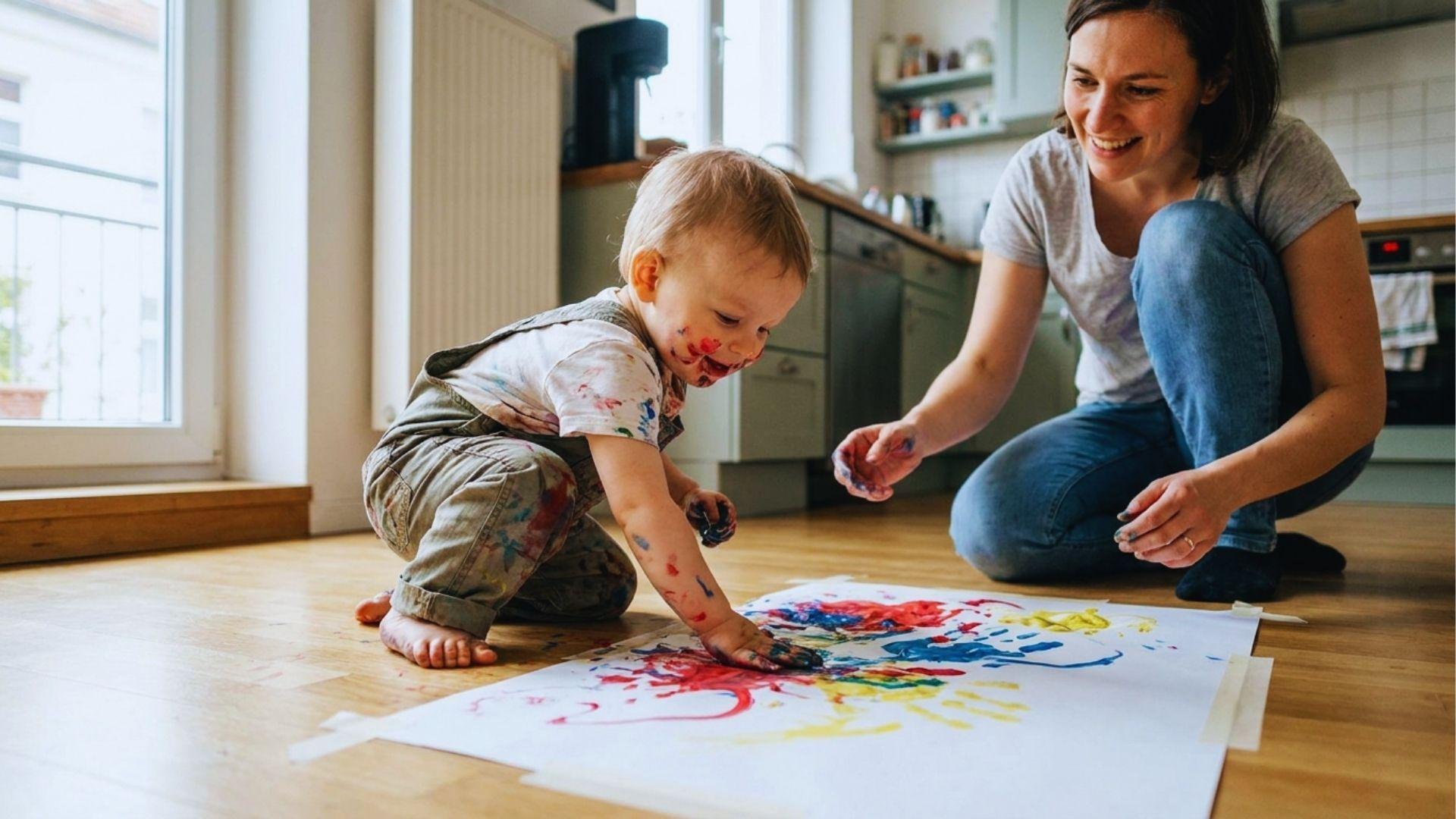
Spread some baby-safe paint on a piece of paper and let your child go to town. They will smear, press, and explore.
Finger painting builds creativity and sensory awareness. It also develops grip and hand control over time.
For a mess-free version, squeeze a few drops of paint into a sealed zip bag, tape it to the floor, and let your child press and swirl the colors through the plastic.
Use a smock or old clothes. Tape the paper to the table so it does not slide.
8. Shape Sorter Play
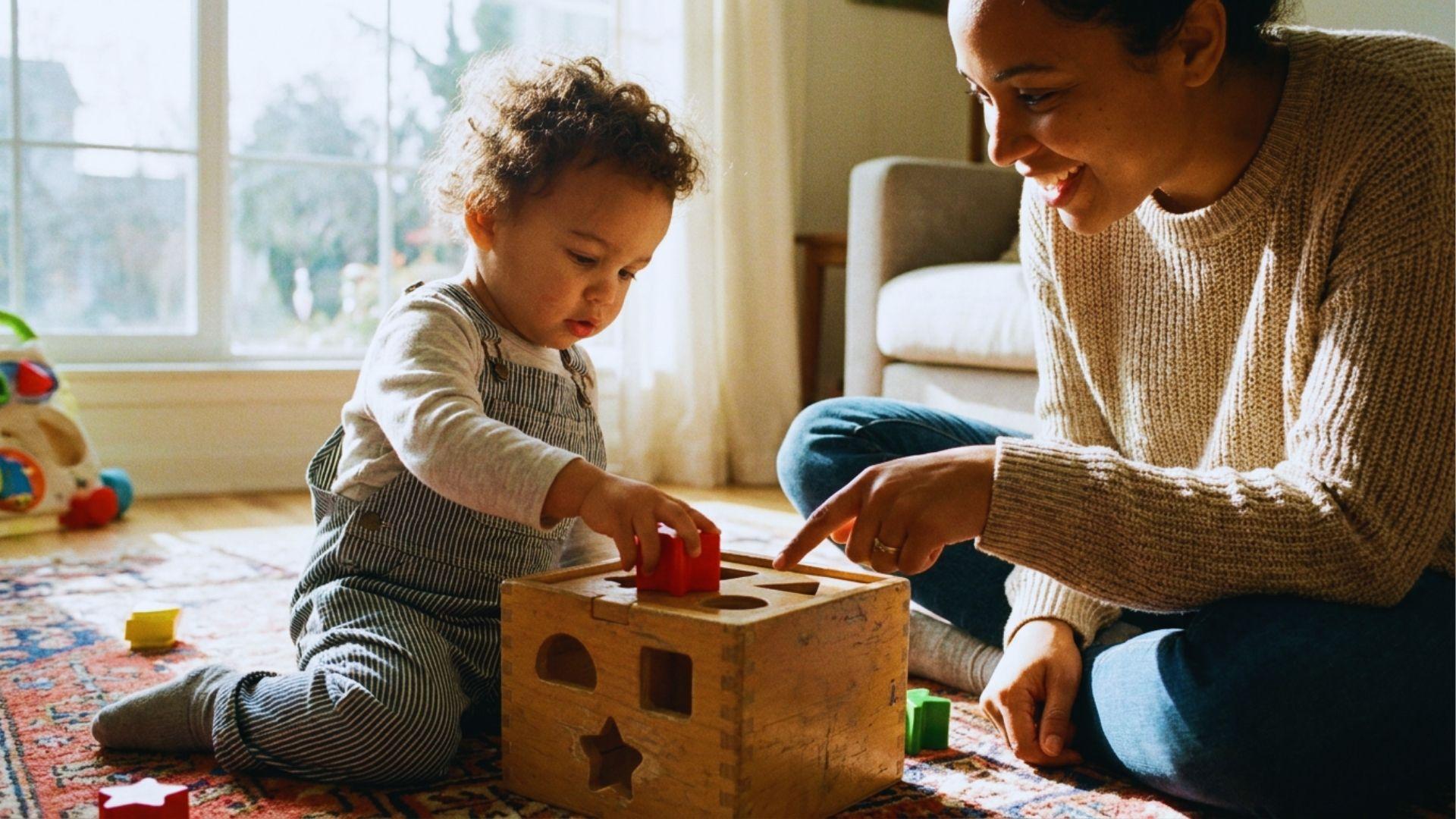
A shape sorter is a classic for good reason. It teaches problem-solving, hand-eye coordination, and early cognitive skills like matching and spatial reasoning.
Start by showing your child one shape. Guide their hand if needed. Celebrate when it drops in.
If a shape sorter toy is not available, cut shapes out of cardboard and sort them into a shoebox with matching holes.
9. Ball Rolling Games
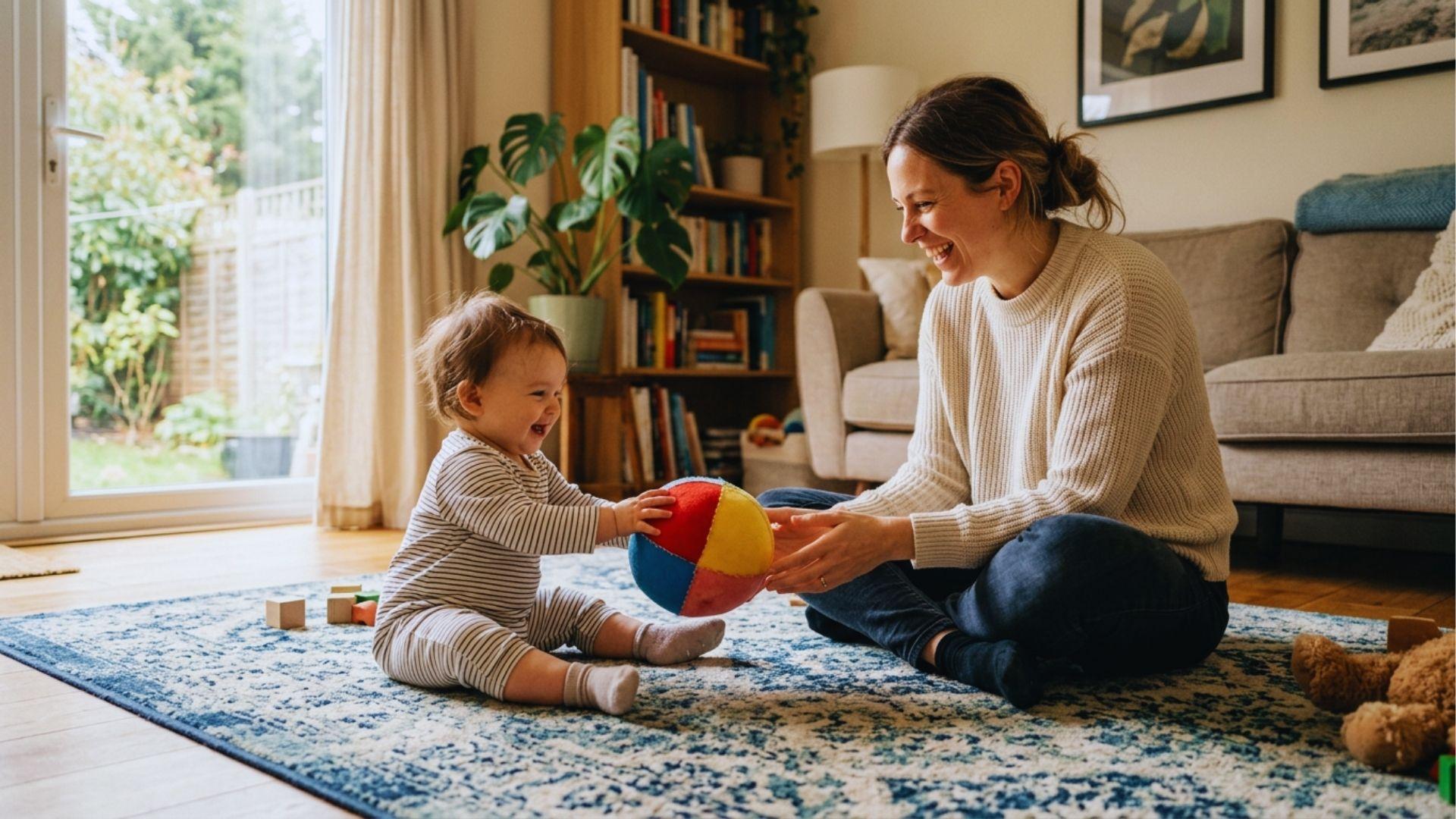
Sit across from your child on the floor. Roll a soft ball back and forth. This sounds simple, but toddlers love it.
Ball rolling teaches turn-taking, focus, and basic coordination. It is also one of the first social play activities a child can do.
Use a soft fabric ball or a lightweight plastic ball to keep it safe.
10. Nature Walk Treasure Hunt
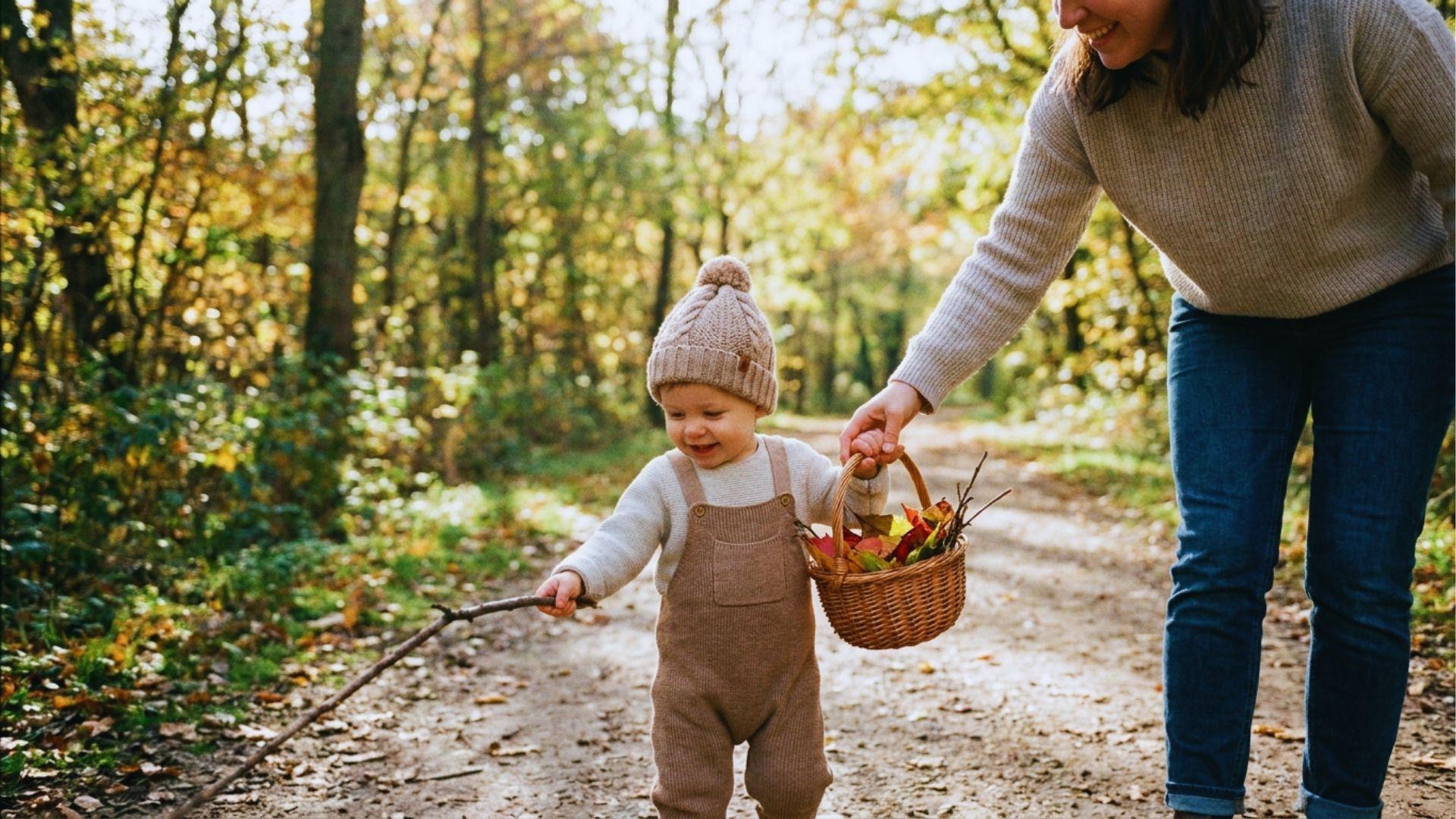
Take a slow walk outside. Let your child pick up leaves, rocks, or sticks. Talk about what they find.
Nature walks support sensory learning and language. Naming things like "rough rock" or "green leaf" builds vocabulary fast.
Keep the walk short. Toddlers tire quickly, but they absorb a lot in just 15 minutes.
11. Pretend Play With Household Items
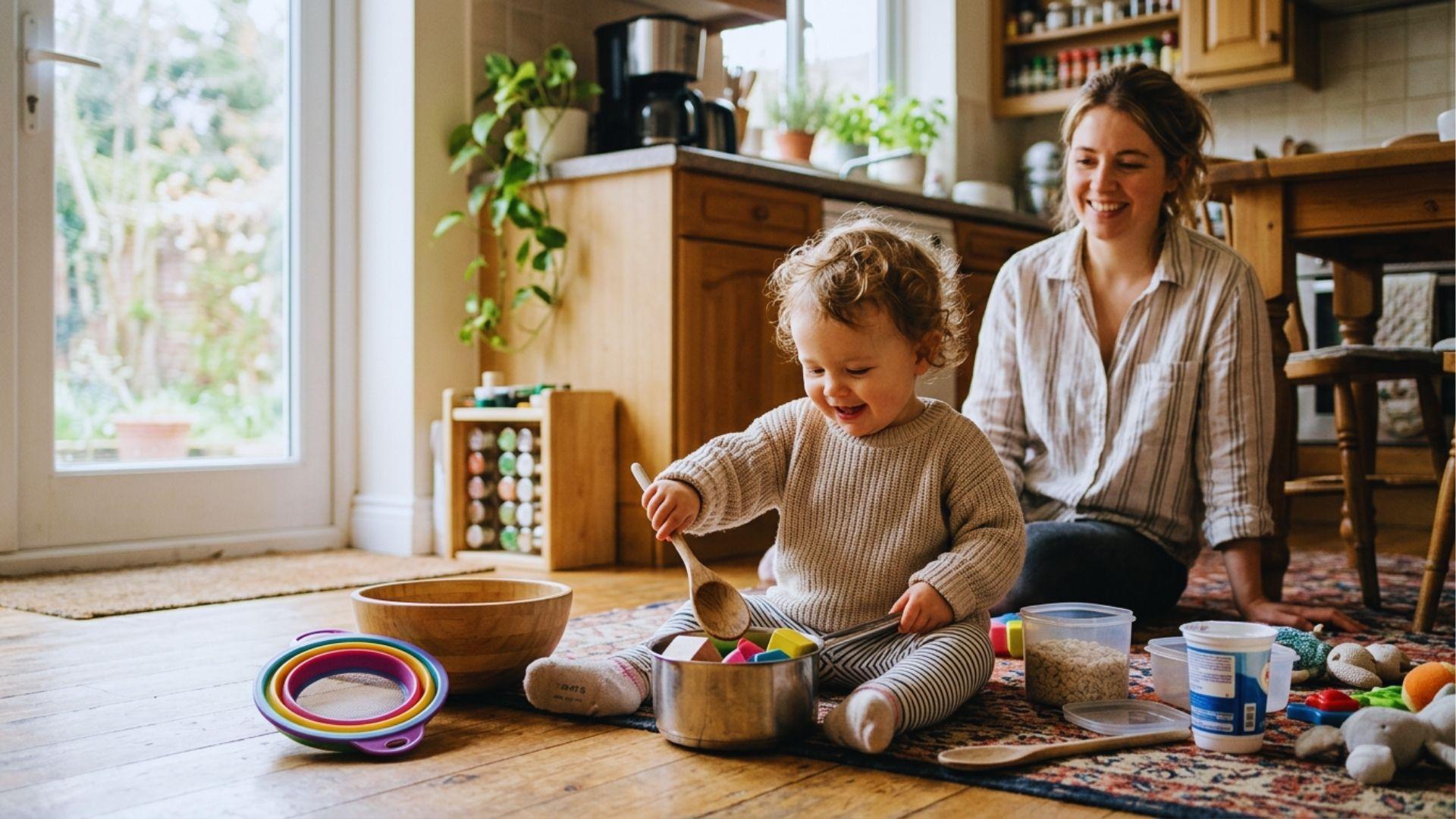
Give your child a wooden spoon and a pot. Watch them stir and bang. Hand them a small bag and watch them pack and unpack it.
Pretend play sparks imagination and builds social-emotional skills. A busy board made from a flat piece of wood with zippers, latches, and knobs is another great option if you want something your child can return to every day.
It shows you what your child finds interesting while building real dexterity. Old phones, toy food, and small containers are all great pretend play props.
How Each Activity Supports Development

Every activity on this list has a real developmental purpose. Here is how they break down by skill area so you can choose the right one at the right time.
Activities for Fine Motor Skills
Fine motor skills involve the small muscles in the hands and fingers. These skills are needed for writing, self-feeding, and dressing later on.
The best activities for fine motor skills on this list include stacking cups, shape sorter play, and finger painting. Each one requires gripping, pressing, or placing objects with care.
Sensory bins also help. Scooping and pouring strengthens hand muscles over time. Playdough is another solid option if you have it.
Pressing, rolling, and pinching dough builds the same small hand muscles without any mess once it is packed away.
Activities for Gross Motor Skills
Gross motor skills involve the big muscles used for walking, running, and jumping. Toddlers at one year are building these skills fast.
Bubble chasing, ball rolling, and nature walks all support gross motor growth. They get kids moving, reaching, and balancing in natural ways.
A simple indoor obstacle course made from couch cushions and pillows works just as well on rainy days. Music and dance is another great option. It gets the whole body moving without any pressure.
Activities for Language and Sensory Learning
Language develops quickly between 12 and 24 months. The more you talk during play, the better.
Story time and nature walks are the strongest for language. But really, any activity works if you narrate what is happening. Say things like "you're pouring the water" or "that block is red."
This kind of running commentary during play is one of the simplest ways to support vocabulary growth.
Around one year of age, many children begin imitating gestures and pointing to objects that interest them. Naming the things your child reaches for and points at during play helps build vocabulary.
Sensory bin play, water play, and finger painting all target sensory learning. They help the brain process touch, sound, and movement.
Easy Ways to Keep Play Fun Every Day
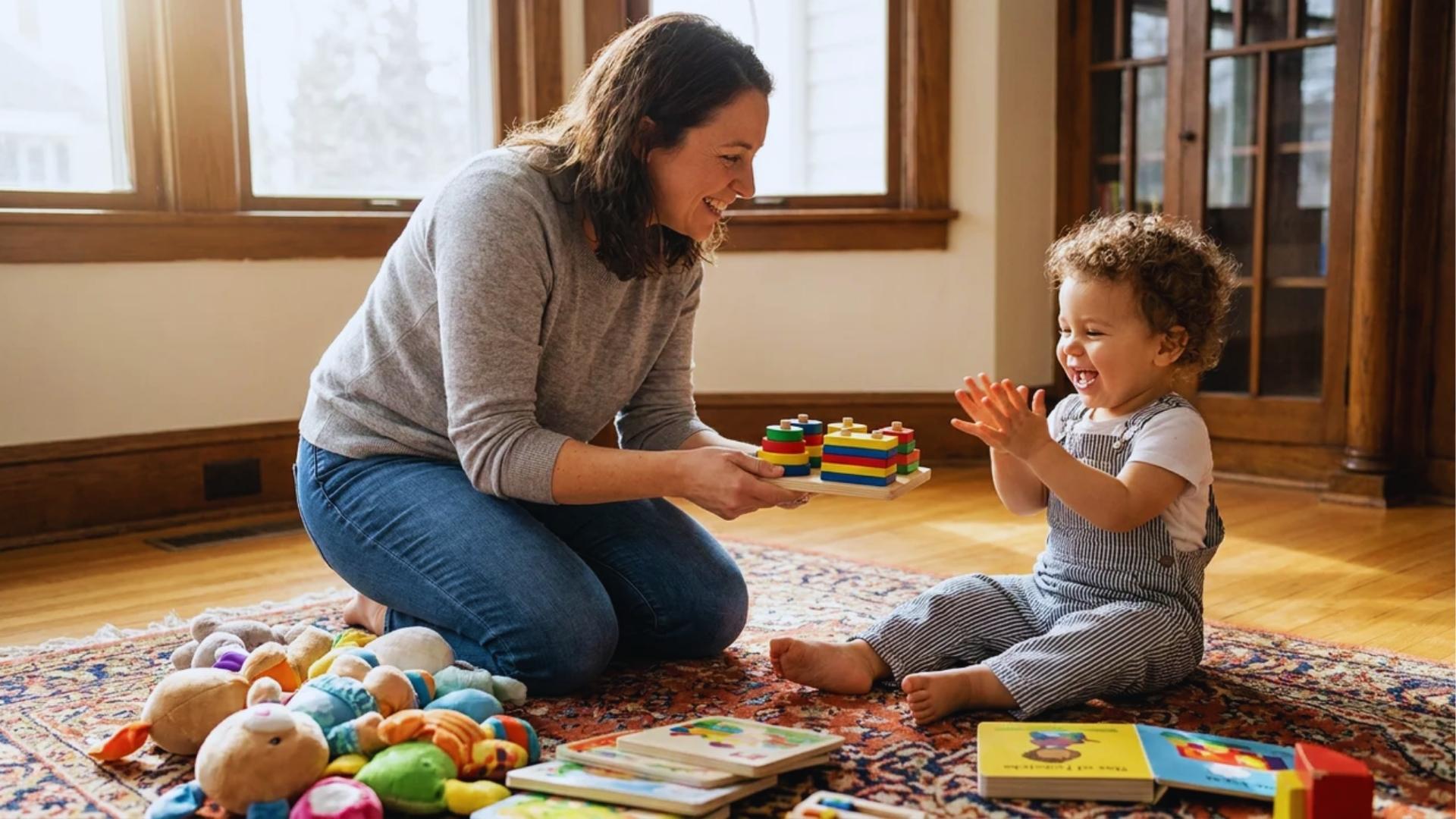
You do not need a perfect plan. A few simple habits make daily play much easier and more enjoyable for everyone involved.
Rotate Activities to Hold Attention
Toddlers lose interest fast. If you offer the same activity every day, it stops working.
Try rotating through three or four activities across the week. Bring one back after a few days, and it feels new again.
Keep a small box of go-to supplies ready. That way, setup takes under a minute.
Follow Your Child's Interests
Pay attention to what your child gravitates toward. If they always go for the kitchen drawer, use kitchen items in play.
A discovery basket filled with safe kitchen tools like lids, spoons, and small bowls can keep a curious toddler busy for a long stretch. If they love being outside, lean into nature-based activities.
Play works best when it matches the child's current obsessions. You do not have to force an activity that is not clicking.
Switch things up without guilt. Flexibility is more useful than a strict routine.
Keep Play Short and Pressure-Free
Most toddlers play in short bursts of 10 to 20 minutes. That is completely normal.
Do not push them to keep going if they are done. Let them lead. They will come back when ready.
The goal is positive association with play, not achieving milestones on a schedule. Brief independent play in a safe, enclosed space is also healthy and worth encouraging as your child grows.
Common Playtime Mistakes to Avoid
Even well-meaning parents make some playtime mistakes. Knowing what to avoid helps you get more out of each session.
Expecting Too Much Too Soon
It is easy to compare your child to others or to developmental charts. But every toddler moves at their own pace.
If your child cannot do something yet, that is okay. Offer the activity again in a few weeks. Forcing it creates frustration for both of you.
Celebrate small wins. Even holding a block correctly is progress.
Choosing Activities That Are Unsafe
Some activities look fun but carry real risks for 1-year-olds. Small pieces, sharp edges, or toxic materials are serious hazards.
Always check that paint is labeled baby-safe. Make sure sensory bin items are too large to swallow. Avoid activities with strings or cords.
Read labels and stay close during play. Supervision matters more than any toy.
Overstimulating Your Child
Too much noise, too many toys, or too many activities back to back can overwhelm a toddler quickly.
Signs of overstimulation include crying, turning away, rubbing eyes, or throwing things. When you see those signs, slow things down.
A quiet activity or a short rest usually helps reset them.
Tips for Safe and Enjoyable Play
Keeping play safe does not have to be complicated. A few steady habits make a big difference.
- Never leave a toddler alone during active play, especially near water or small objects. Sitting nearby is enough. Your presence helps them feel safe without hovering.
- Stay within arm's reach whenever water or choking hazards are part of the activity. A few extra seconds of closeness can prevent a serious situation.
- Use what you already have at home. Plastic containers, old magazines, and scarves make great play tools and teach your child that fun does not require a toy store.
- If an activity feels too easy by 18 months, that is a good sign. Add a small challenge like more steps, smaller objects, or simple questions to keep it engaging.
- Keep adjusting activities as your child grows. The same basic ideas can work across the entire toddler stage with just a few small changes each time.
Conclusion
Play is one of the best gifts you can give your toddler right now. These activities to do with 1 year old are simple, safe, and genuinely good for their growth.
You do not need expensive toys or hours of prep. You just need a little time and a willingness to get on the floor with them.
Start with one or two activities this week and see what your child enjoys most. If this helped you, share it with another parent or leave a comment below.
Every toddler is different, and finding what works for yours is half the fun.
Frequently Asked Questions
How long should playtime last for a 1-year-old?
Let your child guide the length of each session. Several short play sessions throughout the day are usually more effective than one long session.
Can a 1-year-old play independently without a parent?
Brief independent play is healthy and normal. Set up a safe space nearby and check in regularly without interrupting.
How many activities should I offer in a day?
Two to three activities per day is plenty. Offering too many options at once can overwhelm toddlers and reduce their focus.
What if my 1-year-old is not interested in any activity?
Try again later or change the setting. Sometimes hunger, tiredness, or mood affects interest more than the activity itself.
Is screen time okay alongside these activities?
Limiting screen time is recommended at this age. Active play, movement, and real-world interaction support development far more than screens do.