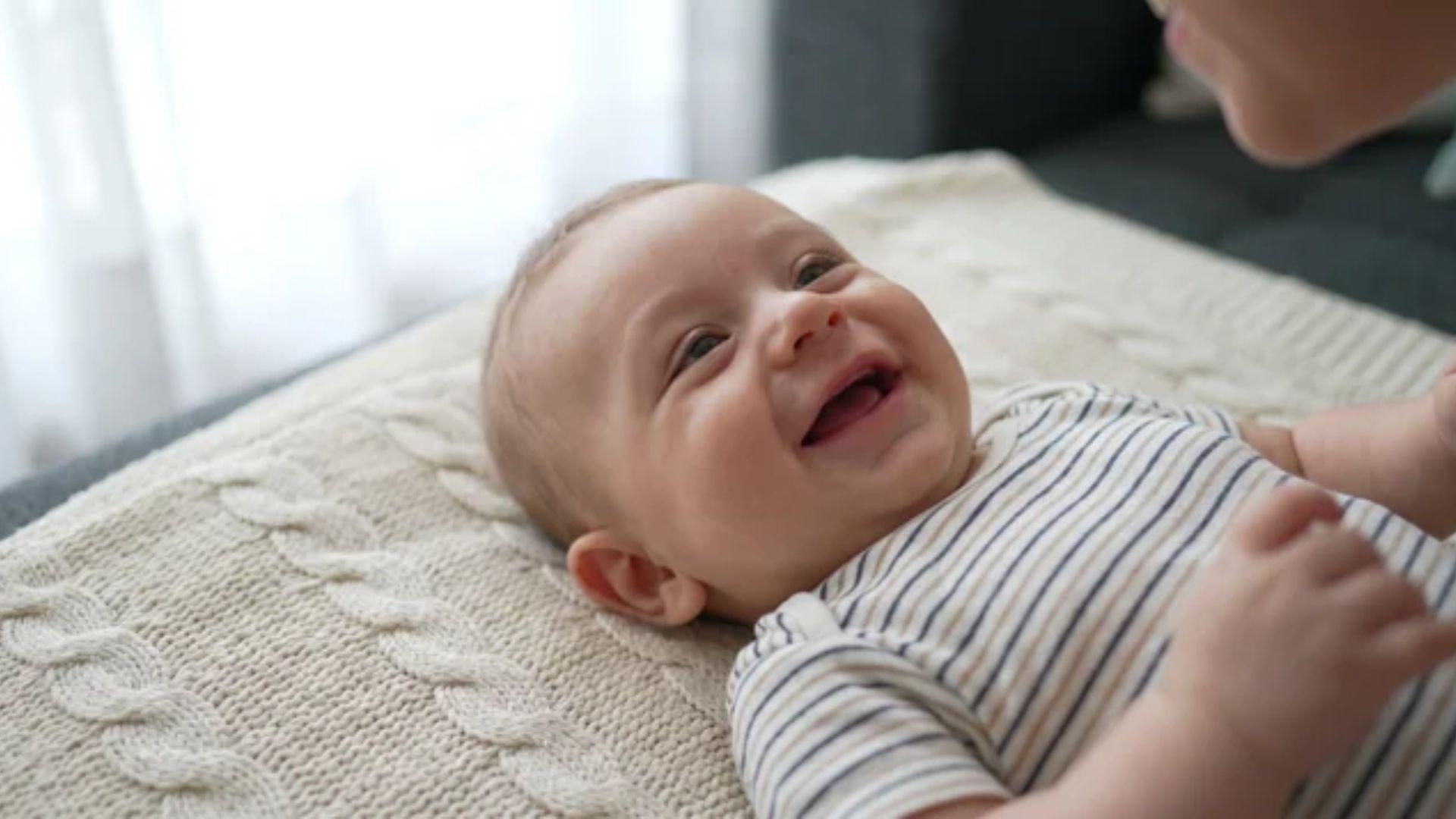
Your baby locks eyes with you and the corners of their mouth lift. So when do babies start smiling and cooing?
Usually around six to eight weeks, and a few weeks later is still typical. Most parents freeze anyway, afraid one blink will end it.
I hear this question from parents again and again, usually asked quietly.
Parents often count a smile and a coo as two separate milestones. They are really one conversation, and your baby is just learning to start it.
Once you see why they arrive together, the timing makes more sense, and so does what comes next. First, the age itself.
When Do Babies Start Smiling and Cooing?
When do babies start smiling and cooing? Most babies begin around 6 to 8 weeks, and the normal range runs to about 12 weeks.
Smiles show up in response to your face or voice. Coos are soft vowel sounds like “ooh” and “aah,” made while your baby watches you.
When do babies start cooing and smiling in a way you can count on? Usually a couple of weeks after the first brief attempts.
Early on, the smiles tend to arrive without warning. You might see two in a morning and none for the rest of the day.
Over the next few weeks they become steadier. Your baby smiles at anyone who leans in, though the biggest grins often go to familiar faces.
Responding back has a look to it. Your baby watches your mouth, goes quiet while you talk, and waits.
Then you pause, and a smile or a coo comes back. That pause and answer is the moment you are listening for.
By 4 months, most babies make sounds back when you talk, a milestone on the CDC’s 4-month list.
Why Do Smiles and Coos Appear Together in Two Months?
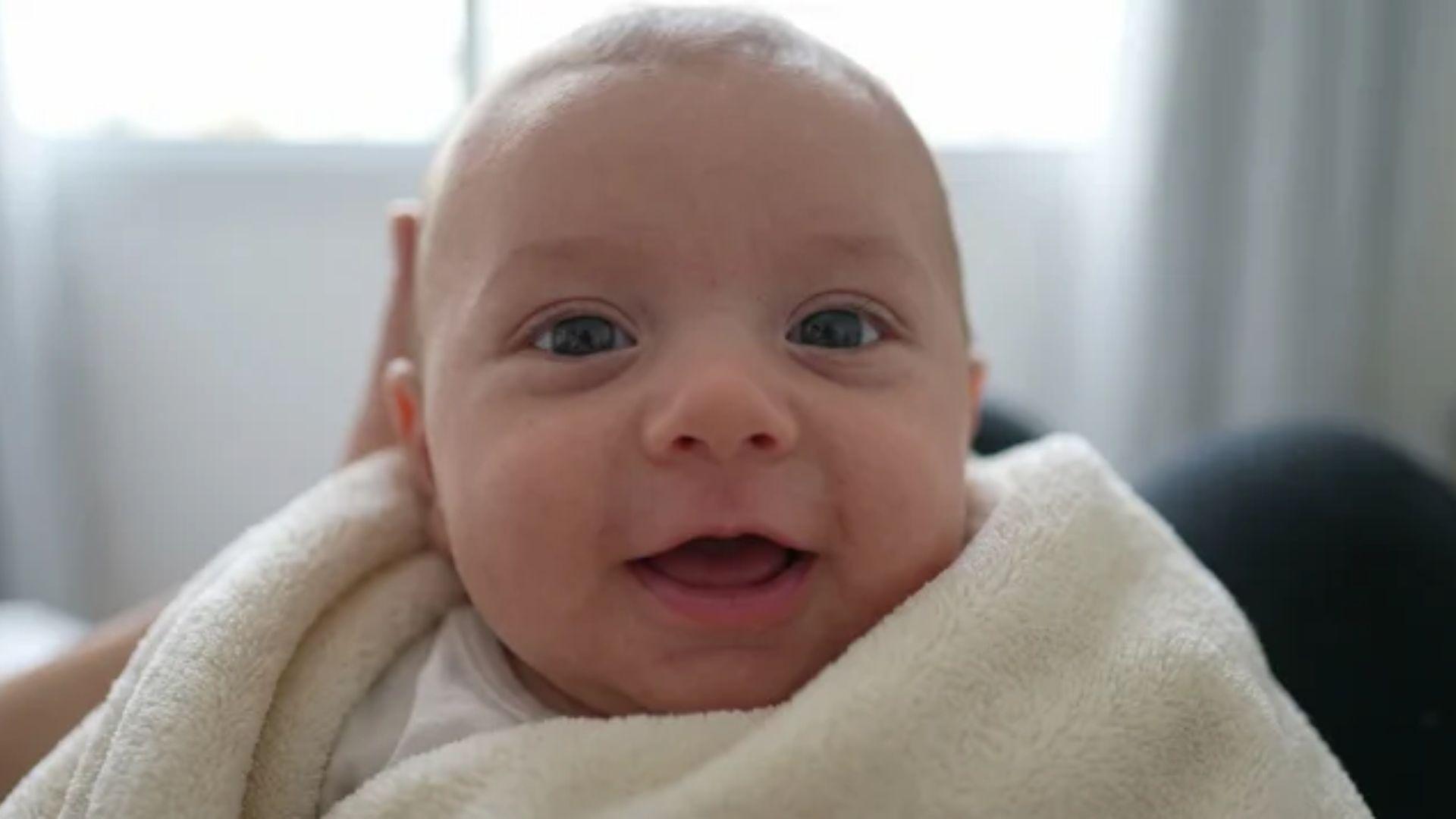
Smiling and cooing are two ways your baby answers the same thing, which is you. That is why they show up within a few weeks of each other.
Around two months, your baby’s eyes get better at holding focus on a face. Interest in faces and voices grows at the same time.
Breath and throat control improve over the same weeks, so your baby can make soft, steady sounds. Now there is a face to look at and a voice to answer with.
So when do newborns smile? Sometimes in the first weeks, but those early reflex smiles happen on their own and are not aimed at you.
Once the window opens, a back-and-forth begins. Your baby smiles, you smile back and talk, and that makes the next smile or coo more likely. Harvard’s Center on the Developing Child calls this serve and return.
A baby who gets plenty of calm face time may build the loop a little sooner. A quieter baby may take longer, and both paces are normal.
A tired or fussy baby may sit out the loop, even when the skill is ready. The ability arrives first, and your baby shows it only when calm and alert.
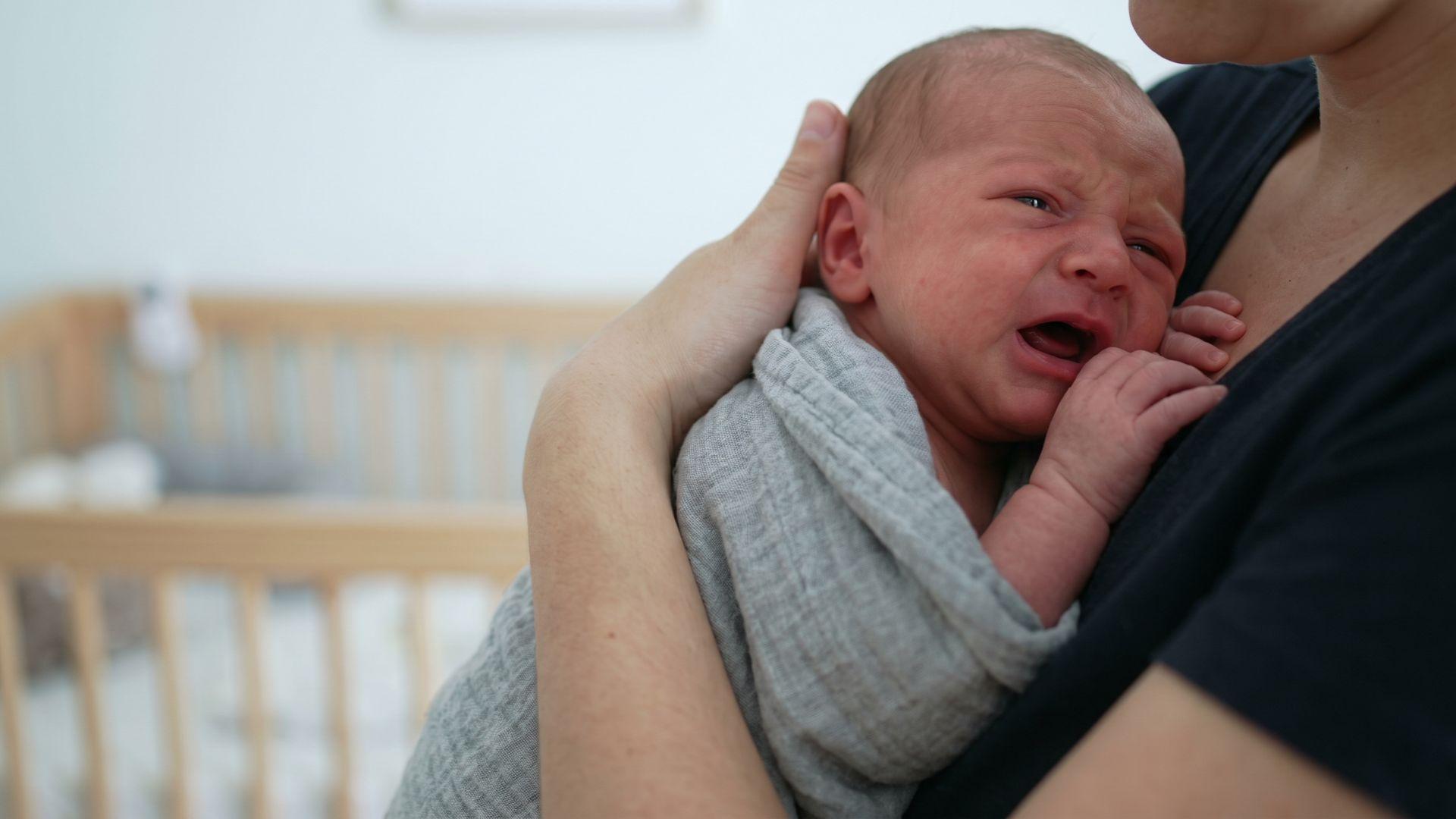
It also helps to see how a coo differs from a cry. A cry says I need something, while a coo says I am here with you.
What Comes After Cooing? From Babbling to Baby Gibberish
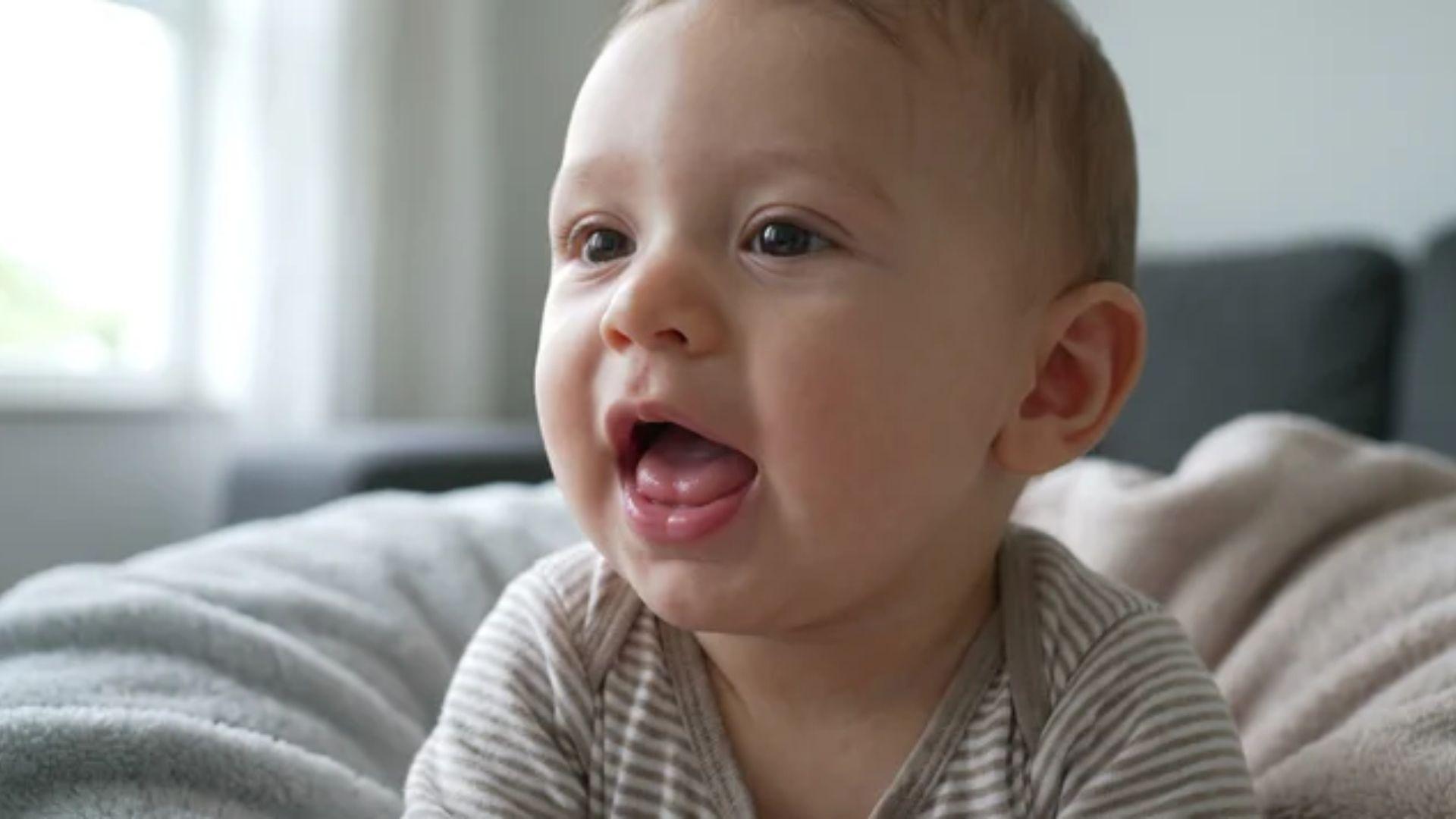
Cooing leads into babbling at about 4 to 6 months, and speech-like gibberish follows later in the first year.
The sounds in between get livelier. Around 3 months you may hear squeals, growls, and the first laughs.
So when do babies start to babble? Usually between 4 and 6 months, when sounds like “ba” and “da” appear.
Vowels like “ooh” come from a relaxed mouth. Consonants ask your baby to close the lips or lift the tongue on purpose, so they take more practice.
That is why the order matters more than the exact week. A baby who starts “mamama” at 7 months is still following the usual path.
Gibberish comes later and sounds different. Early babbling repeats single syllables, like “bababa.”
Gibberish strings different sounds together, with the rise and fall of a real sentence. So when do babies start talking gibberish? Usually in the second half of the first year, around 9 to 12 months.
It can sound like a full sentence in a language you don’t speak. Your baby is practicing the music of talking before the words arrive.
Babbling practices sounds, while gibberish practices rhythm and tone. Both are steps toward real words.
Most babies move through this order at their own pace. A few signs are worth knowing about, though, which brings us to when to check in.
What Can Shift the Timeline, and When Should You Check In?
A window, not a single week, is what counts as normal. A few things can move your baby’s timing, and a few signs are worth a call.
- Early birth: Milestones are counted from the original due date, which is called corrected age by the AAP. A baby born eight weeks early may start social smiling around 14 to 20 weeks after birth. That is right on time.
- Temperament: Some babies stay calm and alert for only a few minutes. You see fewer smiles even when the skill is there. The 12-week upper range absorbs much of this, so a serious or sleepy baby is not behind just because the smiles come later.
- Around 3 to 4 months: This is the point to check in with your pediatrician if something seems missing. Count by corrected age if your baby was born early.
- Signs worth raising: No social smile, no interest in faces, or no response to voices. Mention it too if crying is the only sound you hear.
This is a reason to ask, not a diagnosis. Your pediatrician can look at the whole picture with you, and a short visit gives a clear answer.
Final Thoughts
When do babies start smiling and cooing? Around 6 to 8 weeks, and anywhere up to 12 weeks is still normal.
A smile and a coo are one conversation taking shape. Your baby answers you with a smile and a sound, and babbling comes next.
Your baby sets the pace, and a few weeks either way sits inside the normal range.
This week, pick a calm, alert moment and talk to your baby face to face. Then pause long enough for a reply.
Your baby is learning to take turns, and that pause is where the practice happens.
Frequently Asked Questions
When Do Babies Start Laughing?
Most babies start laughing around 3 to 4 months, shortly after the first social smiles and coos. Early laughs sound like breathy chuckles or squeals and usually come during playful moments like peekaboo.
Why Is My 2-Month-Old Not Smiling Yet?
That is common, since reliable smiles can take a few more weeks. Try face-to-face play when your baby is fed, rested and alert. Hold your face about 8 to 12 inches away.
When Can a Baby Identify Its Mother?
Newborns know their mother’s voice and scent within the first days, since they heard her voice before birth. By about two to three months, many save their biggest smiles for familiar faces.