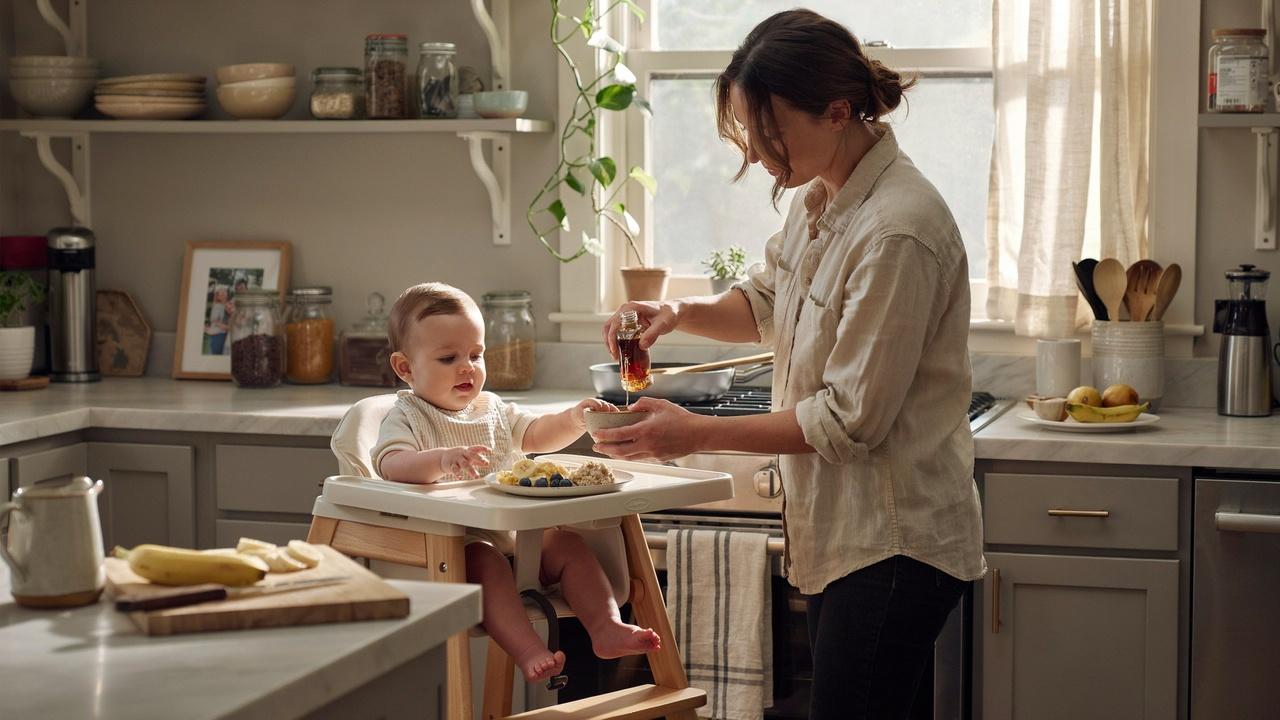
You’re standing in the kitchen with a bottle of maple syrup in your hand, wondering if a little drizzle on your baby’s pancake is really a big deal.
Sweet foods pop up everywhere once babies start solids, and maple syrup feels more natural than white sugar sitting in the pantry. But natural doesn’t always mean it’s the right call for a baby’s age.
I will walk you through the right age to introduce it, the risks to know about, and simple swaps that work just as well for a little one still learning to eat.
Can Babies Have Maple Syrup?
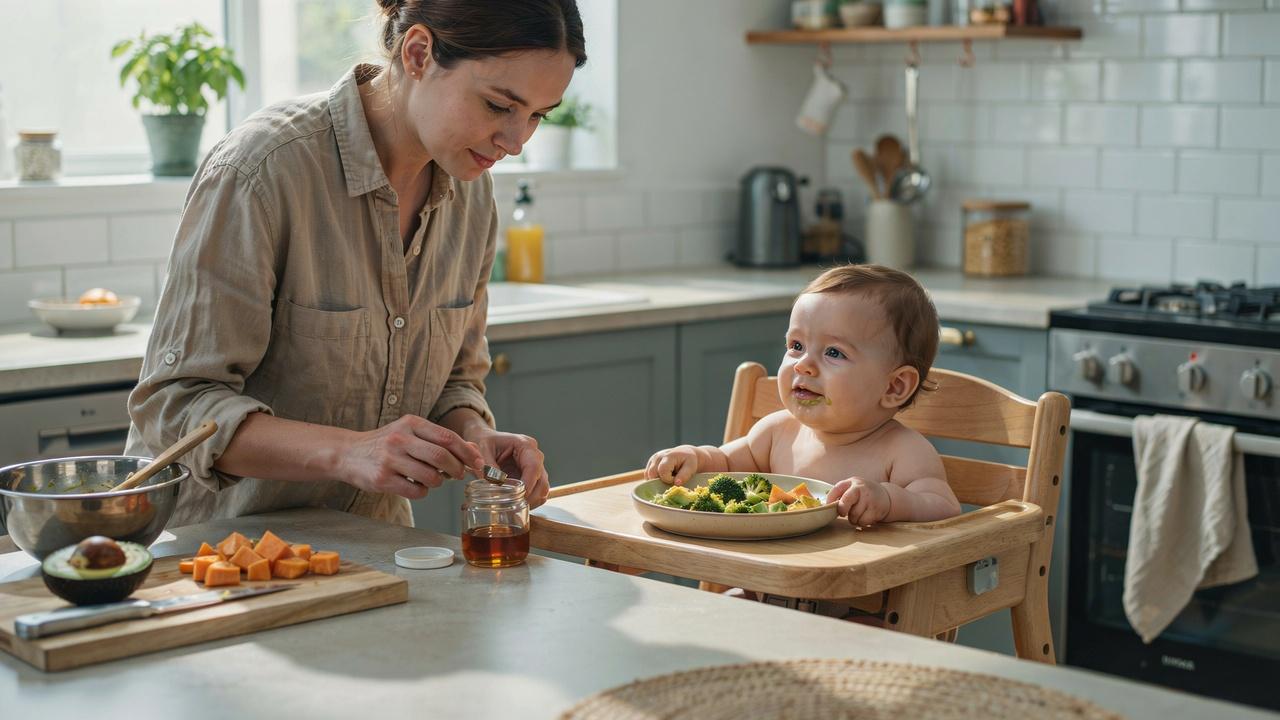
Maple syrup is not toxic for babies, but it’s not recommended before 12 months, and even after that, only in small, occasional amounts.
Unlike honey, pure maple syrup is not associated with infant botulism, so in that narrow sense, it’s considered safe past a certain age. But “safe” doesn’t mean it belongs on the daily menu.
There’s a real difference between something that won’t hurt your baby and something that’s actually good for them. Maple syrup falls into the first group, not the second.
The American Academy of Pediatrics (AAP) recommends avoiding added sugars for children younger than 2 years because early exposure can shape long-term taste preferences and reduce interest in nutrient-rich foods.
Although maple syrup can be introduced after 12 months, health experts still recommend avoiding added sugars until age 2 whenever possible because young children do not need them for healthy growth.
Quick Answer Box:
- Pure maple syrup is different from honey.
- Added sugars should be limited in young children.
- Choose 100% pure maple syrup if serving it.
- Offer only occasionally.
When Is the Right Age to Introduce Maple Syrup?
Age matters more than most parents expect when it comes to added sugar.
| Age | Recommendation |
| Under 6 months | Do not offer maple syrup. Babies should only have breast milk or formula. |
| 6–12 months | Avoid added sugars, including maple syrup. Focus on whole foods. |
| 12–24 months | Small amounts occasionally with family meals. |
| 2 years and older | Can be enjoyed in moderation as part of a balanced diet. |
The older your child gets, the more wiggle room you have, but moderation stays the rule at every stage.
Why Experts Recommend Limiting Maple Syrup
Pediatricians point to a few clear reasons for holding off on added sugar this early.
- High sugar content, even though it comes from a natural source.
- Babies naturally prefer sweet flavors, so early exposure builds a strong sweet tooth.
- Increased risk of tooth decay once teeth come in.
- May reduce interest in nutrient-rich foods like vegetables and proteins.
- Supports healthier long-term eating habits when you delay sweeteners.
Is Maple Syrup Safe for Babies?
Once your baby is old enough for added sugar, pure maple syrup carries far less risk than honey.
Maple Syrup vs. Honey
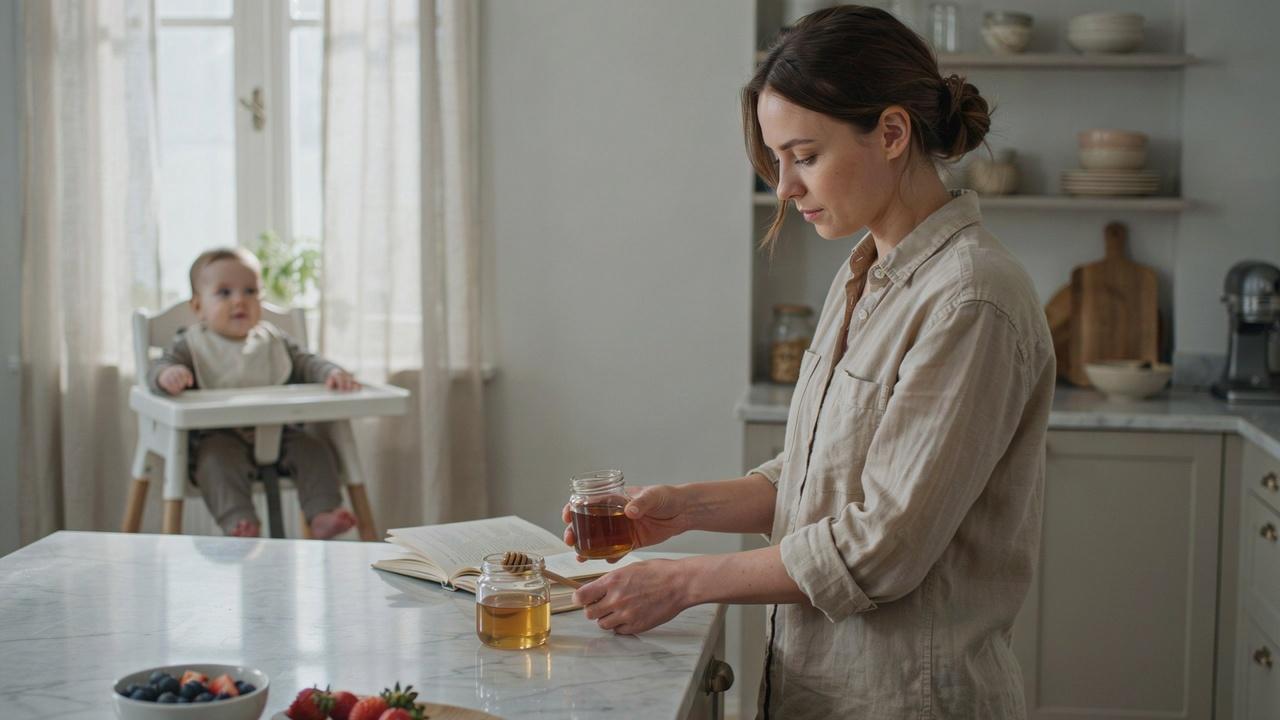
Honey isn’t safe before 12 months because it can carry spores of a bacteria called Clostridium botulinum. A baby’s gut isn’t mature enough yet to fight it off, which can lead to infant botulism.
If you’re curious about why honey is restricted for the entire first year, there’s a simple explanation behind how those spores affect a young gut.
Maple syrup doesn’t carry this same warning. Commercial maple syrup goes through a boiling process during production, which is different from raw honey. This heat step is why maple syrup isn’t linked to the same infant botulism risk.
Still, avoid raw or unprocessed maple sap, since it hasn’t gone through that same treatment and carries its own unknowns. Watch for breakfast syrup blends too, since some mix in real honey, bringing the botulism risk back.
The same hidden-honey problem shows up in honey-flavored breakfast cereals, so it’s worth reading the ingredient list on anything sweet before it goes in your baby’s bowl.
One quick note: Maple Syrup Urine Disease is a rare inherited condition, not caused by feeding your baby maple syrup. The name is just a coincidence.
Maple Syrup vs. Pancake Syrup
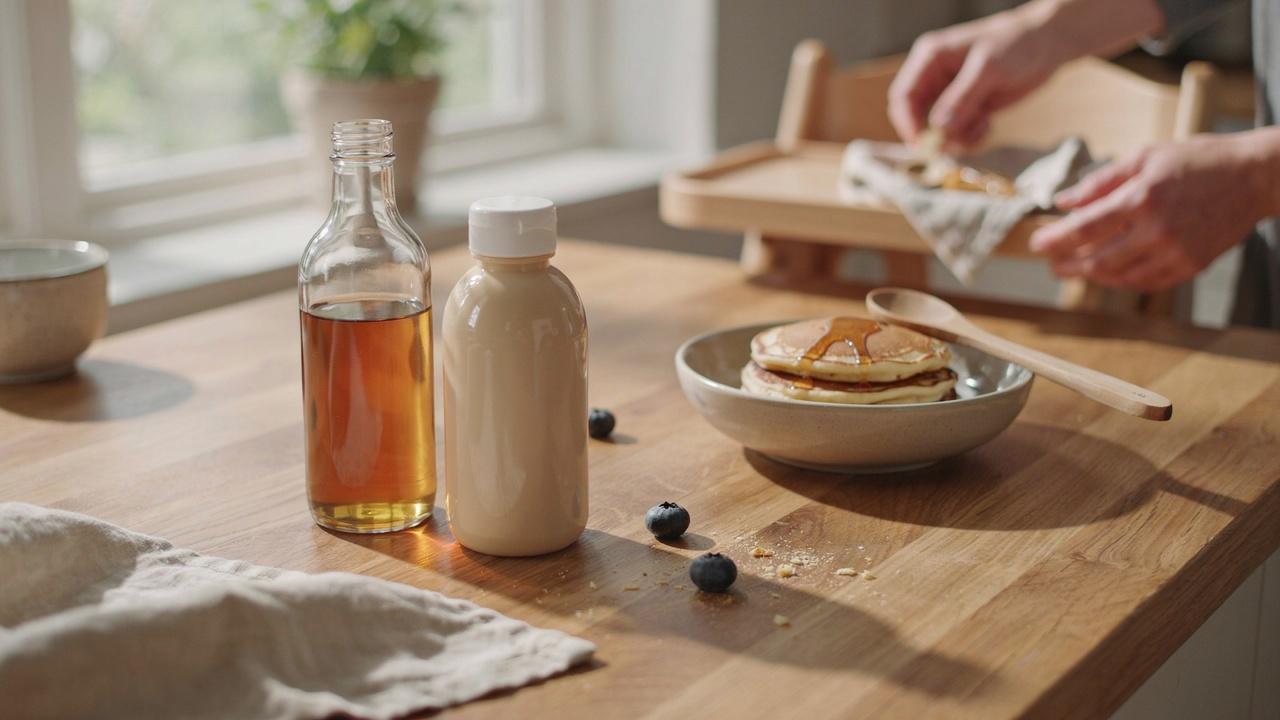
These two look similar on a shelf but aren’t the same product. Pancake syrup is usually corn syrup with added flavoring, coloring, and sometimes preservatives.
Pure maple syrup comes from boiled tree sap and has one ingredient: itself. If you choose to serve syrup at all, 100% pure maple syrup is the better pick since it skips the extra additives.
You may also see Grade A or Grade B on labels, but neither is a healthier pick for a baby. Once opened, refrigerate pure maple syrup to help prevent mold growth and keep it fresh.
A rare allergy note: maple sap contains pollen, so a baby with a pollen allergy can occasionally react to raw sap. This is uncommon.
How to Serve Maple Syrup Safely
If your child is old enough and you choose to serve it, keep these habits in mind.
- Use only small amounts.
- Drizzle lightly over pancakes or waffles.
- Stir a small drizzle into oatmeal or plain yogurt once in a while.
- Use in homemade baked goods in moderation.
- Offer a few sips of water after sticky foods, and brush your child’s teeth twice a day to help reduce the risk of tooth decay.
- Watch texture, since sticky syrup can raise choking risk.
- Avoid making sweet foods an everyday habit.
Does Maple Syrup Have Any Nutritional Value?
Maple syrup does hold a few minerals, though not enough to make it a healthy food.
| Nutrient | Benefit |
| Manganese | Supports normal metabolism |
| Zinc | Supports immune function |
| Calcium | Supports bone health |
| Potassium | Helps muscle and nerve function |
| Antioxidants | Help protect cells |
Key takeaway:While maple syrup contains small amounts of minerals and antioxidants, these benefits do not outweigh its high sugar content for babies.
Better Sweet Alternatives for Babies
Whole foods give babies natural sweetness without the added sugar load.
- Mashed banana: Soft and easy for little mouths to manage. It’s naturally sweet without any added sugar. It also makes a good base for mixing in other fruits.
- Applesauce: A gentle sweetness that works well on its own or mixed in. It pairs nicely with oatmeal or plain yogurt. Unsweetened versions keep added sugar off the plate.
- Pear puree: Mild in flavor and easy on a baby’s digestion. It’s a gentle first sweet food for younger babies. It’s a good choice for babies who are new to solids.
- Sweet potato: Naturally sweet with a soft, scoopable texture. It also brings fiber and vitamin A to the meal. It works well mashed alone or mixed into other purees.
- Pumpkin puree: Sweet and smooth, easy to mix into other foods. It adds vitamins and minerals along with the flavor. A spoonful stirred into oatmeal adds sweetness without syrup.
- Mashed berries: A tart-sweet option once babies are ready for texture. It offers real fruit sugar instead of added sugar. Mixing berries with yogurt makes for an easy sweet snack.
Naturally sweet whole foods give babies real nutrition alongside the sweetness, something added sugar simply can’t offer.
As your baby grows and handles new textures, naturally sweet dried fruit can also become part of the mix, as long as it’s prepared in a way that’s safe for little mouths.
Common Mistakes Parents Make
A few habits trip up even careful parents when it comes to sweeteners.
- Assuming natural sugar is always healthy:maple syrup comes from a tree, but it still counts as added sugar once it’s poured on food.
- Confusing maple syrup with pancake syrup: pancake syrup is often just corn syrup with flavoring, not real maple at all.
- Offering sweetened foods too often: a little syrup once in a while is fine, but daily servings build a habit that’s hard to undo.
- Not checking ingredient labels: words like “maple flavored” or “syrup blend” usually mean the bottle has little or no real maple in it.
- Using sweets as a reward: tying syrup or dessert to good behavior can teach a baby to link food with emotions instead of hunger.
Conclusion
So, can babies have maple syrup? Not before their first birthday, and even after, only in small, occasional amounts.
Waiting until your child’s first birthday is a simple way to support healthy eating habits without missing any nutritional benefits.
Try holding off a bit longer than you planned. Your baby’s taste buds will thank you later.
If this helped, leave a comment below or share it with another parent working through the same question.
Frequently Asked Questions
How much maple syrup can a baby have per day?
A teaspoon or less, offered only occasionally, is plenty for a toddler over 12 months.
Is organic maple syrup safer for babies?
Organic maple syrup isn’t safer, since the sugar content stays the same regardless of the label.
Can maple syrup help with a baby’s constipation?
A small amount may help sometimes, but whole foods like pear or prune are a better first choice.
Does maple syrup need to be refrigerated after opening?
Yes, refrigerate it once opened to keep it fresh and free of mold.