Many new parents wonder should I remove pacifier when baby is sleeping? It's one of those questions that comes up at 2 a.m. when your baby finally drifts off and you're not sure what to do next. You want to do the right thing, but the answer isn't always clear.
This guide covers when to take it out, when to leave it in, and how to handle nighttime pacifier use without making sleep harder for everyone.
You'll also find age-by-age guidance and common mistakes worth skipping.
Getting clear, simple answers on this can make bedtime feel a lot less overwhelming. With the right information, you can make confident choices that work for your baby and your family.
Should I Remove Pacifier When Baby Is Sleeping?
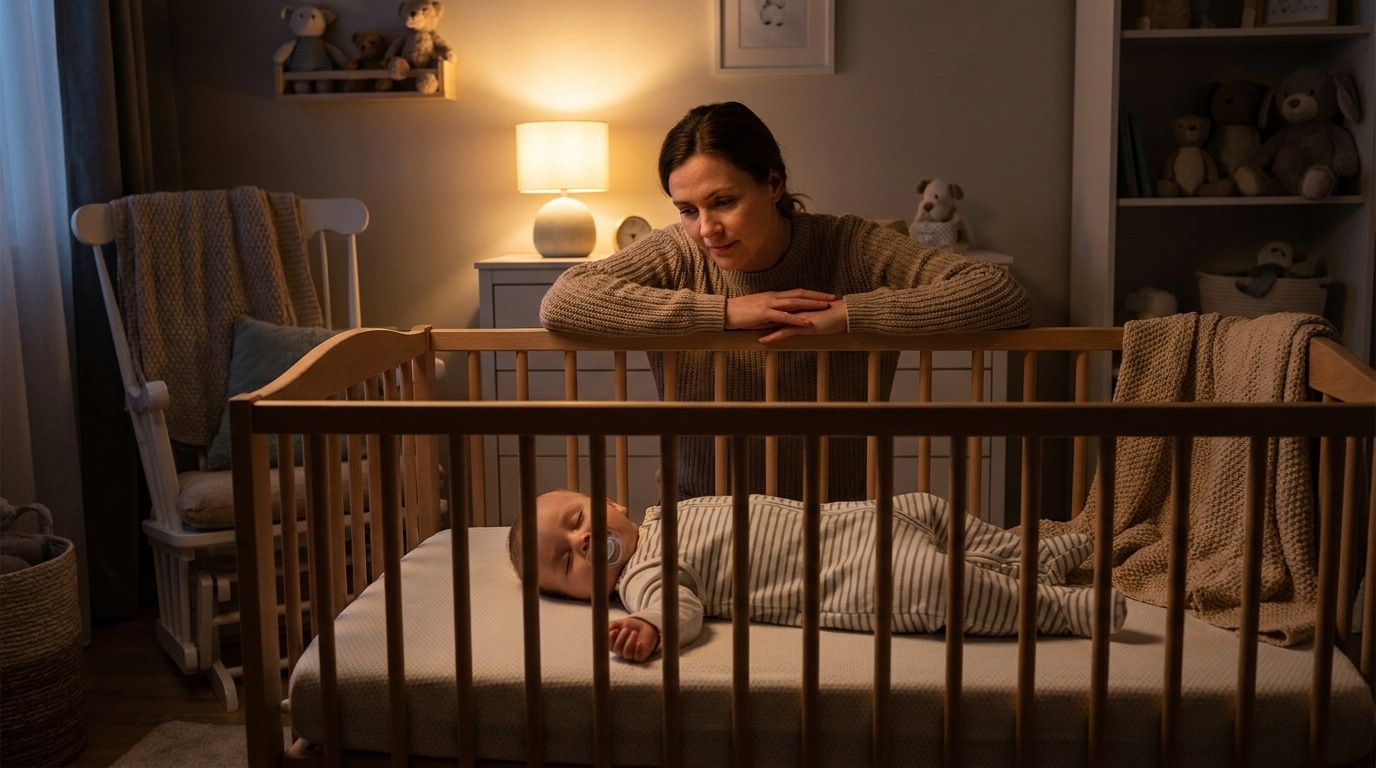
You don't need to remove the pacifier once your baby falls asleep and in most cases, leaving it in is perfectly fine.
Most parents face this exact moment when the baby is asleep, pacifier still in mouth, and you're frozen wondering if you should pull it out.
The answer depends on your baby's age, sleep stage, and habits. Pediatric sleep experts and the American Academy of Pediatrics (AAP) generally agree that removing it is not necessary.
The AAP actually recommends offering a pacifier at the start of sleep for babies under 12 months, as it has been linked to a lower risk of sudden infant death syndrome (SIDS).
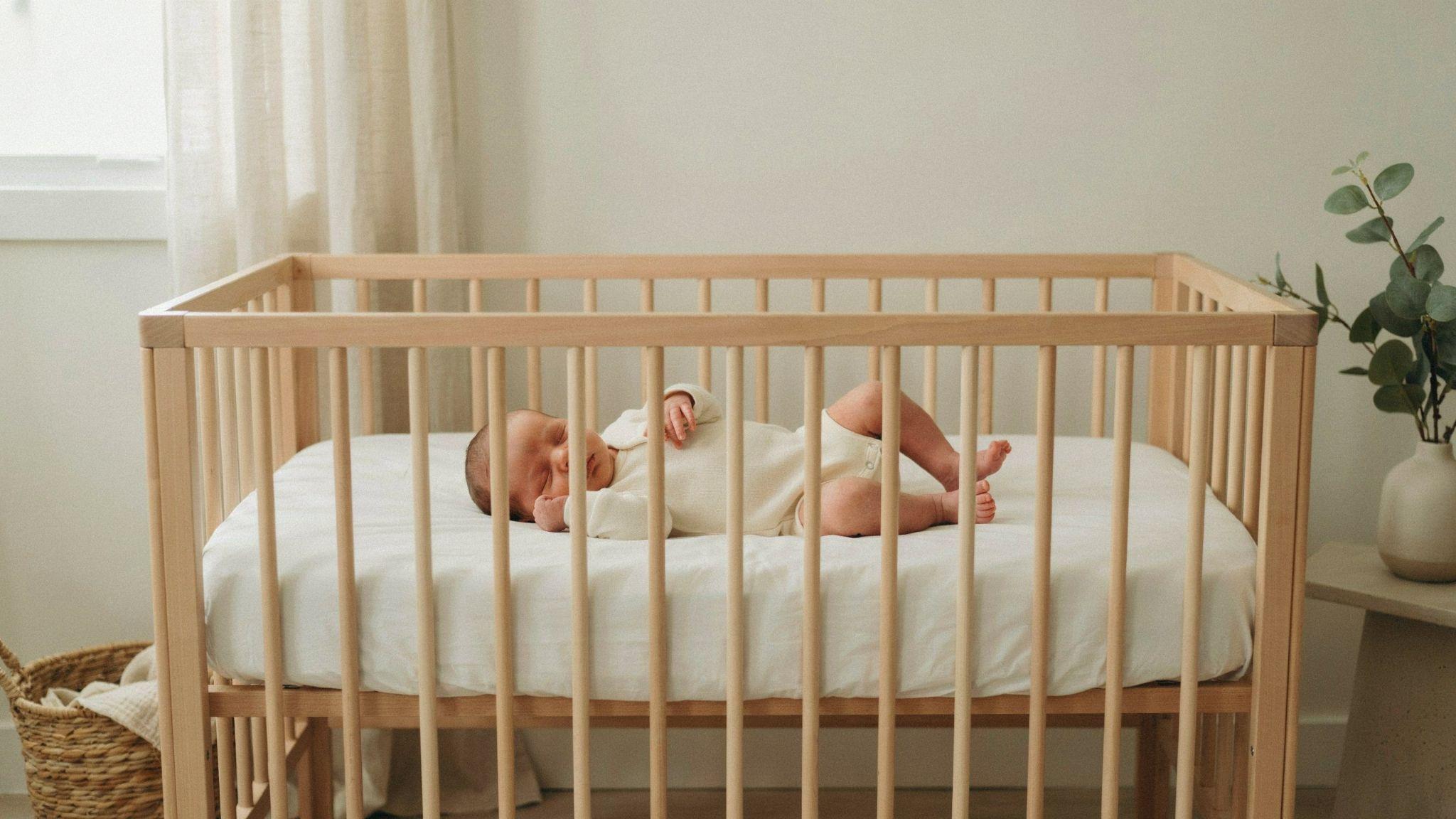
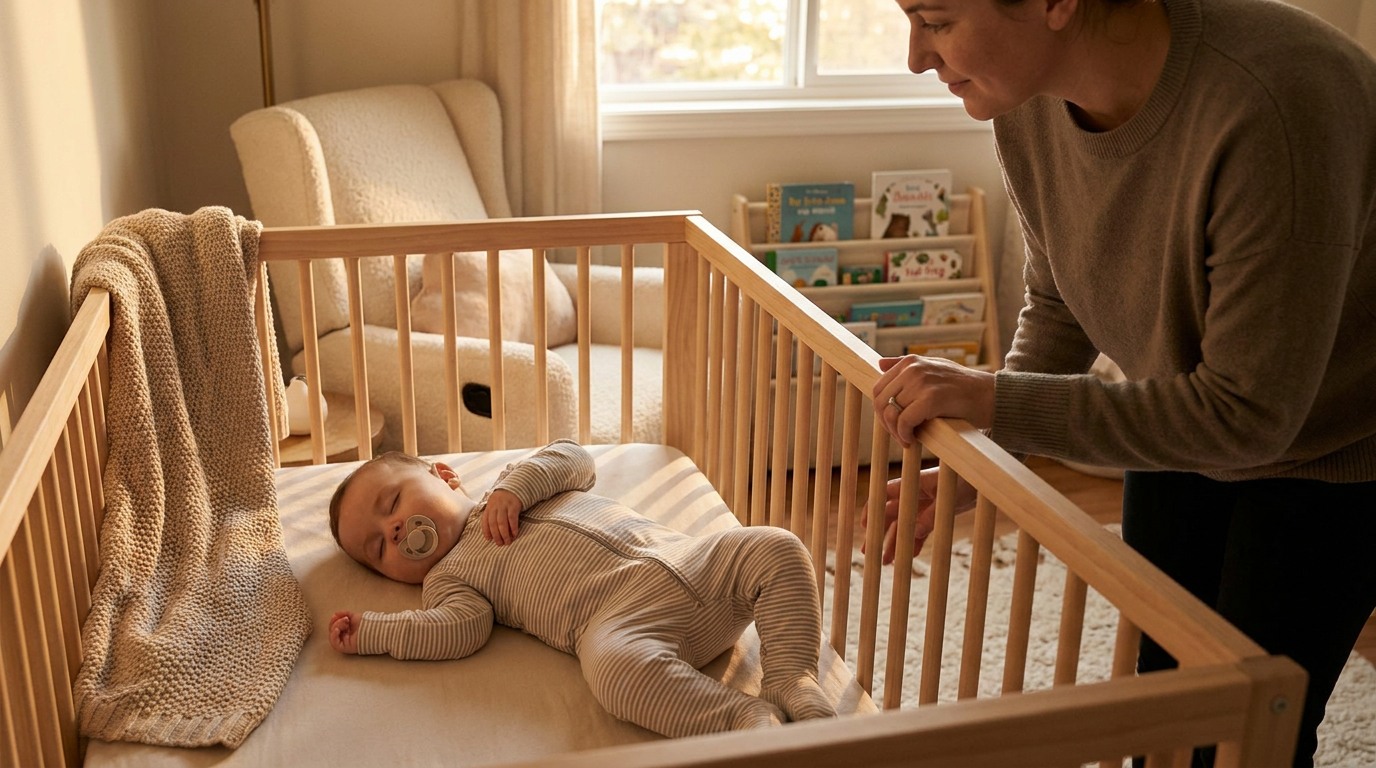
You can safely leave it in if your baby is under 12 months, lying on their back, on a firm flat surface, with no loose bedding around them.
If it falls out naturally as your baby enters deeper sleep, there's no need to replace it. However, if the pacifier feels loose and could become a hazard, take it out carefully.
If your baby is older than 12 months and waking repeatedly just to have it put back in, that's a sign the habit may need some adjusting.
Is It Safe for Babies to Sleep With Pacifiers?
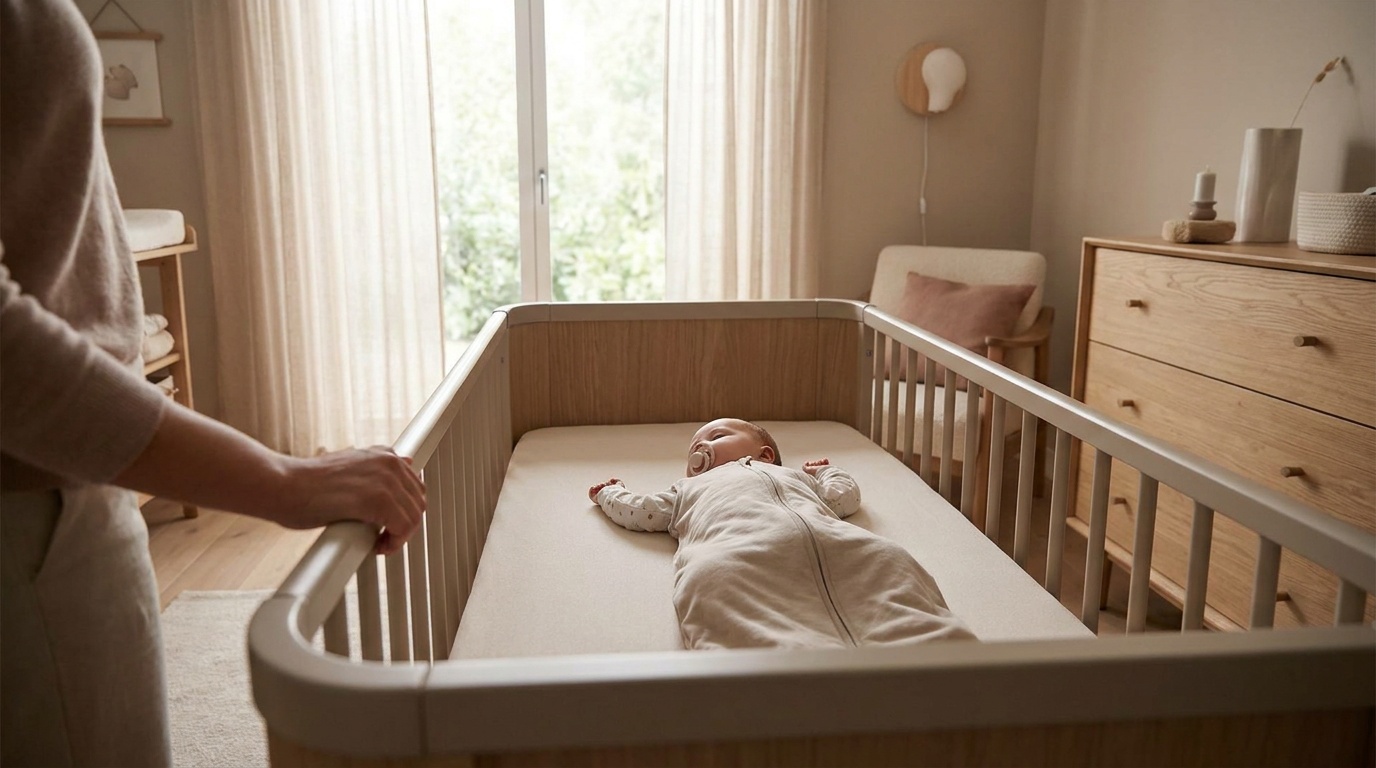
For most babies under 12 months, sleeping with a pacifier is considered safe and even encouraged by pediatric experts.
Research shows pacifier use during sleep may reduce SIDS risk because sucking helps keep the airway open and may prevent babies from falling into too deep a sleep.
The AAP recommends offering a pacifier at the start of naps and bedtime throughout the first year.
That said, a worn out, cracked, or loose pacifier can become a choking hazard, and pacifiers should never be attached to strings or cords near a sleeping baby.
Heavy pacifier use has also been loosely linked to higher rates of middle ear infections.
Always use a one-piece pacifier, check it regularly for damage, and offer it at the start of sleep without forcing it. Keep a few clean ones nearby so you are never scrambling at night.
Pacifiers also support what is called non-nutritive sucking, which is sucking that provides comfort and relaxation rather than feeding.
This natural reflex releases endorphins in a baby's brain and can help them settle into sleep more easily. It's one of the reasons pacifiers work so well for newborns.
What To Do After Baby Falls Asleep With Pacifier
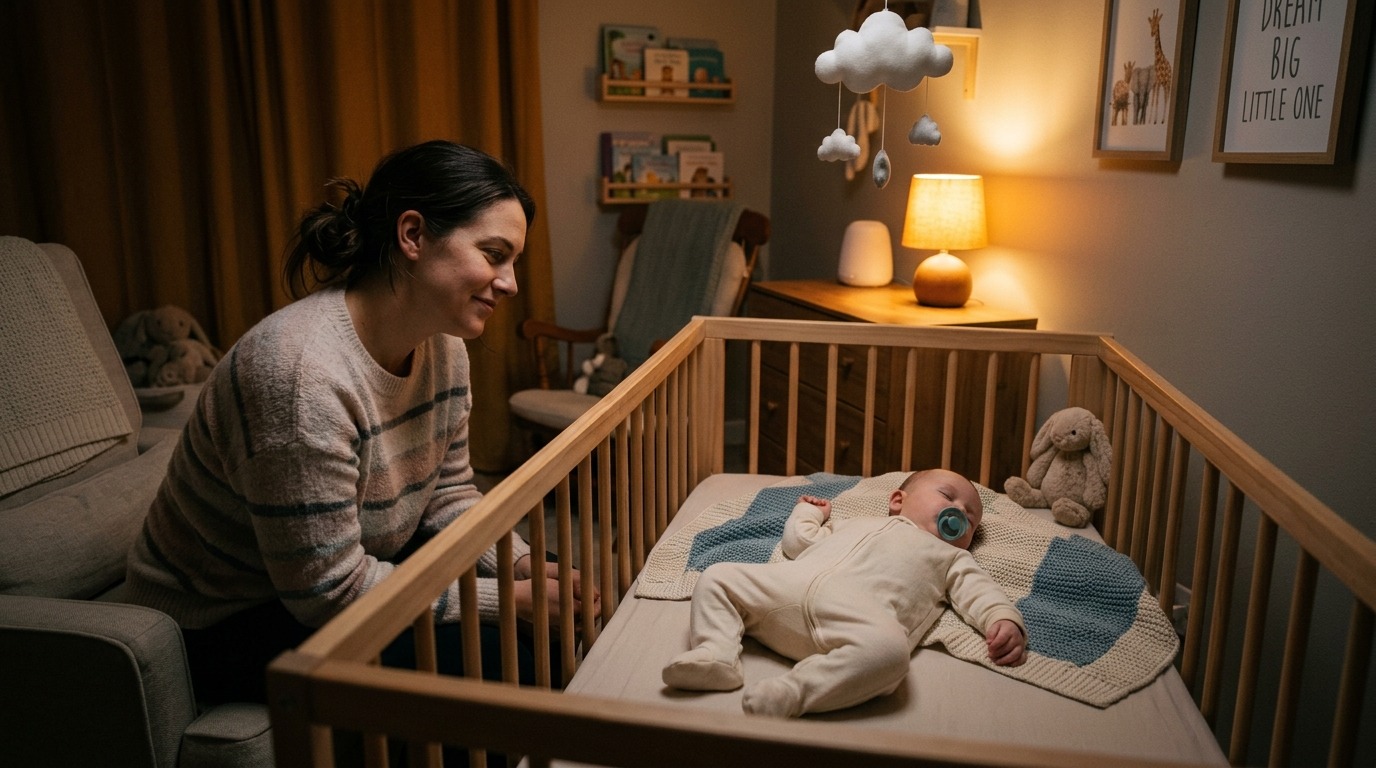
Once your baby is asleep, most parents aren't sure what their next move should be. Do you leave it? Take it out? Put it back if it drops? Here's a clear breakdown.
Should You Take It Out Once Your Baby Is Asleep
In most cases, no. You don't need to remove it. Pulling it out can actually wake your baby, which is the opposite of what you want.
If it stays in naturally, leave it. If it falls out on its own as your baby enters deeper sleep, that's completely normal and you can leave it where it is.
Do You Need to Replace It If It Falls Out
For babies under 6 months, you may need to replace it if they start fussing. After around 6 to 8 months, many babies can find and reinsert their own pacifier if you place a few in the crib.
Teaching this early can help reduce the number of times you have to get up at night.
How to Avoid Creating Sleep Problems
The main sleep problem that comes from pacifier use is when babies need it to fall back asleep every time they wake up between sleep cycles.
This strong sleep association means your baby can only resettle one way. If your baby can only sleep with the pacifier in their mouth, they may struggle to self-settle.
Try putting your baby down drowsy but still awake sometimes so they learn to fall asleep without it fully.
Pacifier Use Based on Baby's Age
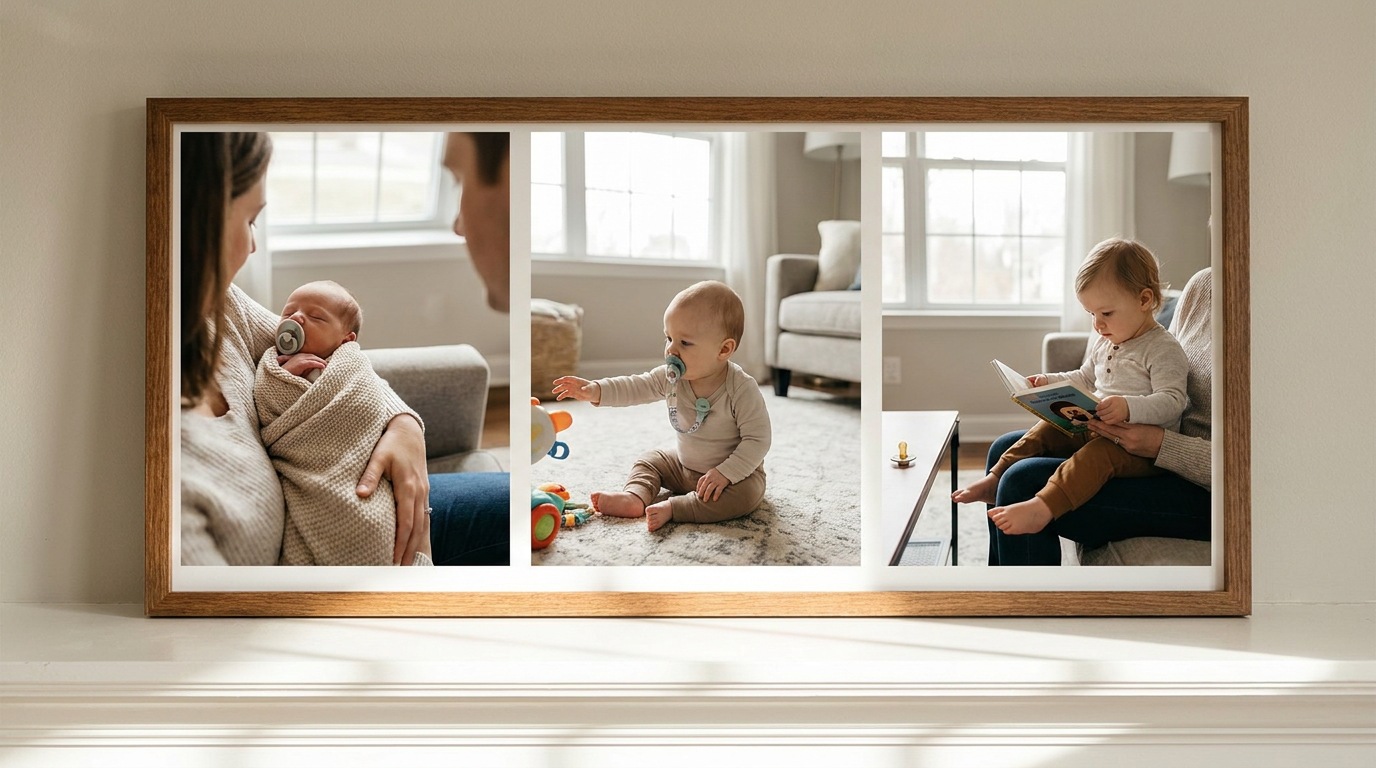
The pacifier needs to shift as your baby grows. What works for a newborn won't be the right approach for a toddler. Here's a simple breakdown by age.
Pacifier Guidance for Newborns and Young Babies
For newborns, especially those who are breastfed, it's often recommended to wait until breastfeeding is well established before introducing a pacifier, usually around 3 to 4 weeks.
After that, it can be offered at sleep times. At this age, the pacifier mostly serves as a soothing tool and the sleep safety benefit is real.
Current research also shows that introducing a pacifier does not cause nipple confusion or reduce breastfeeding success, so you don't need to worry about that if nursing is going well.
Changes in Pacifier Needs as Babies Grow
Between 4 and 6 months, many babies start to rely on the pacifier as a sleep association. Around 6 to 8 months, they may begin to have stronger opinions about it.
Some will naturally reduce how much they want it. Others will become more attached. This is a good window to start helping your baby self-soothe in other small ways.
Choosing an orthodontic pacifier at this stage, one designed to support natural jaw and palate development, can also help reduce any long-term dental concerns.
When Pacifier Habits May Need Adjustment
By 12 months, the SIDS-reduction benefit is no longer a factor. Most pediatricians suggest beginning to reduce pacifier use between 12 and 24 months to avoid dental issues and speech concerns.
Prolonged use beyond age 2 can affect tooth alignment and jaw shape, so starting pacifier weaning early makes the process easier on everyone.
If your child is 18 months or older and waking multiple times a night needing the pacifier, it's probably time to start a gentle weaning plan.
Common Pacifier Sleep Mistakes To Avoid
Even well-meaning parents fall into habits that make sleep harder over time. These are the most common ones worth knowing about.
Putting the Pacifier Back Too Often Overnight
If you are running into the nursery every hour to replace the pacifier, it becomes exhausting fast. Doing this repeatedly also reinforces the habit.
Instead, try placing several pacifiers in the crib so your baby can find one independently.
For younger babies, a pacifier clip attached to a sleep sack, not a cord, can keep it within reach safely. Never attach a clip to loose bedding or directly to your baby.
Using Damaged or Unsafe Pacifiers
Old, worn, or cracked pacifiers should be thrown out right away. A damaged pacifier can break apart and become a choking risk.
Check the nipple by pulling it in different directions. If it stretches oddly, tears, or feels sticky, replace it. Most pacifiers should be replaced every 4 to 6 weeks with regular use.
Relying on Pacifiers for Every Sleep Issue
A pacifier is one tool, not a fix for everything. If your baby is not sleeping well, it's worth looking at the full picture, including feeding schedule, sleep environment, overtiredness, and routine.
Using the pacifier as the default solution for every night waking can mask what's really going on and delay finding a longer-term solution.
Tips for Managing Pacifier Use at Night
You don't have to choose between using a pacifier and getting good sleep. With a few small changes, you can make nighttime pacifier use work better for your whole family.
- Build a consistent bedtime routine with bath, feeding, and wind-down, then offer the pacifier at the start of sleep, not as a last resort.
- Help your baby connect the pacifier with the beginning of sleep, not as the only way to get back to sleep during the night.
- Introduce other soothing methods as your baby grows, like gentle rocking, white noise, or a soft lovey for babies over 12 months.
- Avoid sudden removal and instead slowly build other settling habits so your baby isn't relying on just one thing to sleep.
- Watch for signs it's time to cut back, such as frequent night waking for the pacifier, effects on feeding or speech, or daytime distress without it, then reduce use gradually one nap at a time.
Conclusion
Knowing when to remove a pacifier when the baby is sleeping can feel complicated, but it doesn't have to be. For babies under 12 months, leaving it in is generally safe and even recommended.
As your baby grows, you can start making small adjustments to prevent sleep problems later on. Focus on building good habits early, and don't stress the small stuff.
If you found this helpful, drop a comment below or share it with another parent who might need it. Every baby is different, and you're doing a great job figuring it out.
Frequently Asked Questions
Can a Pacifier Cause Mouth Breathing in Babies During Sleep
Long-term heavy use may contribute to mouth breathing in some children. If you notice it consistently, talk to your child's pediatrician or dentist.
What Age Should a Baby Sleep Without a Pacifier Entirely
Most experts suggest fully stopping pacifier use by age 2 to 3 to avoid dental and speech issues developing over time.
Is It Okay To Use a Pacifier During a Nap but Not at Night
Yes, you can use it selectively. Many families find this helpful when trying to gradually reduce overall pacifier dependence without stopping all at once.
Can Pacifier Use Affect How Long a Baby Sleeps
Yes, if a baby wakes between sleep cycles and needs the pacifier to resettle, it can lead to more frequent night waking than average.
Should Both Parents Agree on Pacifier Rules at Night
Having a consistent approach between caregivers helps avoid confusion for your baby and makes sleep habits easier to manage and change over time.