It’s 2 a.m., the house is quiet, and your baby has finally gone limp in your arms. The pacifier is slipping out, and one question loops: should I remove the pacifier when the baby is sleeping?
Parents ask me this all the time, and the answer is simpler than you’d think. They often ask it quietly, as if they’ve done something wrong.
The reason behind the answer tends to surprise parents. The pacifier does its most important work at the start of sleep.
What happens after that is a separate question, and it’s the one worth understanding. Once you see how those pieces fit, bedtime gets calmer.
Should I Remove Pacifier When Baby Is Sleeping?
You don’t need to remove the pacifier once your baby falls asleep and in most cases, leaving it in is perfectly fine.
Most parents face this exact moment when the baby is asleep, pacifier still in mouth, and you’re frozen wondering if you should pull it out.
The answer depends on your baby’s age, sleep stage, and habits. Pediatric sleep experts and the American Academy of Pediatrics (AAP) generally agree that removing it is not necessary.
The AAP actually recommends offering a pacifier at the start of sleep for babies under 12 months, as it has been linked to a lower risk of sudden infant death syndrome (SIDS).
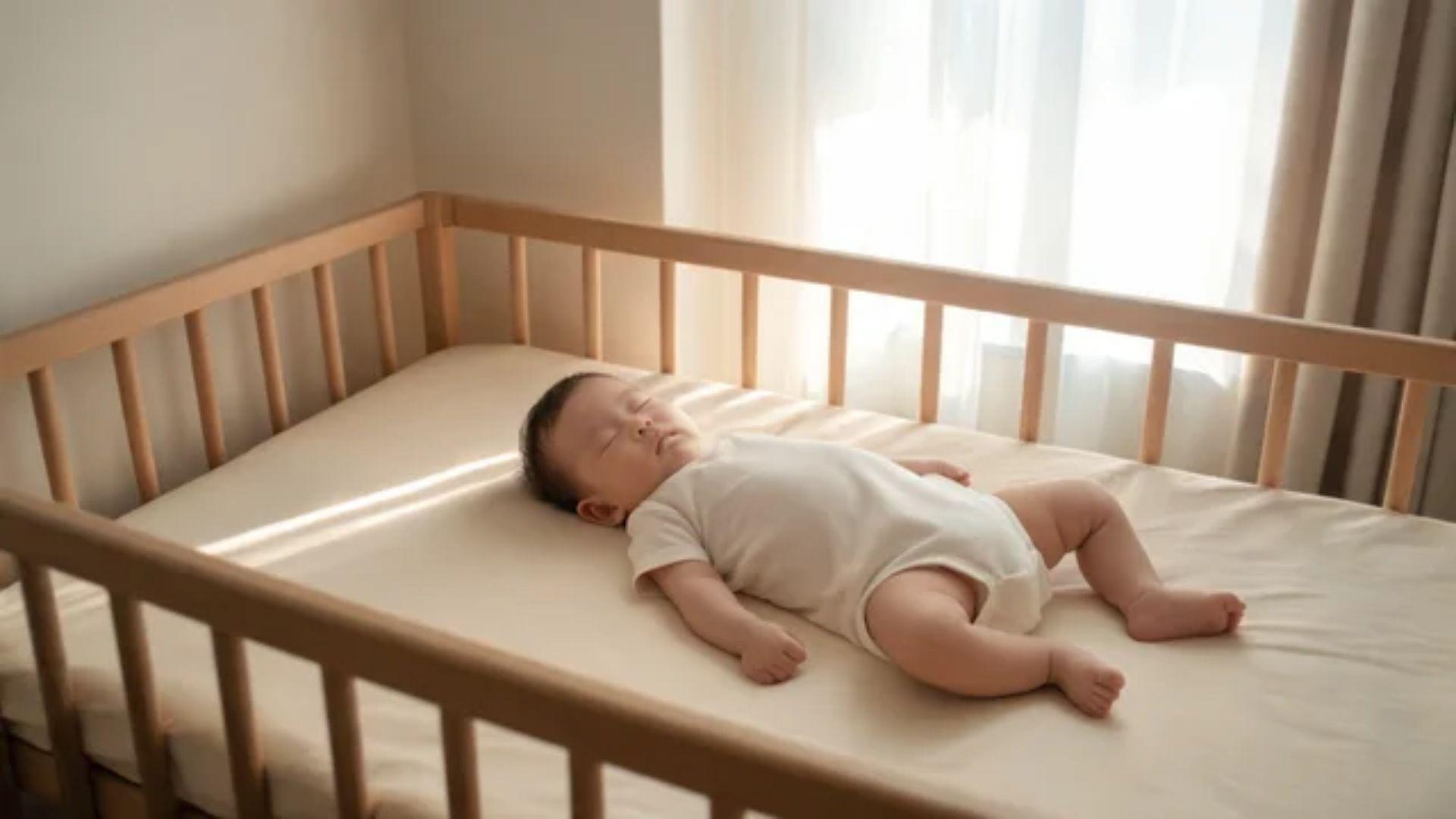
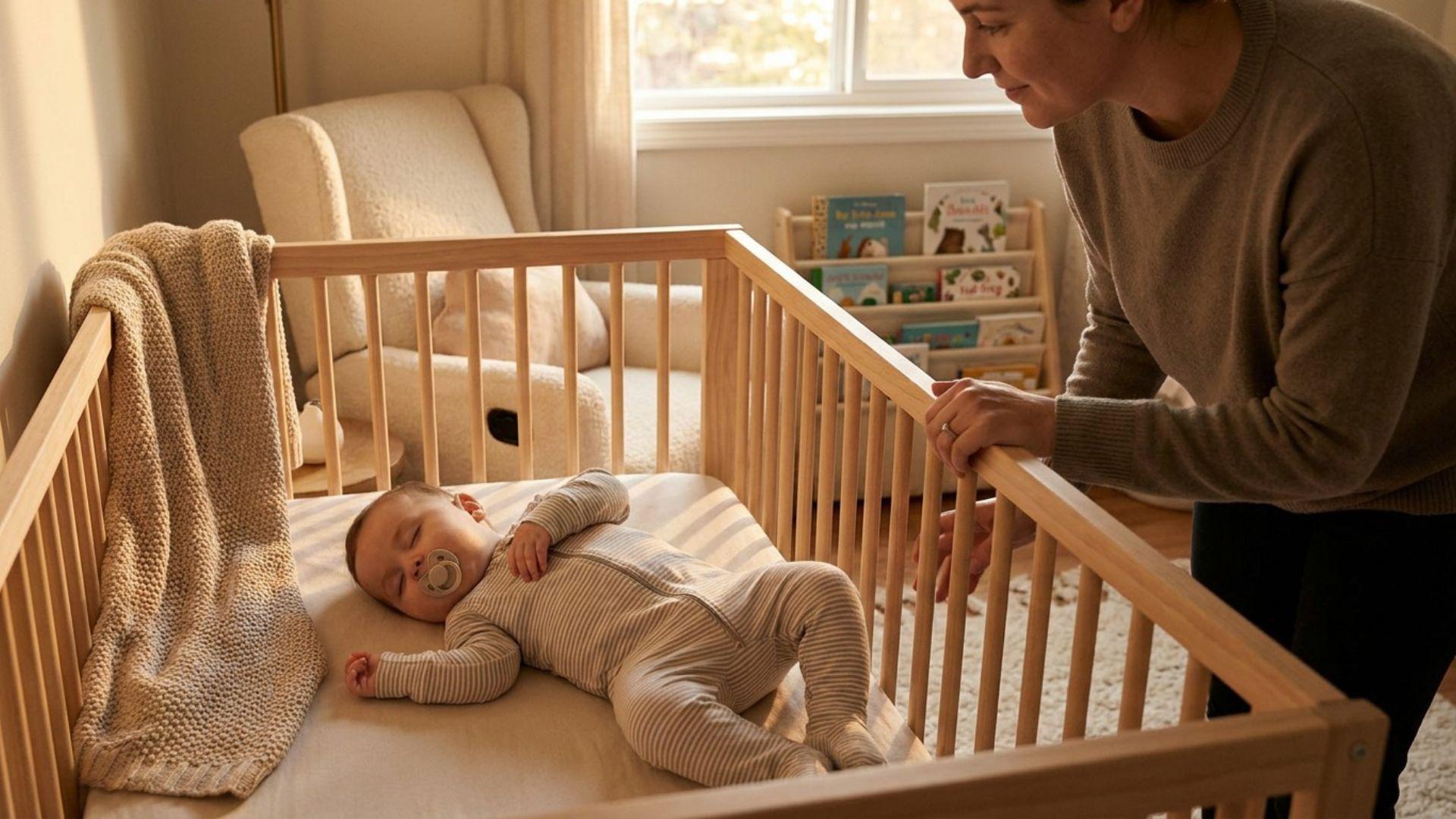
You can safely leave it in if your baby is under 12 months, lying on their back, on a firm flat surface, with no loose bedding around them.
If it falls out naturally as your baby enters deeper sleep, there’s no need to replace it. However, if the pacifier feels loose and could become a hazard, take it out carefully.
If your baby is older than 12 months and waking repeatedly just to have it put back in, that’s a sign the habit may need some adjusting.
Can a Newborn Sleep With a Pacifier?
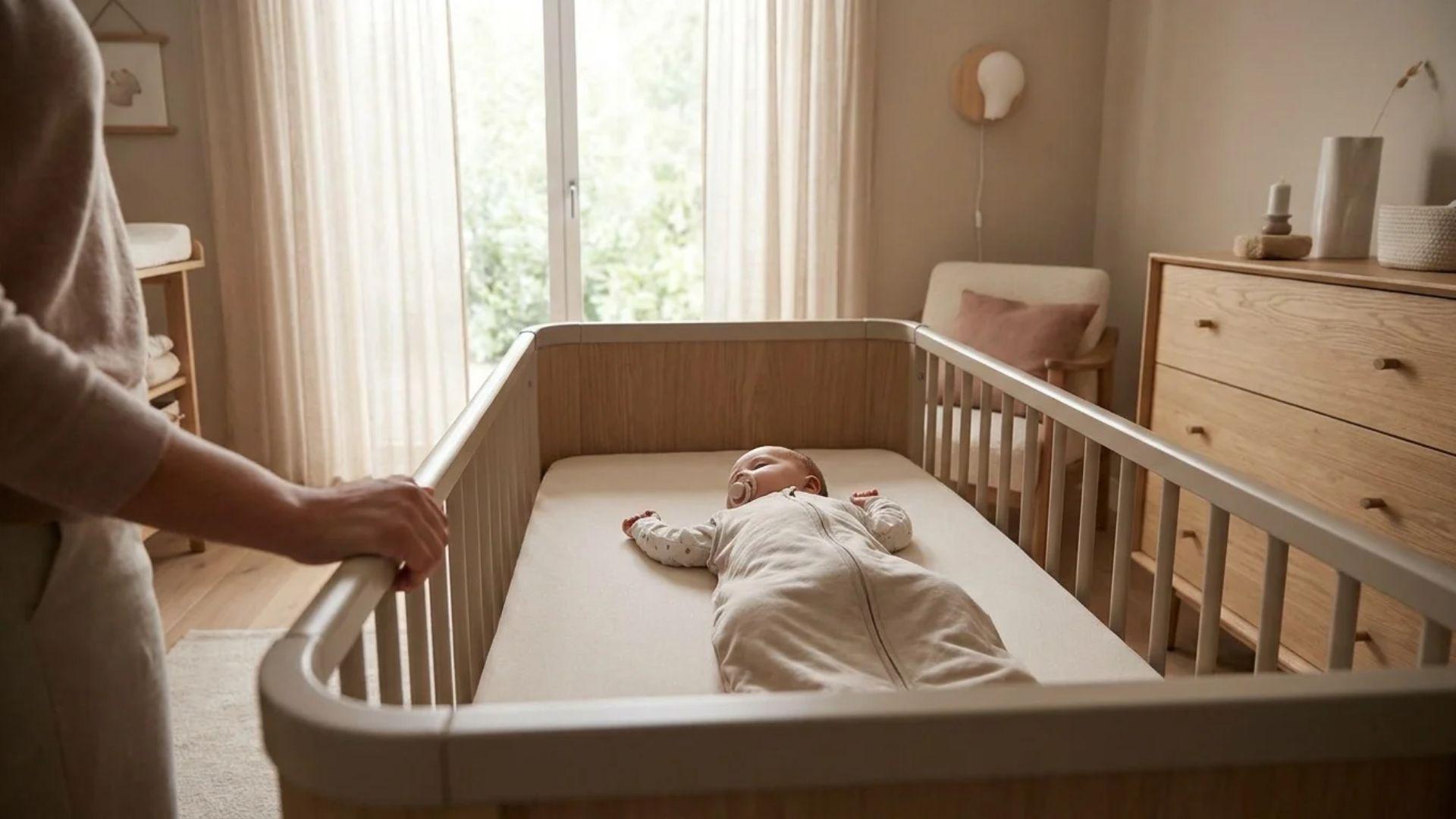
Yes, a newborn can sleep with a pacifier as part of a safe sleep setup. If your baby is breastfed, most guidance says to wait until nursing is well established.
The American Academy of Pediatrics puts that at about 3 to 4 weeks, which gives feeding time to settle. BabyCenter says closer to 3 weeks.
Waiting protects breastfeeding while you and your baby are still finding your rhythm. If breastfeeding feels hard, ask your pediatrician or a lactation consultant before you start.
If you’re bottle-feeding, there’s no feeding reason to wait. Offer the pacifier when you put your baby down, and let your baby lead.
Newborns have a strong urge to suck, which is why a pacifier can calm them between feeds. If you’re still weighing the pros and cons, see are pacifiers good for babies for a broader look.
If your newborn pushes it out, don’t force it, because some babies never take one.
At this age, the pacifier is a comfort tool not a habit to fix. I hear the dependence worry from parents of two-week-old babies, and it can wait.
Is It Safe for Babies to Sleep With a Pacifier?
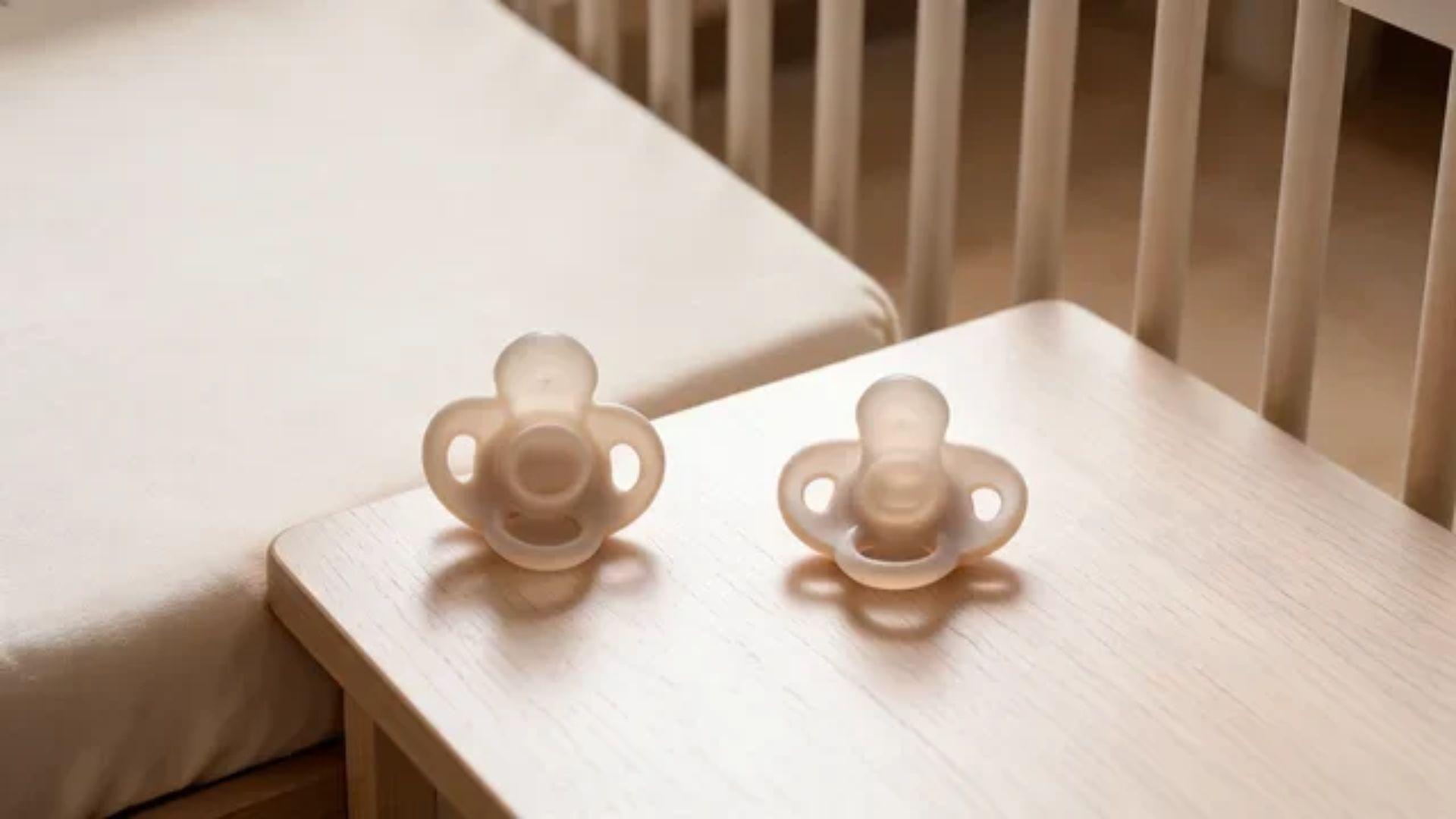
For babies under 12 months, a pacifier at sleep is considered safe when it’s clean, one piece, and attached to nothing.
The AAP’s pacifier guidance says to offer one when you put your baby down. Pacifier use at sleep is linked to a lower risk of SIDS.
What matters is offering it at the start of sleep. The benefit doesn’t depend on staying in all night.
Now let’s look at what keeps a pacifier safe. The checks below take only a few seconds.
- A clean, firm, ventilated pacifier made as one piece
- A size made for your baby’s age
- Nothing tied, clipped, or pinned to your baby, clothing, or bedding
- Never dipped in honey or sugar
That includes pacifier clips, since anything attached can create a strangulation or suffocation risk.
This is the difference worth remembering. A pacifier that slips out is harmless, but one attached to your baby is not.
A cracked pacifier can break apart and become a choking risk, so replace any that looks worn. I’d check it at every bedtime, since small cracks are easy to miss at 2 a.m.
What If the Pacifier Keeps Falling Out and Waking Baby at Night?
A pacifier that falls out once your baby is asleep isn’t a safety problem and needs no replacing. It becomes a sleep problem only when your baby wakes fully each time.
Why a Fallen Pacifier Wakes Some Babies
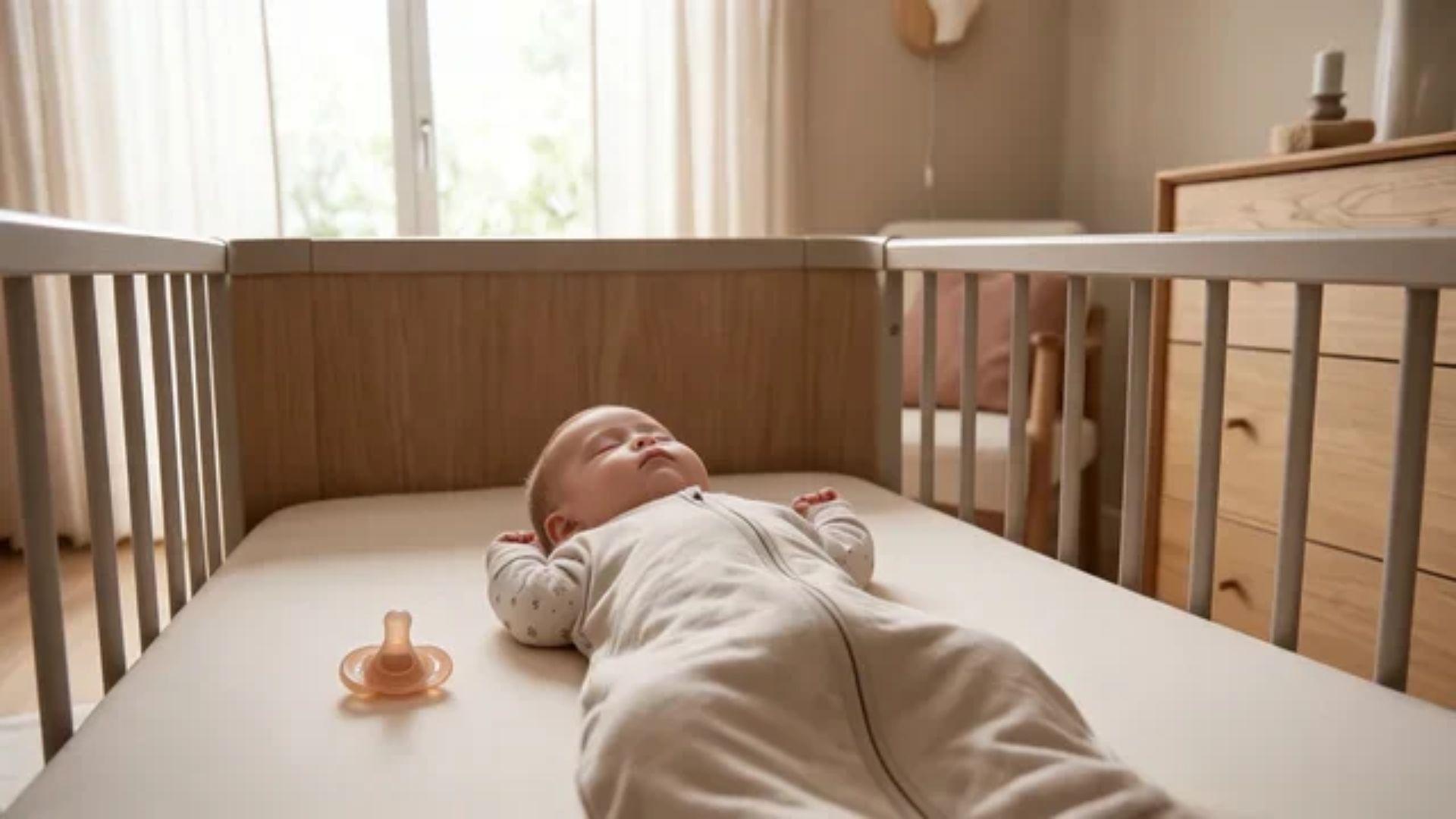
Babies don’t sleep in one long stretch. They move between deeper and lighter sleep, and they surface briefly between those cycles.
Most babies drift straight back down. A baby who fell asleep sucking a pacifier may notice it’s gone. That small change can pull them fully awake.
It’s like falling asleep on a pillow and waking up without it. You’d notice, and you’d want it back.
Some babies shrug this off, while others call out every time. The difference is how much they rely on that one way of settling.
This often shows up around 4 to 6 months, which overlaps with the 4-month sleep regression.
What To Try by Age
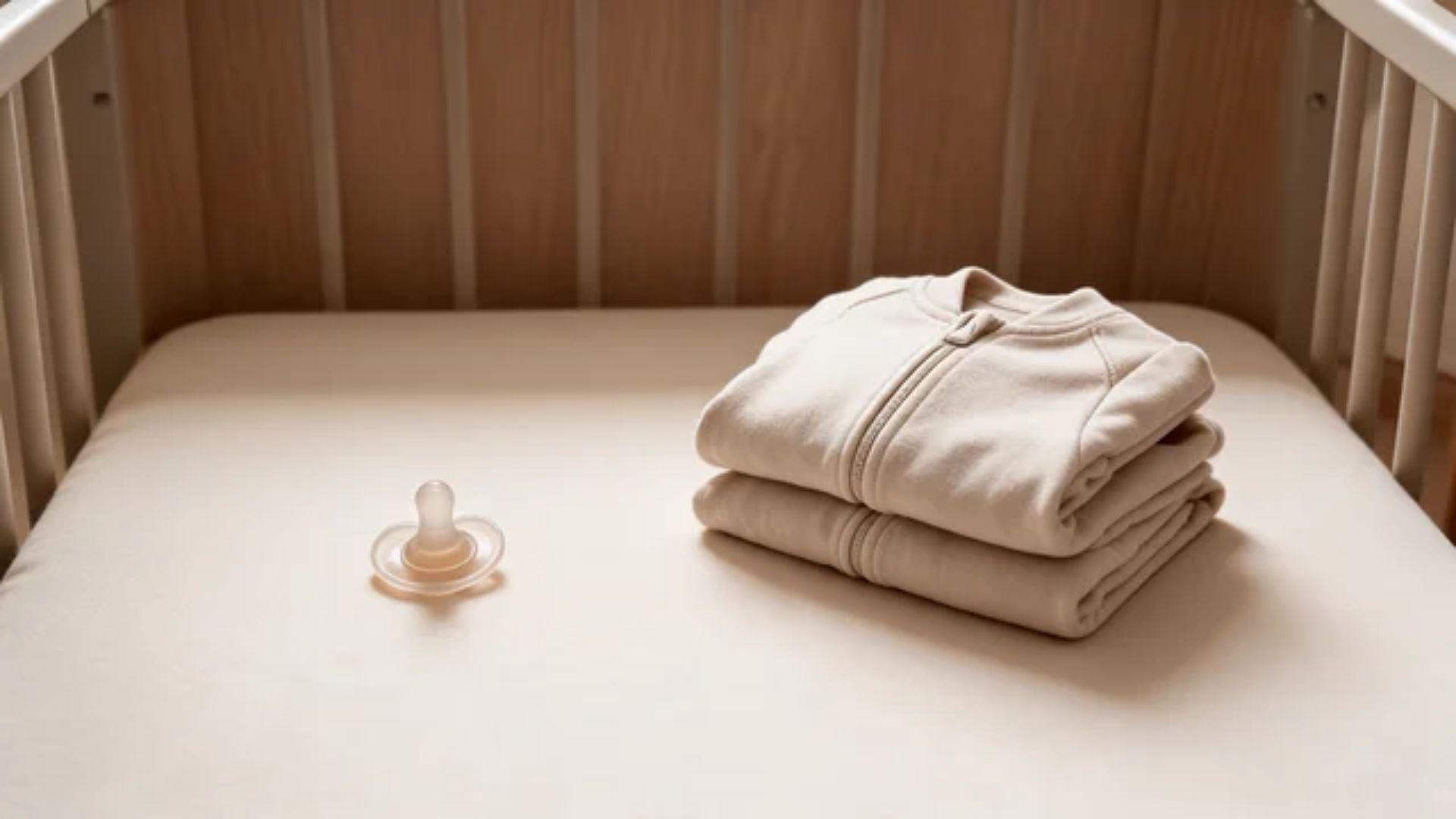
In about 6 months, a quick replacement is fine. If your baby is fussing, offering the pacifier back helps them settle, and it won’t create a problem yet.
Give it a minute before you go in, since some babies settle on their own.
From around 4 to 6 months, watch the pattern instead of the clock. If your baby wakes crying each time it falls out, that pattern is worth addressing.
Later in the first year, many babies start finding it themselves as grabbing skills develop. That varies a lot, so don’t count on a set age.
Here is a simple rule: an occasional replacement is fine. Several times a night means the pacifier has become your baby’s only way to settle.
At that point, repeated trips to the crib keep the habit going. Weaning is the better next step, and the next section covers how.
When and How To Wean Your Baby Off the Pacifier
There’s no single right age to wean. Most families cut back gradually, one nap at a time, with bedtime last.
When To Start Weaning
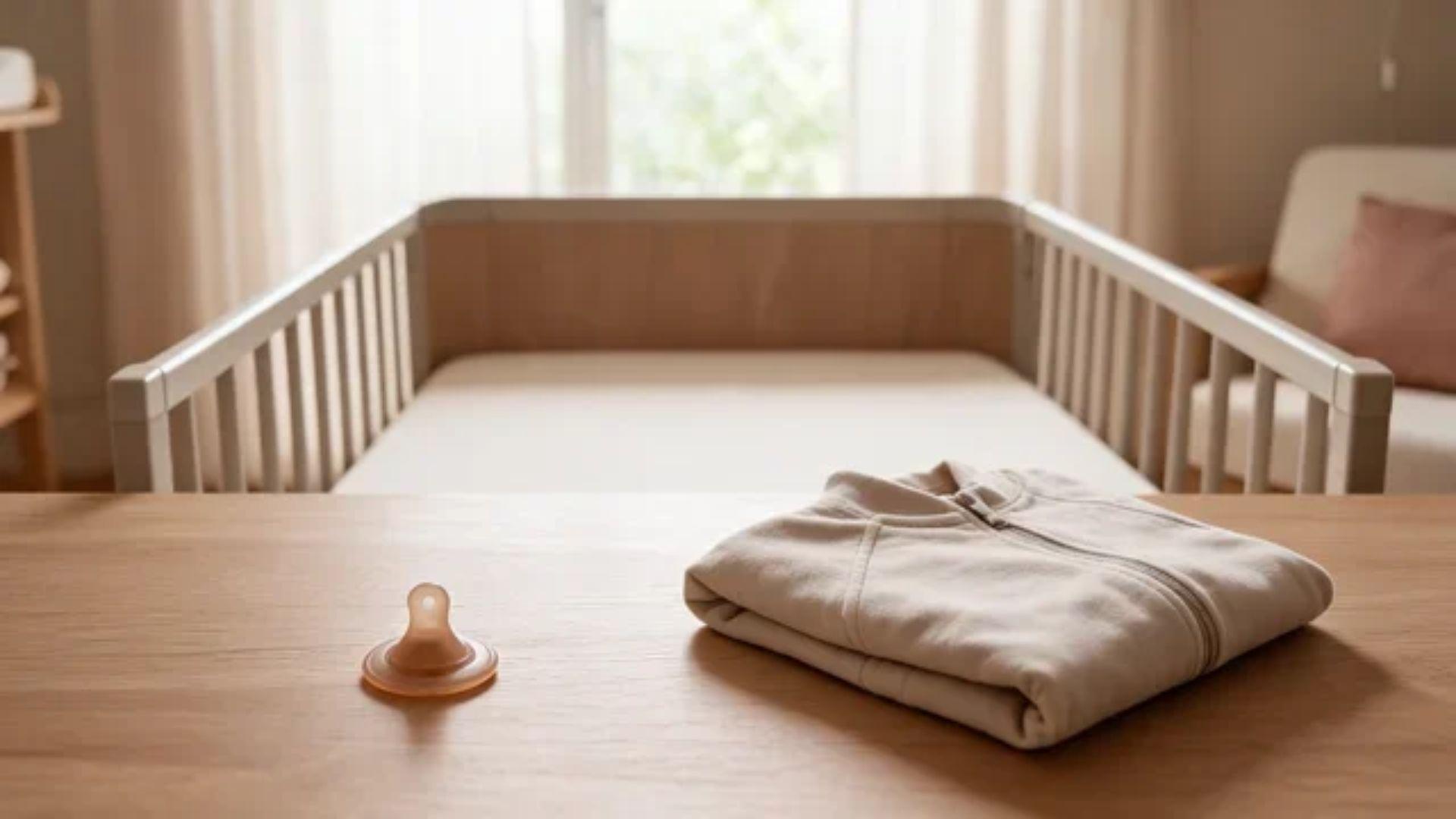
Sources don’t agree on one age, so I’d think in windows instead of a deadline.
The earliest window is around 4 to 6 months, and only if your baby wakes repeatedly for it. Talk to your pediatrician first, because the SIDS benefit is part of that decision.
A common window is 6 to 12 months. Mayo Clinic’s pacifier guidance says weaning in that range may lower the risk of ear infections.
Many children keep it longer, and that’s normal. The same page says most children stop on their own between ages 2 and 4.
Habits matter more than the calendar. A baby who has it only for sleep is usually easier to wean than one who carries it all day.
If sleep is going well, waiting is fine. Weaning isn’t an emergency.
How To Wean Step by Step
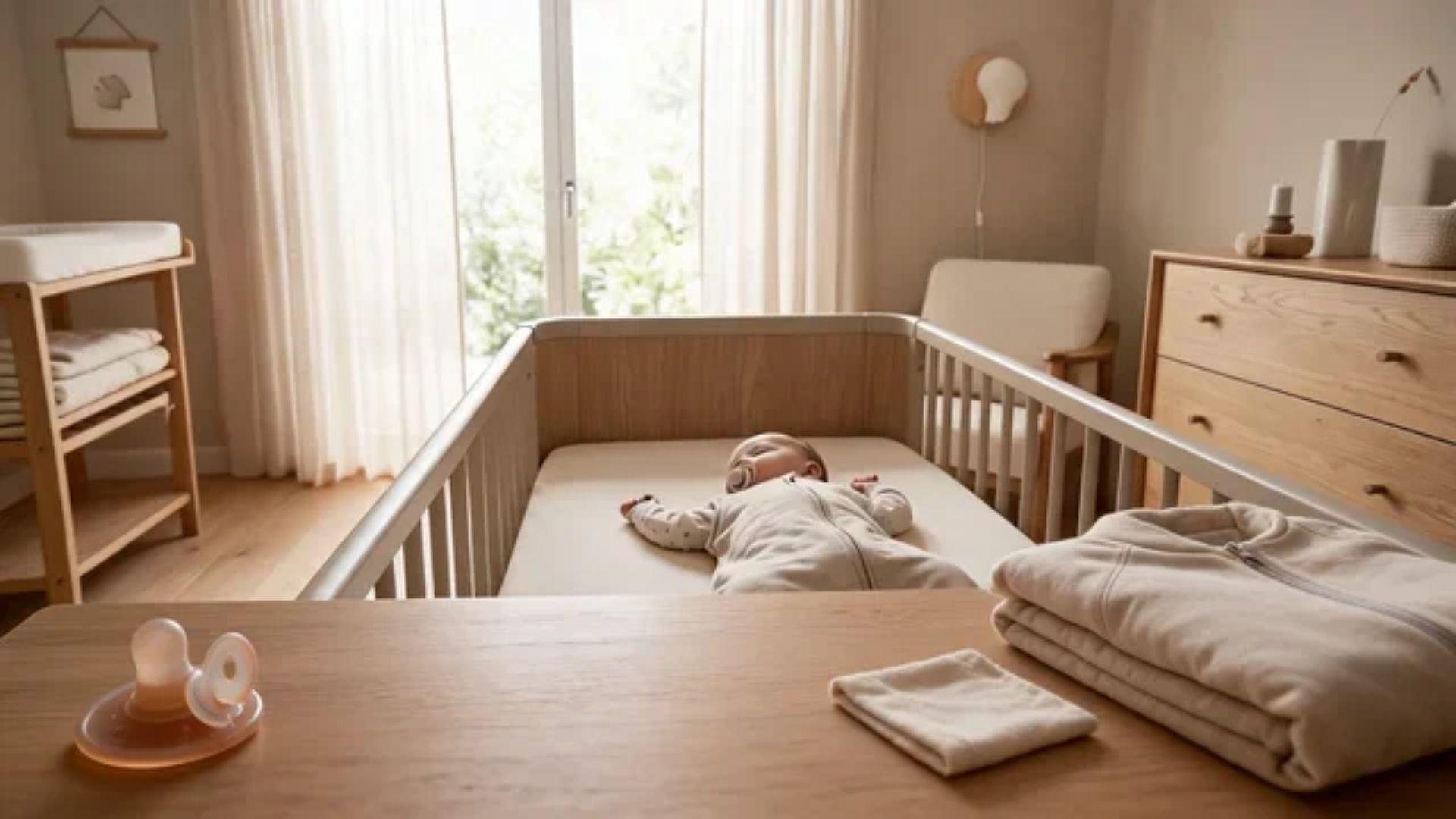
Think of the pacifier as your baby’s cue for sleep. Weaning works by swapping that cue slowly, so your baby learns new ways to settle.
Pace depends on your baby. Some give it up quickly, while others need several weeks, and both are normal.
Move through these steps in order, and give each one time to settle before the next.
- Start by limiting it to sleep times, and soothe with cuddles or a song during the day.
- Next, drop it at naps, one nap at a time.
- Bedtime comes last.
- Offer other comfort at sleep, such as a hand on the chest, soft sounds, or a lovey after 12 months.
- All caregivers should follow the same plan, so your baby gets one clear message.
Naps go first because the stakes are lower and you’re awake to help. Bedtime comes last because night is when babies lean on it most.
Some babies switch to a thumb or fingers instead. That can be harder to break, since a thumb can’t be thrown away.
Expect a few rough nights, especially when you drop it at bedtime. Stay consistent, because bringing it back at every wake-up keeps the old habit going.
If your baby is sick or truly distressed, comfort comes first, and you can restart when they feel better.
The Bottom Line
So, should I remove the pacifier when the baby is sleeping? Usually not, and leaving it in is the safe default.
Safety and habit are two separate questions. Offering the pacifier at the start of sleep covers safety, and watching for dependence covers habit.
If it falls out, you don’t need to go back in unless your baby needs it. If your baby starts waking for it several times a night, that’s your cue to begin weaning gently.
Trust what you see in your own baby, because that tells you more than any rule. Tonight, offer it as you put your baby down, and let it be once they’re asleep.
What has worked at bedtime in your house? Share your experience in the comments, because another parent may need it tonight.
Frequently Asked Questions
Do Babies Sleep Better Without a Pacifier?
Not necessarily. Many babies sleep well without one, and a pacifier isn’t required. What matters is how your baby settles, so judge by their sleep, not by whether they use one.
How Many Hours Should a Baby Use a Pacifier?
There’s no widely cited hour limit, so think about when instead. Offer it at naps and bedtime, and for soothing when needed, rather than keeping it in all day.
Will Baby Take a Pacifier if Hungry?
A hungry baby may suck on one briefly, but it rarely settles them for long. A pacifier soothes the urge to suck, not hunger. If your baby keeps fussing, check feeding cues first.