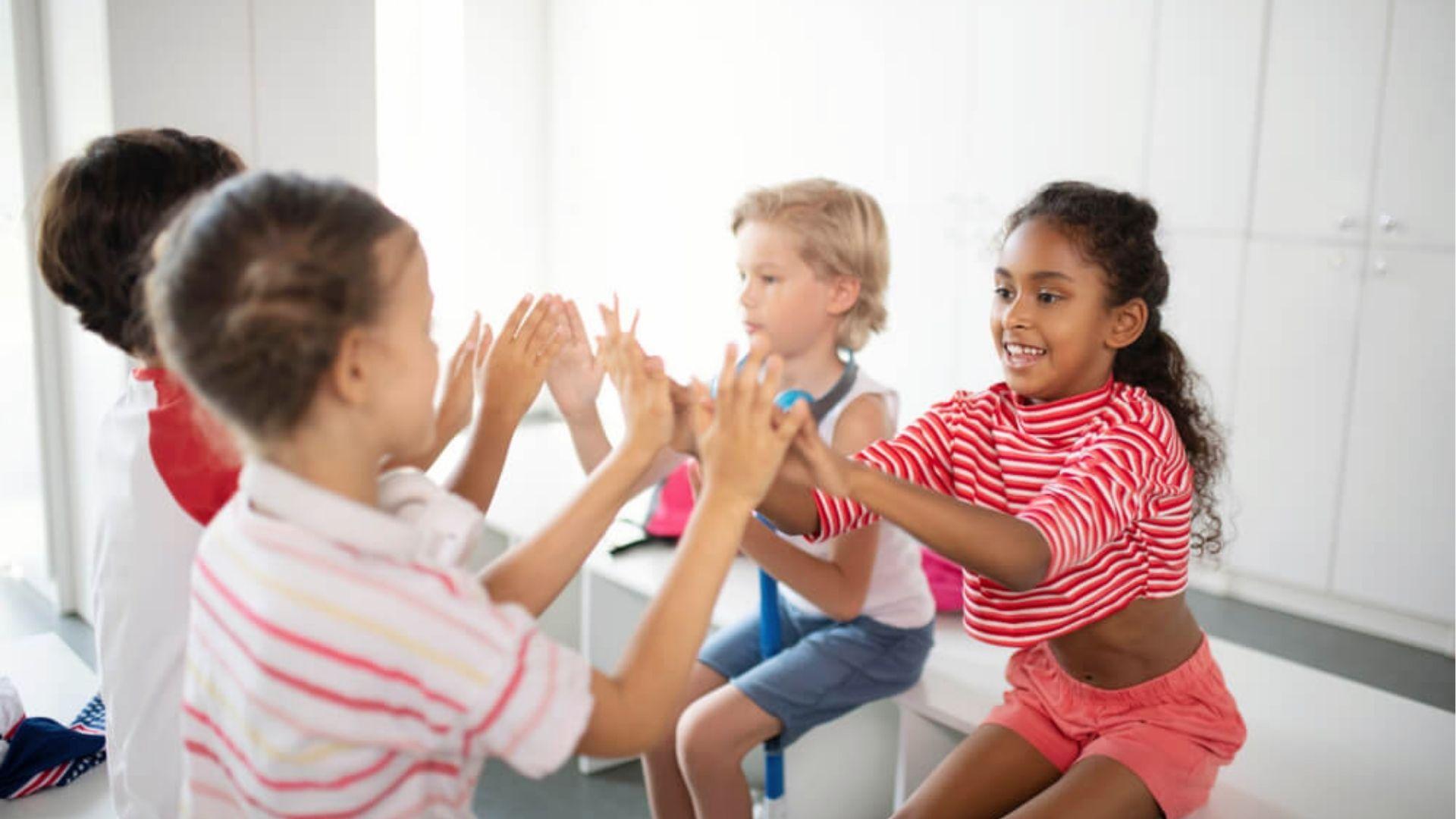
Hand games for kids are some of the simplest ways to keep children busy without needing a single toy or screen.
I grew up playing Miss Mary Mack on the school playground, and even now, watching kids fall into the same rhythms feels like something worth passing on.
These games need little to no equipment, and children can play them with a parent, a sibling, or a group of friends.
Some involve clapping, some use counting, and others build rhythm or memory. If you are looking for a quick, easy activity, you are in the right place.
The Simple Truth About Hand Games for Kids
Hand games follow a simple structure. One set of rules, two or more players, and a clear way to win or keep going.
What keeps them interesting is the variation. A clapping game like Miss Mary Mack is about rhythm and memory.
Rock, Paper, Scissors is about quick thinking and reading your opponent. The Multiplication Hand Game is math in disguise. Same hands, completely different skills at play.
Most hand games also have no wrong way to start. You explain the rules in one minute and jump straight in. That low barrier is exactly why children ask to play them again.
15 Hand Games for Kids
This list covers a range of games, from quiet two-player ones to lively group activities, so there is something for every age and setting.
1. Hand Stacking

Players: 2 or more
Age: 3 and up
One player puts a hand flat on the table. The next player stacks their hand on top. Players keep stacking until all hands are in the pile.
The player on the bottom slides their hand out and puts it on top. Keep going without knocking the stack over.
Variation: Try it faster each round.
2. Fist Stacking

Players:2 or more
Age: 3 and up
Same idea as hand stacking, but players use closed fists instead.
Stack fists on top of one another and keep pulling the bottom fist up. The goal is to keep the tower going as long as possible.
3. Secret Handshakes

Players:2
Age: 4 and up
Two players create their own handshake using any combination of slaps, snaps, fist bumps, or finger wiggles.
Practice until both can do it without stopping. The longer and more complex, the better.
Variation: Time yourselves and try to beat your record.
4. Rock, Paper, Scissors

Players:2
Age: 4 and up
Both players count to three, then throw one of three hand signals at the same time. Rock beats scissors. Scissors beat paper. Paper beats rock. First to win five rounds wins the game.
Variation: Play best of three for a faster version.
Note: Children develop at different rates. Some children grasp the rules easily at 4, while others are more comfortable at 5 or 6. There is no rush if the rules feel confusing, try again in a few months
5. Thumb Wars

Players:2
Age: 4 and up
Link four fingers with your opponent so both thumbs are free. Say “one, two, three, four, I declare a thumb war.”
Try to pin your opponent’s thumb down for three counts without letting go of the hand grip.
6. High-Five Games

Players: 2 or more
Age: 3 and up
Players take turns doing high fives in different ways. Up high, down low, on the side, or behind the back. Whoever misses or gets “too slow” is out. Great for fast reactions and giggles.
7. Stella, Ella, Ola

Players:2 or more
Age: 5 and up
Stand in a circle. Clap alternating hands with the person next to you while chanting “Stella, Ella, Ola, clap clap clap.”
The rhythm changes as the chant speeds up. The player who misses the clap is out.
Note: As Wikipedia’s entry on Stella Ella Ola confirms, lyrics and elimination rules vary widely depending on where you grew up. The circle structure and the passing clap are the consistent core of the game.
8. Multiplication Hand Game

Players:2
Age:7 and up
Each player holds up any number of fingers, one to five. Both players say a number at the same time, trying to guess the total number of fingers shown across both hands.
The player who guesses correctly first scores a point.
This is a great way to practice multiplication facts without it feeling like homework.
9. Addition Hand Game

Players:2
Age: 5 and up
Same setup as the multiplication version, but players add the fingers together instead. Great for younger children still building number sense.
10. Hand Slap

Players:2
Age:6 and up
One player holds their hands out, palms up. The other player rests their hands on top, palms down.
The bottom player tries to slap the top of the other player’s hands before they can pull away. Switch roles after a point is scored.
This game is also known as Red Hands or Hot Hands and is a classic playground reaction game.
Safety note: Remind children to keep slaps light. This game should sting a little from the speed, not from force. It is not suitable for children who play roughly or cannot yet regulate how hard they hit.
11. Sign Language Spelling Bee

Players:2 or more
Age: 7 and up
One player’s finger spells a word using American Sign Language hand shapes. The other players try to read the letters and say the word aloud.
Use simple three-letter words to start, then build to longer ones as players get more comfortable.
Important: Children need to learn the ASL manual alphabet before playing this game. Gallaudet University, the leading university in the world for Deaf and hard-of-hearing students, offers free basic ASL vocabulary and lessons online, including fingerspelling, and is a great starting point for families.
This game works well in educational settings and is a respectful, hands-on way to introduce children to Deaf culture and language.
12. Miss Mary Mack
Players:2
Age: 5 and up
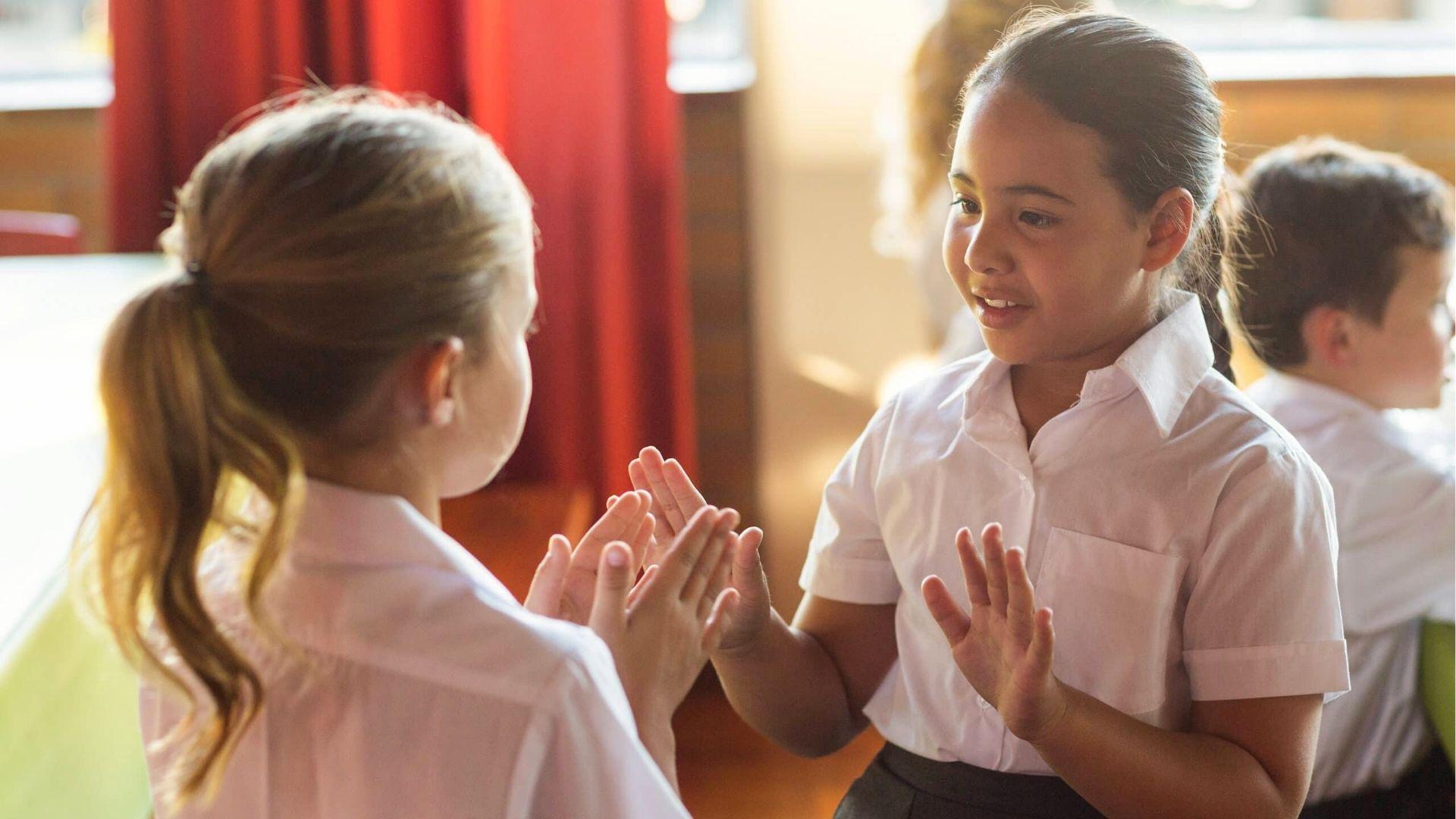
Two players face each other and clap a repeating pattern while reciting the “Miss Mary Mack” rhyme.
The most common clapping pattern goes: clap your own hands together, cross your arms over your chest and touch your own shoulders, clap your own hands again, then clap your right hand against your partner’s right hand, clap your own hands, clap your left hand against your partner’s left hand, clap your own hands, then clap both hands flat against your partner’s hands.
Repeat this sequence through the whole rhyme without losing the beat.
Note: Miss Mary Mack has no single “official” version, clapping patterns vary by region, family, and playground.
13. Concentration

Players:2 or more
Age: 6 and up
Players clap a steady rhythm together. On each beat, someone says a word in a chosen category, like animals or colors.
Anyone who repeats a word or breaks the rhythm is out. The category makes it trickier the longer the game goes.
14. Double, Double, This, This

Players:2
Age:5 and up
Sit across from a partner. Follow the chant “double, double, this, this; double, double, that, that” while copying a clapping pattern.
The trick is to keep the rhythm tight while also watching your partner’s hands. Missing a beat means starting over.
15. Down Down Baby

Players: 2 or more
Age: 5 and up
Clap in rhythm while chanting “down down baby, down by the roller coaster.” Each line of the chant comes with a different clapping move.
Children pick up the pattern quickly after a few rounds.
How to Choose a Hand Game for Your Child
A quick guide to matching the right game to the right child.
Age matters most at the start. Younger children, around three to five, do well with simple stacking games or High-Five Games.
Older children, six and up, can handle chants, sequences, and math-based games without losing interest.
If your child is playing alone with you, two-player games like Rock, Paper, Scissors or Thumb Wars are a natural fit. For a group, Stella, Ella, Ola or Down Down Baby keeps everyone in.
Think about energy levels too. Hand Slap and High-Five Games are livelier. Concentration and Sign Language Spelling Bee are calmer and work well in quiet spaces like a car or waiting room.
If your child is still building counting skills, the Addition Hand Game is a soft entry point. If spelling is the goal, Sign Language Spelling Bee adds a hands-on layer to practice.
Go with what your child will actually enjoy. A game they want to play again is more valuable than one that checks every skill box but bores them in two minutes.
Final Thoughts
Hand games for kids are easy to start and surprisingly fun to keep going. They work in cars, waiting rooms, backyards, and classrooms with no gear required.
Whether you try Miss Mary Mack with a five-year-old or the Multiplication Hand Game with an older child, you are spending time together in a way that actually sticks.
Try one game this week and see which one your child asks to play again.
And if you want more activity ideas, check out our other posts on games kids can play without screens.
Frequently Asked Questions
Can hand games help kids who struggle with focus?
Short, structured games with a clear win condition can help children practice staying on task. The repetition and rhythm give them something concrete to follow.
How long does it usually take a child to learn a new hand game?
Most simple games click within two or three rounds. Chant-based games with longer sequences may take a few sessions before a child feels comfortable keeping up.
Do hand games work well for kids who are shy or introverted?
Yes. Two-player games like Secret Handshakes or Thumb Wars are low-pressure and one-on-one, which makes them a comfortable starting point for children who are not ready for group play.