
As a parent, you’ve probably stood in the toothpaste aisle wondering whether your child is ready to switch from that bubblegum-flavored kids’ paste to what the rest of the family uses. It’s a small decision that actually matters more than it looks.
Most adult toothpaste in the US has about the same fluoride as kids’ toothpaste, around 1,000 to 1,100 ppm. The bigger differences are flavor, foam, and how much a child swallows.
Some stronger, higher-fluoride pastes are made for older kids and adults, and those are the ones to hold off on.
In this guide, you’ll get a clear, honest answer on when kids can use adult toothpaste, what to watch for, and how to make the switch without second-guessing yourself.
When Can Kids Start Using Adult Toothpaste?
Most kids can switch to adult toothpaste around age 6, once they spit reliably. The US labeling rules point the same way.
Lower-strength fluoride toothpaste (roughly 850 to 1,150 ppm) is for ages 2 and up, and higher-strength pastes (around 1,500 ppm) are for ages 6 and up.
Here’s why six is the usual line. The CDC says that by about age 6, kids have a swallowing reflex strong enough to stop most accidental swallowing. Before that, a lot of toothpaste ends up in the stomach instead of the sink.
That matters because of fluorosis. Too much fluoride while permanent teeth are forming can leave faint white spots or streaks on them.
Most cases in the US are mild and only affect looks. Moderate and severe cases are rare.
Fluoride itself isn’t the problem, though. The ADA recommends fluoride toothpaste from the very first tooth, which usually appears around 6 months. The question is how much your child uses and whether they spit.
Age is a useful guide, but spitting ability is the real deciding factor. If your child consistently spits after every brush, they are ready to switch just keep it to a pea-sized amount. If they still swallow occasionally, wait a little longer.
Children’s Toothpaste vs. Adult Toothpaste
They both clean teeth, so what’s actually different? More than most people realize and if you’ve ever wondered how sippy cups affect teeth too, that’s worth a look alongside your toothpaste choice.
| Feature | Children’s Toothpaste | Adult Toothpaste |
| Fluoride Level | 1,000 ppm (US standard); 500 ppm in Australia for children under 6; the UK recommends a minimum of 1,000 ppm for under-3s and 1,350–1,500 ppm for ages 3 and up | About 1,000 to 1,100 ppm in the US. Some higher-strength and UK/EU pastes have 1,350 to 1,500 ppm. Prescription pastes (up to 5,000 ppm) are a separate category. |
| Abrasives | Mild, gentle on developing enamel and baby teeth | Stronger abrasives; whitening variants can be harsh on sensitive teeth |
| Whitening Ingredients | Usually none not appropriate for developing teeth | Often contains hydrogen peroxide or baking soda; not suitable for young children |
| Flavor | Sweet, mild flavors (bubblegum, strawberry, watermelon) designed to encourage brushing habits | Strong mint or menthol; can feel too intense for young children |
| Foaming Agents | Low foam, gentle formula reduces gagging in young children | Higher foam; can feel overwhelming for kids still learning to rinse |
| Safe to Swallow? | Not meant to be swallowed, but a rice-grain or pea-sized amount keeps the risk low. | Not meant to be swallowed. Keep the amount small and supervise younger kids |
| Best For | Children from first tooth eruption through early school years | Ages 6 and up when spitting reliably and adult tooth development is underway |
Children’s toothpaste is built around one simple fact: Young kids swallow things. The mild flavor and gentle foam make brushing easier for them.
Adult toothpaste often has a stronger flavor and more foam, and some versions add whitening. That’s fine once your child can spit and rinse well.
How Much Toothpaste Should Kids Use?
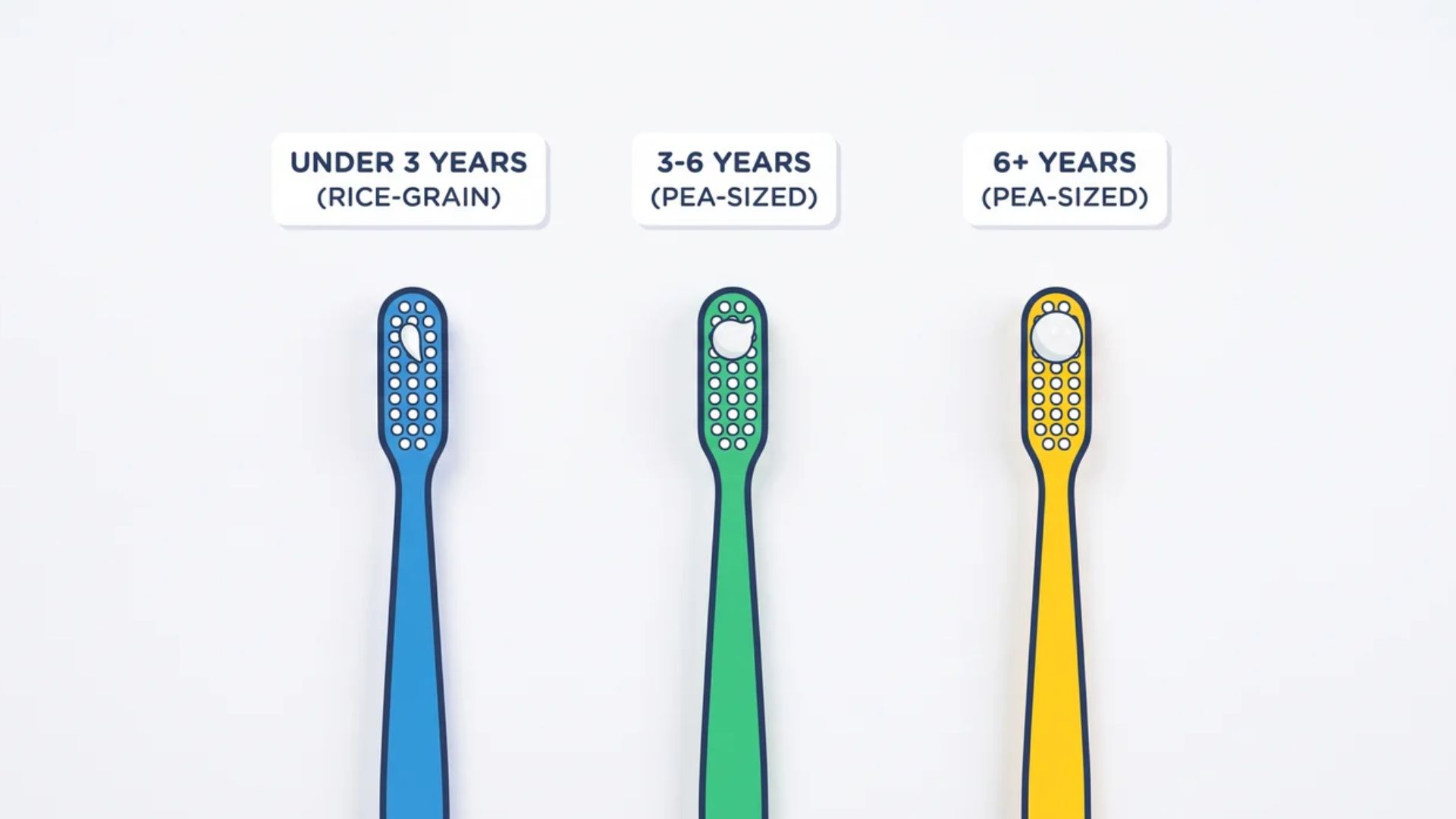
The amount matters just as much as the type. Too much toothpaste, even the kids’ version, can cause problems over time. Here’s a simple breakdown by age.
Under Age 3
- Use only a rice grain-sized smear of fluoride toothpaste
- At this age, swallowing is almost guaranteed, so less is safer
- Use a fluoride toothpaste from the first tooth a rice-grain smear is the right amount at this age
Ages 3 to 6
- A pea-sized amount is enough, nothing more
- Kids this age are still learning to spit, so keep the quantity small
- Children’s toothpaste is still the right call here
Ages 6 to 8
- Still stick to a pea-sized amount even if they’ve switched to adult toothpaste
- This is the transition window, so the amount stays the same even if the product changes
- Supervise brushing if you can, kids often squeeze out way more than they need
Age 8 and Older
- A pea-sized amount still works fine for most kids this age
- By now most children can handle adult toothpaste if they’re spitting reliably
- More toothpaste doesn’t mean cleaner teeth; it just means more waste and more fluoride than necessary
If your child swallows a large amount of toothpaste, call Poison Help at 1-800-222-1222 (US). A small swallow now and then isn’t an emergency.
Why Does Fluoride Matter for Kids?
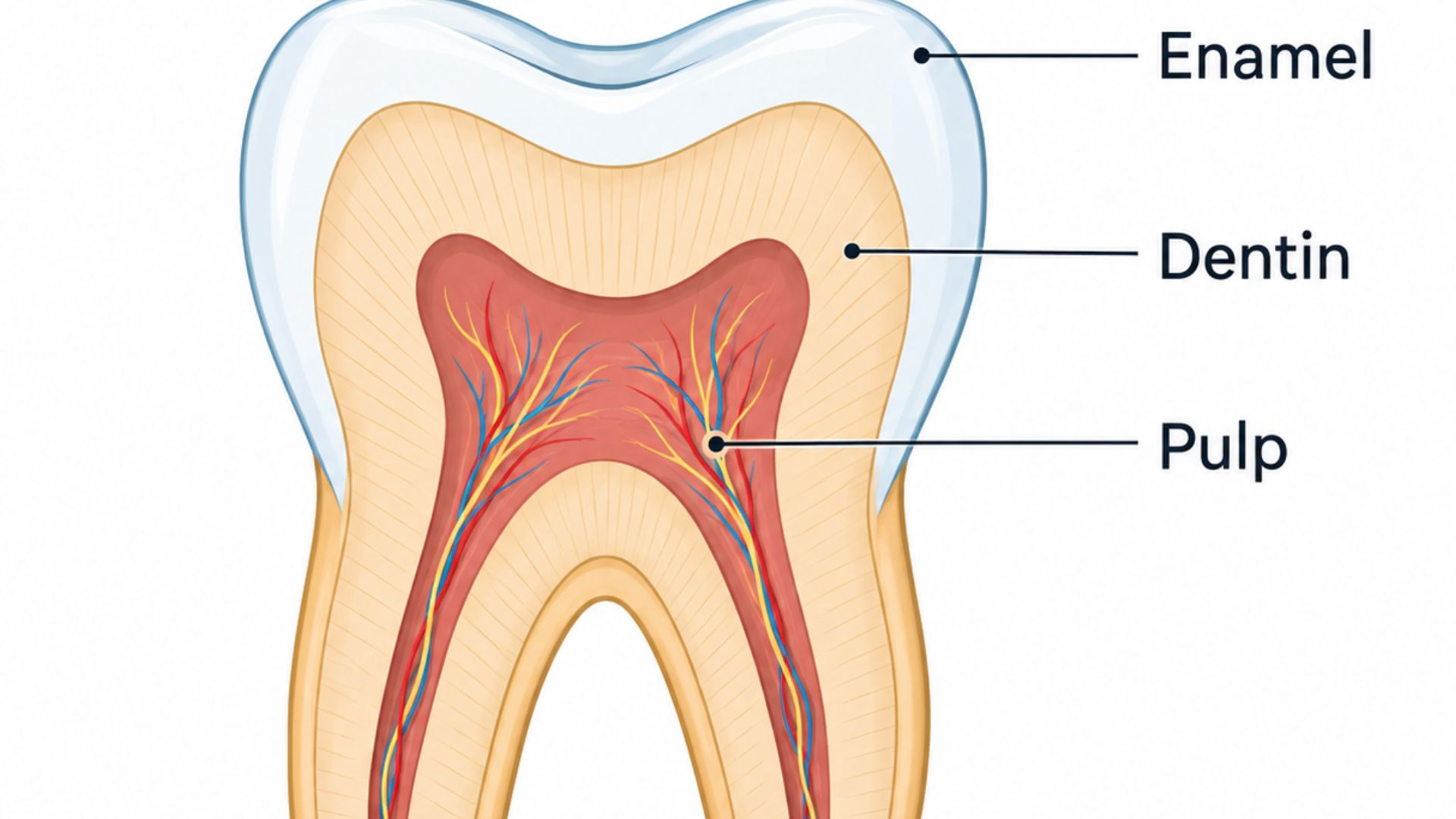
Fluoride is what actually protects teeth from cavities. It strengthens enamel and helps reverse early decay before it becomes a real problem.
In the US, kids’ and adult toothpastes often have similar fluoride levels, around 1,000 ppm. So the key difference is the amount used and how closely you watch.
Younger children tend to swallow instead of spit, which is why the quantity is kept to a rice-grain smear under age 3 and a pea-size from age 3 onward.
Too much fluoride while permanent teeth are still forming beneath the gums can cause dental fluorosis, which typically appears as faint white spots, streaks, or lines on the teeth.
In more visible cases, it can show as brown discoloration, though moderate and severe fluorosis is uncommon in the US.
One reassuring fact: The risk window for fluorosis closes around age 8. By that point, the crowns of all permanent teeth (except wisdom teeth) are fully formed.
Older children, teens, and adults cannot develop dental fluorosis regardless of how much fluoride they consume.
If your child is already past age 8, this is no longer something to factor into your toothpaste choice.
If your child drinks well water rather than fluoridated tap water, takes fluoride supplements, or has a higher-than-average cavity risk, speak with a pediatric dentist before switching products they can calibrate the right approach for your child’s specific situation.
The Bottom Line
Most kids can use adult toothpaste around age 6, once they spit reliably every time. Keep to a pea-sized amount, and skip whitening or specialty pastes for now.
Their brushing habits matter more than the number on the birthday cake.
Every child develops at a different pace. If your child has a higher-than-average cavity risk, takes fluoride supplements, or drinks well water instead of fluoridated tap water, a pediatric dentist can tell you which toothpaste is right and when to switch.
If you found this helpful, share it with another parent who has the same question.
Frequently Asked Questions
What is the 2-2-2 rule for teeth?
The 2-2-2 rule means brushing twice a day, for two minutes each time, and visiting your dentist twice a year. Following this simple routine helps remove plaque, prevent cavities, and catch any dental issues early.
What toothpaste should you stay away from?
Avoid charcoal toothpastes and high-abrasiveness whitening pastes, as they can wear down enamel over time. You should also skip fluoride-free formulas unless your dentist specifically recommends one, since fluoride is your teeth’s main defense against decay.
Should I wet my toothbrush before brushing?
Wetting your toothbrush is a matter of personal preference and makes very little difference in how well you clean your teeth. What matters more is brushing for a full two minutes and not rinsing with water right after, so the fluoride stays on your teeth longer.
Which teeth usually rot first?
The back molars typically decay first because their deep grooves trap food and bacteria, and they are harder to reach with a toothbrush. In children, the first permanent molars that erupt around age six are especially vulnerable to early decay.