

You’re counting tiny fingers and toes in the first hours after birth, and then you notice something nobody warned you about: a tooth.
Can babies be born with teeth? They can, and doctors have a name for it.
Teeth that are already there at birth are called natal teeth, and while they’re uncommon, most are ordinary baby teeth that showed up months early.
That answer usually brings a new set of questions. Will the tooth hurt during feeding? Could it come loose? Does it need to come out, or can it stay?
The good news is that each of these has a clear, practical answer.
This guide explains why some babies arrive with a tooth, the two problems to watch for, how to care for the tooth at home, and when to call your baby’s doctor.
What Are Natal Teeth?
Natal teeth are teeth that are already visible in a baby’s mouth at birth. Neonatal teeth are closely related.
They break through the gums during the first 30 days of life. Both are usually primary (baby) teeth that came in early, and most appear in the lower front of the mouth.
The American Academy of Pediatric Dentistry (AAPD) says first teeth usually come in around 6 months of age.
Most newborns have smooth gums, so it helps to know what healthy baby gums look like before that first tooth.
How rare is a baby born with teeth? Older reviews put natal and neonatal teeth at about 1 in every 2,000 to 3,500 births.
A 2023 meta-analysis in the Journal of the American Dental Association (Vitali et al.) found 34.55 natal-tooth cases per 10,000 births worldwide.
Cleveland Clinic’s natal teeth overview puts that at about 1 in every 289 newborns. The studies used different methods, so the safest summary is that these teeth are uncommon but not extraordinary.
A 2012 review in the Journal of Pharmacy and Bioallied Sciences (Maheswari et al.) found that only 1% to 10% of these early teeth are supernumerary.
That means they are extra teeth beyond the usual set of 20 baby teeth. The rest belong to the normal set, which matters when a dentist decides whether to keep the tooth.
Why Are Some Babies Born With Teeth?
Doctors don’t know the exact cause. The leading theory is that the tooth bud, the cluster of cells that becomes a tooth, sits closer to the gum surface than usual.
As a result, the tooth breaks through early. Family history, some medical conditions, and certain chemical exposures may also raise the odds.
Genes seem to play a part. Published reviews report that about 15% of babies with these teeth have a close relative who had them too.
Cleveland Clinic also lists congenital syphilis, an overactive thyroid or other gland problems, and some hormone-disrupting chemicals, such as polychlorinated biphenyls (PCBs).
The AAPD’s 2025 guidance adds that natal teeth are more common in babies born with a cleft palate.
A few rare genetic syndromes have also been linked with natal teeth, but most babies born with teeth are otherwise healthy.
The routine newborn exam includes a look inside the mouth, and that is how most of these teeth are found.
How Do Natal Teeth Look?
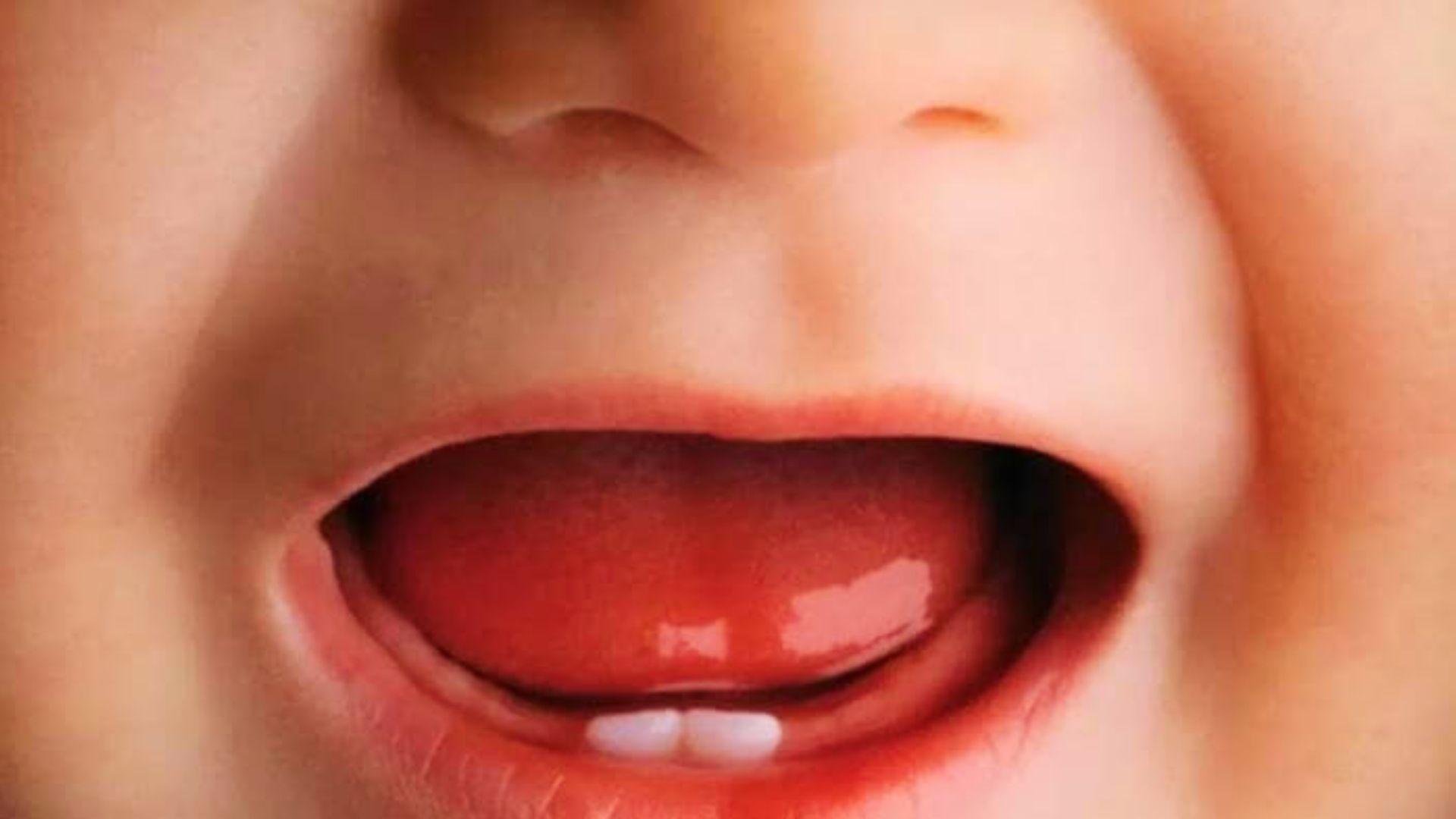
Once you know the causes, the next step is recognizing what you’re seeing. A natal tooth can look like a normal baby tooth, but many look a little different.
University of Rochester Medical Center (URMC) says they are often small, loose, and brown or yellow. Reviews add that some are cone-shaped with a chalky, whitish surface.
The root is usually short or barely formed. The AAPD explains that, as a result, these teeth are held mostly by the gum alone.
That is why one may wobble or sit at a slight angle. They often come alone or in pairs, and their edges can be sharp.
This is different from later baby teeth growing in crooked, which is common and usually harmless.
Are Natal Teeth Safe for Babies?
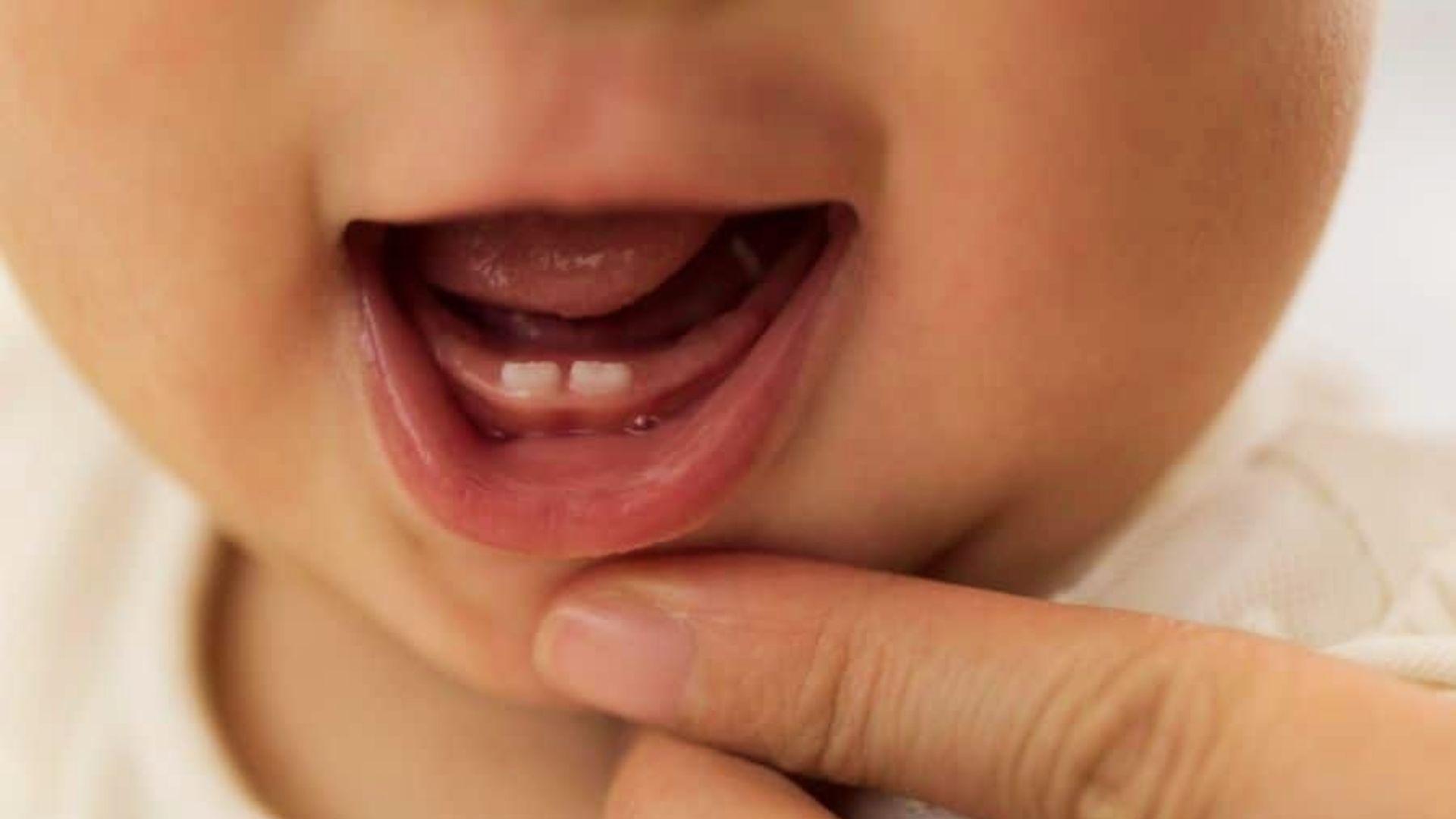
Most natal teeth are not dangerous, especially when they are firmly attached.
The AAPD says these teeth can stay if they don’t disrupt feeding, pose a risk of being breathed in, or interfere with how the mouth works.
Two problems need closer attention: a loose tooth and a tongue sore.
The first is a loose tooth. A tooth with little root can come out, and if a baby breathes it into the airway, doctors call that aspiration.
That is why a wobbly tooth should be checked promptly. Still, published case reviews note that teeth that move only slightly often firm up soon after they come in.
The second is Riga-Fede disease, a sore (ulcer) on the underside of the tongue.
The AAPD explains that it forms when the tongue keeps rubbing across the tooth’s edge during swallowing.
The sore can bleed and hurt. Because it sits where the tongue moves during sucking, it can make feeding painful.
Can Natal Teeth Affect Breastfeeding?

That tongue sore leads to the next question many new parents ask. Natal teeth can affect breastfeeding, but not in every case.
The AAPD notes that they sometimes cause nipple scrapes and pain for the nursing parent.
A 2015 report in Case Reports in Dentistry also lists infant discomfort and refusal to feed among possible problems.
In that report, a 1-month-old with two natal teeth and Riga-Fede disease had trouble breastfeeding.
Nursing resumed after the dental team removed the loose tooth and smoothed the sharp edge of the other.
How much a tooth affects a baby depends on where it sits, how stable it is, and whether a sore has formed.
If nursing hurts, a lactation consultant can help with positioning and latch while you wait for the dental visit.
Bottle-fed babies can show similar signs, such as pulling away or fussing.
Steady weight gain at checkups is one of the clearest signs that feeding is going well, so tell your pediatrician about any feeding trouble.
Do Natal Teeth Need to Be Removed?
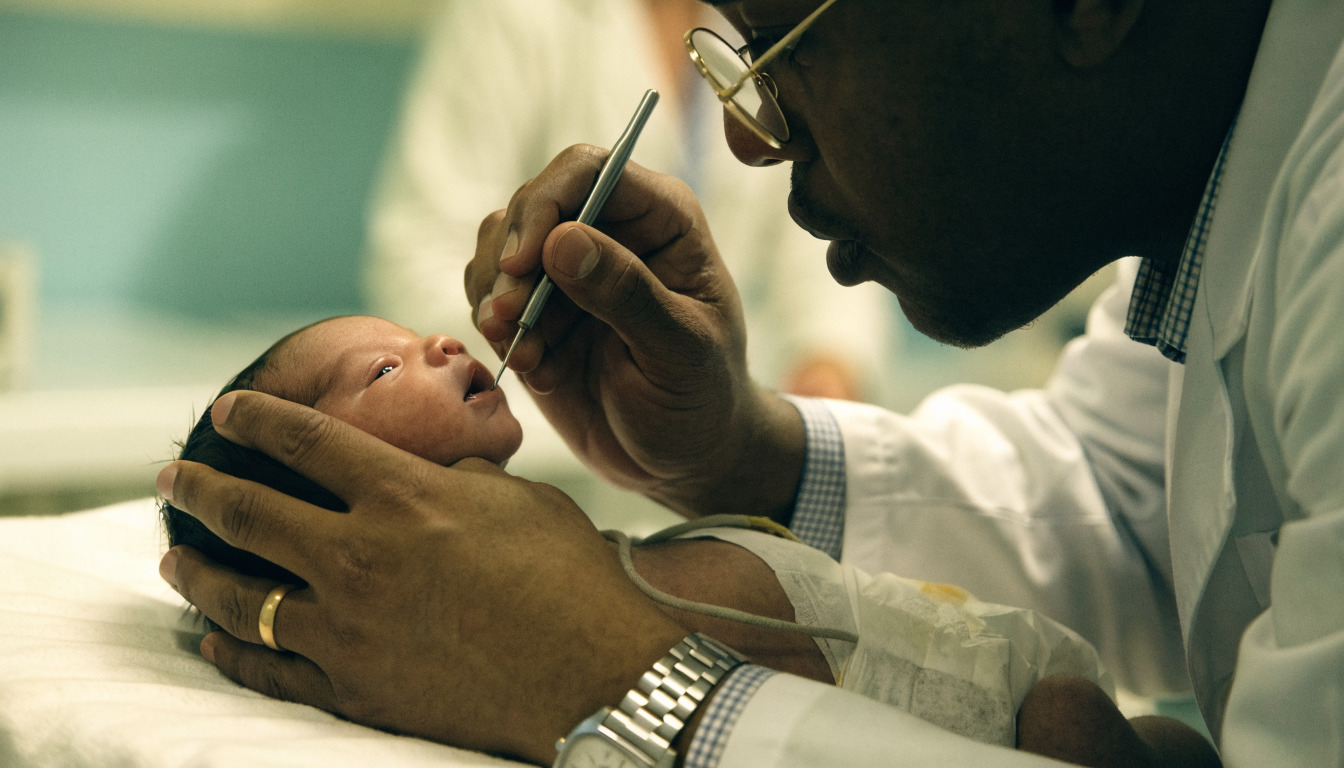
Not always. Since most natal teeth are normal baby teeth, the AAPD recommends deciding case by case after weighing the risks for parent and baby.
Removal is usually considered when a tooth is very loose or is an extra tooth. It is also considered when the tooth keeps causing tongue sores or feeding problems that smoothing doesn’t fix.
For a sharp but stable tooth, the AAPD lists smoothing the biting edge as one option. Case reports favor trying this gentler approach first when it is safe.
A dental X-ray can show how much root has formed and whether the tooth is part of the normal set.
What Happens if the Tooth Is Removed?
Timing matters in the first days of life. Newborns have low levels of vitamin K, which helps blood clot.
For this reason, the American Academy of Pediatrics (AAP) recommends a vitamin K shot for every baby at birth.
Case reports advise confirming that the shot was given. Some clinicians also prefer to wait until a baby is at least 10 days old before removal, unless the tooth is too loose to wait.
Because a natal tooth is usually a true baby tooth, removing it leaves a gap until the permanent tooth arrives, often around age 6 to 7 for the lower front teeth.
The dentist may also clean the socket, since leftover tissue can sometimes form a tooth-like structure later.
How Should You Care for Natal Teeth?

Once a dentist confirms that the tooth can stay, daily care takes only a minute or two.
- Clean Gently Around the Tooth Daily:URMC advises gently wiping the gums and teeth with a soft, clean, damp cloth. Ask your baby’s dentist whether and when to add a rice-grain smear of fluoride toothpaste.
- Do Not Press or Wiggle the Tooth:Avoid pushing, wiggling, or pulling the tooth, even when it seems ready to come out. Handling it at home can hurt the gum and raise the chance of the tooth being swallowed or breathed in.
- Monitor the Underside of the Tongue:URMC also suggests checking your baby’s tongue, gums, and inner lips often. Gently lift the tongue and look for a white, yellow, or red sore, or any bleeding. These can be early signs of Riga-Fede disease.
- Keep Up With Follow-Up Appointments:Follow-up visits let the dentist track how stable the tooth is. The AAPD encourages every child to have a dental home, meaning a regular dentist, by 12 months of age. A baby with a natal tooth simply starts that relationship earlier.
When Should You See a Pediatric Dentist?

Ask for a pediatric dental exam as soon as a natal tooth is found, ideally in the first days after birth.
Your pediatrician can usually arrange the referral. The dentist will check how loose the tooth is, whether it is a normal baby tooth, and whether it affects feeding or the tongue.
Call sooner if the tooth gets looser, a sore or bleeding appears under the tongue, or breastfeeding causes pain or nipple damage.
Call your pediatrician the same day if your baby refuses feeds, has fewer wet diapers than usual, or seems unusually sleepy.
If a loose tooth comes out and you can’t find it, or your baby starts coughing, gagging, wheezing, or struggling to breathe, call 911 right away.
At that first visit, ask four things: is this a normal baby tooth or an extra one, is it likely to firm up, could smoothing work instead of removal, and what should you watch for at home?
Frequently Asked Questions
Has There Ever Been a Baby Born With a Full Set of Teeth?
Multiple natal teeth are uncommon, and most babies have one or two. A 2026 Siriraj Medical Journal review cites a rare case of 14 natal teeth in one newborn, short of a full 20-tooth set.
What Syndromes Are Associated With Natal Teeth?
URMC links natal teeth with Sotos syndrome, Ellis-van Creveld syndrome, pachyonychia congenita, and Hallermann-Streiff syndrome. These conditions are rare, and published reviews describe most natal teeth as isolated findings in otherwise healthy babies.
Can My 2 Month Old Be Teething Already?
It’s possible but uncommon. First teeth usually come in around 6 months, and a 2026 Siriraj Medical Journal review classifies teeth that appear between 1 and 3 months as early-erupting primary teeth.
How Painful Is a Baby’s First Tooth?
Many babies show little discomfort. The AAPD says teething can bring mild, on-and-off gum soreness, fussiness, drooling, and low-grade fever. It advises against benzocaine or lidocaine teething gels because of serious risks.